
In Brief
- The Middle East e-commerce industry is rapidly growing due to increasing smartphone usage, digital payments, and rising mobile shopping adoption across GCC countries.
- The overall e-commerce app development cost depends on app complexity, features, technology stack, cloud infrastructure, and scalability requirements.
- Advanced platforms like Noon require features such as AI recommendations, multilingual support, payment gateway integrations, and real-time logistics systems.
- The estimated development cost can range from $15,000 for basic apps to over $200,000 for enterprise-level marketplace platforms with advanced integrations.
- Future e-commerce trends in the Middle East will focus on AI-powered personalization, AR shopping experiences, hyperlocal delivery systems, and cloud-native commerce platforms.
Cost of Developing E-commerce Mobile Apps in 2026
From quick-commerce startups in Dubai to enterprise retail brands in Saudi Arabia, businesses across the Middle East are racing to launch mobile shopping apps that can compete with platforms like Noon and Amazon. As customer expectations continue to rise in 2026, companies now require scalable, AI-powered, and multilingual e-commerce apps that deliver seamless shopping experiences across GCC markets.
The rise in digitization has forced organizations and businesses to create a mobile commerce application that will provide them with a competitive edge in the market. This has led to increasing interest in understanding the cost of developing e-commerce apps in the Middle East countries in 2026. The cost of developing a mobile app relies upon many other factors.
For businesses targeting UAE and other GCC markets, localization plays a crucial role. Features such as Arabic language support, regional payment gateways, and logistics integrations can significantly influence the app development cost like Noon. As competition continues to rise, investing in a high-quality and future-ready e-commerce app has become more important than ever.
Why Middle East is a Hotspot for E-commerce Apps
The Middle East has rapidly emerged as one of the fastest-growing digital commerce regions globally. Countries like UAE and Saudi Arabia are witnessing a major increase in mobile shopping adoption, driven by strong internet connectivity, smartphone usage, and changing consumer preferences.
Consumers now expect fast deliveries, secure payment options, multilingual interfaces, and personalized shopping experiences directly through mobile apps. This growing demand is one of the biggest reasons why brands are investing in scalable e-commerce app development solutions in the Middle East.
Some major factors accelerating this growth include:
- High smartphone penetration across GCC countries
- Government-led digital transformation initiatives
- Growth of digital payment ecosystems
- Rising demand for hyperlocal delivery platforms
- Increasing trust in online shopping applications
The region’s young, tech-savvy population is driving massive demand for mobile shopping apps across fashion, groceries, electronics, and luxury retail. As competition increases, companies now require advanced features like AI recommendations, cloud scalability, and real-time logistics integrations. These evolving user expectations directly impact the overall mobile app development cost in Dubai brands must plan for.
Market Statistics and Trends
The Middle East digital commerce market is witnessing massive growth due to increasing smartphone adoption, digital payments, and changing consumer shopping habits. These trends are directly increasing demand for advanced e-commerce app development solutions.
Some important market statistics include:
- Smartphone penetration in the Middle East reached nearly 82% of the population, driven by strong digital infrastructure and smart city initiatives.
- According to Omdia, smartphone shipments in the Middle East grew by 15% in Q2 2025, making it one of the fastest-growing smartphone markets globally.
- UAE recorded 13% year-on-year smartphone market growth due to strong retail promotions and increasing digital adoption.
- Reports estimate that the Middle East e-commerce market could grow at a CAGR of nearly 19.89% between 2026 and 2034.
- AI-powered shopping experiences, personalized recommendations, and voice commerce are becoming major growth drivers across GCC e-commerce platforms.
- Around 70% of high-net-worth consumers in the Gulf region are now comfortable shopping online, highlighting rising trust in premium digital commerce experiences.
These trends clearly show why startups and enterprises are actively investing in understanding the cost to build a shopping app in the Middle East for long-term digital growth.
Features That Influence E-commerce App Development Cost
The overall pricing of an e-commerce application depends on the features integrated into the platform. Simple apps require limited functionality, while advanced platforms like Noon demand enterprise-grade architecture and intelligent automation systems.
Some of the most important features affecting the development cost include:
- User registration and profile management
- Smart product search and filtering
- Wishlist and shopping cart functionality
- Secure payment gateway integrations
- Multi-language support including Arabic and English
- Real-time order tracking and delivery updates
- Push notifications and promotional alerts
- AI-powered product recommendations
- Vendor management dashboard
- Inventory and order management system
Advanced integrations can significantly increase the e-commerce app features cost breakdown because they require stronger backend infrastructure and higher scalability.
Additional cost-driving factors include:
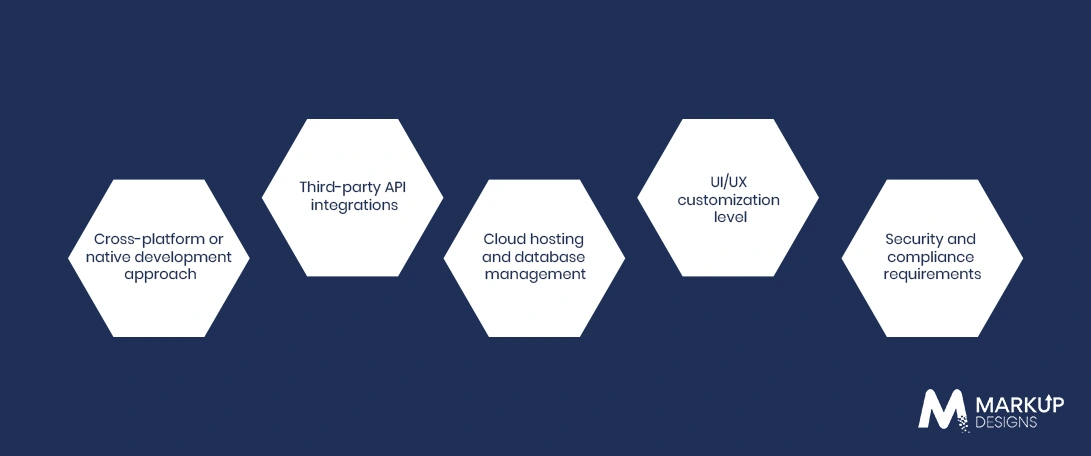
- Cross-platform or native development approach
- Third-party API integrations
- Cloud hosting and database management
- UI/UX customization level
- Security and compliance requirements
Modern enterprises now prefer cross-platform shopping app development cost optimization using frameworks like Flutter and React Native to reduce development time while maintaining app performance across Android and iOS platforms.
Tech Stack Commonly Used in Apps Like Noon
Choosing the right technology stack is one of the most important decisions while developing a shopping platform. A strong tech foundation helps improve app performance, security, scalability, and long-term maintenance.
Most modern e-commerce platforms in the Middle East use technologies that support high traffic, real-time updates, and seamless user experiences.
Frontend Technologies
Used for creating responsive and interactive mobile interfaces:
- Flutter
- React Native
- Swift for iOS
- Kotlin for Android
These frameworks are widely preferred for reducing the overall mobile app development pricing in UAE while maintaining smooth cross-platform performance.
Backend Technologies
Responsible for handling server-side operations and app logic:
- Node.js
- Laravel
- Java
- Python
Database & Cloud Infrastructure
These technologies help manage large-scale product catalogs and user data:
- MongoDB
- MySQL
- PostgreSQL
- AWS
- Microsoft Azure
- Google Cloud
Third-Party Integrations
Modern shopping apps also require external integrations such as:
- Payment gateways
- Shipping and logistics APIs
- CRM tools
- Analytics platforms
- Customer support systems
A technology stack becomes even more important for platforms targeting GCC markets because growing traffic and real-time transactions can directly impact the overall estimation cost to build a shopping app in the Middle East.
Cost Breakdown of Developing an E-commerce App Like Noon
The total development cost of an e-commerce app depends on several factors including feature app complexity, technology stack, UI/UX quality, integrations, scalability requirements, and deployment approach. A basic shopping app will cost significantly less than an enterprise-level marketplace platform like Noon.
For companies entering GCC markets, localization requirements such as Arabic language support, regional payment gateways, VAT compliance, and advanced logistics systems can further increase the overall e-commerce app development cost.
Estimated Cost Breakdown
| App Complexity | Features Included | Estimated Cost Range | Development Timeline |
| Basic App | Product listing, login/signup, cart, payment integration | $15,000 – $35,000 | 2–4 Months |
| Medium Complexity App | Multi-vendor support, real-time tracking, notifications, analytics | $35,000 – $80,000 | 4–7 Months |
| Advanced App Like Noon | AI recommendations, cloud scalability, advanced analytics, multilingual system, logistics integrations | $80,000 – $200,000+ | 7–12 Months |
Major Factors Affecting Development Cost
Some of the biggest factors influencing the app development cost like Noon include:
- App complexity and feature requirements
- Cross-platform or native development
- UI/UX customization level
- Backend infrastructure and cloud hosting
- API and third-party integrations
- Security implementation and compliance standards
- Maintenance and post-launch updates
Another major factor impacting the mobile app development cost in Dubai is the development team’s location and expertise. UAE-based agencies often charge higher rates due to premium infrastructure, experienced developers, and enterprise-grade delivery standards.
Many startups now prefer MVP-based development strategies to optimize the on-demand app development cost before scaling into full-featured marketplace infrastructure.
Key Obstacles in Building Modern E-commerce Apps
Building an e-commerce app in the Middle East is not only about creating an attractive shopping interface. Modern platforms must handle scalability, security, logistics, and customer expectations simultaneously. As competition continues to grow, companies are facing several technical and operational challenges during development.
Some of the biggest challenges include:
- Managing real-time inventory and order synchronization
- Integrating regional payment gateways securely
- Building multilingual interfaces for Arabic and English users
- Ensuring fast app performance during peak traffic
- Handling logistics and delivery tracking systems
- Maintaining strong cybersecurity and data protection
- Creating personalized shopping experiences using AI
At the same time the other challenge is scalability. Many startups initially launch with limited features but later struggle to manage growing user traffic and transaction volumes. This is why choosing the right architecture becomes essential for long-term e-commerce app development planning.
User expectations are also evolving rapidly. Customers now demand instant search results, one-click payments, real-time notifications, and hassle-free UI/UX experiences. Meeting these standards can significantly influence the e-commerce app features cost breakdown during development.
Additionally, companies entering GCC markets must comply with regional regulations, localization standards, and VAT requirements, which can further increase development complexity and overall project timelines.
Why Partner with Markup Designs for E-commerce App Development?
Building a successful e-commerce platform requires more than just mobile app development. Companies need scalable architecture, smooth user experiences, cloud infrastructure, AI capabilities, and long-term technical support to compete in the growing Middle Eastern digital commerce market.
Markup Designs helps brands develop high-performance e-commerce applications designed specifically for modern GCC market demands. With strong expertise in mobile technologies, AI-driven systems, and enterprise-grade development, the company focuses on building digital commerce frameworks for startups and growing enterprises.
Some key reasons why companies choose Markup Designs include:
- Expertise in scalable mobile and web commerce platforms
- Experience with AI-powered personalization systems
- Strong focus on UI/UX enhancement and user engagement
- Cross-platform development using Flutter and React Native
- Secure payment gateway and third-party API integrations
- Cloud-native architecture for high scalability
- Agile development approach with transparent execution
- Support for multilingual platforms including Arabic and English
The company also understands the regional requirements of UAE market, including localization, logistics integrations, and evolving customer expectations. This helps organizations optimize their e-commerce app development cost planning while building future-ready shopping platforms.
With strong expertise in digital product engineering and modern technologies, Markup Designs helps brands build reliable and high-performing commerce applications across the GCC region.
Future Trends in Middle East E-commerce Apps
The e-commerce industry in the Middle East is expected to evolve rapidly in the coming years as companies invest in AI, automation, and immersive shopping experiences. Users today rarely tolerate slow checkout experiences or delayed delivery updates, especially in UAE and Saudi Arabia markets. directly through mobile platforms.
Some key trends that will shape the future of digital commerce in the GCC region include:
- AI-powered product recommendations and smart search
- Voice-enabled shopping experiences
- AR-based product previews for fashion and furniture
- Hyperlocal delivery and quick commerce platforms
- Blockchain-powered secure payment systems
- Personalized customer engagement using predictive analytics
- Growth of social commerce and live shopping experiences
Another major shift will come from cloud-native apps that can handle large-scale user traffic during seasonal sales and regional shopping festivals. This is expected to increase demand for advanced strategies that help reduce cross-platform shopping app development cost among startups and enterprises.
As competition grows, companies focusing on scalability, automation, and smooth user experiences will gain a stronger market advantage across UAE and the wider Middle East region.
Ready to Build Your E-commerce App in 2026?
Create a powerful mobile commerce platform with advanced features, seamless user experiences, multilingual support, and secure payment integrations designed for growing GCC digital markets.

Conclusion
The Middle East e-commerce market is growing rapidly, and mobile shopping apps are becoming an essential part of online retail. Features like AI-based recommendations, multilingual support, cloud infrastructure, and real-time delivery tracking are now important for creating smooth and modern shopping experiences.
The final e-commerce app development cost in the Middle East in 2026 will depend on factors such as app features, technology stack, integrations, infrastructure, and scalability requirements. While basic shopping apps can be developed within a moderate budget, advanced platforms like Noon require higher investment for security, performance, and user experience.
As UAE and GCC digital markets continue to expand, companies focusing on strong technology, smooth customer experiences, and long-term innovation will have better growth opportunities in this competitive market.
FAQs
1. How much does it cost to develop an e-commerce app like Noon?
The overall app development cost like Noon in UAE can range from $15,000 for basic apps to over $200,000 for enterprise-level marketplace platforms with AI, cloud infrastructure, and advanced logistics integrations.
2. What factors affect e-commerce app development pricing?
Major factors include app complexity, platform selection, UI/UX design, backend infrastructure, cloud hosting, third-party integrations, and scalability requirements.
3. Which technology is best for developing shopping apps?
Frameworks like Flutter and React Native are widely preferred because they help optimize cross-platform app development cost while maintaining smooth performance across Android and iOS devices.
4. How long does it take to build an e-commerce app?
Development timelines usually range between 3 to 12 months depending on features, integrations, testing requirements, and app complexity.
5. Why is the Middle East becoming a major e-commerce market?
Rapid smartphone adoption, digital payment growth, government-led digital transformation initiatives, and increasing online shopping behavior are driving massive growth across the GCC digital commerce network.
Author's Perspective
Over the years, the Middle East has transformed into one of the most promising regions for digital commerce innovation. What makes this market unique is the combination of high smartphone adoption, evolving consumer behavior, and strong digital infrastructure. Platforms like Noon have already demonstrated the region’s potential for commerce ecosystems. In 2026 and beyond, companies investing in intelligent, user-focused, and reliable mobile applications will be better positioned to compete in this rapidly evolving digital landscape.
Discuss Your Project NowAjit Kumar Jha
VP - Business Operations
Related Posts

Cost to Build a Mobile App in Qatar...

How Much Does It Cost to Build an...

How to Build a Car Wash App: Development...
Insights Are Valuable & Execution is Priceless
You’ve read about the digital future. Now, let’s build the infrastructure to take you there. Move your strategy from the page to the product.
Design Your Solution Now
Contact Us
Schedule The Appointment At Your Convenience Date And Time.
30 Min
Web Conference
Time Zone
Indian standard time (08:30pm)

Thanks For Getting In Touch!
You’ve Taken The First Step Toward Transforming Your Digital Presence. Our Experts Will Reach Out Shortly To Take It Forward.
Launch Your Dream Project
Provide a brief overview of your project, and our specialists will evaluate your requirements. We will connect with you to explore how the right digital solutions can help you launch faster.