

In Brief
- Cross-platform app development allows businesses to create a single application that works across multiple operating systems, like iOS and Android, using one shared codebase.
- It helps reduce development costs, speed up launch timelines, simplify maintenance, and improve scalability.
- Businesses increasingly prefer cross-platform frameworks like Flutter and React Native to deliver consistent user experiences across devices.
- Cross-platform development is ideal for startups, MVPs, e-commerce platforms, enterprise applications, service apps, and customer-facing digital platforms.
- Modern frameworks now offer near-native performance, advanced UI capabilities, API integrations, and cloud scalability.
- While highly effective for most applications, cross-platform development may not be suitable for graphics-intensive gaming or hardware-dependent systems.
- As businesses continue prioritizing faster digital transformation and scalable mobile ecosystems, cross-platform development is becoming one of the most practical app development approaches globally.
The mobile app industry has evolved far beyond simply creating applications for smartphones. Today, mobile apps have become a core part of how businesses operate, engage customers, manage services, and compete in digital markets. From e-commerce and banking to healthcare, logistics, education, and entertainment, users now expect seamless mobile experiences across every device they use.
As mobile demand rapidly increased over the last decade, businesses also faced a growing challenge. Developing separate applications for iOS and Android required larger budgets, longer timelines, multiple development teams, and continuous maintenance efforts. This made mobile expansion costly and operationally complex, especially for startups and businesses trying to scale quickly. Cross-platform app development emerged as a practical solution to this problem by allowing companies to build applications for multiple platforms using a shared codebase while maintaining consistent performance and user experience.
Understanding Cross-Platform App Development
Cross-platform app development refers to the process of building mobile applications that can run on multiple operating systems, primarily iOS and Android, using a single codebase. Instead of creating separate native applications for each platform, developers use specialized frameworks that allow one shared application structure to function across different devices and operating systems.
Traditionally, businesses relied on native development, where applications were developed separately using platform-specific technologies. iOS apps were built using Swift or Objective-C, while Android applications were developed using Java or Kotlin. Although native development provided strong performance and deep hardware integration, it also significantly increased development complexity, operational costs, and maintenance efforts.
Cross-platform development changed this model by introducing frameworks capable of translating shared code into platform-compatible applications. This allowed businesses to reduce duplication during development while accelerating deployment timelines.
Today, modern frameworks like Flutter and React Native have transformed cross-platform development into a scalable and highly practical solution for modern mobile ecosystems.
The Evolution of Mobile App Development
In the early stages of the smartphone industry, native development dominated the market because mobile operating systems had limited compatibility and framework support. Businesses aiming to provide apps on both Android and iOS had no option except to build entirely separate products for each platform.
This approach worked initially because the app economy itself was still growing. However, as smartphone adoption accelerated globally, the pressure on businesses increased significantly. Customers no longer interact with brands through only websites or desktop systems. Mobile apps became the primary digital touchpoint for communication, transactions, bookings, entertainment, shopping, and customer support.
At the same time, customer expectations also evolved rapidly. Users expected:
- Faster applications
- Real-time responsiveness
- Seamless interfaces
- Frequent updates
- Cross-device compatibility
- Stable experiences across platforms
Maintaining multiple native applications became increasingly difficult for businesses trying to meet these expectations while managing operational efficiency.
This shift created strong demand for development approaches that could simplify mobile expansion without compromising usability. Cross-platform frameworks emerged as the ideal middle ground between scalability, speed, and cost efficiency.
Over the years, framework technology improved dramatically. Earlier cross-platform systems often suffered from limited performance, poor responsiveness, and inconsistent interfaces. However, modern development frameworks now provide near-native performance capabilities, making cross-platform applications suitable for a large percentage of business use cases.
Why Businesses are Investing in Cross-Platform Development
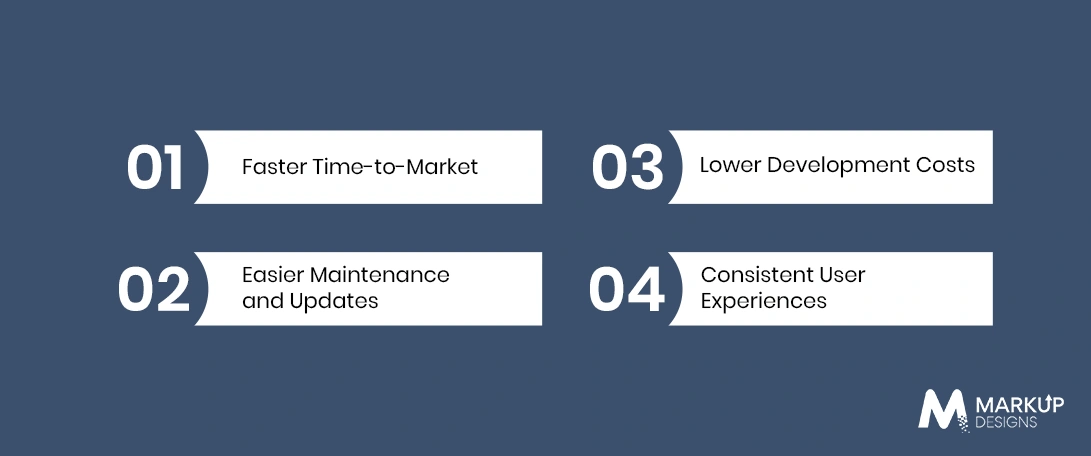
The growing adoption of cross-platform app development is directly linked to changing business priorities and digital transformation strategies.
Organizations today are focused on:
- Faster product launches
- Reduced operational costs
- Wider audience reach
- Faster scalability
- Improved customer experiences
- Efficient long-term maintenance
Cross-platform development supports these goals by simplifying how applications are developed and maintained.
1. Faster Time-to-Market
One of the biggest advantages of cross-platform development is reduced development time. Businesses can simultaneously launch applications on both Android and iOS without building separate products from scratch.
This significantly improves:
- Product launch speed
- Market entry timelines
- Competitive positioning
- Customer acquisition opportunities
For startups and growing businesses, faster launch cycles can directly influence market success and investor confidence.
2. Lower Development Costs
Building native applications separately requires:
- Independent development teams
- Separate testing cycles
- Platform-specific maintenance
- Duplicate feature development
Cross-platform development reduces these operational burdens through shared architecture and reusable code.
As a result, businesses can optimize budgets while maintaining strong product quality.
3. Easier Maintenance and Updates
Managing updates across multiple native applications can become time-consuming and expensive. Every feature addition, bug fix, or interface update often requires separate implementation processes.
Cross-platform applications simplify this workflow because developers can deploy updates across platforms through a shared codebase.
This improves:
- Maintenance efficiency
- Product consistency
- Long-term scalability
- Development productivity
4. Consistent User Experiences
Modern consumers interact with brands across multiple devices. Cross-platform frameworks help maintain:
- Consistent design systems
- Unified interfaces
- Similar navigation structures
- Stable functionality across platforms
This consistency strengthens brand identity while improving user familiarity and engagement.
Popular Cross-Platform Frameworks

Several frameworks currently dominate the cross-platform development ecosystem, each offering different strengths depending on project requirements.
Flutter
Flutter, developed by Google, is one of the fastest-growing cross-platform frameworks globally. It uses the Dart programming language and is known for its high-performance rendering engine and flexible UI capabilities.
Flutter offers:
- Smooth animations
- Fast rendering performance
- Customizable interfaces
- Strong scalability
- Consistent design systems
Businesses often choose Flutter for visually rich applications requiring scalable architecture and responsive user experiences.
React Native
React Native, developed by Meta, allows developers to build mobile applications using JavaScript and React-based components.
Its popularity comes from:
- Faster development cycles
- Strong developer community
- Reusable components
- Large ecosystem support
- Easier hiring opportunities
Many startups and enterprises use React Native to accelerate mobile development while maintaining flexibility and scalability.
Xamarin
Xamarin, backed by Microsoft, is commonly used for enterprise applications requiring .NET integration and Microsoft ecosystem compatibility.
It supports:
- Shared business logic
- Enterprise-grade security
- Strong backend integration
- Multi-platform deployment
Ionic
Ionic is another cross-platform framework primarily based on web technologies such as HTML, CSS, and JavaScript.
It is widely used for:
- Lightweight applications
- Hybrid mobile systems
- Rapid prototyping
- Web-to-mobile transitions
However, Ionic is generally less performance-focused compared to Flutter or React Native.
Read Also: Mobile App Development: Complete Guide for Businesses
Cross-Platform vs Native App Development
Understanding the difference between native and cross-platform development is essential when selecting the right approach for a mobile project.
Native Development
Native apps are built specifically for one operating system using platform-specific programming languages and tools.
Advantages include:
- Maximum performance optimization
- Better hardware integration
- Advanced graphics capabilities
- Platform-specific customization
However, native development also introduces:
- Higher development costs
- Longer project timelines
- Increased maintenance complexity
- Larger technical teams
Cross-Platform Development
Cross-platform development focuses on shared architecture capable of running across multiple operating systems.
Its key advantages include:
- Faster development
- Reduced costs
- Easier maintenance
- Unified code management
- Faster scalability
Although modern frameworks provide near-native performance, certain highly advanced applications may still benefit more from native environments.
The right approach ultimately depends on business goals, technical requirements, scalability expectations, and operational priorities.
Industries Successfully Using Cross-Platform Apps
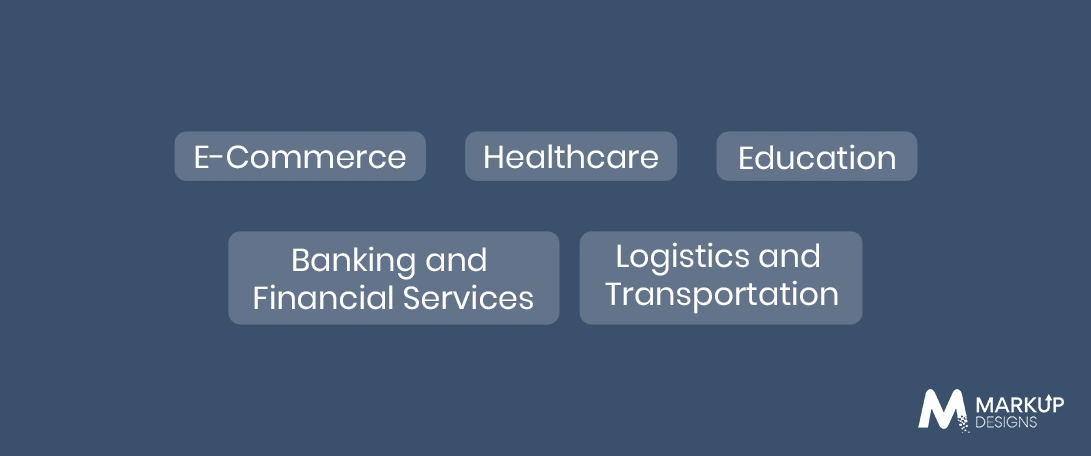
Cross-platform development is now widely used across multiple industries because of its scalability and operational efficiency.
E-Commerce
Retail businesses use cross-platform applications for:
- Online shopping platforms
- Payment integrations
- Customer engagement
- Order tracking
- Loyalty programs
These businesses prioritize accessibility and rapid scalability across devices.
Healthcare
Healthcare providers increasingly use cross-platform applications for:
- Telemedicine
- Patient management
- Appointment booking
- Medical record access
- Virtual consultations
The ability to provide consistent mobile experiences across platforms is particularly important in healthcare accessibility.
Education
Educational institutions and EdTech companies use cross-platform development for:
- Learning management systems
- Online classes
- Student collaboration tools
- Digital assessments
- Mobile learning platforms
Logistics and Transportation
Logistics companies rely on mobile applications for:
- Fleet tracking
- Route optimization
- Delivery management
- Warehouse coordination
- Real-time communication
Cross-platform frameworks help maintain operational consistency across distributed mobile environments.
Banking and Financial Services
Financial institutions use mobile applications for:
- Digital banking
- Transaction management
- Investment tracking
- Customer support
- Financial analytics
While security-sensitive components may involve native integrations, cross-platform systems still support many customer-facing functionalities.
When Businesses Should Choose Cross-Platform Development
Cross-platform development works best when businesses prioritize scalability, speed, and efficient resource utilization.
Startups and MVP Development
Startups often use cross-platform frameworks to launch Minimum Viable Products (MVPs) quickly while minimizing development expenses.
This helps businesses:
- Validate ideas faster
- Gather user feedback early
- Reduce funding pressure
- Accelerate market entry
Businesses Requiring Faster Expansion
Organizations aiming to expand rapidly across multiple user segments benefit from simultaneous platform deployment.
Cross-platform development simplifies this process significantly.
Applications Focused on User Interactions and Workflows
Applications primarily centered around:
- Data management
- User interactions
- APIs
- Service delivery
- Customer engagement
They are often highly compatible with cross-platform architecture.
Businesses Seeking Long-Term Cost Efficiency
Cross-platform development reduces ongoing maintenance and operational complexity, making it attractive for businesses managing scalable digital ecosystems.
Situations Where Native Development May Be Better
Although cross-platform development is highly effective for most business applications, certain projects still benefit more from native environments.
High-Performance Gaming
Games involving:
- Advanced graphics rendering
- Real-time multiplayer systems
- Intensive GPU processing
Typically, they require native optimization.
AR and VR Applications
Augmented reality and virtual reality applications often depend heavily on hardware-level integrations that native systems handle more efficiently.
Hardware-Dependent Systems
Applications requiring deep device control, advanced camera processing, or low-level hardware optimization may perform better natively.
However, these use cases represent a relatively smaller portion of overall mobile applications globally.
The Future of Cross-Platform App Development
The future of mobile development is increasingly moving toward unified ecosystems and scalable digital infrastructures.
Businesses are now looking beyond standalone applications and focusing on connected digital environments involving:
- Mobile apps
- Web applications
- Cloud platforms
- AI integrations
- IoT systems
- Real-time analytics
Cross-platform frameworks are evolving rapidly to support these broader ecosystems.
For example, Flutter now supports:
- Mobile App development
- Web Applications Development
- Desktop Systems
- Embedded devices
This allows businesses to manage larger digital ecosystems through more centralized development strategies.
The integration of AI, cloud computing, automation, and scalable APIs is also making cross-platform applications more intelligent and adaptive.
As framework performance continues improving, the distinction between native and cross-platform experiences will likely become even smaller in the coming years.
Why Choosing the Right Development Partner Matters
Building a successful cross-platform application is not only about selecting frameworks like Flutter or React Native. The real challenge lies in how efficiently the application is planned, developed, optimized, and scaled over time. Many businesses launch apps quickly but later struggle with performance issues, poor scalability, inconsistent user experiences, and difficult maintenance cycles because the development process lacked long-term technical planning.
A strong development partner helps businesses move beyond basic app creation by focusing on both technical performance and business growth objectives. This becomes especially important for companies aiming to scale their mobile platforms across growing customer bases and evolving digital ecosystems.
Businesses often look for development teams that can support:
- Scalable cross-platform architecture
- Faster development and deployment cycles
- Consistent UI/UX across devices
- Smooth API and cloud integrations
- Long-term app maintenance and upgrades
- Performance optimization and security
- Future-ready mobile scalability
Companies like Markup Designs work closely with businesses to develop cross-platform applications that combine functionality, scalability, modern design systems, and operational efficiency. Whether it is an MVP for a startup or a large-scale enterprise application, having the right development strategy plays a major role in determining how effectively an app performs in competitive digital markets.
FAQs
1. What is the main difference between cross-platform and native app development?
Native apps are built separately for iOS and Android, which takes more time and money. Cross-platform apps use one shared codebase that works on both platforms, making development faster, cheaper, and easier to maintain without sacrificing quality for most business needs.
2. Is cross-platform development suitable for my startup or MVP?
Absolutely. It lets you launch on both iOS and Android at the same time, with lower costs and faster timelines. This means you can test your idea in the market sooner and make improvements based on real user feedback without burning through your budget.
3. How do Flutter and React Native differ, and which should I choose?
Flutter is great for apps that need rich visuals and smooth animations. React Native works well when you want faster development using JavaScript. The best choice depends on your project needs, and a good development partner can help you make the right call.
4. Will a cross-platform app perform as well as a native app?
For most business apps — whether it’s e-commerce, healthcare, or fintech — yes, the performance difference is barely noticeable. Native development only has a clear edge for very specific use cases like advanced gaming, AR/VR, or deep hardware integrations.
5. How much can businesses save with cross-platform development?
Businesses typically save 30–50% on development costs by avoiding duplicate work across platforms. Maintenance becomes cheaper too, since any update or bug fix only needs to be done once and applies to both iOS and Android automatically.
Conclusion
Cross-platform app development has become one of the most practical and scalable approaches to modern mobile application development. As businesses continue prioritizing faster digital transformation, broader audience reach, and operational efficiency, the demand for shared development ecosystems continues to grow rapidly.
Instead of managing separate applications across multiple operating systems, businesses can now streamline development through unified frameworks capable of delivering consistent user experiences across devices.
Modern frameworks like Flutter and React Native have significantly improved performance, scalability, and design flexibility, making cross-platform development suitable for a wide range of industries and applications.
While certain advanced use cases may still require native vs cross-platform development now supports the majority of modern business applications effectively.
As digital ecosystems continue expanding globally, businesses that prioritize scalable, efficient, and adaptable mobile strategies will be better positioned to compete in an increasingly mobile-first economy.

Author's Perspective
Deciding on a software stack is a long-term business commitment. In my experience advising growing enterprises, the question shouldn’t just be “How fast can we code this feature?” but rather “How easily can we maintain, update, and scale this ecosystem over the next five years?” Cross-platform development solves this modern maintenance puzzle. By selecting the right framework and building on a clean, decoupled architecture, companies remove the operational drag of running dual native codebases, turning mobile development into a lean, highly responsive catalyst for business growth.
Discuss Your Project NowJupinder Singh Arora
Founder and CEO
Related Posts
How to Build a Car Wash App: Development...

Benefits of Mobile App Development for Businesses in...

Complete Guide to Hiring Mobile App Developers in...
Insights Are Valuable & Execution is Priceless
You’ve read about the digital future. Now, let’s build the infrastructure to take you there. Move your strategy from the page to the product.
Design Your Solution Now
Contact Us
Schedule The Appointment At Your Convenience Date And Time.
30 Min
Web Conference
Time Zone
Indian standard time (08:30pm)

Thanks For Getting In Touch!
You’ve Taken The First Step Toward Transforming Your Digital Presence. Our Experts Will Reach Out Shortly To Take It Forward.
Launch Your Dream Project
Provide a brief overview of your project, and our specialists will evaluate your requirements. We will connect with you to explore how the right digital solutions can help you launch faster.