
Native vs Cross-Platform Apps: Best Choice for UAE Businesses
In Brief
- UAE businesses are rapidly investing in mobile apps due to growing smartphone usage and digital transformation.
- The biggest challenge for companies is choosing between native and cross-platform app development.
- Native apps provide better performance, security, and device integration but require higher investment and separate development teams.
- Cross-platform apps help startups reduce development cost and launch faster using a single codebase.
- Frameworks like Flutter and React Native are becoming highly popular for modern business applications.
- Native apps are best suited for fintech, gaming, AR/VR, and performance-heavy applications.
- Cross-platform development works well for startups, ecommerce apps, booking platforms, and enterprise workflow solutions.
“Should we build separate apps for Android and iPhone or is there a smarter option?”
This is one of the most common questions businesses in UAE are asking today. From startups in Dubai to growing enterprises in Abu Dhabi, companies are under constant pressure to launch mobile apps faster without overspending on development and maintenance.
A few years ago, organizations mostly preferred native apps because they offered better performance and smoother user experiences. But the challenge was cost. Building two separate apps meant hiring two different teams, managing longer timelines, and handling double maintenance efforts. For many organizations, especially startups and SMEs, that approach became difficult to sustain.
That’s when demand for cross-platform app development in UAE began rising rapidly as more companies started adopting it. Instead of creating separate apps for iOS and Android, companies can now build a single application that works across multiple platforms while saving both time and investment.
But does that mean native apps are outdated? Not really. The real question is which approach actually fits your business goals, budget, and future scalability plans.
Understanding Native and Cross-Platform App Development
Before choosing between the two approaches, businesses first need to understand how both models actually work. Many companies in UAE jump directly into development without fully understanding the long-term impact of their decision. This often leads to higher costs, delayed launches, and scalability issues later.
In simple terms, native apps are built separately for each operating system. For example, an iOS app is developed using Swift, while Android apps are built using Kotlin or Java. This approach gives companies better performance, smoother animations, and deeper access to device features. That’s why many enterprises in UAE still prefer native app development solutions for high-performance applications.
Cross-platform apps work differently. Instead of building two separate apps, developers use a single codebase that runs on both Android and iOS platforms. Frameworks like Flutter and React Native have made this approach highly popular because startups can launch faster while reducing development costs.
Today, most businesses working with a mobile app development company in UAE ask the same question: which approach is better? The answer depends on goals, budget, scalability needs, and user expectations.
The debate around cross-platform vs native apps is no longer just about performance. Enterprises are now evaluating maintenance costs, future upgrades, launch speed, and long-term operational efficiency before making a decision.
Native Apps vs Cross-Platform Apps: Core Difference Explained
For many UAE organizations, the decision usually comes down to one thing – “Do we want better performance or faster and more affordable development?”
That is where the real comparison between native and cross-platform apps begins.
A native app is built separately for Android and iOS, which means developers create two different versions of the same app. This approach gives enterprises excellent speed, smoother performance, and stronger device optimization. However, it also increases development time and cost.
On the other hand, cross-platform development allows businesses to build one app for both platforms using a single codebase. UAE-based companies now widely use modern frameworks like Flutter App Development and React Native App Development solutions, which have completely transformed the market. Businesses can now launch apps faster without sacrificing too much on quality or user experience.
Here’s a simple comparison to understand the difference better:
| Factor | Native Apps | Cross-Platform Apps |
| Development Speed | Slower | Faster |
| Development Cost | Higher | More budget-friendly |
| Performance | Excellent | Very Good |
| Maintenance | Separate updates for both platforms | Single update cycle |
| User Experience | Highly optimized | Consistent across platforms |
| Scalability | Strong | Strong for most business apps |
| Best For | Gaming, fintech, AR apps | Startups, ecommerce, enterprise apps |
A few years ago, cross-platform apps struggled with performance issues. But things are very different now. Frameworks like Flutter and React Native have become much more advanced, making them suitable even for enterprise mobile app development that businesses in UAE are investing in today.
That’s why many startups and growing companies now prefer cross-platform development because it helps them:
- Launch faster in UAE market
- Reduce overall app development costs
- Manage updates more easily
- Reach both Android and iPhone users together
- Scale operations without maintaining two separate apps
Still, native apps continue to dominate industries where performance is critical. For example:
- Banking apps
- Real-time trading platforms
- Heavy gaming applications
- AR/VR-based solutions
In simple words, there is no single winner in the debate between native and cross-platform apps. The better option depends completely on your business goals, target audience, budget, and long-term growth strategy.
UAE Market Statistics Every Business Should Know
UAE mobile app market is growing faster than many businesses expected. Today, companies are not just building apps for visibility, they are building apps to improve customer experience, automate operations, and increase revenue.
Here are some real numbers that explain why companies are investing heavily in mobile app development:
- UAE has approximately 10.8 million active smartphone users in 2026, representing nearly 95% of the country’s population, making it one of the world’s most digitally connected markets.
- UAE mobile app market reached nearly $1.8 billion in 2026 with around 18% annual growth, especially in fintech, ecommerce, logistics, and enterprise applications.
- According to recent developer surveys, 46% of developers globally now use Flutter, making it one of the most preferred frameworks for cross-platform app development.
- In UAE, over 40% of development agencies actively use React Native for cross-platform mobile applications because of its faster deployment and cost efficiency.
- Smartphone penetration in UAE has already crossed 96%, making mobile apps one of the strongest digital channels for businesses.
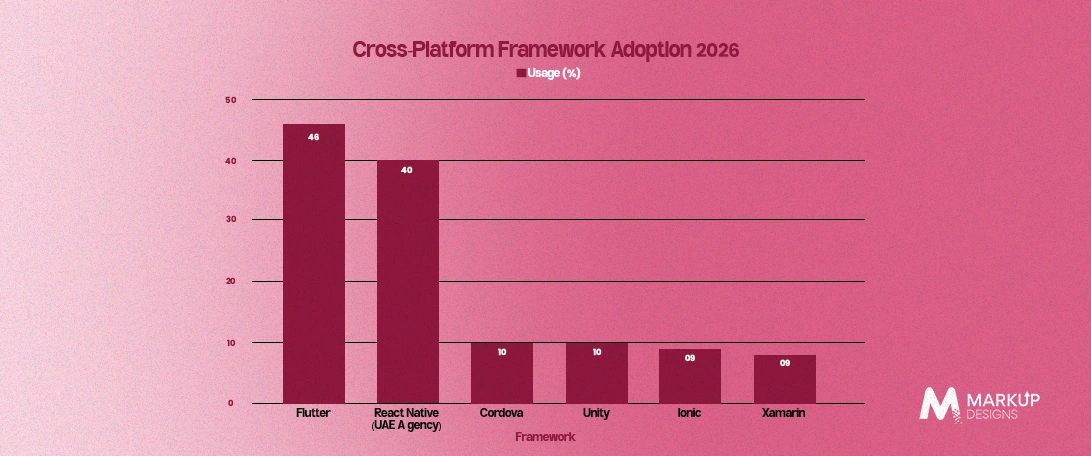
These numbers clearly show one thing, UAE enterprises are moving towards faster, scalable, and more cost-effective app solutions. That’s one of the biggest reasons why cross-platform frameworks like Flutter and React Native are becoming highly popular across startups, SMEs, and even large enterprises.
When Native Apps are the Better Choice for UAE Businesses
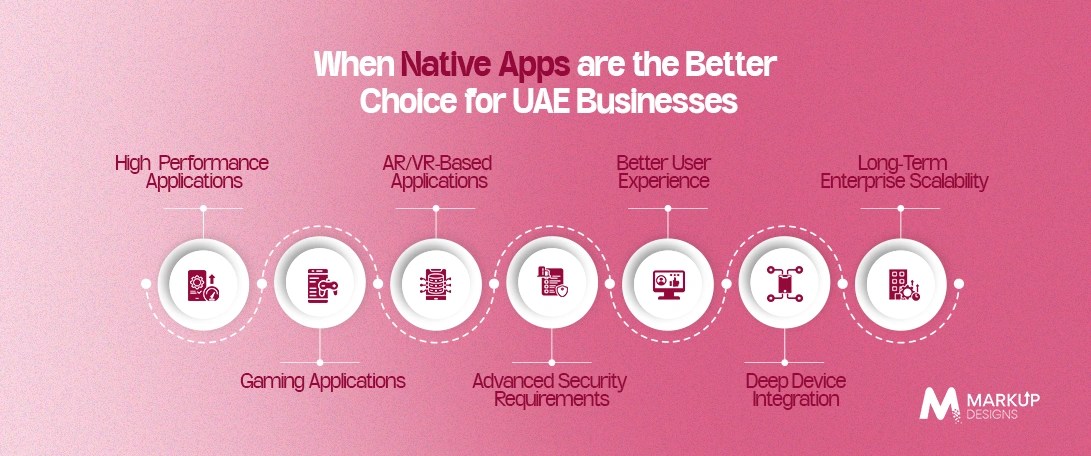
Even though cross-platform development is growing rapidly, there are still many situations where native apps become the smarter choice. Organizations that prioritize performance, speed, and advanced functionality often invest in native app development solutions for long-term reliability in UAE.
Here are the situations where native apps make more sense:
- High-Performance Applications
Apps that process large amounts of data in real time usually perform better with native development. Examples include trading platforms, live streaming apps, and advanced fintech applications. - Gaming Applications
Mobile games require faster graphics rendering, smoother animations, and lower lag. Native apps provide better performance for gaming experiences. - AR/VR-Based Applications
Industries like real estate, healthcare, and retail in UAE are increasingly using AR and VR technologies. Native apps integrate better with device hardware and advanced features. - Advanced Security Requirements
Banking, fintech, and healthcare apps often require stronger security layers and deeper encryption support. Native development offers better control over security implementation. - Better User Experience
Native apps usually feel smoother because they are designed specifically for a single operating system. This helps startups deliver premium user experiences. - Deep Device Integration
Features like GPS tracking, camera controls, biometric authentication, and NFC payments work more efficiently in native apps. - Long-Term Enterprise Scalability
Large enterprises with complex workflows often choose native development for better customization and flexibility.
At the same time, many businesses combine native capabilities with modern frameworks like React Native app development for selected modules to reduce development effort while maintaining performance balance.
When Cross-Platform Apps Make More Sense
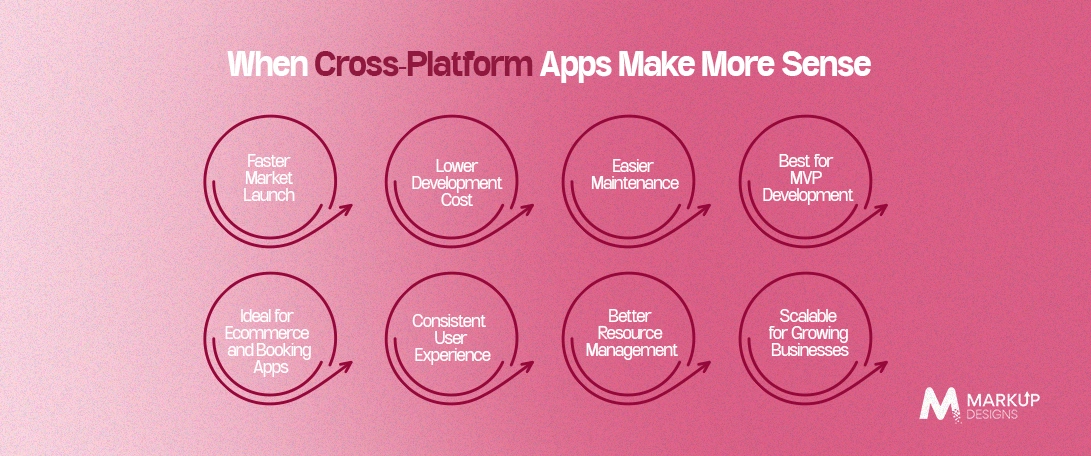
For many startups and growing businesses, speed and budget matter just as much as performance. That’s one of the biggest reasons why cross-platform app development is becoming the preferred choice for modern organizations in UAE .
Instead of building separate apps for Android and iOS, companies can launch both platforms together while reducing development and maintenance costs.
Here’s when cross-platform apps become the better option:
- Faster Market Launch
Businesses can release apps much quicker because developers work with a single codebase instead of building two separate applications. - Lower Development Cost
Startups and SMEs often prefer cross-platform development because it reduces overall project expenses compared to native development. - Easier Maintenance
Updates, bug fixes, and feature improvements can be managed together, making long-term maintenance simpler and more cost-effective. - Best for MVP Development
Enterprises testing new app ideas can launch faster and validate their products before making larger investments. - Ideal for Ecommerce and Booking Apps
Most ecommerce, delivery, booking, and service-based apps do not require heavy native processing, making cross-platform development a practical choice. - Consistent User Experience
Businesses can maintain similar designs and functionality across both Android and iOS platforms. - Better Resource Management
Companies can manage one development team instead of hiring separate Android and iOS teams. - Scalable for Growing Enterprises
Modern frameworks like Flutter app development and React Native app development now support scalable enterprise applications, making them suitable for long-term growth.
In the UAE, enterprises investing in custom mobile app solutions are increasingly opting for cross-platform frameworks as they make development faster, more affordable, and still maintain a smooth user experience.
Mobile App Development Cost in UAE: Native vs Cross-Platform
One of the biggest factors businesses consider before starting an app project is budget. The overall mobile app development cost that UAE businesses pay usually depends on app complexity, features, development approach, integrations, and long-term maintenance requirements.
In most cases, native apps cost more because companies need separate development for Android and iOS platforms. Cross-platform apps are usually more affordable because developers work with a single codebase.
Here’s a simple cost comparison:
| App Type | Native App Cost | Cross-Platform App Cost |
| Basic MVP App | $ 40,000 – $ 80,000 | $ 30,000 – $ 60,000 |
| Medium Complexity App | $ 90,000 – $ 180,000 | $ 70,000 – $ 120,000 |
| Enterprise-Level App | $ 200,000+ | $ 150,000+ |
However, development cost is not just about the initial investment. Many businesses forget to calculate long-term expenses like maintenance, feature upgrades, testing, and scalability.
Here are a few important things startups should consider before finalizing their app development strategy:
- Native apps require separate maintenance for Android and iOS versions
- Cross-platform apps reduce update costs because one team manages both platforms
- Complex integrations like AI, real-time analytics, or AR features can increase development expenses
- UI/UX customization also affects the total project cost
- Security and compliance requirements may require additional investment
Another important factor is future scalability. Businesses planning long-term digital growth in UAE usually invest in scalable mobile app development solutions that can handle increasing users, integrations, and operational expansion without rebuilding the app later.
Which Option Offers Better Scalability for UAE Enterprises?
Scalability has become one of the biggest priorities for modern businesses in UAE. Companies no longer build apps just for current users – they build them for future growth, expanding operations, and increasing customer demand.
A few years ago, native apps were considered the only reliable option for large-scale enterprise systems. But modern frameworks have changed the market significantly. Today, many startups in UAE are investing in enterprise mobile app development solutions and are also considering cross-platform technologies because they have become faster, more stable, and highly scalable.
Here’s what enterprises usually evaluate before choosing a scalable app architecture:
- Future user growth capacity
- Cloud integration support
- AI and automation compatibility
- Third-party API integration
- Security and compliance requirements
- Long-term maintenance efficiency
Native apps still provide stronger performance for highly complex applications. However, modern cross-platform frameworks can now support most enterprise-level business operations efficiently.
The key is choosing an architecture who supports your business expansion without increasing operational complexity later.
Common Mistakes UAE Businesses Make While Choosing App Development Approach
Many businesses focus too much on short-term savings and ignore long-term business impact. This often creates scalability and maintenance problems after launch.
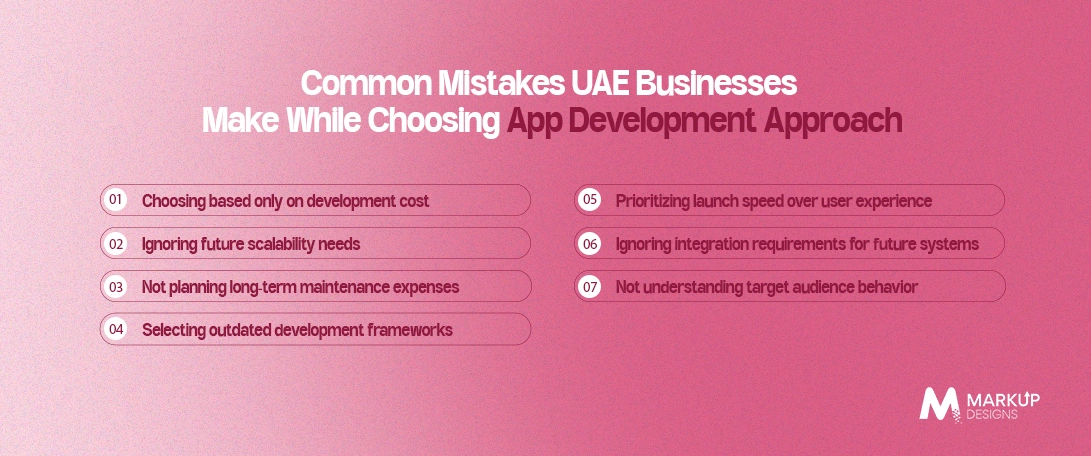
Here are some common mistakes companies make during the cross-platform vs native apps decision process:
- Choosing based only on development cost
- Ignoring future scalability needs
- Not planning long-term maintenance expenses
- Selecting outdated development frameworks
- Prioritizing launch speed over user experience
- Ignoring integration requirements for future systems
- Not understanding target audience behavior
Some companies also assume cross-platform automatically means lower quality, which is no longer true with modern frameworks like Flutter and React Native.
Read Also: Practical Guide to Developing Your First Mobile Apps
How to Decide Between Native and Cross-Platform Apps
There is no universal answer when choosing between native and cross-platform development. The better option depends entirely on your business model, timeline, audience expectations, and operational goals.
A reliable mobile app development company in UAE will usually analyze these factors before recommending the right development approach for businesses.
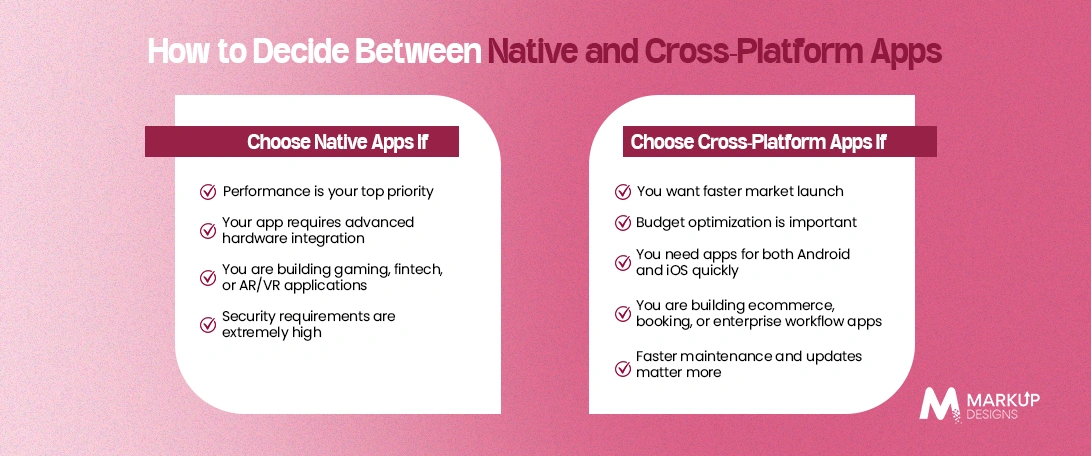
Choose Native Apps If
- Performance is your top priority
- Your app requires advanced hardware integration
- You are building gaming, fintech, or AR/VR applications
- Security requirements are extremely high
Choose Cross-Platform Apps If
- You want faster market launch
- Budget optimization is important
- You need apps for both Android and iOS quickly
- You are building ecommerce, booking, or enterprise workflow apps
- Faster maintenance and updates matter more
Future of Mobile App Development in UAE
UAE mobile app industry is evolving very quickly. Businesses are no longer building apps only for online presence. They are focusing on automation, AI integration, personalized experiences, and long-term digital growth.
In the coming years, several trends will shape the future of app development in the region:
- AI-powered mobile applications
- Voice-enabled user experiences
- Super apps with multiple services in one platform
- 5G-driven real-time experiences
- Cloud-native mobile ecosystems
- Smarter enterprise workflow automation
One major shift enterprises are now focusing on is scalable mobile app development provided by UAE companies, because future-ready apps need to handle growing users, advanced integrations, and changing customer expectations without performance issues.
Businesses that invest in flexible and future-ready app architecture today will have a stronger competitive advantage tomorrow.
Read Also: Future of AI in Digital Transformation in the Next Decade
Final Thoughts
There is no universal winner in the native vs cross-platform debate. Both approaches offer unique advantages depending on the type of business application you want to build.
Native apps are still the strongest choice for high-performance applications that require advanced device integration and premium user experiences. On the other hand, cross-platform development has become highly practical for startups, SMEs, ecommerce businesses, and enterprise workflow applications.
The most important thing is understanding your business goals before starting development. Factors like scalability, launch timeline, maintenance cost, target audience, and future integrations should always guide your decision.
More companies in the UAE are going for custom mobile app solutions because they want apps designed specifically for their operations, not ready-made templates.
Choosing the right app development approach today can directly impact your future scalability, operational efficiency, and customer experience.
FAQs
1. Which is better for UAE startups: native or cross-platform apps?
For most startups, cross-platform apps are usually more cost-effective and faster to launch. Native apps are better when performance and advanced functionality become the top priority.
2. How much does app development cost in UAE?
The overall mobile app development cost that UAE businesses pay depends on app complexity, features, integrations, and development approach. Basic apps may start around AED 30,000, while enterprise-level applications can exceed AED 200,000.
3. Are cross-platform apps scalable for enterprises?
Yes. Modern frameworks like Flutter and React Native now support enterprise-grade scalability, cloud integrations, and advanced app functionalities.
4. Which industries prefer native apps the most?
Industries like fintech, gaming, healthcare, and AR/VR applications usually prefer native development because of higher performance and security requirements.
5. Is Flutter better than native app development?
Flutter is excellent for faster development and cost optimization. However, native apps still perform better for highly complex and performance-heavy applications.

Author's Perspective
Businesses in UAE have become far more strategic about app development decisions. Earlier, the primary focus was on launching apps quickly, but now companies are paying closer attention to scalability, operational efficiency, and long-term maintenance. A reliable mobile app development company in the UAE today is expected to offer more than just development services. Businesses now look for technology guidance that supports future growth, changing user expectations, and long-term digital transformation goals.
Discuss Your Project NowGaurav Goyal
Global Sales- VP
Related Posts

How to Build an App Like Yuka: Features,...

10 Key Factors to Choose the Right Mobile...

Mobile App Development in Kuwait: Cost, Process, Features...
Insights Are Valuable & Execution is Priceless
You’ve read about the digital future. Now, let’s build the infrastructure to take you there. Move your strategy from the page to the product.
Design Your Solution Now
Contact Us
Schedule The Appointment At Your Convenience Date And Time.
30 Min
Web Conference
Time Zone
Indian standard time (08:30pm)

Thanks For Getting In Touch!
You’ve Taken The First Step Toward Transforming Your Digital Presence. Our Experts Will Reach Out Shortly To Take It Forward.
Launch Your Dream Project
Provide a brief overview of your project, and our specialists will evaluate your requirements. We will connect with you to explore how the right digital solutions can help you launch faster.