
Why Mobile Apps Are Driving Digital Transformation in the Middle East
In Brief
- Mobile apps are central to digital transformation in the Middle East, acting as the primary interface for customer engagement, services, and data-driven decision-making.
- High smartphone usage and strong connectivity (4G/5G) are accelerating mobile-first adoption across industries like retail, fintech, healthcare, and logistics.
- Apps enhance customer experience through personalization, real-time access, and seamless interactions, helping businesses build stronger relationships and retention.
- Operational efficiency improves as mobile apps automate processes, support remote workforces, and streamline supply chains.
- Government initiatives and smart city projects are further driving digital innovation, encouraging businesses to adopt scalable mobile solutions.
The Middle East is undergoing one of the fastest digital evolutions in the world. Over the past decade, the region has shifted from traditional, infrastructure-heavy systems to agile, technology-driven ecosystems. At the center of this transformation lies a powerful catalyst: Mobile Applications.
With smartphone penetration reaching some of the highest levels globally and internet accessibility expanding rapidly, mobile devices have become the primary gateway to digital services. From shopping and banking to healthcare and transportation, consumers across the Middle East increasingly rely on mobile apps to manage their daily lives.
What makes this shift particularly significant is that mobile apps are no longer just an extension of business operations; they are becoming the core of digital strategy. Companies are rethinking how they interact with customers, streamline operations, and scale their services, all through mobile-first approaches.
This transformation is not limited to one sector. Industries such as retail, fintech, healthcare, logistics, and real estate are leveraging mobile apps to improve efficiency, enhance customer engagement, and unlock new revenue streams.
In this blog, we will explore how mobile apps are driving digital transformation across the Middle East, the key factors behind their rapid growth, and what businesses must do to stay competitive in this evolving landscape.
Read Also: Digital Transformation Framework for Enterprise Growth
Understanding Digital Transformation in the Middle East
Digital transformation in today’s context goes far beyond simply digitizing existing processes. It involves a fundamental shift in how businesses operate, deliver value, and engage with customers. In the Middle East, this transformation is defined by the integration of advanced technologies such as artificial intelligence, cloud computing, big data analytics, and automation into core business functions.
Organizations are moving away from legacy systems and adopting digital-first strategies that allow for greater agility, scalability, and innovation. Mobile applications are a critical part of this shift, acting as the primary interface between businesses and their customers.
Rather than being a standalone channel, mobile apps now serve as a central hub where data, services, and customer interactions converge. This enables businesses to create seamless, personalized experiences while gaining valuable insights into user behavior.
Challenges in Mobile-Led Digital Transformation
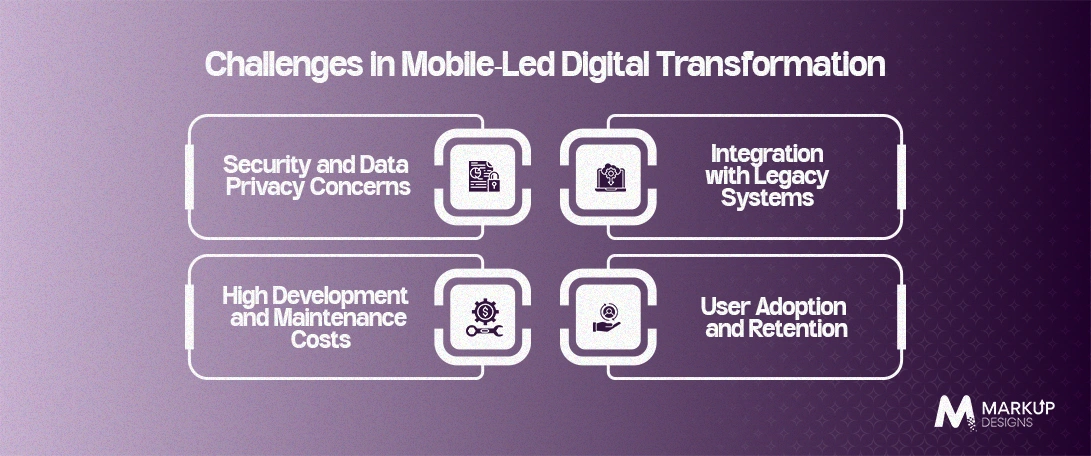
Security and Data Privacy Concerns
As mobile apps handle sensitive data, security becomes a major concern. Businesses must implement robust security measures to protect user information and prevent cyber threats.
Integration with Legacy Systems
Many organizations still rely on outdated systems that are difficult to integrate with modern mobile solutions. This creates challenges in achieving seamless digital transformation.
High Development and Maintenance Costs
Developing and maintaining the cost of mobile apps requires significant investment. Businesses must continuously update and optimize their apps to stay competitive.
User Adoption and Retention
With a large number of apps available, attracting and retaining users can be challenging. Businesses must focus on delivering value and continuously improving their offerings.
Regional Factors Driving the Digital Transformation Growth
Several factors are fueling digital transformation in the Middle East:
- Government Initiatives: Countries across the region are actively promoting digital economies through national visions and smart city projects. These initiatives encourage businesses to adopt modern technologies and innovate at scale.
- High Smartphone Penetration: The majority of the population owns smartphones, making mobile apps the most effective way to reach and engage users.
- Young, Tech-Savvy Population: A large portion of the population is digitally native, with high expectations for convenience, speed, and personalization.
- Improved Connectivity: Expanding 4G and 5G networks are enabling faster, more reliable mobile experiences.
The Rise of Mobile-First Economies
The Middle East has adopted mobile technology at a rapid pace. Consumers prefer using mobile apps over traditional websites due to their speed, convenience, and ease of use. In many cases, mobile devices are the primary means of accessing digital services.
Users spend their online time on mobile apps, whether for shopping, social interaction, or financial transactions. This behavior has pushed businesses to prioritize mobile experiences as a key part of their digital strategy.
Why Mobile Apps Are Preferred Over Web Platforms
Mobile apps offer several advantages that make them more demanding than web platforms:
- Faster Performance: Apps are optimized for mobile devices, providing smoother interactions.
- Personalization: They can leverage user data to deliver tailored experiences.
- Offline Access: Many apps offer limited functionality even without internet connectivity.
- Better User Experience: Intuitive interfaces and features like push notifications enhance engagement.
How Mobile Apps Are Redefining Business in the Digital Age
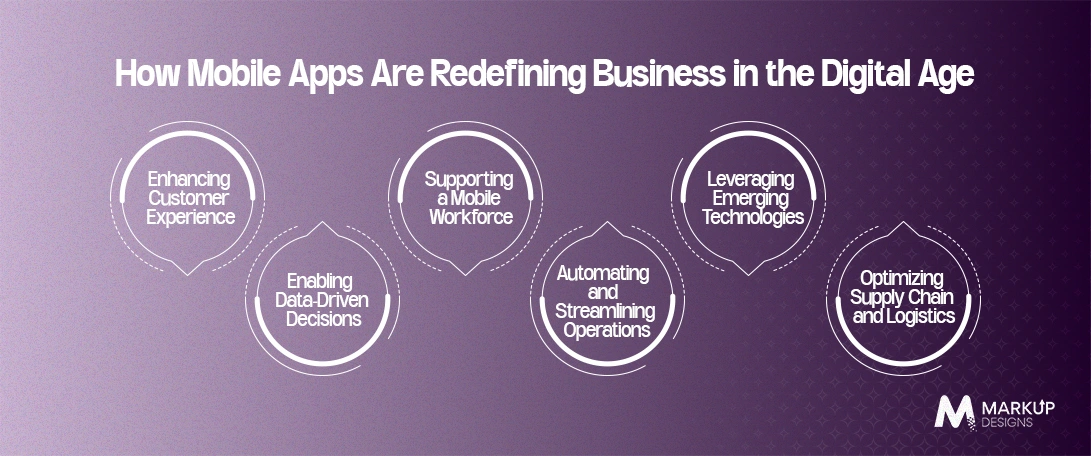
Mobile apps play a crucial role in driving digital transformation by reshaping customer experiences, automating business processes, and enabling real-time access to data. They act as a foundation for modern enterprises by improving accessibility, increasing operational efficiency, and supporting data-driven decision-making.
Enhancing Customer Experience
Mobile apps offer 24/7 access, personalized interactions, and instant support through features like chatbots. They help businesses deliver seamless digital journeys and build stronger customer relationships through targeted engagement.
Enabling Data-Driven Decisions
Apps collect valuable user and operational data in real time, turning them into powerful insights. This allows businesses to make informed decisions, optimize strategies, and improve overall performance.
Supporting a Mobile Workforce
Enterprise apps allow employees to access systems, collaborate, and manage tasks from anywhere. This flexibility improves productivity, speeds up decision-making, and supports remote work environments.
Automating and Streamlining Operations
Mobile apps reduce manual effort by automating tasks such as order processing, payments, and logistics. They also help integrate existing systems, making operations more efficient and scalable.
Leveraging Emerging Technologies
Apps serve as a gateway to advanced technologies like AI, ML, AR/VR, and IoT. This enables businesses to innovate faster and stay competitive in a rapidly evolving digital landscape.
Optimizing Supply Chain and Logistics
Mobile solutions provide real-time tracking and visibility across the supply chain. This improves delivery efficiency, especially in last-mile logistics, and enhances overall operational control.
Read Also: Practical Guide to Developing Your First Mobile Apps
Government Support and Smart City Initiatives
Governments across the Middle East are actively supporting digital transformation through strategic initiatives and investments. Smart city projects aim to create connected, efficient, and sustainable urban environments.
Mobile apps play a crucial role in these initiatives by enabling citizens to access services such as transportation, utilities, healthcare, and public safety.
Public-private partnerships are also driving innovation, encouraging businesses to develop advanced mobile solutions that align with national digital goals.
Best Practice for Businesses Investing in Mobile Apps

Strong Planning & Research
Start by understanding the market and identifying real user needs. Study your target audience, review competitors, and define clear goals for what your app should achieve.
Clear Revenue Strategy
Decide how your app will generate income. This could include subscriptions, in-app purchases, or ads, depending on the purpose of your app.
Start with an MVP
Begin with a basic version of your app that focuses on core features. This helps you test your idea, gather feedback, and make improvements before full development.
Simple and Engaging Design
Make sure your app is easy to use and visually appealing. A clean and user-friendly design helps users stay longer and reduces confusion.
Ongoing Support and Updates
Plan for regular updates and maintenance after launch. It’s a good idea to set aside around 20% of your development budget for improvements and marketing.
Data Security and Compliance
Protect user data and follow all necessary regulations. This is especially important for industries like finance, where trust plays a key role.
User Retention Strategies
Keep users engaged with features like notifications and in-app alerts. Regular interaction helps improve user activity and long-term retention.
What’s Next for Mobile Apps in the Middle East?
The future of mobile apps in the Middle East looks promising, with several trends shaping the next phase of digital transformation:
AI-driven personalization
Artificial intelligence will enable apps to analyze user behavior in real time and deliver hyper-personalized content, recommendations, and services. This level of customization will improve user engagement, increase conversions, and create more meaningful customer experiences.
Apps combining multiple services into a single platform
Super apps are emerging as all-in-one ecosystems where users can access services like payments, shopping, transportation, and communication within a single interface. This convenience reduces app fatigue and increases user retention by offering a unified digital experience.
5G technology
The rollout of 5G networks will significantly enhance app performance with faster speeds and lower latency. This will support advanced features such as augmented reality, real-time streaming, and seamless connectivity, creating richer and more interactive user experiences.
Voice and conversational interfaces
Voice-enabled features and AI-powered chatbots are making apps more intuitive and accessible. Users can interact with apps through natural language, simplifying tasks and improving usability, especially for those who prefer hands-free or assistive technologies.
Growth of mobile commerce
Mobile commerce is set to expand rapidly as consumers increasingly prefer shopping through apps for convenience and speed. Features like one-click checkout, personalized offers, and secure payment options will continue to drive higher adoption and sales.
Why Choose Markup Designs as you Mobile App Development Partner?
Choosing the right development partner can shape the success of your app. At Markup Designs, we focus on building apps that are not just functional but also align with your business goals and user needs.
We take time to understand your idea, your audience, and your market. This helps us create mobile applications that are practical, scalable, and easy to use. Our approach is to focus on solutions that deliver real value instead of unnecessary complexity.
Conclusion
Mobile apps have become the backbone of digital transformation in the Middle East, reshaping how businesses operate and how consumers interact with services. Their ability to deliver personalized experiences, enable real-time engagement, and streamline operations makes them indispensable in today’s digital economy.
As the region continues to invest in innovation, connectivity, and smart infrastructure, the role of mobile apps will only grow stronger. Businesses that adopt a mobile-first approach and invest in scalable, user-centric solutions will be better positioned to lead in this rapidly evolving market.
FAQs
1. Why are mobile apps important for digital transformation in the Middle East?
Mobile apps provide a direct and efficient way for businesses to connect with users, streamline operations, and leverage data-driven insights, making them essential for digital transformation.
2. Which industries benefit the most from mobile apps in the Middle East?
Industries such as retail, fintech, healthcare, logistics, and real estate are seeing significant benefits through improved efficiency, customer engagement, and service delivery.
3. How do mobile apps improve customer experience?
They offer personalized content, faster interactions, seamless navigation, and real-time updates, all of which enhance user satisfaction and engagement.
4. What challenges do businesses face when developing mobile apps?
Common challenges include high development costs, integration with legacy systems, security concerns, and maintaining user retention.
5. What future trends will shape mobile apps in the region?
Trends such as AI-driven personalization, super apps, 5G technology, voice interfaces, and mobile commerce will continue to drive innovation.

Author's Perspective
From a strategic standpoint, mobile apps are no longer just a digital channel; they are the foundation of modern business ecosystems in the Middle East. What stands out is how rapidly consumer expectations are evolving, pushing businesses to innovate faster than ever before.
Organizations that succeed will be the ones that treat mobile apps as long-term assets rather than short-term projects. This means continuously investing in user experience, adopting emerging technologies, and staying aligned with changing market dynamics.
In my experience, the biggest differentiator is not just technology, it is the ability to combine strategy, design, and scalability into a single, cohesive solution. Businesses that get this right will not only adapt to digital transformation but lead it.
Discuss Your Project NowGaurav Goyal
Global Sales- VP
Related Posts

How to Build an App Like Yuka: Features,...

Digital Transformation in Financial Services: Trends, Benefits &...

10 Key Factors to Choose the Right Mobile...
Insights Are Valuable & Execution is Priceless
You’ve read about the digital future. Now, let’s build the infrastructure to take you there. Move your strategy from the page to the product.
Design Your Solution Now
Contact Us
Schedule The Appointment At Your Convenience Date And Time.
30 Min
Web Conference
Time Zone
Indian standard time (08:30pm)

Thanks For Getting In Touch!
You’ve Taken The First Step Toward Transforming Your Digital Presence. Our Experts Will Reach Out Shortly To Take It Forward.
Launch Your Dream Project
Provide a brief overview of your project, and our specialists will evaluate your requirements. We will connect with you to explore how the right digital solutions can help you launch faster.