
iOS or Android : Which App Launch First?
Creating an app for mobile devices may seem thrilling until the question arises: What should be first build first apps for Android or iOS?
And here comes the catch because making this decision means more than just choosing one technical solution over another. Depending on which option you choose, you may face serious implications for your budget, customer base, and business operations in general. Too often, people start developing apps without giving much thought to which platform will suit them better, only to discover later that they’ve made the wrong move.
But the thing is, it’s almost impossible to create both platforms at the same time, and if your time and money aren’t unlimited, it’ll take even longer for you to launch your product on two different platforms.
Fortunately, knowing the difference between Android and iOS platforms is what makes creating an app successful. Let’s see how it works.
Understanding Android App Development
What is Android App Development?
The term Android app development means developing mobile applications for smartphones that run on the Android OS. It is the most popular mobile operating system worldwide that works on billions of smartphones, tablets, and even televisions.
From the business point of view, Android is the best mobile operating system when you need to reach a wide number of users. With Android, you have great possibilities to create apps from different fields such as eCommerce apps, social networks, etc.
How Android apps are developed:
- Programming languages like Java and Kotlin
- Development using special IDE, e.g., Android Studio
- Integration with backend using cloud solutions and REST APIs
- Testing on various types of screens and devices
Why it matters for businesses:
- Possibility of accessing a worldwide pool of users, including those from developing nations
- More freedom for designing and customizing apps
- Simpler method for publishing apps than with other platforms
Yet, there are certain drawbacks to Android app development, including device fragmentation and higher testing requirements. Nevertheless, when it comes to expanding your business quickly, you can begin with Android app development.
Key Features of Android Apps
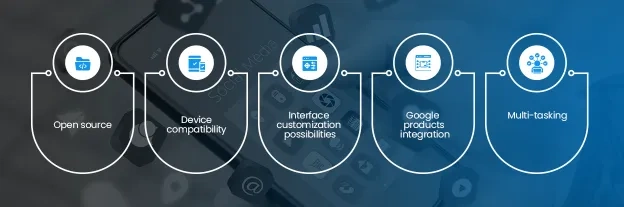
One of the strengths of Android-based apps is their adaptability, versatility, and level of customization, meaning that these apps will be suitable in numerous scenarios. Running within the Android environment, the apps will work on various kinds of mobile devices, from cheap smartphones to premium flagship ones.
Core features of Android App:
- Open source
Due to its openness, Android allows extensive customization of the apps.
- Device compatibility
Apps can operate on various hardware types and software settings, expanding their range.
- Interface customization possibilities
A business will be able to create unique UI/UX designs that match its preferences.
- Google products integration
Integration of various Google services like Google Maps, Google Pay, and Firebase expands the potential of an app.
- Multi-tasking
Background operations are available on Android platforms.
Why these features matter for business:
- Ability to scale quickly in new markets
- Facilitating testing and innovation of features
- Enabling various revenue models (advertising, subscription, freemium)
Advantages of Android Development
There are many reasons why Android development is a great choice for starting out-especially if your goal is growth and reach.
Key advantages:
- Large global market size
Android leads the Asian, African, and South American markets, thus suitable for organizations seeking a wide audience reach.
- Less difficult access
Getting your apps published in the Google Play Store is considerably simpler than on other competing app stores.
- More freedom
More flexibility is offered when implementing new elements and updates without stringent limitations.
- Efficient resource use
Android makes it easier for firms to release MVPs before gradually incorporating additional functionalities.
- Diverse ways of earning income
There are many possibilities for generating revenue via ads, in-app purchases, and subscriptions within the Android ecosystem.
Real-world example:
Ride-sharing and food delivery apps frequently favor Android in newly developing regions, rapidly gaining millions of users.
Limitations of Android Development
Although there are numerous advantages of using Android, there are certain issues associated with it. It is essential that businesses weigh down the limitations before proceeding further.
Limitations include:
- Fragmentation of devices
Given the sheer number of devices available in the market, delivering a consistent experience can be tricky.
- Increased testing requirements
Due to the higher number of devices, testing will become more demanding.
- Security threats
As an open-source platform, the apps developed on Android could face greater risks from security attacks.
- Lower monetization rates
The users of Android may end up spending less money than users of iOS in purchasing in-app content.
- Consistency of user interface
The user interface remains another challenge when working with multiple devices.
Understanding iOS App Development
What is iOS App Development?
The process of iOS app development entails creating software that runs on Apple gadgets with the help of the iOS system, including iPhones and iPads. The platform is famous for its top-notch user experience and fast performance, making it a popular choice among companies seeking excellence and profitability.
How iOS apps are developed:
- Programming languages (Swift and Objective-C)
- Development platforms (Xcode)
- Rigid UI design principles (Apple Human Interface Guidelines)
- Limited testing on selected Apple devices
Why it matters for businesses:
- Availability of affluent customers with high disposable income
- Superior performance and optimization owing to limited devices
- Positive brand reputation
Unlike Android, iOS functions within a closed environment, guaranteeing uniformity but imposing stricter requirements.
Key Features of iOS Apps
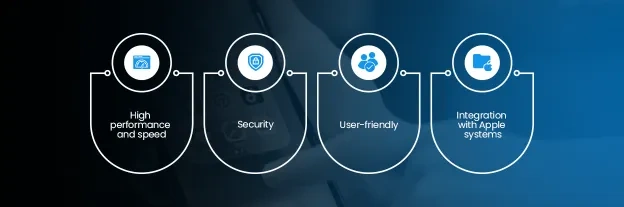
The apps developed using iOS are well-known for their high performance, security, and great user interface/experience. This is because of the highly regulated system by Apple which helps developers to develop an app of high standard on all devices.
Core features of iOS apps:
- High performance and speed
Hardware/software optimization allows iOS apps to be performed effectively.
- Security
App sandboxing, encryption, privacy controls, etc., make it more secure.
- User-friendly
iOS apps always follow the guidelines provided by Apple.
- Integration with Apple systems
Integration of apps with systems such as iCloud, Apple pay, etc.
- Less device fragmentation
Fewer devices mean easier testing and better optimization.
Advantages of iOS Development
Choosing iOS as your main platform may be a smart move if you want to make money and market successfully. Why is that?
- Highly monetizable audience
iOS users are more likely to spend real money on apps, services, and paid features within apps.
- Reaching out to affluent audiences
Ideal for apps aimed at affluent citizens from highly developed nations like the USA, UK, Western Europe.
- Best app performance
Limited device types guarantee better performance and fewer issues related to diverse hardware.
- More security and privacy
Great for customer loyalty-building apps and apps involving finances and healthcare.
- Quicker app development
Fewer devices require less time for testing and rollout.
Real-world example:
SaaS and subscription models tend to debut on iOS platforms before launching other versions.
Limitations of iOS Development
Nevertheless, iOS development still entails several downsides, which organizations need to keep in mind. Main constraints:
- Small global market presence
When compared to Android, iOS tends to have fewer users in many areas.
- Stringent App Store regulations
The review process at the App Store may lead to delays in launching and updating an app.
- Expensive development process initially (sometimes)
Particularly if you take into account design and other considerations.
- Lower customizability level
Because of restrictions in the Apple environment, this is sometimes the case.
- Dependency on Apple ecosystem
Developers must adhere strictly to Apple’s tools and policies.
Android vs iOS: Key Differences Explained
It is important to be familiar with their distinct qualities when choosing between Android and iOS because each one caters to unique business objectives and targets distinct customers through unique monetization models.
Comparison of Market Share
Android enjoys a massive market share, being used in most of the phones globally-most especially in the Asian, African, and South American continents. Meanwhile, iOS enjoys a relatively modest market share but is considered more valuable and mainly consists of users in premium nations such as the United States and Britain.
Difference:
Android = Maximum reach and global scalability
iOS = High-value users in premium markets
Revenue and Monetization Opportunities
Even though Android has more users, iOS is ahead in terms of revenue. The users of iOS are more willing to purchase apps and subscriptions, while users of Android are more receptive towards advertisements and free trials.
Difference:
Android = Good for advertising and free-to-play games
iOS = Suitable for subscription services and premium apps
Cost of Development
The cost of development depends upon the complexity of the project but there exists a difference between the two. While building applications on Android requires considerable testing because of different devices and screen sizes, developing apps for iOS is easier because of a few device types.
Difference:
Android = Higher testing and maintenance costs
iOS = Easier and more efficient development process
Time to Market
apps developed for iOS are typically faster to be released since there will be fewer devices that the developers will have to optimize their apps to work well. Conversely, developing an app for Android takes longer due to the large variety of hardware devices.
Difference:
Android = Requires prolonged testing
iOS = Releases happen quickly and efficiently
Demographics of Users
Users of Android operating systems are varied in demographics and geographic location. On the other hand, users of iOS are mostly from affluent backgrounds and are heavy digital spenders.
Difference:
Android = Mass audience across all demographics
iOS = Premium, high-spending audience
App Store Regulations
The Google Play store provides a fast and efficient approval process for its apps. On the contrary, Apple’s app store requires a long and meticulous process when releasing new software.
Difference:
Android = Developer-friendly environment
iOS = Quality-driven platform
To summarize, Android and iOS are not competing products-they are strategic decisions. Depending on one’s objective, Android and iOS offer different approaches to achieve their objectives.
Mobile App Market Statistics (2026 Insights)
Mobile app development decisions are no longer based on assumptions—they are driven by data. Understanding current market trends can help businesses choose the right platform strategically.
- Android dominates global market share
Android holds around 70–72% of the global smartphone OS market, making it the best choice for businesses aiming for maximum reach.
- iOS leads in revenue generation
Despite lower market share (~28–30%), iOS contributes to over 60% of global app revenue.
- Higher user spending on iOS
iOS users spend 2–3x more on in-app purchases compared to Android users.
- Download volume vs revenue gap
Android leads in total app downloads, while iOS dominates in average revenue per user (ARPU).
- Retention rates are higher on iOS
iOS apps tend to have slightly better user retention and engagement rates, especially in premium segments.
Android vs iOS Development Cost Comparison
Comparing the development costs of Android and iOS, one will find that there is not only a difference in pricing but also in how the funds are used.
Development Cost Breakdown
Based on industry statistics from Statista and Clutch, the price of mobile app development
lies between $25,000 to $150,000+ according to its level of complexity.
Since Android apps need more testing, they usually take 20-30% more effort compared to iOS. This might lead to higher development costs, particularly in the case of complex apps with multiple features.
On the other hand, iOS apps can be developed only for a few selected devices, making their testing easier. However, Apple has high standards of design and performance, which can cause the cost of UI/UX design to go up by 10-15%.
Maintenance Cost
Generally speaking, the cost associated with maintenance is about 15–20% of the initial cost of developing the software each year, as mentioned by GoodFirms.
Android requires more maintenance budget for the following reasons:
- More frequent system updates
- Hardware compatibility problems
- Variation in hardware
iOS, on the other hand, will need less maintenance since the following:
- Over 80% of all iOS device users upgrade to the latest version within months (statistics from Apple Developer)
- Fewer devices reduce debugging and optimization time
Hidden Costs
Hidden costs are frequently overlooked, yet they can play a huge role in determining your budget. As per data from Statista and industry norms:
- Cloud hosting & backend infrastructure: $1,000-$10,000/year
- Third-party API & tool integration: $500-$5,000/year
App store commissions:
- Google Play: $25 onetime charge
- Apple App Store: $99/year
Moreover, an extra 15%-20% is recommended to cover any unforeseen expenditure.
Which Platform Has Better ROI?
ROI relies on your app’s model of earning, which will highlight the difference between Android and iOS.
Android ROI Considerations
Android rules the market with around 70% of global market share (Statista) and provides excellent opportunities for user acquisition at a grand scale.
Android apps targeted at the development markets will experience:
- Higher volume of downloads
- Improved performance with ad monetization model
- Unfortunately, ARPU for such apps will be lower as compared to those developed for iOS.
iOS ROI Considerations
Although iOS holds only 28-30% of global market share, iOS users account for a greater portion of app revenues. According to Sensor Tower:
- More than 60% of global app revenues come from iOS users
- iOS users buy twice or three times as much in-app as Android users
iOS offers good profitability for:
- Subscriptions
- Premiums
- SaaS
Business Model Impact
Your choice of monetization will directly affect your ROI. Based on statistics and evidence-based reasoning, you should:
- Freemium & Ads Model -> Android
(Increased downloads & larger customer base)
- Subscriptions & Paid App -> iOS
(Increase spending by users and improved conversion rate)
In reality, a lot of firms tend to launch in one app ecosystem depending on their potential users before expanding into another.
When Should You Choose Android First?
- Mass Audience Targeted
An Android platform will be more advantageous in a situation where you need to target a mass audience. As mentioned, Android accounts for the majority of the market share worldwide, which makes it easy for businesses to maximize their audience exposure.
- Restricted Budgets
If the budget you have is limited, Android will make sense for you. The cost may be different depending on several factors; however, releasing an app on one platform initially helps you save money.
- Emerging Markets Strategy
In case the focus of your growth is emerging markets such as India, Southeast Asia, and some parts of Africa, Android will be very advantageous for you.
When Should You Choose iOS First?
- Premium Target Audience
The use of iOS works perfectly if you want to reach premium or high-income users because generally speaking, Apple users have a greater buying capacity and hence are perfect for luxuries and valuable services.
- Revenue Potential
Since iOS usually has more monetization capabilities than other operating systems in terms of app purchases, iOS makes the most sense if you have an in-app purchase or a paid app strategy.
- MVP Strategy
In case you’re building an MVP as a startup, then iOS is your perfect choice because there are only a limited number of devices and hence development will be easier for you.
Should You Build for Both Android and iOS?
Creating an app for both Android and iOS may dramatically boost your chances of success and make your presence much more widespread in an increasingly crowded app environment. Nonetheless, the correct strategy should be based on a number of factors.
Cross-Platform App Development (Flutter, React Native)
With the help of cross-platform technologies like Flutter and React Native, it is possible to create a universal codebase for launching apps for both Android and iOS, saving time and money.
Dual Launch: When It’s Recommended
Launching apps on both platforms is recommended if you need to reach a large user base at once. It is particularly helpful for apps that belong to highly competitive sectors.
Scalability Strategy
There are many examples of companies that started with a single platform and expanded their presence. It may be a better choice to scale gradually.
How to Decide the Right Platform for Your App
Platform choice will depend on many strategies, including budget, target audience location, company goals, and others. The proper decision at this stage can help save money, effort, and achieve success with the app.
Budget
The budget will influence the platform choice significantly. In case resources are low, starting with a single platform would be wise, while having an ample budget allows to cover both Android and iOS platforms from day one.
Target Audience Location
Knowing the location of your target audience can be helpful here. Android is more popular in developing countries, while iOS is widely used in the US and Europe.
Business Goals
Company goals will dictate platform choice. When quick growth is the main goal, then Android can be a good choice, while iOS is preferable for premium branding and earning.
App Type
The type of app is another critical factor in deciding upon a platform. Simple MVP or even content-based apps can begin their life on a single platform, while more complicated projects require coverage of both platforms.
Why Work with a Professional App Development Agency?
Using the services of a professional app development company guarantees that your app will be developed in accordance with proper strategy, technologies, and understanding of the market.
Proper Strategic Choice of Platform
Professional companies assist you in selecting an appropriate platform based on your needs, budget, and target audience. There is no guesswork; rather, you will receive a data-based strategy for developing either an Android app or iOS app or both.
Minimized Costs
By helping you minimize expenses on the app development process, a professional company will optimize its costs and avoid any possible financial errors.
Faster Time-to-Market
Professional companies will accelerate the whole development process and help you bring your product into the market earlier than expected.
Common Mistakes to Avoid
There are various critical blunders that companies commit during either the selection or development of their app.
- Selecting Platforms Based on Assumptions
A significant proportion of companies make the mistake of selecting platforms without doing adequate research. In essence, not understanding user preferences and market conditions might impact the future of the business negatively.
- Lack of Analysis for Targeted Customers
In addition, failing to understand the targeted customers’ needs is a huge mistake that many organizations commit. Ignoring the target customers’ behavior results in reduced performance.
- Selection of Platform Due to Cost Considerations
The decision to select one platform over another might be influenced by cost considerations. Although budgeting is essential, it should not affect long-term profitability.
- Failure to Test the app Using an MVP
It is vital to test apps using minimum viable products (MVPs). This process minimizes the chance of errors and provides an opportunity to refine ideas during the development phase.
- Failure to Explore Cross-Platform Development
Finally, businesses usually shy away from exploring the potential of cross-platform development. However, this approach offers several advantages due to platforms such as Flutter and React Native.
Conclusion
Android vs. iOS isn’t a choice that’s universal in nature. Your selection should be determined based on your users, cost constraints, and organizational objectives. In most cases, it is advisable to develop for one OS first and scale after. Nevertheless, proper planning-a process that can be informed by professionals may lead to faster time-to-market, minimize risks, and ensure high ROI. Ultimately, what matters is developing a good app for your users.
FAQs
- Which is Better? Android or iOS App Development?
Neither Android nor iOS is better in all aspects; it mainly depends on the audience you aim to reach and the income source you want to pursue.
- What is Better for Startups? iOS or Android App Development?
Startups may start with developing their apps for iOS because it helps test their Minimum Viable Product (MVP) faster or choose Android to gain a wider audience.
- Which Platform Requires More Budget: Android or iOS App Development?
Typically, it can be slightly cheaper to develop an iOS app since there are fewer types of devices. Still, the cost of developing any app mainly depends on its features rather than the platform.
- Is It Possible to Develop Apps for Both Platforms Simultaneously?
Indeed, cross-platform frameworks can allow building both Android and iOS apps without significantly increasing the budget or extending the project duration.
- Which Platform is Best Suited for My App Idea?
Consider your target audience, budget, business goals, and app type. A clear strategy or consultation with experts can help you make the right decision.
Many businesses look to outsource their IT services as a cost savings opportunity, but the most successful companies use outsourcing as a strategic lever for growth instead. The real difference comes from moving from the question “How can I save money by outsourcing?” to the question “How can I use my outsourced provider to create new capabilities?” It is when you change your focus from cost savings to capability creation that your outsourced IT provider will deliver the value you want to achieve.
In my experience, the biggest difference between successful companies that outsource and those that do not is the degree to which they are clear about the goals they wish to achieve through outsourcing, whether that’s accelerating product development, enhancing their cybersecurity capabilities, or enabling scalable infrastructures. Successful companies tend to create effective outsourcing partnerships, while companies that outsource without a strategic plan are more likely to encounter issues with alignment and a lack of results.
Discuss Your Project NowGaurav Goyal
Global Sales- VP
Related Posts

How Much Does It Cost to Build a...

How to Build a Secure Payment Gateway Integration...

Cost to Build a Mobile App in Qatar...
Insights Are Valuable & Execution is Priceless
You’ve read about the digital future. Now, let’s build the infrastructure to take you there. Move your strategy from the page to the product.
Design Your Solution Now
Contact Us
Schedule The Appointment At Your Convenience Date And Time.
30 Min
Web Conference
Time Zone
Indian standard time (08:30pm)

Thanks For Getting In Touch!
You’ve Taken The First Step Toward Transforming Your Digital Presence. Our Experts Will Reach Out Shortly To Take It Forward.
Launch Your Dream Project
Provide a brief overview of your project, and our specialists will evaluate your requirements. We will connect with you to explore how the right digital solutions can help you launch faster.