
In Brief
- Cloud-native application development focuses on building scalable, resilient, and highly flexible applications optimized for cloud environments.
- Modern cloud-native systems use microservices, containers, Kubernetes, APIs, DevOps pipelines, and automated infrastructure management.
- Cloud-native architecture helps businesses improve scalability, deployment speed, operational efficiency, and long-term application reliability.
- Technologies such as Docker, Kubernetes, serverless computing, and CI/CD pipelines play a major role in cloud-native ecosystems.
- Businesses across fintech, healthcare, SaaS, logistics, e-commerce, and enterprise software are rapidly adopting cloud-native development strategies.
- Cloud-native applications support faster product innovation, easier scaling, and improved system resilience compared to traditional monolithic applications.
Modern businesses no longer operate within static digital environments. Today’s applications must support millions of users, real-time interactions, global accessibility, continuous updates, and changing business requirements. Traditional software systems built around legacy, single-tier, centralized, or infrastructure architectures struggle to handle evolving demands.
This shift has led organizations toward cloud-native application development, a modern software engineering approach specifically designed for scalability and cloud optimization. Instead of relying on connected monolithic systems, cloud-native applications are built using distributed architectures that allow services to scale independently, recover faster, and adapt continuously to changing workloads.
Cloud-native development is not simply about hosting applications on cloud servers. It involves designing applications specifically for cloud environments using technologies such as microservices, containers, Kubernetes, APIs, DevOps automation, and dynamic infrastructure.
Understanding how to build a cloud-native application from scratch has become increasingly important for businesses planning scalable digital platforms that are capable of supporting long-term growth.
Understanding Cloud-Native Application Development
Cloud-native application development refers to the process of designing and building applications specifically optimized for cloud environments rather than traditional on-premise infrastructure.
Unlike conventional software systems that rely heavily on fixed servers and tightly coupled architectures, cloud-native applications are built around distributed, modular, and independently scalable services.
These applications are typically designed using:
- Microservices architecture
- Containers
- Dynamic orchestration systems
- APIs
- Automated infrastructure
- Continuous deployment pipelines
- Cloud-based databases
- Observability and monitoring systems
The primary goal of cloud-native development is to create applications capable of:
- Scaling automatically
- Recovering from failures efficiently
- Deploying updates continuously
- Managing distributed workloads
- Supporting high availability
- Improving operational flexibility
This architecture allows businesses to release new features faster while reducing infrastructure bottlenecks and operational downtime.
Read Also: Mobile App Development: Complete Guide for Businesses
Why Are Businesses Moving Towards Cloud-Native Development?
The growing demand for scalable digital ecosystems is one of the biggest reasons businesses are investing in cloud-native applications.
Modern organizations require systems capable of handling:
- Rapid user growth
- Global accessibility
- Real-time processing
- Continuous software delivery
- Dynamic workloads
- Multi-platform integrations
- Faster innovation cycles
Traditional monolithic applications often struggle to support these requirements because scaling one feature frequently requires scaling the entire application infrastructure. Cloud-native systems solve this limitation by breaking applications into smaller, independent services that can scale individually based on demand.
This significantly improves:
- Infrastructure efficiency
- Application reliability
- Deployment flexibility
- Resource optimization
- Development productivity
Businesses also benefit from reduced downtime because failures within one service rarely impact the entire application ecosystem.
As companies continue accelerating digital transformation initiatives, cloud-native architecture is becoming the preferred foundation for building scalable modern software platforms.
Challenges in Building Cloud-Native Applications
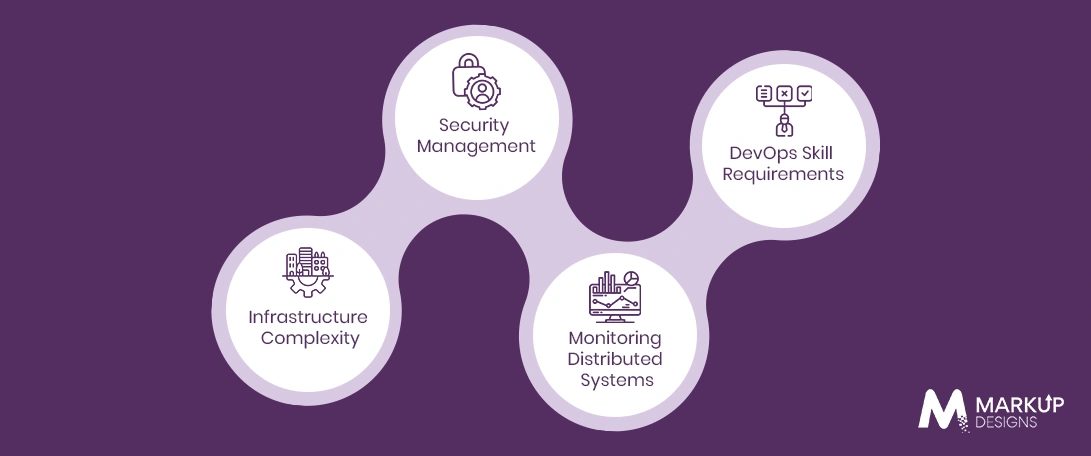
Infrastructure Complexity
Distributed systems are significantly more complex than monolithic applications.
Managing:
- Multiple services
- Kubernetes clusters
- CI/CD pipelines
- Networking
- Monitoring systems
requires specialized expertise.
Security Management
Cloud-native ecosystems expand attack surfaces through distributed APIs and services. Businesses must carefully manage:
- Authentication
- Encryption
- API protection
- Infrastructure access
Security automation becomes critically important.
Monitoring Distributed Systems
Troubleshooting distributed systems can be difficult without a strong observability infrastructure. Organizations must invest in:
- Centralized logging
- Monitoring tools
- Performance analytics
- Alert systems
to maintain operational reliability.
DevOps Skill Requirements
Cloud-native development requires expertise in:
- Cloud infrastructure
- Kubernetes
- Automation
- Infrastructure as Code
- Security management
The growing demand for cloud-native engineers continues to create skill shortages globally.
Read Also: Enterprise’s Guide to Choosing a Reliable AI Development Partner
Key Components of a Cloud-Native Application

Cloud-native applications are built using several interconnected technologies and architectural principles that work together to create scalable and resilient ecosystems.
Microservices Architecture
Microservices architecture is one of the most important foundations of cloud-native development. Instead of building one large monolithic application, developers divide the application into smaller independent services responsible for specific functionalities.
For example:
- Authentication service
- Payment processing service
- Notification service
- Inventory management service
- Analytics service
Each microservice operates independently, allowing teams to:
- Scale services separately
- Deploy updates independently
- Improve fault isolation
- Accelerate development cycles
- Reduce infrastructure dependency
This modular structure improves long-term scalability and operational flexibility.
Containerization
Containers package applications along with all dependencies, libraries, and runtime environments required for execution. Docker is one of the most widely used containerization technologies in cloud-native development.
Containers help ensure:
- Environment consistency
- Faster deployment
- Lightweight scalability
- Better portability
- Efficient resource utilization
Unlike traditional virtual machines, containers are lightweight and optimized for distributed cloud environments. This allows applications to run consistently across:
- Development environments
- Testing systems
- Cloud infrastructure
- Hybrid deployments
- Multi-cloud ecosystems
Kubernetes and Container Orchestration
As applications become bigger, handling thousands of containers manually becomes harder. Kubernetes helps solve this problem by automatically managing containers and keeping applications running smoothly.
Kubernetes helps with:
- Deploying containers
- Increasing or decreasing resources automatically
- Balancing traffic between servers
- Connecting services together
- Restarting failed containers automatically
- Updating applications without downtime
- Using system resources efficiently
Because of this automation, businesses can manage large applications more easily and efficiently. Today, Kubernetes is one of the most important technologies used in modern cloud-native application development.
APIs and Service Communication
Cloud-native applications rely on APIs for communication between distributed services. APIs allow microservices to exchange data securely, while maintaining service independence.
Modern cloud-native systems commonly use:
- REST APIs
- GraphQL
- gRPC
- Event-driven messaging systems
Strong API architecture is essential for:
- Scalability
- Integration flexibility
- Third-party connectivity
- Distributed system coordination
As applications expand, APIs become the communication backbone of cloud-native ecosystems.
DevOps and CI/CD Pipelines
DevOps practices play a major role in cloud-native application development. Continuous Integration and Continuous Deployment (CI/CD) pipelines allow development teams to automate:
- Code testing
- Build generation
- Deployment processes
- Infrastructure provisioning
- Monitoring workflows
This automation fastens the release cycles while reducing manual operational risks. Cloud-native systems heavily depend on:
- Infrastructure as Code (IaC)
- Automated deployments
- Version control
- Monitoring systems
- Continuous testing frameworks
Process to Build a Cloud-Native Application
Building a cloud-native application requires strategic planning across architecture,cloud infrastructure development workflows, scalability, and operational management.
Step 1: Define Business Goals and System Requirements
The first step involves identifying:
- Business objectives
- User requirements
- Scalability expectations
- Security requirements
- Traffic estimates
- Integration needs
- Compliance requirements
Clear planning helps determine:
- Infrastructure architecture
- Service design
- Cloud platform selection
- Database strategy
- Deployment workflows
Step 2: Choose the Right Cloud Platform
Businesses must select cloud infrastructure providers based on:
- Scalability requirements
- Geographic reach
- Pricing models
- Compliance support
- Service ecosystem
- Infrastructure flexibility
Popular cloud platforms include:
- Amazon Web Services (AWS)
- Microsoft Azure
- Google Cloud Platform (GCP)
Each provider offers:
- Compute services
- Container orchestration
- Database solutions
- Monitoring tools
- Serverless computing
- Security management
The right cloud platform depends on business requirements and long-term scalability plans.
Step 3: Design the Application Architecture
Architectural design is one of the most critical phases of cloud-native development. Teams must define:
- Microservice boundaries
- API communication patterns
- Database structures
- Authentication workflows
- Infrastructure dependencies
- Scalability models
A poorly designed architecture can create:
- High latency
- Scalability limitations
- Deployment complexity
- Operational bottlenecks
Well-structured cloud-native architecture focuses on loose coupling and high service independence.
Step 4: Containerize the Application
After designing services, developers package applications into containers using Docker or similar technologies. Containerization ensures:
- Consistent deployments
- Easier portability
- Faster scaling
- Simplified environment management
Each service typically runs inside its own container, allowing independent scaling and deployment. This modular structure improves resilience and infrastructure flexibility.
Step 5: Implement Kubernetes Orchestration
Kubernetes helps automate large-scale infrastructure management. Development teams configure:
- Container orchestration
- Auto-scaling rules
- Load balancing
- Resource allocation
- Monitoring systems
- Service discovery
Kubernetes also supports self-healing capabilities, where failed containers restart automatically without manual intervention. This improves application reliability and uptime.
Step 6: Build CI/CD Pipelines
Cloud-native development depends heavily on automation. CI/CD pipelines automate:
- Code integration
- Testing
- Deployment
- Rollbacks
- Infrastructure provisioning
Popular CI/CD tools include:
- Jenkins
- GitHub Actions
- GitLab CI/CD
- CircleCI
- Azure DevOps
Automation allows businesses to deploy updates rapidly while minimizing operational risks.
Step 7: Implement Monitoring and Observability
Monitoring is essential for distributed cloud-native systems. Observability tools help track:
- Application performance
- Infrastructure health
- Error rates
- API latency
- Container usage
- Security events
Popular monitoring tools include:
- Prometheus
- Grafana
- Datadog
- New Relic
- ELK Stack
Step 8: Secure the Cloud-Native Infrastructure
Security must be integrated throughout the development lifecycle. Cloud-native security involves:
- Identity management
- API security
- Encryption
- Secret management
- Access control
- Vulnerability scanning
- Compliance management
Businesses increasingly adopt DevSecOps practices to integrate security directly into CI/CD workflows. This helps reduce risks while improving compliance and infrastructure resilience.
Cost to Develop Cloud Application in 2026
| Component | Estimated Cost (USD) | Operational Context |
| Requirement Analysis & Planning | 10,000 – 35,000 | Business requirement gathering, architecture planning, and tech stack selection. |
| UI/UX Design | 7,000 – 25,000 | Designing user interfaces, wireframes, and user experience flows. |
| Application Development | 30,000 – 200,000 | Frontend and backend development, APIs, and feature implementation. |
| Cloud Infrastructure Setup | 12,000 – 80,000 | Setting up cloud environments, servers, storage, networking, and scalability configurations. |
| Integration & APIs | 10,000 – 50,000 | Third-party integrations, payment gateways, and external service connections. |
| Security Implementation | 12,000 – 70,000 | Data encryption, IAM policies, compliance standards, and threat protection. |
| Testing & QA | 10,000 – 40,000 | Functional testing, performance testing, and bug fixing. |
| Deployment & DevOps Setup | 7,000 – 30,000 | CI/CD pipelines, containerization, and production deployment. |
| Maintenance & Support (Annual) | 20,000 – 100,000 | Ongoing updates, monitoring, bug fixes, and performance optimization. |
Benefits of Cloud-Native Application Development

Cloud-native development offers several major advantages for businesses building scalable digital platforms.
Improved Scalability
Cloud-native systems can scale services independently based on traffic demand. This improves:
- Resource optimization
- Infrastructure efficiency
- User experience
- Cost management
Applications can handle large traffic spikes without impacting overall system stability.
Faster Deployment Cycles
CI/CD automation allows businesses to release updates faster and more frequently. This improves:
- Product innovation
- Competitive agility
- Customer responsiveness
- Development productivity
Teams can deploy features continuously instead of waiting for large release cycles.
Better Fault Tolerance
Microservices architecture improves system resilience because failures remain isolated within individual services. This reduces:
- System-wide downtime
- Infrastructure risks
- Operational disruptions
Self-healing orchestration systems further improve application reliability.
Operational Flexibility
Cloud-native systems support:
- Hybrid cloud deployment
- Multi-cloud infrastructure
- Remote scaling
- Distributed development workflows
This flexibility allows businesses to adapt infrastructure based on changing business needs.
Improved Resource Efficiency
Containerized infrastructure uses resources more efficiently than traditional virtual machines.
This reduces:
- Infrastructure waste
- Operational costs
- Deployment overhead
Businesses can optimize cloud spending more effectively through dynamic scaling.
Industries Adopting Cloud-Native Applications
Cloud-native development is rapidly expanding across multiple industries.
Fintech
Financial platforms use cloud-native systems for:
- Real-time transactions
- Payment processing
- Fraud detection
- Scalable banking infrastructure
Cloud-native architecture supports high availability and transaction scalability.
Healthcare
Healthcare organizations use cloud-native ecosystems for:
- Telemedicine
- Patient management systems
- Medical analytics
- Remote monitoring platforms
Scalable infrastructure helps support growing healthcare accessibility.
SaaS Platforms
Most modern SaaS companies rely on cloud-native infrastructure for:
- Multi-tenant applications
- Subscription management
- Scalable APIs
- Continuous feature deployment
Cloud-native systems align naturally with SaaS scalability requirements.
E-Commerce
E-commerce businesses use cloud-native for:
- Inventory management
- Real-time order processing
- Personalized recommendations
- Scalable payment systems
Cloud-native systems help manage seasonal traffic spikes efficiently.
Logistics and Transportation
Logistics companies depend on cloud-native systems for:
- Fleet management
- Real-time tracking
- Route optimization
- Supply chain analytics
Scalable infrastructure improves operational visibility and coordination.
The Future of Cloud-Native Application Development
Cloud-native development is expected to become even more important as businesses continue expanding digital ecosystems. Future cloud-native trends include:
- Serverless computing
- AI-driven infrastructure automation
- Edge computing
- Multi-cloud orchestration
- Intelligent observability
- Kubernetes-native security
- Autonomous infrastructure management
The integration of AI and automation will further simplify infrastructure optimization and deployment management. As businesses continue prioritizing scalability and operational agility, cloud-native architecture will remain one of the most important foundations of modern software engineering.
Why Choosing the Right Development Partner Matters
Building successful cloud-native applications requires more than infrastructure setup and container deployment. The real challenge lies in designing scalable architecture, automating infrastructure efficiently, securing distributed systems, and ensuring long-term operational stability.
Many businesses struggle with:
- Poor scalability planning
- Infrastructure inefficiencies
- Deployment bottlenecks
- Security vulnerabilities
- Monitoring limitations
- High cloud costs
This is why selecting the right cloud-native development partner becomes critically important.
Businesses often look for development teams capable of supporting:
- Kubernetes architecture
- Cloud infrastructure management
- DevOps automation
- API scalability
- CI/CD implementation
- Container orchestration
- Cloud-native security
- Infrastructure optimization
Companies like Markup Designs help businesses build scalable cloud-native ecosystems designed for long-term digital growth, operational efficiency, and continuous innovation. From microservices architecture to cloud automation and intelligent infrastructure management, the right technical strategy plays a major role in determining long-term software scalability.
Conclusion
Cloud native application development has become one of the most effective ways to build scalable, reliable, and future-ready digital platforms. Today, businesses rely on real-time services, cloud systems, and continuous software updates, making traditional infrastructure less capable of handling modern business needs efficiently.
By using technologies like microservices, containers, Kubernetes, DevOps automation, APIs, and cloud platforms, businesses can build applications that scale easily, perform reliably, and adapt quickly to changing demands.
While cloud native development can be more complex during the initial setup, its long-term benefits, such as faster deployment, better scalability, improved flexibility, and stronger system reliability, make it a smart investment for modern businesses.
As digital technologies continue evolving worldwide, businesses that adopt cloud-native architecture will be better prepared to innovate faster, grow efficiently, and stay competitive in technology-driven markets.
FAQs
1. What is a cloud-native application?
A cloud-native application is software specifically designed for cloud environments using technologies such as microservices, containers, Kubernetes, APIs, and automated infrastructure management to improve scalability, flexibility, and resilience.
2. Why are businesses adopting cloud-native architecture?
Businesses adopt cloud-native systems to improve scalability, accelerate deployment cycles, reduce infrastructure limitations, support continuous innovation, and improve operational efficiency.
3. What technologies are commonly used in cloud-native development?
Common cloud-native technologies include:
- Docker
- Kubernetes
- Microservices
- CI/CD pipelines
- APIs
- Serverless computing
- Cloud databases
- Monitoring and observability tools
4. Is Kubernetes necessary for cloud-native applications?
Kubernetes is not mandatory, but it is one of the most widely used orchestration platforms for managing containers, scaling infrastructure, automating deployments, and improving system resilience.
5. Are cloud-native applications more scalable than monolithic systems?
Yes. Cloud-native applications allow independent service scaling, better resource optimization, and improved fault isolation, making them significantly more scalable than traditional monolithic architectures.
Author's Perspective
Building cloud-native applications is not just about moving software to the cloud. It is about rethinking how modern systems are designed and maintained in digital environments. In my experience, businesses that succeed with cloud-native transformation are the ones that treat scalability, automation, observability, and resilience as foundational architectural priorities rather than afterthoughts. As digital ecosystems continue growing more distributed and real-time, cloud-native development is becoming less of a competitive advantage and more of a long-term operational necessity for businesses to scale efficiently and innovate continuously.
Discuss Your Project NowAjit Kumar Jha
VP - Business Operations
Related Posts
How is DevOps Charting a New Model for...

Green Cloud Computing: Sustainable Cloud Strategies for Modern...

Cloud Computing in Logistics: Building Smarter, Faster, and...
Insights Are Valuable & Execution is Priceless
You’ve read about the digital future. Now, let’s build the infrastructure to take you there. Move your strategy from the page to the product.
Design Your Solution Now
Contact Us
Schedule The Appointment At Your Convenience Date And Time.
30 Min
Web Conference
Time Zone
Indian standard time (08:30pm)

Thanks For Getting In Touch!
You’ve Taken The First Step Toward Transforming Your Digital Presence. Our Experts Will Reach Out Shortly To Take It Forward.
Launch Your Dream Project
Provide a brief overview of your project, and our specialists will evaluate your requirements. We will connect with you to explore how the right digital solutions can help you launch faster.