
Cloud Infrastructure Basics Every Founder Must Understand
Cloud infrastructure has quietly become one of the most important decisions a founder makes, and most make it without fully understanding what they’re deciding. Global end-user spending on cloud services is projected to reach approximately $591.8 billion this year. That number exists because cloud infrastructure does something fundamental: it removes the need to own, manage, and maintain physical hardware. Your servers, storage, and computing power live in data centres run by providers like AWS, Google Cloud, or Azure, and you access all of it through an internet connection, on demand, at whatever scale your business actually needs.
What Is Cloud Infrastructure?
Cloud infrastructure is the collection of hardware and software components that support cloud computing services. This infrastructure has two layers, known as the physical and the abstraction layer. In the physical layer, we have servers, storage devices, network components, and other underlying hardware. The abstraction layer sits above the physical layer and includes virtualisation software, management tools, and the user interface, the components that make cloud resources accessible and manageable without direct interaction with the hardware. The key benefits of cloud computing are far-reaching. Here, know some of them into the 3 main categories:
- Flexibility to Use: Teams can scale up their services to fit the business’s needs, customize apps, and access the cloud services from any location as long as there is an internet connection.
- Highly Efficient: Businesses can bring applications to market faster without bearing the overhead cost of owning and maintaining the physical infrastructure.
- Scalability: Cloud services give enterprises a competitive advantage by providing the most innovative technology available.
The Key Components of Cloud Infrastructure That You Should Not Miss Out
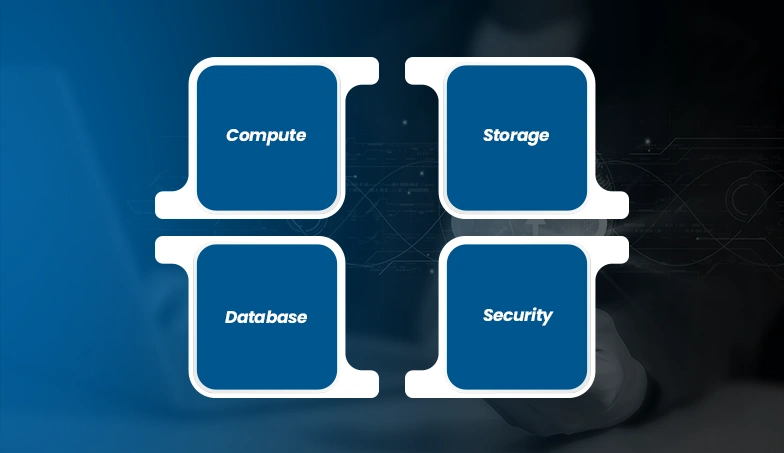
| Cost Component | What It Covers | Typical Monthly Range (USD) |
| Compute (EC2/VMs) | Servers running your app | $50 – $2,000+ |
| Storage (S3/Blob) | Files, images, backups | $10 – $500 |
| Database (RDS/Cloud SQL) | Managed database service | $30 – $1,500 |
| Data Transfer (Egress) | Data sent out of the cloud | $5 – $300+ |
| CDN / Networking | Content delivery, load balancing | $10 – $400 |
| Monitoring & Logging | Alerts, logs, performance tracking | $15 – $200 |
| Security / Compliance Tools | Firewalls, key management, and audits | $20 – $500 |
| Total (Early Stage) | MVP / seed-stage startup | $150 – $3,000/month |
| Total (Growth Stage) | Post-Series A, scaling product | $3,000 – $20,000+/month |
Note: Cloud costs depend on factors like your provider, region, architecture, and how your systems are used. These are general figures to help founders plan and not fixed quotes.
Common Cloud Infrastructure Mistakes Founders Make
1.Not Understanding the Pricing
One of the most common mistakes is that when you are starting with AWS, you do not have an understanding of the pricing and costing of services. AWS offers a broad range of services, and understanding how each one is priced, including any hidden or usage-based charges, is essential before you start building. Making sure you fully understand the cost associated with each service, including any hidden costs.
2.Not Making Use of the Cost Optimisation Opportunities
To keep your expenses under control, it’s critical to utilise the cost optimisation choices offered by AWS. This includes utilising compute savings plans, which AWS has recently strongly advised, to access Reserved Instance recommendations (for RDS, ElastichCache, DynamoDB, OpenSearch, and Redshift).
3.Creation of Resources in the Management Account
The startups begin with a single AWS account that hosts everything, such as production and development, demos, and a developer’s playground. As the company grows, keeping everything in one place starts to create risk and complexity. The better approach is to set up separate AWS accounts for production, development, and testing from the start, even if it feels like overkill early on. Reorganising later is far more disruptive than getting the structure right from day one.
4.Automate Your Infrastructure — Don’t Manage It Manually
Most startups make the same mistake when moving to the cloud: they set things up manually, one resource at a time. It works at first, but quickly becomes fragile and hard to manage. One wrong configuration, one missed update, or one team member who forgets a step can bring down your entire environment. The most widely used IaC tools are Terraform, AWS CloudFormation, and Pulumi. You do not need to know how to use them, but your technical team should, and it is worth asking whether they are part of your current setup.
Instead of clicking through dashboards and setting up servers by hand, IaC lets you define your entire infrastructure in code, servers, networks, databases, security rules — all written out, version-controlled, and repeatable.
How Can You Have Better Conversations With Your Tech Team?
You don’t need to understand every technical detail. Here are the major questions that every founder should ask to get clear answers:
- Where is our product hosted, and what happens if that location goes down?
- How do we scale if we suddenly get 10x the traffic?
- What does our monthly cloud bill look like, and what’s driving the highest costs?
- If our database crashed right now, how would we recover, and how long would it take?
- Who has admin access to our cloud environment, and has that list been reviewed recently?
If your team can’t answer these clearly and quickly, that’s a gap worth closing before it becomes a crisis.
Why Should You Partner With Markup Designs for Your Cloud and Digital Infrastructure?
Most companies will take your brief, build what you asked for, and hand it back. Markup Designs works differently. We are not just a design or development team; we work with founders and established enterprises, sitting alongside you, asking the right questions, and helping you make smart technical decisions before they turn into expensive problems.
Our team understands both sides of the table, the business pressure to move fast and the technical reality of doing it right. That combination means you never get advice that sounds good in a meeting but falls apart in execution.
We help you build infrastructure that fits where you are right now. Your growth stage. Your budget. Your actual risk tolerance. Not a template. Not a recycled solution from the last client. Something built specifically for your business.
Here is what we actually help you with:
- Cloud architecture review and recommendations so that you know exactly what you have, what needs fixing, and what to build next
- Scalable and cost-efficient hosting environments, which means infrastructure that grows with you without costs spiralling out of control.
- DevOps setup and automation pipelines, which involve less manual process, faster releases, and fewer things breaking in production.
- Monitoring and alerting, so you know about a problem before your customers do.
FAQs
Q1. Do I really need to understand cloud infrastructure as a non-technical founder?
Yes — but not deeply. You don’t need to know how to set up a server or configure a database. What you do need is enough understanding to make informed budget decisions, have meaningful conversations with your tech team, and spot warning signs before they turn into costly problems.
Q2. How long does it take to move to the cloud?
For an early-stage startup with a simple setup, a basic migration can be completed in two to four weeks. For a more established business with multiple systems, legacy infrastructure, and large datasets, expect anywhere from six weeks to four months
Q3. How much should a startup budget for cloud infrastructure in the first year?
For most early-stage startups, from MVP to your first thousand users, a realistic monthly cloud spend sits between $150 and $800. As you grow, that number scales. But here’s the part most founders miss: the bigger risk isn’t overspending on cloud. It’s under-investing in the right architecture early.
Q4. What does the process actually look like when working with Markup Designs?
We keep it straightforward. It starts with a discovery call where we understand your current setup, your goals, and where the gaps are. From there, we put together a clear plan, what needs to be done, in what order, and what it will cost.
Q5. What is the most common infrastructure mistake early-stage startups make?
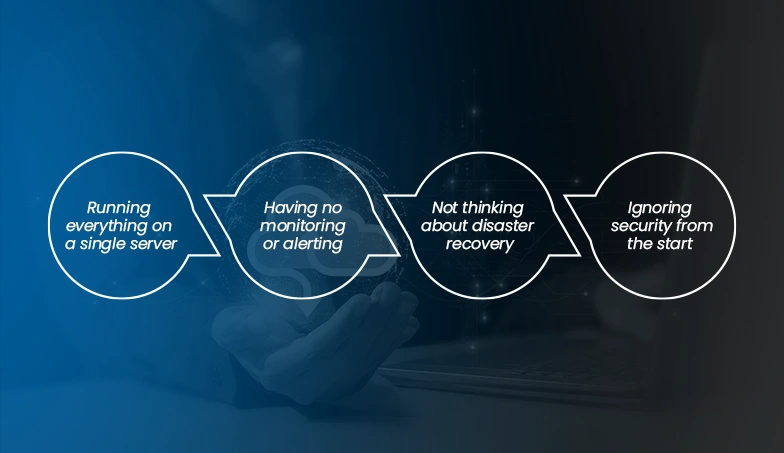
Running everything on a single server with no backups, no monitoring, and no plan for what happens when something breaks. It’s extremely common and completely avoidable. It usually happens because the priority in the early days is speed, which is understandable.
Q6. Is cloud infrastructure a one-time setup or ongoing work?
It’s ongoing. Infrastructure needs to grow and evolve as your product scales, your team changes, and your usage patterns shift. Security needs regular review. Costs need active monitoring. Architecture decisions that worked at 100 users often break down at 100,000.
Q7. How do I know if my current cloud setup has problems?
Get an audit. Most founders are genuinely surprised by what a proper review uncovers — unused resources that are quietly running up costs, open access permissions that pose a real security risk, no automated backups, and cloud bills that nobody on the team fully understands.
Q8. How can I reduce my cloud costs without affecting performance?
Audit your setup regularly, remove unused resources, and right-size your infrastructure. Use auto-scaling so you only pay for what you use, keeping costs efficient without impacting performance
Conclusion
Cloud infrastructure does not have to be intimidating. As a founder, there is no need to learn everything, all you need is a few basics. Knowing a few basics is enough to ask the right questions, to catch a problem before it becomes a crisis, and to make decisions that hold up as your business grows.
The founders who build the most resilient companies are not always the most technical. They are the ones who stay curious, keep asking questions, and surround themselves with the right people.
If you are not sure where your current setup stands, start there. Run an audit. Have an honest conversation with your team. And if you want someone to look at what you have built with no pressure, no jargon, no lengthy sales process, reach out to us. This is exactly what we are here for.
Author's Perspective
From experience, cloud infrastructure often gets ignored until something breaks—whether it’s rising costs, downtime, or security gaps. Founders don’t need deep technical knowledge, but having basic clarity helps them ask the right questions and avoid costly mistakes early. The biggest difference I’ve seen is mindset: teams that treat infrastructure as an ongoing part of the business, not a one-time setup, scale more smoothly, control costs better, and face fewer surprises as they grow
Discuss Your Project NowGaurav Goyal
Global Sales- VP
Related Posts
Cloud Services Company in Oman for Scalable Business...

Why Businesses Fail to Optimize Cloud Costs: Common...

ROI of Cloud Computing: Is It Really Worth...
Insights Are Valuable & Execution is Priceless
You’ve read about the digital future. Now, let’s build the infrastructure to take you there. Move your strategy from the page to the product.
Design Your Solution Now
Contact Us
Schedule The Appointment At Your Convenience Date And Time.
30 Min
Web Conference
Time Zone
Indian standard time (08:30pm)

Thanks For Getting In Touch!
You’ve Taken The First Step Toward Transforming Your Digital Presence. Our Experts Will Reach Out Shortly To Take It Forward.
Launch Your Dream Project
Provide a brief overview of your project, and our specialists will evaluate your requirements. We will connect with you to explore how the right digital solutions can help you launch faster.