
In Brief
- UAE organizations are rapidly investing in AI to improve efficiency, automate workflows, and manage growing customer expectations.
- Government initiatives like the UAE AI Strategy 2031 and smart city programs are accelerating AI adoption across industries.
- AI technologies are helping organizations improve customer experiences through automation, personalization, and predictive support.
- Industries such as banking, healthcare, retail, logistics, and government are seeing the biggest impact from AI adoption.
- Reports show that AI deployment and enterprise investment across UAE and MENA region are growing significantly.
- AI implementation costs in UAE vary depending on project complexity, infrastructure needs, and scalability requirements.
- Major adoption challenges include high implementation costs, legacy systems, data privacy concerns, and AI talent shortages.
- Successful AI adoption requires clear objectives, strong data infrastructure, scalable systems, and proper employee training.
A few years ago, many organizations across UAE were still dependent on manual processes, disconnected systems, delayed customer support, and traditional decision-making methods. Teams were spending hours managing repetitive tasks, analyzing scattered data, and handling operational bottlenecks that slowed overall growth.
At the same time, customer expectations were rapidly changing. People wanted faster services, personalized experiences, and real-time support, while organizations were struggling to keep up with increasing operational pressure and rising competition.
This growing gap between traditional operations and modern customer expectations is one of the biggest reasons behind the rapid adoption of AI solutions in UAE. From intelligent automation and predictive analytics to AI-powered customer engagement, organizations are now investing in technologies that improve efficiency, reduce costs, and support smarter decision-making.
The rise of enterprise AI solutions is also being supported by government-led digital initiatives, strong cloud infrastructure, and UAE’s vision to become a global AI-driven economy.
In this blog, you will explore why UAE enterprises are investing heavily in AI, the industries leading adoption, implementation costs, challenges, future opportunities, and more.
The Growing AI Ecosystem Behind UAE’s Rapid AI Investments
Over the last few years, UAE has created one of the strongest digital innovation ecosystems in the Middle East. Government initiatives like UAE AI Strategy 2031, smart city programs, advanced cloud infrastructure, and digital transformation policies are encouraging faster adoption of intelligent technologies across industries.
This strong technology-focused environment has made AI more accessible, scalable, and practical for organizations of all sizes. At the same time, operational challenges are also pushing organizations toward AI adoption.
Many enterprises still struggle with repetitive workflows, rising operational costs, disconnected data systems, delayed customer support, and increasing pressure to deliver faster digital experiences. Traditional systems are no longer enough to manage modern customer expectations and growing market competition.
This is where organizations across UAE are adopting AI technology to improve operational efficiency, automate repetitive processes, strengthen decision-making, and deliver more personalized customer experiences.
From predictive analytics and workflow automation to AI-driven customer support, industries across the UAE are increasingly adopting technologies that strengthen scalability, improve efficiency, and support long-term operational growth.
The rapid rise of enterprise AI adoption in UAE reflects how AI is evolving from a technology trend into a core part of future-ready digital operations.
Real Statistics Showing AI Growth in UAE
The growing investment in AI across UAE is backed by strong market data, enterprise adoption reports, and government-led digital initiatives. Over the last few years, organizations across the region have rapidly shifted from experimenting with AI to implementing it across real operational environments.
According to an IBM study, 42% of UAE organizations have already actively deployed AI, while 65% of IT professionals stated that AI rollout has accelerated over the last 24 months.
Another regional report by e& and IBM revealed that 65% of MENA CEOs are accelerating Generative AI adoption, which is higher than the global average of 61%. Additionally, 54% of leaders believe advanced GenAI is critical for maintaining competitive advantage.
The operational impact of AI is also becoming increasingly visible. A recent IBM report found that 77% of UAE senior leaders reported significant productivity improvements through AI adoption, outperforming the EMEA regional average of 66%. The same study also revealed that:
- 44% of organizations expect AI ROI within one year
- 49% anticipate major time savings
- 40% expect cost reduction improvements
- 41% expect revenue growth through AI initiatives
- 93% believe AI agents will deliver measurable ROI within two years
These numbers clearly show how rapidly enterprise AI adoption is expanding across UAE in industries such as healthcare, banking, logistics, retail, and government operations.
The increasing demand for intelligent automation, predictive analytics, and scalable infrastructure is also driving stronger investments in AI integration services UAE, as organizations focus on long-term operational efficiency instead of short-term experimentation.
Industries in UAE Seeing the Biggest Impact From AI
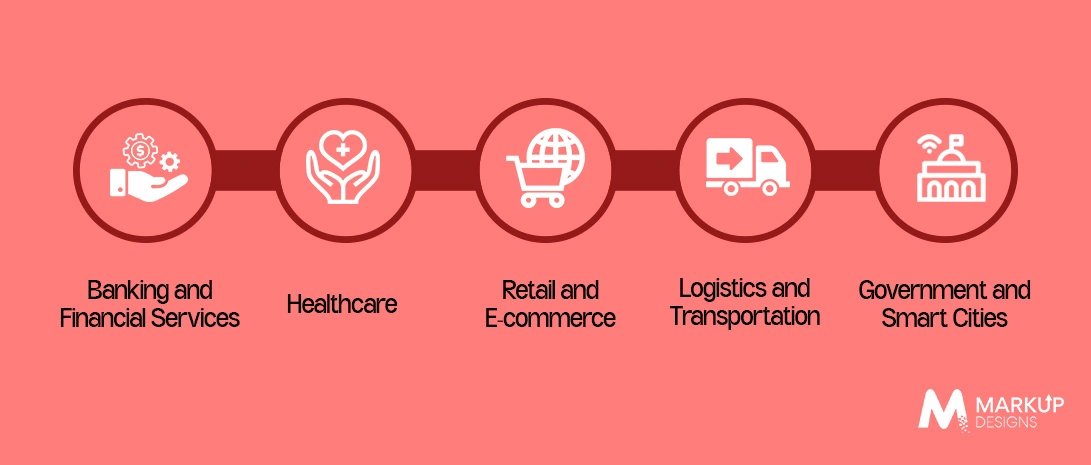
AI adoption in UAE is no longer limited to the technology sector. Organizations across multiple industries are now using intelligent systems to improve operations, automate workflows, enhance customer experiences, and make faster decisions using real-time insights.
As AI technologies become more accessible, their impact is becoming visible across both public and private sectors.
- Banking and Financial Services
The banking sector is among the fastest adopters of AI technology in UAE. Financial institutions are using AI-powered systems for fraud detection, risk analysis, automated customer support, and transaction monitoring.
Intelligent algorithms can quickly identify unusual financial activity, helping banks improve security while reducing manual workload. AI is also improving customer experiences through personalized financial recommendations, smart chatbots, and faster digital banking services.
- Healthcare
Healthcare organizations are increasingly adopting AI to improve diagnostics, patient management, and operational efficiency. AI systems help analyze medical data faster, support early disease detection, and streamline hospital workflows.
Virtual assistants and predictive healthcare technologies are also helping medical providers improve patient engagement and reduce administrative pressure.
- Retail and E-commerce
Retail companies are using AI to better understand customer behavior and deliver personalized shopping experiences. Recommendation engines, inventory forecasting systems, and AI-powered customer support tools are helping retailers improve engagement while optimizing operations.
This growing use of artificial intelligence in UAE retail environments is helping brands respond faster to changing consumer demands.
- Logistics and Transportation
UAE’s logistics and transportation sector is heavily investing in AI-driven automation and predictive systems. AI is helping streamline logistics operations through intelligent route planning, automated warehouse management, fleet tracking, and predictive supply chain analysis.
These technologies help reduce delays, improve delivery efficiency, and lower operational costs in highly competitive logistics environments.
- Government and Smart Cities
Government entities across UAE are actively integrating AI into smart city initiatives and public services. AI is being used in traffic management systems, public safety monitoring, digital citizen services, and urban planning projects.
The growing adoption of AI solutions in UAE government infrastructure is playing a significant role in building smarter, more efficient, and better-connected cities for the future.
Read: Also: How AI Is Transforming UAE Businesses in 2026
Challenges UAE Enterprises Face During AI Adoption
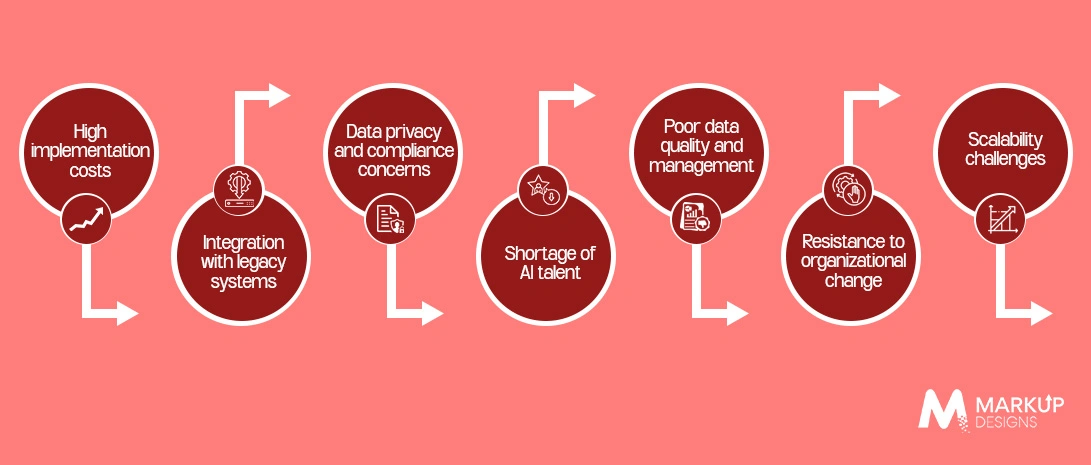
While AI offers major growth opportunities, many organizations in UAE still face several challenges during implementation. Successfully adopting AI requires the right infrastructure, skilled teams, quality data, and long-term planning.
Key Challenges in AI Adoption
- High implementation costs
AI projects often require investment in cloud infrastructure, data systems, software integration, and skilled development teams.
- Integration with legacy systems
Many organizations still rely on outdated software that is difficult to connect with modern AI technologies.
- Data privacy and compliance concerns
AI systems process large amounts of sensitive data, making security, governance, and regulatory compliance critical.
- Shortage of AI talent
Finding experienced AI engineers, data scientists, and machine learning specialists remains a challenge across the region.
- Poor data quality and management
Incomplete or unstructured data can reduce AI accuracy and affect overall system performance.
- Resistance to organizational change
Employees may hesitate to adopt AI-driven workflows due to uncertainty around automation and operational changes.
- Scalability challenges
Some organizations struggle to scale AI systems efficiently across departments and operational environments.
Many organizations are now partnering with providers offering AI integration services in UAE to simplify implementation, improve scalability, and reduce technical complexities during adoption.
Cost of Implementing AI Solutions in UAE
The cost of AI implementation in UAE can vary significantly depending on the complexity of the solution, infrastructure requirements, and level of customization involved. Some organizations may only require AI-powered chatbots or workflow automation tools, while others invest in large-scale predictive analytics platforms and enterprise-wide intelligent systems.
Factors That Influence AI Development Costs
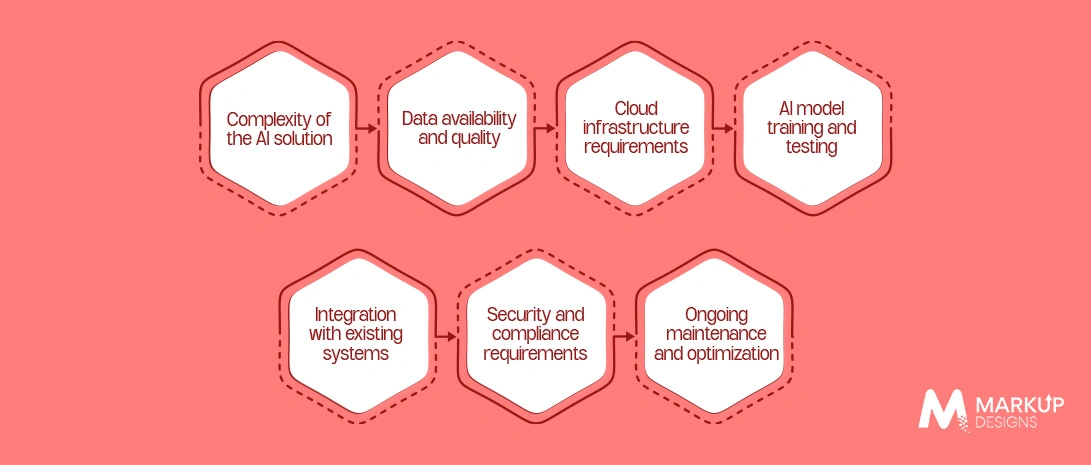
Several factors directly affect AI implementation budgets, including:
- Complexity of the AI solution
- Data availability and quality
- Cloud infrastructure requirements
- AI model training and testing
- Integration with existing systems
- Security and compliance requirements
- Ongoing maintenance and optimization
Organizations investing in highly customized systems generally require larger development timelines and stronger infrastructure support.
Here is a general estimate of AI implementation costs across different project levels:
Estimated AI Solution Costs in UAE
| AI Solution Type | Estimated Cost Range | Best Suited For |
| AI Chatbots & Virtual Assistants | AED 20,000 – AED 80,000 | Customer support, automated responses, lead handling |
| Predictive Analytics Platforms | AED 80,000 – AED 250,000 | Data analysis, forecasting, customer behavior insights |
| AI Automation Systems | AED 100,000 – AED 400,000 | Workflow automation, operational efficiency, process management |
| Enterprise-Level Custom AI Platforms | AED 250,000 – AED 1M+ | Large-scale AI integration, advanced automation, enterprise operations |
The final investment often depends on how deeply AI is integrated into operational workflows and customer-facing systems.
Today, many organizations view enterprise AI solutions as long-term operational investments rather than short-term technology expenses. When implemented strategically, AI can improve efficiency, reduce manual costs, enhance customer experiences, and generate measurable ROI over time.
Future of Artificial Intelligence in UAE Economy in 2026
Explore the future of AI in UAE economy, including AI Automation, trends, industry use cases, market growth, implementation costs, challenges, and future opportunities.

How Enterprises Can Successfully Adopt AI Solutions
Successfully implementing AI innovation requires more than just investing in technology. Organizations need a structured approach that focuses on long-term scalability, operational goals, and smooth integration.
- Start with clear objectives
Organizations should first identify the exact challenges they want AI to solve, such as improving customer support, automating repetitive workflows, reducing operational costs, or improving decision-making processes.
- Prioritize high-impact use cases
Instead of deploying AI across all departments at once, organizations should begin with areas where AI can generate faster and more measurable results, like customer service automation, predictive analytics, or workflow optimization.
- Build strong data infrastructure
AI systems rely heavily on organized and accurate data. Secure, scalable, and well-managed data environments help improve AI performance and decision accuracy.
- Invest in scalable technology
Flexible cloud infrastructure and modern digital ecosystems make it easier to expand AI capabilities as operational requirements grow.
- Focus on employee training
Proper training helps employees understand how AI supports their work, reducing resistance and improving adoption success.
- Partner with experienced providers
Many organizations choose experts offering AI implementation in UAE to simplify deployment, improve integration, and ensure long-term scalability.
The Future of AI Investments in UAE
UAE’s AI landscape is expected to grow significantly over the next decade as organizations continue investing in AI automation in digital transformation, intelligent analytics, and digital innovation. AI is gradually becoming part of core operational infrastructure rather than a standalone technology initiative.
One of the biggest trends shaping the future is the rise of generative AI and autonomous systems. Enterprises are actively adopting AI-powered assistants, predictive technologies, and intelligent decision-making systems to improve operational productivity and deliver better customer experiences at scale.
UAE government is also continuing to strengthen its focus on innovation through smart city initiatives, AI in digital transformation programs. This support is encouraging faster adoption across industries including healthcare, finance, logistics, education, and public services.
Another major shift is the increasing accessibility of enterprise AI adoption strategies across UAE for startups and mid-sized organizations. As AI technologies become more scalable and affordable, implementation is no longer limited to large enterprises with extensive technology budgets.
Conclusion
AI is rapidly transforming how organizations across UAE operate, compete, and deliver digital experiences. What started as an emerging technology trend has now become a practical investment for improving efficiency, automating operations, strengthening decision-making, and managing growing customer expectations.
From healthcare and finance to logistics and retail, industries across the UAE are leveraging AI to address operational inefficiencies while building more data-driven and future-ready systems. Strong government support, advanced digital infrastructure, and increasing enterprise demand are further accelerating this shift across the region.
At the same time, successful AI adoption requires more than just technology implementation. Organizations need clear strategies, scalable systems, quality data management, and the right implementation approach to achieve long-term value.
As UAE continues positioning itself as a global innovation hub, AI will play an even bigger role in shaping future industries and digital economies. Organizations that invest early in intelligent technologies today will be better prepared to lead tomorrow’s competitive and rapidly evolving digital landscape.
FAQs
1. Why are UAE enterprises investing heavily in AI?
Organizations across UAE are investing in AI to improve operational efficiency, automate repetitive tasks, reduce costs, enhance customer experiences, and support faster decision-making using real-time data insights.
2. Which industries in UAE are using AI the most?
AI adoption is growing rapidly across banking, healthcare, retail, logistics, transportation, government services, and smart city infrastructure projects.
3. How much does AI implementation cost in UAE?
AI implementation costs can vary depending on project complexity, infrastructure requirements, and customization levels. Small AI solutions may start from AED 20,000, while enterprise-level platforms can exceed AED 1 million.
4. What are the biggest challenges in AI adoption?
Some of the major challenges include high implementation costs, legacy system integration, data privacy concerns, shortage of AI talent, and resistance to organizational change.
5. How does UAE government support AI innovation?
UAE government supports AI adoption through initiatives like UAE AI Strategy 2031, smart city programs, innovation policies, and investments in digital infrastructure and emerging technologies.
Author's Perspective
Organizations across UAE are entering a phase where technology decisions are directly influencing long-term growth and competitiveness. AI is no longer being viewed as a future concept but as a practical solution for improving operations, customer experiences, and decision-making. However, successful adoption will depend on how strategically organizations implement these technologies. The focus should not only be on innovation, but also on scalability, usability, and creating systems that deliver measurable long-term value.
Discuss Your Project NowGaurav Goyal
Global Sales- VP
Related Posts
How to Build Production-Ready Applications with AI Coding...
Cost, Benefits & Business Impact: Generative AI vs....
Enterprise AI Agents: Practical Use Cases Driving Business...
Insights Are Valuable & Execution is Priceless
You’ve read about the digital future. Now, let’s build the infrastructure to take you there. Move your strategy from the page to the product.
Design Your Solution Now
Contact Us
Schedule The Appointment At Your Convenience Date And Time.
30 Min
Web Conference
Time Zone
Indian standard time (08:30pm)

Thanks For Getting In Touch!
You’ve Taken The First Step Toward Transforming Your Digital Presence. Our Experts Will Reach Out Shortly To Take It Forward.
Launch Your Dream Project
Provide a brief overview of your project, and our specialists will evaluate your requirements. We will connect with you to explore how the right digital solutions can help you launch faster.