

In Brief
- Banking software development in the Middle East is accelerating rapidly as financial institutions modernize legacy infrastructure and expand digital banking ecosystems.
- Governments across the GCC are actively supporting fintech innovation, smart city infrastructure, cloud modernization, and cashless economies.
- Modern banking platforms now rely heavily on AI-driven automation, cloud computing, blockchain systems, predictive analytics, and cybersecurity frameworks.
- Digital wallet solutions, BNPL systems, fintech security applications, and mobile banking platforms are becoming core financial infrastructure across the region.
- Arabic mobile app localization and Arabic UI/UX design are critical for improving adoption and customer engagement in Middle Eastern markets.
- Cross-platform development frameworks like Flutter are helping banks reduce development costs while accelerating deployment across Android and iOS ecosystems.
- Enterprise-grade cybersecurity, AI governance, compliance infrastructure, and fraud prevention systems are becoming mandatory across modern financial applications.
- The future of banking software in the Middle East is moving toward intelligent, AI-powered ecosystems capable of delivering highly personalized and predictive financial experiences.
The Middle East is rapidly becoming one of the most ambitious digital transformation regions globally. Governments, enterprises, startups, and financial institutions are aggressively investing in modern technology ecosystems to diversify economies, improve financial inclusion, and accelerate innovation across industries.
Among all sectors undergoing modernization, banking and financial services are experiencing one of the largest transformations.
Traditional banking infrastructure across many regions was originally built around legacy systems designed for branch-based operations, manual verification processes, and fragmented customer interactions. However, changing customer behavior, mobile-first lifestyles, fintech competition, and government-led digital transformation initiatives are forcing banks to modernize rapidly.
Consumers across the GCC and wider Middle East increasingly expect:
- instant transactions
- seamless mobile banking
- AI-powered customer support
- secure digital wallets
- personalized financial experiences
- real-time account management
- frictionless onboarding systems
At the same time, financial institutions must also manage:
- cybersecurity threats
- strict regulatory compliance
- scalability challenges
- cloud modernization
- fraud prevention
- operational automation
- multilingual customer experiences
This is why banking software development in the Middle East is evolving far beyond traditional banking applications.
Modern financial ecosystems now integrate:
- fintech platforms
- AI automation
- blockchain infrastructure
- predictive analytics
- enterprise mobility systems
- cloud-native banking architecture
- digital payment ecosystems
- intelligent cybersecurity frameworks
As regional economies continue prioritizing cashless ecosystems and smart infrastructure initiatives, financial technology is becoming a foundational pillar of digital transformation across the Middle East.
Why the Middle East is Becoming a Global Fintech Growth Hub
The Middle East has rapidly emerged as one of the fastest-growing fintech and digital banking regions globally.
Governments across the UAE, Saudi Arabia, Qatar, Bahrain, and other GCC nations are heavily investing in:
- smart city initiatives
- digital economies
- AI infrastructure
- cloud computing
- financial technology ecosystems
- startup acceleration programs
National transformation programs such as:
- Saudi Vision 2030
- UAE Digital Economy Strategy
- Smart Dubai initiatives
They are actively encouraging financial innovation and digital banking modernization.
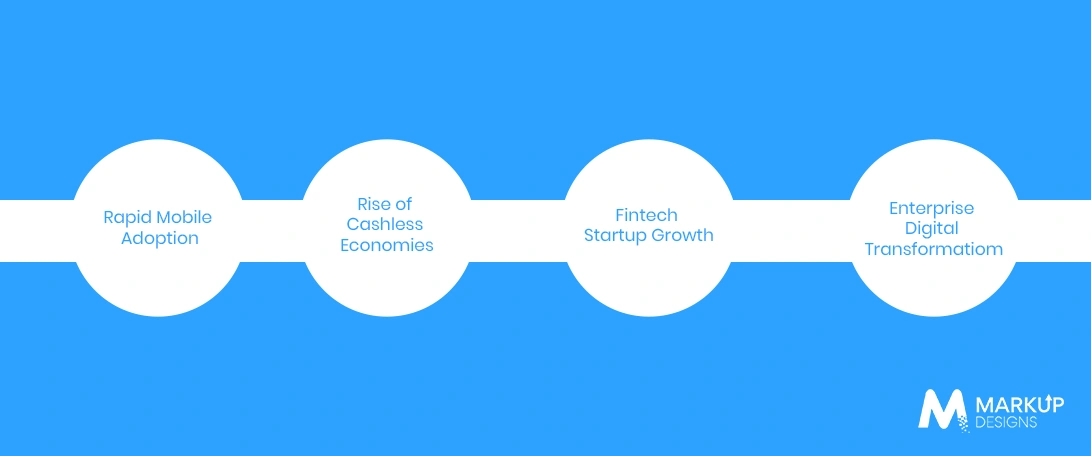
Several factors are driving fintech expansion across the region.
1. Rapid Mobile Adoption
The Middle East has one of the world’s highest smartphone penetration rates. Consumers increasingly rely on mobile-first banking experiences for:
- payments
- investments
- transfers
- lending
- savings
- budgeting
- insurance services
This creates massive demand for:
- mobile banking apps
- digital wallet solutions
- on-demand financial applications
- cross-platform fintech ecosystems
2. Rise of Cashless Economies
Governments and banks are actively reducing dependency on cash transactions.
This has accelerated demand for:
- contactless payments
- QR payment systems
- BNPL platforms
- peer-to-peer transfer systems
- crypto wallet development
- fintech security applications
3. Fintech Startup Growth
The Middle East is experiencing rapid fintech startup expansion across:
- digital lending
- wealth management
- insurtech
- digital payments
- investment platforms
- blockchain systems
This growth is creating strong demand for scalable fintech app development in the Middle East.
4. Enterprise Digital Transformation
Traditional banks are increasingly modernizing:
- core banking systems
- transaction processing
- customer onboarding
- fraud monitoring
- compliance infrastructure
- customer engagement platforms
This shift is fueling large-scale banking software modernization projects across the region.
The Evolution of Banking Software Development
Traditional banking systems were originally built around centralized, hardware-heavy infrastructure that prioritized operational stability over customer experience.
However, modern financial ecosystems now require:
- scalability
- real-time processing
- mobile accessibility
- predictive analytics
- cloud integration
- automation
- AI-powered personalization
As a result, banking software development is evolving into highly connected digital ecosystems.
Modern banking platforms now integrate:
- cloud computing infrastructure
- AI chatbots
- blockchain verification systems
- enterprise mobility solutions
- predictive fraud analytics
- business automation software
- digital wallet ecosystems
Banks are no longer simply financial institutions.
They are becoming full-scale digital technology platforms.
Core Technologies Transforming Banking Software in the Middle East
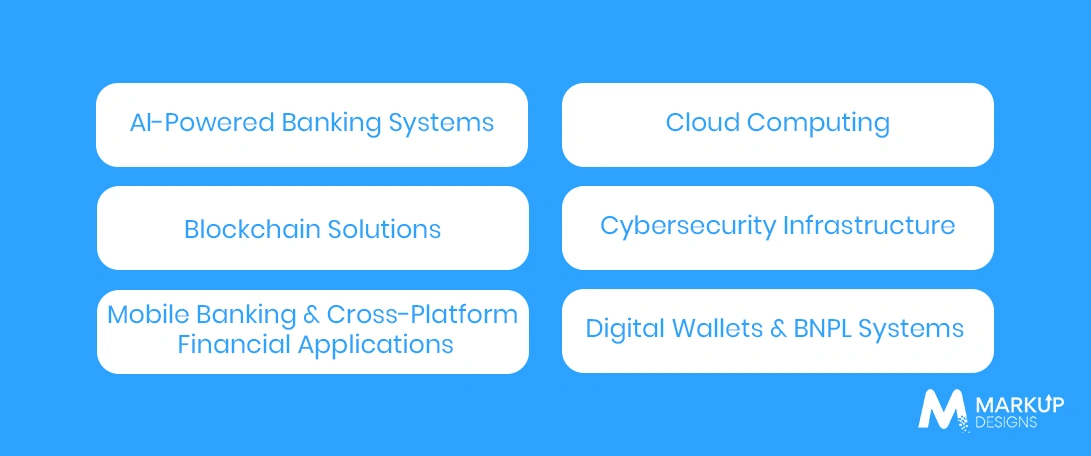
1. AI-Powered Banking Systems
Artificial intelligence is rapidly transforming how financial institutions operate.
Banks now use AI systems for:
- fraud detection
- customer support automation
- predictive financial analytics
- loan eligibility scoring
- intelligent onboarding
- transaction monitoring
AI chatbots in the Middle East are increasingly replacing traditional customer support systems by providing:
- 24/7 assistance
- multilingual communication
- faster response times
- automated issue resolution
Predictive AI models also help banks:
- identify fraud patterns
- forecast customer behavior
- improve retention
- personalize financial recommendations
2. Cloud Computing in Banking
Cloud computing in the Middle East is becoming a critical foundation for scalable banking systems.
Traditional on-premise infrastructure often limits:
- scalability
- operational flexibility
- deployment speed
- disaster recovery capabilities
Modern cloud-native banking systems provide:
- real-time scalability
- faster deployments
- centralized infrastructure
- AI integration support
- improved operational resilience
Banks increasingly use:
- hybrid cloud systems
- microservices architecture
- API ecosystems
- centralized analytics pipelines
to improve operational efficiency and digital scalability.
3. Blockchain Solutions in the Middle East
Blockchain technology is gaining significant traction across financial services.
Financial institutions are exploring blockchain solutions for:
- transaction verification
- smart contracts
- digital identity systems
- remittance processing
- decentralized finance infrastructure
Blockchain improves:
- transaction transparency
- operational security
- verification speed
- fraud prevention
Crypto wallet development is also expanding rapidly as digital asset adoption increases across regional markets.
4. Cybersecurity Infrastructure
Cybersecurity in apps in the Middle East has become one of the biggest priorities for financial organizations.
Banks process enormous volumes of:
- customer information
- financial transactions
- behavioral analytics
- digital identities
Without strong security systems, financial institutions face:
- ransomware attacks
- identity theft
- fraud exposure
- data breaches
- operational disruption
Modern banking applications increasingly integrate:
- zero-trust security frameworks
- biometric authentication
- encrypted cloud environments
- AI-driven threat detection
- multi-factor authentication systems
Cybersecurity is no longer an optional IT layer.
It is the core operational infrastructure.
Mobile Banking & Cross-Platform Financial Applications
Mobile banking adoption across the Middle East continues to grow aggressively.
Customers now expect:
- instant account access
- real-time payments
- investment management
- budgeting tools
- card controls
- financial analytics
- digital onboarding
To meet these expectations efficiently, many organizations are adopting cross-platform apps in the Middle East.
Cross-platform frameworks like Flutter app development in the Middle East help financial institutions:
- reduce development costs
- accelerate deployment
- maintain consistent UX
- simplify maintenance
- improve scalability
Flutter has become particularly popular because it supports:
- high-performance UI rendering
- responsive interfaces
- scalable architecture
- consistent Android and iOS experiences
This is especially important for:
- digital wallet solutions
- BNPL applications
- fintech onboarding systems
- enterprise banking platforms
Digital Wallets & BNPL Systems
The rapid rise of digital wallets and Buy Now Pay Later systems is fundamentally changing customer spending behavior across the region.
Consumers increasingly prefer:
- mobile payments
- installment financing
- contactless checkout
- app-based transactions
As a result, digital wallet solutions in the Middle East are becoming mainstream financial infrastructure.
Modern wallet systems now support:
- QR payments
- peer-to-peer transfers
- loyalty integrations
- cryptocurrency support
- AI-powered fraud monitoring
Similarly, BNPL app development is expanding rapidly due to the growing demand for flexible financing options.
Banks and fintech companies are integrating:
- AI credit scoring
- predictive repayment analytics
- automated risk assessment
- personalized financing offers
to improve lending efficiency while reducing financial risk.
Arabic UI/UX Design & Localization in Financial Applications
One of the most overlooked aspects of banking software development in the Middle East is localization.
Financial platforms cannot simply translate English applications into Arabic and expect strong adoption.
Successful financial applications require:
- Arabic mobile app localization
- culturally adaptive interfaces
- RTL-compatible design systems
- localized onboarding flows
- region-specific payment behaviors
Arabic UI/UX design in the Middle East plays a major role in:
- customer trust
- engagement
- usability
- accessibility
- retention
Financial institutions increasingly invest in:
- bilingual app ecosystems
- localized customer journeys
- region-specific accessibility optimization
to improve customer adoption across diverse demographics.
Enterprise Mobility & Banking Automation
Modern banking ecosystems rely heavily on enterprise mobility solutions in the Middle East.
Financial organizations increasingly operate through:
- distributed teams
- cloud infrastructure
- remote operations
- mobile workforce systems
Enterprise mobility systems allow financial institutions to:
- improve operational flexibility
- enable remote approvals
- accelerate internal workflows
- centralize operational visibility
At the same time, business AI automation software in the Middle East is helping banks reduce manual dependency.
Banks now automate:
- customer onboarding
- compliance workflows
- reporting systems
- fraud monitoring
- customer support operations
- document verification
This improves:
- operational speed
- scalability
- customer experience
- cost efficiency
How Banking Innovation Connects With Broader Industry Transformation
Banking transformation is not happening in isolation.
Financial infrastructure increasingly supports broader digital ecosystems across industries, including:
- healthcare
- e-commerce
- logistics
- real estate
- education
- transportation
For example:
1. E-commerce Mobile Apps in the Middle East
E-commerce platforms rely on:
- digital payment gateways
- wallet integrations
- BNPL systems
- fraud prevention infrastructure
AI-powered ecommerce solutions increasingly integrate banking APIs directly into shopping ecosystems.
2. Real Estate Apps
Modern real estate apps now integrate:
- mortgage pre-approvals
- digital escrow systems
- payment scheduling
- investment analytics
3. Logistics Apps & Fleet Management
Logistics apps in the Middle East increasingly use:
- fintech payment systems
- fuel management integrations
- automated billing infrastructure
4. Smart City Apps
Smart city apps in the Middle East increasingly integrate:
- transportation payments
- parking systems
- utility payments
- government financial services
Financial technology is becoming deeply embedded across regional digital infrastructure.
Challenges Facing Banking Software Development
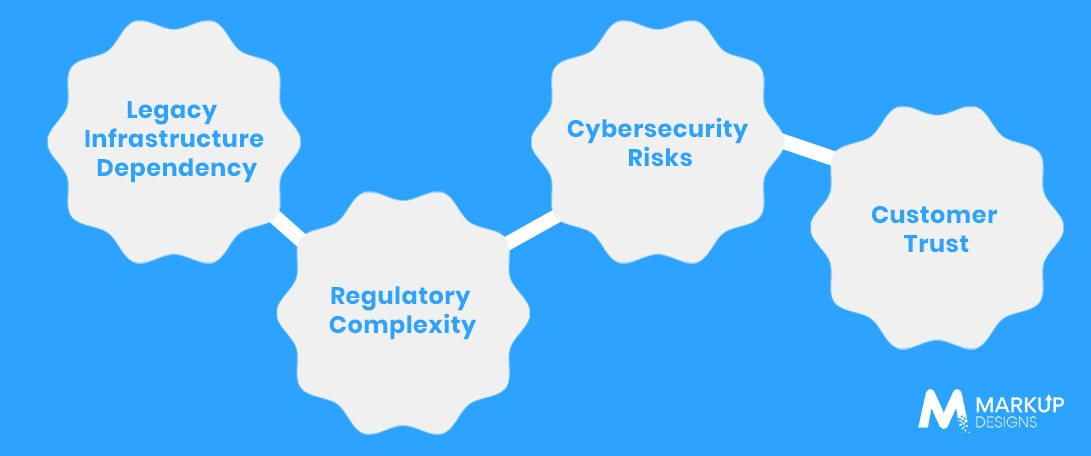
Despite rapid growth, financial software modernization still faces several operational challenges.
Legacy Infrastructure Dependency
Many banks still operate on outdated core systems that limit:
- scalability
- API integration
- AI deployment
- cloud migration
Regulatory Complexity
Financial institutions must comply with:
- data protection regulations
- regional banking laws
- anti-money laundering frameworks
- KYC verification systems
Cybersecurity Risks
As financial systems become more digital, threat exposure increases significantly.
Banks must continuously strengthen:
- identity management
- endpoint security
- AI governance
- fraud prevention systems
Customer Trust
Financial adoption depends heavily on trust.
Even small UX failures or onboarding friction can reduce:
- customer retention
- application adoption
- transaction completion
Measuring Success in Banking Digital Transformation

Modern financial organizations increasingly rely on KPI-driven digital transformation frameworks.
Banks commonly measure:
- customer acquisition cost
- onboarding completion rates
- mobile adoption rates
- fraud detection efficiency
- customer lifetime value
- app retention
- transaction speed
- operational automation savings
AI-driven analytics also help organizations measure:
- churn prediction accuracy
- customer engagement patterns
- lending risk efficiency
- personalization effectiveness
These metrics help banks continuously optimize digital infrastructure and customer experiences.
The Future of Banking Software Development in the Middle East
The future of banking software development is moving toward highly intelligent financial ecosystems powered by:
- AI automation
- predictive analytics
- cloud-native infrastructure
- blockchain systems
- enterprise mobility
- real-time personalization
Banks are increasingly evolving into:
- fintech ecosystems
- digital commerce platforms
- data intelligence systems
Future banking experiences will likely include:
- hyper-personalized financial recommendations
- autonomous AI financial assistants
- biometric banking systems
- decentralized finance integrations
- predictive financial planning
- embedded financial ecosystems
As smart city infrastructure and digital economies continue expanding across the region, banking software will become even more integrated into everyday life.
Why Choosing the Right Banking Software Development Partner Matters
Building scalable financial technology systems requires far more than simply developing mobile applications.
Financial platforms demand:
- enterprise-grade security
- scalable architecture
- cloud modernization
- AI integration
- multilingual UX systems
- regulatory compliance infrastructure
Many financial organizations struggle because their systems lack:
- scalability planning
- operational flexibility
- cybersecurity depth
- predictive analytics capabilities
A strong technology partner helps financial institutions build connected ecosystems capable of supporting:
- digital banking
- fintech growth
- enterprise automation
- customer personalization
- long-term scalability
Companies like Markup Designs help businesses modernize financial infrastructure through scalable banking platforms, AI-powered automation systems, cloud-native ecosystems, cross-platform applications, and secure digital transformation strategies tailored for Middle Eastern markets.
Conclusion
Banking software development in the Middle East is rapidly evolving into a sophisticated digital ecosystem driven by AI, cloud infrastructure, fintech innovation, cybersecurity modernization, and mobile-first customer experiences. As governments continue accelerating digital transformation initiatives and cashless economies expand across the region, financial institutions are under increasing pressure to modernize legacy infrastructure while delivering scalable, secure, and highly personalized banking experiences.
From digital wallet solutions and BNPL platforms to AI-powered automation and blockchain ecosystems, modern banking platforms are becoming deeply integrated into broader smart economy infrastructure. Organizations that invest early in scalable architecture, predictive intelligence, Arabic-first user experiences, and secure cloud-native systems will be significantly better positioned to lead the next generation of financial innovation across the Middle East.
FAQs
1. Why is banking software development growing rapidly in the Middle East?
The Middle East is aggressively investing in digital economies, smart infrastructure, fintech ecosystems, and cashless payment systems. Governments and financial institutions are modernizing banking infrastructure to improve scalability, customer experience, operational efficiency, and financial inclusion.
2. Why are banks investing in cross-platform mobile applications?
Cross-platform frameworks like Flutter help banks reduce development costs, accelerate deployment, simplify maintenance, and maintain consistent customer experiences across Android and iOS ecosystems simultaneously.
3. How is AI transforming modern banking applications?
AI systems help banks automate fraud detection, customer support, predictive analytics, onboarding verification, and financial personalization. This improves operational efficiency while enhancing customer engagement and security.
4. Why is cybersecurity critical for banking software?
Financial platforms process highly sensitive customer and transaction data. Strong cybersecurity infrastructure helps protect organizations from fraud, ransomware, data breaches, and regulatory violations while improving customer trust.
5. Why is Arabic localization important in Middle Eastern banking apps?
Arabic UI/UX design improves usability, accessibility, trust, and customer engagement. Financial applications designed specifically for regional user behavior typically achieve stronger adoption and retention rates.
Author's Perspective
The biggest mistake many financial organizations make is assuming digital banking is simply about launching a mobile app. In reality, modern banking software is an operational infrastructure. If the architecture is fragmented, insecure, or difficult to scale, growth eventually stalls, no matter how good the branding looks on the surface.
The Middle East is entering a phase where financial technology will become deeply embedded into everyday digital life, from transportation and retail to healthcare and smart city ecosystems. The companies that win will not be the ones with the flashiest interfaces, but the ones building stable, intelligent, secure systems capable of adapting continuously as user behavior, regulations, and technology evolve.
Discuss Your Project NowGaurav Goyal
Global Sales- VP
Related Posts

Custom Software Development Cost in Bahrain: Factors, Benefits,...

How Much Does Healthcare Software Development Cost in...

How to Build Compliance Software for Australian Businesses:...
Insights Are Valuable & Execution is Priceless
You’ve read about the digital future. Now, let’s build the infrastructure to take you there. Move your strategy from the page to the product.
Design Your Solution Now
Contact Us
Schedule The Appointment At Your Convenience Date And Time.
30 Min
Web Conference
Time Zone
Indian standard time (08:30pm)

Thanks For Getting In Touch!
You’ve Taken The First Step Toward Transforming Your Digital Presence. Our Experts Will Reach Out Shortly To Take It Forward.
Launch Your Dream Project
Provide a brief overview of your project, and our specialists will evaluate your requirements. We will connect with you to explore how the right digital solutions can help you launch faster.