
In Brief
- Blockchain is rapidly transforming digital systems across the Middle East, especially in UAE, by improving transparency, security, and efficiency.
- Governments and enterprises are driving digital transformation through smart city initiatives and innovation-led policies.
- Demand for blockchain app development is increasing across finance, healthcare, logistics, retail, and real estate sectors.
- Blockchain works as a decentralized system that removes intermediaries and improves trust in digital transactions.
- UAE is emerging as a global blockchain hub due to strong government support and rapid technology adoption.
- AI and blockchain integration is enabling smarter, more secure, and automated digital ecosystems.
A few years ago, many organizations across the Middle East were struggling with slow transactions, limited transparency, rising cybersecurity risks, and disconnected digital systems. Industries handling sensitive information often faced delays in verification processes, data duplication, operational inefficiencies, and growing concerns around digital trust.
Traditional platforms were becoming difficult to scale as customer expectations for faster, more secure, and more transparent digital experiences continued to rise.
At the same time, governments and enterprises in regions like UAE started investing heavily in digital innovation, smart infrastructure, and emerging technologies that could support long-term transformation.
This shift opened the door for blockchain to move beyond cryptocurrency and become a practical solution for industries like finance, healthcare, logistics, retail, and real estate.
Today, the demand for blockchain app development is growing rapidly as organizations look for secure, decentralized, and future-ready digital platforms.
From blockchain mobile app development to advanced enterprise blockchain solutions, the technology is reshaping how digital ecosystems operate across the region.
In this blog, you will understand how blockchain technology works, why the Middle East is becoming a blockchain innovation hub, development costs, real industry use cases, future trends, and how to choose the right blockchain development company in UAE.
Understanding Blockchain App Development
For beginners, blockchain may sound complex, but the concept is actually simple. Blockchain is a decentralized digital system that stores data securely across multiple networks instead of keeping it on a single server. This makes information more transparent, secure, and difficult to manipulate.
Unlike traditional applications, blockchain-powered platforms reduce dependency on intermediaries while improving trust between users and systems. This is one of the major reasons why industries are increasingly investing in blockchain app development for secure transactions, digital identity management, supply chain tracking, and payment systems.
Today, organizations are exploring custom blockchain app development to build applications that can automate workflows, improve security, and handle sensitive information more efficiently. From healthcare and fintech to logistics and real estate, blockchain is creating new possibilities for digital innovation.
The growing demand for blockchain mobile app development also shows how decentralized platforms are becoming an important part of modern digital ecosystems across the Middle East.
Why the Middle East Is Becoming a Blockchain Innovation Hub
The Middle East, especially UAE, is quickly becoming one of the most important global centers for blockchain innovation. This growth is not sudden, it is the result of strong government vision, rapid digital transformation, and increasing demand for secure and scalable technologies across industries.
Governments in the region have actively pushed digital-first strategies, including smart city initiatives and innovation-led economic plans. Dubai, in particular, has set a long-term vision to become a fully digital economy, which has naturally accelerated the adoption of blockchain across both public systems and private enterprises.
As a result, many organizations are now exploring blockchain applications in Dubai to improve transparency, reduce operational friction, and strengthen data security.
At the same time, industries are actively partnering with a blockchain development company in Dubai to build modern decentralized solutions that can support long-term growth and efficiency.
Key reasons behind blockchain growth in the Middle East:
- Strong government support for digital transformation and smart infrastructure
- Rapid adoption of secure digital systems in finance, healthcare, and logistics
- Growing interest in Web3, tokenization, and digital asset ecosystems
- Rising demand for blockchain development services across enterprises
- Focus on improving transparency, security, and operational efficiency
- Increasing collaboration between startups and global technology providers
With this combination of innovation-friendly policies and real industry demand, the Middle East is steadily positioning itself as a global hub for blockchain-driven transformation.
Market Statistics Driving Blockchain Growth
The Middle East blockchain ecosystem is no longer in an early experimental phase, it is now a rapidly scaling market driven by government adoption, enterprise investment, and strong Web3 infrastructure development, especially in UAE.
One of the most important signals of this growth is the overall market expansion. UAE blockchain technology market is projected to reach USD 41.5 billion by 2030, growing at a CAGR of nearly 89.8%, showing how aggressively blockchain adoption is accelerating in the region.
Similarly, the broader decentralized finance and blockchain-driven ecosystem in the Middle East is expected to grow from USD 1.28 billion (2025) to over USD 29.3 billion by 2033, highlighting strong long-term momentum in financial decentralization and tokenization models.
Key real-world blockchain growth indicators in UAE:
- UAE accounts for around 48.7% share of the Middle East DeFi market (2025), making it the regional leader in blockchain-driven financial systems
- The country already hosts 1,650+ blockchain organizations, showing strong ecosystem maturity and developer interest
- UAE’s Web3 ecosystem includes 1,800+ active organizations and thousands of professionals, reflecting strong talent and startup density
- Dubai alone contributes a significant share of regional blockchain activity, supported by regulatory bodies like VARA and innovation zones such as DMCC Crypto Centre.
These numbers clearly show that blockchain is not just growing-it is becoming a core part of digital infrastructure in the Middle East. From government-backed initiatives to enterprise-grade adoption, demand for blockchain app development is rising quickly across sectors like banking, logistics, real estate, and digital identity systems.
Industries Being Transformed by Blockchain Applications
Blockchain is no longer limited to financial experiments or crypto-based systems. In UAE, it is actively reshaping multiple industries by improving transparency, reducing manual dependency, and enabling secure digital transactions.
One of the biggest advantages of blockchain adoption is that it removes unnecessary intermediaries and ensures that data remains tamper-proof. This is especially important for industries that deal with high-value transactions or sensitive information.
Key industries adopting Blockchain
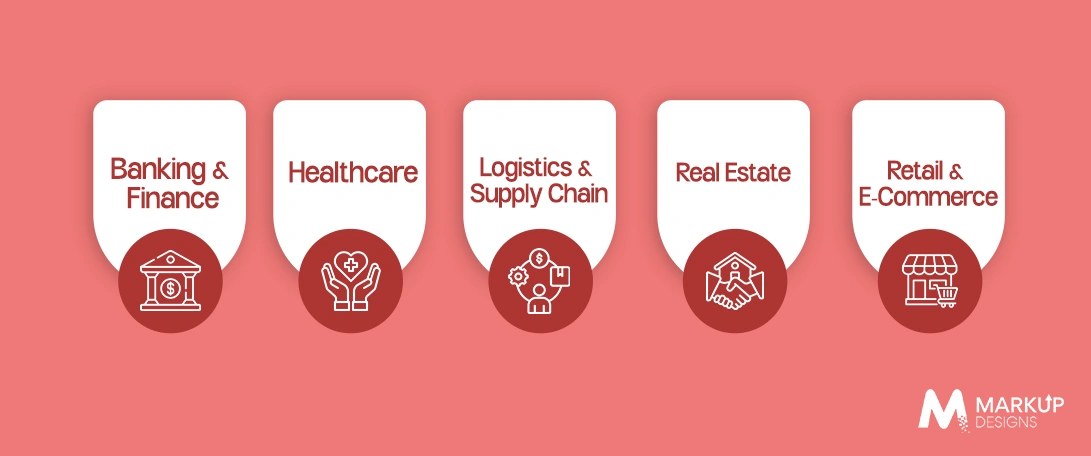
- Banking & Finance
Blockchain enables faster cross-border payments, fraud detection, smart contracts, and secure financial record-keeping. It is also supporting the growth of digital assets and decentralized finance platforms.
- Healthcare
Hospitals and healthcare providers are using blockchain to store patient records securely, ensuring data privacy while improving interoperability between systems.
- Logistics & Supply Chain
Blockchain improves shipment tracking, reduces paperwork, and increases transparency across global trade routes, which is especially important for UAE’s trade-driven economy.
- Real Estate
Property transactions are becoming faster and more transparent through digital ownership records and smart contract-based agreements.
- Retail & E-Commerce
Businesses are using blockchain for loyalty programs, secure payments, and fraud prevention in digital transactions.
Growing Impact on Digital Innovation
With increasing adoption, many organizations are now investing in enterprise blockchain solutions to build scalable systems that support real-time operations and secure data exchange.
This shift shows how blockchain is not just improving existing processes but completely redefining how industries in UAE operate in a digital-first economy.
The Role of AI and Blockchain in Modern App Development
The combination of AI and blockchain is becoming one of the most powerful technology shifts in modern digital ecosystems. While blockchain focuses on secure, transparent, and decentralized data management, AI adds intelligence, automation, and predictive decision-making capabilities.
When these two technologies come together, they create highly efficient, secure, and smart digital applications that go beyond traditional system capabilities.
In the Middle East, especially in UAE-driven innovation hubs, organizations are increasingly adopting this combination to build next-generation platforms.
This is where AI and blockchain integration is becoming a key driver of digital transformation across industries like finance, logistics, healthcare, and retail.
How AI and Blockchain Work Together
- AI helps analyze large volumes of blockchain data to generate actionable insights
- Blockchain ensures that AI-driven decisions are backed by secure and tamper-proof data
- Together, they reduce fraud risks by improving transparency and detection systems
- AI enhances user personalization while blockchain ensures secure identity management
- Automation becomes more reliable when powered by decentralized and verified data sources
Read Also: Future of AI in Digital Transformation in the Next Decade
Practical Applications in Real-World System
- Fraud detection in financial transactions using AI + blockchain verification models
- Predictive supply chain management systems with real-time blockchain tracking
- Smart healthcare platforms that combine patient data security with AI diagnostics
- Intelligent digital wallets and payment systems with automated risk scoring
This convergence is also shaping the future of blockchain app development and blockchain mobile app development, where applications are no longer just decentralized but also intelligent and adaptive.
AI-powered blockchain systems are expected to play a major role in building secure, scalable, and future-ready digital ecosystems across the region.
Key Features of a Successful Blockchain Application
A successful blockchain application is not just about using decentralized technology-it is about building a system that is secure, scalable, and practical for real-world use. In UAE and wider Middle East, organizations are now focusing on building solutions that can handle high transaction volumes, ensure data integrity, and deliver seamless user experiences.
Modern blockchain app development focuses on combining technical strength with usability so that both enterprises and end users can benefit without complexity.
Core features of a strong blockchain application
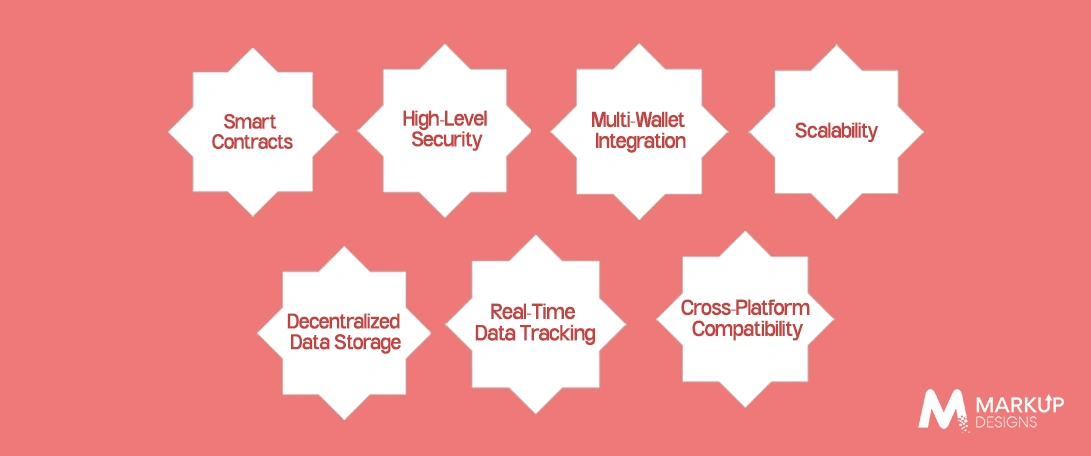
- Smart Contracts
Automate agreements and transactions without manual intervention, ensuring faster and error-free execution.
- Decentralized Data Storage
Removes single points of failure and improves data security across networks.
- High-Level Security
Uses cryptographic algorithms to protect sensitive data and prevent unauthorized access.
- Multi-Wallet Integration
Supports multiple digital wallets for seamless transactions across platforms.
- Real-Time Data Tracking
Provides transparent visibility of transactions and operations.
- Scalability
Designed to handle growing users, transactions, and enterprise-level demands.
- Cross-Platform Compatibility
Ensures smooth performance across mobile, web, and enterprise systems, often used in blockchain mobile app development.
These features help organizations build reliable and future-ready digital ecosystems that align with UAE’s rapid digital transformation goals.
Blockchain App Development Process
Building a blockchain application requires a structured and well-planned development approach. Unlike traditional apps, blockchain systems involve smart contracts, decentralized architecture, and strict security layers, making the process more technical and detail-oriented.
Organizations working with a blockchain development company in UAE usually follow a step-by-step approach to ensure scalability, compliance, and performance.
Blockchain Development Process
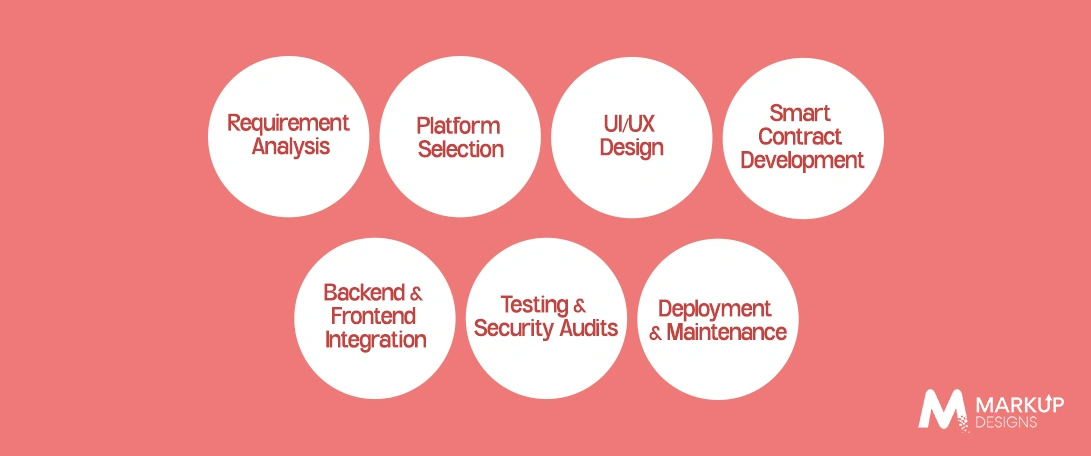
- Requirement Analysis
Understanding business goals, use cases, and technical requirements before starting development.
- Platform Selection
Choosing the right blockchain network such as Ethereum, Hyperledger, Solana, or Polygon based on project needs.
- UI/UX Design
Designing user-friendly interfaces that simplify complex blockchain interactions.
- Smart Contract Development
Writing self-executing contracts that automate transactions and business logic.
- Backend & Frontend Integration
Connecting decentralized systems with user-facing applications for smooth functionality.
- Testing & Security Audits
Ensuring the application is free from vulnerabilities and performs efficiently under load.
- Deployment & Maintenance
Launching the application and continuously updating it for performance, security, and scalability.
This structured approach is essential for delivering reliable blockchain development services that meet enterprise standards and support long-term digital transformation in the Middle East.
Blockchain App Development Cost
When it comes to building blockchain-based solutions, cost is a key factor for startups, enterprises, and government-backed initiatives in UAE. Unlike traditional apps, blockchain systems need smart contracts, decentralized architecture, security audits, and multi-network integration, which directly influence the overall budget.
The blockchain app development cost in UAE varies based on complexity, features, and scalability needs, with simple applications costing less and enterprise-grade solutions requiring higher investment.
Key factors that influence development cost
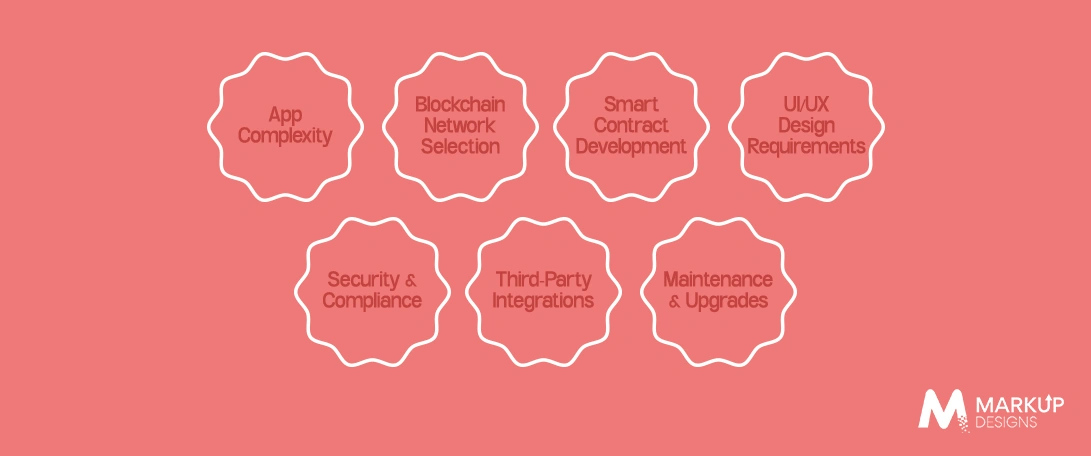
- App Complexity
Basic apps with limited functionality cost less compared to advanced multi-feature platforms - Blockchain Network Selection
Ethereum, Hyperledger, or Solana each have different development requirements - Smart Contract Development
More automation and logic increase development time and cost - UI/UX Design Requirements
Advanced and user-friendly interfaces require more design effort - Security & Compliance
High-level audits and encryption systems increase overall cost - Third-Party Integrations
Payment gateways, wallets, APIs, and enterprise systems add to complexity - Maintenance & Upgrades
Post-launch support also contributes to long-term investment
Estimated Blockchain App Development Cost Range
| App Type | Complexity Level | Estimated Cost |
| Basic Blockchain Application | Low | AED 55,000 – AED 110,000 |
| Mid-Level Blockchain Platform | Medium | AED 110,000 – AED 260,000 |
| Enterprise Blockchain Solution | High | AED 260,000 – AED 550,000+ |
Challenges in Blockchain App Development
Even though blockchain is rapidly growing in the Middle East, especially in UAE, it still comes with its own set of challenges. Many organizations are aware about the potential of blockchain app development, but real-world implementation requires careful planning, technical expertise, and regulatory awareness. These challenges are one of the reasons why blockchain app development needs experienced teams and structured execution.
Key challenges in blockchain development
- Regulatory Uncertainty
Blockchain regulations are still evolving in some areas, making compliance planning complex for new applications.
- Scalability Issues
Some blockchain networks face performance limitations when handling high transaction volumes.
- High Initial Development Cost
Building secure and scalable systems requires significant investment in infrastructure, security, and development expertise.
- Integration with Legacy Systems
Many organizations still rely on traditional systems that are difficult to connect with decentralized platforms.
- Lack of Skilled Developers
The demand for blockchain expertise is high, but the supply of experienced professionals is still limited.
- Security Risks in Smart Contracts
Poorly written smart contracts can lead to vulnerabilities if not properly audited.
Top Choice for Blockchain Development Services in UAE – Markup Designs
When it comes to building secure, scalable, and future-ready blockchain solutions in UAE, choosing the right technology partner can define the success of your entire product. Markup Designs stands out as a strong choice for organizations looking to move beyond basic development and build real digital impact through blockchain development services.
Reasons why Markup Designs should be your first priority:
- Deep Blockchain Expertise: Strong experience in building secure and scalable blockchain app development solutions across industries
- AI + Blockchain Integration: Focus on combining intelligence and decentralization for smarter digital ecosystems
- Enterprise-Grade Security: Robust architecture designed to reduce risks and protect sensitive data
- End-to-End Development Support: From strategy and UI/UX to deployment and maintenance
- UAE Market Understanding: Strong awareness of regional compliance, digital transformation goals, and industry needs
- Scalable Architecture: Solutions built to grow with increasing users, transactions, and business demands
- Proven Delivery Approach: Structured process ensuring quality, transparency, and long-term reliability
With the growing demand for blockchain mobile app development in UAE, Markup Designs delivers solutions that are not just functional but also future-ready and performance-driven.
Conclusion
Blockchain technology is reshaping how digital systems are built, managed, and scaled across the Middle East. From finance and healthcare to real estate and logistics, its impact is becoming more practical and industry-focused every year.
UAE is leading this transformation with strong infrastructure, innovation-friendly policies, and increasing adoption of decentralized systems. This is creating massive opportunities for blockchain app development and next-generation digital platforms.
As organizations continue to evolve, the focus will remain on building secure, scalable, and intelligent systems that can support future growth. Blockchain is no longer just a trend-it is becoming a core part of digital transformation across the region.
FAQs
1. What is blockchain app development?
Blockchain app development is the process of building decentralized applications that store and manage data across multiple networks instead of a single server. These apps offer higher security, transparency, and trust compared to traditional applications.
2. How much does blockchain app development cost in UAE?
The blockchain app development cost in UAE typically ranges from $15,000 to $150,000+, depending on complexity, features, security requirements, and scalability needs. Enterprise-level solutions with advanced integrations cost more.
3. Which industries use blockchain applications in Dubai?
Industries like banking, healthcare, logistics, real estate, and retail are actively using blockchain applications in Dubai to improve transparency, reduce fraud, and streamline operations through secure digital systems.
4. Is blockchain only used for cryptocurrency apps?
No, blockchain is not limited to crypto. It is widely used for supply chain tracking, digital identity, healthcare records, smart contracts, and enterprise systems across various industries.
5. Why is blockchain growing in the Middle East?
Blockchain is growing in the Middle East due to strong government support, smart city initiatives, rising digital transformation, and increasing demand for secure and transparent systems across industries.
Author's Perspective
Blockchain is no longer just a futuristic concept; it is becoming a practical foundation for digital transformation in the Middle East. UAE is leading this shift with strong innovation support and real-world adoption across industries. From my perspective, the real opportunity lies in building solutions that are secure, scalable, and user-focused. Organizations investing early in blockchain app development will be better positioned for long-term digital growth and trust-driven ecosystems.
Discuss Your Project NowAjit Kumar Jha
VP - Business Operations
Related Posts

Why Businesses in Oman Need Digital Transformation Services

Digital Transformation in Financial Services: Trends, Benefits &...
Crypto Trading Bot Development: Architecture, Features & Cost...
Insights Are Valuable & Execution is Priceless
You’ve read about the digital future. Now, let’s build the infrastructure to take you there. Move your strategy from the page to the product.
Design Your Solution Now
Contact Us
Schedule The Appointment At Your Convenience Date And Time.
30 Min
Web Conference
Time Zone
Indian standard time (08:30pm)

Thanks For Getting In Touch!
You’ve Taken The First Step Toward Transforming Your Digital Presence. Our Experts Will Reach Out Shortly To Take It Forward.
Launch Your Dream Project
Provide a brief overview of your project, and our specialists will evaluate your requirements. We will connect with you to explore how the right digital solutions can help you launch faster.