


Cost to Develop a Cryptocurrency Exchange App Like Coinbase
In Brief Costs associated with creating a cryptocurrency exchange application, such as Coinbase, generally fall...

We provide our customers with comprehensive blockchain development services in Dubai to create secure, reliable, and
business-oriented solutions for enterprises. Our services include blockchain application and platform development,
smart contract creation, and decentralized applications creation.

As a blockchain development firm in Dubai, our job is to assist businesses in leveraging blockchain technology to optimize the management of their transactions, data, assets, agreements, and digital ecosystems. The applications of our solutions are practical for businesses in fintech, banking, real estate, healthcare, retail, logistics, energy, and more.
Request a Free ConsultationOur blockchain development services cover the entire product development life cycle from identifying the right use case through to development, integration, deployment, and support. We fuse blockchain engineering with business needs to deliver robust, scalable, and practical blockchain-based solutions for Dubai companies.
Markup Designs uses expertise in blockchain development, programming, security, and industry experience to assist Dubai companies in transitioning from blockchain theories to viable production applications.
We make use of blockchain technology platforms, languages, frameworks, cloud services, and security tools to create blockchain systems that will be able to function within modern enterprises.
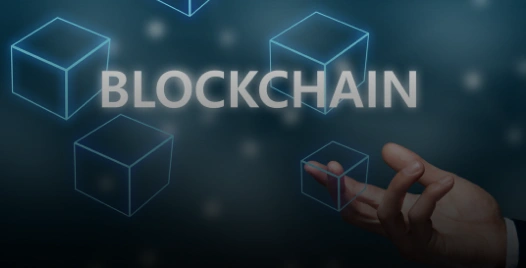

Some of the blockchain technology platforms that we have experience working with include Ethereum, Hyperledger, Polygon, Solana, BNB Smart Chain, and Corda. A blockchain platform is chosen depending on things like transaction needs, governance, scalability, interoperability, and the purpose of the application.


Blockchain programming languages we use to develop blockchain applications include languages like Solidity, Rust, and Vyper, among others. Contract code is tested to determine its functionality and security.


In order to provide responsive interfaces for blockchain applications, dashboards, wallets, decentralized apps, and enterprise applications, we employ React, Angular, Vue.js, JavaScript, HTML5, and CSS3.


Among our backend capabilities are Node.js, Python, Java, Go, .NET, and PHP. Such technologies help us with APIs, business logic, transactions, integrations, authentication, and communication between blockchain networks and enterprise solutions.


Among cloud and DevOps technologies that we employ are AWS, Microsoft Azure, Google Cloud, Docker, Kubernetes, and CI/CD. We use these technologies to build and manage reliable infrastructure.


Depending on the application that we build, we can deal with encryption, identity and access management, PostgreSQL, MongoDB, Redis, IPFS, secure APIs, and other technologies.
Our blockchain technology stack includes distributed ledger platforms, smart contracts, app development frameworks, back-end solutions, cloud computing, database, and security. This helps us create blockchain applications that will be able to integrate into enterprise setups and scale as per requirements.
![[ANGULAR]](https://www.markupdesigns.com/wp-content/uploads/2026/07/ANGULAR.svg)
![[CORDOVA]](https://www.markupdesigns.com/wp-content/uploads/2026/07/CORDOVA-1.svg)
![[FLUTTER]](https://www.markupdesigns.com/wp-content/uploads/2026/07/FLUTTER-1.svg)
![[IONIC]](https://www.markupdesigns.com/wp-content/uploads/2026/07/IONIC-1.svg)
![[Reactnative]](https://www.markupdesigns.com/wp-content/uploads/2026/07/Reactnative-1.svg)
![[UNITY]](https://www.markupdesigns.com/wp-content/uploads/2026/07/UNITY-1.svg)
![[VUE.JS]](https://www.markupdesigns.com/wp-content/uploads/2026/07/VUE.JS.svg)
![[XAMARIN]](https://www.markupdesigns.com/wp-content/uploads/2026/07/XAMARIN-1.svg)
![[.NETCORE]](https://www.markupdesigns.com/wp-content/uploads/2026/07/NETCORE-1.svg)
![[DJANGO]](https://www.markupdesigns.com/wp-content/uploads/2026/07/DJANGO-1.svg)
![[EXPRESS]](https://www.markupdesigns.com/wp-content/uploads/2026/07/EXPRESS-1.svg)
![[Laravel]](https://www.markupdesigns.com/wp-content/uploads/2026/07/Laravel-1.svg)
![[PYTHON]](https://www.markupdesigns.com/wp-content/uploads/2026/07/PYTHON-1.svg)
![[RUBY ON
RAILS]](https://www.markupdesigns.com/wp-content/uploads/2026/07/RUBY-ON-
RAILS-1.svg)
![[TITANIUM]](https://www.markupdesigns.com/wp-content/uploads/2026/07/TITANIUM-2.svg)







![[CORE DATA]](https://www.markupdesigns.com/wp-content/uploads/2026/07/CORE-DATA-1.svg)
![[FIRE BASE
FIRE STONE]](https://www.markupdesigns.com/wp-content/uploads/2026/07/FIRE-BASE
FIRE-STONE-1.svg)
![[MYSQL]](https://www.markupdesigns.com/wp-content/uploads/2026/07/MYSQL-1.svg)
![[POST GRE SQL]](https://www.markupdesigns.com/wp-content/uploads/2026/07/POST-GRE-SQL-1.svg)
![[rEALM]](https://www.markupdesigns.com/wp-content/uploads/2026/07/rEALM-2.svg)
![[REDIS]](https://www.markupdesigns.com/wp-content/uploads/2026/07/REDIS-1.svg)
![[ROOM DATA BASE]](https://www.markupdesigns.com/wp-content/uploads/2026/07/ROOM-DATA-BASE-1.svg)
![[SQLITE]](https://www.markupdesigns.com/wp-content/uploads/2026/07/SQLITE-1.svg)








![[ANSIBLE]](https://www.markupdesigns.com/wp-content/uploads/2026/07/ANSIBLE.svg)
![[Docker]](https://www.markupdesigns.com/wp-content/uploads/2026/07/Docker.svg)
![[GITLABS]](https://www.markupdesigns.com/wp-content/uploads/2026/07/GITLABS.svg)
![[JENKINS]](https://www.markupdesigns.com/wp-content/uploads/2026/07/JENKINS-1.svg)
![[KUBERNETES]](https://www.markupdesigns.com/wp-content/uploads/2026/07/KUBERNETES.svg)
![[TERRAFORM]](https://www.markupdesigns.com/wp-content/uploads/2026/07/TERRAFORM.svg)
![[DOMAIN DRIVEN DESIGN]](https://www.markupdesigns.com/wp-content/uploads/2026/07/DOMAIN-DRIVEN-DESIGN.svg)
![[Micro Services]](https://www.markupdesigns.com/wp-content/uploads/2026/07/Micro-Services.svg)
![[MONOLITHIC]](https://www.markupdesigns.com/wp-content/uploads/2026/07/MONOLITHIC.svg)
![[MVC]](https://www.markupdesigns.com/wp-content/uploads/2026/07/MVC.svg)
![[MVVM]](https://www.markupdesigns.com/wp-content/uploads/2026/07/MVVM.svg)
![[SERVER
LESS]](https://www.markupdesigns.com/wp-content/uploads/2026/07/SERVER
LESS.svg)
Blockchain applications can involve personal data, financial transactions, virtual assets, payment information, and other regulated activities. We therefore consider applicable UAE and Dubai regulations alongside international security standards during solution planning.

Ensuring the safety of your private data

Apple Keychain that secures sensitive app data.

International standard for information security management.

Verify identities, stop money laundering, and prevent identity theft.

Proves that a company handles customer data

Protects data, stops fraud, and builds trust.

Hardcodes an expected server certificate or public key directly in the app.

Protects medical records and other health information.
The regulations governing our blockchain projects shall depend on the use case, and therefore they will be evaluated in accordance with UAE and Dubai requirements.





VARA, established under Dubai Law No. 4 of 2022, regulates virtual assets and Virtual Asset Service Providers across Dubai, excluding DIFC. Blockchain projects involving virtual asset activities must comply with VARA requirements covering areas such as risk management, compliance, technology, information security, market conduct, and asset custody.
Businesses operating in the Dubai International Financial Centre (DIFC) follow the DFSA Crypto-Token Rules. Revised in 2026 and effective from January 12, 2026, these rules regulate financial services involving crypto tokens. Understanding this distinction is essential when planning blockchain or digital asset projects, as compliance requirements vary by location.
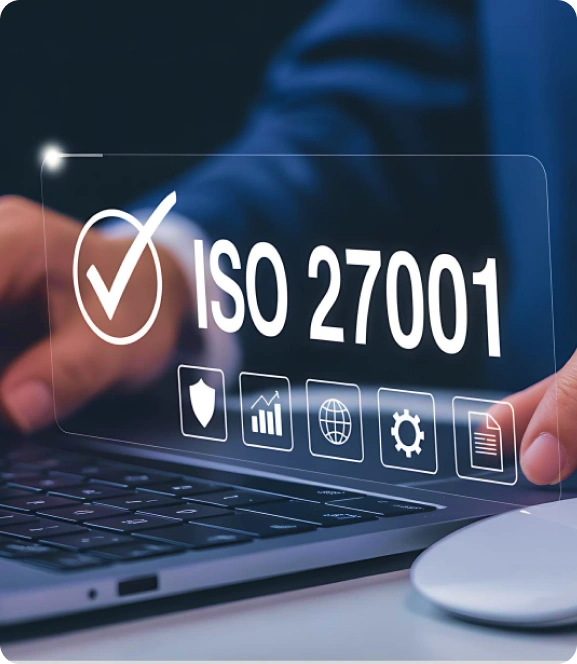
ISO/IEC 27001:2022 sets the requirements for an organization's Information Security Management System. Its security concepts are used as guidelines while setting up processes related to information security, risk management, access control, data protection, and operational security.
In case a blockchain-based application handles payment card data, there may be a need to comply with the PCI DSS. According to the PCI Security Standards Council, "PCI DSS applies to all entities dealing with payment account data processing, which includes those storing, processing, or transmitting cardholder data." PCI DSS v4.0.1 is the latest revision within the PCI DSS v4.x series.
From finance and healthcare to energy, retail, sports, and wellness, blockchain development in Dubai helps organizations strengthen transparency, automate processes, secure records, and improve operational efficiency.
For firms dealing in fintech in Dubai, there is potential for blockchain to assist with transaction processing, digital asset management, identity verification, and finance-related recordkeeping. By use of distributed ledger technology, it is possible for authorized users to access uniform transaction data, eliminating duplicates and increasing traceability. Through smart contracts, it would be possible to automate predefined financial process flows that are predefined. These processes include settlement, contracts, and chosen payment transactions. It could be possible for fintech companies to utilize blockchain to facilitate tokenization and digital asset platforms as long as there is compliance with the necessary regulations.
Some of the possible blockchain applications in the banking industry include trade finance, transaction reconciliation, identification verification, settlement, documentation, and secure information exchange. Distributed ledger technology may be used by banks to ensure that information between the authorized participants is synchronized, eliminating the need to constantly reconcile the information through other systems. Smart contracts could facilitate automated execution of specific actions as specified in an agreement or settlement. Blockchain may also be used to securely verify financial information and assets. As Dubai has a very regulated financial sector, blockchain implementations should be built based on UAE and Dubai requirements, along with financial industry regulations.

Blockchains may be used by insurance firms to enhance policy administration, claims processing, fraud detection, and verification of documents. An interconnected ledger may keep an auditable history of policy data, transactions, and other claim activity available to relevant stakeholders. In addition, smart contracts may be used to automatically execute prearranged actions when certain conditions are met, possibly minimizing human involvement in select claims processes. Blockchain may also be helpful in assisting insurance firms to verify the information obtained from their clients and other third parties. For Dubai-based insurance firms, integration of blockchain technology with existing insurance platforms, client information systems, and databases becomes critical.

In the lending business, blockchain technology can aid in borrower identification, loan transactions, collateral information management, documentation, repayments, and transaction tracking. The distributed ledger can serve as a source of information regarding certain activities for authorized lenders and other parties involved in those activities. It can make it possible to prevent any discrepancies among the systems by providing an identical record of the activities. In addition, smart contracts can be used to automate lending activities based on pre-defined rules, such as funding release and repayment events under certain conditions. The technology can also help verify documents and record assets. Lending organizations operating in Dubai can integrate blockchain into existing financial systems, identity systems, APIs, and user apps.

Businesses involved in payment can leverage blockchain to handle payment transaction recording, settlement, reconciliation, and automation. Distributed ledger technology can offer a shared ledger of payment transactions among authorized participants, whereas smart contracts can automate payment processes in line with defined conditions. Blockchain can also serve certain cross-border transactions and digital assets use cases, based on business models and regulatory frameworks. Payment solutions in Dubai should take into consideration applicable regulations in UAE before deployment. Blockchain can be combined with payment gateways, enterprise applications, APIs, wallets, and accounting solutions to facilitate connected payment transactions.

In the energy industry, blockchain may help with energy trading, green energy certificates, asset management, tracking of transactions, and collaboration among various parties. Energy companies can apply distributed ledger technology to create trust-based records about assets, transactions, and operations related to energy. The use of smart contracts may automatically execute pre-programmed agreements and settlements among the participating organizations. Blockchain may also be applied for the implementation of electric vehicle charging ecosystems and other emerging applications related to energy. Dubai Electricity and Water Authority have tested blockchain in such projects as their Green Charger platform, showing how blockchain can be considered in the context of energy and smart cities ecosystems.
Oil and gas companies can use blockchain in supply chains that include operators, vendors, contractors, logistics companies, and government bodies. The technology can be used to build common databases related to the equipment, purchase documents, contracts, deliveries, certificates, and transactions. Rather than keeping different records in different companies, authorized participants can have access to a unified transaction history. Smart contracts can be implemented in case when there is a predefined workflow related to purchases, deliveries, and contracts. Also, blockchain technology can help increase transparency of assets and documents throughout the process cycle. Oil and gas companies in Dubai dealing with partners in the region and worldwide can benefit from increased coordination between companies with the help of blockchain technology.
With the development of electric mobility, blockchain can be used in several aspects of the EV value chain, including charging payments, payment settlement, energy transactions, charging station management, and battery registration. Companies in the EV field can use blockchain technology to build a reliable transaction history between charging providers, energy suppliers, mobility services providers, and end-users. Smart contracts will be able to automate certain processes for charging and payment depending on certain conditions. In addition, the application of blockchain in the data exchange process among different stakeholders is possible by keeping track of each transaction. Dubai, being an innovative country and focusing on smart mobility and sustainable transportation, will benefit from blockchain technologies in its connected EV platform.
Medical data integrity, patient consent, healthcare provider verification, pharmaceutical chain of custody, and secure information sharing are some of the areas where healthcare providers can utilize blockchain. The storage of sensitive medical information in the blockchain is not necessary, as the right architecture can allow the storing of permissions, verification information, and pointers in the blockchain while storing the sensitive information in secure systems. The authorized healthcare parties will be able to check the integrity and history of the relevant documents. Blockchain can also be useful for pharmaceutical organizations to improve the traceability of their products throughout the supply chain. In Dubai, the healthcare blockchain implementation requires due attention to privacy, security, interoperability, and healthcare regulations.
Blockchain technology can be leveraged by retail companies to enhance traceability, visibility, verification of products, loyalty programs, and certain digital payment mechanisms. The blockchain can keep track of products through all players in the process, including manufacturers, distributors, warehouses, retailers, etc. This will allow businesses to verify the information about products and detect discrepancies that may exist in complex supply chains. Certain transactions or agreements with suppliers can be automated using smart contracts. Retail businesses can also consider using blockchain technology to manage loyalty digital assets and engage customers via tokens. Given the well-connected retail sector in Dubai, blockchain can be incorporated into inventory management, ERP systems, e-commerce solutions, and POS technology.
Sports institutions may apply blockchain technology for recording verifiable digital ownership, ticketing operations, fan engagement, and digital collectibles. The use of blockchain for ticketing can result in transparent ticket issuance and transfer records, while the application of smart contracts may allow certain transactions to be automated. Moreover, blockchain can be applied by sports organizations and clubs for memberships, sponsorships, loyalty programs, and digital assets management. From a fan's perspective, the use of blockchain technology will allow creating verifiable digital ownership of digital collectibles and other types of digital experiences. In the developing ecosystem of sports and entertainment in Dubai, blockchain will be able to integrate with mobile apps, ticketing, payment, and fan-engagement services.
Wellness businesses could leverage blockchain for the purpose of managing memberships, digital certificates, rewards, consent, and data sharing processes. Wellness firms, fitness centers, health-oriented firms, and services firms can make use of distributed ledgers for maintaining verifiable records without storing any confidential personal data in their databases. Smart contracts can be leveraged to automate membership renewals, rewards, agreements on services provided, or some other pre-defined processes. Blockchain can also assist loyalty programs by maintaining verifiable records of rewards that are eligible for redemption in digital form. For wellness and lifestyle firms in Dubai, blockchain technology could be integrated into their mobile apps, booking platform, customer management system, and payment systems.
From your first blockchain concept to a production-ready solution, our team provides the expertise to build secure, scalable, and business-focused blockchain applications across industries.
Our blockchain development process combines business discovery, technical architecture, secure development, testing, deployment, and continuous improvement. The structure of each of these stages ensures the minimization of technical risks and makes sure that the resulting blockchain solution will meet your needs.





Blockchain can generate value in cases where the use of blockchain-based workflows requires shared ledgers, trusted transactions, automation, and collaboration. This would depend on the business models and implementation approaches.
Blockchain enables distributed ledgers for transactions that make any alterations harder. When used together with suitable identity control, access, encryption, and governance controls, blockchain can improve data integrity.
Authorized parties can have access to a shared history of transactions, which will allow organizations to improve traceability of workflows, such as those related to supply chain, assets, payments, and document validation.
The smart contracts are able to perform pre-set activities as soon as certain conditions are met. This is likely to minimize human interaction in cases where it is appropriate and allow companies to automate transaction procedures.
Blockchain can avoid the issue of duplicate entries and coordination between participants who are using the same data. This could lead to simplification of some selected processes which have traditionally relied on several databases.
Blockchain transaction history provides an identical trail of events and makes auditing easier. How valuable this feature is will highly depend on the design of a blockchain and the relevant regulations.
The company could consider various business models which include tokenization, digital property, decentralized applications, programmable transactions, and Web3 services. Any projects using virtual currencies need to be assessed within the scope of the relevant regulations.
Our numbers reflect the experience, delivery capabilities, industry reach, and client trust we have built while helping businesses implement reliable technology solutions across diverse markets and business needs.
Blockchain Solutions Delivered
Transaction Reliability
Industries Empowered
Blockchain Operations Executed
This achievement highlights our focus on delivering intelligent technology solutions that enhance business performance,
foster innovation, and create measurable value across industries.

We know choosing the right technology partner is an important decision. That’s why we’ve answered the most common questions about our process, industry expertise, and collaboration approach. It helps you understand how we deliver impactful digital solutions.
Blockchain development in Dubai involves creating software and digital platforms that use distributed ledger technology for business applications. Solutions can include smart contracts, decentralized applications, enterprise blockchain platforms, digital wallets, tokenization platforms, and blockchain integrations.
Businesses can consider blockchain when they need shared records, transaction traceability, automated agreements, stronger data integrity, or coordination between multiple parties. Dubai has supported blockchain adoption through government initiatives and blockchain use cases across several sectors.
Markup Designs provides blockchain consulting, custom blockchain development, smart contract development, dApp development, blockchain integration, wallet development, token-based solutions, and enterprise blockchain services.
The cost depends on the project's complexity, blockchain platform, number of features, smart contract requirements, integrations, security needs, user roles, regulatory requirements, and development timeline. A basic blockchain application generally requires less development effort than a large enterprise platform or regulated digital-asset solution.
Blockchain can support fintech, banking, insurance, lending, payments, real estate, healthcare, retail, logistics, energy, oil and gas, EV, sports, wellness, and other sectors where secure shared records or automated transactions can provide business value.
Our technology capabilities include Ethereum, Hyperledger, Polygon, Solana, BNB Smart Chain, Corda, and other blockchain platforms. The appropriate platform is selected according to the project's technical, business, scalability, governance, and integration requirements.
Blockchain can provide strong data-integrity and transaction-verification capabilities, but blockchain alone does not make an entire application secure. Security also depends on smart contract design, wallet protection, identity management, APIs, infrastructure, application code, governance, and monitoring.
The timeline varies according to the project's scope. Factors include application complexity, blockchain architecture, smart contracts, integrations, number of users, security testing, regulatory requirements, and deployment environment. A defined timeline can be provided after technical discovery and scope assessment.
Yes. Blockchain applications can connect with ERP systems, CRMs, databases, payment systems, cloud environments, APIs, mobile applications, and other enterprise platforms. Integration allows businesses to introduce blockchain capabilities without replacing their entire existing technology infrastructure.
Markup Designs combines blockchain development, software engineering, cloud technologies, security practices, and enterprise integration capabilities. Our team helps businesses move from blockchain strategy and feasibility assessment to development, deployment, maintenance, and long-term technical support.
Navigate changing markets with a technology roadmap engineered for long-term agility. Whether you need to transition to microservices or launch high-performance custom applications, we provide the architectural insights and proven expertise.
Bring your blockchain vision to life with the right technology and expertise. Whether you need a decentralized application,
smart contract, enterprise platform, or blockchain integration, we can help you move from concept to launch.
Schedule The Appointment At Your Convenience Date And Time.
30 Min
Web Conference
Time Zone
Indian standard time (08:30pm)

You’ve Taken The First Step Toward Transforming Your Digital Presence. Our Experts Will Reach Out Shortly To Take It Forward.
Provide a brief overview of your project, and our specialists will evaluate your requirements. We will connect with you to explore how the right digital solutions can help you launch faster.