
In Brief
- By using an outsourcing strategy for developing products, CIOs can speed up product innovation while reducing costs both operationally and at the design level.
- This allows companies to have access to specialized skills and knowledge regarding artificial intelligence (AI), cloud services, cybersecurity (CS), DevOps, and new technology, without having to hire a large number of in-house employees.
- The choice of outsourcing model by the CIO (such as onshore, nearshore, offshore, or hybrid) will directly affect how well, how scalable, and how much return on investment (ROI) is gained from the project.
- Today’s outsourcing partner relationship extends beyond just developing software to include transforming the cloud, modernizing legacy systems, providing CS, integrating with AI, and developing the product strategy.
- To be successful using product development services, the CIO must define the project objectives, develop a solid governance structure, develop a clear internal communication process, and identify the appropriate partner that will help achieve their digital transformation, such as Artificial Intelligence (AI), cloud-native architectures, and cybersecurity frameworks.
Outsourcing Product Development
When a company uses an outside source or technology partner to manage all phases of developing a product, the process is called outsourcing. This includes the following functions: initial planning, design, programming, testing, launching, maintaining/continuously supporting the product.
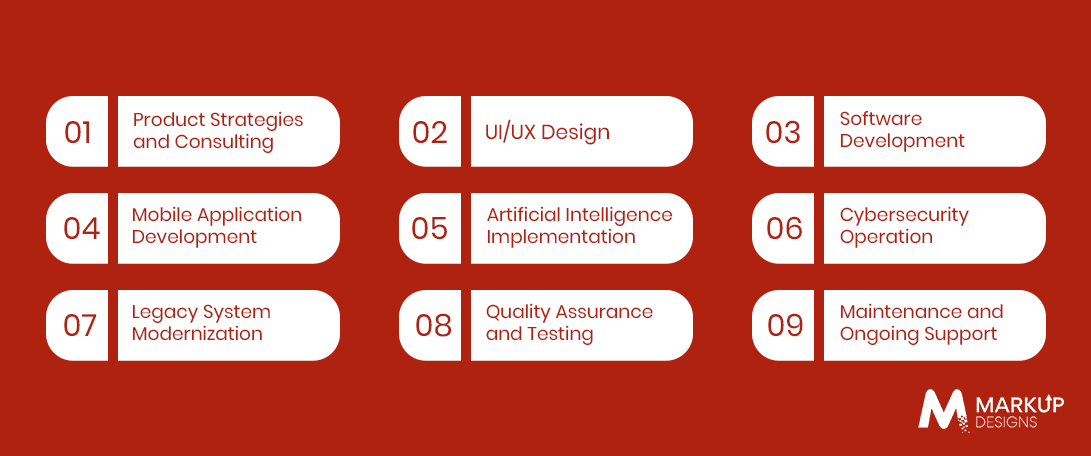
Organizations can outsource any of the following:
Product Strategies and Consulting
Many companies use external consultants to help them find their way to successful products by helping them define their product’s vision, confirm there is an opportunity for that product to sell in the marketplace, prioritize decisions on features of the product(s), and create a roadmap that connects technology investments to the overall strategy of the company, so when the product is eventually developed, it will help the company achieve its overall business goals.
UI/UX Design
User experience is one of the most important factors when trying to sell a product. To create a great user experience through design, companies look to outsource their UI/UX design to specialized UI/UX designers who understand the market, create the customer journey, design the user interface, and help with the usability of the product so that users have an intuitive experience with the product via digital means.
Software Development
Companies routinely outsource software development to have access to experienced software developers without having to hire additional personnel for their internal staff. Examples include custom software development projects, enterprise applications, SaaS solutions, and web-based solutions tailored to each organization’s needs.
Mobile Application Development
More and more often, companies are looking to external development teams to create high-quality iOS, Android, or cross-platform mobile applications. Outsourcing can give organizations access to mobile experts who are able to speed up development timeframes and implement best practices for each platform.
Artificial Intelligence Implementation
AI requires highly specialized skills that most organizations do not have in-house. Organizations can benefit from outsourcing AI projects to more effectively implement technology, such as predictive analytics, intelligent automation, recommendation engines, machine learning models, and generative AI solutions.
Cybersecurity Operation
Organizations are increasingly turning to third-party service providers to help secure their businesses and improve their security posture because of the increasing sophistication of cyber threats. Cybersecurity services can include threat monitoring, vulnerability assessments, compliance management, incident response, and the ongoing optimization of security measures.
Legacy System Modernization
Older systems can cause problems with operations and limit innovation. Outsourcing modernization projects allows organizations to refactor, re-platform, or rebuild older applications using current technologies while minimizing disruptions to businesses.
Quality Assurance and Testing
Product quality is a direct result of customer satisfaction and organizational performance. By using dedicated testing teams, companies can identify defects in products, verify that the product works according to solution documentation, perform performance testing, and ensure that products are of sufficient quality before launching them into the market.
Maintenance and Ongoing Support
Once a product has been developed and launched, the product’s lifecycle continues; therefore, the outsourcing of an organization’s maintenance and support for products is critical. Through continuous tracking, updating, and enhancing products, companies can ensure that their products remain secure, compatible with new technologies, and operating at peak performance.
In conclusion, the primary goal of outsourcing in product development is beyond just minimizing costs.
Why CIOs Are Increasingly Turning to Outsourcing

To meet these growing expectations, CIOs are increasingly using outsourcing as a way to find the right people with the right skill, to develop solutions more quickly by taking advantage of existing talents, and to have better access to high-quality technology resources than traditional hiring methods would allow. By leveraging outsourcing for product development purposes, CIOs can also assist their organizations in recruiting specialized skill sets, effectively scaling their resources, and executing their technology initiatives much faster than they could if they were to attempt to do everything internally through traditional hiring methods.
IT Talent Shortage Continues to Grow
One major hurdle faced by organizations today is a lack of highly skilled workers in the technology field. People with skill sets such as artificial intelligence, cloud computing, cybersecurity, DevOps, and data engineering continue to be in high demand and low supply.
Creating these types of capabilities internally requires long recruitment cycles, a large financial investment in training, and ongoing efforts to retain employees. Outsourcing enables organizations to immediately utilize experienced specialists, allowing organizations to fill gaps and complete projects much faster without having to wait several months to create internal teams.
Problems with the increasing cost of Development
The cost of developing technology continues to grow as businesses implement new technologies, platforms, and digital initiatives. In addition to Developer salaries, companies are required to account for things like recruiting expenses, employee benefits, training programs, cost of infrastructure, licensing of software, and overhead.
With an outsourcing option, businesses can take advantage of flexible costs by using outside services. Experts, when needed, rather than committing to the long-term costs of developing an internal team. This allows Chief Information Officers (CIOs) to maximize their budget while sustaining the momentum of their development.
Building the Security of Businesses
Cybersecurity has become a concern for board members of organizations due to the increase of the sophistication of threats. In order to protect digital products, there has to be a high level of expertise, continuous monitoring, expertise in compliance, and the capabilities to react quickly.
CIOs are using Outsourcing partners who provide them security operations, vulnerability assessments, compliance framework implementation, and ensure their products are developed with security integrated throughout the lifecycle of software development.
Rapidly Meeting Consumer Expectations
As digital experiences become more personalized, intuitive, and reactive to consumers, there have been monumental shifts in what consumers expect from businesses. If companies want to compete and provide customers with a seamless experience, they will constantly innovate.
By partnering with outsourcing companies, organizations can utilize experienced product teams, product designers, and software developers to enable them to innovate faster, create better customer experiences, and develop and deliver customer solutions faster to the market.
Accelerating Time-to-Market
Speed determines success in today’s highly competitive marketplace, and delays can mean misses in opportunities, reducing market share and ultimately slowing revenue growth.
Most outsourcing providers have processes and delivery frameworks that are proven and have specialized teams that can help an organization reduce development timelines and launch products more quickly than they would be able to do on their own, and without sacrificing quality or performance.
Supporting Complex Cloud Transformation Initiatives
Cloud computing now forms the backbone of any digital transformation strategy; that said, migrating applications, optimizing cloud-based environments, and building cloud-native architectures will often require expertise that an organization may not have in-house.
By working with outsourced partners, CIOs are able to utilize the experience of cloud architects, engineers, and consultants to assist them in navigating their cloud transformation initiatives more effectively by using experienced cloud architects, engineers, and consultants to speed up migration efforts while minimizing risk.
Modernizing Legacy Systems Without Disrupting Operations
Many enterprise organizations still have legacy systems that were never designed to meet today’s business needs and are a major cause of operational inefficiencies, higher maintenance, and reduced innovation.
Through outsourcing, an organization can modernize legacy applications through refactoring, replatforming, or rebuilding initiatives, while ensuring its day-to-day operations are not interrupted. This reduces the amount of technical debt and allows the organization to build an effective foundation for future growth.
The cost of maintaining and growing large in-house teams to be able to address the numerous technology challenges facing many organizations is becoming increasingly expensive and ultimately unsustainable to many organizations.
CIOs can use the ability of product development outsourcing to give an adaptable, scalable method to access expertise for fast-tracking innovation and achieve their longer-term digital transformation goals without the pressures of having to recruit extensively, train and invest in infrastructure themselves.
Outsourcing Product Development vs In-House Development
For CIOs, the decision is rarely about choosing one model over the other. It is about identifying the approach that best supports business goals, technology requirements, scalability needs, and long-term growth. While in-house teams provide direct control and institutional knowledge, outsourcing offers flexibility, specialized expertise, and faster execution.
Cost Management and Operational Expenses
An in-house development team typically incurs costs associated with recruitment, salaries, employee benefits, training programs, infrastructure, and software licensing. In contrast, outsourcing converts many of these fixed costs into project-based operational expenses, helping organizations optimize spending and improve financial efficiency.
Hiring and Resource Management
Building an internal team often involves lengthy recruitment cycles and ongoing workforce management. Outsourcing allows organizations to access development resources immediately while avoiding the challenges of hiring, onboarding, and managing underutilized staff during slower periods.
Access to Specialized Technology Expertise
Modern product development requires expertise in areas such as Artificial Intelligence, Machine Learning, Cloud Computing, DevOps, Cybersecurity, and Data Engineering. Developing these capabilities internally can take years, whereas outsourcing provides direct access to specialists with proven experience across multiple industries and technologies.
Speed of Product Development
Internal teams may face resource constraints, competing priorities, or hiring delays that can extend development timelines. Outsourcing partners leverage established workflows, experienced professionals, and mature delivery frameworks to accelerate development and reduce time-to-market.
Availability of Work-Ready Talent
Organizations building in-house teams often spend significant time sourcing and training professionals before development begins. Outsourcing provides immediate access to experienced talent that can contribute from the first day of the project.
Innovation and Technology Adoption
Keeping pace with rapidly evolving technologies requires continuous investment in training and skill development. Outsourcing partners bring exposure to emerging technologies, industry best practices, and diverse project experience, helping organizations adopt innovation more efficiently.
Scalability of Development Resources
Expanding internal teams to support changing project requirements can be expensive and time-consuming. Outsourcing enables businesses to scale resources up or down based on demand without making long-term hiring commitments.
Access to Niche Specialists
Certain projects require expertise that may only be needed for a limited period. Outsourcing allows organizations to engage specialized professionals for specific project phases without the need for permanent employment.
Flexibility During Changing Business Conditions
Adjusting internal teams to accommodate shifting priorities often requires additional hiring, restructuring, or workforce reductions. Outsourcing provides the flexibility to respond quickly to changing business needs, project scope adjustments, and evolving market conditions.
Selecting the Proper Outsourcing Model
There is no “one-size-fits-all” approach when companies consider various outsourcing strategies. When it comes to choosing an outsourcing model, there are a multitude of factors to consider, including: budget, number of people involved in the collaboration, any specific regulations that may need adhering to during the collaborative effort, complexity of the work/project, and long-term organizational goals. Knowing the overall strengths of each of these different outsourcing approaches will assist a CIO in making an informed decision regarding which outsourcing partnership will deliver the best sustainable value.
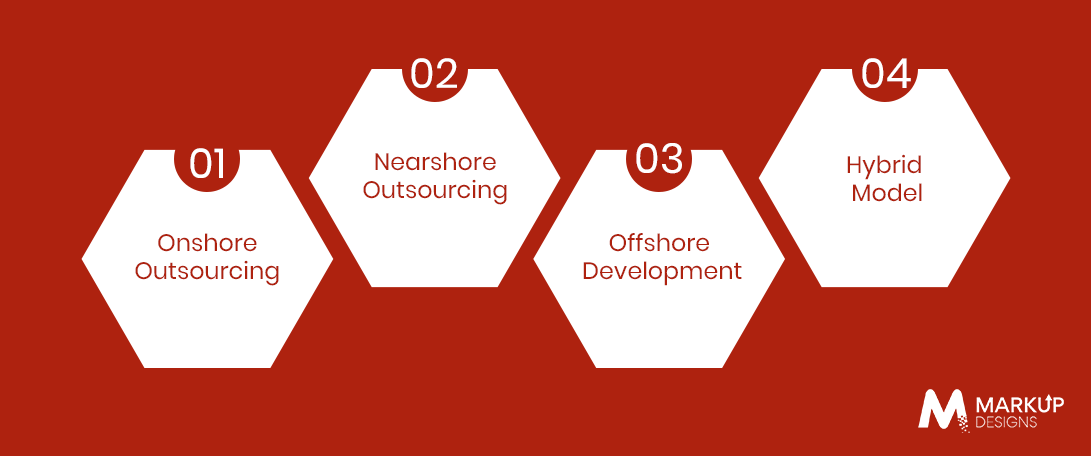
Onshore Outsourcing
Onshore outsourcing is defined as partnering with a technology provider that is in your own country. Organizations that choose to use onshore outsourcing are typically focused on having a seamless communication experience, cultural compatibility, and/or meeting specific regulatory compliance requirements. Onshore outsourcing provides the opportunity to work in the same legal and business environment, which can lead to less complicated governance structures; consequently, it is easier for CIOs to manage these types of outsourcing arrangements.
For CIOs in organizations operating in highly regulated industries, involved in government projects, or managing complex enterprise systems using third-party solutions, onshore outsourcing will generally provide these CIOs with greater visibility and control of the entire development process.
Nearshore Outsourcing –
Nearshore outsourcing is considered to be an approach in which the work is executed by development teams located in countries that are adjacent to, or close to, our own country. The reasons for nearshore outsourcing are generally to provide organizations with a cost-effective solution while at the same time providing frequent communication and close coordination.
The use of similar time zones and fewer logistical barriers with nearshore partners will allow for the ability to collaborate with them in real time while still providing a greater degree of cost savings than if the organization’s outsourcing partner were located onshore.
Use of this type of model is best suited for projects that need continual collaboration among internal stakeholders as well as with their external development team throughout the entire project lifecycle.
Offshore Development
Offshore development is done through an established partnership with teams located outside the country. When an organisation outsources development work offshore, they do so largely to obtain the best qualified talent for a particular job while saving money compared to hiring and maintaining full-time employees in the same position onshore. The popularity of outsourcing to offshore teams has grown tremendously in recent years, and many organisations take advantage of the scalability benefits that it provides without drastically increasing their operational budgets.
There are several reasons for these increases. One reason is that outsourcing to offshore companies allows businesses to access significantly larger pools of talent and to spread their development projects out on a 24/7 basis to multiple locations by using several different development teams in different geographical regions. CIOs who are managing large, ongoing software development programs or large-scale digital transformation projects can achieve substantial scalability and operational efficiencies by partnering with an offshore vendor for these types of projects.
Hybrid Model
A hybrid approach to outsourcing combines the strengths and capabilities of both in-house and outsourced development teams. Instead of having to choose between using in-house employees or outsourced personnel to develop a project, organisations can use a hybrid outsourcing approach that allows them to retain control over the overall direction of a project while relying on external partners to provide specialised expertise and additional resources needed to complete the project successfully.
By using a hybrid approach, enterprises achieve greater flexibility in their operations, improved resource allocation and use, and maintain a reasonable level of governance. Therefore, a growing number of enterprises are utilising hybrid models in support of digital transformation efforts, cloud migration projects, and other complex projects requiring business acumen as well as specialised technical experience.
Choosing the Correct Model for Your Business
There are many different types of outsourcing models, and no one model fits all organisations. Organisations in highly regulated industries often find the highest degree of control through onshore partnerships, while companies focused on scalability or cost-efficient alternatives might consider offshore outsourcing as a viable option. Many CIOs ultimately adopt a hybrid model that leverages both internal leadership and external subject matter expertise to create a balance between innovation, efficiency, and operational control.
What Modern-Day CIOs Are Engaging in Outsourcing

CIOs have been outsourcing product development for many years; however, today, CIOs are engaging external subject matter expertise to support their design, accelerate their transformation, and improve their overall business resiliency across multiple technology segments.
Cloud Transformation
Cloud transformation continues to be one of the most commonly outsourced technology functions. Many companies are engaging third parties for support with their cloud migration and to optimise their cloud infrastructure performance, as well as to improve the security of their cloud environment. Major service providers such as AWS, Microsoft Azure, and Google Cloud Platform require specialised expertise to implement, making it practical to outsource these services to achieve accelerated adoption and lower risk.
Artificial Intelligence Implementation
With the rapid adoption of AI technology in all industries, many companies are not developing large internal teams but are instead leveraging outsourcing partners to implement their advanced AI solutions. Generative AI, Intelligent Chatbot, Predictive Analytics, Recommendation Engine and Natural Language Processing (NLP) are typical types of applications or functionality within an organization that can be AI outsourced to help accelerate the adoption of artificial intelligence by providing access to specialized talent and resources.
Cybersecurity Services
Cybersecurity services have become one of the most outsourced technology functions. Organizations are often seeking external assistance to improve their security posture and help to maintain compliance as they continue to see increasing numbers and types of cyber threats.
Outsourcing partners provide various security-related services, including threat detection, vulnerability assessments, security monitoring, compliance management, and planning for incident response, allowing organizations to improve their overall security without having to have large security teams on staff.
Legacy System Modernization
Most organizations continue to use legacy systems that may limit their scalability and inhibit innovation. Modernizing these types of systems generally requires experience that would be considered niche, often making it difficult for the organization to find available resources internally to help with the modernization effort.
Outsourcing partners provide organizations with the necessary expertise to modernize applications, reduce the overall technical debt, improve system performance, and establish a solid foundation for future digital initiatives.
UI/UX Design
As consumers continue to raise their expectations for how they interact with digital products and services, organizations increasingly recognize the importance of user experience (UX) in the success of their products. Therefore, many businesses have begun to outsource UI/UX design to gain access to subject matter experts with a thorough understanding of user behaviour, interface design and usability best practices.
Through these expert design abilities, outsourcing partners help organizations produce digital products that are more intuitive, engaging and aligned with customer expectations.
Quality Assurance & Testing
Extensive testing throughout the development lifecycle is essential in producing high-quality products. Quality assurance is often outsourced by organisations to provide consistency of performance across a variety of devices, platforms, and user scenarios.
Dedicated testing teams aid in early identification of issues, improved overall stability of the product, and provide better support for throwing things into production.
DevOps & Cloud Operations
Automation, continuous integration (CI), and continuous delivery (CD) have become expected methods of delivering software in today’s ever-changing environment. By outsourcing DevOps functions, organisations can take advantage of streamlined development workflows, which will, in turn, provide operational efficiency.
By outsourcing DevOps functions, the organisation will have quicker release cycles while providing scalable, secure, and reliable applications.
Legacy System Modernisation
Many enterprises continue to run on outdated systems and are therefore limited in their ability to innovate.
Refactor
Refactoring improves the quality of the code and maintainability while still retaining the current functionality of the application.
Re-platform
Re-platforming allows the organisation to move the application’s current functionality from its current environment to a modern one, thus improving performance, agility, and operational efficiency.
Rebuild
If rebuilding is the selected solution, the application will be built using new technology and architecture. This process helps to eliminate technical debt while providing improved performance, stronger security, and future scalability.
UI/UX Design
User experience (UX) can be an important point of differentiation for any organisation.
User Research
Understanding the user’s behaviour and expectations provides insight into developing successful digital experiences.
Customer Journey Mapping
Understanding how the customers normally interact with your technology allows you to assess how they can be improved across all of your touchpoints.
Interface Design
Usable interfaces lead to better user experience, a greater number of users engaged with the site, and higher levels of user satisfaction.
Conversion Optimization
A better design will lead users to take actions and improve business results.
Accessibility Compliance
Creating an accessible environment will expand the number of users you can reach and serve.
New Trends Affecting The Way Organizations Are Outsourcing Product Development
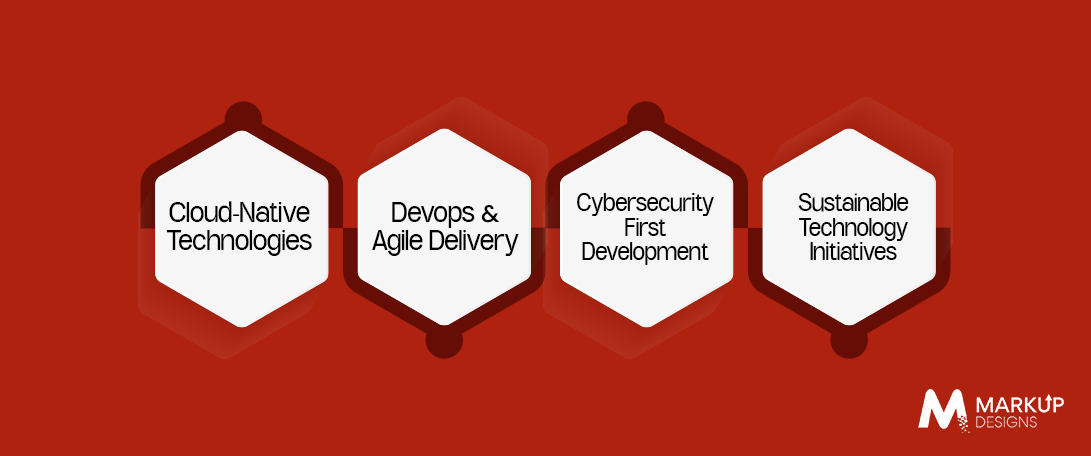
Cloud-Native Technologies
Organizations are moving to adopt cloud-native technologies that allow for scalable, resilient, and agile applications.
- Containers: Containers provide the ability to run the same application in different environments.
- Kubernetes: Kubernetes automates the deployment, scaling, and management of container-based applications.
- Microservices: Microservices allow for applications to be created from multiple independent and deployable components.
- Serverless Computing: Serverless architectures allow an organization to develop and launch applications without managing the associated infrastructure.
DevOps & Agile Delivery
Outsourcing relationships are increasingly being developed around development practices that improve collaboration and delivery speed.
- Agile Development Methods: Agile allows organizations to develop in iterative cycles and to respond to ongoing changes in requirements quickly.
- Continuous Integration (CI): Organizations utilize continuous integration to help identify problems in code quickly through the regular integration of code.
- Continuous Delivery (CD): Organizations utilize continuous delivery to release software on a more frequent and consistent basis with greater reliability.
- DevOps Automation: Automation of DevOps processes makes workflows flow more smoothly and gives developers additional time to focus on quality and meeting release timetables.
These methods will improve the relationship of collaboration and increase speed as well as quality, while developing software.
Cybersecurity-First Development
Security is no longer treated as a post-development activity.
- Secure-by-Design Principles: Security considerations are integrated throughout the development lifecycle.
- Zero Trust Architecture: Access controls are continuously verified to reduce security risks.
- Automated Security Testing: Automated testing helps identify vulnerabilities before deployment.
- Compliance Frameworks: Development practices are aligned with industry and regulatory standards.
Frameworks commonly include GDPR, HIPAA, PCI-DSS, ISO 27001, and SOC 2.
Sustainable Technology Initiatives
Environmental responsibility is becoming a business priority.
- Energy-Efficient Applications: Applications are designed to consume resources more efficiently.
- Sustainable Cloud Strategies: Cloud environments are optimized to reduce unnecessary resource usage.
- Green IT Practices: Organizations are adopting technology approaches that support sustainability goals.
- Carbon-Conscious Development Processes: Development decisions increasingly consider environmental impact alongside performance.
Strategic Framework for Outsourcing Product Development that is Successful

Step 1: Define Business Goals
- Define Outcomes Desired by the Organization
- Define User Requirements (needs)
- Identify the long-term vision (Purpose) of the Product to be Created.
- Establish Success Metrics for Use in Determining If/When the Project Has Achieved Success.
Step 2: Determine the Best Engagement Model
- Define the Available Budget for the Engagement.
- Consider the Complexity of the Project in Making the Decision on the Engagement Model to Use.
- Assess Required Collaboration with All Teams That Will Be Working on the Engagement.
- Ensure that your model is capable of meeting changing demands and will continue to be able to do so as your company grows.
Step 3: Evaluate Potential Partners
- Technical Ability ‐ Evaluate the technical capabilities of the partner in relation to relevant technologies.
- Industry Experience ‐ Look for a partner with industry‐specific experience delivering solutions.
- Portfolio Quality ‐ Evaluate the quality of the partner’s previous projects and the delivery of those projects.
- Security Practices ‐ Have the partner demonstrate to you how they protect and secure data.
- Method of Delivery ‐ Have a clear understanding of how the partner will manage and deliver projects.
Step 4. Establish Communication Frameworks
- Clear Reporting Structures ‐ Set a clear way to communicate project progress and updates.
- Escalation Procedures ‐ Create an accepted process for resolving project‐related issues efficiently.
- Collaboration Tools ‐ Implement a platform that allows for seamless communication between both parties.
- Regular Review Meetings ‐ Schedule regular project review meetings to ensure that the project stays on track.
Step 5. Formalize Governance
- Intellectual Property Ownership ‐ Establish ownership rights of any intellectual property from the beginning of the project.
- Service Level Agreements ‐ Define expectations regarding performance levels and service delivery.
- Data Protection Requirements ‐ Document the requirements to ensure that each party is compliant with data protection regulations.
- Performance Metrics ‐ Develop measurable metrics that will demonstrate success once the project has been delivered.
Step 6. Measure Performance on an Ongoing Basis
- Number of Delivered Projects ‐ Verify whether you are on track with project milestones (i.e., timely delivery of each project).
- Quality of the Product ‐ Assess the customer acceptance testing (CAT) metrics (i.e., how reliable, how fast, how satisfied the users are) to evaluate whether a product meets quality standards.
- User Adoption ‐ Measure the number of users who are utilizing the product or service as intended.
- Security Performance ‐ Review the effectiveness of the partner’s security controls and security practices.
Key Issues Within Outsourcing
Addressing the Challenges Faced by Chief Information Officers
- Communication Issues
- Concerns Regarding Data Security
- Quality Control Issues
- Scope Creep
What Markup Designs Can Provide
At Markup Designs, we assist businesses in developing/transforming product ideas into viable, scalable, and commercially available digital solutions through our outsourcing services for strategic development of products.
Using our multi-faceted development teams, we assist businesses at all phases throughout the life cycle of a product.
With experience in both technical and strategic areas of the business, Markup Designs helps CIOs drive innovation, streamline operations, and achieve measurable digital transformation.
Are You Ready to Accelerate Innovation Without Increasing Your In-House Staff?
Expand your team by leveraging our deep expertise in product development and accelerated project execution, and mitigate your risk of product development.

Conclusion
Outsourcing product development has moved from a tactical cost-saving initiative to a strategic growth enabler for today’s modern enterprises.
Outsourcing provides the benefits of specialized expertise, faster time to market and more operational flexibility for CIOs who are responsible for balancing many factors such as innovation, efficiency, security, and scalability.
However, to be successful, it takes more than simply choosing a vendor. Companies need to define their goals, create an appropriate governance framework and identify technology partners that have deep technical expertise as well as knowledge about the business implications of their products. If done correctly, product development outsourcing can be a significant enabler of digital transformation, allowing companies to remain competitive in an increasingly technology-driven world.
FAQs
1. What is Product Development Outsourcing?
Product development outsourcing is the practice of outsourcing all or most of the phases of planning, designing, developing, testing, deploying and maintaining a product to an external technology partner.
2. Why Do CIOs Outsource Product Development?
CIOs choose to outsource product development to gain access to highly specialized expertise, reduce costs, quickly bring products to market, increase the ability to scale and support digital transformation initiatives.
3. What Are the Main Outsourcing Models?
There are four primary outsourcing models: onshore outsourcing, nearshore outsourcing, offshore outsourcing, and hybrid outsourcing.
4. What Are Commonly Used Technologies That Are Outsourced?
Common technologies that companies outsource include: cloud services, AI implementation, cybersecurity operations, mobile application development, software engineering, DevOps and legacy modernization.
5. Is outsourcing an appropriate strategy for enterprise-wide initiatives?
Absolutely. Many enterprises outsource partner relationships in support of their digital transformation, migrating to cloud-based solutions, modernizing applications, enhancing their cybersecurity initiatives, and engaging in large-scale software development efforts.
Author's Perspective
Today, technology leadership is defined more by how well a company innovates, adapts, and delivers value than by the number of systems it has inside its four walls. Successful CIOs now realize that agility, not ownership of every capability, will be the source of competitive advantage going forward.
Outsourcing product development affords organizations the potential to access domain expertise quickly and efficiently; accelerate innovation while optimizing resources; and maintain strategic control over the end product without sacrificing quality.
As disruptive technologies such as artificial intelligence (AI), cloud-native architectures, automated cybersecurity, and intelligent applications continue to change business models across all sectors, organizations that build strong outsourcing ecosystems will be best suited to react to rapid market shifts and capture new opportunities as they emerge. For CIOs, the focus has shifted from determining whether or not to outsource to how they can create long-term partnerships that will deliver sustainable business value.
Discuss Your Project NowAjit Kumar Jha
VP - Business Operations
Related Posts

Custom Software Development Cost in the UK: Features,...

UK Online Safety Regulations: A Compliance Guide for...
Enterprise eCommerce Fraud Prevention: Best Practices for Secure...
Insights Are Valuable & Execution is Priceless
You’ve read about the digital future. Now, let’s build the infrastructure to take you there. Move your strategy from the page to the product.
Design Your Solution Now
Contact Us
Schedule The Appointment At Your Convenience Date And Time.
30 Min
Web Conference
Time Zone
Indian standard time (08:30pm)

Thanks For Getting In Touch!
You’ve Taken The First Step Toward Transforming Your Digital Presence. Our Experts Will Reach Out Shortly To Take It Forward.
Launch Your Dream Project
Provide a brief overview of your project, and our specialists will evaluate your requirements. We will connect with you to explore how the right digital solutions can help you launch faster.