
Outsourced IT Services: A Strategic Look at Benefits and Potential Risks
Modern businesses are no longer questioning whether they should invest in IT resources. Instead, they are asking how to manage things efficiently. As technology is becoming more complex and the talent shortage is becoming more prevalent, IT has become a major driving force for meeting the workforce demands within an organization.
Businesses across industries are utilizing outsourced IT services to enhance transformation and improve the overall operational performance and success while staying competitive. However, outsourcing IT is not actually the same for everyone; instead, it offers clear advantages. It also introduces major risks that can impact overall control, security, and long-term scalability.
In this blog, we’ll take a balanced view that breaks down what outsourced IT services entail, why businesses adopt them, the benefits they offer, and the risks leaders must evaluate before making a decision.
A Clear Understanding of IT Outsourced Services
The practice of assigning IT tasks to external providers, such as software development, cloud operations, cybersecurity, and infrastructure management, is known as outsourced IT services. These serve as specialised partners by offering resources, equipment, and expertise that may not be found internally.
Instead of establishing and managing the internal IT department, businesses may rely on outsourced experts to handle the entire IT ecosystem. Over time, this approach has undergone significant change, evolving from straightforward services to strategic partnerships that make decisions about innovation and digital transformation. These days, outsourcing is less about work delegation and more about improving capabilities.
Modern Businesses Move Towards IT Outsourcing?
The increased use of IT outsourcing is not just accidental; it is mainly driven by the core business challenges. One of the major reasons is the growing talent gap in the IT sector. Many businesses are unable to hire talented, skilled professionals, which makes outsourcing a practical alternative.
Also, the technology is moving at a faster rate. Businesses must adopt new tools and frameworks that help them stay relevant. IT service outsourcing enables businesses to keep up the pace without overextending the internal teams.
Another major factor that is responsible is the cost. Managing the internal IT department has more fixed costs, such as salaries, infrastructure, and ongoing costs. With the help of outsourcing, one can convert these into flexible, service-based expenses, allowing businesses to scale resources up or down based on demand.
But beyond cost and talent, the real driver is strategy. Companies are increasingly recognizing that IT is not just a service function—it’s a growth enabler. Outsourcing allows them to focus internal efforts on core business objectives while leveraging external expertise for execution.
Key Benefits of Outsourced IT Services
Functionalities Without Decreasing Functionality
Outsourcing IT services is an excellent way to achieve cost-effectiveness. In most cases, businesses do not need to invest in recruiting full-time employees, acquiring major software licenses, or building supporting infrastructures.
The ability for service providers to achieve economies of scale helps organisations gain access to the latest tools and technologies. This enables organisations of all sizes, not just the Fortune 500, to use enterprise-level technology to achieve their business objectives.
However, true value comes from reallocating dollars rather than simply saving them. Organisations may move their budgets away from operating costs and towards the areas of Customer Experience, Product Development, and Innovation.
2. Access to Specialized Expertise and Technology
Outsourced IT providers bring a diverse pool of expertise across domains such as cloud computing, cybersecurity, DevOps, and data analytics. This level of specialization is difficult and often expensive to build internally.
More importantly, these providers stay updated with the latest technological advancements. Businesses benefit from cutting-edge tools and practices without the burden of continuous upskilling.
This access to expertise is particularly valuable in areas like cybersecurity, where threats evolve rapidly and require proactive, expert-led defense strategies.
3. Improved Focus on Core Business Functions
When internal teams are freed from managing IT operations, they can focus on activities that directly contribute to revenue and growth. This shift in focus enhances productivity and strategic alignment.
Instead of spending time troubleshooting systems or maintaining infrastructure, teams can concentrate on innovation, customer engagement, and market expansion.
In essence, outsourcing allows businesses to do what they do best—while experts handle the rest.
4. Scalability and Flexibility
Business is changing rapidly and is constantly dealing with changing demands from consumers. Through outsourcing, businesses can have flexibility in scaling the resources that they use to deliver their IT services up or down based on their demand level.
Whether it be to support a rapid growth phase, launch of a new product, or deal with seasonal demand changes, through outsourcing IT services, a business retains the ability to dynamically align its IT resources with its business requirements in real time.
This agility is essential for a startup or a growing organization as they need to quickly react to the marketplace without overcommitting resources.
5. Improved Security and Regulations
Cybersecurity is becoming a major issue for organizations, no matter what their size is. Managed IT service providers place a lot of weight on their investment toward creating high-end security frameworks, gaining compliance, and building and using monitoring tools to help manage security. An experienced provider will be able to help businesses improve their overall security posture and lessen their exposure to potential threats.
These benefits can only be accomplished by using the right partner, someone who has the personnel and expertise to create and implement these processes and has a strong governance program to operate within.
The Hidden Risks of Outsourced IT Services
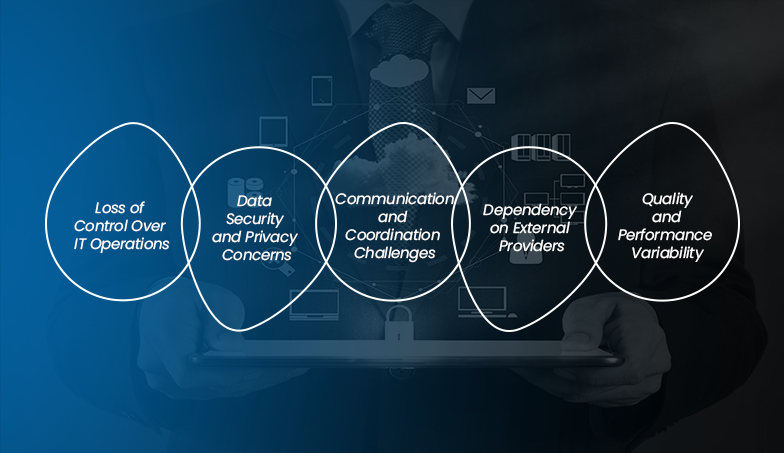
While the benefits are significant of partnering with a top IT outsourcing company. Understanding these risks is critical for making informed decisions.
1. Loss of Control Over IT Operations
Reduced Control is one of the most frequently referenced concerns in externalising IT functions. Because externally outsourced organisations handle a company’s IT function, there can be a lack of transparency across the process, decision-making process, and the execution of work. Reduced visibility may ultimately have an impact on whether the business’s and IT’s goals are aligned if they are not managed appropriately. To mitigate this risk, organizations must establish clear governance frameworks, define expectations, and maintain active oversight.
2. Data Security and Privacy Concerns
Outsourcing involves sharing sensitive data with external providers, which introduces security risks. Even with strong safeguards, breaches at third-party vendors can impact your organization.
This makes vendor selection and compliance critical. Businesses must ensure that providers adhere to strict security standards and regulatory requirements.
Security should never be assumed; it must be verified.
3. Communication and Coordination Challenges
Team collaboration across time differs; lots can go wrong, such as communication gaps or other misunderstandings or delays due to cultural differences (eg, language, time zone, company culture), which could lead to negative impacts on the final results of project work turned in by resource teams in countries other than the site location of worker/subcontractor team members.
Successful collaboration outsourcing will occur when you have a well-developed communication framework with regularly scheduled updates for each team member, as well clearly defined project process(es).
4. Dependency on External Providers
Relying heavily on a single provider can create dependency risks. If the provider fails to deliver, faces operational issues, or exits the market, your business could face disruptions.
This dependency can also limit internal capability development, creating long-term challenges.
A balanced approach, combining external service with internal oversight, is often the most sustainable strategy.
5. Quality and Performance Variability
Not all outsourcing providers deliver the same level of quality. Differences in expertise, processes, and standards can impact outcomes.
Without proper evaluation and monitoring, businesses may experience inconsistent service levels.
This highlights the importance of due diligence, performance metrics, and continuous evaluation
Strategic Considerations Before Outsourcing IT
Before outsourcing IT Services, there are several strategic considerations that need to be taken into account. Decisions on whether to outsource should be made after an organization has established its strategic objectives, such as reducing costs, accessing expertise, or providing faster innovation.
Secondly, your governance structure will be important to making sure that you and your business are properly aligned with your provider. Clear SLAs (Service Level Agreements), performance metrics, and communication protocols are important for maintaining alignment between the parties and ensuring accountability.
Thirdly, the selection of a provider should take into consideration much more than technical capabilities. Evaluating the provider’s cultural fit, communication style, and long-term vision is also essential to a successful relationship.
Lastly, an organization must also keep the right level of internal capabilities. Too much reliance on outsourcing providers can lead to vulnerability within your organization; therefore, striking the right balance between an internal and outsourced business model will generally provide the best results.
Emerging Trends in IT Outsourcing
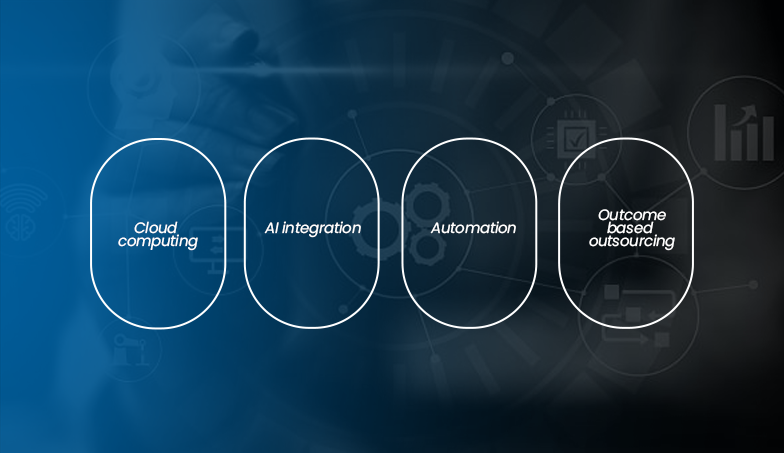
The landscape of IT outsourcing is evolving rapidly. Businesses are moving away from traditional models toward more strategic, value-driven partnerships.
Cloud computing, AI integration, and automation are reshaping outsourcing services. Providers are no longer just executing tasks—they are contributing to innovation and digital transformation.
Another emerging trend is outcome-based outsourcing, where success is measured by business results rather than service delivery alone.
These shifts indicate that outsourcing is becoming a core component of business strategy, not just an operational decision.
Why Partner with Markup Designs for Outsourced IT Services
Choosing an outsourcing partner is not just a technical decision; it’s a strategic one. This is where Markup Designs differentiates itself.
Markup Designs approaches outsourced IT services as a growth partnership, not a transactional vendor relationship. Instead of offering standardized packages, the focus is on aligning IT capabilities with your long-term business objectives. Every solution is tailored to ensure it contributes directly to efficiency, scalability, and measurable business outcomes.
What makes this approach powerful is the balance between technical depth and business understanding. Many providers excel at execution but lack strategic insight. Markup Designs bridges this gap by combining modern technology expertise—across cloud, automation, and digital systems with a clear understanding of how businesses operate and grow.
Cost of Outsourced IT Services (USD Breakdown)
Understanding cost structures is essential when evaluating outsourcing. While pricing varies based on scope, complexity, and geography, here’s a realistic breakdown to guide decision-making:
| Service Type | Estimated Monthly Cost (USD) | Description |
| Basic IT service | $500 – $2,000 | Helpdesk service, basic troubleshooting, maintenance |
| Managed IT Services | $2,000 – $10,000 | End-to-end IT management, including monitoring, updates, and service |
| Cloud Infrastructure Management | $1,500 – $8,000 | Cloud setup, optimization, and ongoing management |
| Cybersecurity Services | $2,000 – $15,000 | Threat monitoring, compliance, vulnerability management |
| Software Development Outsourcing | $25 – $150/hour | Custom development based on complexity and expertise |
| Dedicated IT Team | $8,000 – $30,000 | Full team, including developers, engineers, and project managers |
FAQs
1. What types of IT services can be outsourced?
Businesses can outsource a wide range of services, including IT services, cloud management, cybersecurity, software development, data analytics, and infrastructure management.
2. Is outsourcing IT services cost-effective for small businesses?
Yes, outsourcing helps small businesses avoid high upfront costs while gaining access to expert resources and scalable solutions.
3. How do I choose the right IT outsourcing partner?
Look for proven expertise, strong client testimonials, clear communication practices, and alignment with your business goals.
4. What are the biggest risks in IT outsourcing?
The main risks include data security concerns, communication gaps, and over-dependence on the service provider.
5. Can outsourced IT services scale with business growth?
Yes, one of the biggest advantages is scalability—services can be adjusted based on evolving business needs.
6. How do companies ensure data security when outsourcing IT?
By partnering with providers that follow strict compliance standards, use advanced security tools, and implement robust data protection policies.
7. Is outsourcing suitable for long-term projects?
Absolutely. Many businesses use outsourcing as a long-term strategy to drive innovation and maintain operational efficiency.
8. What industries benefit most from IT outsourcing?
Industries like healthcare, finance, retail, and technology benefit significantly due to their reliance on secure and scalable IT systems.
Conclusion
The selection of an IT service provider is not only a technical decision. It is a strategic decision. Markup Designs takes the approach of creating a partnership for growth rather than simply providing outsourced IT services through a relationship. Instead of static package solutions, Markup Designs focuses on aligning the capabilities of information technology with the strategic long-term business plans. Each proposed solution is customized to achieve measurable business results while keeping efficiency, scalability, and outcome-based metrics.
Author's Perspective
Many businesses look to outsource their IT services as a cost savings opportunity, but the most successful companies use outsourcing as a strategic lever for growth instead. The real difference comes from moving from the question “How can I save money by outsourcing?” to the question “How can I use my outsourced provider to create new capabilities?” It is when you change your focus from cost savings to capability creation that your outsourced IT provider will deliver the value you want to achieve.
In my experience, the biggest difference between successful companies that outsource and those that do not is the degree to which they are clear about the goals they wish to achieve through outsourcing, whether that’s accelerating product development, enhancing their cybersecurity capabilities, or enabling scalable infrastructures. Successful companies tend to create effective outsourcing partnerships, while companies that outsource without a strategic plan are more likely to encounter issues with alignment and a lack of results.
Discuss Your Project NowDeepak Tripathi
Product Manager
Related Posts
Why Businesses in Dubai are Investing in Managed...

Managed IT Services Pricing: What It Really Costs...

How Remote Managed IT Services Help Businesses Scale...
Insights Are Valuable & Execution is Priceless
You’ve read about the digital future. Now, let’s build the infrastructure to take you there. Move your strategy from the page to the product.
Design Your Solution Now
Contact Us
Schedule The Appointment At Your Convenience Date And Time.
30 Min
Web Conference
Time Zone
Indian standard time (08:30pm)

Thanks For Getting In Touch!
You’ve Taken The First Step Toward Transforming Your Digital Presence. Our Experts Will Reach Out Shortly To Take It Forward.
Launch Your Dream Project
Provide a brief overview of your project, and our specialists will evaluate your requirements. We will connect with you to explore how the right digital solutions can help you launch faster.