

In Brief
- Identify User Needs: Figure out the needs of healthcare providers, patients, and administrators before choosing software.
- Pick Appropriate Features: Choose electronic health records, appointment scheduling, telehealth, billing, and secure access to patient information.
- Obey Australian Regulatory Requirements: Take into account the Privacy Act 1988, Australian Privacy Principles, and relevant regulations in the sphere of healthcare.
- Determine the Development Costs: Assess software complexity, integration, data security requirements, and maintenance to determine a real budget.
- Provide Scalability and Integration: Develop software that will be able to work together with other systems in the industry and will fit the business in the future.
Healthcare software development in Australia is helping healthcare providers organize their patient information, make administrative processes easier, and provide access to medical services. From electronic health records and hospital management systems to telehealth solutions, digital technologies are gaining popularity and becoming an integral part of healthcare processes. Still, creating good healthcare software involves more than choosing the best technology for the task. Businesses should understand clinical workflows, requirements of users and systems, and data security expectations.
Businesses that are going to develop healthcare software in Australia need to understand the development process, cost factors, necessary features, and regulatory requirements.
Australian regulations regarding privacy and healthcare can impact software architecture, data management, and deployment. In this article, we describe how to start healthcare software development, estimate costs required for it, decide on the functions that have to be implemented and create an application that will allow to support healthcare operations and comply with all Australian regulations.
What Is Healthcare Software Development?
Healthcare software development is the process of creating and maintaining software that allows managing operations, patient information, administration, and medical services in the healthcare sector. The solutions that can be created are electronic health records (EHRs), hospital management systems, telehealth applications, and healthcare analytics software. In Australia, hospitals and clinics use software to enhance their work, to make more efficient decisions and make healthcare available to patients.
The development of software for the healthcare industry implies taking into account security, system integration, usability, and other important aspects of creating software solutions. It should help healthcare professionals in their work and keep patient information secure. For companies that want to enter the healthcare software market in Australia, the main task is to create software that will meet their specific needs.
What Are the Key Types of Healthcare Software in Australia?
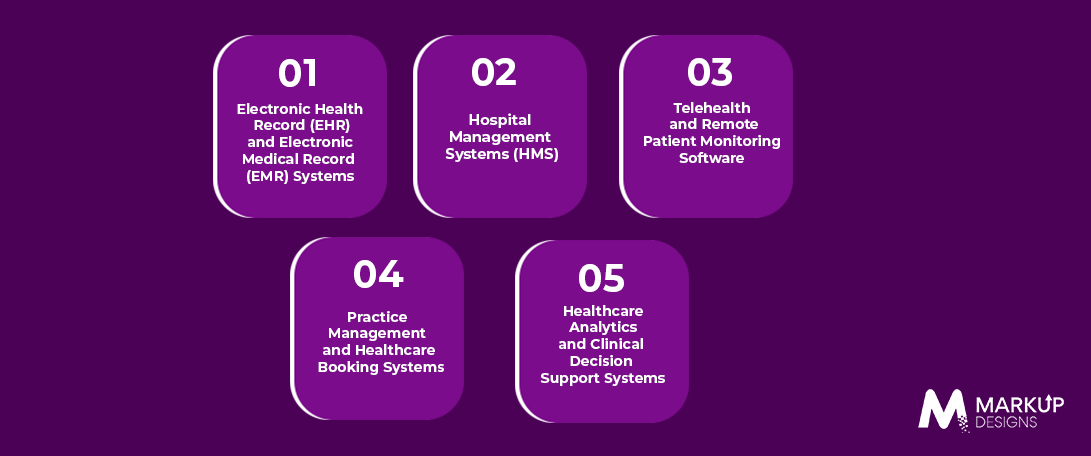
Depending on the specific size of the health organization in question, the specialisation and the requirements that it has, Australian healthcare organizations will need different software packages. In the case of hospitals, they will need integrated management programs, while in private practices, scheduling appointments and managing patient data is usually a priority. It is important to know what type of software there is to find the right software for one’s particular target users and health care environment.
Electronic Health Records (EHR) and Electronic Medical Records (EMR) Systems
EHR and EMR systems assist in storing and managing information about patients in digital form. EMRs are usually more concerned with the medical records in one single practice or organization, while EHRs provide more information about the health status of one patient from different care facilities. In Australia, they may include clinical notes, diagnoses, information about medications, allergies, and test results. Their integration with other healthcare software systems can facilitate information exchange, minimize duplicate data entry, and improve the continuity of care.
Hospital Management Systems (HMS)
Hospital management systems consolidate administrative and operational activities, such as patient registration, bed management, staff planning, payments, and inventory control. This type of software is designed to assist hospitals in coordinating their departments and keeping records of their operations. With different implementations, an HMS may be integrated with clinical systems, laboratory information systems, and diagnostic applications, thus minimizing manual actions and increasing access to operational data. Custom development is especially needed for hospitals that have a unique workflow or integration needs.
Telehealth and Remote Patient Monitoring Software
Telehealth systems allow healthcare institutions to hold remote consultations via videoconferencing and communication channels and schedule appointments using their platforms. Remote patient monitoring software expands these possibilities by gathering health parameters measured with the help of various devices, such as a blood pressure monitor or wearable devices. Australian healthcare providers are able to use telehealth software development services to consult their patients remotely and monitor their health parameters. In addition, the developers should pay attention to reliable connection, secure data transmission, a user-friendly interface, and escalation procedures for concerning health measurements.
Practice Management and Healthcare Booking Systems
Practice management software assists clinics and individual medical practitioners to schedule appointments, register patients, perform billing, generate reminders, and handle other administrative tasks. The healthcare booking system allows patients to search for available appointments and book them. In addition, functionalities such as automated reminders, management of cancelled appointments, and practitioner calendars might assist in minimizing the problem of no-shows. If integrated with clinical records and payments, these applications could ease the work of a practice.
Healthcare Analytics and Clinical Decision Support Systems
Healthcare analytics software transforms clinical and operational data into reports, allowing healthcare institutions to track trends, monitor their performance, and allocate resources. Clinical decision support systems perform another, but also a related, function, namely providing relevant information, alerts, or evidence-based recommendations for clinicians at the time of care delivery. Depending on the purpose, these tools might be subject to additional validation and risk controls. When developing these applications, it is important to focus on data quality, explainability, and clinician control, rather than on automating recommendations as a replacement for the physician’s opinion.
What Features Should Healthcare Software Include?
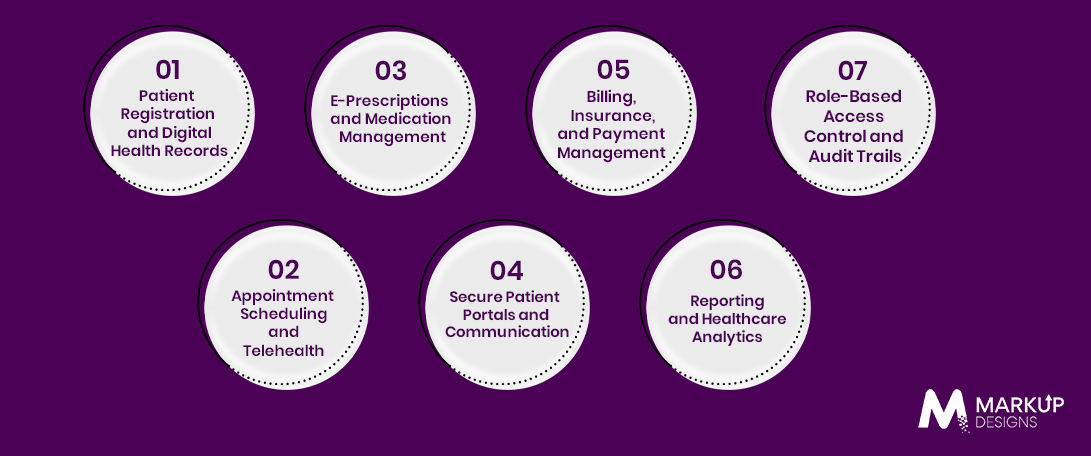
The characteristics of healthcare software solutions should meet the needs of their target users, be they patients, clinicians, administrators, or even hospital management teams. Although different products have different requirements, most require efficient patient data management, smooth workflows, secure communication, and access control mechanisms. Considering these functionalities at the planning stage of the project will help keep the costs low and avoid unnecessary functionalities.
Patient Registration and Digital Health Record
Patient registration and electronic health records form the basis of managing healthcare information. This is where authorised users are able to maintain the demographics, medical history, allergies, diagnoses, notes, and other tests of a patient in an organized way. It is possible to use validation rules to ensure that data entries do not contain inconsistencies or omissions. If necessary, the software should support any applicable Australian healthcare data standards and integrations.
Appointment Scheduling and Telehealth
Features of appointment scheduling enable both patients and staff to arrange bookings, check practitioner availability, make cancellations, and manage reminders through one platform. Telehealth may offer additional functionalities such as video consultations, secure messaging, and digital follow-up processes. The development team should also account for accessibility, connection reliability, and privacy when designing remote consultation features.
E-Prescriptions and Medication Management
Features for e-prescriptions and medication management allow healthcare providers to register prescriptions, review patients’ medication history, and manage related prescribing data. Depending on the software package used, integration will involve electronic prescription services, workflows for pharmacies, and checking medication interactions. Solutions developed for Australia should take into account the prescribing regulations as well as the technology-related requirements, which could include the national electronic prescribing standard where appropriate. Controls for access and verification will help mitigate the risk of making unauthorised changes and medication errors.
Secure Patient Portals and Communications
Patient portals will provide users with access to health information, appointments, test results, and communications tools in a secure environment. Depending on the workflow established by a healthcare organization, patients may also be able to submit forms, request prescription renewals, and get care instructions via the portal. Secure messaging will reduce reliance on fragmented communication channels and link all relevant communications to patients’ records. Authentication and consent management should be considered from the early stages of the development process.
Billing, Insurance, and Payments Management
Billing and payments features will help healthcare organizations prepare invoices, keep track of payments, balances, and accounting information.
Australian solutions may also need workflows for Medicare claims, private health insurance, or other relevant payment arrangements, depending on the provider and service type. Integrating billing with appointment and patient management systems can reduce duplicate data entry and improve reconciliation. The exact functionality should be determined by the organisation’s billing model and applicable payment requirements.
Reporting and Healthcare Analytics
Reporting functionality assists in the tracking of operational metrics, service usage, appointment trends, etc. The dashboard provides data visualisation which can be used for resource planning and performance tracking. The tool for healthcare analytics can also help to reveal any trends in the clinical and operational data, if the data is accurate enough and controlled accordingly. Reporting access should be restricted based on the user role, and patient information use should be compliant with the related privacy rules.
Role-Based Access Control and Audit Trails
Role-based access control limits system functionality and patients’ data access according to user role and responsibility. Thus, a clinician, receptionist, billing administrator, and system administrator should not have equal access automatically. An audit log helps to track any actions related to viewing and changing records, which is needed for investigation and monitoring purposes. It should be supplemented by good authentication, session management, and access reviews.
How to Develop Healthcare Software in Australia?
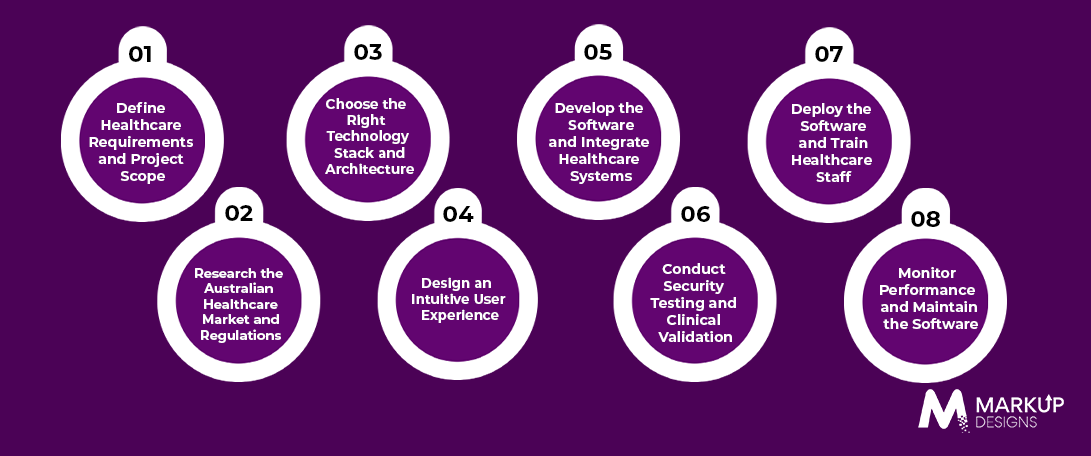
Development of healthcare software requires a structured approach that links business goals with the clinical workflow and technical and legal requirements of Australia.
Each stage influences the solution’s usability, implementation cost, security, and long-term reliability. Following a defined development approach helps organisations identify risks early and build software that meets the needs of healthcare professionals and patients.
Define Healthcare Requirements and Project Scope
First, define what problem your software should solve and what kind of users will use it. Talk to healthcare experts, administrative employees, patients, and other involved parties to get acquainted with their workflow and operational problems. Convert this information into functional requirements, technical specifications, user roles, and project objectives. Defining an MVP might help to prioritize necessary features before investing more effort into complex ones.
Research the Australian Healthcare Market and Regulations
Analyze the target market, competitors, healthcare delivery models, and expectations of Australian healthcare organizations. Find out which laws regarding privacy, security, interoperability, and clinical issues apply to the software you are about to develop. For instance, the Privacy Act 1988 and Australian Privacy Principles may apply to the processing of personal data, and software for therapeutic purposes will need to pass the assessment according to the regulation of the Therapeutic Goods Administration. Identification of these requirements at this stage will greatly affect the architecture, development process, and budget of the software.
Choose the Right Technology Stack and Architecture
Select technologies depending on the software functionality, number of users, integration, security, and maintainability.
The technology stack may include a web or mobile frontend, backend services, databases, cloud infrastructure, and integration APIs. A modular architecture can make future updates easier, while suitable hosting and infrastructure controls can support reliability and data protection. Technology decisions should be driven by project requirements rather than the popularity of a particular framework or cloud provider.
Design an Intuitive User Experience
Healthcare software needs to be functional for users who could be working on tight deadlines and have different levels of technical expertise. Design user stories and prototypes for the main tasks performed by the software, such as registration of patients, record review, appointment management, or remote consultation. Prototype the design and test it with sample users to reveal potential problems with navigation and superfluous steps in the process of using the software. Usability, accessibility, user interface, readable and helpful error messages, and efficient workflow need to be regarded as mandatory elements.
Develop the Software and Integrate Healthcare Systems
Build the software in iterations, focusing on essential functionality and testing it during each iteration. Integration can require the connection with already existing clinical systems, laboratory information systems, pharmacy information systems, billing software, or any other necessary national digital health services. In cases where integration is required, the team needs to evaluate supported interoperability standards, API, identity, and data-mapping criteria. It is essential to conduct early integration testing because of possible incompatibility with the existing healthcare IT systems caused by data format issues.
Conduct Security Testing and Clinical Validation
Perform tests for functional issues, performance problems, integration failures, and security vulnerabilities prior to releasing the software. Security testing may include access control verification, vulnerability assessments, penetration testing, and tests for secure data transmission and storage. Clinical validation will also be necessary when the software performs tasks and functions that can influence patient safety and make clinical decisions. Depth of testing must take into account the nature of use, potential risks, and requirements imposed by regulations.
Deploy the Software and Train Healthcare Staff
Deploy the software taking into account the needs of the organization, data migration requirements, and possible downtime. Validate the records migrated, confirm the permissions assigned, perform integrations, and prepare backup and restoration measures before going live. Healthcare staff must be trained on the workflows pertaining to their work with the help of documentation and practical demonstrations. Phased deployment may be appropriate for bigger organizations, as it will allow finding and correcting problems before deployment in all departments.
Monitor Performance and Maintain the Software
Healthcare software will need constant monitoring after deployment in order to ensure that it remains reliable, secure, and suitable for current operational needs. Track application performance, integration failures, user feedback, security alerts, and relevant service-level indicators. Regular maintenance should cover bug fixes, dependency updates, backup testing, security reviews, and infrastructure optimisation. Organisations should also reassess regulatory obligations when new features, integrations, or intended uses change the product’s risk profile.
How Much Does Healthcare Software Development Cost in Australia?
Development costs for healthcare software in Australia vary depending on the complexity of the product, its features, integrations, security control mechanisms, and the delivery period. Development of a simple appointment booking tool will cost less money than development of an all-in-one hospital information system with many integrations and complex logic. Assessment and migration of data and other related expenses may significantly increase the cost. An estimated cost will be more accurate if it is based on scope definition and technical assessment rather than on some industry average number.
Cost Based on Software Type and Complexity
One of the key factors influencing the development cost is the type of healthcare software. While a simple booking tool is likely to have a simpler workflow and will be developed faster, EHRs, hospital management solutions, or decision support systems may be more complicated in terms of data structures, integration possibilities, etc. Custom workflows, multiple types of users, and high reliability may further complicate the process.
Features and Customisation Requirements
Every feature brings design, development, testing, and further maintenance work. Standard functionality such as appointment reminders or patient registration is generally easier to scope than advanced analytics, automated clinical recommendations, or integrations with multiple external services. Customisation can also increase costs when the software must accommodate unique clinical processes or existing organisational systems. Prioritising features according to business value and user needs helps prevent scope expansion from consuming the available budget.
UI/UX Design and Development Costs
The cost of UI/UX depends on the number of user flows, types of interfaces, accessibility, and testing. The healthcare software might have multiple target audiences with varied permission levels and workflows, thus increasing the complexity of the design. Development cost will vary based on the selected platforms, technology stack, team structure, and technical architecture. The development cost of a set of native applications will be quite different compared to the development cost of a responsive web or cross-platform mobile app.
Third-Party Integrations and Infrastructure
Integration of the healthcare software with other third parties might involve such activities as API development, coordination with vendors, data mapping, setting up authentication, and integration testing. Costs related to infrastructure will vary depending on hosting, storage, data traffic, backup policy, monitoring, and availability targets. Some third parties might require you to pay for licensing, subscriptions, transactions, or usage fees. Such expenses should be considered in addition to the initial cost of development to avoid underestimating the total cost of ownership.
Testing, Compliance, and Security Expenses
Healthcare software will require testing corresponding to the complexity of the product and its effect on the care provided to patients.
Expenses may include functional and integration testing, penetration testing, privacy assessments, accessibility reviews, and clinical validation where applicable. Products subject to medical device regulation may also require specialist regulatory advice and supporting evidence. The budget should account for these activities from the planning stage because treating compliance and security as last-minute additions can lead to expensive redesigns and launch delays.
Ongoing Maintenance and Support Costs
The initial development budget does not represent the full cost of operating healthcare software. Organisations must plan for hosting, technical support, security updates, bug fixes, compatibility changes, and enhancements as user needs evolve. Costs may also arise from changes to external APIs, regulatory requirements, and healthcare data standards. A long-term maintenance plan should define responsibilities, response times, monitoring arrangements, and the resources needed to keep the software secure and operational.
What Compliance Requirements Apply to Healthcare Software in Australia?
Software in the field of healthcare in Australia has to adhere to certain privacy, security, and healthcare requirements depending on the intended use of the software and type of information it is processing. The requirements might be different for the software that allows patients to make bookings, software for maintaining electronic health records, and software providing for medical purposes. Establishing the respective obligations will allow businesses to avoid expensive software re-designs, ensure patient information confidentiality, and make proper preparations for using software in the healthcare market of Australia.
Australian Privacy Principles (APPs) and the Privacy Act 1988
The Privacy Act 1988, along with its Australian Privacy Principles (APPs), defines the conditions for working with personal information within the scope of this Act. Health information is considered to be sensitive information; thus, additional requirements apply to it. For each organisation and the activities it conducts, there are certain obligations related to collection, consent, use and/or disclosure, data quality, access, correction, and information security. The appropriate privacy controls and other related measures have to be included in the healthcare software.
My Health Records Act 2012 and My Health Record Requirements
My Health Records Act 2012 regulates the operation of the Australian national digital health records system, including participation and access rules. The healthcare software that will interface with the My Health Record will have to satisfy the necessary participation, access, security, and technical requirements. Businesses need to determine whether they need such integration and get acquainted with the necessary onboarding and compliance requirements before developing the solution. Also, they will have to consider patient privacy, authorized access, and data protection when retrieving information from the system.
Australian Digital Health Agency Standards and Integration Requirements
The Australian Digital Health Agency (ADHA) promotes the development and implementation of digital health capabilities and standards of interoperability in Australia. In terms of integration, depending on the purpose of the software, there may be different requirements for APIs based on FHIR, clinical terminology standards, healthcare identifiers, and other specifications. Rather than relying on a single specification being used for all the systems, businesses need to verify the current technical specifications and requirements of each particular integration.
Therapeutic Goods Administration (TGA) Regulations for Medical Software
The Therapeutic Goods Administration regulates therapeutic goods in Australia, including certain software products that meet the definition of a medical device. Whether software is regulated depends on its intended purpose, functionality, claims, and risk profile. Administrative applications, appointment booking tools, and general record-management systems do not automatically require TGA approval, while software intended to diagnose, monitor, predict, or treat medical conditions may fall within the regulatory framework. Businesses should assess the product’s intended use early and determine whether applicable classification, conformity assessment, or Australian Register of Therapeutic Goods requirements apply.
Healthcare Data Security and Access Controls
Healthcare software should protect sensitive information through security measures appropriate to its risks and applicable legal obligations. Common safeguards include encryption in transit and at rest, multi-factor authentication, role-based access controls, audit logging, secure API management, and tested backup and recovery procedures. Businesses should also establish processes for vulnerability management, incident response, access reviews, and secure data disposal. Security requirements should be incorporated into the software architecture and reviewed throughout development and operation rather than addressed only before launch.
What Challenges Do Businesses Face When Developing Healthcare Software?
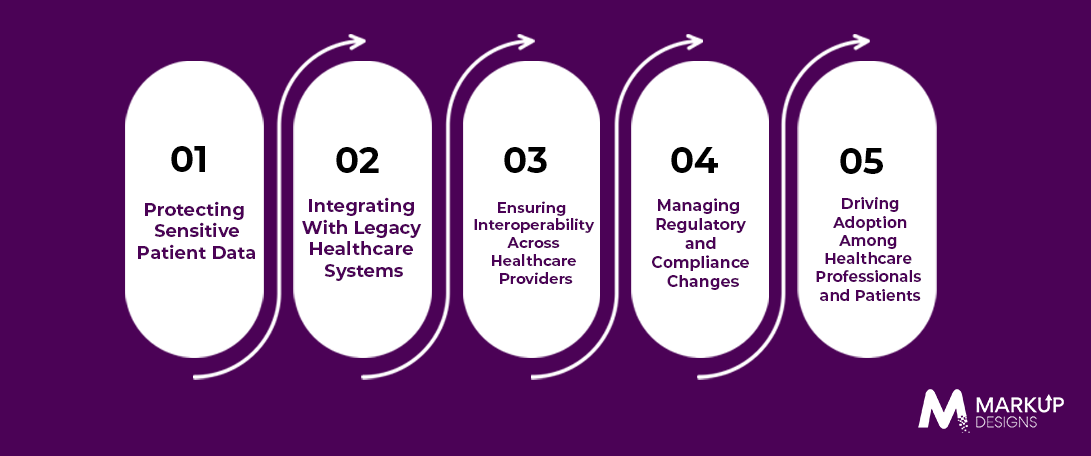
Healthcare software projects involve challenges that extend beyond application development. Businesses must work with sensitive information, established clinical workflows, legacy infrastructure, and regulatory expectations while ensuring the product remains usable for healthcare professionals and patients. Addressing these issues early helps reduce implementation risks, control costs, and improve the chances of successful adoption.
Protecting Sensitive Patient Data
Healthcare applications store or process information that can expose patients to privacy risks if accessed or disclosed without authorisation. Weak authentication, excessive user permissions, insecure integrations, and unpatched vulnerabilities can create entry points for attackers. Businesses should adopt privacy-by-design principles, minimise unnecessary data collection, restrict access according to job responsibilities, and conduct regular security testing. Clear incident response procedures are also important for identifying, containing, and reporting eligible data breaches.
Integrating With Legacy Healthcare Systems
Hospitals and medical practices often rely on established systems that use different technologies, data structures, and integration methods. Connecting new software to these systems can require custom APIs, data transformation, vendor coordination, and careful migration planning. Inadequate integration can create duplicate records, inconsistent information, or interruptions to clinical workflows. Businesses should assess the existing technology environment before development and test integrations using realistic data and operational scenarios.
Ensuring Interoperability Across Healthcare Providers
Healthcare information may need to move between clinics, hospitals, laboratories, pharmacies, and other care providers. Differences in data formats, clinical terminology, patient identifiers, and system capabilities can make consistent information exchange difficult. Adopting relevant interoperability standards and validating data mappings can reduce these problems. Businesses should also define how information is matched, updated, and reconciled across systems to prevent errors from spreading between connected platforms.
Managing Regulatory and Compliance Changes
Healthcare regulations, technical standards, and integration requirements can change over time. Software that meets its initial requirements may need updates when legislation changes, new security risks emerge, or external systems revise their specifications. Businesses should assign responsibility for regulatory monitoring, maintain technical documentation, and review the impact of changes on existing features. A modular architecture and a structured release process can make updates easier to implement and validate.
Driving Adoption Among Healthcare Professionals and Patients
Even technically sound software can fail if it adds unnecessary work or creates confusing user experiences. Healthcare professionals need interfaces that support clinical workflows, while patients may require accessible navigation and clear instructions. Involving representative users during design and testing helps identify usability problems before launch. Training, practical documentation, responsive support, and a feedback process can further encourage adoption and help organisations improve the product after deployment.
How Can Businesses Choose the Right Healthcare Software Development Partner in Australia?
Selecting a development partner requires more than comparing hourly rates or delivery promises. Healthcare projects demand a combination of technical capability, knowledge of the Australian regulatory environment, integration experience, and long-term support. Businesses should assess potential partners against their specific requirements and ask for evidence of relevant experience before committing to a project.
Evaluate Healthcare Domain Expertise
Look for a partner that understands healthcare workflows, sensitive data handling, and the operational differences between clinics, hospitals, and digital health platforms. Review relevant project examples, technical case studies, and the partner’s experience with comparable features or integrations. A team familiar with healthcare requirements is better positioned to identify risks during discovery and translate operational needs into practical software specifications. Where direct healthcare experience is limited, verify how the team will obtain the necessary clinical and regulatory expertise.
Verify Australian Regulatory and Security Knowledge
Ask how the development team identifies applicable Australian privacy, digital health, and medical device requirements. The partner should be able to explain how regulatory considerations influence architecture, access controls, documentation, testing, and deployment planning. Verify its security development practices, vulnerability management procedures, and approach to privacy assessments. Regulatory compliance should not be accepted as a vague promise; responsibilities and required deliverables should be documented in the project scope.
Assess Integration and Interoperability Capabilities
Review the partner’s ability to work with existing clinical systems, third-party APIs, healthcare data standards, and external service providers. Ask how it handles authentication, data mapping, failed transactions, duplicate records, and integration testing. A capable partner should identify dependencies and technical limitations before they become delivery problems. Request an integration plan that specifies the systems involved, data flows, testing responsibilities, and expected outcomes.
Review Testing, Deployment, and Maintenance Support
Evaluate how the partner manages quality assurance, security testing, performance testing, deployment, and post-launch support. Healthcare projects may require additional clinical validation or regulatory evidence depending on the software’s intended use. Ask who will maintain the application, address vulnerabilities, monitor integrations, and manage future upgrades. A clear support agreement with defined responsibilities, response times, and maintenance arrangements is more useful than an unsupported promise of ongoing assistance.
Why Choose Markup Designs for Healthcare Software Development in Australia?
From initial discovery and UI/UX design to development, testing, deployment, and maintenance, a structured delivery process helps businesses manage complexity and plan for future improvements. Markup Designs can work with healthcare organisations to evaluate project requirements, identify integration dependencies, and define a practical development roadmap. Regulatory applicability and specialist clinical requirements should be assessed for each project rather than assumed to be covered by software development alone.
Build Healthcare Software for the Australian Market
Turn your healthcare software idea into a practical development roadmap with the right features, integrations, security measures, and technical foundations.

Conclusion
A structured development process, appropriate security controls, and a reliable technology partner can help organisations manage implementation risks and prepare for long-term maintenance. Before starting a project, businesses should establish a realistic budget, prioritise essential features, assess relevant Australian regulations, and plan for interoperability from the outset. These decisions provide a stronger foundation for developing healthcare software that meets operational needs and can evolve with the healthcare environment.
FAQ
1. How long does it take to develop healthcare software in Australia?
Development time depends on the software’s complexity, required integrations, regulatory obligations, and testing scope. A relatively simple application may take a few months, while a complex hospital platform or regulated medical software product may take considerably longer.
2. Can healthcare software integrate with My Health Record?
Yes, eligible healthcare software can integrate with My Health Record when the intended use and technical approach support it. The solution must meet the applicable participation, security, technical, and conformance requirements.
3. Is healthcare software required to comply with the Australian Privacy Principles?
Not every software provider is subject to the Privacy Act 1988 in exactly the same way, but many healthcare organisations and service providers must comply with its requirements, including the Australian Privacy Principles where applicable. Health information receives additional protection, and state or territory privacy laws may also apply.
4. Does all healthcare software require TGA approval?
No. Software is not automatically regulated by the TGA simply because it is used in healthcare. Regulatory status depends on its intended purpose and functionality. Software that performs certain diagnostic, monitoring, treatment, or other medical functions may qualify as a medical device, while ordinary administrative tools may not.
5. Should businesses choose custom healthcare software or an off-the-shelf solution?
Custom healthcare software is appropriate when an organisation needs specialised workflows, tailored integrations, or greater control over functionality and future development. Off-the-shelf software may be more suitable when standard features meet the requirements and faster implementation is a priority.
Author's Perspective
From initial discovery and UI/UX design to development, testing, deployment, and maintenance, a structured delivery process helps businesses manage complexity and plan for future improvements. Markup Designs can work with healthcare organisations to evaluate project requirements, identify integration dependencies, and define a practical development roadmap. Regulatory applicability and specialist clinical requirements should be assessed for each project rather than assumed to be covered by software development alone.
Discuss Your Project NowJupinder Singh Arora
Founder and CEO
Related Posts

Enterprise Application Integration: A Complete Guide for Modern...

How Much Does Custom Accounting Software Development Cost...

How Much Does It Cost to Develop Property...
Insights Are Valuable & Execution is Priceless
You’ve read about the digital future. Now, let’s build the infrastructure to take you there. Move your strategy from the page to the product.
Design Your Solution Now
Contact Us
Schedule The Appointment At Your Convenience Date And Time.
30 Min
Web Conference
Time Zone
Indian standard time (08:30pm)

Thanks For Getting In Touch!
You’ve Taken The First Step Toward Transforming Your Digital Presence. Our Experts Will Reach Out Shortly To Take It Forward.
Launch Your Dream Project
Provide a brief overview of your project, and our specialists will evaluate your requirements. We will connect with you to explore how the right digital solutions can help you launch faster.