

In Brief
- The complexity level is a key factor that determines the cost of development: Depending on the software’s complexity, its development price will vary in accordance with its features, scope, integrations, and level of customisation.
- Basic systems cost much less: The cost of building a property’s basic lease, tenant and rent management functionalities is also usually much lower compared to that of enterprise systems.
- Integrations influence the total cost: Connecting payment gateways, accounting software, and other third-party solutions impacts the final development costs considerably.
- Compliance with Australian standards makes things more complicated: While planning and developing, it is necessary to consider privacy management and data protection regulations in Australia.
- Consider the maintenance budget separately: Total cost of ownership includes cloud hosting, technical support, security patches, and future updates.
Australian property agencies, landlords, and property managers require property management software to manage rents, communicate with tenants, fulfil requests, manage leases, and report finances from a single solution. With the increase in property management needs, companies begin to think about custom development of software because of its efficiency of operations, automation of many operations, and enhanced control of property.
Still, the expenses associated with developing property management software in Australia is contingent upon business requirements, set of features, integration necessities, and technical intricacies. A platform that has been developed for a smaller property management firm has different requirements in comparison to that of an enterprise software solution that manages multiple portfolios, automated payments, and advanced analytics. Having a clear understanding of the cost factors enables businesses to understand their investment in advance, outline key features, and design a development approach that would help them grow.
What Factors Influence Property Management Software Development Costs in Australia?
The cost of developing property management software depends on the design features, technical requirements, and business objectives. The understanding of the following factors allows businesses to investigate their investments and identify the necessities in terms of development.
Software Complexity and Project Scope
Scope is one of the most important elements that affect development costs. A simple platform that helps manage tenants and properties requires fewer resources than a system that operates with many portfolio brands, sophisticated reporting and tracking systems, and technology that enables online processing of payments. A basic platform designed to manage rental properties and tenant records requires fewer resources than a system supporting multiple property portfolios, automated workflows, advanced reporting, and real-time data synchronisation. Businesses should define their operational requirements early to avoid unnecessary development expenses and scope changes.
Features, Modules, and Customisation Requirements
The introduction of each feature entails the need for some specific development, verification, and support. Basic modules, which include tenant management and lease tracking functions, are generally easier to create than customized processes that utilize automated approval, portfolio analytics, and role-based access management. The closer the software should be to existing business processes, the longer and more costly its implementation will be.
UI/UX Design and User Experience
Real estate management solutions may need to address multiple groups of users such as owners, tenants, property managers, and maintenance teams, which creates the necessity to conduct user research, create wireframes and prototypes, and carry out usability tests. The design process may become even more challenging due to the need to support different devices.
Third-Party Integrations and Data Migration
The processes of integrating outside systems and migrating data to them may lead to an increase in costs as well. The complexity of integration varies due to many factors, including the availability of APIs and the number of systems to be connected.
The complexity depends on API availability, data compatibility, and the number of systems involved. Migrating existing property records, lease documents, and financial data also requires validation to maintain data accuracy and operational continuity.
Security, Compliance, and Data Hosting
Property management software must keep private data, which consists of important information about tenants, lease contracts, payments, owners, etc. This process requires implementing encryption, controlling access, secure login, audit logs, and backup systems, which drives costs associated with software development. Companies should also consider meeting all requirements under the Australian privacy law, including the Privacy Act 1988 if applicable, and the companies must also make a decision regarding how to host the data legally.
Development Team and Technology Stack
The cost of software development depends very much on the team’s experience, location, business model used, and technology stack. The team may consist of business analysts, UI/UX designers, frontend and backend developers, QA, and DevOps engineers. This stack also impacts the amount of infrastructure costs and the time required for integration and support. The companies that choose technology only based on its cost incur on other costs.
How Much Does Property Management Software Development Cost by Type?
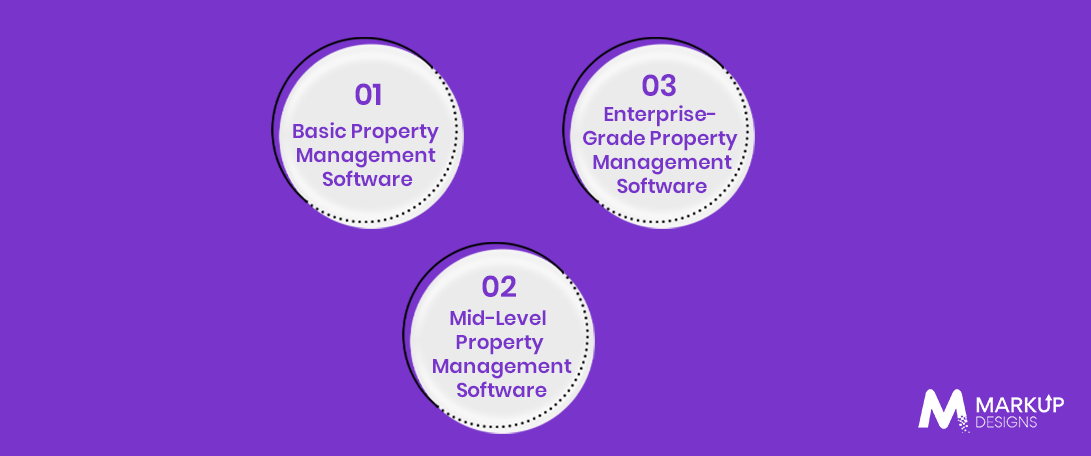
The cost of property management software development is very much influenced by how many users are working with the product, what business processes the software supports, and how customizable it has to be. The following estimates provide indicative planning ranges in Australian dollars (AUD), rather than fixed market prices.
| Software type | Estimated development cost | Typical scope |
| Basic | AUD 20,000–50,000 | Essential property records, tenant management, and lease tracking |
| Mid-level | AUD 50,000–150,000 | Rent management, maintenance workflows, reporting, and integrations |
| Enterprise-grade | AUD 150,000–400,000+ | Multi-portfolio operations, advanced automation, complex integrations, and analytics |
These ranges indicate starting point costs before carrying out specific evaluations of the project. They are categorized as the projected costs of initial development.
Basic Property Management Software
A simple property management software provides essential functionalities of rental property management, including keeping records of properties, tenants, leases, and tracking money movements. It is applicable to small property management agencies, small landlords, or companies switching from spreadsheets and unconnected software.
The development costs are reasonable if the scope is clear and the application utilizes common processes. However, custom portals, complicated integrations, and sophisticated automation can lead to considerable increases in the budget.
Mid-Level Property Management Software
Mid-level software allows bigger operations thanks to the abilities of providing information about reminders on rent payments and requests for repairs and financial statements, as well as giving tenants plenty of useful sections connected with a property or owner of the property.
Mid-level software can be used by growing companies in the property management area that get bigger and require coordinating larger portfolios and numerous groups of users. Prices vary depending on how complex integration is, what processes the software should have, and how much data is needed to migrate.
Enterprise-Grade Property Management System
Enterprise-grade solutions target big agencies, commercial property operators, builders, and enterprises with sophisticated portfolios spread over many locations. They probably consist of all kinds of advanced features, integrations, complex accounting systems, predictive analytics, and automated business processes.
The development process requires careful architecture design, security operations services, quality testing, and implementation management. As a result, development costs can exceed AUD 400,000 when the project implies lots of customisations, past systems integration, and advanced automation.
What Is the Cost Breakdown of Property Management Software Development?
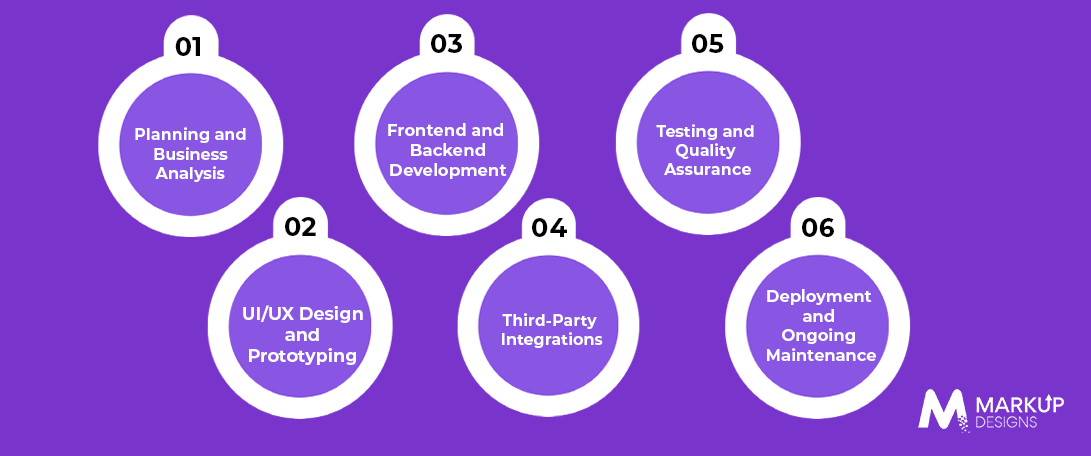
Total costs for developing property management software include more than just writing code. Each stage incurs spending for specific activities which depend on the project’s complexity and methodology.
Planning and Business Analysis
Planning defines the main goals of the software, users’ needs, technical side, and other important aspects for development. Business analysts help to create a workflow, find the gaps in business processes, and figure out the MVP.
Investing in this phase helps reduce scope changes and prevents businesses from spending money on features that do not address their core requirements.
UI/UX Design and Prototyping
This stage involves carrying out user research, creating information architecture, wireframes, interface designs, and interactive prototypes. Designers need to think about the various user paths, for example, tenants reporting problems and property managers evaluating tenant history. Usability testing is a crucial phase that helps uncover potential design issues early on.
Frontend and Backend Development
Frontend development looks into how users will be interacting with your platform, while backend development addresses business logic, databases, authentication, and data processing. The price will depend on the number of modules, complexity of the process, number of platforms supported, and the required performance levels. If you have to create two separate web and mobile applications, it would take more time than creating one responsive web application.
Third-Party Integrations
The charges for integration will depend on how many external applications a given portal will need to integrate with and how complicated those integrations will be. Payment processing, accounting, property listing, identity verification, and document management usually require separate implementation and testing. Otherwise, applications that have limited API support and inconsistent data can be harder to work with than systems that can easily be connected.
Testing and Quality Assurance
Testing verifies that the software functions correctly, protects sensitive information, and performs reliably under expected workloads. This phase may include functional testing, integration testing, security assessments, usability testing, and performance testing. More complex platforms require broader test coverage because issues in financial workflows, access permissions, or data synchronisation can disrupt daily operations.
Deployment and Ongoing Maintenance
Deployment involves configuring production infrastructure, setting up monitoring, migrating final data, and preparing users for launch. After release, businesses must budget for hosting, bug fixes, security patches, compatibility updates, and technical support. Maintenance costs should be considered separately from initial development because software requires ongoing attention as business requirements and technologies evolve.
How Do Features Affect Property Management Software Development Costs?
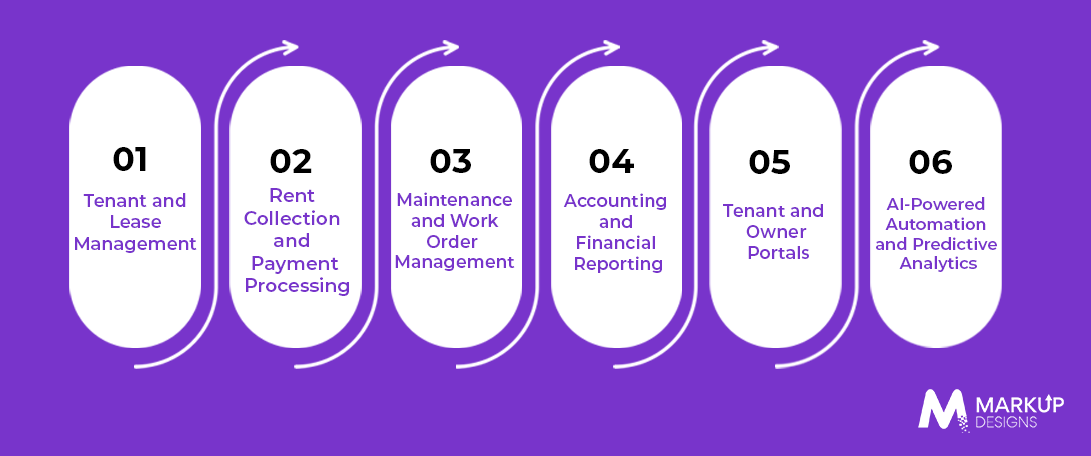
The feature set directly affects development effort, testing requirements, and long-term maintenance. Businesses can control costs by prioritising functionality according to operational needs and introducing more advanced capabilities as the platform grows.
Tenant and Lease Management
Tenant and lease management features centralise tenant profiles, rental agreements, lease dates, renewal reminders, and property occupancy information. Basic record management is relatively straightforward, while automated renewals, document workflows, and complex lease rules require additional development. Businesses managing large portfolios may also need advanced search, bulk operations, and detailed access permissions.
Rent Collection and Payment Processing
Rent collection features can include payment reminders, transaction tracking, recurring payment schedules, overdue notifications, and reconciliation with accounting records. Integrating a payment gateway introduces additional work related to API configuration, transaction status handling, refunds, and payment security. The final cost depends on the provider, supported payment methods, and level of automation required.
Maintenance and Work Order Management
Maintenance modules help tenants submit repair requests while enabling property managers to assign contractors, track progress, and manage completion records. More advanced functionality may include priority-based scheduling, service-level tracking, contractor portals, and automated notifications. Integration with external maintenance providers or asset monitoring systems can further increase development effort.
Accounting and Financial Reporting
Accounting features may cover rent ledgers, expense tracking, owner statements, invoices, financial summaries, and reconciliation workflows. The cost increases when the software must support complex reporting structures, multiple business entities, or integrations with existing accounting systems. Financial calculations and reporting also require thorough testing to maintain accuracy and provide reliable records.
Tenant and Owner Portals
Dedicated portals allow tenants to pay rent, access documents, and submit maintenance requests, while owners can review property performance, statements, and updates. These portals require separate user journeys, secure authentication, permissions, and responsive interfaces. Real-time notifications, document signing, and personalised dashboards add further development effort.
AI-Powered Automation and Predictive Analytics
AI capabilities can automate document classification, categorise maintenance requests, analyse rental trends, and help identify potential maintenance issues. Predictive analytics may also support occupancy forecasting and portfolio performance analysis. Costs depend on data availability, model selection, integration requirements, and ongoing monitoring. Businesses should establish a clear use case before investing in AI, as unnecessary automation can increase costs without delivering meaningful operational benefits.
What Are the Ongoing Costs of Maintaining Property Management Software in Australia?
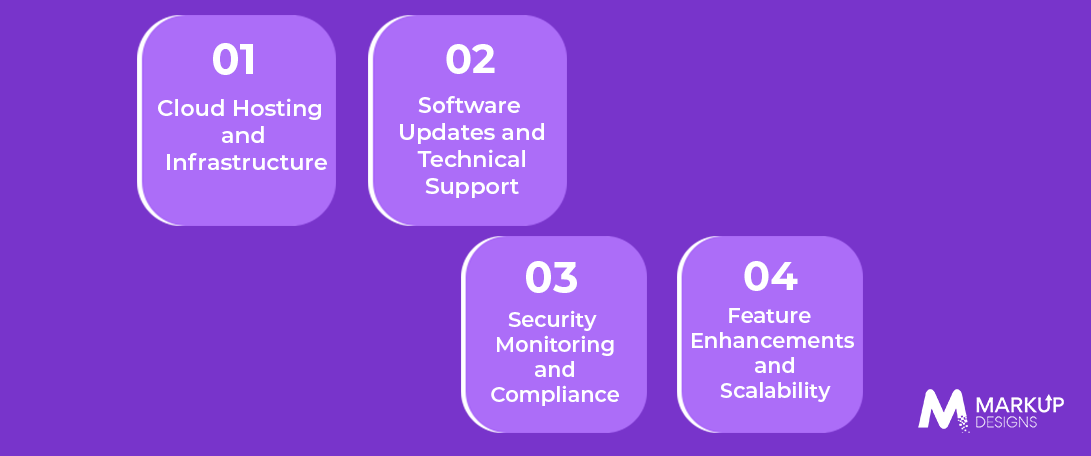
The initial development cost is only part of the total investment in property management software. Businesses must also budget for infrastructure, technical support, security, and future improvements to keep the platform reliable as their property portfolios and operational needs grow.
Cloud Hosting and Infrastructure
Cloud hosting costs depend on the number of users, storage requirements, transaction volumes, and computing resources needed to run the platform. Businesses may also incur expenses for database services, backups, monitoring tools, and content delivery networks. As usage increases, infrastructure should be reviewed regularly to balance performance with operating costs.
Software Updates and Technical Support
Software requires regular updates to fix bugs, maintain compatibility, and address changing business requirements. Technical support may cover troubleshooting, performance issues, system downtime, and user assistance. The cost depends on the support arrangement, platform complexity, and service-level requirements. Businesses should establish a maintenance plan rather than treating support as an occasional expense.
Security Monitoring and Compliance
Ongoing security expenses can include vulnerability assessments, access monitoring, security patches, backup testing, and incident response. Businesses must also review their privacy practices and applicable Australian regulatory obligations as the software evolves. Regular security assessments help identify weaknesses before they lead to data breaches, service disruptions, or compliance problems.
Feature Enhancements and Scalability
As businesses expand, they may need additional integrations, reporting capabilities, user roles, or automation features. These changes require development and testing to ensure they do not disrupt existing workflows. Planning for scalability from the beginning can reduce the need for expensive architectural changes later, although additional infrastructure and development will still be necessary as demand grows.
How Can Businesses Optimise Property Management Software Development Costs?
Controlling development costs does not mean choosing the cheapest technology or removing essential functionality. It means investing in features that address real operational needs while avoiding unnecessary complexity and preventable rework.
Prioritise Features for the MVP
Start with a minimum viable product (MVP) that addresses the most important property management tasks, such as property records, tenant management, lease tracking, and rent monitoring. Additional features can be introduced after the core platform has been tested with actual users. This approach limits initial investment and provides feedback before businesses commit to a broader feature set.
Choose a Scalable Technology Architecture
Select an architecture that meets current requirements while allowing the platform to accommodate future growth. Overengineering the initial solution can increase development and infrastructure costs, while an architecture that cannot support expansion may require expensive redevelopment. The objective is to build only what the business needs now without creating avoidable technical limitations.
Integrate Existing Tools Where Practical
Reusing established accounting, payment, document management, and communication tools can reduce the cost of building equivalent functionality from scratch. However, businesses should assess integration fees, API limitations, data compatibility, and vendor dependency before making a decision. Custom development is justified when existing tools cannot meet essential operational requirements.
Plan Development in Phases
Divide the project into manageable releases, beginning with core functionality and adding more advanced modules based on business priorities. Phased development helps teams identify technical issues early, evaluate actual user adoption, and adjust subsequent investment. Clear milestones and defined acceptance criteria also make progress and spending easier to monitor.
Account for Long-Term Operational Costs
Evaluate the total cost of ownership rather than comparing development quotes alone. Include hosting, third-party subscriptions, maintenance, security, support, and future enhancements in the budget. Establishing a realistic operating budget early helps businesses avoid underfunding the platform after launch and make better decisions about its long-term sustainability.
How Can Markup Designs Help Develop Cost-Effective Property Management Software in Australia?
Markup Designs helps businesses plan and develop custom software around their operational requirements, user needs, and long-term growth objectives. From requirement analysis and UI/UX design to software development, third-party integrations, Qa testing, and deployment, the team can help establish a clear development scope and prioritise essential functionality. By aligning technical decisions with business goals, Markup Designs aims to help Australian property businesses manage development investment while building software that can adapt to changing requirements.
Build Property Management Software That Fits Your Business
Define your core requirements, evaluate the right technology approach, and plan a development roadmap around your budget and operational goals.

Conclusion
The cost of developing property management software in Australia depends on the platform’s complexity, feature requirements, integrations, security needs, and development approach. While a basic solution may address essential rental operations, more advanced platforms require greater investment in automation, reporting, and enterprise-level functionality.
Businesses can manage costs more effectively by defining their requirements early, prioritising an MVP, selecting suitable technologies, and accounting for ongoing maintenance. A clear understanding of both initial development expenses and long-term operating costs helps property businesses make informed investment decisions and build a platform that supports their future needs.
FAQ
1. What is the development cost of property management software in Australia?
The cost of developing property management software can be estimated around AUD 20000-50000 for a basic system, AUD 50000-150000 for a mid-level application, and over AUD 150000-400000 for an advanced solution. The real cost depends on the particular functionality, integrations, the level of customization and security needed, and the scope of the project. Those figures are approximate; they do not represent the current market prices.
2. What is the typical timeframe for property management software development?
A basic platform may be developed within 2-4 months, while a mid-level solution may take around 4-8 months, and the time needed for developing a sophisticated enterprise solution could exceed 12 months. The timeline may differ drastically according to the requirements of the business, team size, number of integrations, as well as the data migration process.
3. Is the custom property management application more costly than the standard solution?
In general, custom software is initially more expensive due to the fact that it is created taking into account the specific requirements and processes of the business. Off-the-shelf software typically costs less to adopt initially, but subscription fees, customisation limitations, and integration requirements can affect its long-term value. The better option depends on the business’s scale, processes, and budget.
4. What drives property management software development costs?
The main cost drivers are complex functionality, a high level of customisation, multiple third-party integrations, legacy data migration, strict security requirements, and support for multiple operating systems and platforms. Frequent changes in project scope can also increase development time and cost.
5. How much does it cost to maintain property management software per year?
Annual maintenance costs depend on the complexity of the solution, hosting needs, nature of support, and number of updates. As a rough estimate, companies can plan to allocate about 15–25% of the initial development cost for annual maintenance.
Author's Perspective
Property management software should not be perceived only as a one-off development project but as a long-term operational investment. Australian companies should refrain from making any major investment in advanced functionalities and features until they confirm the necessity of their use, but should not be stingy with security and data handling needs and the architecture needed for future development. The right approach is to start with simple processes, track the benefits of the approach, and scale the platform as the business grows.
Discuss Your Project NowGaurav Goyal
Global Sales- VP
Related Posts

How Much Does Custom Accounting Software Development Cost...

How to Build an Insurance Portal with CRM,...

Custom Software Development Services in Abu Dhabi for...
Insights Are Valuable & Execution is Priceless
You’ve read about the digital future. Now, let’s build the infrastructure to take you there. Move your strategy from the page to the product.
Design Your Solution Now
Contact Us
Schedule The Appointment At Your Convenience Date And Time.
30 Min
Web Conference
Time Zone
Indian standard time (08:30pm)

Thanks For Getting In Touch!
You’ve Taken The First Step Toward Transforming Your Digital Presence. Our Experts Will Reach Out Shortly To Take It Forward.
Launch Your Dream Project
Provide a brief overview of your project, and our specialists will evaluate your requirements. We will connect with you to explore how the right digital solutions can help you launch faster.