

In Brief
- A doctor-on-demand mobile application is used by patients to connect with healthcare specialists who provide consultations both offline and online, book appointments, write digital prescriptions, get paid, and arrange further treatment. There are different types of apps, such as general consultation, specialist consultation, urgent care, mental consultation, chronic conditions management, and multi-specialty mobile apps.
- The main functionality includes the following: patient registration, doctor’s profile creation, appointment booking, video and audio consultations, payment system, e-prescriptions, notifications, and admin panel. The feature list should depend on the type of audience and healthcare business model.
- The process of developing a doctor-on-demand app consists of the following stages: determining requirements, conducting market research, securing, compliance, UI/UX design, tech-stack selection, architecture development, integration of features, testing, launch, and support.
- Development of a doctor-on-demand app is expected to cost about $20,000–$40,000 for a basic app, $40,000–$80,000 for an intermediate app, and $80,000–$150,000+ for an advanced app. Development times may vary between 2–3 months for a basic app and 6–9+ months for an advanced app.
- The main obstacles for the project implementation are associated with the security of personal information, compliance with healthcare regulations, integration of the EHR system, stability of video calls, scheduling of doctors, and scalability of the platform. Markup Designs offers you 14+ years of industry experience, 200+ professionals, and has worked with 500+ companies in UAE.
Everyone wants fast and easy access to healthcare facilities without spending countless hours commuting to clinics and booking appointments. The increasing demands have made doctor-on-demand apps an essential part of telemedicine. These apps help you make appointments, get consultations with doctors via video calls, and receive prescriptions, all right from your smartphone.
For doctors and entrepreneurs in the field of medicine, developing a doctor-on-demand app presents an exciting opportunity to connect with more patients, organize appointments easily, and provide flexible consultation services. But developing a good app is not only about integrating basic booking and video calling facilities.
With the right approach to development, you can create an application that will fit the requirements of your users and, at the same time, be profitable for you.
In this blog, we will discuss the steps to take when developing a doctor-on-demand app, its main features, architecture, development process, and the cost of its implementation.
What is a Doctor On-Demand App?
Doctor on Demand application is a digital platform that offers patients consultations with certified doctors via online and offline means. The patients get connected to healthcare practitioners, schedule appointments with them, and receive relevant consultation without having to follow cumbersome procedures for appointment booking.
The applications feature various aspects like video consultations, electronic prescriptions, online payments, appointment reminders, and availability of medical history of the patient, among others. According to the business model of the company, patients could be able to receive consultations from specialists, arrange follow-up appointments, or receive remote healthcare services.
These platforms offer management of appointments, communication with patients, and reduced administrative workload for healthcare practitioners. These platforms offer increased accessibility to healthcare services, especially to those with limited proximity to clinics or those who want to consult doctors remotely.
A doctor-on-demand app can be used for various purposes ranging from general medical consultations to more specialized healthcare services. The set of features and functions will depend on the target users, healthcare services to be provided, and the objectives of the business. Identifying the requirements is the initial step to creating an effective platform.
Types of Doctor On-Demand Apps
Doctor on-demand applications cater to different needs in healthcare based on the services provided by the app and its target audience. It is critical to select the appropriate application models prior to development based on your business needs.
General Healthcare Consultation Applications
Such applications allow patients to talk to general practitioners regarding common health issues, seek medical advice, and schedule follow-ups via video or audio calls.
Specialist Consultation Applications
These are platforms that help individuals seek consultation from specialists such as dermatologists, cardiologists, nutritionists, and other specialists.
Urgent Care Apps
Such applications enable users to get consultations with medical practitioners for any health issues that are not life-threatening.
Mental Health Consultation Apps
These apps enable users to connect with different medical specialists such as therapists, counselors, and psychologists.
Chronic Disease Management Apps
Through these applications, patients can monitor and manage diseases like diabetes and high blood pressure through consultations and other health services.
Multi-Specialty Healthcare Apps
This is a healthcare application that incorporates different healthcare services into one application. Through these apps, patients can consult different doctors from different disciplines.
Choosing the right app type helps you define the required features, development scope, and overall project budget.
Key Features of a Doctor On-Demand App
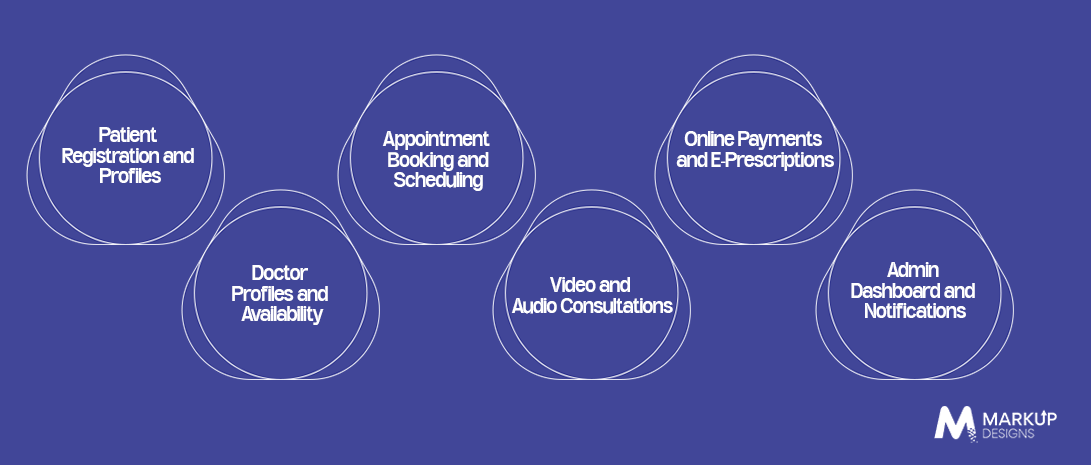
The features of a doctor-on-demand application will determine how easy it is for patients to find doctors, schedule appointments, and receive healthcare services. An effective application should provide a seamless user experience for patients as well as allow doctors to organize their day-to-day operations.
Patient Registration and Profiles
Patients should have the ability to register on the app, edit their profile, add medical history, and view their past appointments.
Doctor Profiles and Availability
Doctors’ profiles should contain information about qualifications, specialization, experience, fee per consultation, and available time slots.
Appointment Booking and Scheduling
It should be possible for patients to check the availability of doctors, schedule an appointment, change the appointment, and cancel an appointment.
Video and Audio Consultations
Secure audio and video calling gives the patients an option to consult their doctors via remote communication. Functionality such as good connection, chatting, and file transfers could make these consultations easier.
Online Payments and E-Prescriptions
Payment gateways will give the ability for users to pay the consultation fees through online payments. Electronic prescriptions from doctors must also be possible.
Admin Dashboard and Notifications
An administrator dashboard would be useful in managing patients, doctors, appointments, payments, and activities on the platform. Notifications, emails, and SMS notifications will be used to provide data on bookings and updates.
How to Build a Doctor On-Demand App: Step-by-Step Development Process
To develop a doctor-on-demand application, proper planning, technology, and knowledge about the medical requirements are essential. Following the steps described below will allow you to save money and avoid possible troubles while making your product trustworthy.
Step 1: Determine Your Business Model and Requirements
First, figure out who will be using your application, what kind of healthcare services you will be providing, and your business model. Also, choose the type of appointments that will be provided via your application – general consultation, a special one, or lots of other healthcare services.
Step 2: Study the Market and Target Audience
Study all existing applications in this sphere in order to learn about their functionality, price, and disadvantages. Collect opinions from your future clients and medical practitioners concerning the services offered by your platform.
Step 3: Define Security and Compliance of the Application
Since most of the applications in the field of healthcare contain personal information, the questions about security need to be answered during the early stages of development. Find out which of the healthcare regulations need to be considered in your region.
Step 4: Create the UI/UX
Create user-friendly interfaces for patients, physicians, and administrators to register, look for a physician, make an appointment, and have consultations.
Step 5: Technology Stack
Select frontend and backend technologies, databases, cloud providers, and other third-party services that may be required. The choice needs to ensure security and proper performance.
Step 6: Development of the App Architecture
Figure out how frontend, backend, database, API, and third-party services will communicate in your application. The right app architecture design ensures consistency of the application.
Step 7: Adding Features and Integrations
Implementing basic features such as user profiles, scheduling, video consultation, payments, and notifications is important. Additionally, integrating with third-party healthcare systems and other third-party services may be required.
Step 8: Application Testing
Testing should be done on various levels, including functionality, usability, security, compatibility, and performance, to ensure that the major workflows such as scheduling appointments, conducting consultations, making payments, and receiving prescriptions function well.
Step 9: Launching and Monitoring Performance
Once you have tested the application successfully, launch your application. Monitoring performance, user feedback, bugs, and security aspects can help you understand which areas need improvement.
Step 10: Upgrades and Scaling of the Application
Upgrades are crucial for fixing the existing problems, ensuring security, and adding more features to your application. Scaling will become inevitable once you start having many users.
A well-planned development process will help you release your application with the necessary features while keeping it secure and useful for further development.
Doctor On-Demand App Architecture: Key Components and Integrations
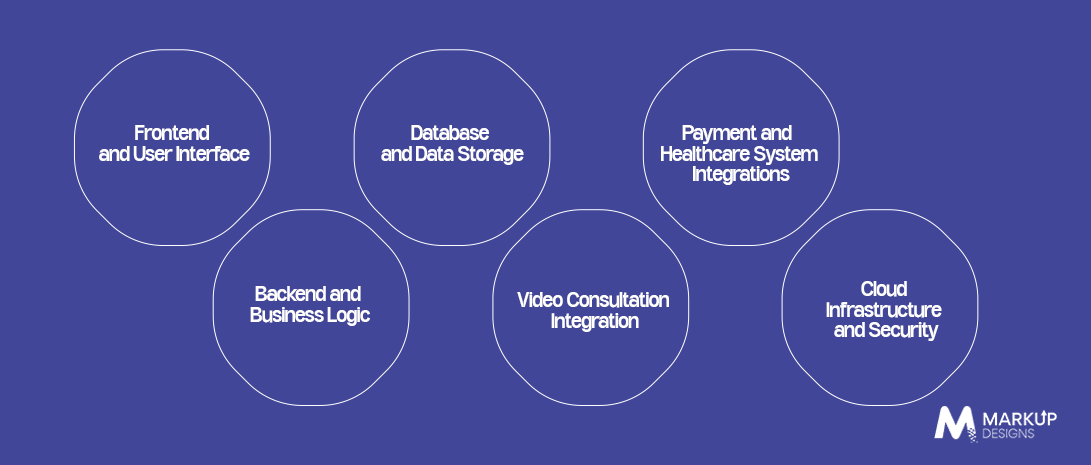
The good architecture of the application will assist the doctor-on-demand platform to work with the requests of the patients, the availability of doctors, consultation, payments, and patients’ information effectively. Also, it will be beneficial for the security of data, the reliability of the platform, and its development in the future. The following elements are necessary to take into account.
Frontend and User Interface
The frontend consists of the screens for the patients, doctors, and administrators to communicate with the application. It is supposed to be user-friendly, with an adaptive layout on different devices.
Backend and Business Logic
Backend controls some vital processes like user authorization, appointment scheduling, doctor availability, notifications, and payments.
Database and Data Storage
The database contains patient information, consultation appointments, consultation history, and other information about the platform. Various security controls, such as access controls, encryption, backups, and proper data retention practices, help protect sensitive information.
Video Consultation Integration
The video and audio services will help to perform remote consultations between patients and their doctors. Integration with a communication service will provide the opportunity for performing real-time calls and managing sessions.
Payment and Healthcare System Integrations
Payment gateways are used to allow patients to pay consultation fees. Also, based on platform requirements, EHR systems, pharmacies, laboratory systems, and healthcare APIs integration might be required.
Cloud Infrastructure and Security
The cloud service will help to host, store, and monitor the application and scale it when needed. The following security controls, like encryption, access control, audit logs, and API authentication, help protect patient data.
Key Factors That Affect Doctor On-Demand App Development Cost
The cost of developing an on-demand doctor application will be influenced by something else besides the quantity of features you want to have implemented. Such aspects as technological stack, security measures, integrations, and business objectives will also determine the total cost.
Let’s highlight the main factors that you should take into account before development.
1. App Features & Complexity
An application with registration, searching for doctors, and booking appointments will be cheaper than a platform with video consultation, prescriptions, AI-based functionality, and remote patient monitoring.
2. UI/UX Design
Designing a straightforward user interface could be cheaper than designing an application with several different dashboards.
3. Platform Selection
The decision to create an app on Android, iOS, or both will impact the cost of development. Cross-platform development could save the developer some work duplication, whereas native applications can provide additional platform-specific control.
4. Third-Party Integrations
Development of integrations with video consultation systems, payment processing, EHRs, pharmacies, notifications, and other third-party services could be required, and some third parties will require usage or subscription fees.
5. Security and Compliance Considerations
Developing a healthcare application requires the implementation of adequate measures regarding the security and protection of patient data, which includes security testing, encryption, access control, etc.
Common Challenges in Doctor On-Demand App Development and How to Address Them
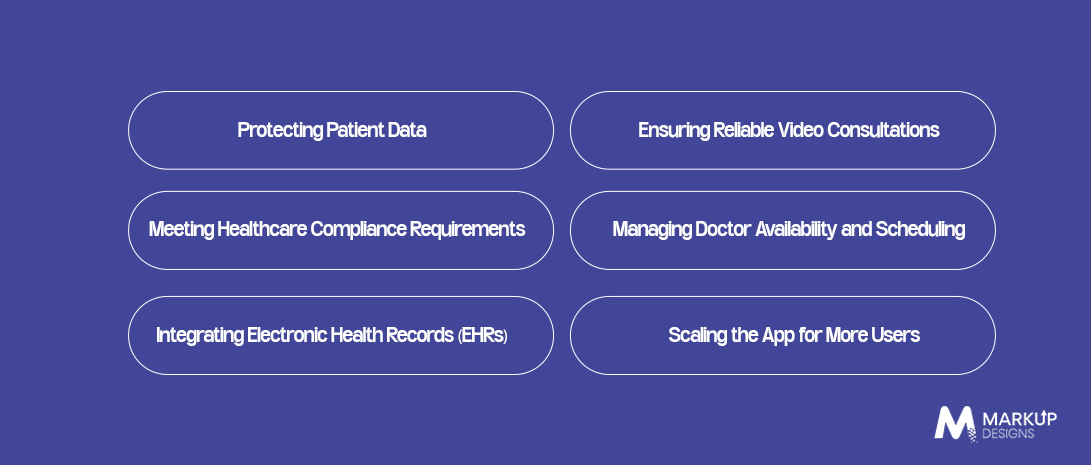
Developing an application for hiring doctors poses certain risks ranging from data protection to smooth consultations. Identifying such potential problems in advance will help you make informed decisions while developing your application.
Protecting Patient Data
All healthcare applications store certain information that is protected, namely medical history, prescriptions, and results of consultations. In case of any leak, the trust will be lost.
How to address it: You need to apply encryption, ensure secure authentication, use access control rules, log auditing, and security testing. It is necessary to gather only the required information.
Meeting Healthcare Compliance Requirements
Healthcare regulations vary depending on the country and on how the application works. Meeting the requirements might be complicated since it should cover various regions.
How to address it: You have to identify all possible regulations before the development process starts. You should work with compliance specialists.
Integrating Electronic Health Records (EHRs)
It can be challenging to connect the app with the already-existing health care system due to the different ways of processing data used by providers.
How to address it: Use standard APIs and recognized standards of interoperability such as HL7 FHIR if necessary. Carefully validate the data transfers and set up proper access permissions.
Ensuring Reliable Video Consultations
Poor sound quality, connection interruptions, and unstable connections can negatively impact the consultation process. The mentioned factors can have a particularly strong effect on people with poor internet connections.
How to address it: Choose a reliable communication service, perform testing under different conditions, and allow switching to an audio call if possible.
Managing Doctor Availability and Scheduling
It can be frustrating for patients and doctors when double booking, sudden changes in schedule, and outdated availability information happen.
How to address it: Real-time availability update, reminder about appointment, appointment confirmation, and rescheduling processes should be implemented.
Scaling the App for More Users
As more patients and physicians use the platform, the app can suffer from slower performance, higher costs related to infrastructure, or even downtime.
How to address it: Adopt a scalable architecture, monitor the system, optimize queries to the database, and test the anticipated amount of traffic.
How Much Does It Cost to Build a Doctor On-Demand App?
The cost of developing an on-demand doctor mobile application depends on the features, complexity, integration, and security needs of the product. An application that provides scheduling features will be less expensive than an application that has the functionality of a multi-specialty healthcare mobile app.
The following figures are illustrative planning estimates in USD, not fixed market prices. Actual costs will depend on the project scope and development team.
| App complexity | Estimated cost | Estimated timeline |
| Basic app | $20,000–$40,000 | 2–3 months |
| Mid-level app | $40,000–$80,000 | 3–6 months |
| Advanced app | $80,000–$150,000+ | 6–9+ months |
Read Also: Healthcare App Development Cost in 2026
Why Choose Markup Designs for Doctor On-Demand App Development?
Markup Designs is a company with more than 14 years of experience, more than 200 specialists, and a reputation for working with more than 500 companies in the UAE. We will assist in making your business idea come alive with digital healthcare solutions that have all the necessary functions, security, and an attractive design. Our main tasks are the analysis of your needs, choosing proper technologies, implementation of necessary healthcare services, and long-term prospects of the product.
From the initial stages to testing, deployment, and further maintenance, we will try to make your project meet your expectations and budgetary limitations. We are ready to help you create a trustworthy on-demand doctor application.
Let’s Build a Smarter Digital Healthcare Platform
Planning to launch a doctor-on-demand app? Markup Designs can help you turn your idea into a secure, user-friendly solution with the right features, technology, and development strategy.
Conclusion
Building a doctor-on-demand app will require adequate planning, necessary features, solid architecture, and knowledge of the health sector. Whether it concerns registering patients and booking appointments, conducting video consultations, or keeping sensitive medical records, each feature should ensure a seamless user experience for both patients and healthcare professionals.
The total development cost will depend on the complexity of your app, the platforms that you intend to use, your integration and security needs, and your development team. Starting with core features might be a good idea to control your initial costs, test your idea, and receive user feedback for future iterations.
Planning for data privacy, healthcare laws and regulations, robustness, and scalability at an early stage can help you build a platform that users can trust and adapt to your growing health services.
With the correct app development strategy and technology partner, you can make your vision a reality. Contact us at Markup Designs to discuss how to build a doctor-on-demand app based on your needs and budget.
FAQs
1. How long does it take to build a doctor-on-demand app?
A basic app may take around 2–3 months, while a mid-level solution can take 3–6 months. Advanced platforms with complex integrations and features may require 6–9 months or longer, depending on the project scope.
2. What features should a doctor-on-demand app include?
Essential features include patient registration, doctor profiles, appointment scheduling, video consultations, online payments, notifications, and an admin dashboard. E-prescriptions and EHR integrations may also be needed, depending on the services offered.
3. How much does it cost to develop a doctor-on-demand app?
Development may cost approximately $20,000–$40,000 for a basic app, $40,000–$80,000 for a mid-level solution, and $80,000–$150,000 or more for an advanced platform. These are illustrative estimates; actual costs depend on features, integrations, and development requirements.
4. Which technology stack is best for doctor-on-demand app development?
The right stack depends on your requirements. React Native or Flutter may support cross-platform mobile development, while Node.js, Java, or .NET can support backend services. PostgreSQL or similar databases, cloud infrastructure, and secure video APIs may also be suitable options.
5. How can a doctor-on-demand app protect patient data?
Use encryption, secure authentication, role-based access controls, audit logs, regular security testing, and secure API communication. You should also follow applicable privacy regulations and collect only the data required to provide your services.
Author's Perspective
Doctor-on-demand apps are changing how patients access healthcare and how providers deliver consultation services. However, success depends on more than technology alone. Businesses need to understand patient expectations, protect sensitive information, and create simple workflows for doctors and administrators. A clear development strategy helps control costs and avoid unnecessary complexity. By prioritizing essential features, choosing a suitable architecture, and planning for security and scalability from the start, businesses can build a reliable healthcare platform that supports better access to care and long-term growth.
Discuss Your Project NowAjit Kumar Jha
VP - Business Operations
Related Posts
Healthcare App Development Cost in 2026: Complete Pricing...
How to Build a Compliant HealthTech App in...
Complete Guide to Healthcare App Development in Saudi...
Insights Are Valuable & Execution is Priceless
You’ve read about the digital future. Now, let’s build the infrastructure to take you there. Move your strategy from the page to the product.
Design Your Solution Now
Contact Us
Schedule The Appointment At Your Convenience Date And Time.
30 Min
Web Conference
Time Zone
Indian standard time (08:30pm)

Thanks For Getting In Touch!
You’ve Taken The First Step Toward Transforming Your Digital Presence. Our Experts Will Reach Out Shortly To Take It Forward.
Launch Your Dream Project
Provide a brief overview of your project, and our specialists will evaluate your requirements. We will connect with you to explore how the right digital solutions can help you launch faster.