

In Brief
- Healthcare applications provide new opportunities to cut costs and improve the quality of care in hospitals and medical offices in Saudi Arabia.
- Modern healthcare apps enable telemedicine services, appointment booking, e-health record management, remote patient monitoring, and e-prescription features.
- Creating effective healthcare apps involves developing viable tech solutions, matching regulatory standards, streamlining integrations, and allowing for user-friendly navigation.
- The cost of healthcare app development varies depending on its complexity, the required functionality, integrations with third-party applications, and necessary compliance regimes.
- A qualified healthcare application development company assists in developing products that are highly scalable, secure, and ready for the future.
Saudi Arabia is witnessing rapid digitalization processes across its healthcare sector. The Vision 2030 initiative is engineered to make the kingdom more advanced in healthcare matters, resulting in market growth.
The introduction of applications in healthcare is transforming service delivery and ensuring better healthcare outcomes for patients. The creation of a viable concept for healthcare software goes beyond an intriguing idea. It requires thorough know-how on the healthcare workflow, adherence to regulations, the provision of secure data safety, and understanding clients’ needs. The presented article covers everything about developing a healthcare app in Saudi Arabia, discussing the available types, necessary features, development stages, technologies used, compliance necessity, costs, and other factors that may be of help while selecting a partner in app development.
Healthcare Digital Transformation in Saudi Arabia

Saudi Arabia is progressively digitalizing its healthcare sector. Government initiatives, as well as growing investment from the private sector, facilitate healthcare organizations’ application of advanced technologies such as mobile applications, cloud technologies, and AI-enabled solutions.
Vision 2030 and Digital Healthcare
Vision 2030 is the program that aims at transforming healthcare by adopting numerous innovative solutions, as this initiative has a positive impact on improving medical access and quality of healthcare services.
The initiative encourages healthcare providers to adopt advanced technologies that improve accessibility, streamline medical services, and enhance patient outcomes. As a result, healthcare app development in Saudi Arabia continues to gain momentum across both public and private sectors.
Rising Adoption of Healthcare Mobile Apps
Many healthcare providers are investing in mobile applications that allow people to schedule appointments, consult with doctors, manage prescriptions, and access medical records. These applications simplify interactions between patients and healthcare facilities while helping the providers offer quick and convenient services.
Government Support for HealthTech Innovation
The HealthTech revolution keeps being boosted by the government as it develops such important components as regulations, infrastructure, and other initiatives in the area of digital health. By these means, hospitals, start-ups, and other companies involved in medicine are encouraged to utilize safe digital technologies.
Growing Demand for Telemedicine and Remote Care
Telemedicine and virtual health care services have become a compulsory part of the healthcare delivery system today. Patients expect to get medical consultations and continuous assistance without having to come to the hospitals.
What is Healthcare App Development?
The development of healthcare apps means developing safe software that allows patients, healthcare providers, and medical facilities to administer healthcare services more efficiently. The apps enhance communication, make processes easier, and help better decision making in clinical practice in full compliance with medical rules and regulations.
Understanding Healthcare Mobile Applications
Healthcare mobile applications refer to applications designed for the provision of various healthcare services like virtual appointments, appointment scheduling, access to medical history, prescription tracking, remote monitoring, and wellness management. Depending on business needs, the target audience might be patients, physicians, hospitals, pharmacies, or insurance companies.
Why Healthcare Businesses Need Mobile Apps
Healthcare organizations need mobile applications in order to boost patient involvement, minimize managerial burdens, optimize clinical procedures, and improve channels for making clinical decisions. Digital channels also help improve access to and quality of healthcare services.
Key Stakeholders Using Healthcare Apps
There are several stakeholders receiving benefits from the use of healthcare applications, such as:
- Patients who want to access healthcare services.
- Physicians who use the applications for consultations and keeping medical history.
- Hospitals that gain efficiency in work.
- Clinics providing coordinated patient care.
- Pharmacies dealing with prescriptions and delivery of medications.
Types of Healthcare Apps
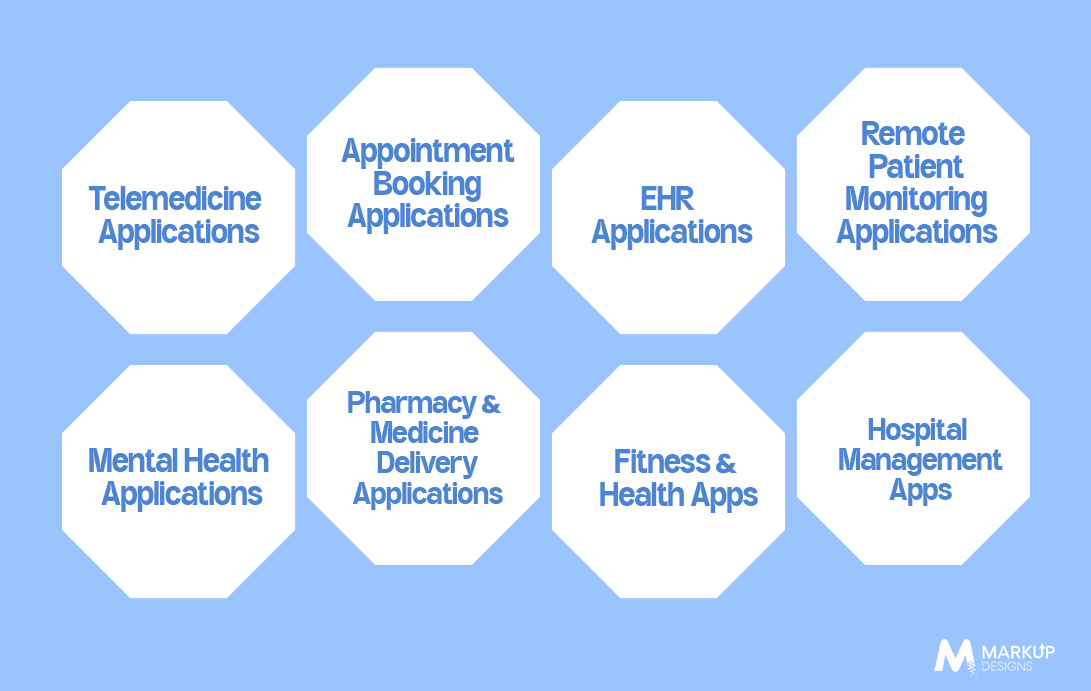
Medical software helps in providing various medical and operational requirements. Identifying the best type is determined by the services available, target users, and business goals.
Telemedicine Applications
Telemedicine applications are used to make virtual appointments, have secure interactions, and make online follow-ups, permitting users to access additional services without unnecessary visits to hospitals.
Appointment Booking Applications
Appointment scheduling apps help organize meetings as patients can book or change appointments, as well as receive reminders with the help of the application.
EHR Applications
EHR applications allow access to the patient’s medical history, prescriptions, laboratory reports, and treatment records, enabling better coordination among healthcare professionals.
Remote Patient Monitoring Applications
Remote patient monitoring apps use data from medical devices and wearables to provide healthcare professionals with continuous access to their patients outside of clinical practice.
Mental Health Applications
Mental health apps help people to enhance their emotional state, providing them with therapy sessions, mood tracking, meditations, and connecting with licensed specialists in the field.
Pharmacy & Medicine Delivery Applications
Pharmacy and medicine delivery applications help to submit prescriptions online, receive medicines, and get reminders about their usage.
Fitness & Health Apps
Fitness applications allow consumers to live their lives in a healthier way by keeping track of physical activity as well as diet and sleep, and personal wellness goals in connection with wearables.
Hospital Management Apps
Hospital management apps help to reduce administrative burden by allowing for appointment management, employee management, record keeping, and communication.
Essential Features of a Healthcare App
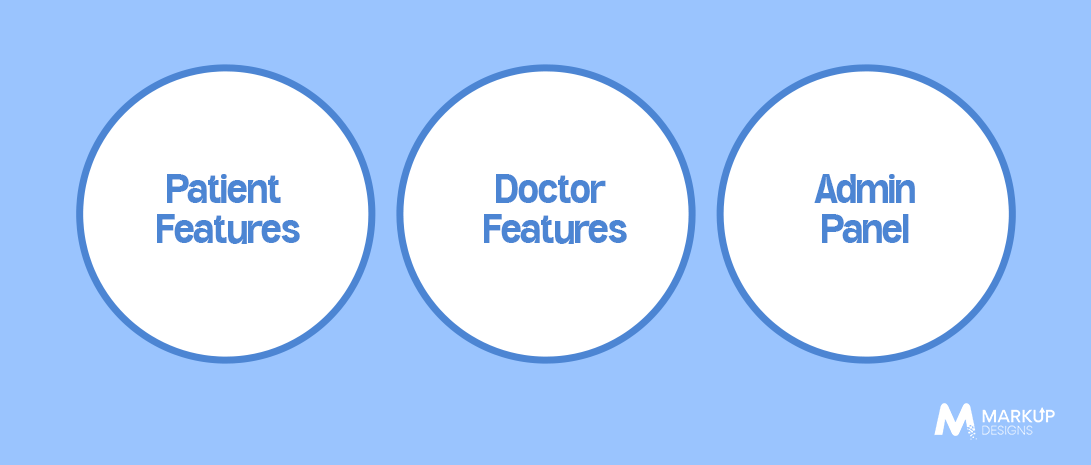
A successful healthcare application should ensure the best experience for its users, including patients, healthcare professionals, and administrators, while complying with security and regulations.
Patient Features
Patients should be able to create personal accounts, book appointments, use video consultations, read medical history, control their prescriptions, receive notifications, and make payments easily using the app.
Doctor Features
Healthcare professionals need tools to manage appointments, check patient history, prescribe medications online (e-prescribing), carry out video consultations, and communicate securely with patients.
Admin Panel
An admin panel is required for the healthcare organization to manage users, monitor app performance, create reports, and manage all operations from a single platform.
Technologies Powering Modern Healthcare Apps
Modern healthcare applications rely on advanced technologies to provide better service to patients, automate workflows, and securely share data.
Artificial Intelligence
AI is capable of analysing data related to medicine, aiding in the diagnostics process, automating mundane activities, and offering suggestions for personalized healthcare in order to achieve better medical outcomes.
Internet of Medical Things (IoMT)
IoMT unites medical equipment and wearables with the software implemented in the field of medicine so that it is possible to find out the health condition through real-time monitoring.
Cloud Computing
Cloud solutions provide safe storage of patients’ data, allow remote connection, and help make healthcare institutions more scalable.
Wearable Device Integration
Healthcare applications can be combined with smartwatches, fitness trackers, glucose meters, and other connected devices in order to help gather vital indicators of health.
Big Data Analytics
Big data allows healthcare organisations to spot trends, make the right decisions, and offer more personalised treatment to patients.
Blockchain
Blockchain helps enhance information protection by ensuring the safety of medical records, increasing transparency, and enabling data sharing.
Healthcare App Development Process
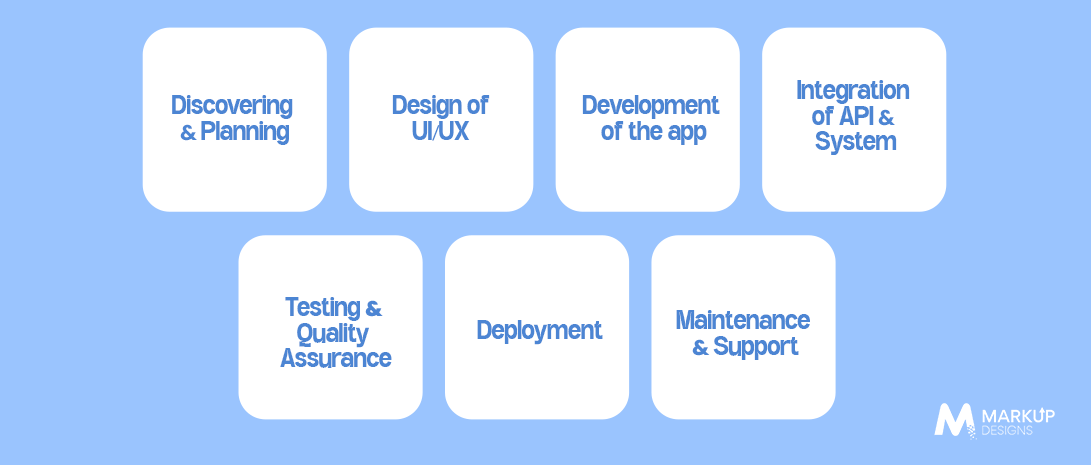
The process of creating a healthcare app should be structured to ensure an appropriate user experience and software reliability.
Discovering & Planning
Business objectives, user obligations, and conditions regarding compliance are established to outline a comprehensive plan for development.
Design of UI/UX
An easy-to-use interface is created that allows patients and providers to access all required functionalities easily.
Development of the app
The app development team creates both safe and flexible apps suited to the specific needs of health care operations and business targets.
Integration of API & System
The mobile app is connected to numerous EHR systems, payment services, wearables, as well as other medical mobile platforms.
Testing & Quality Assurance
The application goes through a number of tests to check if it is functional, secure, effective, and compliant.
Deployment
Once it has been tested successfully, it is deployed onto the needed platforms, and the business is going smoothly.
Maintenance & Support
Maintenance of the application includes regular upgrades and modifications that ensure it remains efficient and innovative.
Healthcare App Compliance in Saudi Arabia
Healthcare applications must meet the local regulations and ensure a durable channel for safe performance of healthcare tasks.
Saudi Health Regulations
Healthcare apps should comply with the national healthcare policies related to digital health services and patient safety.
Personal Data Protection Law (PDPL)
According to the provisions of the PDPL, organizations must collect, analyze, and store personal information in a secure manner and make sure that the privacy of patients is protected.
NHC & SDAIA Guidelines
Health care application industry needs to adhere to whatever digital health and data policies that the authorities in Saudi Arabia impose, and to stay in line with the given standards.
HIPAA & GDPR Considerations
Any organization that works with international users needs to comply with global privacy rules, which will secure their data protection procedures and the compliance processes according to legislation.
HL7 & FHIR Standards
HL7 provides standards that allow the transfer of information between medical apps and information systems safely.
Cybersecurity Best Practices
The requirement for organizations working in the healthcare sector is to encrypt, use secure authentication, limit the type of access by roles, and implement regular monitoring.
Healthcare App Development Cost in Saudi Arabia
The cost of developing a healthcare application may be determined based on the complexity level, requirements for compliance issue, different integration levels, and solutions used.
Healthcare App Development Cost in Saudi Arabia
The cost of healthcare app development depends on application complexity, compliance requirements, integrations, and technology choices.
Factors Affecting Development Cost
Development costs are influenced by the number of features, regulatory compliance, third-party integrations, AI and IoMT capabilities, platform selection, development resources, and long-term maintenance requirements.
| App Type | Estimated Cost |
| Basic Healthcare App | SAR 80,000 – 180,000 |
| Mid-Level Healthcare App | SAR 180,000 – 450,000 |
| Enterprise Healthcare Platform | SAR 450,000 –1,200,000+ |
Challenges in Healthcare App Development
When developing a healthcare application, the challenge is in keeping innovation balanced with security, compliance, and usability.
Data Safety
It is very important to ensure the safety of sensitive patient information to keep people’s trust and remain compliant with regulations.
Regulatory Compliance
Complying with regulations in the healthcare and privacy domain is also important throughout the process of the application’s development.
Integration with Healthcare Systems
Being compatible with different hospital systems and special medical devices is important to ensure no problems with exchanging information.
User Adoption
Simple navigation and intuitive design facilitate efficient use of the application by both healthcare professionals and patients.
Scalability
The application must be ready to support an increasing number of users, a growing amount of data, and rising healthcare services.
Interoperability
Information exchange between different healthcare platforms and systems also has to run smoothly.
Future Trends in Healthcare App Development
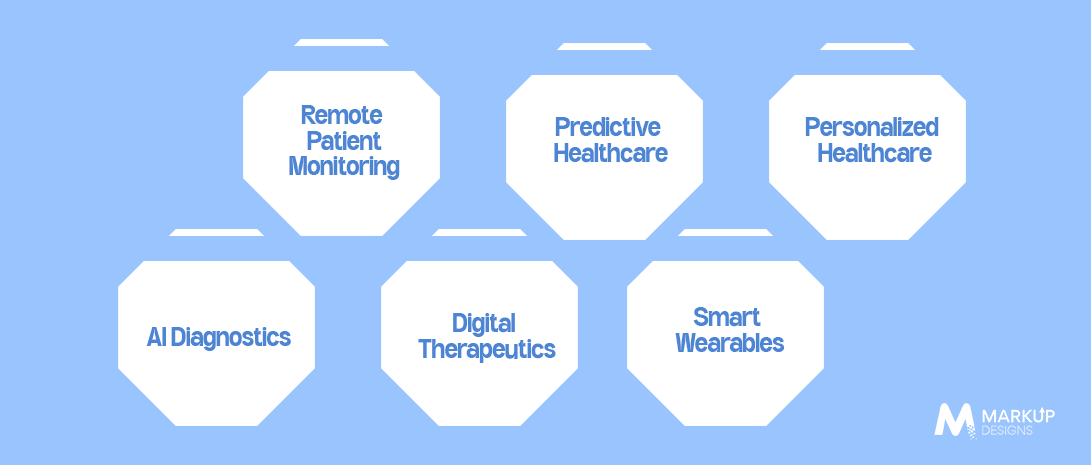
Healthcare technology keeps developing through improved, better connected, and personalized digital solutions.
AI Diagnostics
Artificial intelligence helps doctors with improvements in diagnostic system performance and faster decision-making.
Remote Patient Monitoring
Connected devices help monitor patients continuously and decrease the number of hospital visits.
Digital Therapeutics
The process of utilizing software for treatment is increasingly regarded as a form of supplement to conventional health care.
Predictive Healthcare
Predictive analytics make it possible to pinpoint possible health dangers before they reach critical levels.
Smart Wearables
Wearable technology keeps on being a source of real-time health information for prevention and wellness purposes.
Personalized Healthcare
The majority of healthcare applications are now available in a form of customized therapy plans based on the information and behavior of patients.
How to Choose the Right Healthcare App Development Company in Saudi Arabia
The choice of a technological partner should be made wisely in order to create a healthcare application of high quality, safe, and compliant with the latest trends.
Healthcare Industry Experience
Pick a company with proven experience in providing healthcare solutions.
Regulatory Expertise
Make sure that the developer is familiar with Saudi regulations on healthcare and data privacy.
Technology Capabilities
Consider the background in artificial intelligence, cloud computing, IoMT, and mobile app development.
Security Standards
Check if the company uses secure practices of development and follows the globally-approved standards of safety in the sphere.
Portfolio and Client Evaluations
Examine prior healthcare projects as well as client evaluations to determine their delivery capabilities.
Post-Launch Support
Choose a partner that offers maintenance, enhancements, and long-term technical assistance.
Reasons to Partner With Markup Designs for Healthcare App Development in Saudi Arabia
Markup Designs integrates over 12 years of experience in software development with a team of more than 300 experts in technology to create safe, scalable, and regulatory-compliant healthcare applications. Our services range from AI-based healthcare platforms and cloud solutions to PDPL-compliant applications; we can offer complete development, smooth integration, and more.
Ready Healthcare Apps for Saudi Arabia
Develop secure, scalable, and compliant healthcare applications with Markup Designs that enhance patient care, streamline operations, and support the UAE’s digital healthcare transformation.
Conclusion
Healthcare app development is playing a pivotal role in Saudi Arabia’s digital transformation, helping providers deliver faster, more accessible, and patient-centric care. From telemedicine and remote monitoring to AI-powered diagnostics, custom healthcare applications are improving operational efficiency while enhancing the overall patient experience.
Success, however, depends on more than innovative features. Compliance with Saudi regulations, strong security practices, and seamless integration with existing healthcare systems are essential for building reliable digital health solutions. By partnering with an experienced healthcare app development company like Markup Designs, organisations can build scalable applications that support long-term growth and future healthcare innovation.
FAQs
1. What is healthcare app development?
Healthcare app development is the process of building mobile or web applications that help healthcare providers, patients, and medical organisations manage consultations, health records, appointments, remote care, and other healthcare services digitally.
2. How much does healthcare app development cost in Saudi Arabia?
The cost typically ranges from SAR 80,000 to SAR 1,200,000+, depending on the application’s complexity, features, integrations, compliance requirements, and technology stack.
3. How long does it take to develop a healthcare app?
A basic healthcare app may take 3 to 5 months, while advanced enterprise healthcare platforms with AI, IoMT, and third-party integrations can require 6 to 12 months or longer.
4. Which regulations should healthcare apps follow in Saudi Arabia?
Healthcare applications should comply with Saudi healthcare regulations, the Personal Data Protection Law (PDPL), applicable NHC and SDAIA guidelines, and interoperability standards such as HL7 and FHIR.
5. What features should a healthcare mobile app include?
Essential features include patient registration, appointment scheduling, video consultations, electronic health records, prescription management, secure messaging, notifications, payment integration, analytics, and role-based administration.
Author's Perspective
Saudi Arabia is rapidly embracing digital healthcare as part of its Vision 2030 strategy, creating significant opportunities for organisations investing in innovative healthcare technologies. Custom healthcare applications are no longer optional—they are becoming essential for improving patient engagement, streamlining clinical workflows, and delivering accessible care.
At Markup Designs, we build secure, scalable, and compliance-ready healthcare applications that combine modern technologies with practical business needs. Our focus is on helping healthcare providers develop future-ready digital solutions that improve patient outcomes while supporting long-term growth and innovation.
Discuss Your Project NowAjit Kumar Jha
VP - Business Operations
Related Posts
How to Build a Compliant HealthTech App in...
Remote Patient Monitoring App Development in the UAE:...
Complete Cost Breakdown of Telemedicine App Development in...
Insights Are Valuable & Execution is Priceless
You’ve read about the digital future. Now, let’s build the infrastructure to take you there. Move your strategy from the page to the product.
Design Your Solution Now
Contact Us
Schedule The Appointment At Your Convenience Date And Time.
30 Min
Web Conference
Time Zone
Indian standard time (08:30pm)

Thanks For Getting In Touch!
You’ve Taken The First Step Toward Transforming Your Digital Presence. Our Experts Will Reach Out Shortly To Take It Forward.
Launch Your Dream Project
Provide a brief overview of your project, and our specialists will evaluate your requirements. We will connect with you to explore how the right digital solutions can help you launch faster.