

In Brief
- Telemedicine applications are revolutionizing the Australian healthcare industry by providing opportunities for conducting online consultations, remote monitoring of patients conditions, creating digital prescriptions and managing patients in a secure manner.
- It is important to know that a good telemedicine application is characterized by some key features including appointment scheduling, video consultations, secure messaging, integration with EHR systems, online payment gateway, notifications and adherence to the laws of the Australian healthcare industry.
- Development of telemedicine applications involves a set of processes like requirement analysis, UI/UX design, technology selection, development, integration with third parties, testing, deployment and maintenance to provide security, scalability and reliable operation of the system.
- Cost of development of telemedicine applications in Australia usually varies between AUD 30,000 for an MVP up to AUD 250,000 and more for enterprise-grade solutions.
- Choosing the right partner in development of healthcare software makes it possible to create a good telemedicine application which will be safe, scalable and future-proof.
Accessing healthcare services is experiencing a rapid evolution and is being spearheaded by the use of telehealth applications. From online doctor consultations to patient monitoring to issuing online prescriptions, healthcare providers are increasingly turning to telehealth software to offer faster, more accessible, and more convenient medical services. Be it assisting patients in the countryside or minimizing waiting times in cities, telehealth applications are making life easier for healthcare organizations through better patient experiences and improved efficiencies.
With the increased demand in telehealth applications, businesses are increasingly developing telehealth software development solutions in Australia to develop a safe, scalable, and compliant digital health care environment.
In this blog post, we will walk you through the basics of telehealth software development and give you information on why it is becoming popular in Australia, the features necessary in every application, the development process, necessary integrations, development costs, timelines, and factors influencing costs.
What is Telehealth Software Development?
Telehealth software development involves creating digital platforms that enable medical practitioners to render their services from afar. These platforms help in connecting doctors and other healthcare practitioners with their patients through video consultations, communication via messaging, appointment booking, prescription, and handling of the patient’s health record in an online environment.
Modern telemedicine software development in Australia goes beyond just creating simple video-calling applications to creating advanced platforms that are not only secure and compliant but also user-friendly for both parties. These platforms may be integrated with other platforms such as electronic health records, payment gateways, wearables, and pharmacies.
Custom telemedicine software development is gradually becoming the most popular approach among hospitals, clinics, and startups in the healthcare industry because of the high level of flexibility, security, and functionality according to particular needs of businesses. It can be anything from the virtual care platform that allows conducting virtual consultations or software for remote monitoring of patients with chronic diseases.
Why is Telehealth Software Development Growing in Australia?
The demand for digital healthcare services has risen considerably in Australia in recent times. The patients expect instant access to health care services without the necessity to move around and wait for long durations to get an appointment. On the other hand, the health care organizations are seeking better means of providing quality patient care services while reducing their workload and expanding their reach out of their clinics.
Such demands have made telehealth software development Australia a critical area for hospitals, health care organizations, startups, and individual practitioners. The modern telehealth solutions provide easy access to health care services even for people staying in rural areas.
Some of the key factors driving this growth include:
- Rise in the demand for virtual healthcare services
- Improvement of access to healthcare services in rural and regional areas of Australia
- Increase in the use of smartphones and digital health technology
- Government support for digital healthcare initiatives
- Increasing need for remote monitoring of patients and treatment of chronic conditions
- Greater focus on improving patient convenience and healthcare outcomes
- Increased investment in digital transformation across the healthcare sector
As healthcare progresses, the telehealth software industry will play an increasingly important role in providing faster, safer, and more interconnected health care services.
Benefits of Telehealth Software for Healthcare Providers and Patients
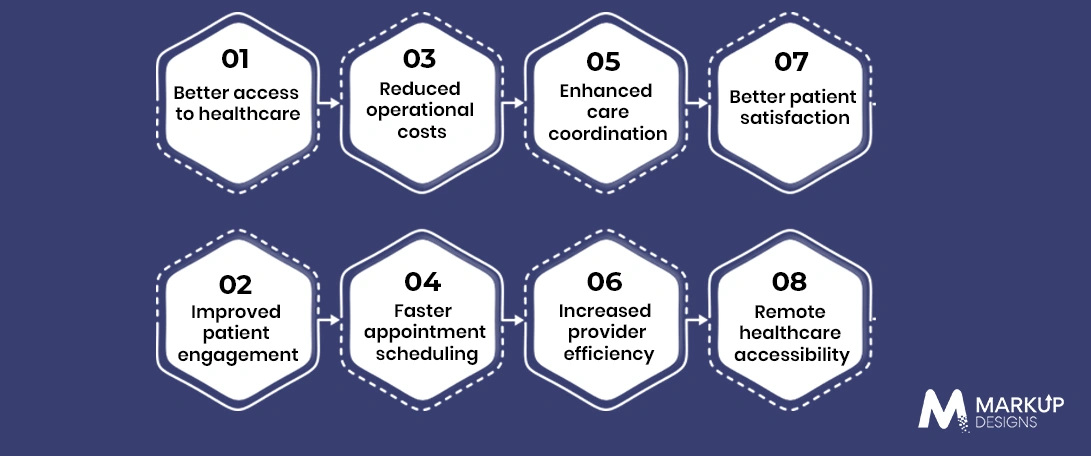
Telehealth software is revolutionizing the way that healthcare services are provided by increasing access to affordable and patient-centered medical care. It assists healthcare facilities to improve their efficiency while providing patients with fast and convenient access to healthcare services. Some of the advantages include the following:
Better access to healthcare
It provides individuals with an opportunity to interact with healthcare experts irrespective of where they are located.
Improved patient engagement
Appointment reminders, messaging, and health monitoring encourage the patients to participate in the treatment process.
Reduced operational costs
Digital consulting and automation of administrative procedures enable healthcare institutions to cut their operating costs.
Faster appointment scheduling
The possibility of booking an appointment online makes the procedure easier and saves time.
Enhanced care coordination
Collaboration among healthcare practitioners becomes possible due to easy exchange of patient information.
Increased provider efficiency
Automation of routine tasks enables doctors and other medical personnel to concentrate more on patients health needs.
Better patient satisfaction
Virtual consultations, less time spent waiting and customized experience result in increased patient satisfaction.
Remote healthcare accessibility
Patients get uninterrupted medical services from remote consultations and remote patient monitoring solutions.
Types of Telehealth Software Solutions
Telehealth software differs based on the type of healthcare services provided. Be it virtual consultation, continuous monitoring, etc., telehealth software serves to provide better access and improved patient care.
Virtual Consultation Platforms
Such platforms help doctors consult with their patients remotely through video or voice calls for any online assessment of the patients health conditions.
Remote Patient Monitoring Software
Healthcare professionals can monitor the vitals and health status of the patient with the help of connected devices so that early intervention can be done without any visit to hospitals.
Mental Health Platforms
These platforms have been designed for psychologists and therapists where they can hold private video consultation with their patients and communicate through the platform.
Management Systems for Chronic Diseases
Such systems help patients with chronic ailments such as diabetes, heart diseases, and hypertension to be monitored constantly as well as have consultations through video conferencing.
e-Prescriptions System
It allows physicians to write and deliver electronic prescriptions directly to the patients devices or to the pharmacy, ensuring quick and efficient prescription delivery.
Telehealth Platform for Hospitals & Clinics
It enables hospitals and clinics to have access to all-in-one telehealth software solutions to manage consultations and appointments from one system.
Must-Have Features of Telehealth Software
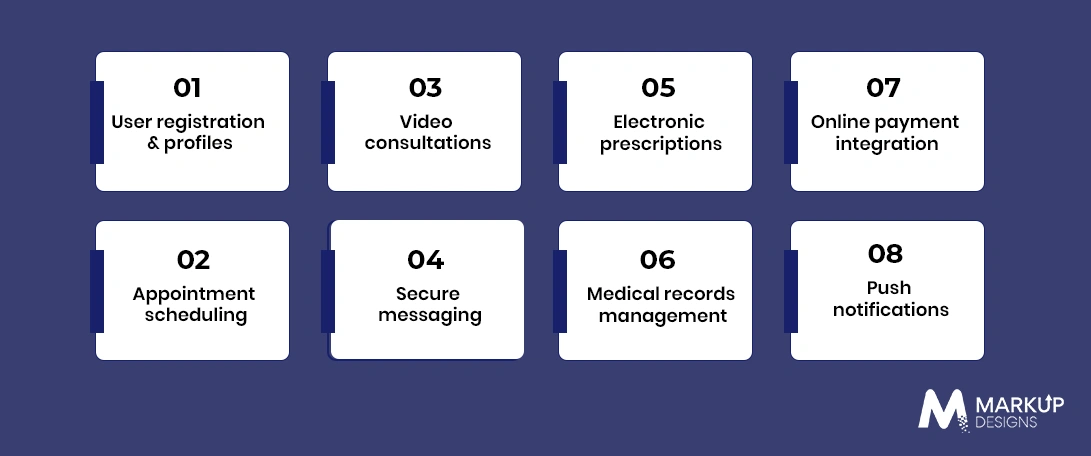
The successful telehealth system should provide a smooth process for the patient, healthcare professional, and administrator. Features which would help to create an efficient process are not only useful for providing healthcare services, but also ensure security, compliance, and operational efficiency.
User Registration & Profiles
Helps patients and healthcare professionals register and maintain secure profiles with all the details related to their personal, professional, and medical data.
Appointment Scheduling
Helps patients make, change, or cancel appointments, as well as manage appointment calendars for healthcare professionals.
Video Consultations
Enables creation of good quality video consultation where there is real-time communication via both audio and video from patients to health practitioners.
Secure Messaging
Facilitates secure communication between patient and doctor through encrypted messaging services for consultations, medical information, and document transfer.
Electronic Prescriptions
Provides assistance with the use of e-prescriptions; doctors can generate and send out e-prescriptions to their patients or to pharmacists.
Medical Records Management
It offers secured access to health records of the patients, consultations history, prescriptions, and diagnosis reports.
Online Payment Integration
Provides safe payment methods for consultations, subscriptions, and health care services using reliable payment gateways.
Push Notifications
Informs users of appointments, prescriptions, consultations, and other health care related notifications.
Ready to Build a Future-Ready Telehealth Platform?
Whether you’re planning a telehealth startup, modernizing an existing healthcare system, or launching a secure virtual care platform, choosing the right development partner makes all the difference.

How We Develop Reliable Telehealth Software Solutions
The development of a successful telehealth platform is impossible without a thorough planning phase, appropriate technologies, and healthcare standards. An organized development cycle will help you create a safe, scalable, and convenient solution tailored to the requirements of both parties involved in healthcare provision.
Step 1: Requirement Analysis
Identify the goals of the business, the users who will use the application, the functions needed in it, and the project scope.
Step 2: UI/UX Design
Create an easy-to-use interface that makes navigation on the platform comfortable for patients, doctors, and administrators.
Step 3: Technology Choice
Select appropriate front end, back end, cloud services, database, and security technology solutions as per requirement of the project.
Step 4: Software Development
Create various modules like patient portal, doctor dashboard, video consultation system, scheduling system, and billing system.
Step 5: Integration of Third Party Services
Integration of EHR / EMR system, payment gateways, pharmacies, wearables and communication API’s for an integrated healthcare experience.
Step 6: Testing & Compliance
Testing for functionality, security and performance while ensuring compliance with the Australian healthcare laws and guidelines.
Step 7: Platform Deployment & Maintenance
Deployment of the platform in the required environment and maintenance through updates and other functionalities.
Essential Integrations for Telehealth Software
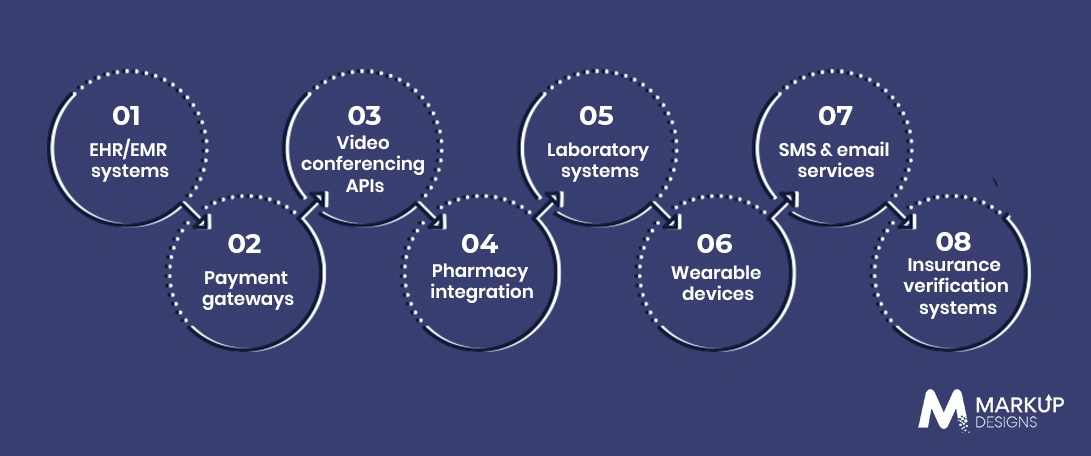
Integration of third-party apps can result in the improved performance of telemedicine applications. With integration, processes become automated and well-connected. This helps ensure that there is consistency and precision of data, which benefits both the patient and the healthcare worker.
EHR/EMR Systems
Allow doctors to access and manage patients medical records during consultations.
Payment Gateways
Help carry out transactions for consultations and subscriptions in a secure environment.
Video Conferencing APIs
Ensure that patients have high-quality video and audio consultation services.
Pharmacy Integration
Doctors should be able to send prescription information digitally to pharmacies to facilitate fast medication handling.
Laboratory systems
This involves allowing laboratories and healthcare facilities to communicate diagnosis reports and test findings easily.
Wearable Devices
Connect smart wearable devices to your telehealth software to collect real-time patient health data, enabling continuous remote monitoring, early health risk detection, and more informed clinical decisions.
SMS & email services
Appointment reminders, verification codes, follow-ups and other important health care communications should be sent here.
Insurance Verification Systems
Simplify insurance eligibility checks and streamline the claim verification process for patients and providers.
Read More:- AI in Healthcare in Australia
Telehealth Software Development Cost in Australia
In Australia, the development cost of telemedicine software depends on the complexity of the project, the features that need to be added, integration, security measures, and development method. The cost of the basic telemedicine platform with minimum features is much lower compared to the enterprise-level telemedicine platform with AI and remote patient monitoring features.
Below is a general cost estimate for different types of telehealth software:
| Solution Type | Estimated Cost (AUD) |
| Basic Telehealth MVP | $30,000 – $60,000 |
| Medium-Complexity Platform | $60,000 – $120,000 |
| Advanced Telehealth Platform | $120,000 – $250,000+ |
| Enterprise Healthcare Solution | $250,000+ |
The costs quoted above may change depending on your business needs, compatibility with different platforms, regulations, external connections, and maintenance. Collaborating with a reputable business for telemedicine software development in Australia will ensure that your investment gives you a reliable telemedicine system.
Factors Affecting Telehealth Software Development Cost
The cost of developing telehealth software varies depending on several technical and business aspects. An awareness of these aspects enables healthcare organizations to budget their money and define priorities according to their needs.
Platform Type
Developing software for web, iOS, Android, or multiple platforms affects the overall development cost.
Feature Complexity
Basic platforms cost less, but additional development efforts are required when incorporating artificial intelligence, remote monitoring, and advanced analytics.
UI/UX Design
An easy-to-use and efficient interface enhances user experience; however, it also increases the duration for designing and developing the interface.
Third-Party Integrations
Integration of third-party products such as EHR/EMR system, payments gateway, pharmacies, laboratories, and wearables raises project complexity.
Security & Compliance
Data encryption, authentication, access control, and compliance with Australia’s health care regulations raise extra costs.
Development Team
The experience, location, and size of the development team affect the total cost of the project.
Maintenance & Support
Updates, performance checks, bug fixing, and security upgrades should be planned in the long run for the project.
How Long Does It Take to Develop Telehealth Software?
The development timeline depends on the level of software’s complexity, needed features, integrations, and testing. The MVP can be put into operation quicker than the complete software for an enterprise.
Here’s a general timeline:
| Development Stage | Estimated Timeline |
| Requirement Analysis & Planning | 1-2 Weeks |
| UI/UX Design | 2-4 Weeks |
| Software Development | 8-16 Weeks |
| Third-Party Integrations | 2-4 Weeks |
| Testing & Quality Assurance | 2-3 Weeks |
| Deployment | 1 Week |
On average, a basic telehealth platform can take 3-4 months, while a feature-rich enterprise solution may require 6-9 months or longer, depending on project scope and customization.
Why Choose Markup Designs for Telehealth Software Development in Australia?
The development of healthcare software not only involves technical skills but also a deep knowledge of security issues, compliance, and user experience. At Markup Designs, we assist healthcare organizations in creating digital solutions for improving patient experience and optimizing healthcare operations.
Here’s why businesses choose us:
- Team with extensive experience in developing software for healthcare.
- Creation of safe, scalable, and highly effective telemedicine products.
- Individual software development according to your business goals.
- Integration with EHR/EMR, payment gateways, and other healthcare systems.
- Software development according to the compliance rules of Australian healthcare.
- Services throughout the entire process – from planning to implementation and support.
- Transparent communication and agile development process.
- Long-term software maintenance and continuous improvements.
Whether you are launching a start-up platform or want to improve your existing healthcare software, our professionals are here to help you create a safe and future-proof telemedicine solution.
Let’s Build Your Telehealth Platform Together
Markup Designs combines healthcare expertise with modern technologies to build digital platforms that improve patient care, simplify operations, and support long-term growth.

Conclusion
Telehealth is changing the future of healthcare in Australia by making healthcare services convenient, efficient, and patient-oriented. From online appointments, remote patient monitoring to electronic prescribing and healthcare system integration, telehealth software allows providers to offer high-quality services from anywhere other than clinical settings.
But selecting the right development partner is crucial too. With a carefully thought out platform that is secure, easy to integrate and compliant with the regulations of the healthcare industry in Australia, you will be able to increase operational efficiency of your organization and provide an improved patient experience.
FAQs
1. What is telehealth software development?
Telehealth software development is the process of creating digital platforms that enable remote healthcare services such as video consultations, appointment scheduling, patient record management, and electronic prescriptions.
2. How much does telehealth software development cost in Australia?
The cost typically ranges from AUD 30,000 for a basic MVP to AUD 250,000+ for an enterprise-grade telehealth platform, depending on features and complexity.
3. How long does it take to build telehealth software?
A basic solution generally takes 3-4 months, while an advanced custom platform may require 6-9 months or more.
4. What features should a telehealth platform include?
Essential features include patient registration, appointment scheduling, video consultations, secure messaging, medical records, e-prescriptions, payment integration, and notifications.
5. Can telehealth software integrate with existing healthcare systems?
Yes. Modern telehealth platforms can integrate with EHR/EMR systems, pharmacies, laboratories, payment gateways, wearable devices, and insurance verification systems.
Author's Perspective
Telehealth software is revolutionizing the healthcare industry with its ability to make medical services accessible, efficient, and patient-oriented. For any healthcare institution, the adoption of a telehealth system is a future-oriented decision that will help in enhancing patients experiences, streamlining internal processes, and growing their business. With the adoption of advanced digital healthcare technology, healthcare service providers are able to meet the future needs of their customers.
Discuss Your Project NowAjit Kumar Jha
VP - Business Operations
Related Posts

Custom Software Development Cost in Bahrain: Factors, Benefits,...

How Much Does Healthcare Software Development Cost in...

How to Build Compliance Software for Australian Businesses:...
Insights Are Valuable & Execution is Priceless
You’ve read about the digital future. Now, let’s build the infrastructure to take you there. Move your strategy from the page to the product.
Design Your Solution Now
Contact Us
Schedule The Appointment At Your Convenience Date And Time.
30 Min
Web Conference
Time Zone
Indian standard time (08:30pm)

Thanks For Getting In Touch!
You’ve Taken The First Step Toward Transforming Your Digital Presence. Our Experts Will Reach Out Shortly To Take It Forward.
Launch Your Dream Project
Provide a brief overview of your project, and our specialists will evaluate your requirements. We will connect with you to explore how the right digital solutions can help you launch faster.