
In Brief
- Building flutter web apps allows you to create speedy, interactive, and scalable web applications with just one code base that will cut down development time and cost for web, Android, and iOS applications.
- The main benefits of flutter include performance, uniform UI/UX, quick development using Hot Reload technology, ease of use and maintenance, ability to work across different platforms, and API/cloud service integrations.
- Flutter is ideal for developing various web applications including software-as-a-service solutions, dashboard interfaces, eCommerce web portals, customer portals, enterprise software, learning management software, booking software, and progressive web apps (PWAs).
- Creating a great Flutter web app development project requires a certain process which involves requirements analysis, designing the UI/UX, architecture planning, development, testing, deployment, and maintenance of the application.
- The cost of development will depend on the complexity of the project, features required, integrations, design, backend services, and the skills of the development team. It is recommended to collaborate with professional web app development companies in flutter for a secure and scalable solution.
In today’s world, the need for web-based applications that give users high performance and responsive websites, while being easy to maintain on different platforms is increasing. Developing distinct web applications for Android, and iOS may take additional time and cost expenses. Therefore, many companies choose Flutter web app development as an easier way to develop up-to-date and highly efficient web applications from one codebase.
The technology of Flutter web app development allows developers to create attractive and scalable web applications and simplify the process of their development. In addition, using this approach makes it possible to build web applications for customer portals, SaaS platforms, admin dashboards, or other purposes without losing reliability.
In this blog post, we are going to discuss what flutter web app development is, why businesses choose Flutter web app development, benefits and features, full development process, cost estimation, and some tips on how to develop your own Flutter web application.
What is Flutter Web App Development?
Flutter web application development consists of developing web applications using Flutter UI toolkit. When developing web applications in Flutter, it is not necessary to create three applications, one for the web, one for the Android platform, and another for the iOS platform; developers can create just one app that can run smoothly on different platforms. This approach saves time and money for the companies who want to develop web applications.
The development of a flutter web application is done using the same widgets and render engine used in mobile applications. This means that your business will have a rich and modern web application that is fast and responsive without affecting its performance.
Flutter web app development is commonly used in the development of customer portals, SaaS products, eCommerce platforms, company dashboards, internal enterprise applications, and PWAs.
With continued evolution of Flutter, more companies are opting for Flutter web application development to create scalable, interactive, and future-ready web experiences that can scale with the growth of their businesses.
Why Businesses are Choosing Flutter for Web App Development
Companies are seeking web-based solutions that can be developed quickly, are affordable in terms of maintenance costs and have the potential to provide a smooth user experience. And this is one of the most compelling reasons behind the increasing preference of startups as well as enterprises for Flutter-based web application development.
The major advantages of this framework include the opportunity to develop apps with a single code base. As opposed to other methods, where companies need different development teams for different platforms, whether mobile or web, the development process becomes more effective, resulting in saving development time.
Moreover, this framework enables you to create visually attractive user interface designs that are browser and device friendly. As a result of using widgets, animations, and layout flexibility offered by the framework, companies can develop a decent user experience without needing to make any adjustments to their design at all.
Another advantage of the web application development process using Flutter is the ability of scaling. No matter whether you create an MVP or work on some enterprise-level platform, with the help of this tool, you will be able to introduce new functionality when your company expands.
Businesses also benefit from:
- Faster development with Flutter’s Hot Reload feature.
- Less maintenance due to the common code base.
- Uniform user interface on web and mobile platforms.
- Smooth integration with APIs and cloud computing technologies.
- Community support and constant improvement by the Google team.
If your business plans to build web apps with Flutter framework, then it is the right option to consider.
Key Benefits of Flutter Web App Development
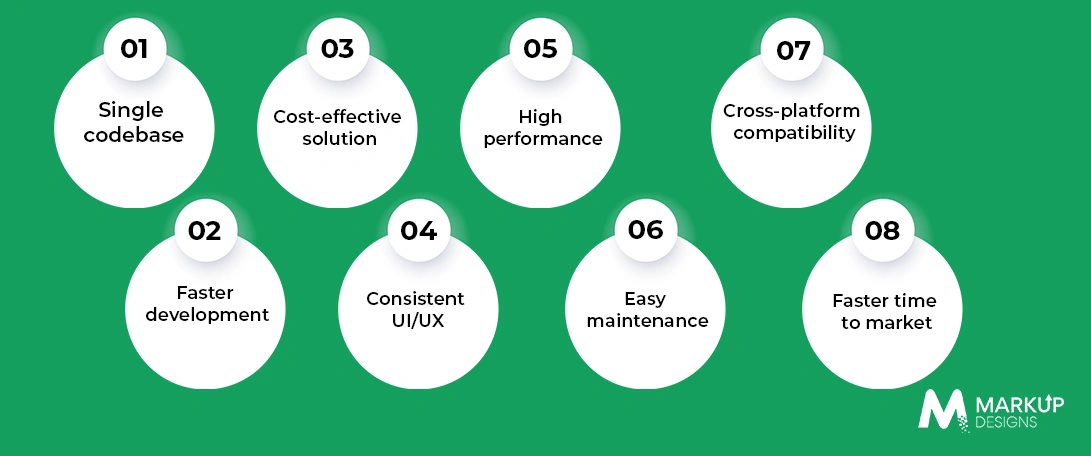
In modern businesses, web applications are needed to be developed rapidly and managed easily and are expected to provide users with an incredible experience. Flutter web app development is a great choice for businesses that want to build both web and mobile applications using a single codebase. This approach reduces development time and costs while improving efficiency by allowing developers to maintain one codebase across multiple platforms.
Below are some advantages of Flutter web app development:
Single codebase
Build, maintain, and update web, Android, and iOS applications from one codebase, avoiding any duplicated effort.
Faster development
Since Hot Reload and widget creation are offered by Flutter, developers will be able to develop applications at a much quicker pace.
Cost-effective solution
Since the same codebase is used across multiple platforms, Flutter reduces both development and maintenance costs.
Consistent UI/UX
Flutter guarantees smooth user interface and design experience on various platforms, assisting businesses in maintaining their brand identity.
High performance
The fast loading performance is guaranteed by its rendering engine that makes the application load fast and work efficiently on any modern browser.
Easy Maintenance
Since only a single code base needs to be managed, it becomes very easy to update features and debug.
Cross-Platform Compatibility
A cross-platform web application can be developed using Flutter, which will look similar on various types of platforms, such as mobiles and computers.
Faster time to market
Less time for product development leads to quick deployment of the product compared to the competitors and quicker feedback from users.
Features of Flutter Web Applications
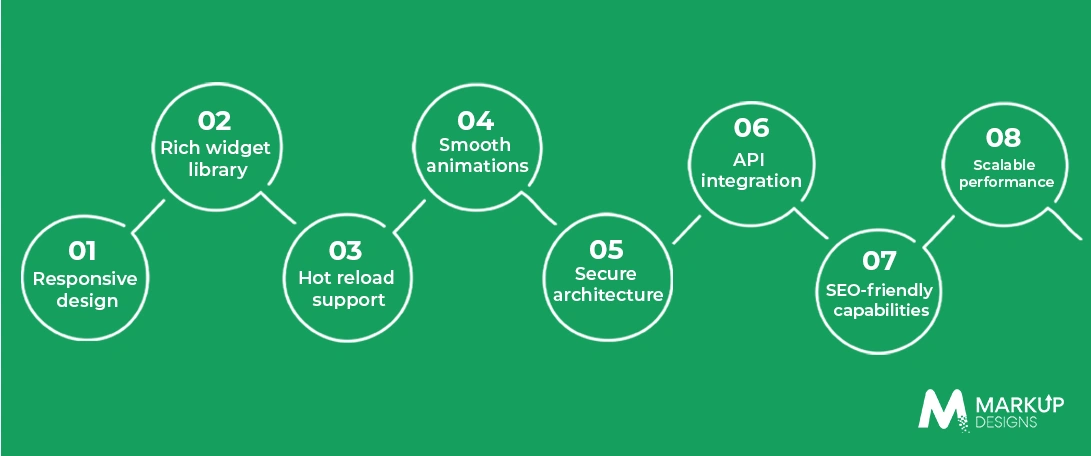
The increasing use of Flutter web application development can be attributed to the advanced features provided by the tool which allow companies to develop interactive and scalable web applications easily. Such capabilities have made Flutter an appropriate tool for startup organizations as well as large enterprises.
Responsive Design
Flutter has the ability to modify its layout depending on screen sizes, and that means there will be a great browsing experience when using a computer, tablet, and mobile phone.
Rich Widget Library
There are numerous widgets available that can be customized, which help developers create aesthetically pleasing interfaces without needing to create everything from scratch.
Hot Reload Support
Developers can instantly view code changes during development, making testing, debugging, and feature updates significantly faster.
Smooth Animations
Flutter offers built-in animation capabilities that create fluid transitions and interactive user experiences without affecting application performance.
Secure Architecture
Flutter supports secure coding practices, encrypted communication, authentication mechanisms, and secure API interactions to protect application data.
API Integration
Web applications have the capability of integrating with third party services, payment gateways, cloud based systems, CRMs, ERPs, and much more.
SEO-Friendly Capabilities
Although Flutter primarily focuses on rich user interfaces, modern optimization techniques enable developers to improve discoverability for web applications where search visibility is important.
Scalable Performance
If you are creating your minimum viable product or an enterprise application, you can scale up features and traffic without making any changes to the architecture in Flutter.
Are You Ready for Creating High-Performance Flutter Web Applications?
Markup Designs can assist you in developing your Flutter web apps that are secure and high-performing. You can get your project developed from scratch, starting from ideation to design, development, and delivery.

What Types of Web Applications Can You Build With Flutter?
The Flutter platform is very efficient in developing various business apps. Whether you’re building a web application or a mobile app for your business, Flutter allows you to develop both using a single codebase, making the development process faster, more efficient, and cost-effective.
Here are some of the common types of web apps you can build with Flutter:
Business Websites and Portals
Create interactive business websites, customer, employee portals, and self-service portals for the users.
SaaS Applications
Flutter is perfect for SaaS applications that require responsive UI/UX, dashboards, user management, and subscription services.
Admin Dashboards
Create dashboards with advanced features of analytics, reports, key performance indicators (KPIs), and operational data using interactive charts.
eCommerce Solutions
Create online retail applications that contain product catalogues, shopping cart functionalities, payment gateway integration, order tracking, and account management.
Enterprise-Level Web Applications
Develop custom business solutions such as Customer Relationship Management (CRM), Enterprise Resource Planning (ERP), Human Resource Management Systems (HRMS), and other enterprise applications to streamline operations and improve productivity.
Educational Platforms
Build eLearning portals, Learning Management Systems (LMS), online examination platforms, and virtual classrooms with engaging, user-friendly interfaces for seamless digital learning experiences.
Reservation & Booking Applications
Develop web applications for healthcare, travel, hospitality, event management, and appointment booking with features such as real-time availability, online scheduling, and secure payment integration.
Progressive Web Applications (PWAs)
Enterprises can even develop progressive web applications through Flutter that offer application-like experience with the help of modern web browsers.
Flutter Web App Development Process
A structured flutter web app development process will go a long way when ensuring that your application is scalable, secure, and aligning with your business objectives. Though each project has different requirements, most successful Flutter web application development projects tend to follow the following steps:
Requirement Analysis
It involves getting your business objectives, the target audience, the features needed, and the technical specifications of the project.
UI/UX Design
Designers create wireframes, user flows, and interactive prototypes that focus on delivering an intuitive and responsive user experience across different screen sizes.
Architecture and Technology Planning
Appropriate architecture, backend technologies, APIs, databases, and cloud technologies that will ensure scalability and performance in the long run are chosen by the development team.
Flutter Web Development
Application development begins using a single codebase technology of Flutter. Key functionalities, user interfaces, business logic, and third-party integrations are built at this phase.
Testing and Quality Assurance
Testing is done on the application to fix problems related to functionality, performance, security, responsiveness, and browser compatibility before launching the application.
Deployment
After the successful testing process, the application is deployed to the live environment. App performance monitoring is conducted to ensure a smooth launch.
Ongoing Maintenance & Updates
Web application development doesn’t end after deployment. Regular updates, security enhancements, feature improvements, and performance optimization keep the application secure, efficient, and ready to meet future business needs.
Best Practices for Building High-Performance Flutter Web Apps
For creating a successful Flutter Web application, developing high-quality code isn’t enough. The application can also be improved by applying some of the best practices from the industry.
Optimize App Performance
Reduce the use of redundant widgets, optimize the images used, decrease the size of assets and use lazy loading wherever possible.
Designing Responsive Layouts
Design responsive layouts that automatically adjust according to desktops, tablets, and smartphones to make sure that users have an equally good experience whatever the screen size is
Maintain Structured Code
Organize project files, use clean code architecture, and separate business logic from User Interface to make future development easier.
Protect Your App
The safety of user data can only be achieved through the proper security of the application using authentication and encryption.
Use Robust API Integration
Integrate third-party services using secure APIs and implement proper error handling to maintain application stability and seamless functionality.
Check on Browser Compatibility
Your application should be developed in such a way that it works well with major web browsers like Chrome, Edge, Firefox, and Safari.
Scalability Planning
The application should be designed in a manner such that future feature addition or growth of traffic does not need the entire system to be redesigned.
Flutter Web App Development Cost
The flutter web app cost depends on factors like complexity, the features, design, integration, and even the skills set of the development team. Due to the ability to develop an application using one code base for several platforms, enterprises will be able to lower their development costs by comparing the development of web and mobile applications separately.
The creation of a simple website or customer portal usually consumes less time than creating a complicated SaaS tool or enterprise app that requires elaborate integrations. Custom UI/UX, third party integration, payment systems, and cloud technology can influence the price too.
There are various factors that influence the development of a project, table below will give you an idea of the approximate cost involved in the development process of the Flutter web application.
| Application Type | Estimated Time | Estimated Cost (USD) |
| Basic Web Application | 1-2 Months | $8,000-$15,000 |
| Medium-Complexity Business App | 2-4 Months | $15,000-$35,000 |
| Advanced Enterprise Web Application | 4-8 Months | $35,000-$80,000+ |
| Large-Scale SaaS Platform | 6-12 Months | $80,000-$150,000+ |
Factors Affecting Flutter Web App Development Cost
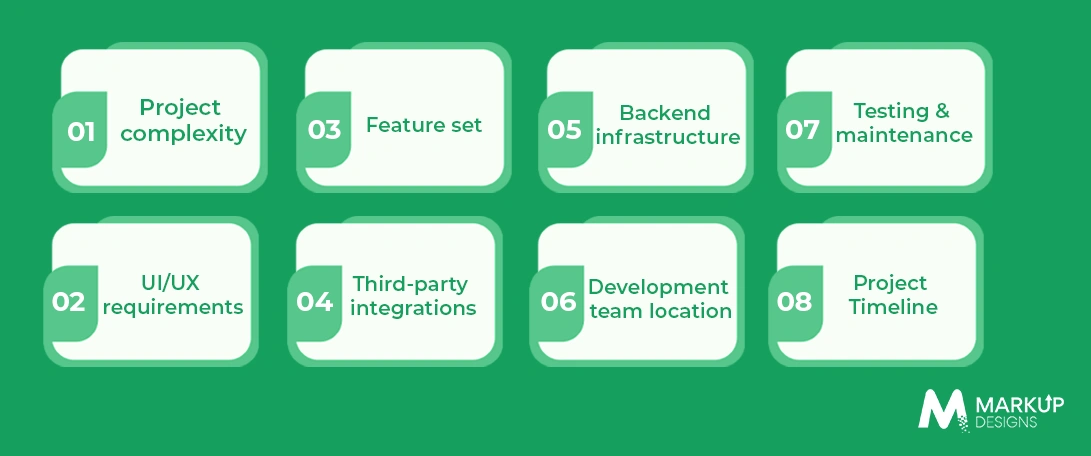
Every web application development project is unique; therefore, different web application development projects will not have the same costs. It is important to be aware of the cost drivers in order to plan an appropriate budget.
Project Complexity
Applications that have advanced workflows or functionality needs will typically take longer time to develop than simpler applications.
UI/UX Requirements
Highly customized interfaces, interactive animations, and premium user experiences increase both design and development efforts.
Feature Set
Features such as user authentication, payment gateways, notifications, analytics, chat systems, and role-based access control contribute to overall development costs.
Third-Party Integrations
Connecting your application with CRMs, ERPs, payment providers, cloud services, or external APIs requires additional development and testing.
Backend Infrastructure
The complexity of databases, cloud hosting, server architecture, security implementation, and API development directly impacts project pricing.
Development Team Location
Hiring an experienced Flutter web development company in different regions can significantly influence hourly development rates and the overall project budget.
Testing and Maintenance
Comprehensive quality assurance, browser compatibility testing, security audits, bug fixes, and ongoing maintenance should be included in the overall budget.
Project Timeline
Accelerated delivery schedules often require larger development teams or additional resources, which can increase project costs.
Why Choose Markup Designs for Flutter Web App Development?
Choosing a suitable development partner is vital for the development of a great web application. At Markup Designs, we combine both expertise and a business mindset in order to deliver you secure, scalable and high-performance flutter web applications. As a leading Flutter web app development company, we build high-performance Flutter web applications that help businesses create scalable, engaging, and feature-rich digital products.
Our developers are responsible for handling the entire development process from inception through planning, UI/UX designing, development, testing, deployment, and maintenance. We apply the agile development methodology for developing flutter web applications so that they are delivered fast.
No matter whether you need a customer portal, a SaaS application, an enterprise application, or an eCommerce solution, we develop applications that are flexible, scalable, and easy to maintain as your company grows. At Markup Designs, we provide Flutter web application development services which ensure quality and high performance of our applications.
Ready to Build Your Flutter Web App?
Turn your idea into a fast, scalable, and secure Flutter web application with Markup Designs. Our experts deliver end-to-end development solutions that support your business growth.

Conclusion
Developing flutter web apps turns out to be a perfect solution for enterprises who want to create scalable and affordable web applications. With the use of a single codebase, high performance, fast development process, and responsiveness, Flutter web app development becomes an excellent choice for building both business portals and enterprise systems.
Being aware of website development and allocating the budget in a proper way will assist you to build a web application that is going to suit your business requirements as well as help you with the future business development. Furthermore, working with the right Flutter web app development partner is going to guarantee the successful development of your project.
FAQs
1. What is Flutter web app development?
It is a procedure through which web applications are developed using Google’s Flutter framework in such a way that one codebase is enough to extend to mobile platforms as well.
2. Is Flutter useful for web application development?
Yes, it is highly beneficial for creating dashboards, software-as-a-service applications, enterprise apps, customer portals, and many other web applications which require modern UI.
3. Is Flutter suitable for both web and mobile application development?
Yes, the best thing about Flutter is that you can create applications for the web, Android, and iOS with just one codebase.
4. What is the cost of developing a Flutter web application?
The cost depends on the project size, its features, integration options, design requirements, etc. The cost may be about $8,000 for small projects or more than $100,000 for large enterprises.
5. Is it possible to use Flutter for enterprise web apps?
Yes, it is possible to create scalable systems, secure integrations, responsive UIs, and enterprise features with Flutter.
Author's Perspective
The use of Flutter in web development now makes it possible for app development which is more efficient with respect to scalability, performance and cross-platform uniformity from just one single codebase. However, when it comes to businesses, the most important thing lies in choosing the right strategy and the right developers. It will give you more value for your money.
Discuss Your Project NowGaurav Goyal
Global Sales- VP
Related Posts

How Progressive Web Apps Help Businesses Drive Growth,...
Insights Are Valuable & Execution is Priceless
You’ve read about the digital future. Now, let’s build the infrastructure to take you there. Move your strategy from the page to the product.
Design Your Solution Now
Contact Us
Schedule The Appointment At Your Convenience Date And Time.
30 Min
Web Conference
Time Zone
Indian standard time (08:30pm)

Thanks For Getting In Touch!
You’ve Taken The First Step Toward Transforming Your Digital Presence. Our Experts Will Reach Out Shortly To Take It Forward.
Launch Your Dream Project
Provide a brief overview of your project, and our specialists will evaluate your requirements. We will connect with you to explore how the right digital solutions can help you launch faster.