

In Brief
- Learn about the complete mobile app development process in Australia, starting from validating your idea and moving on to post-launch maintenance.
- Understand all the important aspects that might influence the mobile app development price and time.
- Learn about all the legal, security, and compliance aspects of launching a mobile app in Australia.
- Find out what challenges businesses have to face during mobile application development.
- Find out how Markup Designs can help build mobile applications businesses need for the future, safe and scalable.
Over the past few years, Australia has established itself as one of the fastest-growing digital economies. All industry sectors are investing in mobile application development. Whether you are a startup that is to validate an idea or an enterprise, developing a mobile app is a long-term investment for the successful future of your company. However, developing a successful mobile app takes more than just coding.
Starting with defining business objectives, ending with understanding the app development costs, methods, and regulatory constraints, every decision counts.
Creating an effective mobile application requires more than coding alone. Each choice impacts the outcome of the app, from the selection of appropriate technologies and identification of business requirements to knowing development budgets and deadlines.
In this article, we provide a thorough overview of mobile application development processes in Australia, examine factors that influence budgets and deadlines, and share suggestions to help you develop a secure application.
Why Invest in Mobile App Development in Australia?

The growing digital economy of Australia, the number of smartphones, and the increasing consumer choice made mobile applications an investment worth making for businesses. From small companies to big corporations, businesses began using mobile applications to achieve more effective consumer outreach, improve their operations, and discover new sources of profit in an increasingly competitive marketplace.
Australia’s Growing Mobile App Market
The mobile app industry of Australia is developing rapidly as businesses embark on digitalization and adopt modern digital solutions. While there is a surge of demand across sectors, numerous businesses are switching to mobile app usage.
Rising Smartphone and Mobile Commerce Adoption
The increasing popularity of smartphones and the rise of mobile commerce have pushed companies to create smooth mobile experiences. Nowadays, consumers turn to apps rather than traditional platforms for shopping, banking, health, entertainment, learning, and other ordinary needs.
Benefits of Building a Mobile App for Australian Businesses
With the right mobile application, organizations can boost customer engagement, enhance customer loyalty, enhance automation of processes, gain valuable user insights, and obtain additional sources of income.
Industries Driving Mobile App Development in Australia
In Australia, mobile application implementers are growing in retail and e-commerce, healthcare, financial technology, education, logistics, tourism, property market, and demand services.
Key Decisions Before Developing a Mobile App
Investment in mobile application development always requires proper planning. It is important to make the right decisions from the start in order to cut development expenses, enhance user experience, and make sure that the app fulfills the needs of the company.
Define Your Business Targets
Clearly define what the application should accomplish, whether it is to enhance sales, increase customer engagement, or streamline processes.
Identify Your Target Audience
Understand the needs, tastes, and behavior of your potential users to create a really valuable app.
Conduct Market and Competitor Analysis
By analyzing market patterns and competing applications, you can find ways your application can set itself apart.
Choose the Right App Type
It is essential to choose an appropriate development method based on your budget, performance metrics, and users.
Native Apps
Programmed to work solely on iOS or Android devices, native applications ensure excellent performance and user experience.
Cross-Platform Apps
Unlike native apps, cross-platform apps share a single codebase across platforms, significantly reducing both the time and cost required for development.
Progressive Web Apps (PWA)
PWAs deliver an app-like experience via a web browser, making them a more affordable option in many cases.
Choose between Android and iOS, or both
Choose the right operating system for your application based on your target audience, business goals, and budget. Organizations usually decide in favour of both operating systems to cover maximum ground.
Select the Right Monetisation Strategy
Select the model that fits your business objectives well, such as in-app purchases, subscriptions, advertisements, or paid downloads.
Mobile App Development Process in Australia
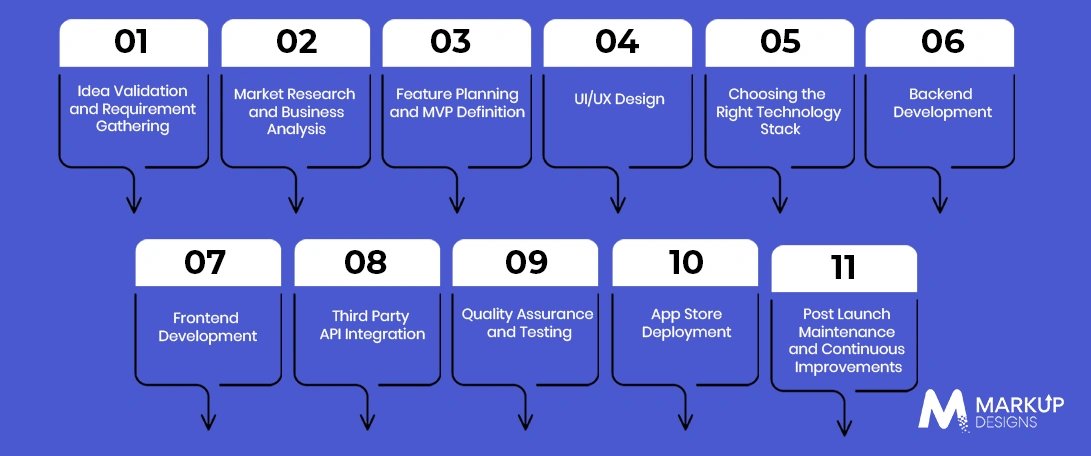
To build a successful application, you need to follow a systematic app development process, which will guarantee that your idea will be transformed into an efficient, scalable, and user-friendly digital product.
Step 1: Idea Validation and Requirement Gathering
Specify your application’s purpose, objectives, target audience, and essential requirements.
Step 2: Conducting Market Research and Business Analysis
Analyze your rivals, users’ expectations, and trends in the market to determine whether you have a valid idea about your application and discover opportunities.
Step 3: Feature Planning and MVP Definition
Identify the critical features and create a Minimum Viable Product (MVP) that will allow you to launch quickly and get clients’ feedback.
Step 4: UI/UX Design
Make user-friendly interfaces and smooth user journeys to guarantee an engaging experience for users.
Step 5: Choosing the Right Technology Stack
Determine programming languages, platforms, and cloud systems based on your app’s needs.
Step 6: Backend Development
Build secure servers, databases, APIs, and logic that run your application.
Step 7: Frontend Development
Create responsive, user-friendly interfaces for Android, iOS, or other platforms.
Step 8: Third-Party API Integration
Incorporate payment systems, navigation, notifications, analytical systems, etc., to extend the opportunities of your application.
Step 9: Quality Assurance and Testing
Test your app for purpose and safety before launching it.
Step 10: App Store Deployment
Publish your app on the Google Play and App Store after meeting the submission requirements and requirements for publishing.
Step 11: Post-Launch Maintenance and Continuous Improvements
Check how the app functions, fix errors, renew it, and add new features.
Essential Features Every Mobile App Should Have
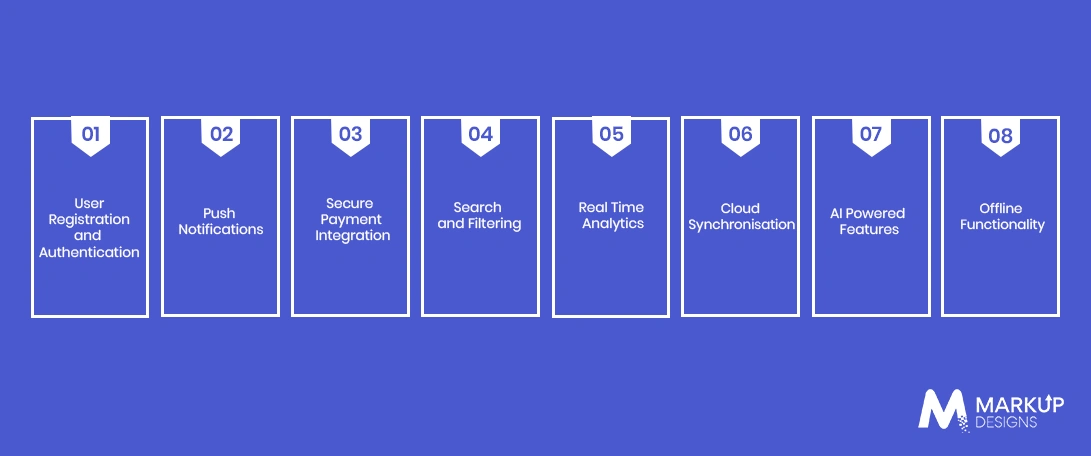
Choosing the appropriate features boosts user-friendliness, involvement, and success rates while providing for a positive user experience.
User Registration and Authentication
Allow users to register and log in via email, phone number, or social network accounts.
Push Notifications
Notify users of the latest news, promotional offers, and important happenings in real time.
Secure Payment Integration
Offer secure and easy payment options that use proven sites for payments.
Search and Filtering
Allow users to quickly locate the products, services, or information they want.
Real Time Analytics
Monitor user activity and application performance, so you can make informed business choices.
Cloud Synchronization
Make data available on various devices.
Artificial Intelligence Features
Improve user experience with ideas that include recommendation engines, chatbots, and other advanced tools.
Offline Functionality
Provide users access to key functionalities even if they do not have internet access.
Mobile App Development Timeline in Australia
The mobile app development timeline in Australia is determined by the complexity of the app, its features, and the need for tests. A well-thought-out plan allows for a faster development pace.
Simple Mobile Apps
Regular apps are expected to take about 2-4 months.
Medium Complex Apps
Apps with custom features, API integration, and payment functions are believed to demand 4-7 months.
Mobile Applications for Enterprises
For Cabinet-Level mobile applications with complex functionalities and numerous integrations, more than 8-12 months are needed.
Factors That Affect Development Timelines
Number of Features
More functionalities will lead to longer design, development, and testing time.
Platform Selection
The choice of developing on Android or iOS affects the timeline.
UI/UX Complexity
Unique design and interactive UI require long development.
Third Party Integrations
Development of third-party services, e.g., payment gateways or CRMs, requires more time.
Testing Requirements
Proper testing ensures the application’s performance on different devices.
Compliance
Ensuring compliance with industry regulations and safety measures may affect the development time as well.
How Much Does Mobile App Development Cost in Australia?
The mobile app development cost in Australia varies based on the app’s complexity, features, technology stack, and development requirements.
Cost by App Complexity
| App Type | Estimated Cost |
| Simple App | AUD 30,000–70,000 |
| Medium App | AUD 70,000–150,000 |
| Complex App | AUD 150,000–350,000+ |
| Enterprise App | AUD 350,000–700,000+ |
Factors Affecting Development Cost
App Complexity
The more advanced the application is, the more time and resources will be required to develop it.
Features
The number of features that the app will have is going to influence the price of the application development directly.
Platform Choice
Generally, it’s cheaper to develop one version of the app on one platform than to develop two applications for Android and iOS separately.
UI/UX Design
When creating a custom user interface, the cost of design and development increases.
Backend Infrastructure
The development cost is impacted by the need for scalable servers, databases, and cloud solutions.
AI & ML Integration
The implementation of A.I. functionality (e.g., ai chatbots) means that you will need to hire a professional app developer in Australia for this purpose.
API Integrations
If the app needs to connect to any third-party services, the costs of app creation are raised.
Security Features
Encryption, authentication, and other security measures will require additional investments.
Developer Location
The cost of developing an application varies depending on the app developers’ geographical locations.
Maintenance Costs
When the app is introduced to the market, it needs to be maintained and regularly improved.
Hidden Costs Businesses Should Consider
There are many hidden costs associated with app creation, such as downloads and hosting plans for your app.
Mobile App Maintenance Cost
Maintenance of mobile applications costs around 15-20% of the original cost of the application creation each year.
Australian Regulations and Compliance for Mobile Apps
Meeting Australian requirements ensures that companies obtain user data in a secure manner while gaining trust and preventing possible legal issues during the application development.
Privacy Act 1988
Organizations are obliged to acquire and manage personal data according to the Australian Privacy Act.
Australian Privacy Principles (APPs)
The APPs lay down the rules and regulations that ensure that personal information is handled properly and transparently.
Consumer Data Protection
Organizations keep the consumer data secure from unwanted access and violation.
PCI DSS for Payment Applications
Any mobile application that is involved in electronic payments should adhere to PCI DSS.
Accessibility Requirements
Develop applications that are easily available for different categories of people.
Encrypting Data and Security
Ensure the safety of the information using encryption, other safety tactics, and updates on a regular basis.
Common Challenges in Mobile App Development
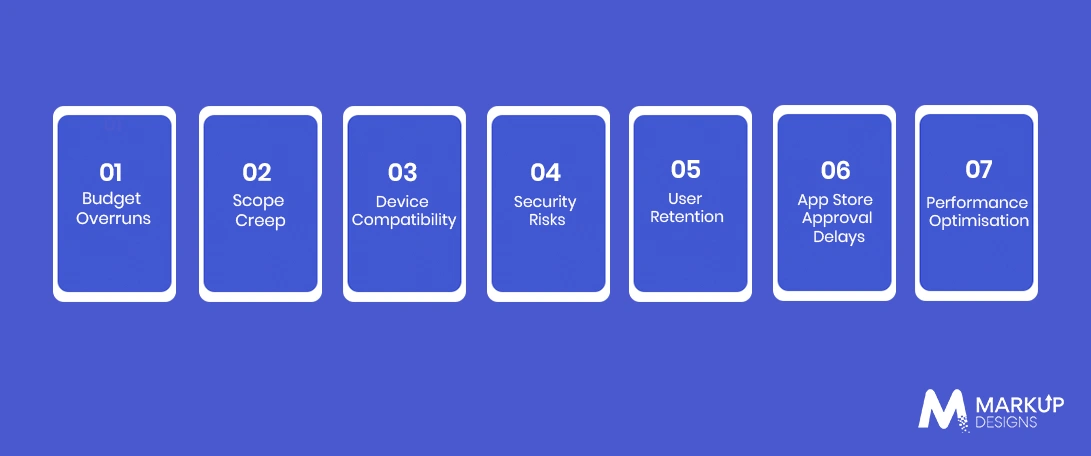
Mobile app creation is accompanied by a number of technical and business problems that should be solved after proper planning.
Budget Overruns
Poor planning and a lack of clarity in the requirements may lead to an increase in the costs.
Scope Creep
The addition of new features during the development may slow down the process and significantly increase the budget.
Device Compatibility
The application must be compatible with different devices and OS environments.
Security Issues
Well-thought-out security systems guarantee the safety of all user data.
User Retention
By providing a great user experience and frequent updates, it is possible to keep users active.
App Store Approval Delays
Apps can be delayed in launch if platform requirements are not followed.
Performance Optimization
Ensuring speed, stability, and responsiveness makes apps easy to work with.
Best Practices for Successful Mobile App Development
Following tried and tested development approaches enables businesses to create secure, scalable, and high-quality mobile applications.
Start with an MVP
Start from fundamental features to check your idea and then extend possibilities.
Build Scalable Architecture
Create an architecture that will allow for further expansion and growing demand from users.
Put User Experience First
Develop user-friendly designs to ensure the ease of interaction with the app.
Ensure Security from the Very Beginning
Use security best practices at all stages of development.
Conduct Regular Testing
Regular testing will help identify existing problems before the actual launch.
Schedule Updates
Make updates to improve the user experience, usability, and security of the application.
Use Agile Development Methodology
Use Agile methods to make faster releases and adjust to upcoming changes in requirements.
Future Trends in Mobile App Development
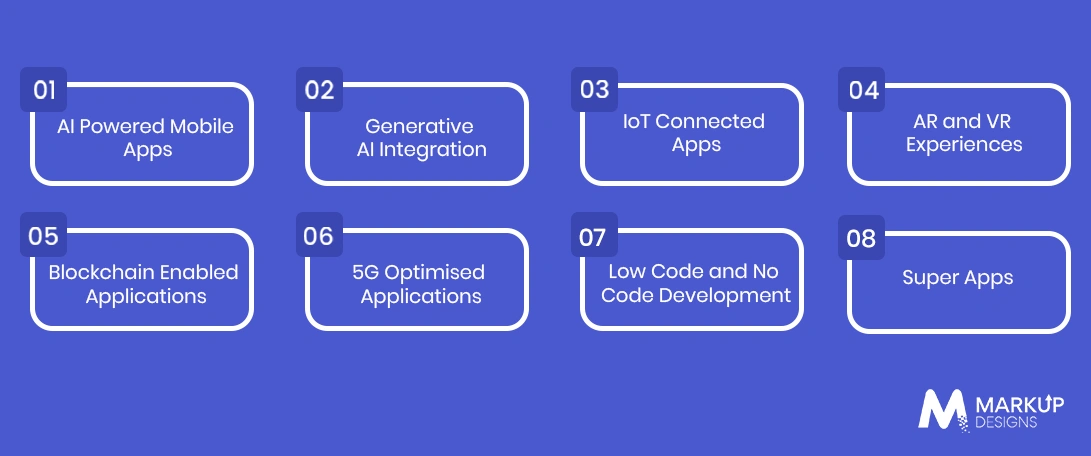
New technologies are changing mobile application design, development, and use. Companies that introduce innovations will be able to adapt to changes in customer expectations and keep up with their rivals.
AI-Powered Mobile Applications
Artificial intelligence is making it possible to deliver personalisation, automation, and smart decision-making via mobile applications.
Generative AI Integration
Generative AI is adding capabilities such as AI assistants, content creation, and chatbots to applications.
Internet of Things Connected Apps
The Internet of Things (IoT) is enabling applications to control and monitor connected devices in real time, and across industries.
Augmented Reality and Virtual Reality Experiences
Augmented reality and virtual reality are bringing new experiences to sectors like retail, healthcare, education, and gaming.
Blockchain-Enabled Applications
Blockchain is making payments, digital identity, and data processing more secure, clear, and reliable.
5G Optimised Applications
5G technology allows mobile applications to achieve faster connectivity, lower latency, and increased effectiveness.
Low Code and No Code Application Platforms
These platforms help to hasten the process of development and make it easier for businesses to introduce new applications.
Super Applications
Super applications are combining the functions of multiple applications into one.
Why Should You Choose Markup Designs for Mobile Application Development in Australia?
Markup Designs is focused on developing reliable, scalable, and high-performance mobile applications. Our services cover all aspects of mobile application creation, including strategy, design, development, and support in any of the mentioned areas.
Complete mobile app development
We are responsible for each and every step of the mobile application development process.
User Interface / User Experience (UI/UX) Excellence
Every design of ours creates a smooth and beautiful user experience to ensure a high level of user satisfaction.
Customization of mobile applications
We develop mobile apps that are tailored to your needs.
Implementation of AI & other technologies
We have specialists who skillfully combine AI, IoT, and other technologies to offer you a perfect application.
Application of agile project development methods
We practice agility in order to finish the project faster and be able to adapt promptly to the requirements of the clients.
Continuous support and maintenance
We are able to provide continuous service and maintenance.
Ready to Build a High-Performing Mobile App in Australia?
Turn your app idea into a scalable, secure, and feature-rich mobile solution with Markup Designs. Our experts help you navigate every stage of the development journey, from strategy and design to deployment and ongoing support.

Conclusion
Creating a mobile app in Australia calls for thorough planning, appropriate technological decisions, as well as implications concerning costs and timelines. By adhering to formal procedures and best practices in the field, entrepreneurial entities can create reliable apps, ensuring that added value is provided in the long run. Another issue that guarantees a timely completion of a project and is free of possible problems is collaborating with a reputable development company.
FAQs
1. What is the approximate cost of mobile app development in Australia?
The cost for mobile app development in Australia varies from AUD 30,000 for a simple app to over AUD 700,000 for advanced programs.
2. How long does app development take?
The time it takes for development may take from 2 to 4 months for simple apps and up to 12 months for more complex applications.
3. What are the main influencers on mobile app development costs?
Several aspects that may determine mobile app development costs include app complexity, technological requirements, and functionality.
4. Should a native app be used or a cross-platform one?
Native apps are known to outperform cross-platform ones due to higher speeds and lower costs. The right choice depends on your business goals, budget, and target audience.
5. What is the cost of maintaining an application?
Annual maintenance costs are usually between 15-20% of the cost of the app’s development. Maintenance costs will include software updates, bug fixes, security patches, and enhancements.
6. What technologies are used in creating mobile apps?
Common technologies used in mobile app development include: Flutter, React Native, Swift, Kotlin, Node.js, .NET, Firebase, AWS, Microsoft Azure, and Google Cloud solutions.
7. How to select the best mobile app developer?
When choosing a mobile app development partner, make sure that this company has industry experience, excellence in technology, suitable portfolio, transparency, and the capability to carry out full-cycle mobile app development.
8. Why invest in mobile app development in Australia?
Due to the rapid development of the digital economy in Australia, a high level of smartphone penetration, and growing demand for mobile-first solutions, creating mobile apps has become an excellent opportunity for companies to develop their businesses and attract more customers.
Author's Perspective
Building a successful mobile app is not just about adopting the latest technologies. It requires a clear business strategy, a deep understanding of user needs, and a focus on scalability from day one. As Australia’s digital landscape continues to evolve, businesses that invest in well-planned, user-focused mobile applications will be better positioned to improve customer experiences, streamline operations, and achieve sustainable growth. At Markup Designs, we believe the best apps are those that solve real business challenges while remaining flexible enough to adapt to future market demands.
Discuss Your Project NowGaurav Goyal
Global Sales- VP
Related Posts

Cost to Build a Mobile App in Qatar...

How Much Does It Cost to Build an...

How to Build a Car Wash App: Development...
Insights Are Valuable & Execution is Priceless
You’ve read about the digital future. Now, let’s build the infrastructure to take you there. Move your strategy from the page to the product.
Design Your Solution Now
Contact Us
Schedule The Appointment At Your Convenience Date And Time.
30 Min
Web Conference
Time Zone
Indian standard time (08:30pm)

Thanks For Getting In Touch!
You’ve Taken The First Step Toward Transforming Your Digital Presence. Our Experts Will Reach Out Shortly To Take It Forward.
Launch Your Dream Project
Provide a brief overview of your project, and our specialists will evaluate your requirements. We will connect with you to explore how the right digital solutions can help you launch faster.