

In Brief
- UI/UX design plays a major role in improving mobile app performance, user engagement, and long-term retention by creating smooth, intuitive, and user-friendly experiences.
- Elements like easy navigation, responsive layouts, fast loading speeds, personalized experiences, and seamless onboarding encourage users to continue using the app.
- Poor UI/UX practices such as cluttered interfaces, slow performance, confusing navigation, and excessive notifications can increase uninstall rates and reduce engagement.
- Businesses that focus on effective UI/UX strategies can improve customer satisfaction, strengthen brand loyalty, and increase long-term profitability through higher retention rates.
- Monitoring UI/UX metrics and continuously optimizing user experiences helps companies build scalable, high-retention mobile applications that align with modern user expectations.
Mobile applications have become an essential part of daily life, but attracting downloads alone is not enough for long-term success. The real challenge for businesses is keeping users engaged and encouraging them to return regularly. This is where UI/UX design plays a major role. A well-designed mobile app not only looks visually appealing but also creates smooth, fast, and user-friendly experiences that improve satisfaction and retention.
From easy navigation and responsive layouts to personalized experiences and seamless onboarding, every design element influences how users interact with an app. Even a slight delay, confusing interface, or poor user journey can increase uninstall rates and reduce engagement.
As competition in the mobile app market continues to grow, businesses are increasingly focusing on performance-driven UI/UX strategies to build stronger customer relationships, improve brand loyalty, and increase long-term app retention.
In this blog, you will explore how UI/UX design directly impacts mobile app performance, user engagement, and long-term retention, along with the key design elements businesses should focus on to create successful mobile experiences.
Understanding User Retention
User retention is about fostering a long-term relationship with your users. It is the art of consistently delivering value that aligns with evolving user needs and exceeding expectations. It is about creating an intuitive and delightful experience that not only fulfills a functional purpose but also cultivates an emotional connection with your brand.
The formula for Calculating User Retention Rate (URR):
Total number of app users at the start of a stage (÷) Total number of active app users at the end of the stage = User Retention Rate (%)
All these translate to a simple yet powerful plan: satisfied users equal returning users. But is it that simple though? Recent app retention statistics clearly highlight the growing challenge businesses face in keeping users engaged over time.
- On Android devices, app retention drops significantly from 21.1% on the first day to just 2.1% after 30 days.
- iOS apps perform slightly better, with retention decreasing from 23.9% on day one to 3.7% after 30 days.
These statistics clearly show why businesses need strategies that keep users engaged and encourage them to continue using the app. A high user retention rate is not just a performance metric-it directly impacts customer loyalty, long-term engagement, and overall business growth.
Studies show that even a 5% increase in user retention can boost app profits by 25% to 95% over time. The reason is simple, the longer users stay engaged with an app, the higher the chances of them becoming loyal and paying customers.
The Role of UI/UX Design in Improving User Retention
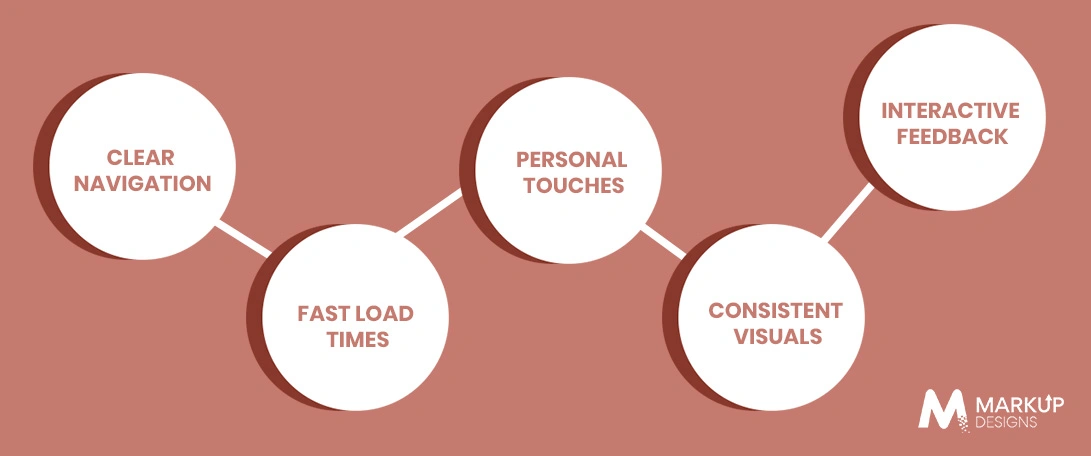
According to Forbes, a bad UX makes 88% of visitors leave for good user retention depending on one question: do people want to come back? A well-planned UI/UX design makes sure they do. It focuses on details that create easy, satisfying experiences.
Here’s how thoughtful design helps improve app retention:
- Clear navigation: Simple menus and intuitive layouts keep users moving without frustration.
- Fast load times: Apps that open in under three seconds maintain momentum and reduce drop-offs.
- Personal touches: When an app remembers user preferences, it saves time and feels more convenient.
- Consistent visuals: Uniform colors and icons make the app familiar and comfortable to return to.
- Interactive feedback: Subtle animations or responses make every action feel acknowledged.
How Interactive Mobile App Design Keeps Mobile App Users Engaged
User retention is one of the most important metrics for any app. Getting users to download your app is just the beginning. The real challenge lies in keeping them engaged over the long term. This is where UX and UI design play crucial roles.
A streamlined, intuitive design encourages users to keep returning to the app. Consistency is key: elements like buttons, icons, and navigation should follow a logical pattern throughout the app. This creates a sense of familiarity, helping users navigate effortlessly.
For example, implementing responsive design ensures that the app functions well across various devices and screen sizes. Additionally, micro-interactions-small animations or feedback mechanisms-can add an extra layer of delight, making users feel connected with the app.
Retaining users goes beyond functionality. It’s about offering an engaging experience that fosters a connection between the user and the app. Elements like push notifications, personalized content, and easy onboarding processes can significantly impact retention rates. Thoughtful UX design ensures that these elements are used strategically, without becoming overwhelming or intrusive.
Read Also: Practical Guide to Developing Your First Mobile Apps
Key UI/UX Elements That Influence Retention
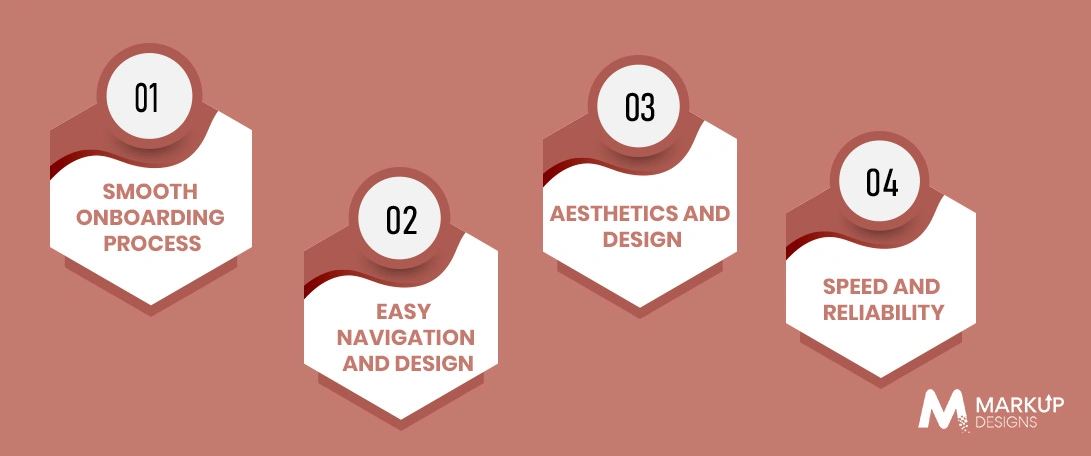
Following are the main elements that influence the retention on mobile apps:
Smooth Onboarding Process
Onboarding is what the users see after installing an app. It establishes a trend on which they will be using it in the long term. An ineffective onboarding procedure can also cause rejection of the app. Conversely, a user-friendly and attractive opening makes users understand the efficacy of the app within a short period.
Best practices onboarding:
- Make the steps short and simple.
- Use short walkthroughs, hints or tool tips, rather than lengthy tutorials.
- Make the journey navigable so that users can skip.
- Show benefits early enough to give the users motivation to proceed.
Easy Navigation and Design
The backbone of any mobile application is navigation. In case users fail to get what they require, they will go away. Easy and straightforward navigation will assist the user in solving tasks without getting lost. When users have menus that are overloaded or hidden, people just feel lost and frustrated.
Tips to enhance navigation:
- Adopt a clean and logical page layout with very few steps.
- Make key functions available with one or two clicks.
- Use general icons and labels so that people can immediately identify them.
- Test with real users to determine the areas of difficulty.
Aesthetics and Design
Quality design creates confidence and makes the application memorable. Users often decide whether they trust an app within seconds. Clean visuals, readable text, and consistent branding can make the difference between continued engagement and an uninstall. The apps with bad visuals look outdated or unsafe to use.
Components of good visual design:
- Select colors that represent the feeling and character of the app.
- Use readable typography.
- Provide design uniformity across screens
- Use attractive graphics, but don’t overdo them and make the app slow.
Speed and reliability
The superior design will not achieve success when the app is slow. Users want fast loading speeds and flawless navigation of pages. Lags, crashes, or errors make people get rid of apps at first. The use of high performance is a very important aspect of churn reduction.
Performance improvement methods:
- Ensure that screens load in a few seconds.
- Add fluid transitions and animations.
- Fix bugs and errors through periodic updates.
- Test on multiple devices to see that performance is the same.
Common UI/UX Mistakes That Increase App Uninstalls
Even a feature-rich mobile app can fail if the user experience is frustrating. Many users uninstall apps because of poor design decisions that make navigation confusing or interactions time-consuming. A complicated interface, excessive pop-ups, or slow loading speeds can quickly reduce engagement and increase churn rates.
Some of the most common UI/UX mistakes that negatively impact retention include:
- Cluttered screens with too much information
- Complex onboarding processes that overwhelm users
- Poor navigation and hidden features
- Slow-loading pages and laggy animations
- Excessive notifications and interruptions
- Inconsistent design elements across screens
- Forced account creation before exploring the app
- Lack of responsiveness across different devices
Users expect mobile apps to deliver fast, smooth, and intuitive experiences. When apps fail to meet these expectations, users often switch to competitors that offer better usability and performance.
How Good UX Builds Brand Loyalty
A strong UI/UX design does more than improve usability, it helps businesses build long-term customer relationships. When users consistently enjoy smooth and reliable app experiences, they begin to trust the brand behind the application. This trust encourages repeat usage and strengthens customer loyalty over time.
Good UX design creates familiarity through consistent layouts, easy navigation, and personalized experiences. Features like quick access to important functions, intuitive interfaces, and responsive interactions make users feel comfortable while using the app.
A positive user experience also increases the chances of:
- Higher customer satisfaction
- Better user engagement
- More app recommendations and referrals
- Increased customer lifetime value
- Stronger emotional connection with the brand
Apps that prioritize user needs are more likely to retain customers and maintain long-term engagement in competitive markets.
UI/UX Metrics Businesses Should Track
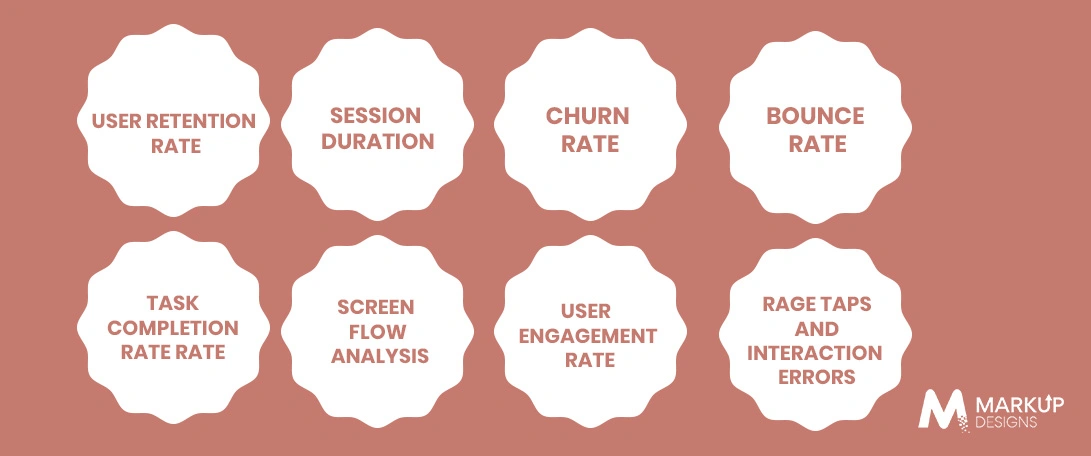
Tracking UI/UX performance metrics helps businesses understand how users interact with mobile applications. These insights make it easier to identify usability issues, improve user journeys, and increase retention rates.
Some important UI/UX metrics businesses should monitor include:
- User Retention Rate
- Session duration
- Churn rate
- Bounce rate
- Task completion rate
- Screen flow analysis
- User engagement rate
- Rage taps and interaction errors
For example, a high bounce rate may indicate confusing navigation, while shorter session durations can signal poor engagement. Similarly, analyzing user journeys helps businesses identify screens where users drop off or experience friction.
By continuously monitoring these metrics, companies can improve app usability, optimize performance, and create better user experiences.
Best Practices for Designing High-Retention Mobile Apps
Creating a high-retention mobile app requires more than attractive visuals. Businesses must focus on usability, speed, consistency, and user satisfaction throughout the entire app experience.
Here are some effective UI/UX practices that improve retention:
- Keep interfaces clean and simple
- Reduce unnecessary user steps
- Optimize app speed and responsiveness
- Use consistent colors, typography, and navigation
- Design intuitive onboarding experiences
- Add personalized recommendations and content
- Ensure accessibility for all users
- Test app experiences with real users regularly
It is also important to gather user feedback continuously and make improvements based on user behavior. Apps that evolve according to customer needs are more likely to maintain long-term engagement and loyalty.
Build Engaging Mobile App Experiences With Markup Designs
At Markup Designs, we create user-focused mobile applications that combine visually appealing interfaces with seamless functionality. Our team focuses on designing intuitive digital experiences that improve engagement, retention, and overall app performance.
We follow a strategic UI/UX approach that prioritizes:
- Smooth user journeys
- Responsive and scalable app designs
- Fast and performance-driven interfaces
- Personalized user experiences
- Cross-platform compatibility
- Consistent branding and design systems
With expertise across multiple industries, our developers and designers build mobile applications that align with modern user expectations while supporting long-term business growth. From idea validation and wireframing to deployment and optimization, we deliver mobile app solutions designed to maximize user satisfaction and retention.
Create Mobile App Experiences Users Love
Improve user retention, engagement, and app performance with intuitive UI/UX design and scalable mobile app development solutions built for long-term business growth.

Conclusion
UI/UX design plays a critical role in determining the success of a mobile application. From onboarding and navigation to performance and personalization, every design decision impacts how users interact with an app. A smooth and engaging user experience not only improves retention rates but also strengthens customer loyalty and increases long-term profitability.
As user expectations continue to evolve, businesses must focus on creating mobile app experiences that are intuitive, responsive, and user-centric. Investing in effective UI/UX strategies can help brands reduce uninstall rates, improve engagement, and build stronger relationships with their users.
FAQs
1. Why is UI/UX design important for mobile app retention?
UI/UX design improves usability, navigation, and overall user satisfaction, encouraging users to continue using the app over time.
2. How does app performance affect user retention?
Slow-loading apps, crashes, and laggy experiences frustrate users and increase the chances of app uninstalls.
3. What are the most common UI/UX mistakes in mobile apps?
Common mistakes include poor navigation, cluttered interfaces, confusing onboarding, excessive notifications, and inconsistent designs.
4. How does personalization improve user engagement?
Personalized recommendations, saved preferences, and customized experiences make apps more relevant and convenient for users.
5. Which metrics help measure app retention?
Businesses commonly track retention rate, session duration, churn rate, bounce rate, and user engagement metrics to measure app performance.
Author's Perspective
Modern mobile app users expect fast, intuitive, and highly personalized experiences. Businesses that prioritize UI/UX design are more likely to retain users and build long-term customer relationships. In today’s competitive app market, design is no longer just about aesthetics-it directly influences engagement, retention, and business growth. Companies that continuously improve usability and performance will have a stronger advantage in creating successful and scalable mobile applications.
Discuss Your Project NowJupinder Singh Arora
Founder and CEO
Related Posts

UI/UX Design Best Practices for Successful Mobile Apps...
Insights Are Valuable & Execution is Priceless
You’ve read about the digital future. Now, let’s build the infrastructure to take you there. Move your strategy from the page to the product.
Design Your Solution Now
Contact Us
Schedule The Appointment At Your Convenience Date And Time.
30 Min
Web Conference
Time Zone
Indian standard time (08:30pm)

Thanks For Getting In Touch!
You’ve Taken The First Step Toward Transforming Your Digital Presence. Our Experts Will Reach Out Shortly To Take It Forward.
Launch Your Dream Project
Provide a brief overview of your project, and our specialists will evaluate your requirements. We will connect with you to explore how the right digital solutions can help you launch faster.