
In Brief
- Understand your app goals, features, budget, and platform requirements before hiring developers.
- Compare freelancers, in-house teams, offshore developers, and mobile app development agencies carefully.
- Evaluate portfolios, technical skills, client reviews, and industry experience before making a decision.
- Ask important technical, project management, and post-launch support questions during the hiring process.
- Avoid common hiring mistakes such as choosing developers based only on low pricing.
Mobile applications have become an essential part of modern business growth, customer engagement, and digital transformation. Whether you are a startup launching a new product or an enterprise improving customer experiences, choosing the right mobile app developer plays a major role in the success of your project.
A skilled developer can help businesses build secure, scalable, and user-friendly applications that deliver long-term value, while the wrong hiring decision can lead to delays, budget overruns, poor performance, and technical issues.
With so many freelancers, development agencies, and offshore teams available in the market, finding the best mobile app developer can become challenging.
This guide will help you understand how to evaluate developers, compare hiring models, assess technical skills, avoid common mistakes, and select the right development partner for your business goals.
Why Hiring the Right Mobile App Developer is Important
Choosing the right mobile app developer is one of the most important decisions in the app development journey. A mobile application is not just a digital product anymore; it directly impacts customer engagement, business growth, operational efficiency, and brand reputation.
Whether you are building an ecommerce app, healthcare platform, fintech solution, on-demand service app, or internal business application, the success of the project largely depends on the expertise of the development team you hire.
Many businesses invest in app ideas but fail to achieve expected results because they partner with inexperienced or unsuitable developers. A skilled mobile app developer does much more than writing code. They help shape the product strategy, improve user experience, recommend the right technologies, ensure security, and build scalable solutions that can support long-term business growth.
On the other hand, hiring the wrong developer can lead to delayed launches, poor app performance, security vulnerabilities, increased development costs, and even project failure. This is why businesses should carefully evaluate developers before making a hiring decision.
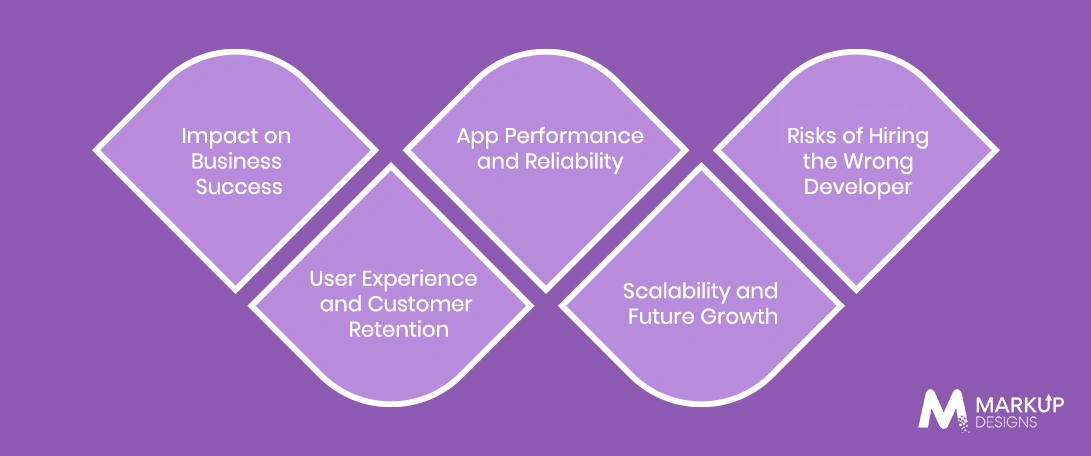
Impact on Business Success
A professionally developed mobile app can significantly improve business performance. It helps companies connect with customers more efficiently, automate processes, increase sales opportunities, and strengthen customer loyalty. The right mobile app developer understands how to align technical execution with business goals.
Experienced developers focus on:
- Building apps that solve real user problems
- Creating smooth and engaging customer experiences
- Developing scalable architecture for future growth
- Ensuring high app performance and stability
- Reducing technical issues and downtime
- Supporting long-term maintenance and upgrades
When businesses hire developers with strong technical and industry expertise, they increase the chances of launching successful mobile applications that generate long-term value.
User Experience and Customer Retention
User experience plays a major role in the success of any mobile application. Even if an app offers useful features, users may uninstall it if the interface is confusing, slow, or difficult to navigate. A skilled mobile app developer understands the importance of intuitive design, fast loading speed, and smooth app functionality.
Good developers focus on:
- Easy navigation and responsive interfaces
- Fast app performance across devices
- Minimal crashes and technical issues
- Optimized onboarding experiences
- Personalized user interactions
- Consistent performance across operating system
A positive user experience encourages users to spend more time on the app, return regularly, and recommend it to others. This directly improves customer retention and long-term engagement.
App Performance and Reliability
Performance and reliability are critical factors that determine how users perceive a mobile application. Slow loading times, frequent crashes, lagging interfaces, or server failures can damage brand credibility and reduce user trust.
Professional mobile app developers follow best development practices to ensure:
- Stable app performance under high traffic
- Efficient code structure
- Proper backend optimization
- Smooth API integrations
- Faster response times
- Regular testing and debugging
Reliable mobile apps help businesses maintain customer trust and reduce negative reviews on app stores. This becomes especially important for industries such as ecommerce, healthcare, fintech, logistics, and online services where app stability directly affects revenue and customer satisfaction.
Scalability and Future Growth
Many businesses initially develop apps with basic features and later expand them as the business grows. A skilled developer builds the app architecture in a way that supports future upgrades, feature additions, and increasing user demand.
Scalable mobile app development helps businesses:
- Add new functionalities easily
- Handle growing traffic and data
- Expand to multiple platforms
- Integrate advanced technologies like AI or IoT
- Reduce redevelopment costs in the future
- Maintain long-term operational efficiency
Developers who understand scalable architecture can help businesses avoid technical limitations that often appear when apps grow rapidly.
Risks of Hiring the Wrong Developer
Hiring the wrong mobile app developer can create serious business and technical challenges. Many companies make decisions based only on low pricing or quick delivery promises without properly evaluating the developer’s expertise.
Some of the most common risks include:
Budget Overruns
Poor planning, lack of technical expertise, and inefficient development practices often increase project costs. Businesses may end up spending more money fixing issues or rebuilding the app entirely.
Delayed Launches
Inexperienced developers may fail to meet deadlines due to weak project management, communication gaps, or technical limitations. Delayed launches can impact business opportunities and market competitiveness.
Poor App Quality
Apps developed without proper testing and quality assurance may face performance issues, crashes, security vulnerabilities, and poor user experiences. This can damage brand reputation and reduce customer trust.
Security and Maintenance Issues
Security is one of the most critical aspects of mobile app development. Weak coding practices or poor security implementation can expose user data and business information to cyber threats.
Choosing the right mobile app developer requires careful evaluation, technical assessment, and a clear understanding of business requirements. Investing time in the hiring process can help businesses build secure, scalable, and high-performing mobile applications that support long-term growth.
Define Your Mobile App Requirements Before Hiring
Before hiring a mobile app developer, businesses should clearly define their project requirements. Having a clear understanding of goals, features, budget, and timelines helps developers provide accurate project estimates and development strategies. It also reduces misunderstandings during the development process.
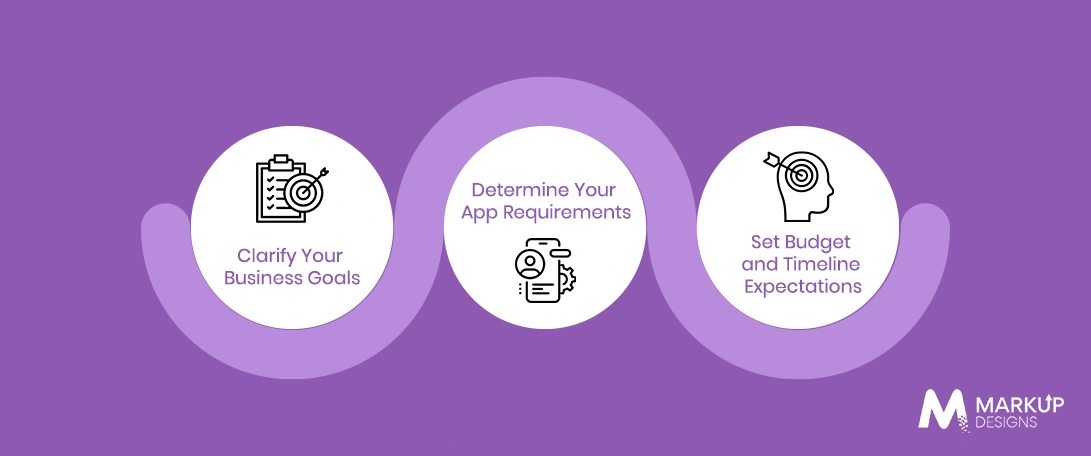
Clarify Your Business Goals
- Identify the main purpose of the mobile app.
- Understand the problem the app will solve for users.
- Define your target audience and their expectations.
- Determine the business outcomes you want, such as increasing sales, improving customer engagement, or streamlining operations.
Determine Your App Requirements
- Decide whether the app should support iOS, Android, or both platforms.
- Choose between native app development or cross-platform development based on budget and performance needs.
- List the core features and functionalities required in the first version of the app.
- Identify any third-party integrations needed, such as payment gateways, GPS, CRM systems, APIs, or cloud services.
Set Budget and Timeline Expectations
- Define an estimated budget range before approaching developers.
- Understand that app complexity directly impacts development cost and timeline.
- Set realistic deadlines for design, development, testing, and deployment.
- Discuss future scalability and maintenance requirements from the beginning to avoid unexpected costs later.
Understand the Different Hiring Options
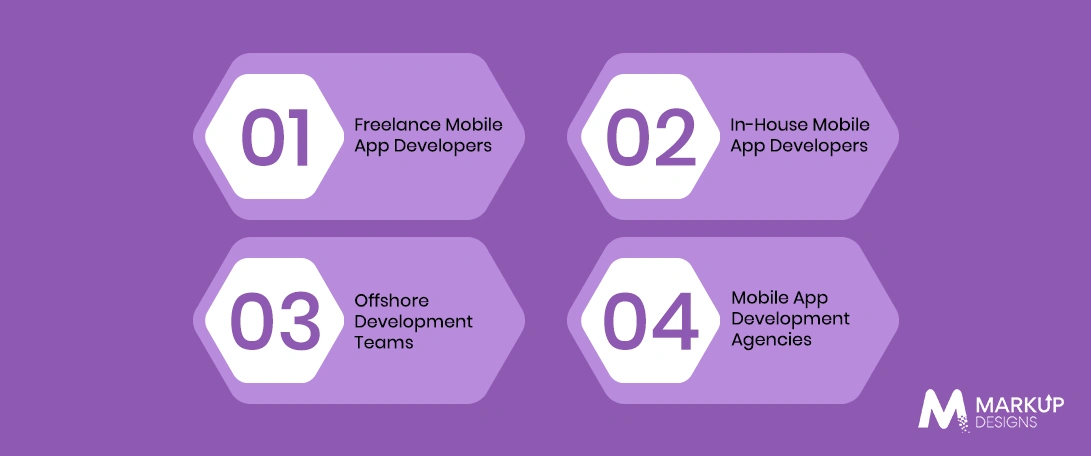
Businesses have multiple options when hiring mobile app developers, and each model comes with its own advantages, challenges, and cost considerations. The right choice depends on your project complexity, budget, timeline, and long-term business goals.
Understanding these hiring models can help businesses select the most suitable development approach for their mobile app project.
Freelance Mobile App Developers
Freelancers are independent developers who usually work on short-term or smaller projects. They are often a cost-effective option for startups or businesses with limited budgets.
Pros
- Lower development costs
- Flexible hiring model
- Faster onboarding process
Cons
- Limited scalability
- Possible communication or availability issues
- May lack complete project management support
Best Use Cases
- MVP development
- Small app projects
- Basic feature upgrades
In-House Mobile App Developers
An in-house team works directly within the organization and provides full control over the development process.
Advantages
- Better communication and collaboration
- Dedicated focus on the project
- Easier long-term management
Challenges
- Higher hiring and operational costs
- Time-consuming recruitment process
- Requires infrastructure and management support
Offshore Development Teams
Offshore teams are popular among businesses looking for skilled developers at competitive pricing.
Benefits
- Cost-effective development
- Access to global talent
- Faster scalability
Potential Drawbacks
- Time zone differences
- Communication barriers
- Project coordination challenges
Mobile App Development Agencies
Development agencies provide complete end-to-end mobile app development services, including design, development, testing, deployment, and maintenance.
They are often the best choice for:
- Complex enterprise applications
- Long-term projects
- Businesses needing full-service support
- Scalable and secure app development
Comparison Table: Which Hiring Model is Right for You?
| Hiring Model | Cost | Best For |
| Freelance Mobile App Developers | Low to Medium | Startups, MVPs, small projects |
| In-House Mobile App Developers | High | Long-term projects and enterprises |
| Offshore Development Teams | Medium | Businesses seeking cost-effective scaling |
| Mobile App Development Agencies | Medium to High | Complex and full-scale mobile app projects |
Where to Find Qualified Mobile App Developer
Finding qualified mobile app developers requires proper research and evaluation. Businesses should explore reliable platforms and professional networks to identify developers with the right technical expertise and industry experience.
Top Platforms to Find Mobile App Developers
- Search on freelance platforms like Upwork, Toptal, and Fiverr for independent developers.
- Explore professional networking platforms such as LinkedIn to review developer profiles, experience, and recommendations.
- Use developer communities like GitHub and Stack Overflow to evaluate coding activity and technical contributions.
- Research mobile app development companies through Google search, Clutch, GoodFirms, and other B2B review platforms.
- Attend technology events, startup meetups, and industry conferences to connect with development professionals.
- Ask for referrals from business partners, industry contacts, or entrepreneurs who have previously developed mobile applications.
What to Check While Searching
- Industry-specific development experience
- Portfolio quality and app complexity
- Technical skills and platform expertise
- Client reviews and testimonials
- Communication and project management capabilities
- Post-launch maintenance and support services
Choosing developers from trusted sources helps businesses reduce hiring risks and find experienced professionals capable of building secure, scalable, and high-performing mobile applications.
How to Evaluate a Mobile App Developer’s Portfolio
A developer’s portfolio helps businesses understand their technical expertise, design capabilities, and experience in handling different types of mobile app projects. Reviewing previous work carefully can help identify whether the developer is the right fit for your project requirements.
Key Things to Evaluate in a Portfolio
- Check the variety of mobile apps developed across industries such as healthcare, ecommerce, fintech, logistics, or education.
- Review app design quality, user interface, and overall user experience.
- Analyze app performance, responsiveness, and functionality.
- Verify whether the developer has experience with iOS, Android, or cross-platform development.
- Look for apps with advanced features like AI integration, payment systems, real-time tracking, cloud integration, or analytics dashboards.
- Download and test live applications whenever possible to evaluate performance and usability.
Important Questions to Consider
- Has the developer handled projects similar to your business idea?
- Are the apps scalable and technically advanced?
- Does the portfolio demonstrate innovation and problem-solving capabilities?
- Were the projects delivered for startups, SMEs, or enterprises?
- Is there evidence of long-term maintenance and updates?
A strong mobile app development portfolio reflects technical expertise, industry understanding, and the ability to deliver high-quality mobile applications aligned with business goals.
Technical Skills Every Mobile App Developer Should Have
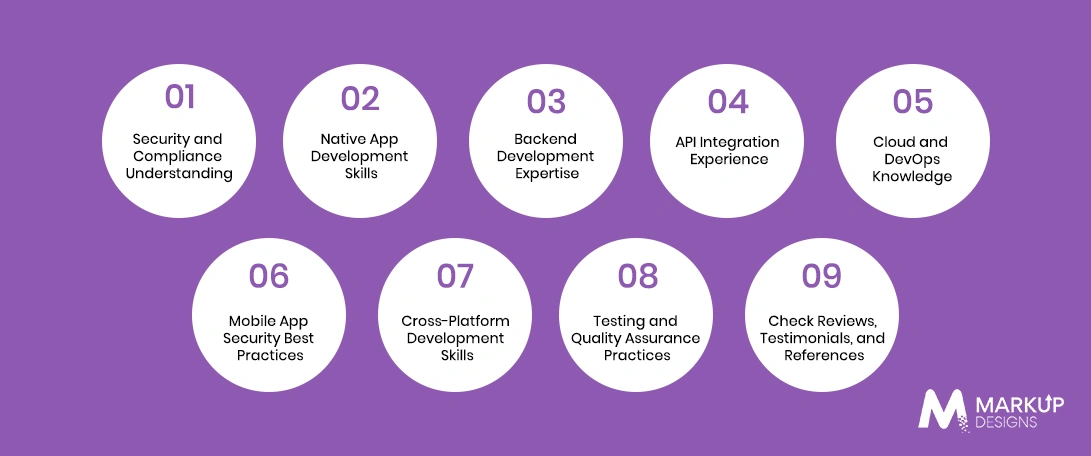
Hiring a mobile app developer requires more than checking coding knowledge. Businesses should evaluate whether the developer has expertise in security, scalability, backend systems, testing, and cross-platform technologies to ensure successful app development.
Security and Compliance Understanding
Developers should understand data protection standards, secure authentication, encryption, and compliance requirements such as GDPR or HIPAA to protect user and business data.
Native App Development Skills
Strong knowledge of Swift for iOS and Kotlin or Java for Android helps developers build high-performing native applications with better user experiences.
Backend Development Expertise
Developers should understand server-side technologies, database management, APIs, and cloud infrastructure to ensure smooth app functionality.
API Integration Experience
Experience with payment gateways, social logins, maps, analytics, and third-party APIs is essential for modern mobile applications.
Cloud and DevOps Knowledge
Understanding AWS, Azure, CI/CD pipelines, and cloud deployment helps developers manage scalability and app performance efficiently.
Mobile App Security Best Practices
Developers should implement secure coding practices, multi-factor authentication, encrypted storage, and regular security testing.
Cross-Platform Development Skills
Knowledge of Flutter or React Native helps developers build apps for multiple platforms with reduced development time.
Testing and Quality Assurance Practices
Developers should perform functional, performance, usability, and security testing before deployment.
Check Reviews, Testimonials, and References
Client reviews, testimonials, and references help businesses verify reliability, communication quality, and project delivery performance.
Questions to Ask Before Hiring a Mobile App Developer
Before hiring a mobile app developer, businesses should ask technical, project-related, and post-launch questions to evaluate expertise, communication, and long-term support capabilities.
Technical Questions
Which technology stack do you recommend and why?
This helps businesses understand whether the developer can select technologies based on scalability, performance, and business goals.
How do you handle app security?
Developers should explain their approach to data encryption, authentication, secure APIs, and compliance standards.
How do you ensure app performance?
Look for answers related to code optimization, load testing, performance monitoring, and quality assurance practices.
Project Questions
What is your development process?
Experienced developers usually follow structured workflows such as Agile or Scrum for better project management.
How will project milestones be managed?
Developers should provide clear timelines, deliverables, and progress tracking methods.
How do you handle change requests?
A professional developer should explain how additional features or modifications are managed during development
Post-Launch Questions
Do you provide maintenance support?
Ongoing maintenance is important for fixing bugs, improving security, and supporting future upgrades.
What happens after deployment?
Developers should assist with app store submission, monitoring, and post-launch optimization.
How are updates handled?
Regular updates ensure compatibility, security improvements, and better app performance over time.
Red Flags to Watch Out for When Hiring Mobile App Developers
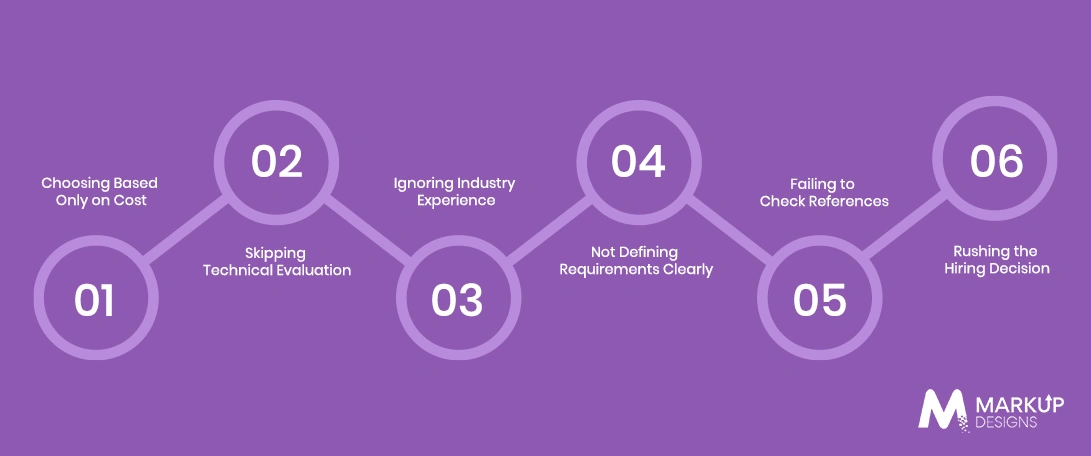
Hiring the wrong mobile app developer can lead to delayed launches, budget overruns, poor app performance, and long-term technical issues. Businesses should carefully identify warning signs before making a hiring decision to avoid unnecessary risks and development challenges.
Choosing Based Only on Cost
Many businesses select developers only because they offer the lowest pricing. However, cheaper development often results in poor code quality, security vulnerabilities, limited scalability, and higher long-term maintenance costs
Skipping Technical Evaluation
Failing to assess a developer’s technical expertise can lead to serious project issues. Businesses should always evaluate coding skills, platform knowledge, technology stack expertise, and development experience before hiring.
Ignoring Industry Experience
Developers with industry-specific experience better understand customer expectations, compliance requirements, and operational challenges. Ignoring relevant experience may affect app functionality and user experience.
Not Defining Requirements Clearly
Unclear project goals and feature requirements often create communication gaps, project delays, and unexpected cost increases during development.
Failing to Check References
Client reviews, testimonials, and references help businesses verify a developer’s reliability, communication quality, and delivery performance. Skipping this step increases hiring risks.
Rushing the Hiring Decision
Quick hiring decisions without proper research and evaluation can result in selecting developers who are not the right fit for the project’s technical and business needs.
Why Many Businesses Choose Mobile App Development Agencies
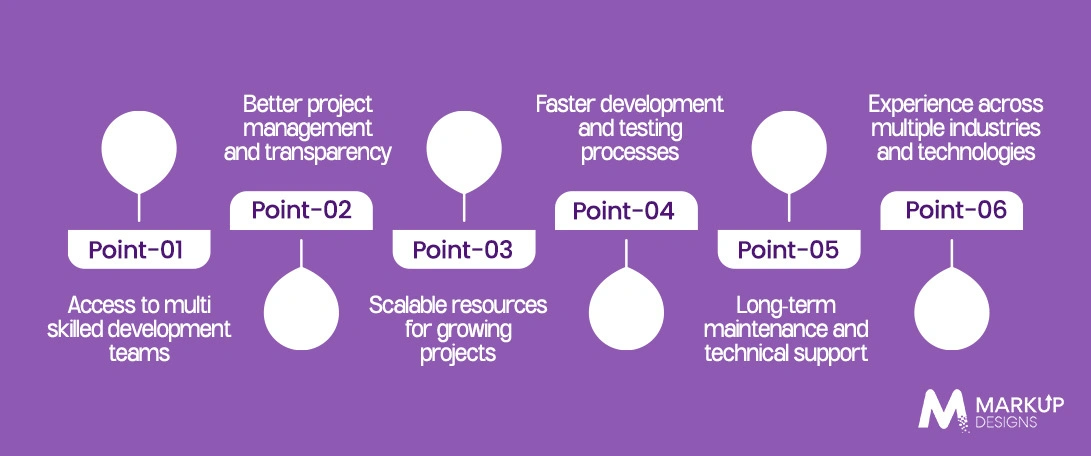
Many businesses choose mobile app development agencies because they offer complete end-to-end development services under one structured team. Unlike freelancers or small independent teams, agencies provide access to experienced developers, UI/UX designers, project managers, QA testers, and support specialists who work together throughout the entire app development lifecycle.
Mobile app development agencies are often preferred for complex projects because they follow organized workflows, clear communication processes, and professional project management practices. They also help businesses reduce development risks by ensuring proper testing, security implementation, scalability planning, and timely delivery.
Key reasons businesses prefer agencies include:
- Access to multi-skilled development teams
- Better project management and transparency
- Scalable resources for growing projects
- Faster development and testing processes
- Long-term maintenance and technical support
- Experience across multiple industries and technologies
For startups, SMEs, and enterprises, agencies provide a more reliable and scalable solution for building secure, high-performing, and future-ready mobile applications aligned with long-term business goals.
Ready to turn your app idea into a powerful digital product?
Whether you’re a startup or an enterprise, the right development partner can help you design, build, and launch a high-performing mobile app that stands out in the market.

Conclusion
Finding the best mobile app developer for your project requires careful planning, technical evaluation, and a clear understanding of your business goals. From defining app requirements to evaluating portfolios, technical skills, communication practices, and long-term support capabilities, every step plays an important role in project success.
Businesses should focus on hiring developers who can deliver secure, scalable, and user-friendly mobile applications that support future growth. Whether you choose freelancers, offshore teams, in-house developers, or mobile app development agencies, selecting the right development partner can improve app performance, customer experience, and overall business outcomes in the long run.
FAQs
1. How do I find a reliable mobile app developer?
You can find reliable mobile app developers through professional platforms like LinkedIn, Clutch, Upwork, GitHub, and mobile app development company websites. Always review portfolios, client testimonials, technical expertise, and communication practices before making a hiring decision.
2. How much does it cost to hire a mobile app developer?
The cost depends on app complexity, features, development platform, developer experience, and hiring model. Basic apps may cost less, while enterprise-level applications with advanced features require higher investment and longer development timelines.
3. Should I hire a freelancer or a mobile app development company?
Freelancers are suitable for small projects or MVPs with limited budgets, while mobile app development companies are better for complex, scalable, and long-term projects requiring full-service support.
4. What skills should a mobile app developer have?
A mobile app developer should have expertise in native or cross-platform development, backend systems, API integration, cloud technologies, app security, testing, and UI/UX understanding.
5. How long does mobile app development take?
Mobile app development timelines vary based on project complexity, features, integrations, testing, and platform requirements. Simple apps may take a few months, while advanced applications can take much longer.
6. What should be included in a mobile app development contract?
A mobile app development contract should include project scope, timelines, payment terms, ownership rights, confidentiality clauses, maintenance support, deliverables, and revision policies.
Author's Perspective
Choosing the right mobile app developer is not only a technical decision but also a strategic business investment. Businesses should focus on long-term value, scalability, security, and user experience instead of selecting developers based only on pricing. A reliable development partner can help transform an idea into a successful digital product that supports business growth, improves customer engagement, and creates long-term competitive advantages in the mobile-first market.
Discuss Your Project NowAjit Kumar Jha
VP - Business Operations
Related Posts

How Much Does It Cost to Build a...

How to Build a Secure Payment Gateway Integration...

Cost to Build a Mobile App in Qatar...
Insights Are Valuable & Execution is Priceless
You’ve read about the digital future. Now, let’s build the infrastructure to take you there. Move your strategy from the page to the product.
Design Your Solution Now
Contact Us
Schedule The Appointment At Your Convenience Date And Time.
30 Min
Web Conference
Time Zone
Indian standard time (08:30pm)

Thanks For Getting In Touch!
You’ve Taken The First Step Toward Transforming Your Digital Presence. Our Experts Will Reach Out Shortly To Take It Forward.
Launch Your Dream Project
Provide a brief overview of your project, and our specialists will evaluate your requirements. We will connect with you to explore how the right digital solutions can help you launch faster.