

In Brief
- The implementation of digital tools is leading to smarter and more efficient renewable energy generation, distribution, and management.
- Machine learning techniques and predictive models are enhancing energy forecasting, asset management, and maintenance scheduling.
- Internet of Things (IoT) systems and smart grids permit companies to monitor energy in real-time, control it remotely, and facilitate better demand management.
- Innovations such as state-of-the-art energy storage and green hydrogen technologies allow companies to deal with renewable energy intermittency and improve the security of energy supplies.
New digital solutions create additional opportunities for various companies within the Australian renewable energy sector. This initiative significantly transforms the landscape of the Australian energy sector, which becomes more reliant on solar and wind energy. However, it is not enough to turn to renewable generation only.
Apart from being intermittent, solar and wind energy generation requires maintaining grid stability, meeting rising market demand, and ensuring effective distribution, which should be met by energy companies.
Technology is going to be a key factor in solving these issues. The use of artificial intelligence, Internet of Things, cutting-edge energy storage technologies, smart grids, digital twins, blockchains, and data analytics will help energy companies improve forecasting capabilities, track the state of their infrastructure in real time, improve energy generation, and make energy systems more reliable.
In this blog, we look at the key technological developments that are boosting renewable energy utilization in Australia. We will also discuss how these technologies are revolutionizing energy production and management, what obstacles organizations encounter during their adoption, and what we can expect from technology-driven renewable energy in the future.
Why Technology Is Critical to Australia’s Renewable Energy Transition
The transition to renewable energy in Australia offers several opportunities for cleaner energy production, but it also raises numerous difficulties connected with intermittency, grid control, operating expenses, and the decentralisation of energy production. Technology can help in overcoming such obstacles and will make renewable energy more predictable, connected, and efficient.
Managing the Intermittency of Solar and Wind
Solar and wind power production depends on weather conditions and time of the day, which leads to fluctuations in energy supply and demand. Efficient forecasting techniques and energy storage systems help energy providers predict their production performance and store the surplus energy.
Improving Grid Reliability and Resilience
As renewable energy becomes an integral part of Australia’s energy production structure, it is increasingly necessary to ensure the stability of the grid.
Smart monitoring, automation, and real-time data help operators balance supply and demand while responding quickly to changes across the grid.
Reducing Renewable Energy Operating Costs
With predictive maintenance, automation, and remote monitoring, technology is creating advantages in the management of renewable energy infrastructure in terms of costs. Data-based insights also allow enterprises to detect equipment problems ahead of time and enhance the efficiency of assets.
Enabling Distributed and Decentralised Energy
Renewable energy is being produced nearer the point of consumption via microgrids, rooftop solar systems, and other forms of distributed generation. Virtual power plants and internet platforms enable businesses and consumers to use and supply power more effectively.
Top Technology Trends Accelerating Renewable Energy Innovation in Australia
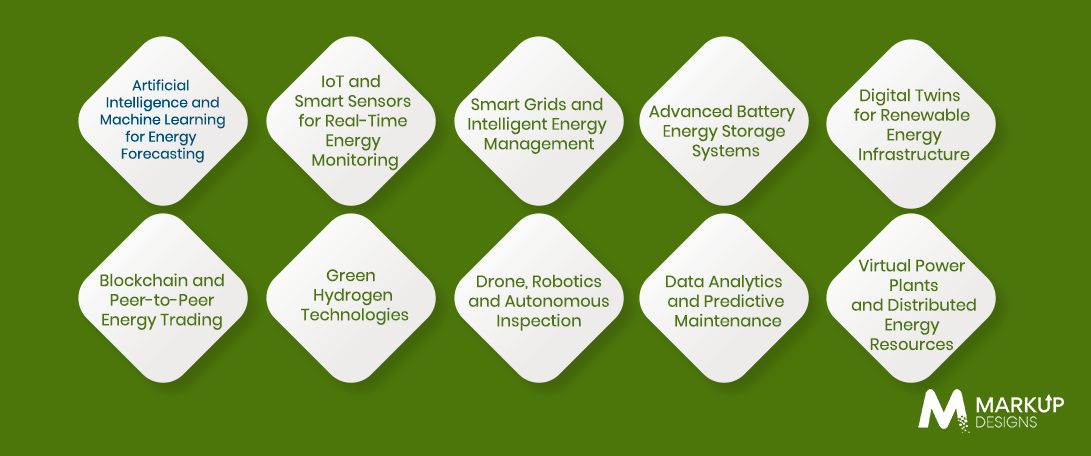
The use of technology in renewable energy production goes beyond producing electricity now, as it enables greater connectivity and more intelligent and adaptive systems. From using AI-based forecasting systems to virtual power plants, technology helps energy suppliers in Australia become more efficient, adjust to uncertainties, and scale renewable energy production.
Artificial Intelligence and Machine Learning for Energy Forecasting
Artificial intelligence and machine learning can provide opportunities for using weather, production, and consumption data for the purpose of forecasting the need for renewable energy supply. In addition, this technology allows for predictive maintenance, grid efficiency improvement, and boosting overall responsiveness
IoT and Smart Sensors for Real-Time Energy Monitoring
The Internet of Things (IoT) enables the interconnection of renewable energy components, including solar power plants, smart meters, and monitoring systems, in order to acquire real-time data. This way, companies can monitor the amount of energy used, supervise the operation of energy equipment, and detect problems from remote locations.
Smart Grids and Intelligent Energy Management
Old-fashioned power grids are gradually transformed into advanced networks that can adapt to varying demand and supply of electricity. Smart grid technology utilizes wireless networks, process automation, and instant data collection for enhanced energy delivery, increasing the amount of electricity supplied as well as integrating local power sources into the system.
How Smart Grids Support Renewable Integration
Smart grids can react to solar or wind generation fluctuations while connecting various energy devices and sources: roof photovoltaic systems, batteries, and small power grid systems. Thus, energy efficiency increases due to the option of optimizing the delivery of energy.
Advanced Battery Energy Storage Systems
Modern batteries play an important role in storing excess energy and providing it when electricity generation is low. Smart chargers and smart battery management systems make it
Lithium-ion and flow batteries, supported by intelligent battery management systems, can help with peak demand, grid stability, and large-scale energy storage.
Why Energy Storage Matters for Australia
The increase in energy supply through the use of renewable energy does not correlate with energy demand in every situation. The need arises for storage capacity to store excess production to enable the supply of electricity at any moment needed.
Digital Twins for Renewable Energy Infrastructure
Digital twins provide virtual copies of the most significant elements used in renewable energy production, such as solar and wind plants, batteries, and grids. It clearly indicates the performance capabilities of the facility in advance, showing possible conditions of the processes from a security perspective.
Blockchain and Peer-to-Peer Energy Trading
Blockchain can support transparent and decentralised energy transactions between producers and consumers. Smart contracts can automate transactions, while blockchain-based records can improve the traceability of renewable energy and energy certificates.
How Blockchain Can Support Australia’s Distributed Energy Market
As distributed energy generation expands, blockchain could help facilitate peer-to-peer trading and provide greater transparency between participants without relying entirely on traditional intermediaries.
Green Hydrogen Technologies
Green hydrogen generated from renewable sources is becoming more significant in industries that use a lot of energy and in new export markets. Digitalisation can be used to improve electrolysis and track production and energy supply availability, as well as to facilitate hydrogen production.
Role of Digital Technology in Scaling Green Hydrogen
Thanks to AI, predictive analytics, automation, and real-time monitoring, hydrogen manufacturers can optimise their energy consumption and increase production efficiency in the process of business scaling.
Drones, Robotics and Autonomous Inspection
Drones and robots are making renewable energy inspections safer and faster. With the help of thermal imaging and high-resolution cameras, faults in solar panels, wind turbines, and other infrastructure can be detected without extensive manual inspections.
Data Analytics and Predictive Maintenance
Renewable energy projects generate huge amounts of operational data. Analytics applications convert the raw data into intelligence information about the efficiency of equipment, the energy produced, and the probability of breakdowns.
Virtual Power Plants and Distributed Energy Resources
Virtual power plants integrate dispersed energy resources such as solar panels, batteries, and other energy-producing devices through a centralized digital interface. Instead of handling each resource separately, operators can combine them to help create energy supply and balance the power grid.
Why VPPs Matter for Australia’s Renewable Energy Future
Virtual power plants can increase the value of decentralized renewable resources through their use at the grid level, as well as provide commercial and residential customers with opportunities to generate, store, and consume energy.
Read Also: How to Build an AI-Powered Mobile App in Australia
How These Technologies Are Transforming Renewable Energy Operations
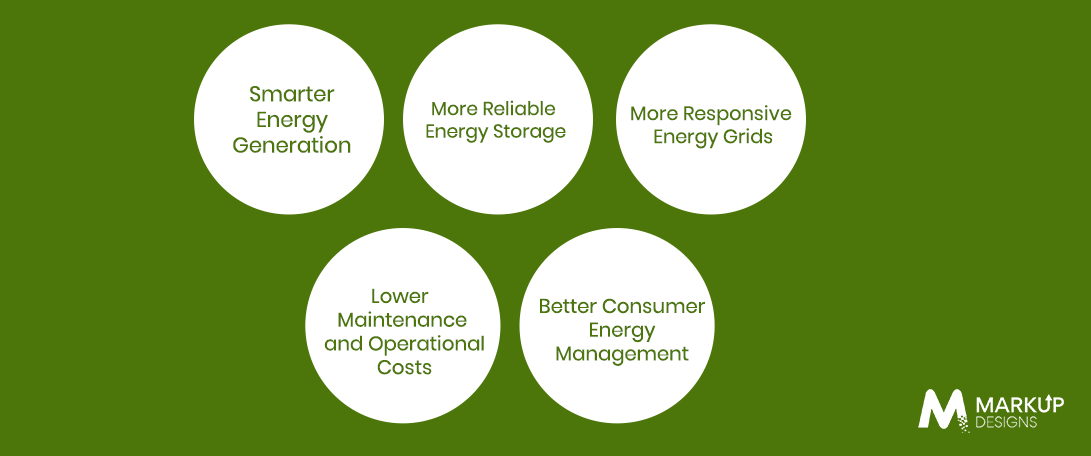
These technologies offer greater value than isolated cases of use. When used together, they can help create interconnected energy systems with more efficient production, storage, power grid control, repairs, and consumer participation.
Smarter Energy Generation
Advanced analytical data can help energy companies improve forecasting efficiency. This means better control of solar and wind production.
More Reliable Energy Storage
Advanced systems for battery management can enable battery performance monitoring and optimal energy storing/releasing.
This helps businesses make better use of renewable power while supporting grid stability during periods of changing demand.
More Responsive Energy Grids
IoT devices, smart grid technology, and automation systems create opportunities for real-time management of energy supply and demand. Energy suppliers possess the opportunity to be proactive when reacting to fluctuation events, keeping energy balance and managing distributed energy resources.
Lower Maintenance and Operational Costs
Predictive maintenance technologies, drones, and robotics are capable of detecting potential problems with machinery before they cause serious malfunctions. As a result, unnecessary checks, downtimes, and long-term maintenance costs have fallen.
Better Consumer Energy Management
Smart meters and energy management apps allow customers to track energy consumption. With the help of this tech, consumers are better equipped to understand how energy is consumed.
Challenges in Adopting Renewable Energy Technologies in Australia
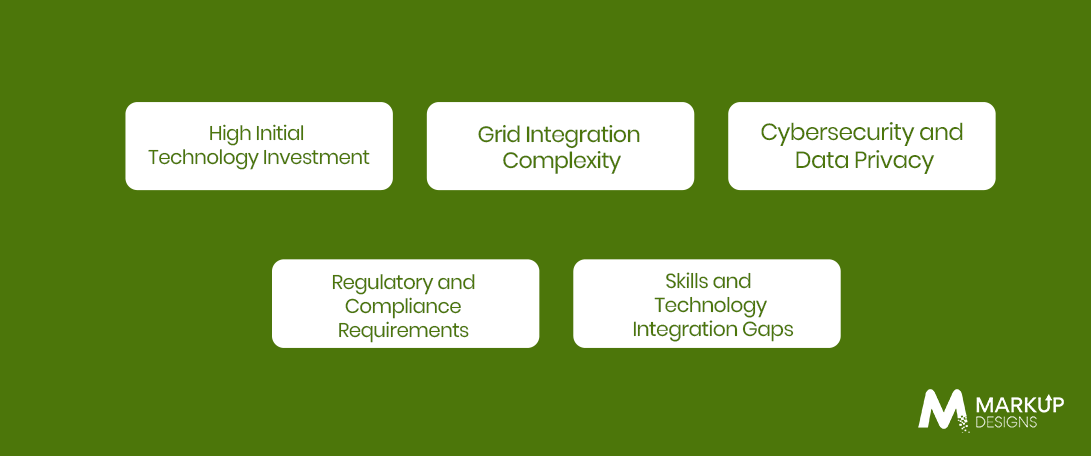
Implementation of these solutions is difficult. Businesses have to sum up the spending, infrastructure issues, cybersecurity concerns, and compliance issues connected with the use of the technology.
High Initial Technology Investment
Technological installations, electricity storage, sensor installation, and various other infrastructural improvements require a lot of money as the initial cost. However, it is possible to smooth the financial burden thanks to gradual implementation and cloud technology. Businesses can reduce the financial burden through phased implementation, cloud-based app solutions, strategic technology partnerships, and available public or private funding.
Grid Integration Complexity
There are several technical and operational issues regarding the integration of new renewable technologies with current grid technology. However, such issues can be solved thanks to the use of smart grid systems, energy storage, and precise forecasting.
Cybersecurity and Data Privacy
Connected energy infrastructure creates more points from which cyber threats can attack. That is why it is extremely important to have secure APIs, encryption, access control, and continuous monitoring of operational and consumer data.
Regulatory and Compliance Requirements
Renewable energy projects have to comply with the country’s changing regulatory and industry frameworks. Incorporating compliance into the technology from the start, ensuring proper government and regular reviews, can decrease risks caused by the regulations.
Skill and Technology Integration Gaps
The new technology implementation requires a certain level of technical knowledge, as well as understanding of energy operations. Companies can overcome this barrier and close the skills gap by cooperating with specialized companies, training their employees, and using modular systems.
The Future of Renewable Energy Technology in Australia
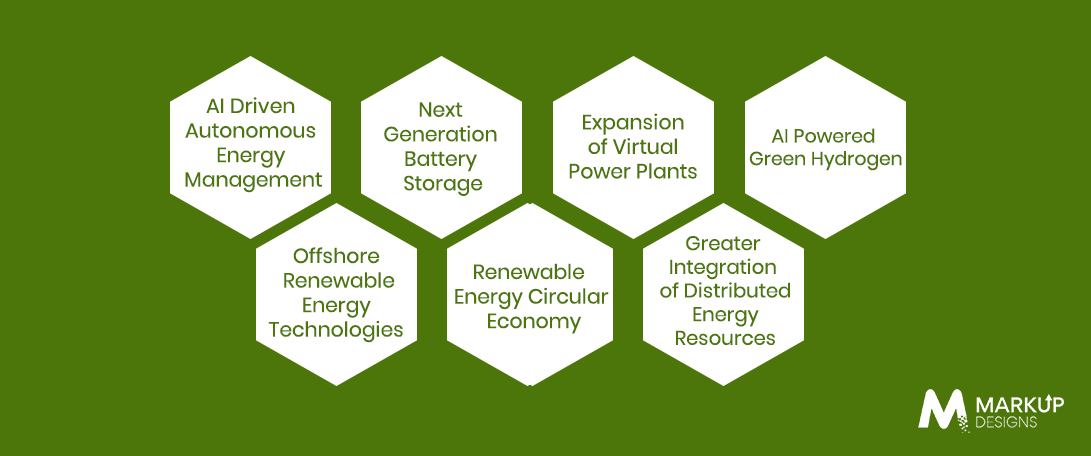
The future of renewable energy technology in Australia will depend not only on increasing power generation capacity but also on making the energy systems more intelligent, flexible, and connected.
AI-Driven Autonomous Energy Management
AI technology will lead to the gradual automation of forecasting energy needs, managing energy consumption, improving the efficiency of energy devices, and operating power grids. Autonomous systems will possibly make decisions in real time with limited human input.
Next Generation Battery Storage
Progresses in battery chemistry, solid-state technology, and long-term storage methods are expected to improve the energy capacity, efficiency, and reliability of energy storage systems. These innovations will be useful in the storage of renewable energy when production is higher than demand.
Expansion of Virtual Power Plants
Virtual power plants will likely integrate a greater number of rooftop solar systems, batteries, and distributed energy resources, which will enable smaller power producers to ensure the reliability of energy supply and balancing of the energy grid.
AI-Powered Green Hydrogen
Artificial intelligence and automated systems will contribute to improvements in hydrogen production through optimization of electrolysis, renewable energy input management, and calculation of operational needs. Thus, the new technology is meant to promote the development of green hydrogen production.
Offshore Renewable Energy Technologies
Offshore wind and other marine energy technologies could expand Australia’s renewable generation potential. Digital monitoring, predictive maintenance, and advanced infrastructure will play an important role in operating these assets efficiently.
Renewable Energy Circular Economy
As renewable infrastructure expands, recycling and responsible material management will become increasingly important. Technologies for recovering materials from solar panels, batteries, and wind turbine components can help reduce waste and resource dependency.
Greater Integration of Distributed Energy Resources
Rooftop solar, home batteries, microgrids, and other distributed resources will become more interconnected. Digital platforms can help coordinate these assets and enable consumers to play a more active role in Australia’s energy system.
How Technology Companies Can Support Renewable Energy Innovation in Australia
Turning these technologies into practical energy solutions requires more than adopting individual tools. Technology companies can help businesses connect data, infrastructure, and users through secure apps and scalable digital platforms.
Building Renewable Energy Monitoring Platforms
Custom platforms can bring asset performance, energy production, alerts, and operational data into a single dashboard. Real-time visibility helps teams identify issues and make faster decisions.
Developing AI-Powered Energy Solutions
AI solutions can support energy forecasting, predictive maintenance, demand analysis, and operational optimisation. These capabilities help businesses make better use of their renewable assets and available data.
Connecting Renewable Assets Through IoT
IoT solutions can connect sensors, devices, meters, and renewable infrastructure to cloud platforms. APIs and data integrations then allow businesses to collect and analyse information across their energy ecosystem.
Developing Mobile Applications for Energy Management
Mobile application development can give businesses and consumers convenient access to energy usage, battery performance, system alerts, and real-time insights. This makes energy management more accessible and supports informed consumption decisions.
Why Choose Markup Designs for Renewable Energy Technology Solutions
Markup Designs can help renewable energy businesses turn emerging technologies into practical digital solutions. Its capabilities across AI, IoT, cloud, data and analytics, mobile applications, and custom software development can support solutions ranging from energy monitoring platforms to intelligent asset management systems.
With API and third-party integration capabilities, Markup Designs can also connect existing infrastructure with new digital platforms while focusing on scalability, security, and long-term usability. This allows businesses to build technology around their specific operational requirements rather than relying on disconnected tools.
From Energy Data to Actionable Digital Solutions
Renewable energy systems generate vast amounts of data, but its value depends on how effectively that data is used. Markup Designs can help businesses turn energy data into practical digital product solutions through AI, IoT, cloud, analytics, mobile applications, and custom software. From real-time monitoring and predictive maintenance to intelligent energy management, these solutions can help renewable energy businesses operate smarter and scale with confidence.
Ready to Build Smarter Renewable Energy Solutions?
Australia’s renewable energy transition needs technology that can turn complex data and infrastructure into practical, scalable solutions. Markup Designs can help you build secure digital platforms designed around your energy operations and business goals.

Conclusion
Technology is becoming a critical driver of Australia’s renewable energy transition. AI, IoT, smart grids, advanced storage, digital twins, and other emerging technologies are helping businesses improve forecasting, optimise assets, strengthen grid management, and reduce operational challenges.
As renewable energy adoption continues to grow, the opportunity will not simply be to generate more clean power, but to manage it more intelligently. Businesses that combine renewable infrastructure with scalable digital solutions will be better positioned to build efficient, resilient, and future-ready energy systems.
FAQs
1. What important technology trends are influencing the development of renewable energy in Australia?
The main technologies of renewable energy development in Australia include AI, IoT, smart grid, advanced energy storage, digital twins, blockchain, green hydrogen, and virtual power plants.
2. How is AI technology applied in the field of renewable energy in Australia?
AI can be applied in energy forecasting, demand prediction, predictive maintenance, and optimizing assets.
3. How does smart grid technology help with integration of renewable energy?
Smart grid technology utilizes real-time data, connected devices, and automation in balancing supply and demand of energy and integrating changing renewable sources.
4. What is the role of IoT in renewable energy management?
IoT makes available the connection of energy assets and sensors so that real-time data can be obtained and used for remote monitoring of the processes and equipment.
5. In what way can battery storage enhance reliability and effectiveness of renewable energy?
Battery storage accumulates excess renewable energy for its later release during periods of lower output or high demand, thus boosting flexibility and stability of the grid.
Author's Perspective
Australia’s renewable energy transition is no longer only about adding more solar panels or wind turbines. The bigger opportunity lies in making the entire energy ecosystem smarter through connected infrastructure, intelligent software, and data-driven decision-making. As these technologies mature, businesses that invest in digital capabilities alongside renewable infrastructure can build more responsive and sustainable energy operations.
Discuss Your Project NowAjit Kumar Jha
VP - Business Operations
Related Posts

Cost to Build a Mobile App in Qatar...

How Much Does It Cost to Build an...

How to Build a Car Wash App: Development...
Insights Are Valuable & Execution is Priceless
You’ve read about the digital future. Now, let’s build the infrastructure to take you there. Move your strategy from the page to the product.
Design Your Solution Now
Contact Us
Schedule The Appointment At Your Convenience Date And Time.
30 Min
Web Conference
Time Zone
Indian standard time (08:30pm)

Thanks For Getting In Touch!
You’ve Taken The First Step Toward Transforming Your Digital Presence. Our Experts Will Reach Out Shortly To Take It Forward.
Launch Your Dream Project
Provide a brief overview of your project, and our specialists will evaluate your requirements. We will connect with you to explore how the right digital solutions can help you launch faster.