

In Brief
- Mobile applications are becoming the foundation of business operations, customer engagement, digital commerce, and service delivery across GCC economies.
- Countries such as Saudi Arabia, the United Arab Emirates, Qatar, Bahrain, and Oman are heavily investing in AI, smart cities, fintech ecosystems, and cloud infrastructure.
- Businesses are moving beyond basic mobile apps and building connected digital ecosystems powered by AI, cloud computing, automation, and real-time analytics.
- Industries such as fintech, healthcare, logistics, retail, hospitality, and enterprise operations are driving major app development demand across the region.
- Cross-platform development, cloud-native architecture, and 5G connectivity are reshaping how future mobile applications are built and scaled.
- Arabic-first UI/UX design, cybersecurity, and localized digital experiences are becoming critical competitive advantages in GCC markets.
- Companies investing early in scalable, intelligent, and customer-centric mobile ecosystems are likely to lead future digital markets across the Gulf region.
Modern businesses no longer treat mobile applications as optional digital tools. Mobile platforms now influence how companies communicate with customers, manage operations, deliver services, process transactions, and compete in increasingly digital economies.
Across GCC countries, consumer behavior has shifted heavily toward mobile-first experiences. Banking, shopping, transportation, healthcare, entertainment, education, food delivery, and even government services are increasingly accessed through smartphones. This change is forcing businesses to rethink how digital infrastructure is designed and delivered.
The future of mobile app development across the Gulf region is no longer just about launching apps. It is about creating intelligent, scalable, and connected digital ecosystems capable of supporting real-time engagement, automation, personalization, and operational efficiency. As governments and enterprises continue accelerating digital transformation initiatives, mobile technologies are becoming central to long-term business growth strategies across the region.
The Shift Toward Mobile-First Digital Economies
The Gulf region is experiencing a major shift toward digitally connected economies. Consumers increasingly expect businesses to provide instant, seamless, and highly responsive mobile experiences across every industry.
This transformation is being driven by several major factors:
- High smartphone penetration
- Expanding digital infrastructure
- Smart city initiatives
- AI adoption
- Growth of e-commerce ecosystems
- Cloud technology investments
- Rising demand for digital convenience
- Young, technology-driven populations
Businesses are no longer competing only through pricing or product quality. Customer experience, speed, accessibility, and digital convenience are becoming major differentiators.
Modern users expect mobile applications to provide:
- Fast loading speeds
- Personalized recommendations
- Secure transactions
- Real-time communication
- Frictionless navigation
- Multilingual accessibility
- Smart automation
- Seamless payment systems
Applications that fail to deliver efficient and intuitive experiences often struggle with low retention and poor engagement. This is one reason businesses across the GCC are aggressively increasing investments in modern mobile ecosystems.
Government-Led Digital Transformation Is Accelerating Innovation

Governments across the Gulf region are heavily investing in digital transformation initiatives designed to modernize economies and reduce dependency on traditional industries.
Large-scale programs such as:
- Saudi Vision 2030
- UAE Smart Government initiatives
- Smart Dubai programs
- Qatar National Vision
- National AI strategies across GCC countries
are rapidly accelerating technology adoption across industries.
These initiatives are creating enormous opportunities for mobile application development in sectors such as:
- Smart government services
- Fintech
- Healthcare
- Logistics
- Education technology
- Transportation
- Retail commerce
- Enterprise operations
As public and private sectors continue modernizing operations, demand for scalable and intelligent mobile applications is increasing significantly.
Businesses that delay digital transformation may struggle to remain competitive in increasingly connected markets where customers expect instant digital accessibility.
Intelligent Mobile Experiences Are Becoming the New Standard
Artificial intelligence is reshaping how mobile applications function across modern digital ecosystems. Future mobile platforms are expected to become increasingly intelligent, predictive, and automated rather than functioning as static software systems.
AI-powered mobile applications are already transforming customer experiences through:
- Personalized recommendations
- Predictive analytics
- AI chatbots
- Voice assistants
- Behavioral tracking
- Fraud detection
- Smart search systems
- Automated customer support
This shift is visible across multiple industries.
Retail applications can now recommend products based on browsing behavior and purchase history. Banking apps use AI-powered fraud detection systems to identify suspicious transactions instantly. Healthcare platforms are beginning to integrate predictive health monitoring and automated patient coordination systems.
The future mobile ecosystem across the Gulf region will likely rely heavily on AI-driven automation and personalization to improve customer engagement and operational efficiency.
Mobile Applications Are Expanding Beyond Single-Purpose Platforms
One of the biggest changes shaping future app development is the movement toward integrated digital ecosystems rather than isolated applications.
Consumers increasingly prefer platforms capable of offering multiple services within a single interface. This is driving the rise of super apps across global and regional markets.
Instead of using separate applications for:
- Payments
- Shopping
- Transportation
- Banking
- Messaging
- Ticket booking
- Food delivery
users increasingly expect unified digital ecosystems.
This model aligns strongly with Gulf consumer behavior, where convenience and digital accessibility continue driving user adoption.
Future super apps across GCC markets may combine:
- Government services
- Digital wallets
- E-commerce
- Healthcare access
- Transportation systems
- Utility payments
- Insurance services
- Lifestyle platforms
Businesses that successfully build integrated ecosystems may achieve stronger customer retention and long-term engagement.
Industry-Specific Mobile Ecosystems Are Growing Rapidly
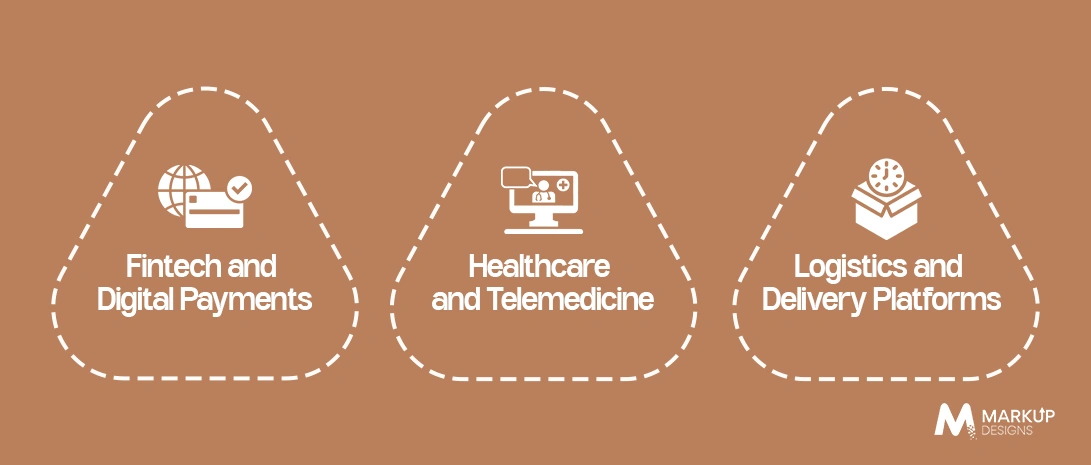
The future of app development across the Gulf region is also being shaped by rapid digital transformation across key industries.
Fintech and Digital Payments
Cashless economies are becoming a major priority across GCC countries. Consumers increasingly expect:
- Mobile banking
- Instant transfers
- QR payments
- Wallet integrations
- Contactless transactions
- Buy-now-pay-later systems
This is accelerating fintech app development across the region.
Modern finance applications are improving:
- Banking accessibility
- Transaction speed
- Financial transparency
- Digital onboarding
- Fraud prevention
- Investment accessibility
AI-driven fraud detection and biometric security are also becoming standard features in modern financial ecosystems.
Healthcare and Telemedicine
Healthcare systems across the Gulf region are rapidly modernizing through mobile technologies.
Healthcare applications are increasingly supporting:
- Telemedicine
- Appointment scheduling
- Digital prescriptions
- Patient records
- Health monitoring
- Remote consultations
- Emergency coordination
Future healthcare ecosystems are expected to integrate wearable devices, predictive diagnostics, AI-assisted reporting, and real-time medical analytics.
The healthcare sector is likely to remain one of the fastest-growing mobile development industries across GCC economies.
Logistics and Delivery Platforms
The logistics sector is becoming increasingly dependent on mobile technologies for operational efficiency and supply-chain visibility.
Mobile logistics applications now support:
- Fleet tracking
- Route optimization
- Warehouse coordination
- Driver communication
- Shipment monitoring
- Delivery analytics
Future logistics ecosystems will likely integrate IoT-enabled tracking systems, predictive analytics, and AI-powered route optimization to improve scalability and operational efficiency.
Businesses Are Prioritizing Scalable App Development Infrastructure
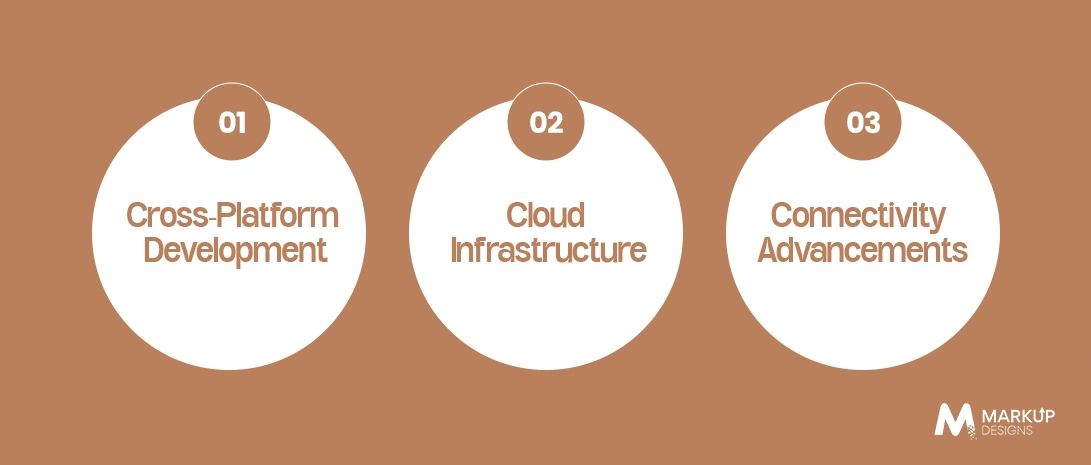
As app ecosystems become more advanced, businesses are increasingly focusing on development approaches that improve scalability, speed, and operational flexibility.
This is why modern app development is shifting toward broader infrastructure strategies rather than isolated coding practices.
1. Cross-Platform Development Is Reducing Operational Complexity
Businesses no longer want separate development ecosystems for Android and iOS applications because maintaining multiple codebases increases:
- Development costs
- Maintenance overhead
- Update delays
- Operational inefficiencies
This is why frameworks such as:
- Flutter
- React Native
- Kotlin Multiplatform
are becoming increasingly popular across GCC markets.
Cross-platform development allows businesses to build scalable applications with shared codebases while maintaining consistent user experiences across devices.
This improves:
- Deployment speed
- Cost efficiency
- Long-term scalability
- UI consistency
- Maintenance management
For startups and growing enterprises, this approach creates stronger operational flexibility without unnecessarily increasing development complexity.
2. Cloud Infrastructure Is Powering Connected Mobile Ecosystems
Cloud-native architecture is also becoming a critical part of future mobile ecosystems.
Traditional mobile systems often struggle with scalability and performance limitations. Cloud-connected infrastructure helps businesses support:
- Real-time synchronization
- Remote accessibility
- Operational flexibility
- Continuous updates
- Multi-device connectivity
- Faster deployment cycles
Cloud ecosystems are increasingly becoming the foundation of scalable mobile platforms because they allow applications to remain agile, accessible, and continuously connected across distributed environments.
Future mobile applications across the Gulf region will likely rely heavily on cloud-native infrastructure to support growing user demands and operational scalability.
3. Connectivity Advancements Are Unlocking New Mobile Experiences
The expansion of 5G infrastructure across GCC countries is expected to significantly reshape future mobile experiences.
Faster connectivity and lower latency are enabling technologies that previously struggled with performance limitations.
This is creating opportunities for:
- Augmented reality (AR)
- Virtual reality (VR)
- IoT-connected applications
- Smart city ecosystems
- Real-time gaming
- Immersive commerce
- Connected operational systems
For example, future retail applications may allow customers to visualize products through AR before making purchases. Real estate platforms may offer immersive virtual property tours. Healthcare systems may support advanced remote diagnostics and connected monitoring in real time.
At the same time, IoT-connected mobile apps are expected to grow rapidly across smart homes, industrial automation, connected vehicles, wearable devices, and smart infrastructure projects.
Without advanced connectivity infrastructure such as 5G, many of these experiences would struggle to operate efficiently at scale.
User Expectations Are Reshaping App Design and Security
As mobile ecosystems evolve, businesses are also facing increasing pressure to improve usability, accessibility, and security standards.
1. Arabic-First UI/UX Is Becoming Essential
Many businesses still underestimate the importance of localization in mobile applications. However, apps designed only around English interfaces often struggle across regional GCC audiences.
Users increasingly expect:
- Arabic-first interfaces
- RTL optimization
- Region-specific experiences
- Localized payment integrations
- Cultural personalization
- Voice-search compatibility
Localization today is not simply about translation. It directly influences usability, customer trust, and long-term adoption.
Businesses targeting Gulf markets increasingly need to prioritize Arabic UI/UX during the earliest stages of app planning and development.
2. Cybersecurity Is Becoming a Core Development Priority
As applications process larger volumes of financial, operational, and personal data, cybersecurity risks are increasing rapidly.
Modern applications now require:
- End-to-end encryption
- Multi-factor authentication
- Biometric verification
- Secure cloud infrastructure
- AI-powered threat monitoring
- Compliance-focused architecture
Weak security systems can result in:
- Financial losses
- Data breaches
- Reputation damage
- Regulatory risks
- Customer distrust
Security can no longer be treated as an afterthought during app development. It is becoming a core part of long-term mobile infrastructure planning.
Businesses Must Prepare for Long-Term App Evolution
Despite enormous opportunities, businesses still face several major challenges in future mobile development.
Some of the biggest obstacles include:
- Rising user expectations
- Increasing development complexity
- Cybersecurity threats
- Integration challenges
- Continuous technology evolution
- Scalability management
Mobile technologies are evolving extremely fast. Applications now require continuous optimization, infrastructure upgrades, and feature enhancements to remain competitive.
Businesses focusing only on short-term app launches often struggle with scalability and long-term user retention.
Successful mobile ecosystems require long-term planning focused on:
- Scalability
- User experience
- Performance optimization
- Security architecture
- Cloud integration
- Operational flexibility
- Future technology adaptability
Why Strategic Development Partnerships Matter
Building successful mobile ecosystems now requires far more than coding expertise alone.
Businesses increasingly need development partners capable of understanding:
- User behavior
- Enterprise scalability
- Cloud architecture
- Cybersecurity
- Performance optimization
- AI integration
- Localization strategy
- Long-term digital growth
Poorly planned applications often fail because of weak architecture, scalability limitations, poor user experiences, or operational inefficiencies.
Markup Designs helps businesses develop scalable and future-ready mobile ecosystems designed around intelligent user experiences, cloud scalability, operational efficiency, and long-term digital adaptability.
The Future of Mobile App Development Across GCC Economies
The future of mobile app development across the Gulf region will likely be shaped by:
- AI-driven personalization
- Intelligent automation
- Cloud-native ecosystems
- Super apps
- IoT-connected infrastructure
- 5G-powered experiences
- Predictive analytics
- Advanced cybersecurity
- Arabic-first digital ecosystems
- Immersive mobile experiences
Mobile applications are no longer simply communication tools or digital storefronts. They are becoming the operational foundation of modern businesses.
Organizations investing early in scalable, intelligent, and customer-centric mobile ecosystems are likely to gain stronger operational agility, customer engagement, and long-term digital competitiveness.
Businesses still relying on outdated digital infrastructure may increasingly struggle in rapidly evolving mobile-first economies.
Transform Mobile Experiences with Smarter App Development
Develop intelligent, scalable, and customer-focused mobile ecosystems designed for long-term digital growth.

Conclusion
Mobile app development across GCC economies is entering a new phase driven by AI, cloud computing, 5G infrastructure, IoT ecosystems, and rapidly evolving consumer expectations.
Businesses are no longer developing applications simply to establish digital presence. They are building connected ecosystems capable of improving customer engagement, operational efficiency, automation, scalability, and long-term competitiveness.
From fintech and healthcare to logistics, retail, enterprise mobility, and smart city infrastructure, mobile technologies are transforming nearly every industry across the Gulf region.
At the same time, localization, cybersecurity, cloud scalability, and intelligent automation are becoming central components of modern app development strategies.
The businesses most likely to succeed in the coming years will be those that treat mobile ecosystems not as isolated digital products but as long-term business infrastructure capable of supporting continuous innovation and connected digital growth.
FAQs
1. Why is mobile app development growing rapidly across GCC countries?
Mobile app development is growing due to high smartphone usage, smart city initiatives, AI adoption, cloud investments, and increasing demand for mobile-first digital experiences across industries.
2. What technologies will shape the future of mobile applications?
AI, cloud computing, IoT, 5G, AR/VR, predictive analytics, and cybersecurity technologies are expected to play major roles in future mobile ecosystems.
3. Why are businesses prioritizing cross-platform app development?
Cross-platform development reduces operational complexity, lowers development costs, improves scalability, and allows businesses to maintain consistent experiences across Android and iOS devices.
4. Why is localization important for GCC mobile apps?
Arabic-first experiences improve accessibility, engagement, usability, and customer adoption across regional audiences. Localization directly impacts long-term app performance in GCC markets.
5. Which industries will benefit most from future mobile ecosystems?
Industries such as fintech, healthcare, retail, logistics, transportation, hospitality, education, and enterprise operations are expected to benefit significantly from advanced mobile technologies.
6. Why is cybersecurity becoming more important in mobile app development?
Modern applications process sensitive financial, operational, and customer data. Strong cybersecurity protects businesses and users from data breaches, fraud, operational disruption, and regulatory risks.
Author's Perspective
Many businesses across the Gulf region still approach mobile applications as marketing tools or support platforms rather than long-term operational infrastructure. That mindset is becoming increasingly outdated.
Mobile ecosystems are rapidly becoming the primary way customers interact with businesses, access services, complete transactions, and engage with digital experiences. As AI, cloud computing, automation, and connected technologies continue evolving, companies relying on outdated or limited mobile systems may struggle to meet rising customer expectations.
The future competitive advantage will not belong simply to businesses that launch apps quickly. It will belong to organizations capable of building scalable, intelligent, secure, and deeply connected digital ecosystems designed around long-term adaptability, personalization, and operational efficiency.
Discuss Your Project NowAjit Kumar Jha
VP - Business Operations
Related Posts
Cost to Build a Mobile App in Qatar...

How Much Does It Cost to Build an...
How to Build a Car Wash App: Development...
Insights Are Valuable & Execution is Priceless
You’ve read about the digital future. Now, let’s build the infrastructure to take you there. Move your strategy from the page to the product.
Design Your Solution Now
Contact Us
Schedule The Appointment At Your Convenience Date And Time.
30 Min
Web Conference
Time Zone
Indian standard time (08:30pm)

Thanks For Getting In Touch!
You’ve Taken The First Step Toward Transforming Your Digital Presence. Our Experts Will Reach Out Shortly To Take It Forward.
Launch Your Dream Project
Provide a brief overview of your project, and our specialists will evaluate your requirements. We will connect with you to explore how the right digital solutions can help you launch faster.