

In Brief
- Both native and hybrid app development have solid solutions to offer to Gulf businesses, but which one to choose depends upon factors such as application complexity, performance requirements, target audience, budget, security needs, and future business plans.
- Native apps ensure better performance, platform-specific functionality, device integration, and better control, making them ideal for financial, healthcare, logistics, gaming, and Fintech applications.
- Since hybrid app development uses a common codebase for different platforms, businesses can lower down their development costs and quickly deploy an app to reach both Android and iOS audiences.
- Time to market, scalability, Arabic and English language support, payment integrations, security needs, and expected user growth are some factors that Gulf businesses need to consider before choosing an approach.
- Native app development is a better choice when talking about performance-driven apps, and the hybrid approach is the most appropriate when talking about fast deployment and cost-effectiveness.
Mobile applications have gained significance in connecting businesses with their clients in the GCC countries and providing them with services. There has been significant investment in mobile applications that provide a high-performance experience, high security standards, and are user-friendly in industries like banking, eCommerce, healthcare, tourism, logistics, and entertainment in the GCC countries.
But before developing an app, one important decision needs to be made: should you choose native or hybrid app development?
Native applications have platform-specific features like iOS and Android and help businesses achieve high performance and high security. In contrast, hybrid applications help in reducing development time.
For Gulf companies, however, the correct answer will depend on a number of things such as the complexity of the app, its target audience, budget, performance requirements, scalability, and time-to-market needs, among others. In this blog post, we will take a look at the differences between native and hybrid mobile app development.
What is Native App Development?
Native applications are those that are developed with consideration of their compatibility with one particular platform only, such as Android or iOS. Generally, applications for Android use Kotlin or Java, while applications for iOS platforms can be developed using Swift or Objective-C. Because of their platform specificity, these applications have the capability to access all the functions of the smartphone, including camera, location services, biometric identification, sensors, and notifications.
Native applications are an ideal choice for companies based in the Gulf region where performance, security, and user experience are the key considerations. Applications such as banking applications, games, and health care applications can take advantage of native app development.
However, businesses have to undertake separate development efforts for various platforms, which increases their cost of development and maintenance.
What is Hybrid App Development?
Hybrid application development refers to the creation of apps capable of running across various platforms using a single codebase. Rather than developing separate apps for Android and iOS devices, hybrid development frameworks like Flutter, React Native, or Ionic are used.
Hybrid application development can be quite helpful for Gulf-based firms in developing their mobile applications more quickly and cheaply. This type of app development is especially suited for startups and companies looking to cater to both Android and iOS users through one development process.
Push notifications, payment gateways, GPS, camera permissions, and third-party integration are some features that hybrid apps are capable of. But very complex apps that require top-notch performance and platform-specific capabilities may find native application development better suited for them.
Native vs. Hybrid App Development: Key Differences
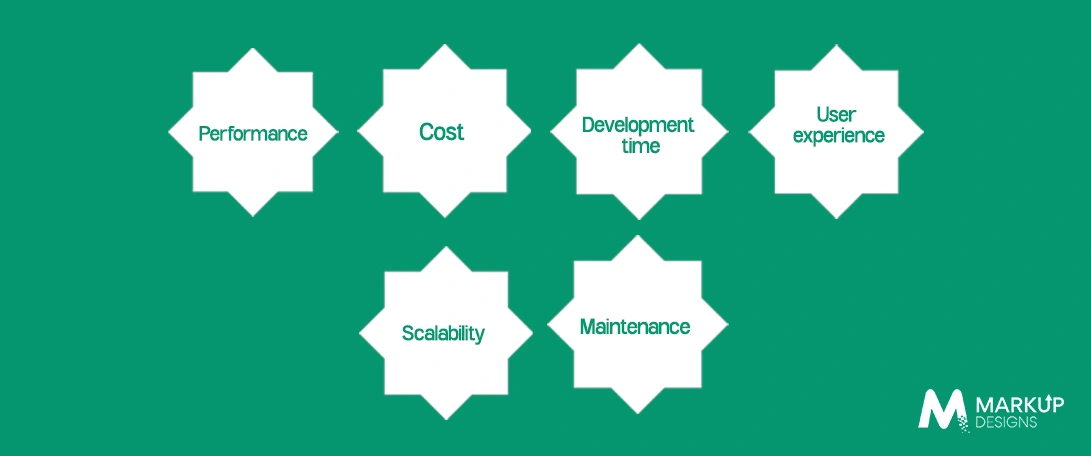
The decision to choose between developing native or hybrid apps is made simpler by comparing both options, taking into account the factors that can affect the success of your app.
Performance
Generally speaking, native apps perform well, as they are designed for a particular operating system. Hybrid apps provide good performance for the majority of business applications, but might have some limitations regarding complex functionality.
Cost
In most cases, native apps need to be developed separately for Android and iOS, making it more expensive.
Development Time
Development is likely to be slower in native development when there are multiple platforms to consider. Hybrid development may speed up the process through simultaneous development for multiple platforms.
User Experience
The native app provides platform-specific user interfaces and experiences. The hybrid app delivers a uniform user experience across multiple platforms.
Scalability
Native apps are likely to be more scalable when it comes to complex applications. Hybrid apps may be scalable for most common business needs.
Maintenance
Maintenance may involve more effort due to multiple native codebases. Hybrid apps facilitate maintenance via a common codebase across multiple platforms.
Read Also: React Native vs Native App Development: Performance, Cost & Business Considerations
Native vs. Hybrid App Development Cost in the Gulf
The development cost of apps in the Gulf region will depend on many factors, including the functionality of the application, design, integration, security needs, the development team, and platforms, among others. The selection of whether to go for native or hybrid development could also have a significant effect on the total budget that is required.
Native apps will most likely be more expensive to develop because there is a possibility that companies will require different development teams or codebases for both Android and iOS.
A more cost-effective strategy may be hybrid app development, since developers would be able to use the same code across platforms, thus saving time.
For Gulf businesses, the lowest-cost option does not work. Gulf businesses should think about the following factors while deciding on technology: maintenance, scalability, performance, and the future increase in users.
Build the Right Mobile App for Your Gulf Business
Choose the right development approach with expert guidance from Markup Designs. Our mobile app development team can help you plan, build, and scale secure applications for your target market.

Native vs. Hybrid App Development: Time to Market
The development strategy may affect the speed at which the app will be released to its intended consumers. Native development usually involves the development of two different versions of the application – iOS and Android, thus making the process lengthy if both operating systems are considered.
Hybrid app development is likely to enable organizations to develop their applications faster as they would be using the same codebase across various operating systems. Thus, hybrid apps are useful for companies from the Gulf region looking for quick validation and market entry.
But development time should not compromise quality, because of complex functionalities, integrations, security testing, localizations in Arabic and English, among others, which might influence the development timeline.
Ultimately, hybrid can offer faster market entry, while native may be more suitable when performance and platform-specific optimization are priorities.
Which Gulf Industries Should Choose Native or Hybrid Apps?
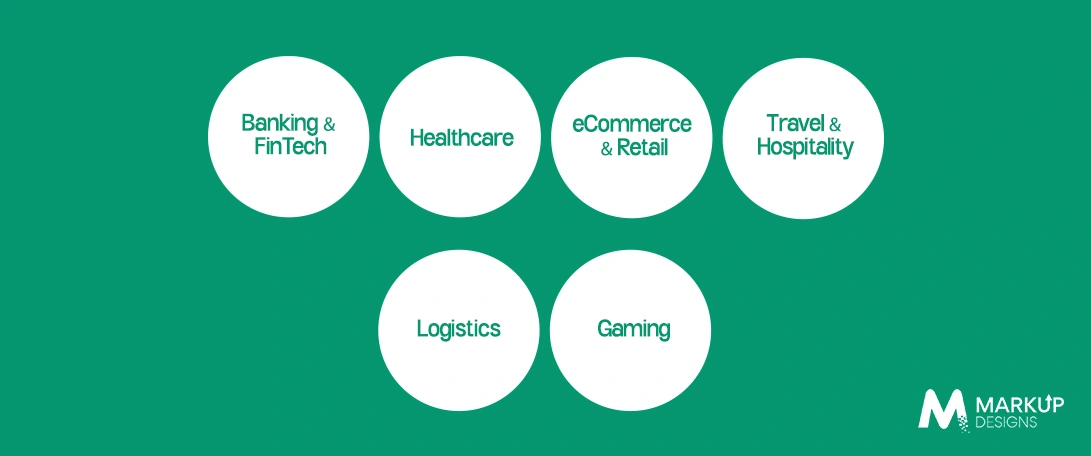
The right approach to software development is mostly dictated by the technical needs of the industry, customer needs, and application complexity. Companies in the Gulf region in various industries could apply native or hybrid development.
- Banking & Fintech: In high-security transactions and authentication with biometrics, native apps are a better choice.
- Healthcare: Healthcare requires highly secure applications that are highly responsive. For this purpose, native app development may work better.
- eCommerce & Retail: In case a business wants to have hybrid apps with such capabilities as payments, catalogs, and push notifications and release its apps fast on both Android and iOS platforms, hybrid development is recommended.
- Travel & Hospitality: Hybrid development will allow a business to quickly develop booking, loyalty, location-based, and customer engagement features on mobile devices.
- Logistics: In the case of logistics, native apps will provide better support for GPS and real-time tracking.
- Gaming: Native app development works better for gaming because of better graphics and performance.
Native vs. Hybrid App Development for UAE Businesses
UAE is characterized by intense competition in the digital sphere, which implies that enterprises require mobile apps that can offer an efficient, secure, and localized user experience. The choice of whether to opt for native or hybrid development depends on the nature of the business, target users, and requirements.
If you are in UAE and are developing banking apps, Fintech, healthcare applications, games, or any other type of application that involves intense performance, then native development can be more appropriate for your business.
Hybrid development can be an effective strategy for startups, e-commerce firms, travel agencies, retailers, and service providers who want to enter the markets of Android and iOS simultaneously.
Companies also need to think about Arabic and English languages, interface right-to-left (RTL) support, payment gateway compatibility, data protection, and scalability when making the decision.
Overall, UAE companies should use the technology according to their app’s functional needs instead of just picking the cheaper option.
How to Choose Between Native and Hybrid App Development?
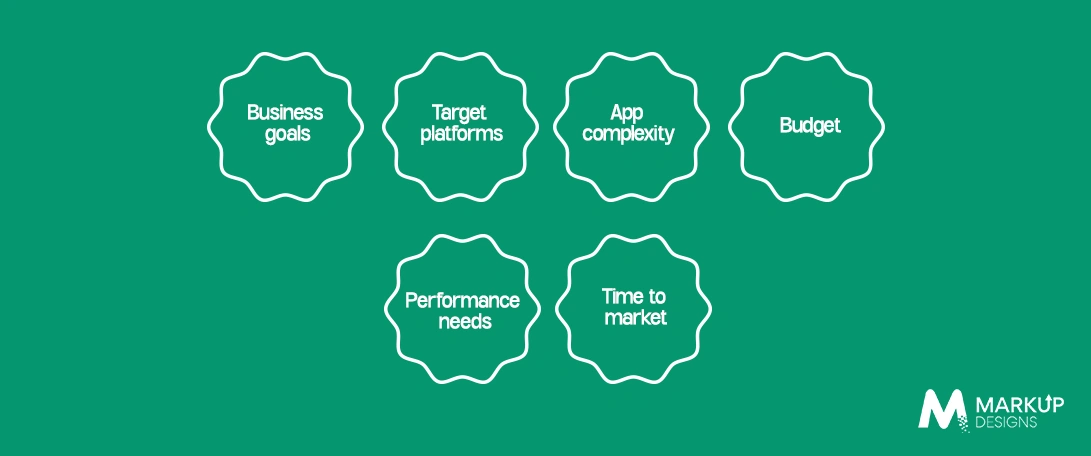
In making such a choice, one must look beyond the cost of developing mobile apps or timelines. Businesses based in the Gulf must assess how well the technology suits their product requirements as well as their plans.
- Business Goals: Find out if you prioritize market entry, performance, platform coverage, or costs.
- Target Platforms: Try to understand what devices your audience from the Gulf region uses. Compatibility with both platforms can be crucial in this case.
- App Complexity: Apps featuring complex graphics, real-time computing, extensive hardware integration, and platform-specific features will do well being native.
- Budget: If you need to release your application on Android and iOS with a small budget, a hybrid approach will minimize duplication efforts.
- Performance Needs: It appears that native app development is better suited to applications that need to be fast and resource-heavy.
- Time to Market: Hybrid application development will allow you to get to the market quicker than any other method of development.
The best choice ultimately depends on your business objectives, technical requirements, budget, and long-term mobile strategy.
Native vs. Hybrid App Development: Decision Matrix
The decision matrix would help companies in the Gulf region decide quickly which strategy is more suitable for them. Although both approaches can be used for creating modern mobile apps, they differ from each other in many ways.
| Requirement | Native App Development | Hybrid App Development |
| High performance | Excellent | Good |
| Development cost | Higher | Lower |
| Time to market | Longer | Faster |
| Platform-specific features | Excellent | Good |
| Cross-platform development | Limited | Excellent |
| User experience | Highly optimized | Consistent |
| Device integration | Extensive | Good |
| Complex applications | Highly suitable | Suitable with limitations |
| Maintenance | More involved | Simpler |
| Best for | Performance-focused apps | Cost and speed-focused apps |
When performance, enhanced features, security, and platform-specific experience become important considerations for businesses in the Gulf region, native development may become a preferable choice. However, if businesses want rapid implementation, multi-platform support and reduced costs of development, hybrid development may become a more preferable approach.
Ultimately, the choice needs to be made depending on the needs of an application rather than considering one approach superior to another.
Why Choose Markup Designs for Mobile App Development in the Gulf?
Using the correct technology for developing mobile applications is one thing, but choosing the right development partner is another important factor that will help you to make your concept real and secure. The markup designs company supports business organizations in the Gulf region for developing mobile applications based on their technical and business requirements.
Our expert services consist of developing native as well as hybrid mobile applications for both Android and iOS platforms. These applications are developed considering the performance requirements, functional requirements, requirements of users in the Gulf region, interfaces in Arabic as well as English language, and business requirements from the Gulf region.
Ready to Build Your Mobile App for the Gulf Market?
Partner with Markup Designs to choose the right development approach and build a mobile application designed for performance, security, and long-term growth.

Conclusion
Many advantages can be identified for both native and hybrid applications for companies operating in the Gulf region, but the question of which one to select largely depends on the nature of the application.
A better choice would be to opt for a native development model when a higher level of performance and a higher degree of device integration and experience are needed. Hybrid application development can be an appropriate solution in cases where rapid deployment, platform diversity, and efficient development is required.
When choosing a development model, it is crucial to consider all important factors including budget, targeted audience, application complexity, performance requirements, security considerations and scalability.
Gulf-based companies should concentrate on finding a proper balance between performance, price, user experience, and flexibility rather than only opting for either native or hybrid application development models.
FAQs
1. Which is better for Gulf businesses, native or hybrid app development?
Depends upon the business needs. Native application development is best when performance is a concern, whereas hybrid application development can serve well for a business with an emphasis on faster development and cross-platform application development.
2. Is hybrid app development less expensive compared to native application development?
Hybrid app development may be less expensive because developers can use the same codebase for developing an application for multiple platforms.
3. Is hybrid app development faster compared to native app development?
Development of hybrid apps can be faster when the same app is required to be developed for both Android and iOS platforms.
4. Which one is more secure, native or hybrid app development?
Native application development may help in building very good security for the particular platform, but the overall security depends upon many factors including architecture, coding practices, authentication, APIs, testing, and data protection.
5. What approach would be better for UAE startups?
Hybrid application development may prove useful for startups seeking quick development and release on Android and iOS.
Author's Perspective
The native vs. hybrid decision is not about choosing the “better” technology. Both approaches can deliver successful apps when aligned with business needs. Gulf businesses should consider app performance, device integration, platform requirements, budget, security, and time to market. Native development suits complex, performance-focused applications, while hybrid development works well for faster cross-platform launches. Ultimately, businesses should evaluate their objectives, users, features, and long-term growth plans before selecting the right development approach.
Discuss Your Project NowAjit Kumar Jha
VP - Business Operations
Related Posts

Cost to Build a Mobile App in Qatar...

How Much Does It Cost to Build an...
How to Build a Car Wash App: Development...
Insights Are Valuable & Execution is Priceless
You’ve read about the digital future. Now, let’s build the infrastructure to take you there. Move your strategy from the page to the product.
Design Your Solution Now
Contact Us
Schedule The Appointment At Your Convenience Date And Time.
30 Min
Web Conference
Time Zone
Indian standard time (08:30pm)

Thanks For Getting In Touch!
You’ve Taken The First Step Toward Transforming Your Digital Presence. Our Experts Will Reach Out Shortly To Take It Forward.
Launch Your Dream Project
Provide a brief overview of your project, and our specialists will evaluate your requirements. We will connect with you to explore how the right digital solutions can help you launch faster.