
In Brief
- Get to know what cybersecurity risk management is, its significance, and its distinction from cybersecurity, enterprise risk management, and compliance.
- Study the key points of a modern cybersecurity risk management framework, including risk assessment, threat identification, continuous monitoring, and incident response.
- Understand how prominent frameworks like NIST CSF 2.0, ISO/IEC 27001, FAIR, CIS controls, and MITRE ATT&CK assist organisations in enhancing cyber resilience.
- Learn about effective ways and technologies to decrease cyber risks, including Zero Trust security, AI-based threat detection, SIEM, SOAR, IAM, and XDR.
- Become aware of how companies can evaluate their cybersecurity efficiency, calculate costs for implementation, and select the right cybersecurity vendor.
Cyber threats are considered one of the major business risks that companies need to cope with. From ransomware and supply chain attacks to cloud vulnerabilities and cybercrime based on AI technologies, companies from around the world operate in a complicated digital environment. By implementing cloud technologies, remote work, IoT, and AI-driven technologies, organizations’ conventional security methods become insufficient in safeguarding sensitive information and vital resources.
Therefore, cybersecurity risk management is crucial for any company as it allows them to spot, evaluate, prioritize, and decrease cyber risks before they can bring about tumultuous situations or cause losses in money and reputation.
A well-designed cybersecurity risk management framework helps an organization change its approach from reactive to proactive. By embracing the concepts of governance, continuous monitoring, cybersecurity risk evaluation and assessment, compliance, Zero Trust security, and incident response planning, organizations can achieve a greater resilience against cyber threats while meeting business and regulatory needs.
In this blog, we’ll discuss concepts linked to the principles of the cybersecurity risk management process, main frameworks and approaches, implementation methods, emerging technologies, and measures that businesses can take to feel secure and strong in their business operations.
What is Cyber Security Risk Management?
Cybersecurity risk management is not an IT issue anymore. It threatens to disrupt the whole operation, expose sensitive data, and ruin customer loyalty. Cybersecurity risk management helps organizations deal with cyber threats by identifying cyber risks and deciding what actions have to be taken to minimize them.
Understanding Cybersecurity Risk Management
Cybersecurity risk management involves the detection of digital assets, evaluating dangers and weaknesses, and the adoption of measures to lower business threats. This field centres around the protection of key systems, while enhancing the ability to endure over time.
Why Cybersecurity Risk Management Is Critical for Modern Businesses
As companies use AI, Cloud, and remote work policies, the attack surface expands. A structured approach will help organisations to prevent risks, safeguard data, comply with regulations, and secure business continuity.
Cybersecurity Risk Management vs Cybersecurity
Cybersecurity deals with the protection of systems and data. Cybersecurity risk management addresses the issue of identifying, prioritising, and managing cyber threats based on their impact on the business.
Cybersecurity Risk Management vs Enterprise Risk Management
Enterprise Risk Management deals with financial, operational, and strategic risks. Cybersecurity risk management is a special aspect that focuses on threats related to technology only.
Cybersecurity Risk Management vs Compliance
Compliance represents the meeting of regulations by organisations. Cybersecurity risk management goes beyond compliance by identifying new cyber threats on a continual basis and managing them.
Key Objectives of a Cybersecurity Risk Management Program
A successful programme helps organisations:
- Identify critical assets and risks
- Perform regular cybersecurity risk assessments
- Prioritise high-risk areas
- Implement effective risk mitigation measures
- Strengthen cybersecurity governance
- Improve cyber resilience
The Growing Cyber Threat Landscape

The more digital your organisation becomes, the more advanced cyber threats become. Current threats, including artificial intelligence-based hacking, shift to the cloud, ransomware, and risks posed by third parties, all demand that organisations constantly review and improve their cybersecurity systems.
Rising Cost of Cyber Attacks
According to the Cost of a Data Breach Report by IBM, the worldwide average cost of a data breach is about $4.4 million, showing the extent of the financial burden due to lack of cybersecurity.
AI-Powered Cyber Threats
Cybercriminals have started contacting victims using AI for phishing and employing deep fake technologies for their sophisticated attacks.
Supply Chain and Third-Party Risks
Cybercriminals can exploit vendors and technology partners in order to invade their targets. Constant supervising and investigation can minimize third-party risks.
Cloud Security Challenges
Cloud services present many risks, including misconfiguration, insufficient access systems, and weak security of APIs, which means that the need for reliable cloud security systems arises.
Insider Threats
Employees and contractors of a company can unintentionally or intentionally leak sensitive information. Therefore, identity management and training in security awareness are vital.
Ransomware and Business Disruption
Ransomware attacks can stop your operation and cause enormous losses. Thus, preparation of events and data backup is a necessity.
Why Continuous Risk Management Matters
Cyber threats evolve constantly, making one time assessments insufficient. According to the World Economic Forum’s Global Cybersecurity Outlook 2025, 72% of organisations reported an increase in cyber risks, reinforcing the need for continuous monitoring and proactive risk management.
Core Components of a Cybersecurity Risk Management Framework
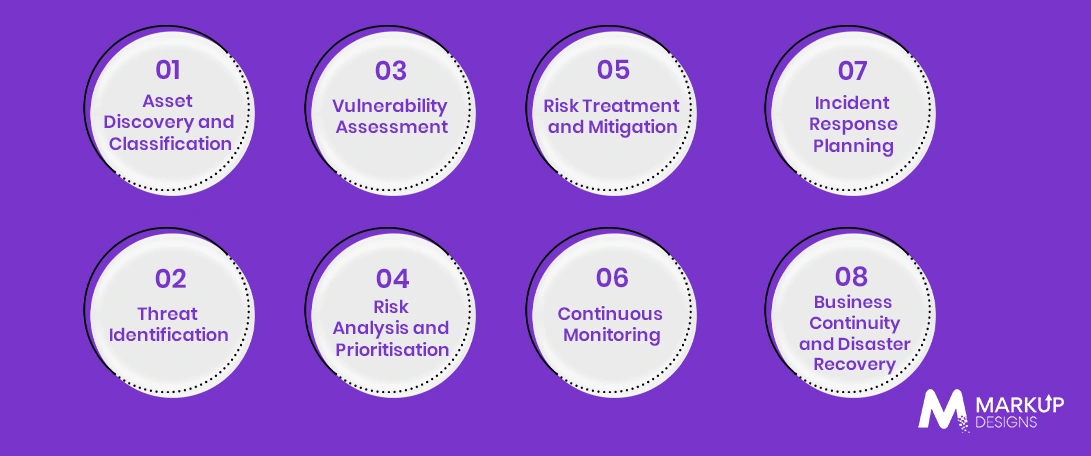
A good cybersecurity risk management framework is a systematic methodology that can assist organizations in recognizing, assessing, and mitigating cyber risks. Even though the frameworks may be different, there are several basic components giving organizations an opportunity to create a stronger security environment.
Asset Discovery and Classification
The process of recognizing all digital devices is the first stage, which includes devices, applications, databases, cloud-based resources, and sensitive information. The discovered devices are reordered in terms of importance and business value so that all the critical items can be protected at the highest level possible.
Threat Identification
Companies should determine possible risks for the exploitation of their systems. Most of the threats include cybercriminals, insiders, ransomware groups, phishing, supply chain risks, and nation-state actors. The identification of probable threats enables organizations to prepare adequate security measures.
Vulnerability Assessment
A cybersecurity risk assessment implies detecting all the vulnerabilities in networks, applications, cloud environments, and end-user computers. Regular scans and tests can help to detect any security flaws which attackees could possibly exploit.
Risk Analysis and Prioritisation
Different vulnerabilities have different levels of risk. Companies assess the risk based on the likelihood of occurrence and the degree of its adverse effect on business, allowing the security groups to focus on the most serious risks and manage the resources properly.
Risk Treatment and Mitigation
When risks are prioritised, appropriate steps to deal with them need to be taken. Among the most used measures are installing security systems, tightening access control, encrypting critical data, installing software fixes, and ensuring against risks.
Continuous Monitoring
Cybersecurity threats are changing all the time, thus making monitoring processes important. Security personnel supervise networks, user actions, and parts of the cloud to observe suspicious activities on time.
Incident Response Planning
There might still be a chance of incidents even if security mechanisms are in place. Thus, a good incident response plan determines how to detect, contain, analyse, and restore systems after security violations.
Business Continuity and Disaster Recovery
Business continuity allows the company to keep carrying on its operations during a cybersecurity event. On the other hand, the main goal of disaster recovery is to return the business in its previous state after an incident happens.
Leading Cybersecurity Risk Management Frameworks
There are several frameworks on an international scale that aid businesses in implementing effective measures towards protecting their information systems from intruders. However, the ideal framework would depend on the kind of business, sector involved, regulations to be adhered to, and risks faced.
NIST Cybersecurity Framework (CSF 2.0)
CSF 2.0 is a comprehensive cybersecurity framework launched by the National Institute of Standards and Technology to help organizations manage cyber risks regardless of their size. The framework is designed to help organizations perform six functions, namely: Govern, Identify, Protect, Detect, Respond, and Recover.
ISO/IEC 27001
ISO/IEC 27001 is an internationally approved standard for creating an Information Security Management System (ISMS). The framework enables organizations to handle information security risks more better, thereby ensuring effective governance and compliance with cybersecurity regulations.
FAIR Risk Model
The FAIR (Factor Analysis of Information Risk) model enables companies to quantify their cyber risks in terms of financial losses suffered owing to cyber attacks and breaches.
CIS Critical Security Controls
The CIS Critical Security Controls is a set of suggestions given by the organization that involves different security measures necessary to limit the risks arising from cyber incidents. The statements in the controls point out the areas of potential security issues in the organization, like asset management, vulnerability management, secure configurations, and continuous monitoring.
MITRE ATT&CK Framework
MITRE ATT&CK is a reference library that describes various attacker actions and methods. Security teams use this information to study how attackers work, strengthen their detection abilities, upgrade their incident response techniques, and assess their security measures against probable attacks.
Choosing the Right Framework for Your Business
It is necessary to point out that in the field of cybersecurity management, there is no universal method that can be applied to any kind of business. The choice of a certain framework depends on the specific goals of a company, including those imposed by the legislation and financial capabilities.
Many companies combine several frameworks, for example, NIST CSF for global management, ISO/IEC 27001 for compliance purposes, FAIR for risk analysis purposes, etc. All mentioned frameworks work in tandem in order to provide better protection.
How to Build a Cybersecurity Risk Management Strategy
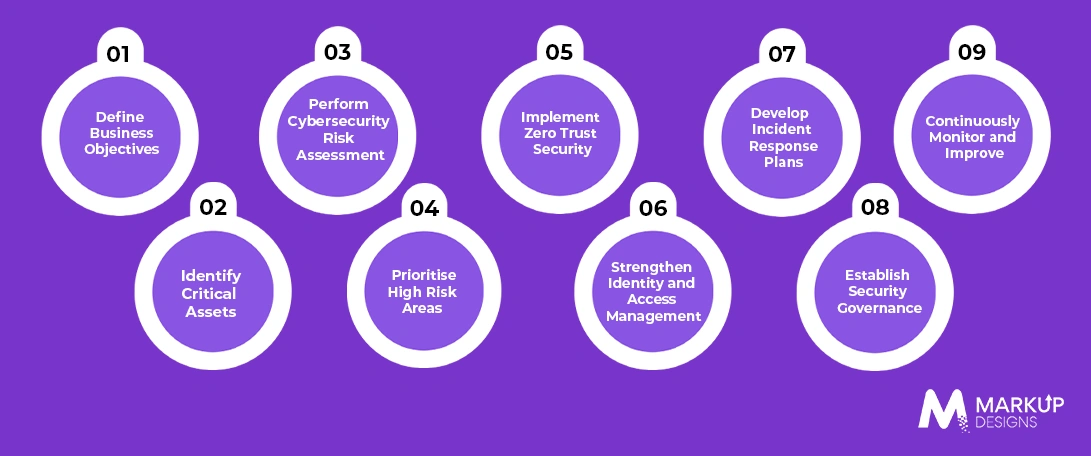
A proper cyber risk management strategy helps to connect the company’s security initiatives with its goals. By following a specified algorithm, every organization can minimize existing risks and operate more efficiently.
Define Business Objectives
In order to create the right strategy, you need to understand what the company’s goals are and what risks can be met along the way to their accomplishment. Security initiatives should help in the achievement of the mentioned goals without being independent of them.
Identify Critical Assets
You should understand which information (software, customer data, systems, etc.) is of the greatest value for your organization and, as a result, requires maximum protection.
Perform Cybersecurity Risk Assessment
Conducting a cybersecurity risk assessment helps discover where companies are required to apply their security efforts. During the assessment, the organization will learn about threats, vulnerabilities, and business impact.
Prioritise High Risk Areas
The organization should concentrate on risks with the highest probability of occurrence and the most severe consequences. It is advisable to pay attention to the threats with significant business risks.
Implement Zero Trust Security
The zero-trust security approach must be embraced. This means that every user and computer should be verified before they access the resources of the business.
Strengthen Identity and Access Management
Reliable authentication, permissions management, and multi-factor authentication implementation are necessary steps toward minimizing illegal business access.
Develop Incident Response Plans
It is necessary to create a clear response plan describing who does what and how this is performed as well as what actions should be taken to recover from possible incidents.
Establish Security Governance
A company should set up security policies, distribute security responsibilities, and make sure that senior management supports it in providing cybersecurity governance.
Continuously Monitor and Improve
Organisations need to keep pace with ever-changing cyber threats through regular monitoring, audits, and analysis.
Read Also: How to Choose Right AI Cybersecurity Consultant for Enterprise AI Security
Cybersecurity Risk Assessment Process
Cybersecurity risk assessment is a process of discovering and predicting risks which could happen being helpful in terms of making appropriate decisions for avoiding cyber threats.
- Identify Digital Assets
- Detect Threats and Vulnerabilities
- Assess Risk Likelihood and Impact
- Prioritise Critical Risks
- Implement Risk Controls
- Review and Reassess Continuously
Cyber Risk Assessment Matrix
| Likelihood | Low Impact | Medium Impact | High Impact |
| High | Medium Risk | High Risk | Critical Risk |
| Medium | Low Risk | Medium Risk | High Risk |
| Low | Low Risk | Low Risk | Medium Risk |
Essential Technologies for Cybersecurity Risk Management
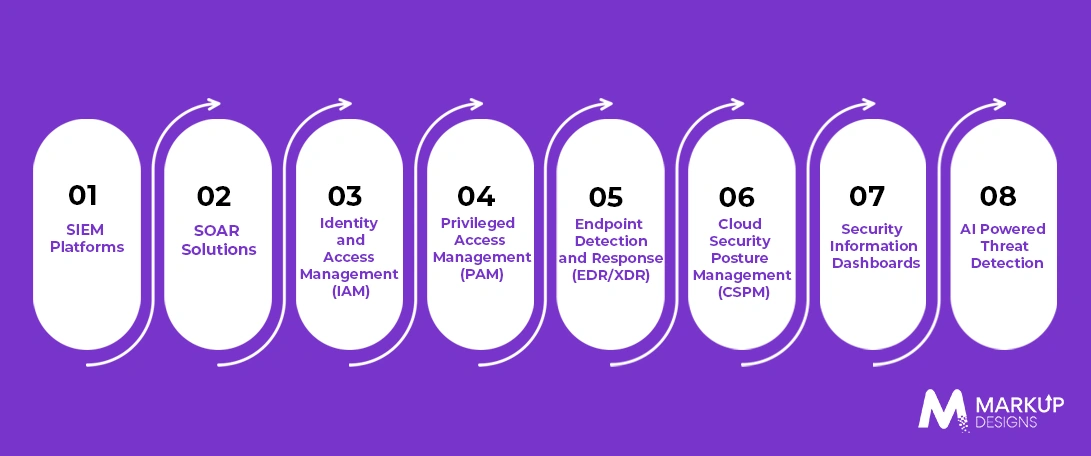
Modern cybersecurity services make extensive use of technology to enhance visibility, automate security processes and manage threats.
SIEM Platform
The Security Information and Event Management (SIEM) platform collects and analyses all security events in the organisation to discover any suspicious operations.
SOAR Technology
Security Orchestration, Automation, and Response technology allows the automation of cybersecurity risk management processes and speeds up the time it takes to respond to incidents.
Identity Access Management (IAM)
IAM solutions are in charge of monitoring the identities of users and ensuring that only those who have been approved can access the company’s systems.
Privileged Access Management (PAM)
PAM is designed to secure the privileged accounts by restricting access and controlling the activities of high-risk administrators.
Endpoint Detection & Response (EDR/XDR)
EDR and XDR solutions monitor the devices continuously, detect threats and respond quickly to them.
Cloud Security Posture Management (CSPM)
CSPM tools allow companies to detect mistakes that are related to their cloud security.
Security Information Dashboards
Dashboards are designed to offer relevant information about security incidents.
AI-Powered Threat Detection
With the help of AI-based security tools, it is possible to perform the analysis of large amounts of information for identifying threats.
Best Practices for Effective Cybersecurity Risk Management
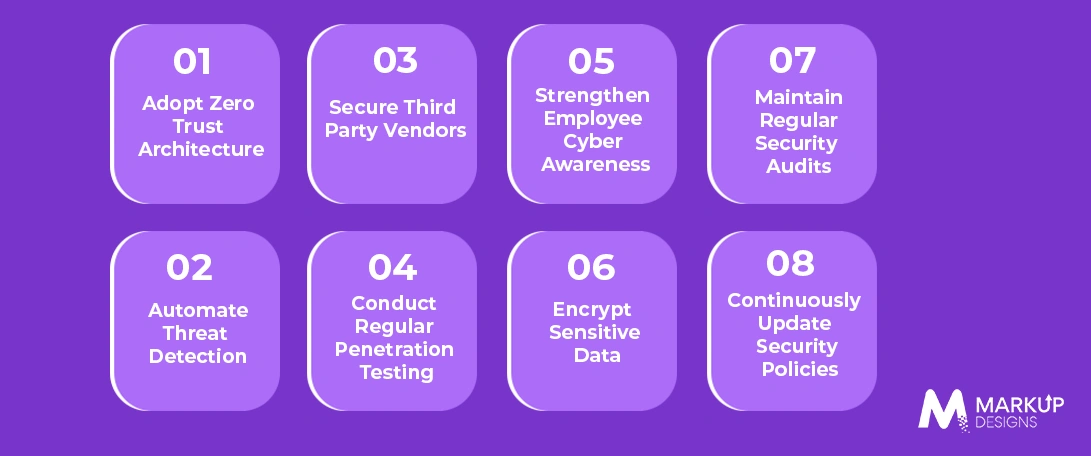
A well-organized cybersecurity risk management strategy requires continuous progress and ongoing risk management. These best practices help organisations strengthen their overall security posture.
Adopt Zero Trust Architecture
Check the identity of every device, user, and application before granting access, regardless of their location.
Automate Threat Detection
Utilize artificial intelligence and automation to quickly detect threats.
Secure Third-Party Vendors
Do vendor assessments regularly to ensure they comply with your security and compliance policies.
Conduct Regular Penetration Testing
Use real-life attack scenarios to find and fix potential vulnerabilities before cybercriminals exploit them.
Strengthen Employee Cyber Awareness
Offer regular training in security awareness to reduce the number of phishing attempts and mistakes made by humans.
Encrypt Sensitive Data
Safeguard sensitive information by applying encryption to data at rest and in transit.
Maintain Regular Security Audits
Review security procedures from time to time to close possible loopholes and ensure cybersecurity compliance.
Continuously Update Security Policies
Updating security procedures to remain in line with any changes in the prevailing threats, technologies, and regulations is vital for creating an efficient online risk management system.
Common Cybersecurity Risk Management Challenges
Despite varied investments in security, there are challenges to address in order to be up to date with cyber threats.
Evolving Threat Landscape
The risk posed by cyber attacks is something many companies face today, particularly due to the rapid evolution of cyber attacks, which, despite great leaps made in security technology, requires organisations to constantly update their security controls.
AI-Driven Attacks
Cybercriminals are increasingly using AI technology in their attacks and automating their cyber attacks, making them even more sophisticated and harder to detect.
Skills Shortage
The shortage of skilled human resources in the cybersecurity field has made it difficult for businesses to manage their risks.
Legacy Infrastructure
Outdated infrastructures cannot keep up with current technology.
Compliance Complexity
Compliance with numerous laws from various countries can prove to be a challenging task requiring a lot of resources.
Budget constraints
Limited budgets may force organisations to choose between important security investments and other business needs.
Vendor risk management
If third-party vendors do not adhere to good cybersecurity practices, businesses may fall prey to security risks.
Balancing Security with User Experience
High levels of security must come with ease of doing business for employees and customers alike.
Measuring Cybersecurity Risk Management Success
Evaluating performance in security makes it easier for businesses to understand whether or not their management strategy works and where changes have to be made to it.
Mean Time to Detect (MTTD)
The time it takes for a cybersecurity team to detect a cybersecurity incident after it happens.
Mean Time to Respond (MTTR)
MTTR records the average time taken to respond to a security incident.
Mean Time to Contain (MTTC)
MTTC gauges the time taken by an organization to contain a cyber event.
Vulnerability Remediation Rate
The vulnerability remediation metric assesses the efficiency of how quickly actively identified vulnerabilities are remediated.
Security Compliance Score
This score gauges the extent to which an organization adheres to given security compliance standards.
Third Party Risk Score
It is a metric that indicates how well vendors and suppliers are protected from cyber attacks.
Security ROI
This metric assesses whether the implementation of cybersecurity has reduced risks.
Business Resilience Metrics
The business resilience metrics measure various aspects of business continuity and recovery capabilities.
Cybersecurity Risk Management Across Industries
Different industries face different risks in terms of cybersecurity. A well-designed cybersecurity risk management framework enables companies to safeguard their assets and comply with industry regulations.
Banking and Financial Services
The cybersecurity management in banking and financial services industry aims to safeguard the integrity of financial transactions.
Healthcare
It ensures the security of patient records and healthcare systems while complying with healthcare regulations.
Retail and E-commerce
It secures payment data, online transactions, and customer accounts from data loss and fraud.
Manufacturing
Cybersecurity in the manufacturing sector is important as factories adopt digital technologies and interconnected systems. It secures production systems, industrial activities, and devices from cyber threats.
Government
It protects critical infrastructure, citizens’ information, and services from advanced cyber attacks.
Energy and Utilities
It helps to secure energy networks and industrial control systems against cyber attacks.
Technology and SaaS
It secures cloud applications, customer information, APIs, and technological platforms while being able to provide the services.
Future Trends in Cybersecurity Risk Management
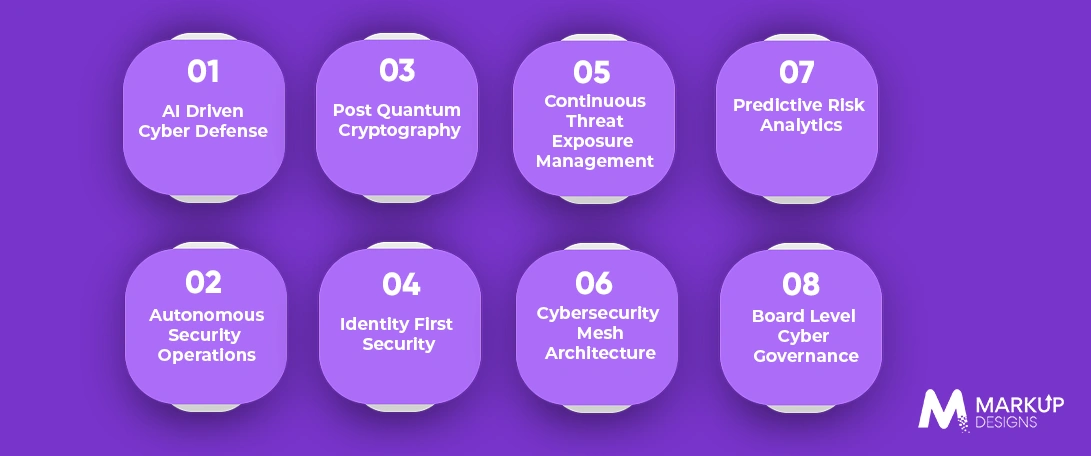
Since cyber threats are constantly changing, organizations need to embrace new technologies and proactive security measures.
AI-Driven Cyber Defense
AI will be used more often in identifying threats, analysing security risks, and speeding up incident response.
Autonomous Security Operations
Automation will lessen human work by taking over repetitive tasks and automatically responding to frequent safety concerns.
Post Quantum Cryptography
Businesses will start preparing encryption technologies that will be safe from future computing abilities.
Identity First Security
Identity authentication will be at the core of the new era of security techniques, which will completely replace the conventional methods of perimeter security.
Continuous Threat Exposure Management
Organizations will constantly discover and address security flaws before hackers have an opportunity to exploit them.
Cybersecurity Mesh Architecture
The decentralized model of security will give protection to users, devices, applications, and cloud systems even in hybrid environments.
Predictive Risk Analytics
Advanced analytical techniques and artificial intelligence will give organizations the power to forecast new cyber threats.
Board Level Cyber Governance
Cybersecurity will become on the executive management agenda as top management and boards will take part in handling cyber risks.
How Much Does Cybersecurity Risk Management Cost?
The cost of cybersecurity risk management will vary according to the size of the company, the nature of the business, compliance needs, and the level of security maturity. While smaller companies will need to implement basic protective measures, big corporations will use sophisticated systems and tools for continuous monitoring.
Small Business Security Programs
It would usually cost around 10,000 to 50,000 US dollars a year. The services will include the anti-virus software, firewalls, backup tools, required employee training, and basic monitoring of the situation.
Mid Market Security Investments
The yearly expenditure of companies falls within the range of 50, 000 to 250, 000 US dollars for SIEM, IAM, cloud security, vulnerability management, and compliance.
Enterprise Cybersecurity Programs
Big enterprises may spend around USD 250,000 to over USD 1 million a year on SOC operations, Zero Trust security, AI-based threat detection, and ongoing monitoring.
Technology and Infrastructure Costs
Costs include investments in SIEM, SOAR, EDR/XDR, IAM, PAM, CSPM, and backup and disaster-recovery solutions.
Managed Security Services Costs
Managed cybersecurity services mostly cost between USD 2,000 and 20,000+ a month, depending on the level of service needed.
Security Compliance Costs
Compliance programs require further investments for audits, certificates, security assessments, and governance.
Cost of Cybersecurity vs Cost of a Data Breach
IBM’s Cost of Data Breach Report in 2025 estimates the average cost of a global data breach to be USD 4.4 million, thereby making proactive cybersecurity worth the investment.
Factors Affecting Cybersecurity Investment
Costs depend on business size, IT infrastructure, cloud infrastructure adoption, compliance requirements, industry, and the complexity of the security environment.
Why Choose Markup Designs for Cybersecurity Risk Management?
Markup Designs is here to assist you in strengthening your security posture with end-to-end cybersecurity consulting services. From cybersecurity risk assessments, governance, and Zero Trust implementation to cloud security, AI-driven threat detection, and continuous monitoring, our experts deliver tailored solutions that minimise cyber risks, ensure compliance, and build long-term cyber resilience.
Build a Stronger Cybersecurity Strategy
Strengthen your business against evolving cyber threats with end-to-end cybersecurity consulting, risk management, compliance, and proactive security solutions. Let our experts help you build a resilient and future-ready security framework.

Conclusion
Cyber threats are becoming more sophisticated, making cybersecurity risk management a business necessity rather than an IT function. A proactive approach that combines risk assessment, governance, Zero Trust security, continuous monitoring, and industry-recognised frameworks enables organisations to reduce cyber risks while ensuring business continuity.
By partnering with an experienced cybersecurity partner der like Markup Designs, businesses can build a resilient security posture, meet compliance requirements, and stay ahead of emerging threats with confidence.
FAQs
1. What is cybersecurity risk management?
Cybersecurity risk management is the process of identifying, assessing, prioritising, and mitigating cyber risks to protect an organisation’s systems, data, and business operations.
2. Why is cybersecurity risk management important?
It helps organisations reduce security risks, minimise financial losses, maintain regulatory compliance, and improve overall cyber resilience.
3. Which cybersecurity framework is best?
There is no single best framework. Popular options include NIST CSF 2.0, ISO/IEC 27001, FAIR, and CIS Controls, with the right choice depending on your business needs.
4. What is the difference between cybersecurity and cyber risk management?
Cybersecurity focuses on protecting systems and data, while cyber risk management identifies, evaluates, and manages cyber risks based on their business impact.
5. How much does cybersecurity risk management cost?
Costs vary depending on business size and security requirements. Small businesses may invest around USD 10,000–50,000 annually, while enterprise programmes can exceed USD 1 million per year.
Author's Perspective
Cybersecurity is no longer a reactive function focused solely on preventing attacks. As businesses embrace cloud computing, AI, remote work, and connected technologies, managing cyber risk has become a critical part of business strategy. Organisations that take a proactive approach to cybersecurity risk management are better equipped to reduce disruptions, protect sensitive data, and maintain customer trust.
At Markup Designs, we believe that effective cybersecurity starts with understanding business risks rather than simply deploying security tools. By combining robust cybersecurity risk assessments, industry-recognised frameworks, continuous monitoring, and modern security practices such as Zero Trust, organisations can build long-term cyber resilience while supporting innovation and sustainable growth.
Discuss Your Project NowJupinder Singh Arora
Founder and CEO
Related Posts

Building Secure Digital Platforms in Saudi Arabia: Compliance...
FinTech Cybersecurity: Essential Controls for Secure Financial Applications
Cybersecurity in Banking: Challenges, Best Practices, and Future...
Insights Are Valuable & Execution is Priceless
You’ve read about the digital future. Now, let’s build the infrastructure to take you there. Move your strategy from the page to the product.
Design Your Solution Now
Contact Us
Schedule The Appointment At Your Convenience Date And Time.
30 Min
Web Conference
Time Zone
Indian standard time (08:30pm)

Thanks For Getting In Touch!
You’ve Taken The First Step Toward Transforming Your Digital Presence. Our Experts Will Reach Out Shortly To Take It Forward.
Launch Your Dream Project
Provide a brief overview of your project, and our specialists will evaluate your requirements. We will connect with you to explore how the right digital solutions can help you launch faster.