
In Brief
- AI systems often look stable before launch, but hidden vulnerabilities at the inference level can still allow manipulation, data leakage, or unexpected model behavior once deployed.
- Traditional cybersecurity teams usually miss AI-specific risks like prompt injection, data poisoning, and model evasion because these threats target the intelligence layer, not just an infrastructure.
- Enterprises struggle with lack of visibility into how AI models behave in real-world, creating blind spots during both testing and production stages.
- Rapid AI adoption across industries increases exposure, while evolving AI-driven attacks make systems harder to detect, monitor, and secure using conventional methods.
- Without specialized AI cybersecurity expertise, organizations risk compliance issues, operational disruption, and loss of trust in AI-driven decision-making systems.
You don’t usually get a warning when something is about to go wrong. In most enterprise AI systems, everything appears stable right up until it isn’t. Dashboards look clean, models are responding, and pipelines are running smoothly. But beneath that surface, the real question quietly remains, how secure is this system, really?
We’ve seen this pattern repeatedly in AI security assessments. In one enterprise deployment within the healthcare space, the model passed all pre-launch security validations. Yet during deeper testing, we uncovered subtle inference-level vulnerabilities that could be exploited to manipulate responses under specific inputs.
That’s the point where teams start re-evaluating their assumptions. Because once AI systems are integrated into critical workflows, whether in finance, healthcare, logistics, or customer operations, even a minor security gap can cascade into data exposure, compliance issues, or operational disruption.
The threat landscape is also shifting faster than most organizations anticipate. According to the 2026 CrowdStrike Global Threat Report, AI-driven cyber activity has increased by 89% year-over-year, with attackers now leveraging adaptive techniques that evolve in real time.
What makes this more complex is the shift from traditional attack patterns to AI-powered adversarial behavior. Threat actors are no longer relying on static methods; they are building systems that can learn, adapt, and bypass defenses continuously without manual intervention.
This is exactly why AI cybersecurity consulting has become a critical step before deployment, not after. Whether organizations rely on internal security teams or external specialists, early-stage intervention helps identify and close vulnerabilities before they turn into production-level risks.
In this blog, we’ll break down how enterprises can approach AI security the right way, what key risks are often overlooked, and what it really takes to evaluate the right AI cybersecurity consultant before launch.
Who is an AI Cybersecurity Consultant?
An AI Cybersecurity Consultant secures enterprise systems by evaluating AI model vulnerabilities (like prompt injection) and deploying AI-driven defense tools. They bridge the gap between artificial intelligence innovation and robust IT security, protecting infrastructure from both AI-assisted cyberattacks and internal data leakage
Unlike traditional cybersecurity experts who mainly focus on networks, servers, and applications, an AI cybersecurity consultant focuses on the unique risks that come with AI. They look for weaknesses in AI models, training data, and deployment environments to make sure attackers cannot manipulate results, access sensitive information, or misuse the system.
Understanding AI Cybersecurity in Enterprise Environments
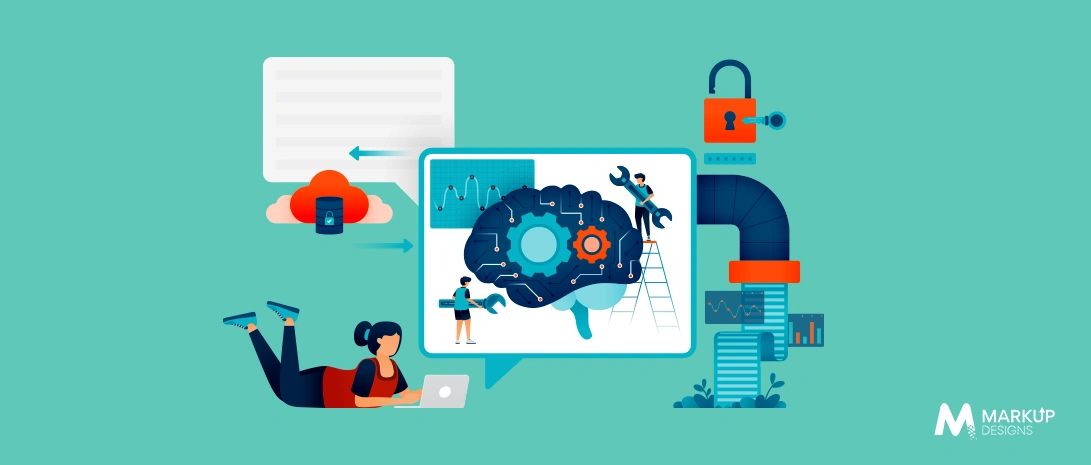
AI cybersecurity is no longer just an extension of traditional security frameworks. It has become a distinct discipline that focuses on protecting AI systems across their entire lifecycle, from data ingestion and model training to deployment and real-time inference.
Unlike conventional systems, AI models introduce new layers of complexity. They don’t just store or transmit data; they learn from it, adapt to it, and generate outcomes based on probabilistic behavior. This creates a broader and more dynamic attack surface.
In enterprise environments, this often includes:
- Data pipelines that feed sensitive and structured business information
- Machine learning models exposed to external or internal prompts
- APIs that enable real-time inference at scale
- Cloud-based infrastructure hosting training and deployment workflows
Each of these layers introduces unique vulnerabilities. In AI systems, the risk isn’t limited to infrastructure; attackers can also target the models, data, and decision-making processes behind the AI.
Why Enterprises Need Specialized AI Cybersecurity Consultants
Most enterprises already have cybersecurity teams in place. But AI systems don’t fit neatly into traditional security models.
The gap usually appears in three areas.
First, AI systems are highly dependent on data quality and data flow. A small compromise in training data can silently influence model behavior without triggering traditional alerts.
Second, many organizations lack visibility into how models behave under adversarial or unexpected inputs. This creates blind spots during both testing and production.
Third, regulatory expectations around AI are tightening quickly. From data privacy laws to emerging AI governance frameworks, compliance is becoming more complex and more AI-specific.
This is where hiring specialized AI cybersecurity consultants becomes important. They don’t just secure infrastructure; they evaluate how intelligence behaves under risk conditions.
Key Responsibilities of an AI Cybersecurity Consultant
In enterprise AI environments, security is not a single checkpoint; it is a continuous layer that runs across data, models, infrastructure, and real-time decision systems. An AI cybersecurity consultant plays a major role in ensuring that the entire ecosystem remains resilient against both traditional threats and AI-specific attack vectors. Their responsibility is not just to identify risks, but to understand how those risks evolve when systems start learning, adapting, and interacting at scale.
At a practical level, their work spans across multiple layers of the AI lifecycle. They don’t operate in isolation; instead, they work closely with data teams, ML engineers, and DevOps units to embed security into every stage of development and deployment.
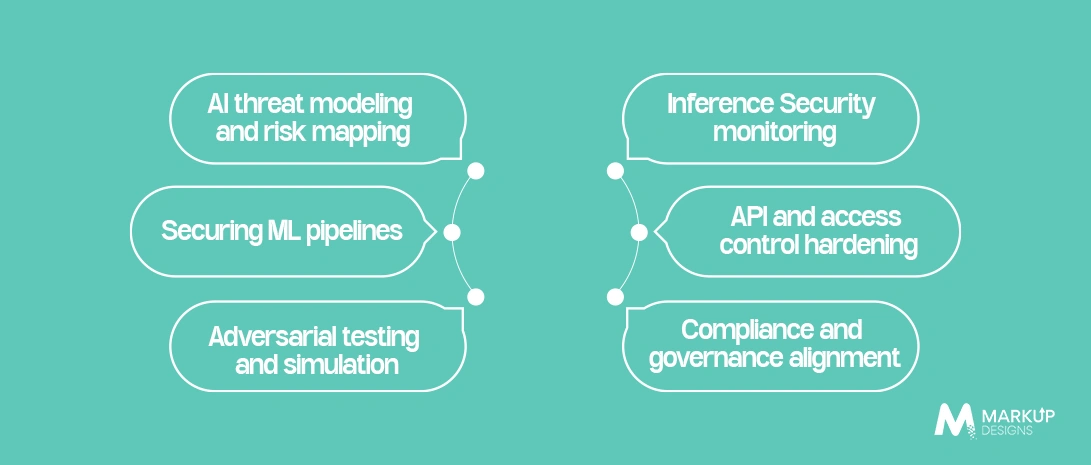
Key responsibilities typically include:
AI threat modeling and risk mapping
Identifying where vulnerabilities can emerge across data pipelines, training datasets, and deployed models
Securing ML pipelines
Ensuring data integrity, preventing poisoning attacks, and maintaining secure model training environments
Adversarial testing and simulation
Running controlled attack scenarios such as prompt injection, model evasion, or manipulation attempts
Inference Security monitoring
Detecting abnormal behavior during real-time model usage that may indicate exploitation attempts
API and access control hardening
Securing endpoints that expose AI models to internal or external applications
Compliance and governance alignment
Making sure AI systems adhere to regulatory frameworks and industry-specific security standards
What makes this role especially critical is that AI systems do not fail in obvious ways. Vulnerabilities often surface silently through model behavior, making early detection and structured security oversight essential before deployment scales across the enterprise.
Essential Skills to Look for in an AI Cybersecurity Consultant
When you are choosing an AI consultant, the focus should not just be on general security knowledge. AI systems work differently, so the person must understand both cybersecurity and how AI models actually behave in real-world conditions. In simple terms, they should know how AI can be attacked, how it can fail, and how to stop those issues before they reach production.
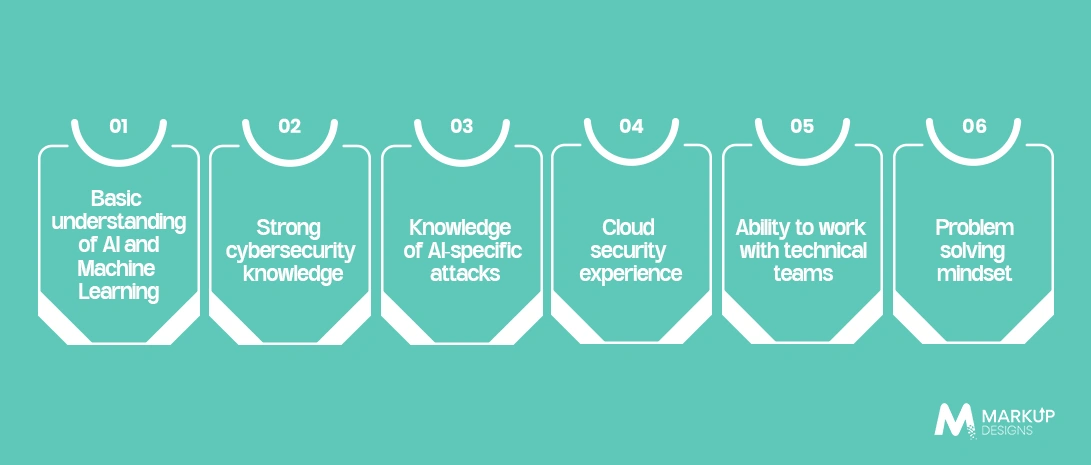
Here are the key skills to look for:
Basic understanding of AI and Machine Learning
They should know how models are trained, how data is used, and how outputs are generated in simple practical terms
Strong cybersecurity knowledge
Experience with threat detection, system protection, and handling real cyber risks in enterprise environments
Knowledge of AI-specific attacks
Awareness of issues like prompt injection, data poisoning, and model manipulation in simple, practical ways
Cloud security experience
Since most AI systems run on cloud platforms, they should understand AWS, Azure, or Google Cloud security basics
Ability to work with technical teams
They should be able to communicate clearly with developers, data scientists, and security teams without confusion
Problem-solving mindset
Instead of just pointing out issues, they should also suggest simple and practical fixes.
In short, a good consultant should make AI security feel clear and manageable, not complicated or overwhelming.
How to Select the Right AI Cybersecurity Consultant
Choosing the right AI cybersecurity consultant is not just about checking credentials. It’s more about following a clear, step-by-step evaluation process to understand whether the consultant can actually secure real-world AI systems in your enterprise environment. Since AI risks are layered and often invisible at the surface level, the selection process also needs to go deeper than traditional hiring checks.
Here’s a structured way to approach it:
- Understand AI security needs first
Before you even evaluate consultants, be clear about what you are trying to protect.
- Identify where AI is being used (chatbots, analytics, automation, etc.)
- Understand what kind of data is involved (customer data, financial data, internal systems)
- Define your risk level (low, medium, high impact systems)
- Check if the consultant understands AI systems
Once your needs are clear, evaluate whether the consultant understands AI at a practical level.
- Ask how AI models behave under real-world usage
- Check if they understand model training, inference, and data flow
- See if they can explain AI risks in simple, non-jargon terms
- Evaluate their experience with real AI security problems
Now move from theory to execution capability.
- Ask for real case studies or past AI security projects
- Check if they have handled issues like model attacks or data leaks
- Look for experience in enterprise-scale environments
- Assess their approach to threat detection and prevention
A strong consultant should not only identify risks but also prevent them.
- Ask how they detect adversarial attacks like prompt injection or poisoning
- Understand their method for securing APIs and AI endpoints
- Check if they focus on proactive monitoring, not just audits
- Verify their knowledge of compliance and governance
AI security is also about legal and regulatory safety.
- Ensure they understand data privacy laws and AI regulations
- Check their familiarity with industry compliance standards
- See if they can align security with governance requirements
- Test how they communicate and collaborate
A highly qualified expert may struggle to deliver results if they cannot communicate effectively with the team.
- Check if they can explain risks in simple language
- Observe how they interact with developers and security teams
- Ensure they are collaborative, not overly theoretical
- Final decision based on practical fit, not just knowledge
Once all checks are done, focus on real-world alignment.
- Do they fit your industry and scale?
- Can they handle your specific AI systems?
- Do they bring clarity, not confusion?
Questions to Ask Before Hiring an AI Cybersecurity Consultant

Before hiring an AI cybersecurity consultant, it’s important to go beyond basic introductions and actually test how well they understand real AI risks. These questions help you see whether they have hands-on experience or just theoretical knowledge. These questions also reveals how they think about security in real enterprise environments.
1. How do you secure AI models against adversarial attacks like prompt injection or data poisoning?
This helps you understand if they are aware of modern AI-specific threats, not just traditional cyber risks.
2. What steps do you take to secure the full AI lifecycle (data, training, and deployment)?
This shows whether they understand AI security as a complete system and not isolated parts.
3. How do you monitor AI models after deployment?
This question is important because many risks appear only in real-time usage, not during testing.
4. Can you explain how you protect APIs that expose AI models?
Since most AI systems run through APIs, this shows their understanding of real attack entry points.
5. Have you worked on enterprise-scale AI systems before? Can you share examples?
This checks whether they have practical, real-world experience in an AI ecosystem.
6. How do you align AI security with compliance and data privacy regulations?
This helps you understand if they can handle governance, legal, and industry standards along with technical security.
7. What would be your first 30-day security assessment approach?
This shows how structured and action-oriented their thinking is when starting a new engagement.
Red Flags to Avoid When Choosing a Consultant
Not every consultant who claims AI security expertise is actually ready for enterprise-level challenges. Some gaps are visible when systems are already live, which is why spotting red flags early is really important.
Only aware about generic cybersecurity terms
If they keep on repeating basic security terms without mentioning AI-specific risks like model manipulation or prompt injection, they may not understand AI deeply.
No real AI project experience
If they cannot show practical work on AI systems, especially in enterprise environments, their expertise may be theoretical.
Avoids explaining technical depth
A good consultant can simplify complex ideas. If they confuse more than they clarify, it’s a concern.
No clear approach to AI lifecycle security
If they only focus on an infrastructure and ignore data, training, and inference stages, their view is incomplete.
Lack of real cases examples
Real experience shows through real scenarios. The absence of examples is a warning sign.
Weak understanding of compliance and governance
AI security is not just technical; it also involves data privacy and regulatory alignment.
In short, red flags usually appear when a consultant treats AI like traditional IT security instead of a dynamic, learning system.
Benefits of Hiring the Right AI Cybersecurity Consultant
Hiring the right AI cybersecurity consultant can significantly change how secure and resilient your enterprise AI systems are. Instead of reacting to issues after deployment, you start building systems that are secure from the ground up.
Reduced AI Security Risks
AI systems face threats such as prompt injection, data poisoning, model theft, and adversarial attacks. An AI cybersecurity consultant identifies these vulnerabilities, implements protective controls, and continuously monitors AI environments to reduce the risk of security breaches.
Improved AI System Reliability
Poorly secured AI models can generate inaccurate, manipulated, or unexpected outputs. An AI cybersecurity consultant strengthens model security, validates AI behavior, and ensures systems perform consistently even under high-risk or unusual conditions.
Stronger Data Protection
AI models often process large volumes of sensitive business and customer data. Consultants establish secure data handling practices, encryption mechanisms, and access controls to prevent unauthorized access and data leakage throughout the AI lifecycle.
Early Detection of Security Gaps
Undetected vulnerabilities can become costly problems after deployment. AI cybersecurity consultants conduct security assessments, penetration testing, and risk analysis to identify weaknesses early, helping organizations address issues before they impact operations.
Regulatory and Compliance Readiness
As AI regulations continue to evolve, businesses face growing compliance requirements. AI cybersecurity consultants help organizations align their AI systems with data privacy laws, industry standards, and governance frameworks, reducing compliance-related risks.
Increased Trust in AI-Driven Decisions
Security concerns can limit AI adoption among employees, customers, and stakeholders. By implementing robust security measures, consultants help build confidence in AI systems, making AI-generated insights and decisions more reliable and trustworthy.
Lower Long-Term Security Costs
The cost of recovering from an AI-related security incident can be significant. AI cybersecurity consultants help prevent costly breaches, downtime, legal penalties, and remediation expenses by proactively addressing risks before they escalate.
Enhanced Business Continuity and Resilience
Cyberattacks targeting AI systems can disrupt critical business operations. An AI cybersecurity consultant develops security strategies, incident response plans, and recovery mechanisms that help maintain operational continuity and minimize disruptions during security events.
In simple terms, the right consultant doesn’t just secure your AI systems-they make your entire AI strategy safer, more stable, and future-ready.
Looking to secure your enterprise AI systems before deployment?
Work with experts who understand both AI and cybersecurity at a deep level. Strengthen your AI infrastructure, reduce risks, and build trusted intelligent systems with confidence.
Conclusion
AI security is no longer optional-it is a core part of building and scaling enterprise AI systems. As threats become more advanced and adaptive, traditional security approaches are not enough on their own. Choosing the right AI cybersecurity consultant helps organizations close hidden gaps before they turn into real risks. The focus should always be on practical experience, AI understanding, and real-world problem solving. In the end, strong AI security is not just about protection-it is about ensuring trust, stability, and long-term success of AI-driven business operations.
FAQ’s
1. What exactly does an AI Cybersecurity Consultant do?
An AI cybersecurity consultant focuses on securing AI systems across their entire lifecycle. This includes protecting training data, securing models, monitoring inference behavior, and identifying risks like adversarial attacks or data manipulation. Their main goal is to ensure AI systems operate safely and reliably in real-world enterprise environments.
2. How is AI cybersecurity different from traditional cybersecurity?
Traditional cybersecurity protects networks, applications, and infrastructure. AI cybersecurity goes a step further by securing the intelligence layer itself. This means protecting how models learn, how they respond, and how they can be manipulated through data or inputs, which is not covered in conventional security approaches.
3. When should a company hire an AI cybersecurity consultant?
Ideally, companies should involve an AI cybersecurity consultant before deploying AI systems into production. Early involvement helps identify hidden vulnerabilities during development, rather than fixing issues after the system is already live and exposed to real users.
4. What are the most important skills in an AI cybersecurity consultant?
Key skills include understanding machine learning systems, strong cybersecurity fundamentals, knowledge of cloud platforms, experience with adversarial AI threats, and the ability to integrate security into the AI development lifecycle. Clear communication with technical teams is also essential.
5. Can AI systems be fully secure?
No system can ever be completely risk-free, especially AI systems that continuously learn and evolve. However, with the right security practices and expert consultation, risks can be significantly reduced and controlled to a safe and manageable level.
Author's Perspective
Focused on real-world AI risks and security challenges, this piece takes a general technology perspective. With the growing adoption of AI across industries, the aim is to help businesses understand not just how AI works, but also how it can fail if it is not secured properly. It highlights how vulnerabilities can emerge at different stages of the AI lifecycle, from data handling to model deployment. The insights shared focus on practical considerations for evaluating, managing, and securing AI-driven systems in real-world enterprise environments where risks are constantly evolving.
Discuss Your Project NowAjit Kumar Jha
VP - Business Operations
Related Posts
How AI is Revolutionising Industrial Automation in Australia
How UK Enterprises Can Build an Effective AI...
AI Voice Agent for Real Estate: Features, Benefits,...
Insights Are Valuable & Execution is Priceless
You’ve read about the digital future. Now, let’s build the infrastructure to take you there. Move your strategy from the page to the product.
Design Your Solution Now
Contact Us
Schedule The Appointment At Your Convenience Date And Time.
30 Min
Web Conference
Time Zone
Indian standard time (08:30pm)

Thanks For Getting In Touch!
You’ve Taken The First Step Toward Transforming Your Digital Presence. Our Experts Will Reach Out Shortly To Take It Forward.
Launch Your Dream Project
Provide a brief overview of your project, and our specialists will evaluate your requirements. We will connect with you to explore how the right digital solutions can help you launch faster.