

In Brief
- Cybersecurity has become critical in modern manufacturing as smart factories, IoT devices, and Industry 5.0 technologies increase connectivity and expand the attack surface.
- Manufacturing organizations face various cyber threats, including malware attacks, data theft, ransomware, denial-of-service (DoS) attacks, and man-in-the-middle (MitM) attacks.
- Legacy operational technology (OT) systems often create security vulnerabilities because they are difficult to update, patch, and integrate with modern security solutions.
- Cyberattacks can cause severe consequences, such as production downtime, supply chain disruptions, intellectual property theft, financial losses, and reputational damage.
- Manufacturers should adopt a proactive cybersecurity strategy by improving asset visibility, integrating IT and OT security, implementing industry-standard security practices, and maintaining regulatory compliance.
- Employee awareness and cyber recovery planning are essential for minimizing risks, responding effectively to incidents, and ensuring business continuity during cyber events.
Cybersecurity in the manufacturing sector is becoming increasingly important as factories adopt digital technologies and interconnected systems. Manufacturers are now prime targets for cyberattacks, especially ransomware, due to their critical role in global supply chains. As connectivity grows with Industry 5.0, the risk of cyber threats also increases, making strong security measures essential.
The Cybersecurity Dive article highlights that the manufacturing sector is one of the most heavily targeted industries for cyberattacks, especially ransomware, due to its critical role in supply chains, sensitive intellectual property, and dependence on uninterrupted operations. Because even short disruptions can halt production and create widespread economic ripple effects.
Even though sectors like energy, healthcare, and telecommunications often attract greater attention from policymakers, cybersecurity companies consistently report that manufacturing is the most frequently targeted among the 16 critical infrastructure sectors identified by the U.S. government.
As manufacturing organizations continue to embrace digitalization and Industry 5.0 technologies, the potential risks associated with increased connectivity also continue to grow. Indeed, while greater levels of connectivity enhance performance, they simultaneously open up greater possibilities for cyber-attacks via vulnerable links in the system.
In this blog, we will discuss the main elements of cybersecurity in manufacturing, specifically what makes securing manufacturing facilities difficult, various cyber risks, their impact on the operation of facilities, and approaches to enhancing cybersecurity in manufacturing.
Understanding the Rising Cyberattacks in the Manufacturing Industry
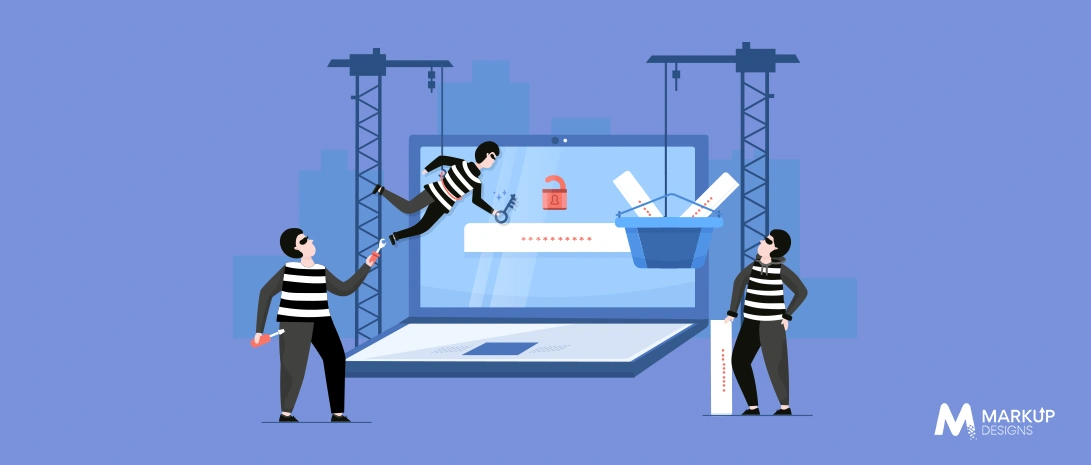
With the adoption of connected technologies, industrial IoT devices, cloud infrastructure, and automated production systems, manufacturing organisations are increasingly vulnerable to cyber threats. These innovations work to boost efficiency and productivity, but they also expand the attack surface and create more entry points for cybercriminals. The manufacturers need to protect their IT environments as well as their operational technology (OT) environments to manage potential risk.
Cyberattacks against manufacturers can have long-term effects beyond the loss of data. A successful breach can disrupt manufacturing lines, stop operations, compromise intellectual property, and damage supply chain networks. Manufacturing facilities are often dependent on continuous operations, so even a brief downtime can result in significant financial losses and missed business opportunities.
Another major cybersecurity challenge in the manufacturing and OT sector is the high cost of equipment and its long operational lifespan. Most manufacturing devices tend to work for decades without any serious maintenance. Thus, there will be no updates that would help address security vulnerabilities in these machines.
To minimize the threat, companies may install additional monitoring solutions for old hardware and infrastructure. However, such a decision is not easy, as it will require the company to collect and analyze a large amount of data.
Major Cyberattacks in the Manufacturing Industry
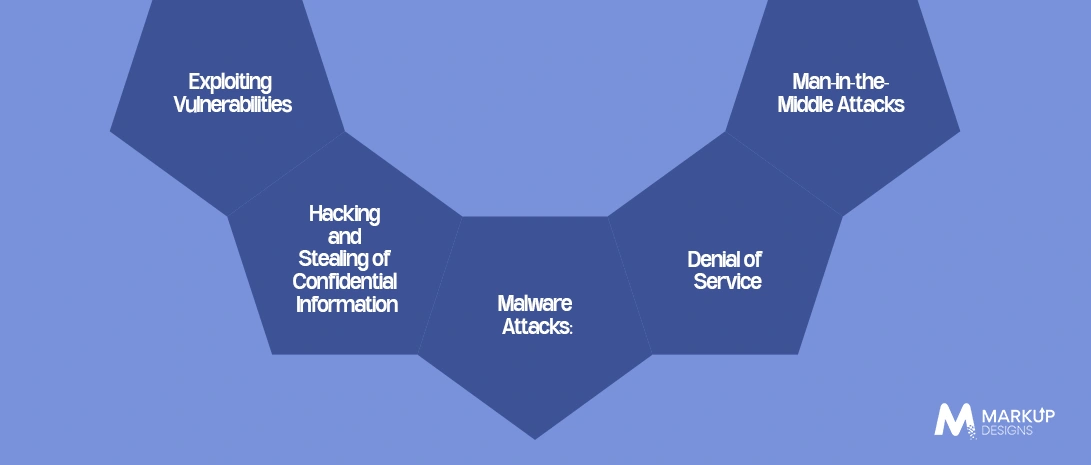
Here’s a list of cyberattacks in the manufacturing sector that can potentially affect production and cause reputation and financial losses:
1. Exploiting Vulnerabilities: In cybersecurity, an exploit is a specific sequence of code, data, or commands designed to take advantage of a vulnerability to gain unauthorized access or cause unintended system behavior
Data Breaches expose sensitive assets such as personally identifiable information (PII), proprietary intellectual property, and financial records directly into the hands of attackers. Once stolen, this data can be sold, weaponized, or leaked publicly with little recourse for the victim organization.
Operational Disruption brings business to a grinding halt. Ransomware locks critical systems, DoS attacks overwhelm servers, and internal networks freeze, leaving teams unable to operate, communicate, or recover without significant intervention.
Financial Losses hit from every direction simultaneously. Beyond the immediate cost of stolen funds or ransomware payouts, organizations face steep incident response bills and mounting regulatory penalties, particularly under frameworks like GDPR, that can collectively run into millions.
Reputational Damage is often the hardest blow to recover from. When customers lose trust in an organization’s ability to protect their data, the consequences don’t end with negative press. They translate into lost contracts, declining revenue, and a brand image that can take years to rebuild.
2. Hacking and Stealing of Confidential Information: Commonly defined as a data breach or data theft, is the illegal practice of exploiting system vulnerabilities to gain unauthorized access to protected digital resources.
Real-world impact
Stealing Ideas and Secrets
The most valuable things a manufacturer has are its ideas and innovations. Hackers go after product designs, formulas, blueprints and years of effort and investment. When these get stolen, competitors can copy products without doing any research or development, leaving the original company at a big disadvantage.
Disrupting Production
Smart factories run on a network of machines, sensors, and automated systems all working together. This setup is efficient but also fragile, just one weak spot can shut everything down. Hackers can mess with machine settings, turn off safety features, or even lock the whole factory.
Spreading Trouble Through the Supply Chain
Manufacturers rely on a whole network of suppliers, delivery partners, and customers connected digitally. When hackers access vendor info or internal messages, they can use it to attack others in the network. One breach can ripple out, disrupting many businesses all at once.
Financial Losses and Damage to Reputation
Every minute the production line is down means lost sales, late orders, and disappointed customers. If data gets compromised too, there are extra costs from fines, lawsuits, and fixing the problems. On top of it, the company’s reputation takes a hit. Once trust is shaken, it takes a lot of time and effort to win customers and partners back.
3. Malware Attacks: A malware attack involves malicious software (malware) infiltrating a device or network to damage, disrupt, or steal data. These attacks are typically delivered through phishing emails, malicious downloads, or software vulnerabilities.
Real World Impact
- Ransomware: The top threat, where hackers lock up factory control files and demand payment. Even a short attack can halt entire production lines in today’s connected factories.
- Spyware & Info-Stealers: Sneaky software that quietly steals trade secrets, formulas, and designs over time, often selling them to competitors or governments.
- Trojans & Worms: Malicious programs disguised as normal software that spread through vendor networks, exploiting weaknesses in connected IoT devices.
How These Threats Affect Both Cyber and Physical Systems
- IT and OT Overlap: Smart factories link IT systems with operational tech like robots and IoT devices. Malware from office networks can spill over, shutting down key equipment and assembly lines.
- Old Systems at Risk: Many factories still use outdated software without strong security, making them easy targets.
- Production Stops: Malware can force automated shutdowns to avoid physical damage, leading to days or even weeks of halted production.
4. Denial of Service and Distributed Denial of Service Attacks: This involves overwhelming the system with excessive traffic that makes the factory unable to access the systems, resulting in costly disruptions and downtimes.
Real World Impact
- Production Line Stoppage: DDoS attacks overwhelm control systems like SCADA or DCS, breaking communication between servers and machinery. This can freeze operations on the factory floor, stopping production completely.
- Supply Chain Disruption: Attacks on logistics and inventory portals prevent tracking of raw materials and shipments. This disrupts order processing and supplier coordination, causing delays and halts in fulfilling orders.
- Quality Control Issues: Real-time data streams essential for detecting defects and automatically adjusting machines can slow down or fail. This leads to the production of faulty parts and significant material waste.
- Safety Risks: In continuous manufacturing processes such as chemical or oil production, losing automated monitoring or emergency shutdown systems due to network outages creates serious safety dangers for workers and the facility.
5. Man-in-the-Middle Attacks: A Man-in-the-Middle (MitM) attack is a cyberthreat where a malicious actor secretly intercepts, monitors, or alters communications between two unsuspecting parties.
Real World Impacts
- Sabotage and Stopping Production
Hackers can take control of factory machines and change important settings like pressure, temperature, or speed. This can cause machines to break down and bring the entire production line to a halt. - Stealing and Changing Important Designs
Attackers can sneak into the digital files sent to 3D printers or other manufacturing machines. They might secretly change these designs, weakening the final product without the company realizing it. - Safety and Environmental Dangers
In industries like chemical or oil production, factories depend on automatic safety limits. Hackers can trick sensors, stopping emergency systems from working. This could lead to explosions, toxic spills, or serious injuries to workers. - Disrupting the Supply Chain
Factories often order materials just in time to keep things running smoothly. If attackers interfere with these orders or delivery details, it can cause big delays in getting the materials needed, slowing down the whole process.
Effective Cybersecurity Strategies for the Manufacturing Industry
Due to the adoption of smart technology by the manufacturing sector, the role of cybersecurity has taken center stage because of the need to protect the technology being used. The use of technologies like cyber-physical systems, Internet of Things, and Industrial Internet of Things (IIoT) has advanced the manufacturing process. However, it has made security management challenging.
These types of cyberattacks not only entail data breaches, but may also result in disruption of the manufacturing line process, operational downtime, and ultimately huge financial damage to the companies.
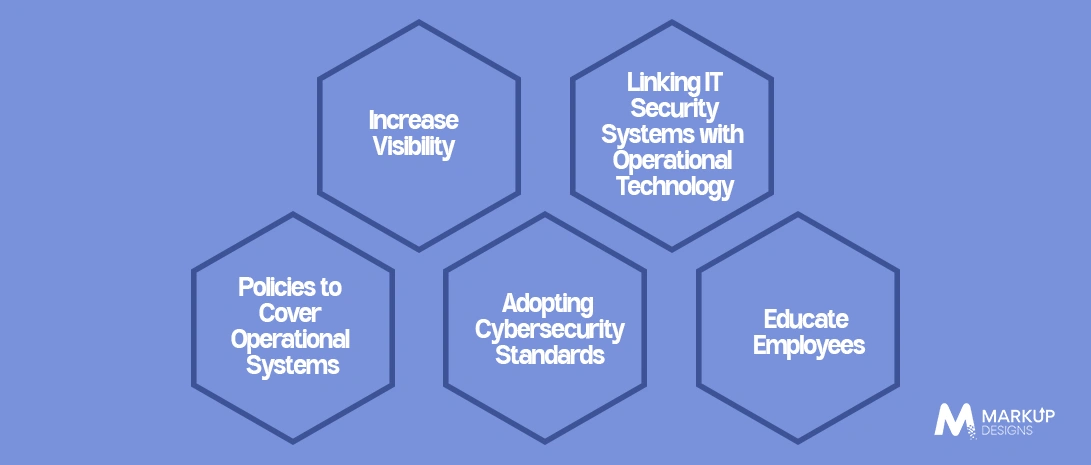
In light of this, there is a need for manufacturers to adopt a robust cybersecurity strategy that takes into account their distinct problems. Below are some approaches that can be adopted to reduce the chances of cyberattacks.
Increase Visibility through Connected Manufacturing Assets
In today’s manufacturing environments, strengthening cybersecurity starts with gaining complete visibility across operational technology (OT) systems and interconnected cyber-physical assets throughout the organization. This involves monitoring the IoT devices, IIoT systems, industrial machinery, and building management systems, among other connected assets within the manufacturing ecosystem.
Linking IT Security Systems with Operational Technology
Once you gain complete visibility across your manufacturing environment, the next important step is to connect IT security processes with Operational Technology (OT) systems. Bringing these systems together helps manufacturers build a more effective and unified strategy that protects both digital and operational assets.
However, achieving this level of visibility is often challenging, as many OT environments still depend on legacy systems that were not designed to integrate with modern technologies. Additionally, some OTs are difficult to scan and patch since they may result in operational downtime, which would negatively affect the company’s revenue stream.
Policies to Cover Operational Systems
While information technology departments prioritize security, OT departments have traditionally prioritized efficiency and productivity over security. As a result, many manufacturing facilities are inadequately secured due to a lack of security controls and standardized security policies.
Manufacturers need to expand policies from information technology systems to include OT systems as well. This will bridge any security gaps that exist while allowing for greater security in manufacturing facilities.
Adopting Cybersecurity Standards
While manufacturing industries have been embracing smart technologies and smart systems, it is becoming imperative to adhere to industry regulations and standards. Not adhering to the necessary compliance could prove costly not just in terms of fines and penalties but also in terms of making one’s manufacturing environment vulnerable to cyberthreats.
By complying with recognized industry standards for cybersecurity, manufacturers would be able to set up an effective infrastructure that would protect them from possible security problems and allow for seamless operations.
Educate Employees to Build a Strong Cyber Recovery Strategy
The involvement of employees in preventing manufacturing firms from cyberattacks cannot be understated; this makes cyber training more essential. The employee needs to learn about possible cyber risks, how to practice safe online behavior, and how to report any suspicious activity as early as possible.
In addition, manufacturing firms require an effective cyber recovery plan. In the event of a cyberattack, a strong response plan plays a crucial role in rapidly resuming business operations while also minimizing the financial impact of production downtime.
With the ongoing implementation of digital transfromation and smart factory solutions in the manufacturing industry, the significance of cybersecurity cannot be ignored. Every manufacturer may have different challenges concerning cyberattacks, but certain basics cannot be overlooked.
One of the key benefits for manufacturers is partnering with cybersecurity service providers who have strong expertise in the manufacturing industry. With support from manufacturing IT and cybersecurity experts, organizations can more easily identify risks and threats and respond quickly to security issues without disrupting production.
From threat detection to system monitoring, an expert AI cybersecurity consultant helps companies implement cybersecurity policies that keep infrastructure secure without causing any disruptions.
Secure Every Layer of Your Manufacturing Infrastructure
Enhance your manufacturing operations with efficient cybersecurity solutions that will help secure your interconnected systems, mitigate operational risk, and increase business continuity.

Conclusion
With the development of manufacturing through smart technologies, automation, and networking, cybersecurity is no longer simply an IT requirement but a crucial aspect of the business itself. Every technology-enabled aspect of manufacturing, from IoT devices and OT systems to cloud networks in the supply chain, brings with it a host of potential threats.
The manufacturers that thrive in today’s world need a cybersecurity strategy based on visibility, IT and OT connectivity, regulatory compliance, employee education, and recovery planning. Companies that recognize the importance of cybersecurity at the outset will be better equipped to avoid future disruptions and stay safe in the modern era of manufacturing.
FAQs
1. Why is cybersecurity important in the manufacturing industry?
Cybersecurity is important in manufacturing because modern factories rely heavily on connected technologies, IoT devices, and automated systems. A cyberattack can disrupt production, expose sensitive data, and cause major financial and operational losses.
2. What are the most common cyberthreats in manufacturing?
Some common threats include malware attacks, ransomware, phishing, denial-of-service (DoS) attacks, data theft, and attacks targeting OT, ICS, and SCADA systems.
3. Why are smart factories more vulnerable to cyberattacks?
Smart factories use interconnected systems, cloud platforms, IoT devices, and third-party integrations. While these technologies improve efficiency, they also create more entry points for cybercriminals.
4. What is the difference between IT security and OT security?
IT security focuses on protecting digital data, software, and business systems, while OT security protects industrial equipment, machines, and operational systems used in manufacturing environments.
5. How can manufacturers improve cybersecurity?
Manufacturers can improve cybersecurity by monitoring connected systems, integrating IT and OT security, following industry standards, training employees, conducting regular security assessments, and implementing strong recovery plans.
6. What role do employees play in implementing cybersecurity in the manufacturing industry?
Employees play an important role in cybersecurity by following security protocols and best practices in their daily tasks. They prevent breaches by identifying and reporting suspicious activities or potential threats early. Regular training also enables them to support a secure and resilient production environment.
7. How does cybersecurity help reduce operational downtime?
Strong cybersecurity measures help detect and prevent attacks before they disrupt production systems. Recovery planning and real-time monitoring also help businesses restore operations quickly during security incidents.
Author's Perspective
The current state of the manufacturing industry is characterized by automation, Artificial Intelligence, and other technological achievements, including the upcoming Industry 5.0 and the emergence of interconnected and smart factory ecosystems. Although there is much room for improvement in terms of operational efficiency, the downside of such developments is an increased vulnerability from a cybersecurity perspective that most businesses have yet to address.
Discuss your Project NowAjit Kumar Jha
VP - Business Operations
Related Posts

Digital Transformation for Government Services in Kuwait: Key...

Building Secure Digital Platforms in Saudi Arabia: Compliance...

Why Businesses in Oman Need Digital Transformation Services
Insights Are Valuable & Execution is Priceless
You’ve read about the digital future. Now, let’s build the infrastructure to take you there. Move your strategy from the page to the product.
Design Your Solution Now
Contact Us
Schedule The Appointment At Your Convenience Date And Time.
30 Min
Web Conference
Time Zone
Indian standard time (08:30pm)

Thanks For Getting In Touch!
You’ve Taken The First Step Toward Transforming Your Digital Presence. Our Experts Will Reach Out Shortly To Take It Forward.
Launch Your Dream Project
Provide a brief overview of your project, and our specialists will evaluate your requirements. We will connect with you to explore how the right digital solutions can help you launch faster.