
In Brief
- Cybersecurity has become a critical business requirement in UAE due to increasing cyber threats, growing digital adoption, and stricter regulatory requirements.
- Choosing the right cybersecurity partner requires evaluating expertise in security architecture, compliance, threat detection, system integration, and long-term support.
- Businesses should look for partners that understand UAE regulations such as PDPL, ADGM, and DIFC requirements and can implement effective compliance controls.
- Key cybersecurity services include cybersecurity consulting, managed security services, penetration testing, compliance management, and incident response planning.
- Common mistakes include focusing on security tools instead of strategy, ignoring compliance expertise, overlooking integration challenges, and selecting providers based solely on cost.
- Future cybersecurity trends in UAE include Zero Trust security, AI-powered threat detection, cloud security platforms, and stronger identity and access management controls.
UAE’s rapid digital growth has made cybersecurity services more important than ever. Today, banks handle payments through cloud systems, hospitals manage patient records on connected platforms, and government services are delivered through apps and shared digital networks. While this improves speed and convenience, it also creates more entry points that cyber attackers try to exploit.
The recent cyber threat report reveals an increase in the number of cyberattacks against UAE companies across various sectors. There is an increase in phishing emails, ransomware attacks, and data breaches due to poor cybersecurity and inadequate access controls.
Approximately 40% of social media users from UAE have been affected by privacy problems following the posting of their personal details. Such instances are fairly common and affect both individuals, big firms, and even medium-sized organizations.
To strengthen their cybersecurity posture, many organizations adopt multiple security technologies over time. However, this often results in a collection of separate security solutions, each managed by different teams of specialists. For example, one team may handle system monitoring, another may oversee user access management, while a separate group focuses on auditing and compliance. Because these systems operate independently and lack effective integration, security teams are overwhelmed with a growing number of alerts and notifications, making it increasingly challenging to identify, prioritize, and respond to potential threats on time.
This highlights the importance that cybersecurity now plays in business in UAE. An attack can cause disruption, fines according to UAE data protection law, and significant damage to reputation and customer confidence. Regulations such as the Personal Data Protection Law, as well as the demands of financial centers such as the ADGM and DIFC, require that businesses conduct themselves responsibly regarding their cybersecurity policies.
Choose the Right Cybersecurity Consulting and Implementation Partner
Knowing what to consider when looking for a right cybersecurity partner is crucial. It is often determined at the starting phase in many organizations in UAE. However, the real challenges become evident once these systems are deployed and begin operating. As the volume of security alerts continues to grow, organizations often struggle to identify genuine threats and respond to them promptly. This increase in notifications can overwhelm security teams, leading to delayed incident response and a higher risk of potential security breaches. The main purpose of this part is the proper evaluation.
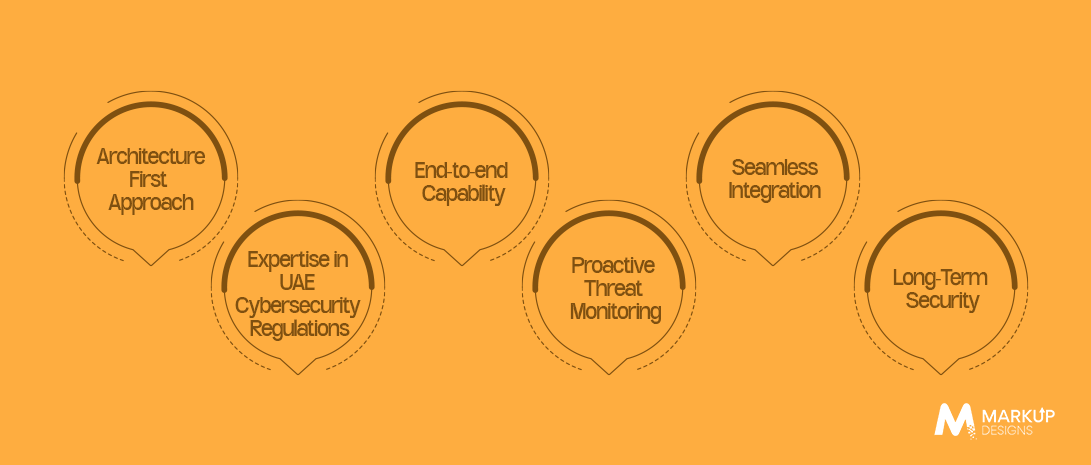
1. Architecture-First Approach
An effective cybersecurity partner will start by knowing how your systems function and what security challenges you face in all of your infrastructure components. We know that the vast majority of UAE organizations leverage hybrid models where both cloud and on-premises components play a role. Security planning needs to consider all layers of your infrastructure, including:
- Access control for users, regardless of whether they operate in the cloud, on-premise, or third-party solutions
- Network segmentation, whereby critical infrastructure is isolated from other systems
- Analysis of the data flows through applications, APIs, databases, and storage.
- Well-defined trust boundaries to adopt Zero Trust principles
In this way, a cybersecurity partner can develop an effective strategy that safeguards your organization without interfering with your business activities.
2. Expertise in UAE Cybersecurity Regulations
UAE law mandates that the organization should have strict cybersecurity policies in place. Some of the compliance issues that should be addressed by an organization when selecting its cybersecurity service provider are:
- Control on data access and auditing according to PDPL standards
- Compliance audit trail in compliance with ADGM and DIFC requirements
- Logging and logging retention as per the time frame
- Access management and automated reporting process
3. End-to-end Capability
Gaps in security systems usually result from several vendors working on various aspects of cybersecurity. Cooperation with a single vendor throughout the entire process, from planning to monitoring and finally responding to an incident, provides greater coordination in solving security problems. Among the main advantages are:
- Having a single team handle consulting, implementation, and security
- Quick communication and escalation of security events
- Fewer uses of third-party services
- Control over the entire system of security
This method allows companies to act quickly while keeping their security strategy uniform.
4. Proactive Threat Monitoring and Detection
A good cybersecurity firm is not just about making alerts; it is about recognizing a real threat that could otherwise cause significant damage. They use powerful analytics tools for monitoring activities from the user level down through their devices and network infrastructure. Key capabilities include:
- SIEM and XDR products for collecting and correlating security data from various sources
- User behavior monitoring for detecting suspicious behavior
- Threat intelligence feeds for detecting known tactics used by attackers
- Continuous monitoring for identifying threats that move around the network
These are some of the important features of cybersecurity products that help in defending against breaches.
5. Seamless Integration with Existing Systems
Almost all companies depend upon a blend of contemporary applications and legacy systems. A great cybersecurity solution needs to provide protection for these environments while making sure that they collaborate seamlessly and safely. Some of the major aspects that need to be looked at are:
- Legacy ERP compatibility, legacy core banking, etc.
- Security integration through secure APIs
- Logging and monitoring centrally in cloud and on-premises deployments
- Identity and access management across multiple platforms
6. Long-Term Security Partnership
Cybersecurity is an ever-evolving process. With growing organizations and emerging cyber threats, there is a need to review and implement necessary security controls from time to time. Here is where having a solid cybersecurity partner becomes vital for your organization, as they will help ensure that your company stays secure. Here are some ways they will do that:
- Conducting regular evaluations of security controls
- Providing security updates considering the emerging cyber risks and trends
- Improving security monitoring and threat detection mechanisms
- Implementing necessary changes to suit your new applications and services
These are some ways in which organizations can differentiate themselves from vendors and have security partners in UAE that provide them with long-term benefits.
Common Mistakes Businesses Make When Selecting a Cybersecurity Partner

Choosing Tools Over Strategy
Some companies buy security devices but lack any strategy for their use. Although the devices could perform their functions efficiently, they do not operate well as a group.
Ignoring Compliance Expertise
The cybersecurity partner might be skilled technologically, but have little experience with the laws of UAE. This would result in problems with compliance, auditing, and data security.
Overlooking Integration Challenges
Companies tend to employ both new and old technologies. If the security measures fail to work in harmony with the present architecture, some of the critical systems could be left unprotected and unmonitored.
Focusing Only on Cost
Opting for a solution at the lowest price might prove cost-effective upfront; however, it could compromise capabilities and leave you paying more when there is a breach of security or non-compliance
Key Cybersecurity Services for Modern Enterprises
Security solutions have been implemented by most organizations of a large size. As risks grow over time, additional solutions are implemented. The challenge arises when these solutions fail to be integrated.
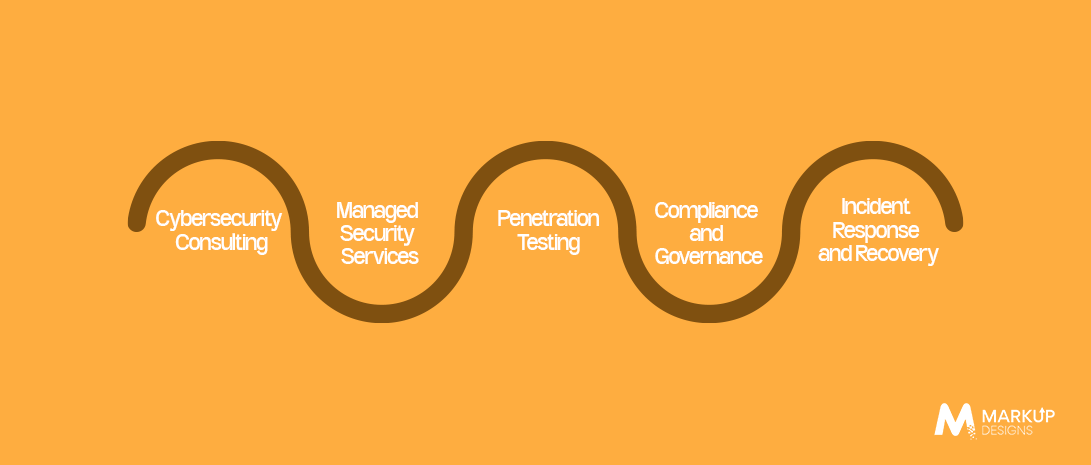
Cybersecurity Consulting
The initial step of the cybersecurity consultancy service entails a thorough review of your company’s security risks and existing security controls. Specialists will examine the state of your security management in relation to users, data, applications, and infrastructure to see what the flaws are. The current state of affairs is compared to international standards, including ISO 27001. Security shortcomings are pinpointed and prioritized depending on the damage done to the business.
Managed Security Services
Managed security services will then be used once security services are put in place to ensure your security is maintained consistently. Security experts will always be monitoring your systems for anything out of place and will take necessary action whenever there is a problem. Rather than responding to every alert, security experts will focus on alerts that require urgent attention. Organizations can also opt to employ monitoring software to detect any user-related activity.
Penetration Testing and Vulnerability Assessment
Security assessments help organizations identify and address potential vulnerabilities before cyberattackers can take advantage. A vulnerability assessment uses automated tools to detect weaknesses across networks, applications, and systems, providing a comprehensive view of security risks. In contrast, penetration testing takes a more proactive approach by simulating real-world cyberattacks to evaluate how effectively an organization’s defenses can withstand and respond to potential threats. These assessments may take various forms, from testing websites and APIs to network penetration testing.
Compliance and Governance
The businesses in UAE need to follow strict guidelines that ensure the security of sensitive information. The services of compliance and governance ensure that there is proper governance when it comes to storing, using, and controlling access to information. These services also keep records of the activities undertaken by users.
Incident Response and Recovery
Despite robust security, there may still be instances where attacks occur within an organization. For instance, there needs to be an incident response and recovery plan. Security specialists will make preparations ahead of time by formulating steps that they should follow when responding to these threats. There will be investigations into how these incidents occurred and what areas of the network have been breached.
Understanding Threats Before Selecting a Cybersecurity Partner
The nature of the attacks that the business experiences will be instrumental in evaluating the potential security service provider. Cyberattacks targeting organizations in the UAE commonly exploit weaknesses in identity management, cloud security configurations, and access control systems. The potential partner must demonstrate this ability through practical experience.
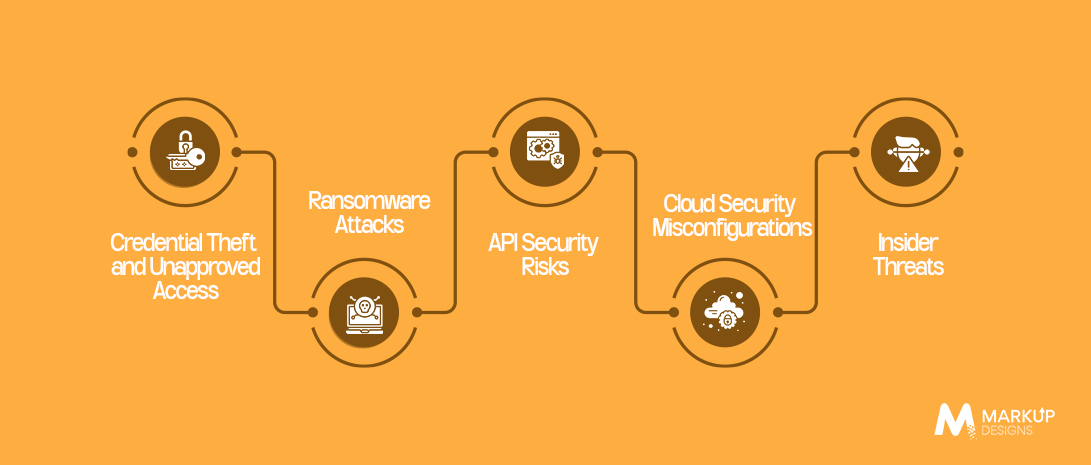
Credential Theft and Unapproved Access
One of the most popular methods that cyber criminals use to access companies’ systems is by stealing user names and passwords. After getting in, they will start moving around and accessing sensitive information. It will be necessary to employ strong authentication mechanisms, access control measures, and continuously monitor all logins.
Ransomware Attacks
Ransomware will allow cybercriminals to lock down the vital systems and disrupt the daily activities of the company. Therefore, it is imperative to be able to detect, isolate, and recover from the situation as soon as possible.
API Security Risks
API is a mechanism for enabling communication between two applications or services. However, an improperly secured API can become a source of vulnerability for a company since sensitive information may be exposed. Therefore, it is an important to monitor any possible activities that could pose threats to the security of the APIs.
Cloud Security Misconfigurations
The incorrect settings used by the organization might accidentally make their sensitive data available to other users without authorization. It is recommended to perform periodic checks to ensure there are no vulnerabilities within the system and also provide proper access control.
Insider Threats and Excessive Access
Security threats do not originate only from outside intruders. Some individuals may be exposed to systems and information that they do not necessarily require access to. This highlights the importance of implementing role-based access controls and ensuring that access permissions are granted only on a need-to-know basis.
Key Compliance and Regulatory Requirements

In UAE, compliance becomes a component of routine security. Compliance does not become an issue after the fact or during the audit process only. We should keep records of who accesses the information, what changes are made, and when those changes happen.. Non-compliance will come out fast once the auditing process starts.
Personal Data Protection Law (PDPL)
The Personal Data Protection Law provides standards on the collection, storage, processing, and protection of personal data. Companies are required to have adequate access controls and record-keeping in relation to their user activities.
UAE Information Assurance (IA) Standards
These standards are usually adopted by government agencies in UAE. They aim at enhancing security measures that include access control, system monitoring, logging of security activities, and reporting of incidents.
ADGM and DIFC Requirements
Any organizations operating in ADGM and DIFC, especially those in the financial and fintech industries, have to keep extensive audit logs and security logs. All actions that concern any systems and information should be accounted for.
Sector-Specific Rules
There are also other sectors like banking, telecommunication, and health care where there are additional compliance requirements. Some of the regulatory requirements include data protection, access control, system availability, and confidentiality of sensitive data.
Audit Records and Reporting
It is compulsory for organizations to have well-maintained logs, which will be helpful during an audit and will be easy to access when required. Organised documentation ensures the organization meets regulatory compliance, eases audits, and prevents security breaches.
The Future of UAE Cybersecurity in 2026 and Beyond
Enterprises are tightening control across users, data, and infrastructure. The trends below reflect what teams are actively working on across large organizations.
Zero Trust Becoming the Standard Security Approach
The traditional approach to security, where security measures are based on a user’s or device’s location within the network, is outdated. The Zero Trust model is gaining importance today as it ensures that each user and device, and their requests for access, are validated prior to granting them any access rights.
AI-Powered Security Operations
In many cases, security teams receive a vast number of alerts per day; therefore, it is challenging for them to find out actual threats promptly. Security AI can be used to process vast amounts of data and detect anomalies, which makes it possible for security teams to act fast and concentrate on important threats.
Growing Adoption of Cloud Security Platforms
As many companies continue to migrate their applications to cloud platforms like Amazon Web Services and Azure, the need for cloud security has increased tremendously. Advanced AWS cloud security systems give a comprehensive view of cloud systems and enable companies to detect misconfigurations, manage risks, and apply security policies.
Identity-Centric Security
A lot of cyberattacks initiate through stolen or compromised user credentials. This explains why IAM has become a fundamental part of today’s cybersecurity strategy. To secure their systems against such attacks, firms have begun incorporating multi-factor authentication, privileged access management, and user activity monitoring.
Strengthen Cybersecurity Strategy
Connect with experienced cybersecurity specialists to assess your current environment, identify security gaps, and build a security strategy tailored to your business needs.

Conclusion
With the development of new cyber threats constantly being witnessed in today’s world, cybersecurity has transformed into a business imperative rather than a technology function only. In order to effectively ensure the safety of important information, compliance, and continued operations in UAE companies, it becomes crucial to select the best possible cybersecurity partner for the company’s cybersecurity needs.
FAQs
1. Why is cybersecurity important for businesses in UAE?
Cybersecurity helps protect business data, customer information, and critical systems from cyberattacks. It also supports compliance with UAE regulations such as PDPL and industry-specific security requirements.
2. What should I look for in a cybersecurity partner?
A reliable cybersecurity partner should have expertise in security consulting, compliance management, threat detection, incident response, system integration, and ongoing security support.
3. What are the most common cyber threats faced by UAE businesses?
Some of the most common threats include phishing attacks, ransomware, credential theft, cloud security misconfigurations, API vulnerabilities, and insider threats.
4. How often should businesses conduct security assessments?
Most organizations should perform vulnerability assessments and penetration testing regularly, typically at least once or twice a year, depending on their industry, compliance requirements, and risk exposure.
5. What is the difference between cybersecurity consulting and managed security services?
Cybersecurity consulting focuses on strategy, risk assessments, security architecture, and compliance planning, while managed security services provide continuous monitoring, threat detection, and incident response support.
6. How do UAE regulations impact cybersecurity requirements?
Regulations such as PDPL, ADGM, and DIFC guidelines require organizations to implement strong security controls, maintain audit records, protect sensitive data, and demonstrate compliance through proper governance practices.
7. Can cybersecurity solutions be integrated with existing systems?
Yes. A qualified cybersecurity partner should be able to integrate security controls with both modern and legacy systems while maintaining operational efficiency and visibility across the organization.
Author's Perspective
Security is not only about defense anymore; it is also about building resiliency throughout the entire business. With more and more companies in UAE integrating cloud solutions, AI-powered systems, and digital services into their operations, the challenge of securing all these systems becomes increasingly complicated. In my opinion, the ones who are going to succeed are companies that see cybersecurity as an integral part of their overall business strategy and not just a technological investment.
Discuss Your Project NowGaurav Goyal
Global Sales- VP
Related Posts
FinTech Cybersecurity: Essential Controls for Secure Financial Applications
Cybersecurity Risk Management: Strategies, Frameworks, and Best Practices
Cybersecurity in Banking: Challenges, Best Practices, and Future...
Insights Are Valuable & Execution is Priceless
You’ve read about the digital future. Now, let’s build the infrastructure to take you there. Move your strategy from the page to the product.
Design Your Solution Now
Contact Us
Schedule The Appointment At Your Convenience Date And Time.
30 Min
Web Conference
Time Zone
Indian standard time (08:30pm)

Thanks For Getting In Touch!
You’ve Taken The First Step Toward Transforming Your Digital Presence. Our Experts Will Reach Out Shortly To Take It Forward.
Launch Your Dream Project
Provide a brief overview of your project, and our specialists will evaluate your requirements. We will connect with you to explore how the right digital solutions can help you launch faster.