

In Brief
- AI agents are intelligent systems that go beyond traditional automation by analyzing data, making decisions, learning from interactions, and executing tasks with minimal human involvement, helping businesses improve productivity and efficiency.
- Across the Middle East, countries like UAE and Saudi Arabia are actively adopting AI agents as part of initiatives such as Vision 2030 and UAE AI Strategy 2031 to accelerate digital transformation, innovation, and economic growth.
- AI agents are being widely used in industries including banking, healthcare, retail, logistics, and government services for customer support, fraud detection, patient management, inventory optimization, supply chain monitoring, and citizen services.
- Businesses benefit from AI agents through automated workflows, real-time data analysis, predictive insights, reduced operational costs, enhanced customer experiences, faster decision-making, and 24/7 business operations.
- Successful AI agent adoption requires a structured approach that includes identifying high-impact use cases, ensuring data readiness, defining measurable goals, starting with pilot projects, addressing integration and compliance challenges, and continuously optimizing performance for long-term ROI.
The Middle Eastern countries are among the world’s leaders when it comes to using AI technology in innovative processes. This is proven by the active investments made in AI by nations such as UAE and Saudi Arabia. In addition, the current trends indicate that businesses will be increasingly relying on AI solutions to become more efficient and productive and to cut down their expenses.
AI agents go beyond simple task automation. They can gather and process large volumes of data, analyze situations in real time, make informed decisions, and execute actions with minimal human involvement. Such intelligent systems are successfully used in customer service, healthcare, finance, logistics, and other industries.
The implementation of AI solutions coincides with the strategic goals of such initiatives as Saudi Vision 2030 and UAE National AI Strategy 2031. Consequently, AI agents are viewed not just as automation tools but as strategic resources of companies.
We shall look at how AI is changing workplaces in the Middle East, use cases of AI agents, cost implications of implementing these solutions, and how businesses can adopt such initiatives successfully.
What are AI Agents and How Do They Transform Work?
An AI agent is an intelligent software system designed to perform specific tasks, make decisions, and execute actions with minimal human intervention. Unlike traditional automation tools that follow predefined rules and fixed workflows, AI agents can analyze data, understand context, interact with different systems, and adapt to changing situations. Their ability to learn from interactions and make informed decisions makes them highly effective for addressing complex business challenges and improving operational efficiency.
In simple terms, an AI agent is a complex solution that integrates several technological capabilities, including machine learning, NLP, predictive analytics, and workflow automation for performing complex tasks usually done by humans.
What distinguishes the conventional automation process and AI agent is the fact that an AI agent analyzes the current situation and chooses the best way to proceed depending on the available data.
In today’s world, companies operating in the Middle East region are utilizing AI agents to revolutionize the work environment in the following ways:
- Customer services and operational automation
- Providing support to the staff for research, reporting, and data analysis
- Process monitoring and identification of inefficiencies
- Financial forecasting and risk management
- Logistics and supply chain optimization
As businesses continue to embrace digital transformation, AI agents are emerging as valuable digital assistants that help streamline operations, reduce manual effort, and support faster, data-driven decision-making. They can work round-the-clock, which makes them useful assets for companies that aim at scalability and excellence in operations.
Read: Also: How AI Is Transforming UAE Businesses in 2026
Why Do AI Agents Deserve a Spot on Your 2026 Strategy Roadmap?
The adoption of AI agents is rapidly evolving from experimental initiatives into a core business function across the Middle East region. As businesses continue to accelerate their digital transformation efforts, AI agents are becoming valuable tools for automating complex workflows, improving decision-making, and enhancing overall business agility. The challenge for firms is not whether to deploy AI agents but how soon.
The opportunity is significant. According to PwC Middle East, AI is expected to contribute approximately $320 billion to the Middle East economy by 2030, with Saudi Arabia projected to gain over $135 billion and UAE expected to see AI contribute nearly 14% of its GDP.
At an enterprise level, organizations are already seeing measurable outcomes. Deloitte’s 2026 State of AI in the Enterprise report found that 66% of Middle Eastern organizations reported improved efficiency and productivity from AI initiatives, demonstrating that AI adoption is moving beyond pilot projects and generating tangible business value.
There are various reasons why AI agents have become a significant focus for 2026:
- The need to boost productivity while keeping work force expenses under control
- The need for real-time, data-based decision making
- Increased client expectations in terms of personalization and accessibility of services
- The national initiative of using AI and innovations by companies
- The availability of enterprise-level AI solutions and cloud technologies
However, the real value of AI agents extends far beyond simple automation. They can help process information, synchronize processes, connect various systems, and constantly increase their efficiency. As a result, businesses can streamline and optimize their operations while enabling employees to focus on strategic initiatives, innovation, and higher-value work.
When making the plans for 2026, AI agents should not be seen merely as technology purchases. Instead, they can become one of your competitive advantages, helping to run a business faster, decrease operating costs, improve customer experience, and scale up. Those companies which start preparation now have more chances to succeed in the upcoming AI era in the region.
Key AI Agent Use Cases Reshaping Industries in the Middle East
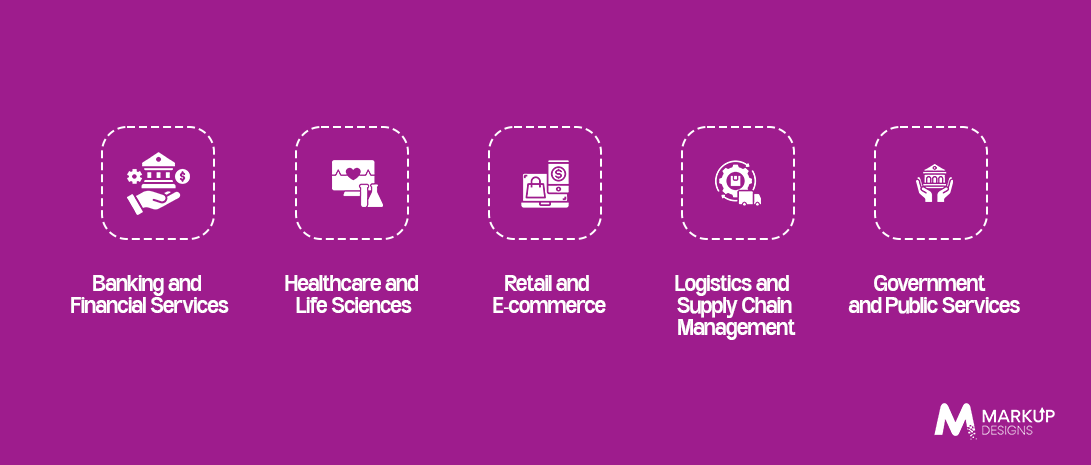
AI is revolutionizing the way that businesses function in the region of the Middle East. Whether it is through enhancing the experiences of their customers or automating their business operations, these intelligent machines are enabling companies to be more efficient, agile, and scalable. As organizations are increasingly embracing artificial intelligence to transform their operations, industry-tailored AI agents are becoming highly useful solutions.
Banking and Financial Services
Financial organizations are using AI agents to optimize their customer support operations, detect frauds, and manage risks better. An AI agent is able to check customer transaction patterns on the fly and report any irregularities to the compliance teams even before the matter blows out of proportion. Moreover, they help customers get information about their accounts and take loans.
Read More: How AI-Powered Banking Apps Are Transforming Financial Services in the Middle East
Healthcare and Life Sciences
Healthcare organizations are utilizing AI agents to perform routine jobs as well as offer enhanced health care services to patients. The agents not only handle appointments and answer questions from patients but can also scan medical records and provide diagnostic assistance to the healthcare experts.
Retail and E-commerce
Retail firms are employing AI agents to personalize their customers’ purchasing experience. AI technologies allow retail organizations to customize product recommendations and promotions based on the behavioral trends of the customers. Moreover, AI agents perform tasks such as inventory management and demand forecasting for the benefit of both the customers and the business.
Logistics and Supply Chain Management
AI agents are having a remarkable effect on the logistics industry by providing numerous opportunities in terms of cost savings, delivery, and management of complex supply chains. Intelligent agents enable companies to plan optimal routes for delivery, predict fluctuations in demand, track inventory, and detect any disruptions that may arise within the supply chain.
Government and Public Services
Various governments within the Middle East region have started implementing AI agents to facilitate public services and improve their citizens’ experiences. For example, AI agents are being used to help process paperwork, file applications for permits, retrieve information, and provide services related to public administration.
How AI Agents Improve Productivity, Efficiency, and Decision-Making
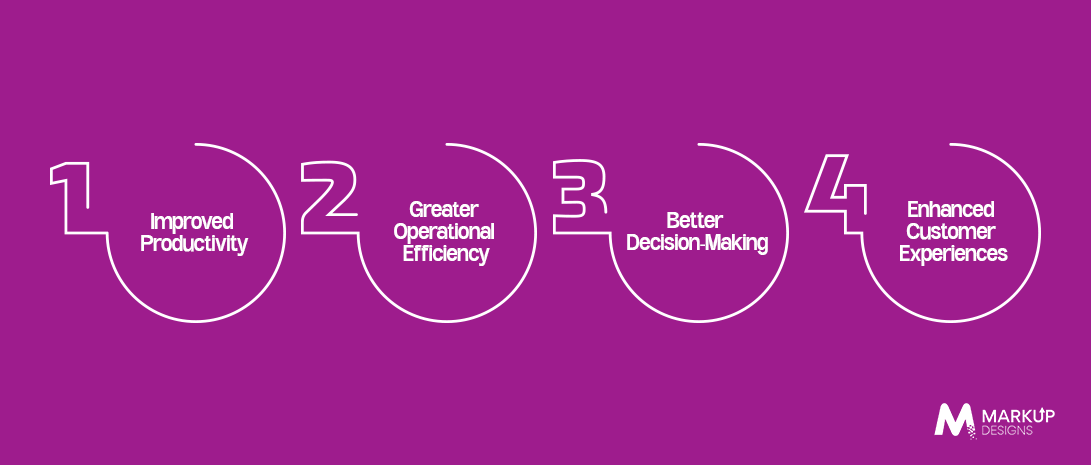
Many organizations in the Middle East are using AI agents due to their ability to provide tangible value to their companies compared to automation alone. AI agents can manage simple activities, process huge amounts of data, and help in making quick decisions.
Improved Productivity
- Automate repetitive tasks: AI agents manage data entry, report generation, customer inquiries, scheduling, and workflow approvals.
- Reduce employee workload: Teams can focus on strategic initiatives rather than spending time on manual administrative work.
- Enable 24/7 operations: AI agents work continuously without breaks, ensuring uninterrupted business processes and customer support.
Greater Operational Efficiency
- Accelerate workflows: AI agents complete tasks significantly faster than manual processes.
- Minimize human errors: Automated execution reduces costly mistakes and improves process consistency.
- Optimize resource utilization: Businesses can allocate human resources to higher-value activities while AI handles routine operations.
Better Decision-Making
- Analyze data in real time: AI agents process large datasets quickly and identify actionable insights.
- Provide predictive recommendations: Businesses can anticipate trends, risks, and opportunities before they occur.
- Support faster responses: Leaders gain access to accurate information that enables quicker and more informed decisions.
Enhanced Customer Experiences
- Instant customer assistance: AI agents respond to inquiries immediately across multiple channels.
- Personalized interactions: Recommendations and communications are based on customer behavior and preferences.
- Improved service quality: Faster resolutions lead to higher customer satisfaction and loyalty.
As a result, AI agents are becoming essential tools for organizations seeking higher productivity, lower operational costs, and stronger competitive advantages.
Cost of Developing and Implementing AI Agents in the Middle East
The cost involved in developing an AI agent in the Middle East will largely depend on a range of factors, including the solution complexity, integrations needed, availability of data, security considerations, and the degree of intelligence desired from the system.
Where an organization is looking to implement a customer support chatbot, for instance, the development cost may not be too high. An enterprise-grade AI agent, however, will require much higher financial commitments considering its capabilities.
In essence, for any business, an AI agent development cost needs to be considered more of a long-term investment than just a technology purchase cost. The proper AI agent will go a long way in helping cut operational costs and increase productivity.
Key Factors Influencing AI Agent Development Costs
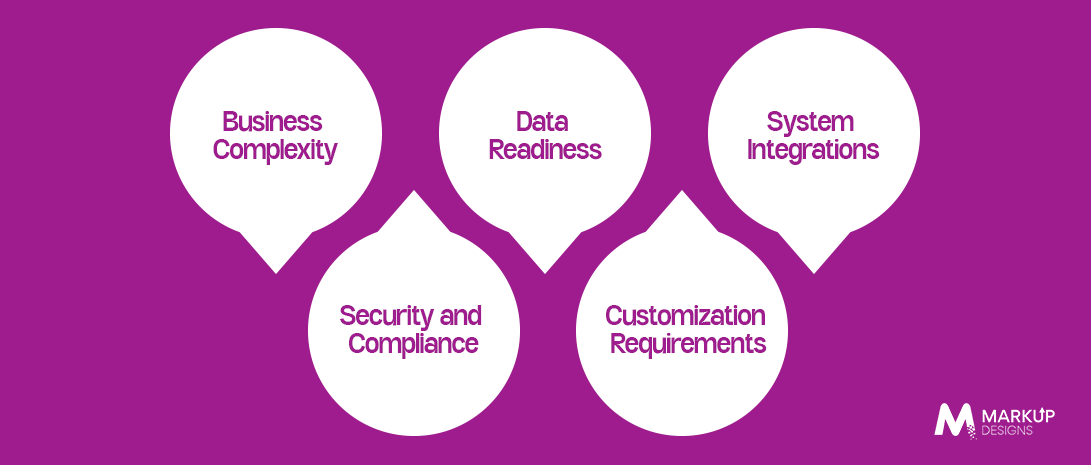
- Business Complexity: More sophisticated workflows require advanced AI models and custom development.
- Data Readiness: Data collection, cleansing, and preparation often account for a significant portion of project costs.
- System Integrations: Connecting AI agents with ERP, CRM, HRMS, cloud platforms, and third-party tools increases development efforts.
- Security and Compliance: Industries such as healthcare, banking, and government require additional compliance measures and security controls.
- Customization Requirements: Highly customized AI agents generally cost more than off-the-shelf solutions.
Estimated AI Agent Development Cost Breakdown
| Development Stage | Estimated Cost |
| Discovery & Strategy | $5,000 – $15,000 |
| Data Preparation | $8,000 – $25,000 |
| AI Model Development | $15,000 – $50,000 |
| Frontend & User Interface | $8,000 – $20,000 |
| Backend & Integrations | $10,000 – $40,000 |
| Security & Compliance | $5,000 – $20,000 |
| Testing & Deployment | $5,000 – $15,000 |
| Ongoing Maintenance | $10,000 – $30,000/year |
Typical Project Cost Ranges
- Basic AI Agent: $20,000 – $50,000
- Mid-Level Enterprise AI Agent: $50,000 – $150,000
- Advanced Multi-Agent Ecosystem: $150,000 – $300,000+
Organizations that begin their journey with pilot projects can easily confirm ROI, find out how to optimize things, and implement AI agents on a larger scale without the fear of investment risk.
Strategy for Successful AI Agent Adoption
The successful deployment of AI agents depends on more than just choosing the appropriate technology. A firm should devise a proper strategy to integrate AI agents into its operations, considering how it is going to help meet the company’s business goals and growth plans.
Step 1: Identify High-Impact Business Processes
Start with an analysis of those places in which AI agents can add maximum value. Think about tedious tasks that are labor-intensive and consume a lot of time.
Some examples are:
- Customer service operations
- Sales and lead generation
- Financial reporting
- Employee onboarding
- Supply chain management
Step 2: Assess Data Readiness
Artificial intelligence needs good data for decision making. The business must check if their current data is complete, accessible, and well structured.
Key Priorities:
- Quality analysis of data
- Data governance procedures
- Security and compliance requirements
Step 3: Define Clear Objectives and KPIs
Set objectives prior to development. This way, the organization will be able to measure its performance and calculate the ROI.
Examples of key performance indicators are:
- Cost savings
- Increased productivity
- Decreased response time
- Customer satisfaction ratings
- Automated processes
Step 4: Start with a Pilot Project
Instead of using AI systems throughout the whole enterprise, start a pilot project to test your hypotheses and gain valuable insights.
Pilot projects can do the following:
- Minimize risk
- Pinpoint technical issues
- Assess business impact
Step 5: Scale and Optimize Continuously
Once the trial is successful, deploy AI agents throughout all departments and processes. Regular monitoring, modeling enhancements, and staff feedback are important for the continued success of the process.
Companies adopting an intelligent approach toward AI agent deployment can expect success, optimize their return on investment, and lay down a solid base for future innovations.
Common Challenges Businesses Face When Deploying AI Agents
Despite their growing potential, implementing AI agents is not without challenges. From data readiness and system integration to compliance and workforce adoption, businesses must address several obstacles to ensure successful deployment and maximize the long-term value of their AI investments.
1. Poor Data Quality and Availability
AI agents depend on accurate, structured, and reliable data to perform effectively. Incomplete, outdated, or fragmented data can lead to inaccurate outputs and poor decision-making.
2. Integration with Legacy Systems
Many organizations still rely on older software and infrastructure that may not be compatible with modern AI solutions. Integrating AI agents with existing ERP, CRM, and business applications can be complex and time-consuming.
3. Data Privacy and Regulatory Compliance
Businesses must ensure that AI agents comply with industry regulations and regional data protection requirements. Managing sensitive customer and business data while maintaining compliance remains a significant challenge.
4. Employee Resistance and Adoption Barriers
Employees may be hesitant to embrace AI technologies due to concerns about job displacement or changes to existing workflows. Successful adoption requires proper training, communication, and change management strategies.
5. High Initial Investment and ROI Concerns
Developing and implementing AI agents often requires upfront investments in technology, infrastructure, and expertise. Organizations may struggle to justify costs without a clear roadmap for measuring ROI.
6. Ongoing Maintenance and Performance Optimization
AI agents require continuous monitoring, model updates, retraining, and performance improvements. Without proper maintenance, their effectiveness can decline as business needs and data patterns evolve.
Why Markup Designs Stands Out as an AI Agent Development Partner
With AI becoming more and more intelligent, the successful implementation of such agents requires much more than simply having access to the best technology out there. Businesses require a strategic partner that has knowledge in AI architectures, enterprise processes, domain-specific challenges, and the scalability needs of your future AI infrastructure. That is how Markup Designs can help businesses achieve success through AI technology.
By leveraging years of experience in software development, AI, digital transformation, and enterprise software engineering, Markup Designs assists businesses in creating AI-powered apps that align with their unique operational needs.
Why businesses choose Markup Designs:
- End-to-end AI agent development and implementation expertise
- Customized solutions aligned with unique business objectives
- Seamless integration with existing enterprise systems and workflows
- Strong focus on security, compliance, and data governance
- Scalable architectures designed for future business growth
- Continuous support, optimization, and performance monitoring
Whether your organization is looking at its first-ever AI project, or you have been implementing AI across your enterprise for years, Markup Designs is ready to bring that same combination of technical know-how, strategy, and innovation to move your organization forward. Working with a company that develops AI agents means lower risk and better ROI.
Turn Your AI Vision Into a Competitive Advantage
Whether you’re exploring your first AI initiative or scaling enterprise-wide automation, Markup Designs can help you develop secure, scalable, and high-performing AI agents that deliver measurable ROI and long-term business value.

Conclusion
The use of AI agents is changing the way companies throughout the Middle East do things through automation, better experiences for customers, and the ability to make decisions based on data. With the increasing rate of digital transformation among organizations, AI agents have become one of the most critical factors driving productivity and efficiency.
It is important to note that there are some elements needed in order to succeed with the use of AI agents. Companies that make the effort to adopt AI technology can save money and optimize their processes. The role of AI agents in the workplace is bound to increase as technology evolves.
FAQs
1. What are AI agents and how are they different from chatbots?
AI agents are intelligent systems that can analyze data, make decisions, and perform tasks autonomously. Unlike traditional chatbots, AI agents can execute workflows, interact with multiple systems, and adapt to changing situations.
2. How much does AI agent development cost in the Middle East?
The cost typically ranges from $20,000 to over $300,000 depending on complexity, integrations, customization requirements, security needs, and business objectives.
3. Which industries benefit the most from AI agents?
Industries such as banking, healthcare, retail, logistics, manufacturing, and government services are among the biggest adopters of AI agents due to their potential for automation and efficiency improvements.
4. How long does it take to develop an AI agent?
Development timelines vary based on project scope. Basic AI agents may take 2–4 months, while advanced enterprise-grade solutions can require 6–12 months or more.
5. How can businesses get started with AI agents?
Businesses should begin by identifying high-impact use cases, assessing data readiness, defining clear objectives, launching pilot projects, and partnering with an experienced AI development company.
Author's Perspective
AI agents have rapidly emerged as a crucial aspect of digital transformation in the Middle East region. Although the automation capabilities of AI agents are highly useful, their true potential is realized when they help organizations in decision-making and improve their overall efficiency for generating new opportunities. In the light of continuous investments made by organizations of the Middle East in AI-based innovations, the adoption of AI agents in an organized way is necessary.
Discuss Your Project NowJupinder Singh Arora
Founder and CEO
Related Posts
Enterprise AI Agents: Practical Use Cases Driving Business...
LLM-as-a-Judge Explained: Improving Enterprise AI Governance and Evaluation
Enterprise AI Outsourcing: How to Choose the Right...
Insights Are Valuable & Execution is Priceless
You’ve read about the digital future. Now, let’s build the infrastructure to take you there. Move your strategy from the page to the product.
Design Your Solution Now
Contact Us
Schedule The Appointment At Your Convenience Date And Time.
30 Min
Web Conference
Time Zone
Indian standard time (08:30pm)

Thanks For Getting In Touch!
You’ve Taken The First Step Toward Transforming Your Digital Presence. Our Experts Will Reach Out Shortly To Take It Forward.
Launch Your Dream Project
Provide a brief overview of your project, and our specialists will evaluate your requirements. We will connect with you to explore how the right digital solutions can help you launch faster.