
In Brief
- Enhanced industrial processes: With the help of AI, companies in Australia are improving the efficiency of their operations while automating certain processes, conducting data analysis, and streamlining their production processes.
- Predictive maintenance: Machine learning enables companies to predict machine failures before they cause malfunctions and breakdowns, reducing equipment downtime and maintenance costs.
- Industry-specific usage: Companies in the mining, manufacturing, energy and logistics sectors have begun implementing AI technology in order to improve their efficiency.
- Safer processes: AI applications assist in the detection of hazards, ensuring responsible use of energy, and effective resource management.
Understanding AI and its implications for industrial automation in Australia is becoming increasingly important for companies that want to enhance their production processes. Industries from mining to manufacturing to transportation are adopting AI-powered technologies for the automation of complex processes, improving their efficiency, and for the solution of wider product issues.
As Australia continues to focus on productivity, workforce efficiency, and industrial modernisation, AI is becoming an important part of its industrial growth strategy. However, successful adoption requires more than deploying new technology. Businesses must also address legacy system integration, data security, implementation costs, and workforce readiness. Understanding how AI is changing industrial automation can help organisations identify practical applications, evaluate potential benefits, and develop an implementation strategy aligned with their operational goals.
What Is the Role of AI in Industrial Automation?
AI enables industrial systems to analyse operational data, identify patterns, predict equipment failures, and optimise production processes. Unlike traditional automation, which follows predefined instructions, AI-powered systems can adapt to changing conditions and support faster decision-making.
In Australia, industries such as mining, manufacturing, and energy use AI to improve equipment performance, reduce manual intervention, and strengthen operational safety. Integrating AI with sensors, robotics, and industrial control systems helps businesses build more efficient and responsive operations.
What Are the Key AI Technologies Transforming Industrial Automation in Australia?
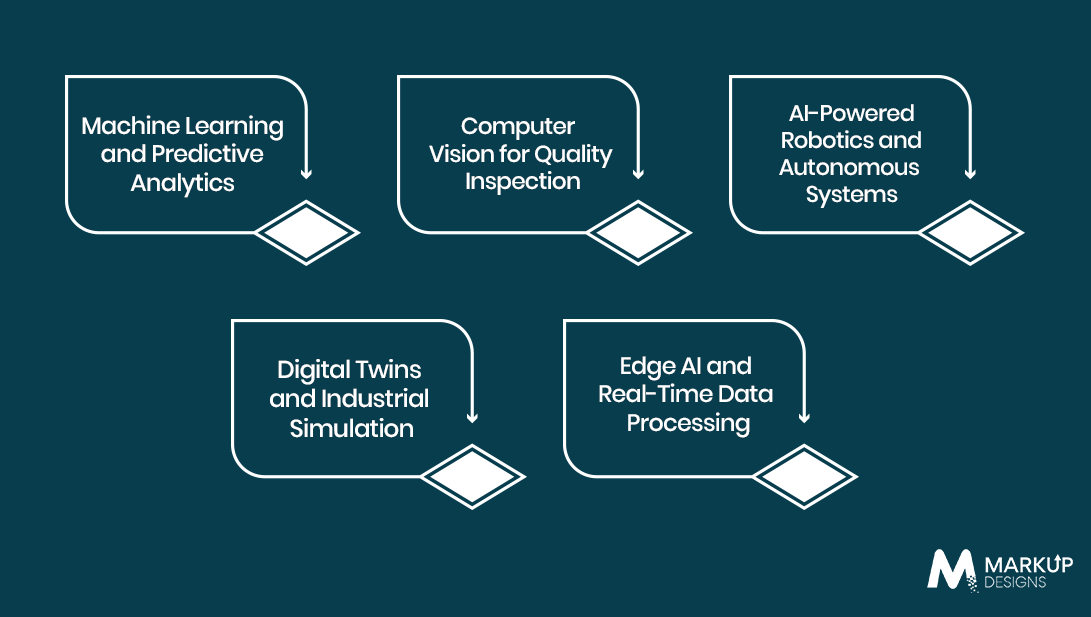
AI technologies are making industrial automation more adaptive, accurate, and efficient. From predicting equipment failures to enabling autonomous operations, these technologies help Australian industries improve performance, reduce manual intervention, and make better use of operational data.
Machine Learning and Predictive Analytics
With the help of historical as well as real-time data about equipment, machine learning analyzes the data to determine possible failures, find areas of inefficiency, and improve production planning. Australian manufacturers and mining companies can use these functions to make necessary maintenance schedules, minimize downtime, and improve resource allocation.
Computer Vision for Quality Inspection
Machine vision helps automate inspection of products, parts, and industrial sites. It is useful for manufacturers to detect possible defects, identify inconsistencies, and maintain quality while reducing dependence on manual repetitive inspections.
AI-Powered Robotics and Autonomous Systems
AI robots are capable of performing repetitive tasks and manipulating materials, as well as reacting to changing conditions in the manufacturing process. Australian companies employ autonomous machinery in mining, manufacturing, and warehousing management in order to enhance productivity and minimize the risk of workers performing hazardous jobs.
Digital Twins and Industrial Simulation
A digital twin is a virtual model of a physical machine or an industrial process. When combined with AI technologies, it allows companies to carry out simulations of different operational conditions and detect bottlenecks in the production process.
Edge AI and Real-Time Data Processing
Edge AI processes data close to industrial equipment, enabling faster responses without relying entirely on cloud connectivity. This is particularly useful for remote Australian facilities that require real-time monitoring and reliable operation despite limited network access.
How Is AI Revolutionising Industrial Automation Across Australian Industries?
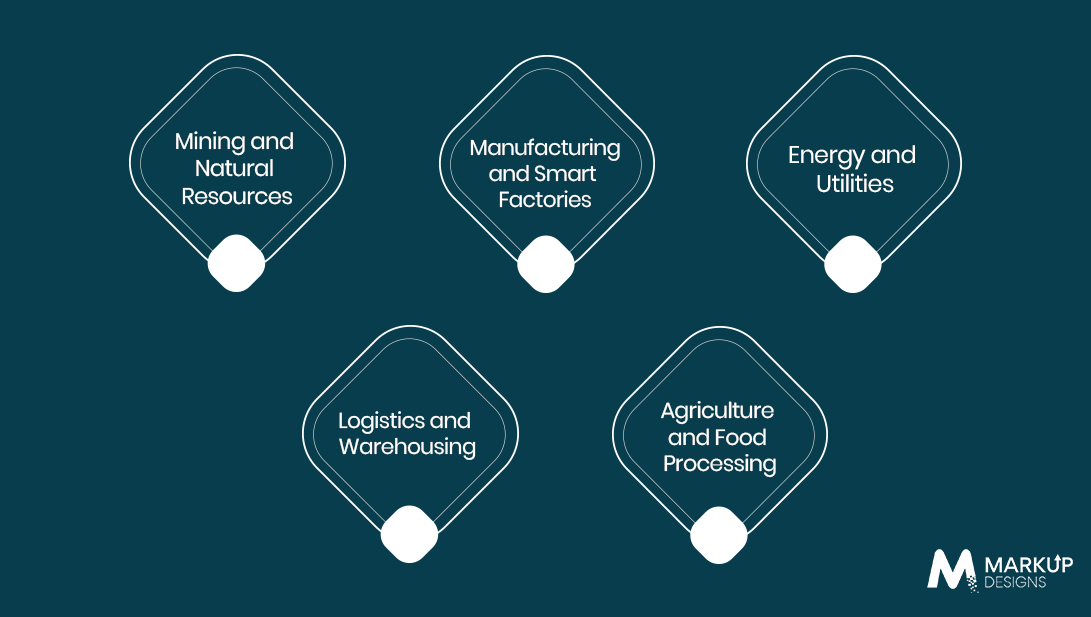
AI usage is different from one industry to another depending on operational needs, infrastructure, and production issues. In Australia, companies leverage AI capabilities to boost productivity, automate complex tasks, and optimize industrial asset management.
Mining and Natural Resources
Mining firms use AI to monitor heavy equipment, predict disturbances in equipment operation, and optimize cargo transportation routes. Autonomous machinery and advanced monitoring technology allow for better operational performance and safer conditions in remote working locations.
Manufacturing and Smart Factories
Manufacturing companies leverage AI to automate quality inspections, scheduling, and identification of inefficiencies in processes. The application of AI technologies in combination with telecommunications devices enables production defect minimization, waste reduction, and output consistency.
Energy and Utilities
AI facilitates the monitoring of equipment and forecasting demand in the energy sector. The potential of AI technologies implies their use in forecasting the volumes of renewable energy produced and managing assets.
Logistics and Warehousing
AI aids in managing stock forecasting, scheduling of warehouse operations, and material handling.
Agriculture and Food Processing
AI-driven equipment and machine vision technologies help in controlling agricultural production, sorting products, and conducting quality control procedures.
These applications help Australian agricultural businesses improve resource efficiency, reduce food waste, and maintain product consistency.
What Are the Key Benefits of AI in Industrial Automation?
Artificial Intelligence is capable of diagnosing problems in production, carrying out routine processes automatically, as well as managing machine operations in various production processes. As a result, companies are capable of increasing production volumes while achieving better resource consumption.
Predictive Maintenance and Reduced Downtime
The technology of Artificial Intelligence is capable of analyzing the data received from the equipment and predicting malfunctions. It helps the company to conduct maintenance in due time before the equipment breaks down.
Improved Product Quality and Accuracy
AI systems are able to detect defects in manufacturing and discrepancies straight away, which allows improving the quality assurance process and minimizing the need for rework.
Enhanced Workplace Safety
AI-monitoring systems are capable of detecting dangerous conditions, wrongly accessing dangerous areas, and predicting potential risks caused by equipment. Although such alerts help to implement safety measures, existing safety rules and human control make them less relevant.
Lower Operational Costs and Energy Consumption
AI aids in optimizing the usage of machines, minimizing waste of materials, and identifying energy inefficiency. Actual savings depend on implementation costs, system performance, and the specific industrial application.
Data-Driven Decision-Making
AI converts industrial data into actionable insights for production planning, maintenance scheduling, and resource allocation. This enables managers to make faster, better-informed operational decisions.
What Are the Challenges of Implementing AI in Industrial Automation?
While the application of AI technology in manufacturing has its merits, it presents several technical, financial, and operational challenges to many businesses. Early recognition of these obstacles can improve the implementation strategy.
Integrating AI With Legacy Industrial Systems
Many industries in Australia still use outdated management systems that do not support modern AI solutions and services. The adaptation of such equipment will require additional sensors, middleware, and substantial upgrading of the current technological infrastructure.
Managing Data Security and Cybersecurity Risks
The integration of AI tech into the industrial side might create various threats and vulnerabilities for sensitive company information. Such risks make it vital for companies to implement effective access control systems and network segmentation.
Addressing Skills Gaps and Workforce Training
With the implementation of AI technologies, workers need to have specific skills in data science, machine learning, engineering, and system integration. Companies may find it quite helpful to train their staff or invite professionals who have experience in dealing with such technologies.
Handling Implementation Costs and ROI Expectations
The application of AI technologies involves certain software solutions and important technological processes, including hardware improvement, data processing and integration, and personnel training.
Ensuring Regulatory Compliance and Responsible AI Use
Industrial AI systems must operate within applicable safety, privacy, and industry-specific requirements. Businesses should establish clear accountability, document automated decisions, and maintain appropriate human oversight, particularly when AI influences safety-critical operations.
What Are the Best Practices for Adopting AI in Industrial Automation?
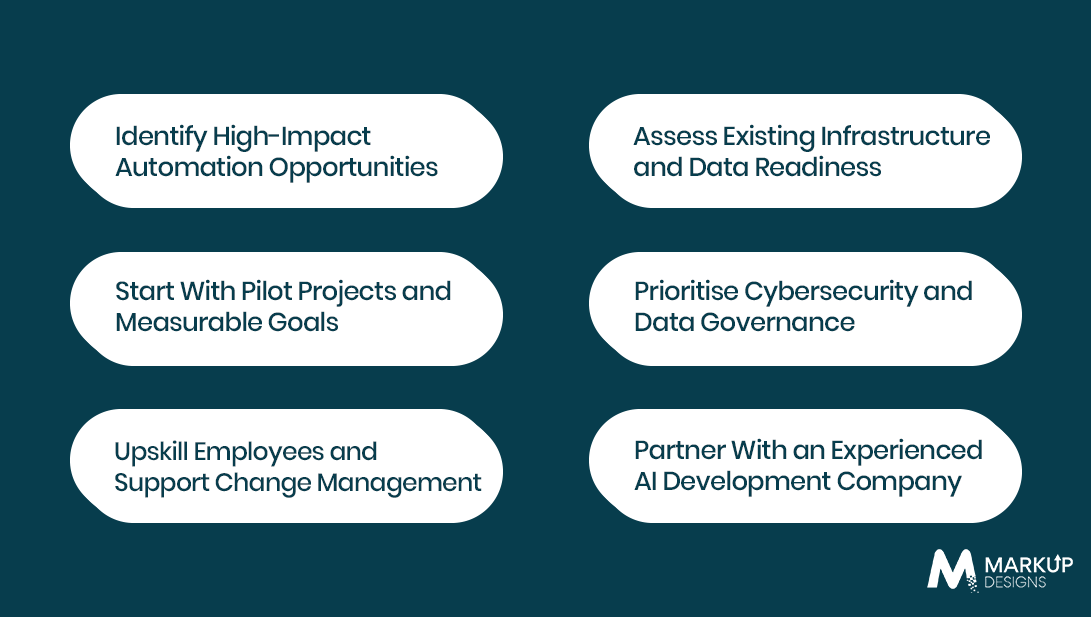
A structured implementation strategy helps businesses reduce deployment risks and achieve measurable operational improvements. The following practices provide a practical starting point.
Identify High-Impact Automation Opportunities
Focus on processes where AI can address clear problems, such as frequent equipment failures, production bottlenecks, or recurring quality defects. Prioritising specific use cases makes it easier to measure results and justify investment.
Assess Existing Infrastructure and Data Readiness
Review current machinery, control systems, data availability, and integration requirements before choosing AI technologies. Accessible and reliable data and compatible technology are vital for successful implementation.
Start With Pilot Projects and Measurable Goals
Use AI in a small model of production or specific machines before using it in a broader sense. Track downtime, defect rates, energy use, and maintenance expenses to see if the system is productive.
Prioritise Cybersecurity and Data Governance
Identify how your company will safeguard the system, monitor data access, and apply the currently existing mandatory obligations from the beginning of the process. Continuous monitoring and constant checking for data ownership help protect the industrial system.
Upskill Employees and Support Change Management
Train the personnel to work with AI-enabled machines and understand system recommendations. Early involvement of operations teams helps to manage opposition and increase success chances.
Partner With an Experienced AI Development Company
A capable AI provider can assist a company in understanding its needs, choosing the right technology, integrating AI into current systems, and creating efficient solutions. Select possible partners based on their industrial background, safety practices, and readiness to help a company even after deployment.
What Is the Cost of Implementing AI in Industrial Automation in Australia?
The cost of AI implementation in Australia is determined by the complexity of the industrial environment, type of automation needed, and the status of already installed technology. A basic predictive maintenance solution usually requires investment in a different range compared to a system of the whole facility using robotics, machine vision, and autonomous equipment.
Companies need to consider the total cost of ownership that includes development, hardware, integration, training, cloud/edge infrastructure, and ongoing support.
Factors Influencing AI Implementation Costs
The complexity of the project: Individual AI solutions and complicated industrial processes require more development.
Upgrading the infrastructure: Old equipment needs to be equipped with sensors, improved connectivity, or changed control systems.
Data readiness: Data needs to be gathered, cleaned, and organized, which influences the implementation costs.
Integration requirements: The process of AI integration with existing manufacturing execution systems, ERP systems, and industrial control systems affects the project scope.
Maintenance and support: Keeping track of AI model performance and introducing system upgrades contribute to long-term expenses.
AI Automation Solutions and Their Cost Implications
Different applications of AI call for specific investments. For example, predictive maintenance solutions may require sensor data and analytics, while computer vision solutions will need suitable cameras, hardware for image processing, and trained models. AI-powered robots and autonomous systems need further equipment, safety measures, and infrastructure modernization.
Hence, companies must seek project-specific estimates instead of relying on industry-wide prices. Costs vary widely, depending on whether the project is based on established platforms, custom-made solutions, or a combination of both.
Strategies to Optimise Implementation Costs
Businesses can keep operational costs low by making sure they choose use cases with high value. Moreover, businesses can reuse the existing infrastructure and test pilot projects before moving forward with the actual project.
The phased approach allows businesses to figure out how to spend money wisely as they spread their investments along the way and evaluate efficiency at every point of the process. Companies should also compare their operational investments versus received benefits to find out if their investments are justified.
What Is the Future of AI in Industrial Automation in Australia?
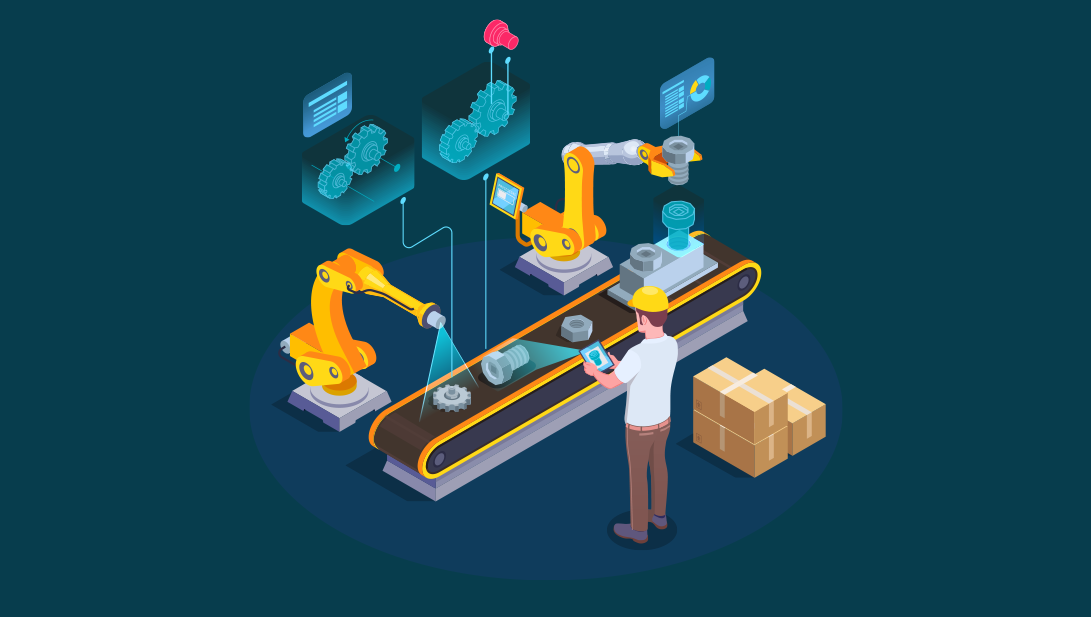
As per the forecasts, AI is going to play an important role in the modernization of industry in Australia and will most likely be used for autonomous devices, smart robots, digital twins, and AI-based decision-making. Other developments in edge computing and industrial connectivity will facilitate such operations.
When faced with interruptions, organizations will probably try to combine the current automation systems with AI rather than switching completely to it. Organizations with good data, cybersecurity, workforce skills, and well-defined goals will reap the benefits of the transformation.
How Can Markup Designs Help You Implement AI in Industrial Automation?
Markup Designs works to help companies create and implement AI-related solutions according to the needs and requirements of each business. Enjoying a wealth of experience in identifying opportunities to introduce automation, creating personalized AI solutions, and successfully integrating these solutions into existing business processes, Stanislav and his team make sure they solve the specified business problems.
Whether your organisation wants to improve predictive maintenance, automate data-intensive workflows, or develop intelligent monitoring applications, Markup Designs can help define the technical approach and implementation roadmap. Contact us to discuss your AI development requirements and explore opportunities to improve industrial operations.
Ready to Transform Your Industrial Operations With AI?
Build smarter, more efficient industrial processes with AI solutions tailored to your business needs. Markup Designs can help you explore automation opportunities and develop scalable AI applications.

Conclusion
AI is transforming industrial automation in Australia by improving productivity, enabling predictive maintenance, strengthening quality control, and supporting safer operations. From mining and manufacturing to energy and agriculture, businesses can use AI to address operational challenges and make better use of industrial data.
However, successful implementation depends on choosing the right use cases, integrating existing systems, protecting operational data, and measuring business outcomes. A phased approach allows organisations to validate results before expanding their investment. With the right strategy and technical expertise, Australian businesses can use AI to build more efficient, resilient, and competitive industrial operations.
FAQs
1. In what manner is AI incorporated into industrial automation in Australia?
AI helps accomplish various functions such as predictive maintenance, automated quality control, robotic operations, equipment monitoring, and production improvement in Australia. Companies in Australia use AI for the purpose of cutting downtime, increasing productivity, and providing safer industrial processes.
2. What industries in Australia get an advantage from AI automation?
The mining, manufacturing, energy, transport, and agriculture industries are the main beneficiaries. These sectors can deploy AI in order to enhance equipment performance, automate mundane work, increase quality of production, and manage resources efficiently.
3. What is the total cost of employing AI for industrial automation?
The accompanying cost of implementation depends on the task, technologies used, preparation, and integration state of the data. Different fields of implementation (for example, predictive maintenance and robotic technologies) may require different costs. A business ought to seek a specific estimate including the cost of any development, installation, training, and maintenance.
4. Can AI work together with the existing industrial systems?
Of course, AI can be connected with already existing systems by means of APIs, industrial gateways, sensors, and data platforms. However, the older machines may also require certain extra devices.
5. In what way is AI enhancing predictive maintenance for industries?
One of the main tasks of AI is examining machinery databases, comprising temperature, vibration, and operational data, to uncover the patterns leading to equipment breakdowns. This way, the maintenance team gets a chance to carry out checks in advance before any malfunction takes place.
6. What are the obstacles related to the use of AI in the Australian industry?
The main challenges include legacy systems integration, cybersecurity threats, lack of skilled professionals, installation costs, quality of data, and compliance with regulations. To overcome the challenges, businesses can use gradual implementation, train employees, contribute the necessary amount of money for installations, and establish precise evaluation criteria.
Author's Perspective
It is important to apply AI in the Australian industry to solve measurable issues instead of using it just for the sake of technology. Predictive maintenance, smart inspections, and process improvements are the first steps for companies wishing to be efficient from the start.
Discuss Your Project NowJupinder Singh Arora
Founder and CEO
Related Posts

How UK Enterprises Can Build an Effective AI...

AI Voice Agent for Real Estate: Features, Benefits,...

30+ Innovative AI Agent Startup Ideas for Entrepreneurs...
Insights Are Valuable & Execution is Priceless
You’ve read about the digital future. Now, let’s build the infrastructure to take you there. Move your strategy from the page to the product.
Design Your Solution Now
Contact Us
Schedule The Appointment At Your Convenience Date And Time.
30 Min
Web Conference
Time Zone
Indian standard time (08:30pm)

Thanks For Getting In Touch!
You’ve Taken The First Step Toward Transforming Your Digital Presence. Our Experts Will Reach Out Shortly To Take It Forward.
Launch Your Dream Project
Provide a brief overview of your project, and our specialists will evaluate your requirements. We will connect with you to explore how the right digital solutions can help you launch faster.