
In Brief
- As of 2026, hiring software developers is now more than just a hiring process; it’s an integral part of your overall business strategy that significantly affects not only how fast your business can grow but also what type of business you can grow into through the use of technological advancement and creativity.
- Businesses are moving toward hybrid talent models that combine in-house (directly employed) roles, dedicated software developers, internal augmented staff (outside contractors), and outsourced partners.
- To be useful as a software developer, technical skills alone are no longer enough.
- Software developers also need to apply systems thinking, experience in the use of cloud-native technology and cloud-native architecture, have an understanding of cybersecurity, and deliver solutions that solve problems.
If hiring decisions are poor, i.e., selecting a software developer who has not shown experience using any or all of these methodologies, your business can lose money through increased budgets spent on changing cases after submitting work to your customers, increased exposure to attack as a result of poor design or insufficiently secured systems, and long-term financial impacts by preventing your company from growing.
It is therefore critical that you have a defined hiring policy, have a governance framework in place for controlling who can make hiring decisions, and implement an effective onboarding strategy for new software developers who join your company before they start contributing to your product offering.
By aligning your company’s talent acquisition strategy with your company’s product and technology vision for the next ten years, you will gain significant competitive advantages over the long term.
Modern development teams function in multiple locations, time zones, and utilise diverse technical environments. Key consequences are that organisations need to change how they hire people now and adopt approaches to balance the ability to acquire talent, be efficient in operations, and manage risk. This guide will discuss important factors to consider when hiring developers in 2026, the types of hiring models available, risks associated with hiring, and how to scale up to fill positions.
Why Hiring Software Developers Is Now More Important Than Ever
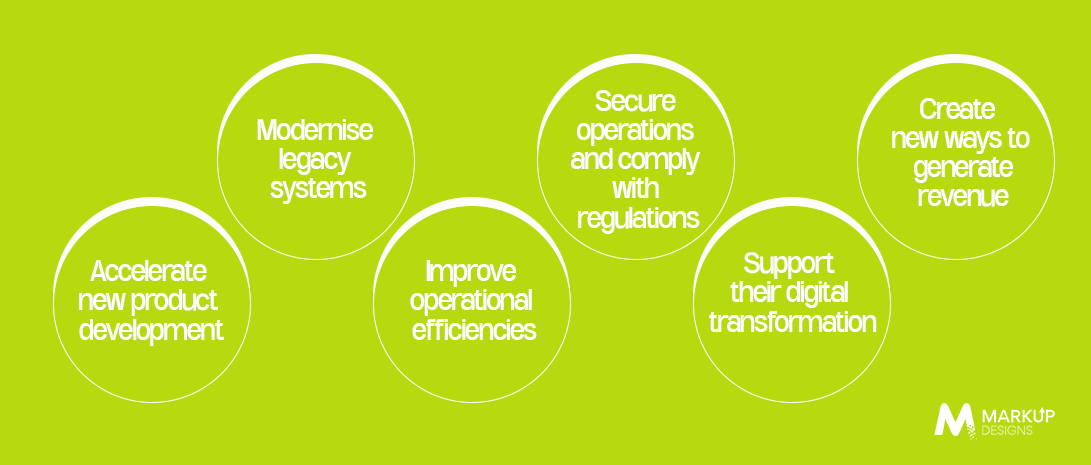
Software is now foundational to the operations of every modern-day business. All companies use technology to remain competitive, from customer experience platforms and apps to enterprise systems and AI-powered projects. To help them succeed, businesses must hire qualified developers to:
- Accelerate new product development
- Modernise legacy systems
- Improve operational efficiencies
- Secure operations and comply with regulations
- Support their digital transformation
- Create new ways to generate revenue
Hiring qualified technical people has become increasingly difficult due to the unavailability of talent, changing technology stacks, and higher expectations from the marketplace for quality software.
Understanding Modern Software Developer Hiring Models
Businesses today can hire software developers through several engagement models, each offering different levels of control, flexibility, and investment. In-house teams remain ideal for organizations managing proprietary technologies and business-critical systems, while staff augmentation helps quickly bridge skill gaps or accelerate development. Dedicated development teams provide long-term support and product ownership, making them a popular choice for ongoing digital initiatives. Meanwhile, full software outsourcing offers access to global talent and faster project execution for companies with limited internal resources.
Defining Your Software Developer Hiring Strategy
Before hiring developers, organizations should focus on defining business objectives rather than technical job titles. Understanding the problem being solved, the systems being developed, scalability expectations, and security requirements helps create a clearer hiring roadmap. This approach ensures businesses recruit talent that aligns with both technical needs and long-term organizational goals.
Essential Skills Software Developers Need in 2026
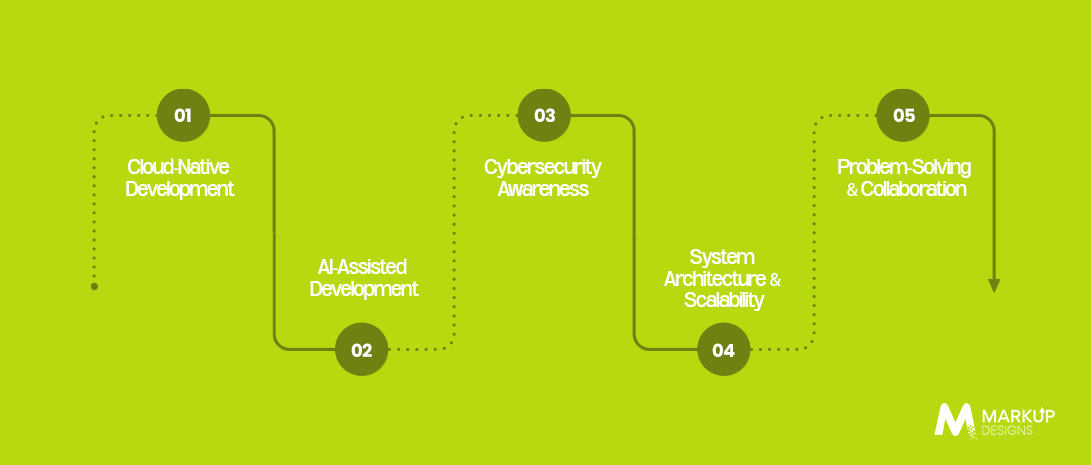
As technology continues to evolve, businesses are looking for developers who can contribute beyond coding and support the development of scalable, secure, and future-ready software solutions. In 2026, organizations increasingly value professionals who combine technical expertise with problem-solving and architectural thinking.
Some of the most in-demand skills include:
Cloud-Native Development
Experience with containers, Kubernetes, microservices, and Infrastructure as Code (IaC) to build scalable applications.
AI-Assisted Development
The ability to work with AI-powered development tools while validating, optimizing, and maintaining generated code.
Cybersecurity Awareness
Knowledge of secure coding practices, authentication mechanisms, data encryption, and regulatory compliance requirements.
System Architecture & Scalability
Understanding how to design, optimize, and maintain applications that can support growing user bases and business demands.
Problem-Solving & Collaboration
Strong analytical thinking, communication, and teamwork skills to effectively work across departments and distributed teams.
While programming expertise remains essential, businesses increasingly prioritize developers who can contribute to architecture, security, performance, and long-term product success.
Common Hiring Risks Businesses Should Avoid
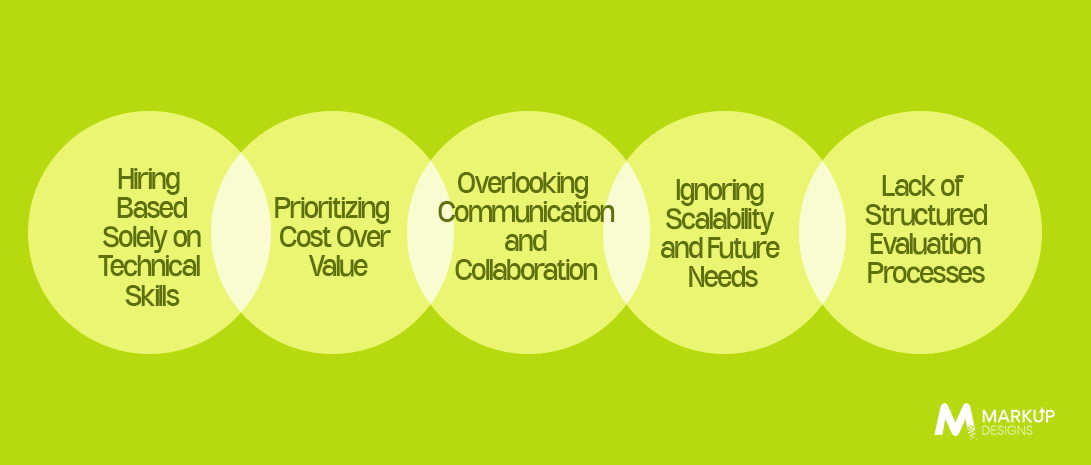
Hiring the right software developers requires more than evaluating technical skills. Many organizations make costly hiring mistakes by focusing on immediate needs rather than long-term business outcomes. Understanding these common risks can help businesses build stronger development teams and avoid unnecessary project setbacks.
Hiring Based Solely on Technical Skills
Strong coding abilities are important, but they are only one part of a successful developer profile. Businesses should also assess problem-solving capabilities, system design knowledge, and the ability to adapt to changing project requirements.
Prioritizing Cost Over Value
Choosing the lowest-cost hiring option often leads to hidden expenses in the form of poor code quality, technical debt, project delays, and higher maintenance requirements. Long-term value should always outweigh short-term savings.
Overlooking Communication and Collaboration
Developers rarely work in isolation. Effective communication, teamwork, and stakeholder collaboration are essential for delivering successful software projects and ensuring alignment with business goals.
Ignoring Scalability and Future Needs
Hiring solely for current project requirements can create challenges as business needs evolve. Organizations should look for developers who can grow with the company and contribute to future technology initiatives.
Lack of Structured Evaluation Processes
Without clear assessment criteria, hiring decisions often become subjective and inconsistent. A structured recruitment framework helps businesses evaluate candidates fairly and identify the best fit for both technical and organizational requirements.
Building a Scalable Hiring and Onboarding Process

Recruitment is only the first step in building a high-performing development team. A structured hiring and onboarding strategy ensures new developers can integrate quickly, understand organizational expectations, and contribute effectively from the beginning.
Assessing Real-World Problem-Solving Skills
Technical interviews should go beyond theoretical knowledge. Evaluating how candidates approach real-world challenges provides a more accurate understanding of their capabilities and practical experience.
Evaluating Communication and Team Fit
Successful software development depends on collaboration between developers, managers, designers, and stakeholders. Assessing communication skills and cultural alignment helps create stronger and more productive teams.
Establishing Clear Expectations
Defining responsibilities, performance goals, and project expectations early creates clarity for new hires. This helps reduce confusion and accelerates productivity during the initial stages of employment.
Implementing Structured Onboarding
A well-designed onboarding program introduces developers to company systems, development processes, coding standards, and organizational objectives. This allows new team members to become productive more quickly.
Supporting Long-Term Success
Ongoing mentorship, regular feedback, and professional development opportunities help developers stay engaged and continue growing within the organization. Businesses that invest in employee success often experience stronger retention and better project outcomes.
Selecting a Software Development Model for Your Firm: Build, Buy, or Partner
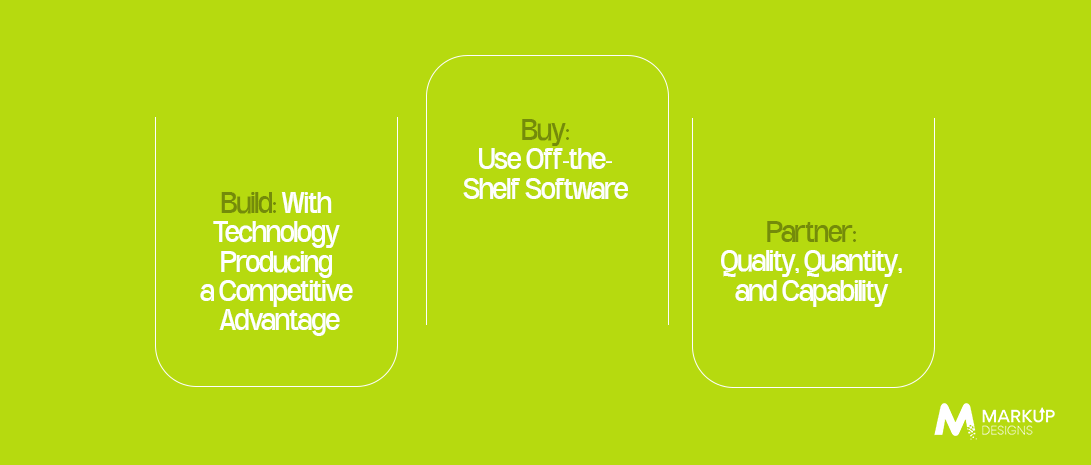
Making decisions about how your firm will grow in its technological capabilities will depend largely on which of the three following options it chooses to follow as a way of developing software. The options available include internally built software, use of existing (or purchased) software, or a combination of the two, together with an external software provider. Selecting the option that allows you to grow rapidly and deliver value quickly can have an enormous impact on how software is developed, the efficiency of operations using that software, the ability to create and deliver innovation, and what it will ultimately cost you.
No one option, at a very high level, would likely ever represent the best option. The selection of which option is “best” will depend on multiple elements including, but not limited to; what are the business goals, what resources are available (capital and people), how quickly does the firm need to be in the market with the software, is there any level of technical complexity associated with software being developed and, what level of strategic value does custom software development program have to the firm? Some companies use a combination of all three available options to create a scalable and balanced technology strategy.
Build: With Technology Producing a Competitive Advantage
The advantage to creating software in-house for an organization gives complete control over the product, process, and intellectual property associated with building that software. This is particularly important for those organizations whose software will drive their competitive differentiation, or they view proprietary development of their software as a core asset of their organization. Organizations developing uniquely proprietary platforms, customer products, and highly customized systems typically prefer to develop using the build model due to the maximum level of control offered by the build model.
With time, expansion of product offerings and improvement in existing products can occur through the use of internal teams who possess a significant amount of experience, expertise, and knowledge. Through this experience and expertise, organizations can integrate product evolution with their strategic objectives.
Creating an internal development team can be a costly investment, including recruitment, onboarding, infrastructure development, business management, and employee retention costs. Although there are long-term benefits to this investment, organizations will have to account for high upfront costs and longer timeframes before generating a return on investment.
Buy: Use Off-the-Shelf Software
Not all business problems require a custom-built software solution; therefore, using an off-the-shelf solution can often be faster and less expensive than building a custom solution.
Selling software off-the-shelf essentially provides businesses with immediate capabilities without having to go through a lengthy and costly build process. For instance, many customer relationship management (CRM), accounting, project management (PM), human resources (HR), and collaboration solutions are already available as established platforms of available vendors.
Buying software is an optimal solution for those organizations that want quick deployment, predictable costs, and less complicated operations. However, organizations must also weigh any limitations, including the customizability of the software, how the software integrates with the existing IT environment, how easily the software can be integrated with other systems, and scalability for future needs.
Although purchasing software will accelerate implementation, businesses may also need to determine if the purchased software will be able to accommodate unique business processes or business needs as efficiently as creating a custom solution.
Partner: Quality, Quantity, and Capability
In response to the increasing complexity of technology ecosystems, many organizations have begun to seek strategic development partners to provide value-added capabilities to help accelerate their own digital initiatives and improve overall performance.
Working with an experienced software development company enables organizations to have access to the specialized knowledge of a multi-disciplined team of professionals, as well as the benefits of using a tested development methodology and scalable engineering resources without having to incur the time, cost, and risk of creating a large-scale internal team. As such, partnering with a strategic development organization will allow organizations to act quickly on market opportunities and grow without experiencing staffing delays and to take advantage of niche technical skills that may be absent from their internal staff.
In addition, companies undergoing digital transformation or the modernization of legacy systems, launching new products, or expanding into emerging technologies (e.g., AI, cloud computing, IoT) will find that a strategic partnership will reduce the risk associated with the project while facilitating the delivery timeframe.
Strategic development partnerships focus not only on the traditional outsourcing approaches of executing against contracts, but on joint collaboration, creativity, and generating long-lasting business value.
Finding the Right Balance
The reality is that there are very few organizations that are purely built, bought, or partnered. Most will take a hybrid approach to building capabilities, based on business objectives and requirements of each initiative.
Thus, before pursuing a given initiative, organizations should assess it in terms of how strategically important it is; its complexity, and the long-term value to their business.
When organizations establish their software development model as it relates to overall business strategy, they tend to find themselves positioned better to scale efficiently, innovate consistently and develop sustainable competitive advantages.
How Markup Designs Can Help
A successful digital product requires more than just hiring software developers. It is imperative for businesses to have the correct development strategy, technical proficiency, and development methodology in order to successfully scale their business.
At Markup Designs, we assist organizations in developing their engineering capabilities, providing services such as dedicated development teams/staff augmentation, full-cycle software development, cloud-native solutions, AI-powered applications, UI/UX design, and ongoing support. We will work with clients to create a framework for rapidly accelerating delivery while maintaining quality, security, and scalability, whether you require one developer or an entire development team.
Develop the Future of High-Performing Engineering Teams
Be confident in hiring qualified software development teams, contractors, or partners in a full spectrum of technologies.

Conclusion
When you hire software developers in 2026, there has to be a strategy involved that extends well beyond just technical ability. Companies need to assess candidates against a broad array of metrics, such as their ability to scale their work based on company size, risk management, systems architecture, and long-term business goals. Companies that align their hiring decisions with their technology roadmap, invest in structured onboarding, and offer flexibility will ultimately be best equipped to innovate, scale efficiently, and create long-term value.
As the digital economy continues to grow, companies no longer need to hire only software developers; they must also build engineering ecosystems that provide long-term sustainable development.
FAQs
1. What is the best way to hire a software developer in the year 2026?
The most effective approach is to combine a clear business purpose, competency-based evaluations, practical assessments, and structured onboarding processes.
2. Are companies better off hiring in-house developers or outsourcing development?
The answer depends on the complexity of the project, the importance of intellectual property, budget, and the long-term growth strategy of the organization; in many cases, the best option is to utilize a hybrid approach.
3. What skills should a software developer have in the year 2026?
Key skills include system design, cloud-native development, cybersecurity, and AI-based development, as well as problem-solving skills and the ability to collaborate with others.
4. How much does it cost to hire a software developer in 2026?
Costs will differ based on location, level of experience, engagement model, existence of an existing team, and project specifications. Therefore, organizations should evaluate the total value delivered as opposed to the hourly rate alone.
5. Why is effective onboarding critical to a software developer’s success?
Effective onboarding helps software developers become productive faster, retain them longer, become more collaborative with other employees, and provide meaningful contributions to the organization in a shorter period of time.
6. What is a dedicated developer team?
A dedicated developer team is a long-term team of professionals who work solely for one client on their product(s) or projects while providing an extension of the internal developer team of the client.
Author's Perspective
One of the most common errors companies encounter while trying to fill their software development jobs (i.e., programmers) is assuming the process is unique from the overall engineering strategy for the business. The organizations that grow at the fastest rate are not necessarily the ones with the most staff – rather, it is those organizations that have created teams of people that have clear ownership over their deliverables and ensure talent decisions are being made in accordance with the overall business goals.
As the use of artificial intelligence continues to change how we do software development and the trend of working remotely becomes the norm, more and more companies will be using flexible talent systems to fill open positions instead of traditional hiring practices. The companies that will thrive in this new environment will have a strong internal leadership team plus an ability to scale from outside resources while still maintaining risk management processes that allow them to continue innovating at an accelerated pace.
Discuss Your Project NowAjit Kumar Jha
VP - Business Operations
Related Posts
Software Development Costs in 2026: Pricing, Factors, and...
Top Benefits of Hiring a Software Development Company...

CTO’s Checklist for Hiring a Fintech Software Development...
Insights Are Valuable & Execution is Priceless
You’ve read about the digital future. Now, let’s build the infrastructure to take you there. Move your strategy from the page to the product.
Design Your Solution Now
Contact Us
Schedule The Appointment At Your Convenience Date And Time.
30 Min
Web Conference
Time Zone
Indian standard time (08:30pm)

Thanks For Getting In Touch!
You’ve Taken The First Step Toward Transforming Your Digital Presence. Our Experts Will Reach Out Shortly To Take It Forward.
Launch Your Dream Project
Provide a brief overview of your project, and our specialists will evaluate your requirements. We will connect with you to explore how the right digital solutions can help you launch faster.