

In Brief
- Give preference to FinTech expertise over generic software development knowledge, so you can guarantee your technology associate is aware of UK financial regulations, expectations of users, and the peculiarities of the industry.
- When checking technical qualifications, pay attention not only to their proficiency in coding and things like cloud-native architecture, cyber security, AI integration, scalability, and upgrades of obsolete systems, but also to their ability to contribute to the success of your business build.
- Make sure the company meets regulatory restrictions and follows security protocols when it comes to GDPR, FCA recommendations, PCI DSS, Secure SDLC, and strict data security policies.
- Make sure to review the delivery models and management systems of the team in order to guarantee that there are no issues with communication in your business.
- It’s a business partner, not just a provider you choose, meaning that while analyzing this technology provider, you need to look at their case studies, technical qualifications, post-launch support options, and scalability.
Before you begin creating the digital platform, it is crucial to note that the UK is one of the most prominent place for the FinTech revolution in the world and is generating innovations in digital banking, payments, lending, and asset management
Nonetheless, choosing a technology partner requires much more than assessing development prices or technical expertise. An expert FinTech software development company should possess comprehensive industry knowledge, efficient cybersecurity protocols, cloud-native engineering skills, innovations based on artificial intelligence, and indispensable knowledge of regulations such as PCI DSS, FCA requirements, and GDPR. The CTO’s instruction sheet can serve as a basis for examining potential technology partners chosen by leaders, thereby decreasing project problems and establishing long-term growth partnerships.
Why it is Important to Choose a Good FinTech Software Development Company
Finding a FinTech software development partner is more than just outsourcing. The ideal partner can profoundly influence all aspects of your product, including safety, scalability, and compliance. A bad decision might result in high costs, delays, technical debts, safety problems, risks of noncompliance, etc.
Unlike conventional software projects, FinTech solutions operate in a highly regulated and security-driven environment where precision is essential. An experienced development company brings expertise in financial workflows, modern technologies, cybersecurity, cloud native architecture, and UK regulatory requirements, helping reduce technical, operational, and compliance risks throughout the development lifecycle. More importantly, they become a strategic technology partner who supports continuous innovation, product evolution, and business scalability rather than simply delivering code.
The CTO’s Pre-Hiring Checklist: Define Internal Requirements First
Before evaluating any FinTech software development companies in the UK, it is crucial for CIOs to decide on business, technical, and operational requirements. Having a clear plan makes it easier to choose a provider, ensures that expectations are aligned, and minimizes project risks from the very start.
Identify Business Goals and Long-Term Product Vision
Establish what your goal is with implementing a FinTech solution. Be sure to align your product vision with business objectives, target users, and future growth.
Determine Project Scope and Expected Deliverables
Develop a roadmap that will include all the essential project components, such as features, integrations, compliance requirements, and expected results.
Evaluate Scalability and Future Growth Requirements
Your solution must be scalable when it comes to users and transactions to avoid any costly revision of the architecture in the future.
Assess internal technical capabilities and resource gaps
Identify the strengths and limitations of your in-house team. Understanding resource gaps helps determine whether you need a dedicated development team, specialised experts, or end-to-end project support.
Determine Budget, Timelines, and Hiring Model
Set realistic budgets, delivery timelines, and the preferred engagement model before approaching vendors. This helps shortlist partners that align with your commercial and project expectations.
Establish Measurable Project Success Criteria
Define clear KPIs such as system performance, security, compliance, user adoption, and delivery milestones. Measurable success criteria ensure transparency and make project outcomes easier to evaluate.
Complete Development Guide to Build AI-Powered Insurance Software in the UK
The UK insurance industry is undergoing transformation in their operations and delivering better services to its clients. AI-Powered Insurance Software UK is becoming a strategic investment as insurers embrace automation, predictive analytics, detect fraud, and deliver more personalised customer experiences

Evaluate Industry Experience and Domain Expertise
When selecting a FinTech software development firm in the Great Britain, industry knowledge plays a crucial role. Apart from technical skills, the technology partner needs to have varied experience in banking, payments, lending, insurance, wealth management, and RegTech to understand the complexities of financial services. The company must also understand UK regulatory requirements, such as FCA regulations, GDPR, PCI DSS, and Open Banking standards, to ensure compliance is integrated into the development process. Analyzing relevant case studies and successful FinTech projects will further confirm that the company is capable of generating measurable business results. Besides, by reviewing the development company’s approach towards financial processes, customer onboarding, payment processing, and user journeys, you will gain more confidence that they will create user-friendly, secure, and customer-oriented financial applications.
Evaluate the Technical Abilities and Engineering Expertise
Strong engineering expertise is vital for creating secure, scalable, and futuristic FinTech apps. Check if the development agency has knowledge in cloud-native app development, microservices architecture, and API-first development, as these disciplines allow for smooth third-party integrations.
It’s necessary for expertise to extend to Artificial Intelligence and Machine Learning with applications for fraud detection and predictive analytics, as well as for blockchain development if appropriate. In addition, it is required to make sure that they are skilled enough at developing secure web and mobile applications and at modernizing legacy systems in order to add speed, scalability, and sustainability to their projects. Overall, a capable technical team can provide innovative solutions and take into consideration the future needs of the business.
Security and Compliance Checklist
Security and compliance should form a part of the process of developing a FinTech software product. Make sure to check your candidate for development partner for the following security standards and delivering compliant financial products.
Secure Software Development Lifecycle (Secure SDLC)
The company should implement the Secure SDLC approach throughout design, development, testing, and deployment stages.
GDPR Compliance
Make sure to check if your partner is familiar with the requirements of GDPR and is able to implement the required measures for customer data protection, privacy, and consent management.
FCA Regulatory Awareness
A good understanding of FCA regulations is important for guaranteeing that the FinTech solution is compliant with the standards of UK financial regulations and best practices.
Payment Solutions PCI DSS Compliance
PCI DSS rules must be strictly adhered to for any payment application in order to have safe transactions and protect cardholder information. IAM User access, permissions, and authentication are managed effectively through Identity and Access Management protocols, protecting against any possible unauthorized access.
Data Protection
It is key to ensure that sensitive financial information is secured through modern encryption tools, reliable storage procedures, and smart key management techniques.
Regular assessments
Studies of cybersecurity vulnerabilities and timely preventive actions help detect weaknesses in systems as early as possible.
Compliance Materials
The cooperation with your tech partner means the availability of all necessary documents and materials related to compliance and readiness for regular audits.
Architecture and Scalability Evaluation
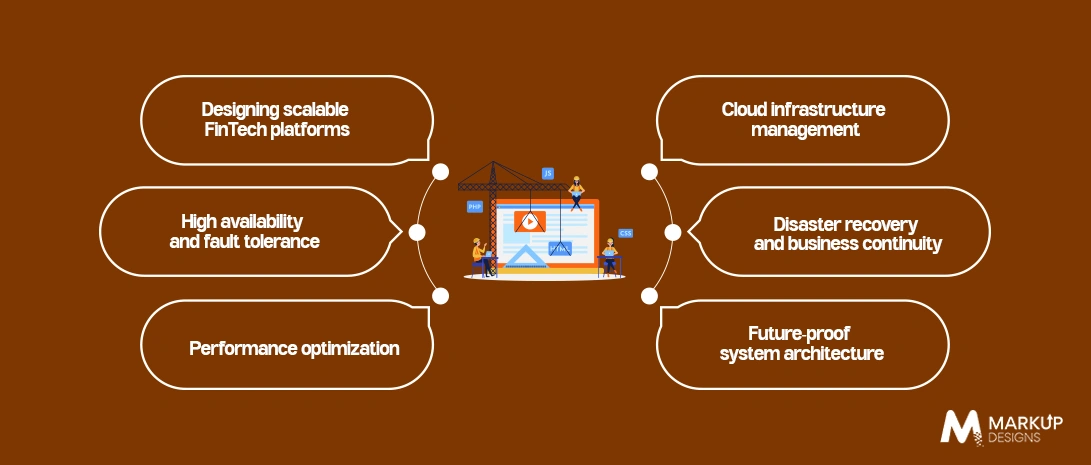
The successful design of a fintech platform means that it can cope with the needs of growth in the number of transactions and maintain stability to withstand market fluctuations.
Designing scalable FinTech platforms
A fintech platform should be created taking into account both the increase in the number of users and transactions without losing its stability and performance.
High availability and fault tolerance
Choose designs that focus on making services near-constantly available by ensuring that redundancy, failover features, and dependable infrastructure result in systems that avoid downtime and provide uninterrupted service.
Performance optimization
By putting effort into a thorough system design, high-quality database optimization, and proper use of system resources, it is possible to maintain speed even in peak transaction periods.
Cloud Infrastructure Management
Possessing expertise in the latest cloud solutions means that you will be able to manage your infrastructure in a more efficient way and use the available processes in a more scalable and flexible way.
Disaster Recovery and Business Continuity
A trustworthy disaster recovery process allows vital systems to be recovered swiftly after accidents occur without leading to problems in business operations.
Future-proof system architecture
Choose an organisation that builds flexible systems which are able to integrate with new technologies, new integrations, and new business systems.
Project Execution and Governance
It is important to have a well-planned process of delivery because it makes it possible to complete every fintech project on time, on budget, and with all expectations met. Find out how the company organizes its processes and communication with the clients.
Agile Development Approach
The agile methodology facilitates quicker development, constant feedback, and adaptability to different business and regulatory requirements.
Sprint Planning and Backlog Management
With proper sprint planning and backlog priority, development is focused on high-value features and also moves at a steady pace.
Risk Identification and Mitigation
A good technology partner will look at possible technical, operational, or compliance risks and take steps to handle them in advance.
Documentation Standards
A good document management policy provides enough technical information and helps in knowledge transfer.
Change Management Procedures
Having a good change management process allows incorporating any additional requirements without any interruptions in the project timeframes and budget.
Communication, Regularity, and Reporting
Having regular meetings and transferring the information about the progress helps all players remain aligned.
Quality Assurance and Testing Approach
The company is required to follow any of the reliable testing strategies, including functionality and performance testing, to deliver an effective and high-quality product.
Checklist for Team Performance Evaluation
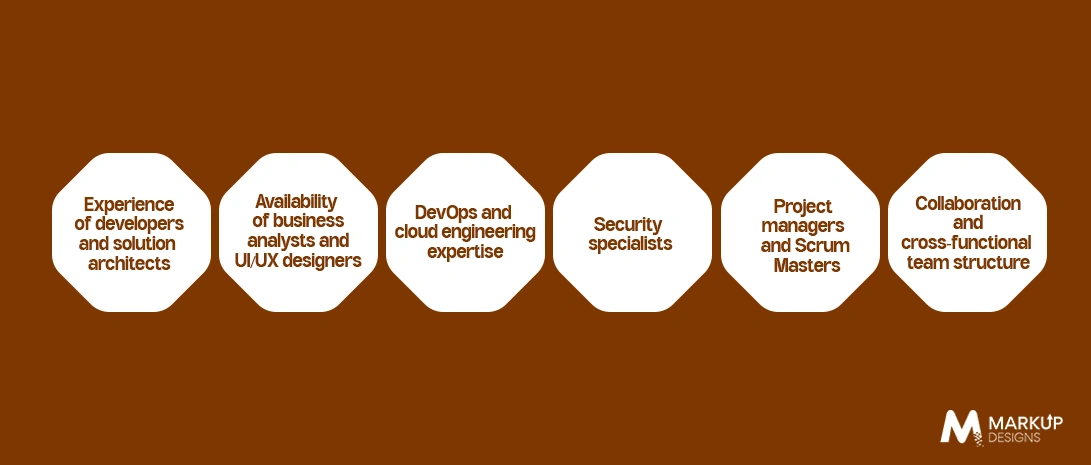
The project’s success depends upon team expertise since the outcome of the FinTech project will rely on the capabilities the project delivery team possesses. Evaluate whether the chosen developer company has the right mix of experts, including technical specialists, business experts, and project managers.
Experience of Developers & Solution Architects
Evaluate the developers and solution architects’ experience in the development of secure, scalable, and enterprise-grade FinTech products.
Availability of Business Analysts and UI/UX Designers
Business analysts are responsible for the proper translation of business needs into technical solutions, while UI/UX designers make sure that the product is easy to use.
DevOps and Cloud Engineering Expertise
Having strong capabilities in DevOps and Cloud technologies allows providing faster deployments, automating infrastructure, and managing cloud processes efficiently.
Security Specialists
Security specialists’ input in terms of implementing efficient and secure coding practices, performing security checks, and monitoring compliance with socio-legal requirements is essential as well.
Project Managers and Scrum Masters
Project managers and Scrum Masters’ job is to make sure everything goes smoothly in terms of team coordination, timing, solving issues that come up during the project life cycle, and deployment.
Collaboration and Cross-Functional Team Structure
An effective cross-functional team encourages collaboration between developers, designers, testers, business analysts, and stakeholders, leading to faster delivery and better project outcomes.
Read Also: Tips for Finding the Right Hire Software Developers in the United Kingdom in 2026
Choosing the Right Engagement Model
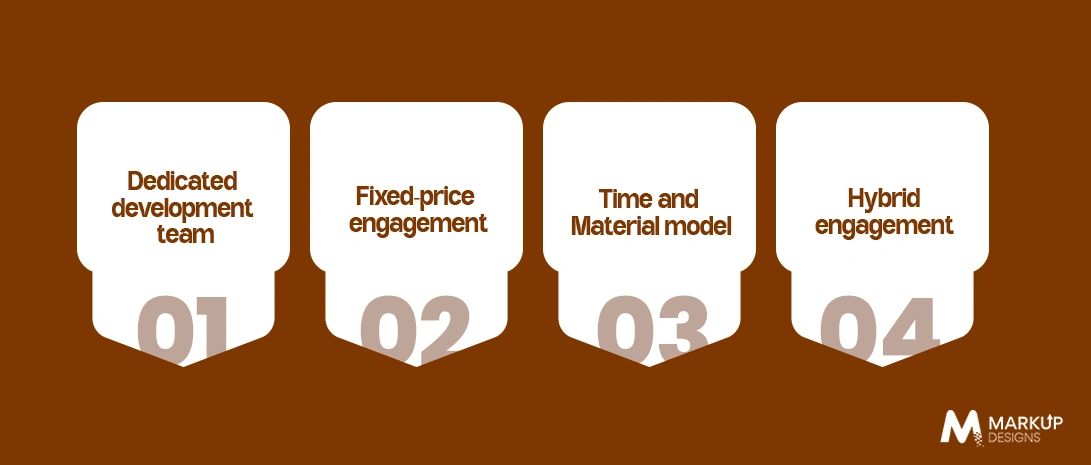
Choosing the correct engagement model is just as vital a task as finding the correct partner. The best engagement model will depend on the scope of your project, budget, timelines, and long-term objectives.
Dedicated Development Team
This is the best option for long-term FinTech projects that require continuous development and flexibility. The team acts like an extension of your in-house resources.
Fixed Price Engagement
This model becomes ideal for projects whose specifications have been clearly defined, as well as those whose budget and schedule are established. Indeed, the scope should not change.
Time and Material Model
This model provides flexibility during the development of the project and allows a gradual change in requirements, allowing payment based on the actual use of resources and efforts.
Hybrid Engagement
This is a combination of different engagement models. With its help, one is able to get the best out of various models.
What is the Best Engagement Model?
To choose the most effective engagement model, you must consider your business objectives.
Technology Evaluation Checklist
The technologies your technology partner uses have an impact on the performance and scalability of your FinTech platform and determination of its long-term success. Check if they are knowledgeable about innovative technologies that can help ensure both safety and future readiness of financial products.
Cloud Platforms
Check whether the company has experience in working with advanced cloud platforms for the development of effective and secure FinTech applications.
AI Development Possibilities
Check if they can implement AI technologies to enable such capabilities as fraud detection, automation, predictive analysis, advanced customer services, and personalized financial products.
DevOps and CI/CD Pipelines
Established DevOps culture and the presence of automated CI/CD pipelines allows for timely release and high effectiveness of the software created.
Containers and Kubernetes
Involvement in containers and Kubernetes allows to make the application deployment and scaling simpler.
API Integrations
Strong expertise in API integration allows for smooth integration of your internal systems, third-party platforms, and outside financial services.
Open Banking Solutions
Check their experience in integrating banking APIs for Open Banking solutions.
Third-Party Integration Services
Assessing the capability of third parties to provide external services like identity verification, KYC, AML, analytical services, alerts, and CRM systems.
Warning Signs for Technology Officers
Recognising red flags can spare you from serious troubles in finding a trustworthy partner for FinTech software development. Consider the following warning signs when evaluating such companies.
Promising Unreasonable Deadlines
Be cautious of firms that promise tight deadlines without understanding the specifics of your project and requirements.
Deficiency of Knowledge of Regulations
Being unaware of certain UK financial institution regulations may lead to falling out of compliance, delays in project completion, and higher risks for businesses.
Flimsy Security Standards
The lack of security measures, insufficient testing, or absence of secure practices in software creation are issues to consider seriously.
Lack of Documentation
The insufficient quality of technical documents might lead to difficulties in maintenance, poor visibility of the process, and complications with upgrades.
Sterile Portfolios Without Objectives
Don’t be fooled by sterile portfolios but search for evidence of targets achieved through case studies and testimonials from clients.
Lack of Scalability Knowledge
If the firm cannot show experience in creating scalable structures, it may not help you achieve scalability in your project
No Governance Framework
The absence of structured project governance often results in poor communication, inconsistent delivery, and ineffective risk management.
No Knowledge Transfer Process
A reliable technology partner should provide proper documentation and knowledge transfer to ensure your internal team can manage the solution effectively.
Vendor Lock-In Risks
Avoid companies that create unnecessary dependency through proprietary technologies or restrictive contracts that limit future flexibility.
A Step-by-Step CTO Hiring Framework
Following the well-structured selection process will allow CTOs to approach the decision-making process with maximum information and choose the right FinTech vendor for their needs.
Step 1: Establishing Technical and Business Goals
Be sure to define your goals and also clarify your technical requirements and your product vision before starting the vendor selection stage.
Step 2: Developing Evaluation Criteria
Compile a list of evaluation criteria that should include skills in tech, industry practice, cybersecurity, compliance, delivery capacity, and commercial alignment across domains.
Step 3: Creating a List of FinTech Software Development Vendors
Find and compare successfully operating FinTech development firms according to their portfolio, clients’ feedback, industry practices, and previous practices.
Step 4: Conducting Technical Interviews and Discussing Architecture
Engage developers in communication and assess their engineering approaches to architecture, problem-solving skills, and tech competence.
Step 5: Comparing Proposals and Commercial Terms
Compare project offers based on pricing options, timelines, deliverables, and terms of cooperation.
Step 6: Verifying References and Past Projects
Talk to former clients and check successful case studies to identify whether the firm could keep its promises or not.
Step 7: If Needed, Pilot the Project
In cases of larger, or more intricate activities, it is advisable to start off with a pilot of the project to assess collaborative, communicational, and technical capabilities before engaging long-term.
Step 8: Contracts and Governance Model
Create precise contracts, communication methods, working processes, and performance expectations that would help the collaboration be effective in the future.
Reasons for Choosing Markup Designs by Companies in the UK for Fintech Software Development
Picking the appropriate partner in technology can considerably decide your Fintech project’s success. Markup Designs has the necessary expertise to provide effective, secure, and technologically advanced solutions in finance. A well-established record in Fintech development along with complex AI-driven innovations, cloud-based engineering, new-generation architecture, and a law-focused approach, enables our smooth creation of first-rate digital products.
Backed by Agile delivery, transparent communication, and end-to-end support from consulting and product strategy to development, deployment, and ongoing maintenance, we help UK businesses accelerate innovation while maintaining security, compliance, and long term scalability.
Build Your Next FinTech Solution with Confidence
Partner with Markup Designs to develop secure, compliant, and scalable FinTech solutions designed to your business goals. Connect with our experts today and transform your vision into a future-ready financial platform.

Conclusion
Hiring a software development company in the UK for FinTech applications is a strategic decision that goes beyond technical expertise. CTOs must evaluate industry experience, regulatory knowledge, engineering capabilities, security practices, delivery processes, and long-term scalability before selecting a technology partner. By following a structured evaluation framework and asking the right questions, businesses can reduce project risks, ensure compliance, and build innovative FinTech solutions that support sustainable growth. The right development partner will not only deliver quality software but also become a trusted advisor in your long-term digital transformation journey.
FAQs
1. What should CTOs look for when hiring a FinTech software development company in the UK?
CTOs should evaluate a company’s FinTech domain expertise, technical capabilities, regulatory knowledge, cybersecurity practices, delivery methodology, scalability experience, client portfolio, and post launch support before making a hiring decision.
2. How do I evaluate a FinTech development company’s technical expertise?
Review their experience with cloud native development, microservices, APIs, AI, DevOps, mobile and web development, cybersecurity, and legacy system modernisation. Case studies, technical discussions, and client references can also help validate their expertise.
3. Why is regulatory compliance important when hiring a FinTech development partner?
FinTech applications handle sensitive financial data and must comply with regulations such as GDPR, FCA guidelines, PCI DSS, and Open Banking standards. A compliance focused development partner helps reduce legal, security, and operational risks.
4. Which engagement model is best for FinTech software development?
The ideal engagement model depends on your project requirements. Dedicated teams work well for long term development, fixed price engagements suit projects with defined scopes, while Time and Material or hybrid models offer greater flexibility for evolving requirements.
5. How much does it cost to hire a FinTech software development company in the UK?
The cost varies based on project complexity, required features, technology stack, engagement model, team size, and development timeline. Discussing your business requirements with an experienced development partner is the best way to obtain an accurate estimate.
Author's Perspective
Hiring a FinTech software development company should never be based solely on cost or development speed. For CTOs, the priority should be finding a technology partner that combines deep industry expertise, strong engineering capabilities, regulatory awareness, and a collaborative approach to innovation. Investing time in evaluating the right partner today can significantly reduce future risks, improve product quality, and create a strong foundation for long-term business growth in the UK’s highly competitive FinTech ecosystem.
Discuss Your Project NowGaurav Goyal
Global Sales- VP
Related Posts

Custom Software Development Cost in Bahrain: Factors, Benefits,...

How Much Does Healthcare Software Development Cost in...

How to Build Compliance Software for Australian Businesses:...
Insights Are Valuable & Execution is Priceless
You’ve read about the digital future. Now, let’s build the infrastructure to take you there. Move your strategy from the page to the product.
Design Your Solution Now
Contact Us
Schedule The Appointment At Your Convenience Date And Time.
30 Min
Web Conference
Time Zone
Indian standard time (08:30pm)

Thanks For Getting In Touch!
You’ve Taken The First Step Toward Transforming Your Digital Presence. Our Experts Will Reach Out Shortly To Take It Forward.
Launch Your Dream Project
Provide a brief overview of your project, and our specialists will evaluate your requirements. We will connect with you to explore how the right digital solutions can help you launch faster.