

In Brief
- Cost of Smart Contract Development: The cost depends on the complexity of the contract, business needs, the blockchain to be used, and the need for security.
- Contract Complexity: A basic contract costs less compared to an advanced solution that involves multiple contracts, workflow automation, and business logic.
- Blockchain Platform: Different platforms provide different development ecosystems and come with different deployment costs.
- Security Needs and Compliance: Security audits, vulnerability testing, and UAE regulations add to the cost of smart contract development.
- Expenses Beyond Deployment: The deployment cost is just one of the expenses. Other expenses include gas fees, monitoring, maintenance, upgrading, and integration with third parties.
Smart contracts enable organisations in the UAE to automate transactions, enforce predefined rules, and minimize the human factor in transaction processing in different industries such as real estate, finance, supply chain, and digital asset management. Knowing the cost of developing smart contracts will help businesses in making decisions about adopting blockchain technology.
The cost of developing a smart contract in the UAE in 2026 depends on different factors, including the complexity of the contract, blockchain platform used, integration requirements, security audit, and compliance needs. Development of a simple contract demands a certain type of investment compared to an enterprise-oriented solution, which may involve several contracts and existing systems. The following guide outlines the main cost factors, platform-based issues, the cost of security measures, and recurring costs to make your estimation of smart contract development budget more accurate.
How Much Does Smart Contract Development Cost in the UAE in 2026?
Costs associated with developing smart contracts in the UAE depend on several factors, including the project’s complexity, the blockchain platform chosen, security measures needed, and integration with other systems. An elementary contract which is meant to automate a payment process or perform some transaction verification is cheaper than the enterprise-oriented solution involving tokenization, financial processes, or multi-contracts.
Businesses will have to consider such factors as deployment, auditing, and further maintenance while calculating smart contract development budget for 2026. Businesses planning to develop smart contracts in the UAE should take into account all expenses related to smart contract development, not just coding costs.
Understanding these cost factors helps businesses establish realistic budgets and select an approach that aligns with their technical and commercial goals.
How Much Does Smart Contract Development Cost in the UAE?
Smart contracts in the UAE can cost anywhere between a few thousand dollars to over $100,000, depending upon the extent of functionalities, architecture of the contract, testing process involved, and the necessary support infrastructure. The above prices are indicative planning figures and not the exact average prices of the UAE market. Actual quotations will vary, based on the project size and the development agency.
Smart Contract Development Cost by Complexity
Costs involved in developing a smart contract are usually dependent on its complexity as well as the degree of testing required. Simpler contracts can cost 2,000 to 5,000, medium-complexity contracts can cost 5,000 to 15,000, while advanced contracts can cost 15,000 to 40,000 or more. For enterprises, the cost can exceed $100,000 due to the integration of many contracts, integrations involved, complexity in permissions, and stringent security requirements.
Smart Contract Development Cost by Project Type
The purpose of the application is also a significant factor influencing the cost of development since certain applications are associated with different requirements. Simple token contracts could require moderate investments while DeFi solutions that include loans, staking, or liquidity provision are more complicated to develop. In case of real estate tokenization, there would be a requirement for ownership data and investors verification while supply chain contracts will likely need ERP integration and delivery verification. It is recommended to calculate smart contract development cost based on the required features and architecture of the system rather than only on industry classification.
What Factors Affect Smart Contract Development Costs in the UAE?
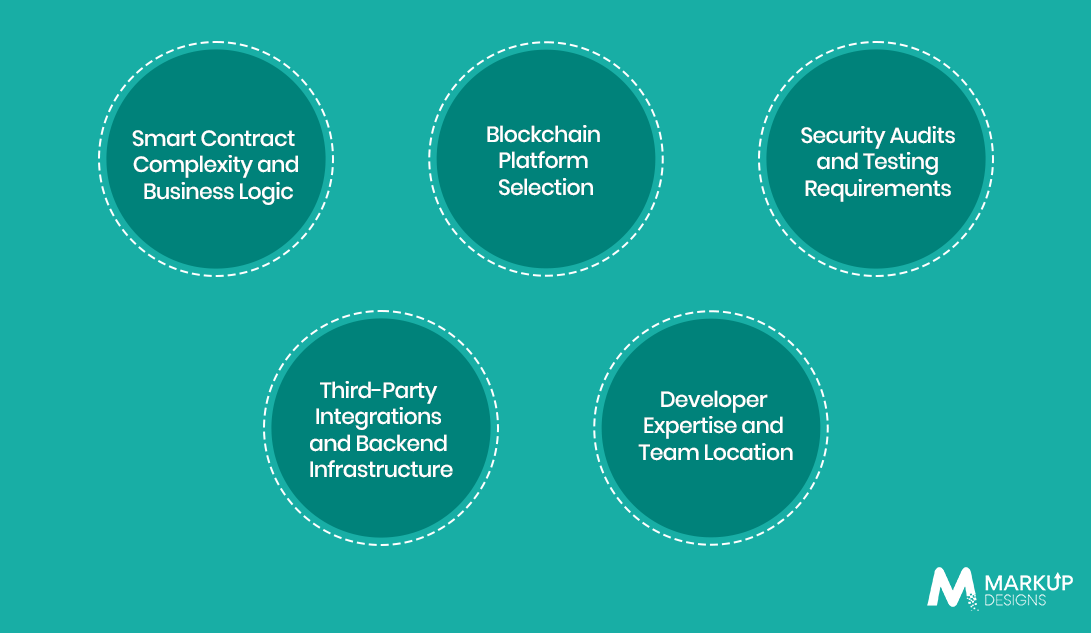
There are several factors that influence the cost of smart contract development, including the complexity, infrastructure, security requirements, and expertise needed for this project. Additionally, businesses will have to think about additional costs associated with third-party services and regulations in case the smart contract includes any financial transactions or digital assets.
Evaluating these factors before development helps prevent scope changes and unexpected expenses.
Smart Contract Complexity and Business Logic
More functions, more transactional rules, more permissions, and more contracts to interact with increase the workload of developers. A contract that simply makes a payment based on the predefined conditions is less complicated than a contract that handles refunds, approval processes, earnings distribution, and even auto penalties. The complex logic also means that you need more time to test the contract in order to detect possible issues. It is necessary to define the contract requirements and exceptions at an early stage of work in order not to incur additional costs.
Blockchain Platform Selection
Different blockchains mean different programming requirements, available developers, transaction costs, and integration efforts. For example, Ethereum allows developing smart contracts in a well-established ecosystem, Solana is designed for high-speed transactions, Polygon provides scalability solutions for Ethereum-based networks, and Hyperledger Fabric works well with permissioned enterprise networks. Each choice has its own specifics, which should be considered in comparison with security and costs.
Security Audits and Testing Requirements
Security tests increase initial expenses but allow detecting the weaknesses of your contract before going into production. Depending on the contract, the budget may include unit testing, integration testing, vulnerability assessments, independent code audits, and remediation. Contracts handling substantial financial value or complex permissions generally require more extensive security assurance than straightforward automation. Businesses should clarify whether audit costs are included in the development proposal or charged separately.
Third-Party Integrations and Backend Infrastructure
A smart contract frequently needs integration with an outside system, whether it is a payment gateway, ID verification system, API, ERP, or some other data source. Such integrations require extra effort for development, testing, and architecture. A tokenization solution for real estate may require ID verification, real estate record checking, a payment system, and a management panel, in addition to the smart contract itself. All such supporting features should be accounted for separately when estimating the full cost of the project.
Developer Expertise and Team Location
The rate of development depends on the technical skill set, location, and structure of the development team, as well as the complexity of the task. Specialized developers with particular skill sets, for instance, related to blockchain architecture or Solidity code security, may be more expensive than regular software developers, but this knowledge can help avoid mistakes in implementation, which would end up costing even more money. UAE companies can collaborate with local or distributed teams, but they need to check technical proficiency, timeframes, source code rights, documentation, and further support in case of launch, not only consider hourly rates of developers.
How Does Blockchain Platform Selection Affect Development Costs?
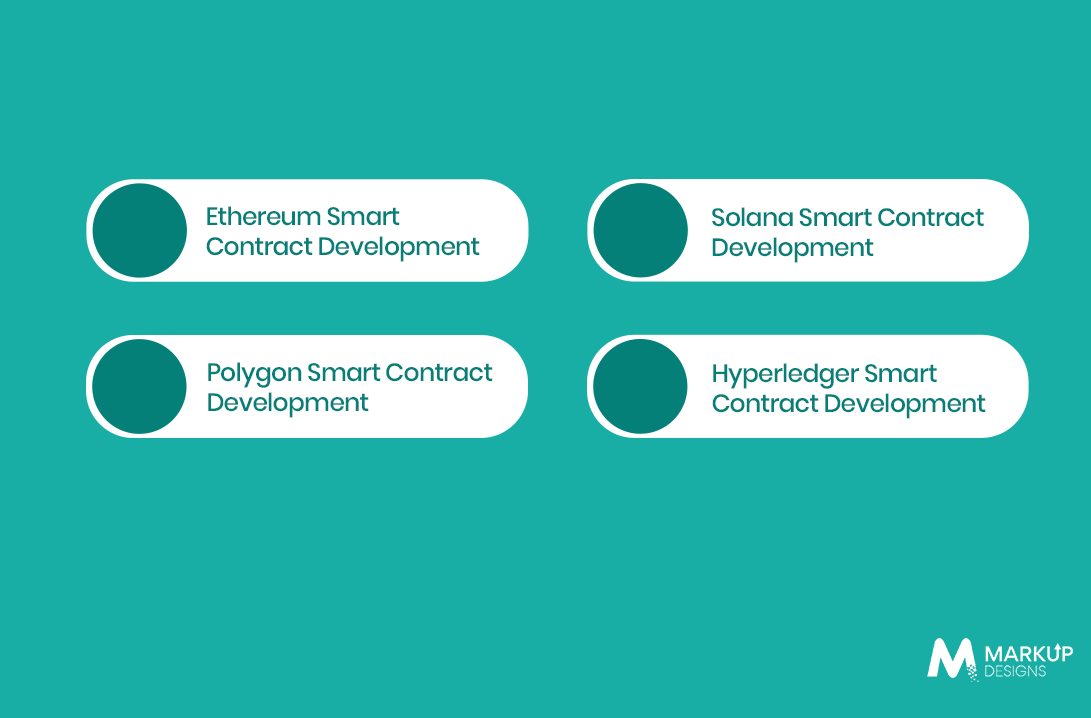
Blockchain platform selection influences development expenses, transaction costs, infrastructure requirements, and future maintenance. The right choice depends on the application’s purpose, expected transaction volume, privacy needs, ecosystem compatibility, and security requirements. Businesses should evaluate the total cost of ownership instead of choosing a platform solely because its transaction fees appear lower.
Ethereum Smart Contract Development
Ethereum is often employed for building decentralized applications, issuing tokens, and DeFi solutions, thanks to mature development tools and existing smart contract standards. The cost of development depends on the complexity of the contract, its integration requirements, and the degree of security that needs to be ensured prior to its launch. Businesses also have to consider the variable nature of the gas fee and possibly examine Layer 2 solutions in case transaction costs play an important role. The budget should take into account both development and operational costs on the selected network.
Solana Smart Contract Development
Solana has been designed to deliver high throughput and relatively low transaction costs, making it appropriate for building applications that feature a lot of transactions or operations with digital assets. The cost of development depends on the complexity of the program, availability of specialists, and testing and integration requirements. While transaction costs may be lower compared to other alternative networks, businesses need to consider the development environment, security, and maintenance considerations when making their decision.
Polygon Smart Contract Development
Polygon provides blockchain infrastructure and scalability solutions which can help to build applications compatible with the tools used in Ethereum-oriented development.
Costs depend on the specific Polygon network or solution, contract functionality, and integration requirements. Businesses should assess the selected network’s technical characteristics, security assumptions, ecosystem support, and operating expenses before finalising the budget.
Hyperledger Smart Contract Development
Hyperledger Fabric is an example of a permissioned blockchain architecture that allows organizations to have control over access to the shared ledger. It can be used for supply chain processes, inter-organizational transactions, and business process automation. However, compared to public blockchain architectures, Fabric development requires extra expenses related to the infrastructure, identity management, network management, and participant onboarding. These expenses have to be considered while comparing the total price of the technology to other platforms.
How Much Do Smart Contract Security Audits Cost in the UAE?
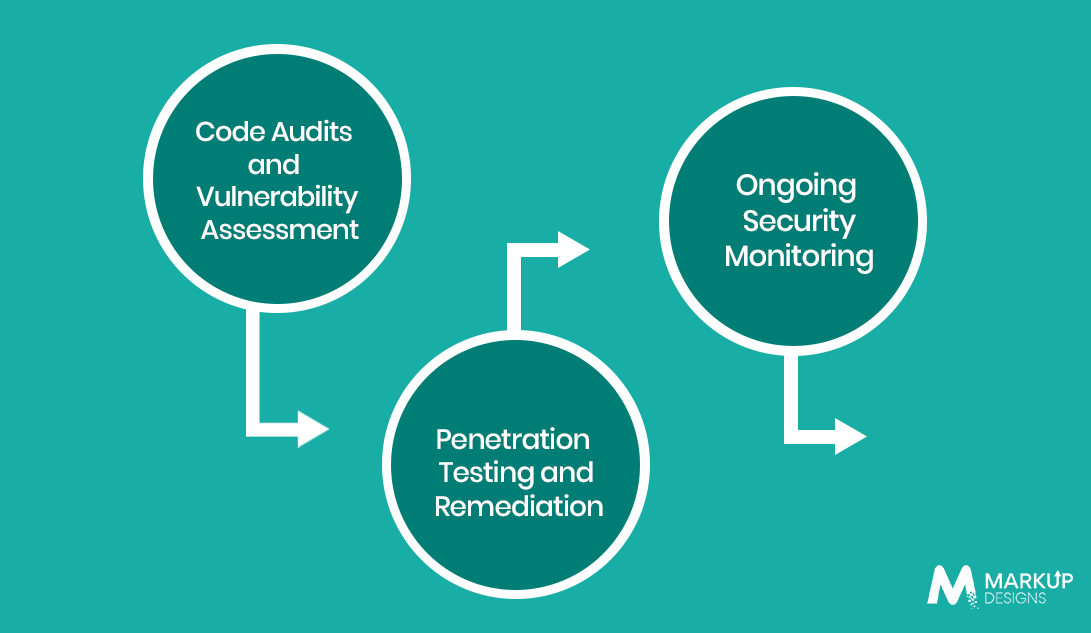
The price of a smart contract security audit depends on the size of the code, complexity of the contract, financial risk, and depth of the audit. Limited auditing might cost several thousand dollars, while comprehensive audits of complex protocols might cost tens of thousands of dollars or even more. These are rough estimates without any verification of the UAE-specific prices. Organizations must request a separate estimate of costs for testing, independent auditing, and re-auditing.
Code Audits and Vulnerability Assessment
A smart contract code audit is aimed at identifying the presence of vulnerabilities like reentrancy problems, access control issues, wrong validation, etc. The cost of such an audit varies depending on the number of contracts, the complexity of the code, and the expertise of the auditor. It is necessary for businesses to make sure of the scope of the audit, its reporting format, and whether or not the provider is going to check the corrections. An audit is not supposed to be substituted by internal development team testing.
Penetration Testing and Remediation
This testing identifies the possibility for hackers to exploit the weaknesses in the application itself, its API and authentication systems, wallets, and supporting services. Remediating the identified problems can be costly depending on their criticality and the extent of code change needed. Some problems can even require the whole architecture of the system to be changed. In order to avoid further expenses and delays in the process, remediating problems can be budgeted.
Ongoing Security Monitoring
Security costs do not end after the smart contract is deployed. Security costs continue after a smart contract goes live because applications may require transaction monitoring, suspicious-activity alerts, dependency updates, access reviews, and periodic security assessments. The level of ongoing investment depends on the contract’s purpose, transaction volume, and potential financial exposure. Applications managing valuable digital assets may need stronger monitoring and incident-response arrangements than low-risk automation tools. These recurring expenses should be included in the total cost of ownership rather than treated as optional post-launch spending.
How Do UAE Regulations Affect Smart Contract Development Costs?
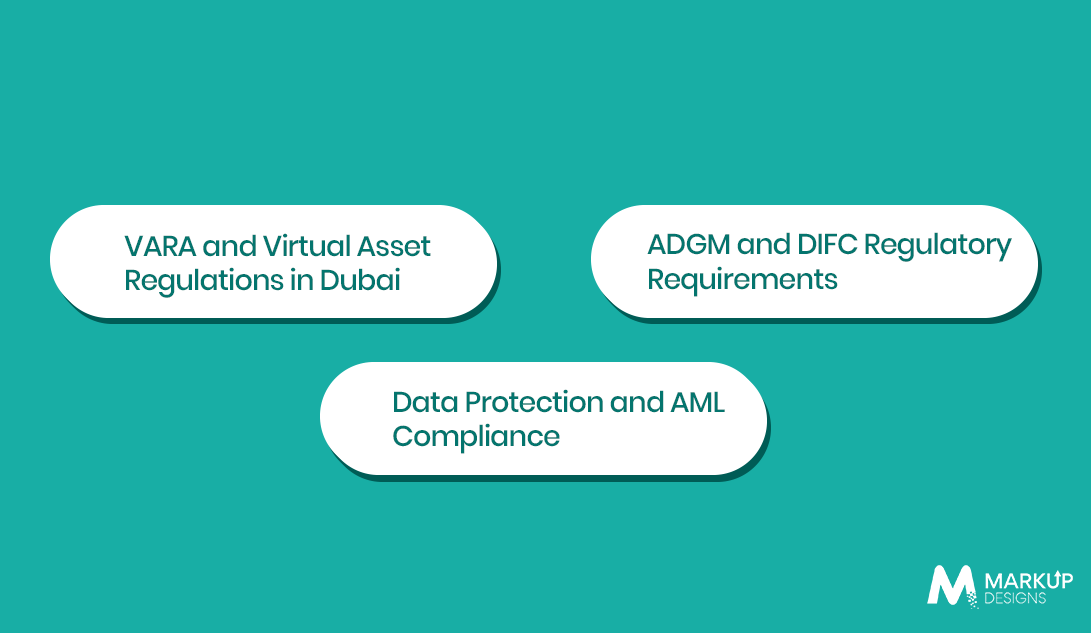
Regulatory requirements may increase the cost of creating smart contracts through legal assessment, identity verification, transaction monitoring, reporting, and system controls. Nonetheless, requirements differ based on the business activity, asset type, customers, and jurisdiction. Business organizations should seek appropriate legal guidance before settling on their technical architecture, as the deployment of a smart contract does not automatically make the underlying transaction lawful and enforceable.
VARA and Virtual Asset Regulations in Dubai
VARA is the body that regulates certain virtual asset activities within its jurisdiction with appropriate exemptions and jurisdictional limitations. Business organizations involved in regulated activities such as virtual asset exchanges, brokering, custody, or issuance would require evaluation of their licensing and compliance requirements. Depending on the business structure, such requirements would include identity verification, transaction monitoring, reporting, and governance of the project. The appropriate requirements must be determined based on the activity carried out rather than all smart contract applications requiring VARA licences.
ADGM and DIFC Regulatory Requirements
Relevant financial activities may fall under the Financial Services Regulatory Authority (FSRA) in ADGM or the Dubai Financial Services Authority (DFSA) in DIFC, depending on the activity and applicable rules. Projects within these frameworks may require additional governance, risk management, audit trails, and compliance processes, increasing development and operational costs. Businesses should establish which jurisdiction and regulatory framework applies before committing to a solution architecture.
Data Protection and AML Compliance
The smart contracts project may be required to take care of applicable data protection and anti-money laundering (AML) compliance rules, depending on the nature of the project and the corresponding laws in the UAE. As blockchain data is difficult to alter or erase after validation, it might pose compliance risks to store personal data directly on the blockchain. Companies can opt for storing the data in external systems and keep the reference in the blockchain only. Verification of identity, monitoring of transactions, record-keeping, and reporting systems can lead to additional expenses.
What Are the Smart Contract Development Costs for Different Use Cases?
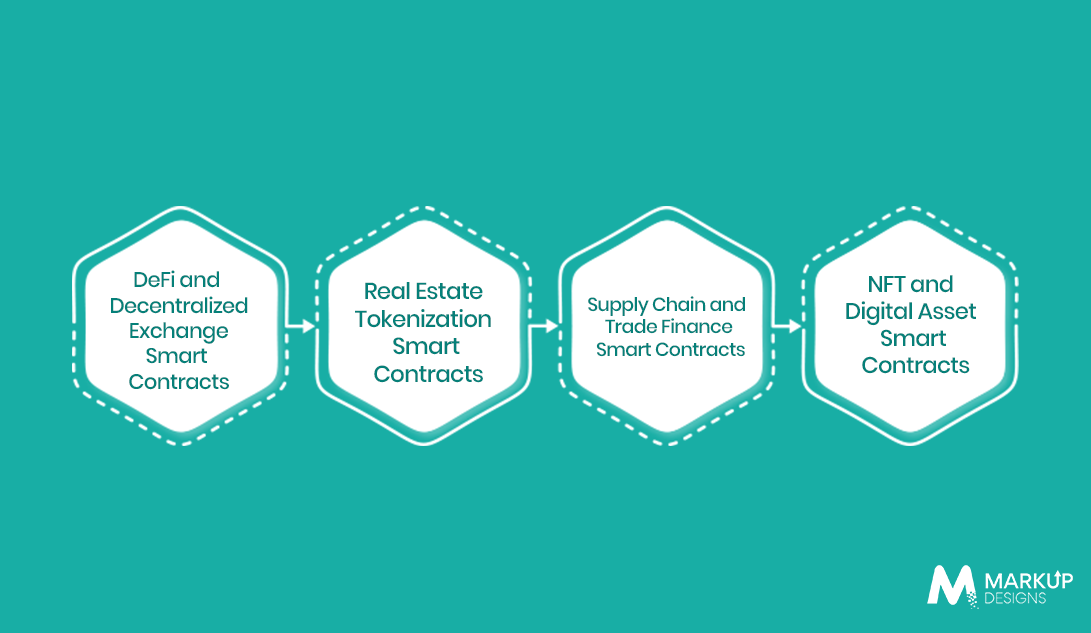
As each use case is different, the cost of developing smart contracts will also differ accordingly. Each type of application requires different business logic and compliance measures. While a simple digital asset contract might have fewer features and complexity, DeFi platforms or tokenization of real estate assets might have many transaction rules and compliance requirements. Companies must estimate the cost of their development according to their unique characteristics.
DeFi and Decentralized Exchange Smart Contracts
The cost of smart contracts related to DeFi and decentralized exchange (DEX) can range anywhere from 15,000 to 50,000 and even above, depending on their functionality and requirements. Lending protocols, staking options, liquidity pools, and token swap smart contracts are complex solutions, which should be carefully tested and verified to ensure there are no vulnerabilities that would jeopardize users’ finances. Some advanced solutions might require price oracles, governance, and multiple integrations between contracts. A security audit conducted by a third-party company can significantly increase the budget.
Real Estate Tokenization Smart Contracts
Real estate tokenization smart contracts can cost around 10,000 to 40,000 and even above, depending on the ownership structure, investors’ permissions and transfer limitations, as well as additional integrations. Such solutions usually contain information regarding fractional ownership, distribution and allowed transfers while other services are responsible for the management of real estate documents, identity verification, and payments. If some projects will include some regulated securities, additional legal work and compliance services will be required. It is necessary to clearly distinguish the development of contracts from the full solution development.
Supply Chain and Trade Finance Smart Contracts
Supply chain and trade finance smart contracts may cost approximately 10,000–35,000 or more, depending on workflow complexity and enterprise integration requirements. Common functions include verifying delivery milestones, automating payments, recording approvals, and managing trade documentation between participating organisations. Integrations with ERP platforms, logistics systems, and external data providers can increase development effort. Enterprise projects may also require permission management, audit trails, and network governance, particularly when multiple organisations need controlled access to shared transaction records.
NFT and Digital Asset Smart Contracts
NFT and digital asset smart contracts may cost approximately 3,000–20,000 or more, depending on whether the project involves basic token minting or a complete marketplace with royalties, access controls, and trading functions. Standard token contracts generally require less custom development than platforms supporting multiple collections, complex permissions, or secondary-market transactions. Businesses should also account for marketplace interfaces, wallet integrations, metadata storage, and security testing when estimating the full project budget.
Read Also: Building Real-Time Transaction Monitoring Systems for UAE Financial Institutions
What Additional Costs Should Businesses Budget for After Deployment?
Deploying a smart contract does not eliminate ongoing expenses. Businesses must budget for transaction fees, infrastructure, monitoring, maintenance, and changes required as their applications evolve. These costs depend on the selected blockchain, transaction volume, contract architecture, and operational requirements, making them an essential part of the total cost of ownership.
Blockchain Transaction and Gas Fees
Public blockchain transactions may incur gas fees, which vary according to network demand, transaction complexity, and the selected network. Deploying a contract generally involves an initial transaction cost, while subsequent interactions may generate recurring fees. Applications processing frequent transactions should estimate costs using realistic usage scenarios rather than current fee levels alone. Layer 2 networks may reduce expenses for suitable applications, but businesses should also evaluate their integration requirements and security assumptions.
Maintenance, Upgrades, and Monitoring
Smart contracts may require ongoing maintenance to address discovered vulnerabilities, update dependencies, improve monitoring, and support changes in business requirements. Upgrade costs depend on whether the contract was designed to support controlled upgrades or requires migration to a new deployment. Monitoring tools and incident-response arrangements can also create recurring expenses. Businesses should establish maintenance responsibilities and upgrade procedures before launch because deployed contracts may not be straightforward to modify.
Integration and Infrastructure Expenses
Supporting infrastructure can include backend services, APIs, databases, cloud hosting, wallet connections, identity verification, and analytics tools. These components may require ongoing subscription fees, technical support, and periodic upgrades even when the smart contract itself operates as intended. Businesses should assess expected transaction volumes, data storage needs, and integration dependencies when preparing their operational budget. Separating blockchain-specific costs from application infrastructure expenses makes long-term spending easier to track.
How Can Businesses Optimize Smart Contract Development Costs?
Businesses can control smart contract development costs by reducing unnecessary complexity without compromising security or essential functionality. Clear requirements, suitable platform selection, early testing, and realistic maintenance planning help prevent rework and unexpected expenses. Cost optimization should focus on the total cost of ownership rather than choosing the lowest initial quotation.
Define Requirements and Prioritize Features
Businesses should document the contract’s purpose, transaction rules, user permissions, integrations, and expected usage before development begins. Prioritising essential features for the initial release helps avoid paying for functionality that is not immediately required. A clearly defined scope also makes it easier to compare development proposals and identify potential cost overruns. Changes to business logic after implementation can increase both development and testing expenses, so requirements should be validated early.
Choose a Suitable Blockchain Platform
The selected blockchain should align with transaction volume, security requirements, ecosystem compatibility, and operational needs. A platform with lower transaction fees may not be the most economical option if it requires extensive custom development or difficult integrations. Businesses should compare development effort, infrastructure costs, available expertise, and future scalability before making a decision. Evaluating these factors together helps avoid expensive platform changes later.
Invest in Security Early
Security requirements should be incorporated into architecture and development rather than addressed only before deployment. Secure coding practices, automated testing, code reviews, and early vulnerability assessments can help identify problems before they become expensive to fix. Independent audits remain important where the contract’s complexity or risk exposure warrants them. Reducing testing expenditure at the expense of security can expose businesses to financial losses and costly remediation.
Work With an Experienced Development Partner
An experienced blockchain development partner can help define the architecture, select appropriate technologies, identify integration risks, and estimate the effort required for implementation. Businesses should evaluate relevant project experience, security practices, documentation, source-code ownership, and post-launch support when comparing providers. A transparent proposal should distinguish development, auditing, deployment, and maintenance costs. This approach provides a more realistic basis for comparing quotations than hourly rates alone.
How Can Markup Designs Help Businesses Develop Smart Contracts in the UAE?
Markup Designs helps businesses evaluate and build blockchain-based solutions aligned with their operational requirements, integration needs, and growth objectives. From defining project scope and selecting suitable technologies to developing secure smart contracts and supporting deployment, the focus is on building solutions that address practical business challenges. Businesses can discuss their requirements with Markup Designs to determine the appropriate development approach, project scope, and estimated investment for their smart contract initiatives in the UAE.
Planning a Smart Contract Project in the UAE?
Turn your blockchain idea into a clearly scoped development project with the right technology, security considerations, and cost plan.

Conclusion
Smart contract development costs in the UAE in 2026 depend on project complexity, blockchain selection, security requirements, integrations, and applicable regulatory obligations. While basic contracts may require a relatively modest investment, enterprise solutions involving DeFi, tokenization, or complex business workflows can demand substantially larger budgets. Businesses should also account for auditing, transaction fees, infrastructure, and ongoing maintenance when estimating the total investment.
A practical approach is to define requirements clearly, choose a blockchain that fits the use case, and incorporate security and compliance considerations from the beginning. Working with an experienced development partner can help businesses establish a realistic budget and reduce avoidable implementation risks.
FAQ
1. How long does it take to develop a smart contract in the UAE?
A basic smart contract may take a few weeks to develop, while a complex solution involving multiple contracts, integrations, and security audits can take several months. The timeline depends on project scope, testing requirements, regulatory reviews, and stakeholder approvals.
2. Is smart contract development expensive in Dubai?
Smart contract development costs in Dubai vary according to functionality, developer expertise, blockchain selection, and security requirements. A basic contract may cost a few thousand dollars, whereas advanced enterprise solutions can cost tens of thousands of dollars or more. Auditing, infrastructure, and applicable compliance expenses may increase the overall investment.
3. Which blockchain is best for smart contract development in the UAE?
The best blockchain depends on the application’s requirements. Ethereum is widely used for DeFi and tokenization, Solana supports high-throughput applications, Polygon offers scaling solutions for suitable use cases, and Hyperledger Fabric supports permissioned enterprise networks. Businesses should compare security, integrations, transaction costs, and long-term maintenance before choosing a platform.
4. Are smart contracts legally enforceable in the UAE?
Smart contracts are not automatically legally enforceable simply because their code executes a transaction. Enforceability depends on the applicable law, the underlying agreement, the parties’ obligations, and the relevant jurisdiction. Businesses should obtain legal advice to determine how smart contracts interact with applicable UAE laws and regulatory requirements.
5. Do businesses need a smart contract audit before deployment?
An independent audit is strongly advisable for smart contracts handling financial assets, sensitive permissions, or high-value transactions. It can help identify vulnerabilities that internal testing may miss. The appropriate level of auditing depends on the contract’s complexity and risk exposure, but an audit does not guarantee that a contract is completely secure.
Author's Perspective
Smart contract development should be budgeted as a complete business solution rather than a standalone coding task. The initial development estimate is only one part of the investment; security assurance, integrations, regulatory considerations, and ongoing maintenance can materially affect the final cost. Businesses in the UAE should define their requirements early and assess both implementation and operational expenses before selecting a platform or development partner.
Discuss Your Project NowJupinder Singh Arora
Founder and CEO
Related Posts

Blockchain App Development: A Step-by-Step Guide for Entrepreneurs,...

Crypto Trading Bot Development: Architecture, Features & Cost...

Cost to Develop a Cryptocurrency Exchange App Like...
Insights Are Valuable & Execution is Priceless
You’ve read about the digital future. Now, let’s build the infrastructure to take you there. Move your strategy from the page to the product.
Design Your Solution Now
Contact Us
Schedule The Appointment At Your Convenience Date And Time.
30 Min
Web Conference
Time Zone
Indian standard time (08:30pm)

Thanks For Getting In Touch!
You’ve Taken The First Step Toward Transforming Your Digital Presence. Our Experts Will Reach Out Shortly To Take It Forward.
Launch Your Dream Project
Provide a brief overview of your project, and our specialists will evaluate your requirements. We will connect with you to explore how the right digital solutions can help you launch faster.