

In Brief
- Logistics software development costs in UAE depend on factors such as software complexity, required features, technology stack, third-party integrations, security, scalability, and the expertise of the development team.
- Businesses across UAE are investing in logistics software to automate operations, optimize routes, improve fleet and warehouse management, reduce operational costs, and meet growing customer expectations for real-time tracking and faster deliveries.
- The overall project cost is distributed across multiple stages, including planning, UI/UX design, development, testing, deployment, and ongoing maintenance, while hidden expenses like cloud hosting, API integrations, security upgrades, and system support should also be considered.
- Companies can optimize development costs by starting with an MVP, prioritizing essential features, adopting scalable cloud architecture, using pre-built APIs, following agile development practices, and partnering with an experienced logistics software development company.
- A well-developed logistics solution delivers long-term value by improving operational efficiency, enabling future scalability, creating monetization opportunities through SaaS or licensing models, and generating a strong return on investment for UAE businesses.
The logistics industry in UAE is witnessing tremendous growth owing to globalization, rise in online sales, and the leading position of UAE as an international business hub. Businesses from Dubai and other cities are making moves towards digitization by integrating modern solutions for managing their supply chain, logistics services, fleets, and warehousing. As a result, the market has seen a huge increase in demand for dedicated software solutions that can help streamline operations, automate processes, and make decisions more smartly.
But what is the first thing that comes into mind when starting a project? How much does logistics software development cost in UAE? There is no fixed price to it as it depends on many aspects of the product – features, complexity level, used technologies, and even software development approach.
In this blog, we are going to cover all the major cost-related aspects of logistics software development in UAE.
Why UAE Businesses are Investing in Logistics Software
UAE has emerged as one of the leading logistical centers due to its strategic positioning, superior port facilities, and trade infrastructure. The growing trend towards ecommerce, retailing and cross border transactions has made logistics even more challenging. That is the very reason for the increasing use of logistics software in the region.
In today’s environment, traditional manual methods will not suffice for fast deliveries, maintaining large inventories and meeting customers’ demands for instant information updates. By using logistics software, companies can automate their systems from end-to-end by managing fleets, optimizing routes, tracking warehouses, and monitoring shipments.
The next significant reason for using custom-made logistics software is cost-saving. There is a need in UAE for cutting operational costs while ensuring high-quality services at the same time. Through this software, businesses can minimize fuel consumption, optimize the delivery process, and avoid costly mistakes made by employees.
However, it is not only about cutting down costs. Customer expectations and demands have also changed considerably. People seek transparency and accountability in their transaction processes and require live tracking and prompt shipments.
Key Factors Affecting Logistics Software Development Costs
There is no constant cost for the development of logistics software in UAE; costs vary significantly depending on many different aspects. Awareness about these aspects will be useful to organizations when planning their budgeting process.
- Complexity of software: The basic logistics software is very cheap in comparison to advanced enterprise logistics software incorporating AI, IoT, and real-time analytics. The more advanced the software, the more will be its cost of development.
- Feature requirements: Features such as live tracking, routing optimization, warehouse management, driver application, and automated dispatch systems affect the cost greatly.
- Technology Stack: Technology stack plays a vital role in the development process. If the technology stack consists of advanced technologies like AI, machine learning, blockchain, and cloud-native architecture, it results in more cost of development but increases performance and scalability.
- Integration of third-party applications: Integrating GPS applications, payment gateways, enterprise resource planning, and customer relationship management systems increases the development cost of logistics software.
- UI/UX Design: The basic design involves fewer hours than advanced designs that are interactive and user-friendly.
- Development team location: It would cost the company more money to hire developers in UAE than outsourcing their services from other parts of the world such as India and Eastern Europe.
- Security and compliance: When logistics software will need to deal with sensitive information, it will have to be protected by good security features, making the project more costly.
- Scalability: In case of anticipated growth in terms of number of users or size of fleet in the future, the system will become even more complex.
- Maintenance support: Future updates and support costs will also affect the total cost.
ERP Software Development in Dubai Complete Overview for Growing Businesses
Think of ERP software as the digital backbone of your business. Rather than managing finance, HR, inventory, and sales through separate tools, ERP connects every department into one centralized platform, allowing teams to work with the same real-time information

Feature-Wise Cost Breakdown of Logistics Software Development
In regard to the development of logistics management software in UAE, features are one of the main factors that define the price. Each feature brings unique aspects of cost, complexity, and time investment to the development process. Companies usually begin by integrating a set of basic features and then gradually grow them.
Basic features, such as user login, dashboard, and shipment tracking, are fairly easy to develop and hence cheap to implement. But once we progress to complex features like AI-driven route optimization or fleet analytics, the price rises due to high development effort and technical requirements.
Following is a rough breakdown of price per feature to give an idea about the price distribution:
| Feature Category | Description | Cost Impact |
| User Management | Login, roles, permissions | Low |
| Shipment Tracking | Real-time tracking, updates | Medium |
| Fleet Management | Vehicle monitoring, driver assignment | Medium-High |
| Route Optimization | AI-based route planning | High |
| Warehouse Management | Inventory control, automation | High |
| Payment Integration | Invoicing, online payments | Medium |
| Notifications System | SMS, email, push alerts | Low-Medium |
| Analytics Dashboard | Reports, performance insights | Medium |
| AI & Predictive Analytics | Demand forecasting, smart decisions | Very High |
| Third-party Integrations | ERP, CRM, GPS systems | High |
As you can observe, there is an increase in cost associated with moving from basic operational functionality to intelligent functionality. In UAE market, businesses normally start with basic operational features and then upgrade to more advanced modules as operations grow.
Also, another key aspect that needs to be considered is the fact that having several advanced capabilities on the same platform will increase development costs. For instance, developing an AI algorithm for optimizing routes along with the real-time tracking functionality will involve a more intricate backend design.
Logistics Software Development Cost by Development Stage
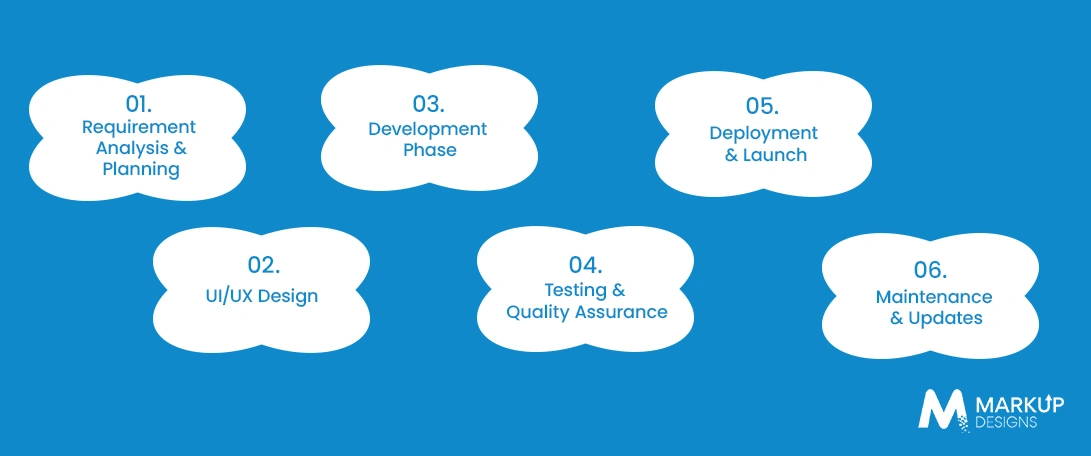
The total cost required for logistics software development in UAE is not spent all at once. This expenditure occurs at various stages during the development process. Each stage makes its own contribution based on its complexity, requirements of design, and other factors.
It becomes easy for any business to know how the money is being utilized and what effect it makes at each stage.
Requirement Analysis & Planning
This is the foundation stage where business needs, workflows, and system goals are defined. It typically accounts for 10-15% of the total cost. Clear planning at this stage reduces future rework and saves money.
UI/UX Design
This stage focuses on designing user-friendly interfaces for web and mobile platforms. It usually takes 15-20% of the budget, especially if the system requires multiple dashboards (admin, driver, warehouse).
Development Phase
The core coding phase where all features are built. This is the most expensive stage, consuming around 40-50% of the total cost due to backend, frontend, API, and integration work.
Testing & Quality Assurance
Ensures the system is bug-free, secure, and performs well under load. This takes about 10-15% of the cost.
Deployment & Launch
Includes hosting setup, server configuration, and final rollout. This stage generally requires 5-10% of the budget.
Maintenance & Updates
Post-launch support, bug fixes, and feature upgrades typically cost 10-15% annually.
Each stage is essential, and a reduction or avoidance of spending on any step may affect the effectiveness and performance of the system as well as its scalability and cost efficiency. In UAE market, companies who spend sufficiently on the earlier steps enjoy good returns in the future.
Hidden Costs Involved in Logistics Software Development
When considering the implementation of logistics software in UAE, companies tend to overlook the potential expenses that may affect their budgets greatly. These expenses may occur either during or after development and are very important for the long-term performance of logistics operations.
1. Cloud Hosting and Infrastructure Services
The logistics application should have scalable server services to manage live data and users. Hosting from AWS or Azure comes at a regular monthly cost, which increases on usage.
2. Third Party Application Integration Fees
Integration services for GPS, map, SMS, financial services, and ERP applications come with additional charges.
3. System Maintenance and Support
Post-release improvements, upgrades, or fixes will need active participation from the development team continuously, resulting in ongoing costs.
4. Data Management and Storage
Large amounts of data are produced by logistics systems in terms of shipment history, route logs, customer details, etc., leading to higher costs for data storage.
5. Security Enhancements
Protection and encryption of the stored data and ensuring compliance with UAE requirements might require certain additional measures.
6. User Training
The staff of drivers, warehouse workers, and managers will need appropriate training on using the application efficiently, adding to costs for its implementation.
7. Scalability Improvements
As the business scales, the software might need performance enhancements or architectural improvements that might cost money.
9. System Downtime
Unplanned outages and other failures might create unexpected costs related to possible losses during the outage period.
Hidden costs play a vital role in logistics software development in UAE. Companies that take these into consideration from the very beginning will be more well-equipped for future success.
Logistics Software Development Timeline: Key Stages Explained
The timeline for developing the logistic software in United Arab Emirates is directly related to how much it will cost to develop this software. Generally, the longer the period needed for developing the software solution, the more expensive it becomes because of high consumption of resources during that period.
Basic logistics software (3-4 months):
A simple system with essential features like shipment tracking, user management, and basic dashboards can be developed within a short timeframe. These solutions are usually suitable for startups or small logistics companies.
Mid-level logistics software (5-7 months):
This includes additional features such as fleet management, route optimization, notifications, and third-party integrations. More planning, testing, and UI/UX work are required, which extends the timeline.
Enterprise-grade logistics software (8-12+ months):
Large-scale systems built for enterprises involve complex architecture, AI-powered analytics, real-time tracking, warehouse automation, and multi-system integrations. These projects require multiple development phases and extensive testing, making them time-intensive.
Another thing worth noting here is that delays, unclear requirements, and scope changes will also increase time and expenses. In contrast, well-considered planning, agile development, and prompt requirement clarification will help minimize both time and expenses.
In UAE market, companies which allocate more resources into proper planning and skilled development will manage to work faster and ensure higher efficiency of their operation. In conclusion, timing cannot be viewed solely from the perspective of speed; there should be balance between quality and expenses as well.
How to Optimize Logistics Software Development Costs
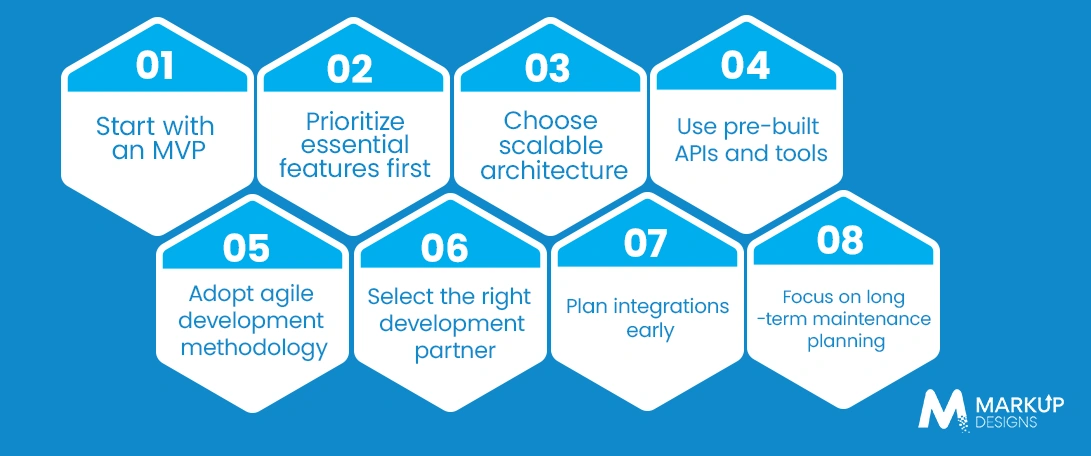
Efficient development of logistics software for a company based in UAE is not about saving money through shortcuts. With proper planning, it is possible to ensure that the process will be carried out without excessive spending and that the final product is efficient.
Start with an MVP
Instead of building a fully loaded system from day one, focus on core features like tracking, basic fleet management, and dashboards. This helps validate the idea early and reduces upfront investment.
Prioritize essential features first
Not every feature is needed at launch. Identify must-have functionalities and delay advanced features like AI analytics or predictive forecasting for later phases.
Choose scalable architecture
Using cloud-based and modular architecture allows businesses to expand systems later without rebuilding everything from scratch, saving long-term costs.
Use pre-built APIs and tools
Instead of developing everything from zero, integrating ready-made APIs for maps, payments, and notifications can significantly reduce development time and cost.
Adopt agile development methodology
Agile allows continuous feedback and iterative development, reducing the risk of costly rework caused by changing requirements.
Select the right development partner
Experienced teams can avoid common mistakes, optimize code quality, and speed up delivery, ultimately reducing total cost.
Plan integrations early
Early identification of third-party integrations prevents delays and unexpected expenses during later stages.
Focus on long-term maintenance planning
Designing systems with easy maintenance in mind helps reduce future upgrade and support costs.
In simple terms, cost optimization in logistics software development is about balancing quality, scalability, and budget through smart planning and execution.
Custom HRMS Software Development in Dubai: Benefits, Costs, and Key Features
As businesses in Dubai grow, managing payroll, attendance, recruitment, and compliance manually becomes increasingly challenging. Custom HRMS software helps streamline operations while improving employee experiences.

Monetization Strategies for Logistics Software Development
Once logistics software is developed in UAE, it can become more than just an operational tool-it can also become a strong revenue-generating product. Many logistics companies and tech startups now focus on monetization models that help them recover development costs and build long-term profitability.
1. Subscription-based model (SaaS):
This is one of the most common models where users pay a monthly or yearly fee to access the platform. Pricing can vary based on features, number of users, or shipment volume.
2. Freemium model:
A basic version of the software is offered for free, while advanced features like analytics, automation, or integrations are available in paid plans. This helps attract more users initially.
3. Transaction-based model:
In this model, businesses charge a small fee per shipment, delivery, or booking processed through the platform. It works well for high-volume logistics operations.
4. Enterprise licensing model:
Large organizations pay a one-time or annual licensing fee to use a fully customized logistics system tailored to their operations.
5. Marketplace model:
The platform connects shippers, drivers, and logistics providers, earning revenue through commissions on each transaction.
6. Value-added services:
Additional revenue can be generated through premium features like advanced analytics, AI-based forecasting, or priority support services.
In UAE market, where logistics is a fast-growing sector, choosing the right monetization strategy is just as important as building the software itself. A well-planned model ensures long-term sustainability and helps businesses turn their logistics platform into a scalable digital asset.
Why Businesses Trust Markup Designs for Logistics Software Solutions
Selecting the right partner for development is the most critical aspect when developing logistics software for UAE. Apart from affecting the quality of the software, selecting the right development partner also plays an essential role in ensuring cost-effectiveness and scalability in software development.
Our primary goal at Markup Designs is the creation of highly-efficient logistics software applications that can handle practical concerns like fleet monitoring, storage, and shipping. Our strategy involves comprehending business operations before designing them digitally.
- Industry-focused development approach: Solutions are built based on logistics and supply chain requirements, not generic software templates.
- Scalable architecture design: Systems are designed to grow with your business without requiring complete redevelopment.
- Advanced technology integration: AI, automation, cloud infrastructure, and real-time tracking capabilities are integrated where needed.
- Cost-efficient development process: Focus on MVP-first strategy to reduce initial investment and speed up time-to-market.
- End-to-end support: From planning and design to deployment and maintenance, the entire lifecycle is covered.
In countries such as UAE, where logistics activities need to be fast, accurate, and scalable, having an experienced team will help companies avoid making costly errors and mistakes. With the right partner, the software becomes not only efficient but also forward-thinking.
All in all, partnering with the right company for logistics development will help companies reduce their risks, manage costs, and develop logistics solutions that make sense for them.
Not Sure Where to Start?
Every logistics business is different. Share your requirements with our team and get a personalized cost estimate and development roadmap tailored to your operations in UAE.

Conclusion
The development of logistics software in UAE has become an important strategic move for businesses willing to remain competitive within the dynamic and demanding environment. The expansion of online shopping services, international trade, and intelligent infrastructures has pushed firms to adopt digital logistics solutions replacing traditional and manual processes.
However, the amount that needs to be spent on developing the software should not be considered as static. It varies according to several parameters such as functionality, complexity, technology stack, integrations, and methodology of development. Thus, the price can vary from the implementation of a simple system to creating a complex one that uses AI and automation technologies.
In fact, what should matter more than the cost itself is its return on investment (ROI). Indeed, investing into a good logistics solution allows reducing costs, optimizing business processes, and making them more efficient. As a result, customers’ satisfaction increases while a business grows.
FAQs
1. How much does logistics software development cost in UAE?
The cost typically ranges from basic solutions to enterprise systems, depending on features, complexity, and technology used.
2. What factors affect logistics software development cost?
Key factors include features, integrations, UI/UX design, technology stack, scalability needs, and development team expertise.
3. How long does it take to build logistics software?
It usually takes 3 to 12+ months depending on whether it is a basic, mid-level, or enterprise-grade solution.
4. Can logistics software be customized for my business?
Yes, custom logistics software can be built based on specific business workflows, fleet size, and operational needs.
5. Is logistics software a good investment in UAE?
Yes, due to rapid growth in trade and e-commerce, it significantly improves efficiency, reduces costs, and increases scalability.
Author's Perspective
The development of logistics software solutions in United Arab Emirates is more than just creating an application-it means addressing real business problems. The sector is rapidly developing, and businesses that have been lagging behind in terms of technology often experience various shortcomings. Any improvements in automation, monitoring, and routing optimization will help improve company performance. It is better to begin by introducing a basic application and then expanding its capabilities through more sophisticated features.
Discuss Your Project NowAjit Kumar Jha
VP - Business Operations
Insights Are Valuable & Execution is Priceless
You’ve read about the digital future. Now, let’s build the infrastructure to take you there. Move your strategy from the page to the product.
Design Your Solution Now
Contact Us
Schedule The Appointment At Your Convenience Date And Time.
30 Min
Web Conference
Time Zone
Indian standard time (08:30pm)

Thanks For Getting In Touch!
You’ve Taken The First Step Toward Transforming Your Digital Presence. Our Experts Will Reach Out Shortly To Take It Forward.
Launch Your Dream Project
Provide a brief overview of your project, and our specialists will evaluate your requirements. We will connect with you to explore how the right digital solutions can help you launch faster.