

In Brief
- ERP software helps Dubai businesses improve efficiency by integrating departments like finance, inventory, HR, sales, and operations into one centralized platform. It enables better collaboration, automation, and real-time decision-making.
- Growing businesses in Dubai need ERP solutions to manage challenges like changing regulations, multilingual operations, disconnected systems, and increasing operational complexity while supporting future expansion.
- ERP software offers essential features such as financial management, inventory and supply chain control, CRM, HR management, and business analytics to help companies improve productivity and performance.
- ERP plays an important role in Dubai’s competitive market by helping businesses manage compliance, simplify supply chains, improve financial visibility, and adapt quickly to changing market demands.
- Successful ERP implementation requires proper planning, including identifying business challenges, defining requirements, selecting the right ERP provider, training teams, and continuously monitoring system performance.
With the increasing pace of competitiveness in Dubai’s business climate, ERP software in Dubai has become a critical factor that guarantees efficiency and growth for businesses. In addition, the increasing rate of expansion along with urbanization, combined with more global opportunities, calls for even greater integration of processes. For example, a major scaffolding contractor based in UAE and GCC, despite its rich experience in the field, started experiencing problems in management due to its lack of integration. This resulted in challenges related to inventory control, project management, and financial oversight, making it difficult to maintain operational efficiency and support continued business growth.
In order to address these difficulties, the company implements a custom-designed ERP system. This strategy is efficient in ensuring the smooth running of the operations and making their business much more competitive.
Examples like these are quite typical for Dubai, where many business owners face certain difficulties due to constant changes in legislation in UAE combined with the extremely fast development of the market itself.
In order to deal with these difficulties, ERP software solutions for enterprises operating in Dubai and other regions of the Middle East is an effective choice, as they allow firms to streamline their operations and grow effectively.
Grand View Research suggests that UAE ERP software market is recording robust growth trends and the market is forecast to be valued at USD 1.49 billion by 2033, up from an estimated USD 631.8 million in 2025. The market is anticipated to witness compound annual growth at a CAGR of 11.6% during the period from 2026 to 2033 on the back of growing digital transformation activities and cloud-based applications.
Know About ERP Software
ERP stands for Enterprise Resource Planning software, which is a software solution through which companies integrate their business processes. Instead of having separate software solutions that handle different business operations like accounting, procurement, sales, and human resource management, ERP software integrates all of these operations into one solution, thereby increasing cooperation between the departments within the firm.
Custom software can play a critical role in expanding businesses by connecting various activities and giving an overview of company performance. It ensures efficiency and effectiveness in managing routine activities, making use of available resources, generating comprehensive reports, and making sound business decisions with accurate data. In the ever-changing business ecosystem of Dubai, ERP systems help organizations remain agile while supporting growth and operational adaptability.
Upgrade Your Business with a Custom ERP Solution

In the rapidly growing business environment of Dubai, having the proper systems is vital to enhance efficiency and compete effectively. As businesses expand and operations become more complex, managing processes manually or through disconnected systems can create operational challenges. Some of the most obvious signs when it comes to developing an ERP software in the Middle East for your business are the following-
Managing Changing Compliance Requirements
There are certain guidelines and regulations set out for doing business in Dubai. However, as business operations expand, maintaining compliance across all regulations and requirements becomes increasingly challenging. In order to facilitate compliance and help with record keeping, a ERP system software will be helpful for any Dubai business.
Managing Multilingual and Multicultural Operations
The business environment in Dubai is highly diverse, with various cultures involved in business operations. The implementation of ERPs that feature multilingual capabilities plays an important role in enhancing communication, managing data, and coordinating between different teams efficiently.
Streamlining Multiple Business Operations
As businesses grow, they often start using different tools and systems for managing various departments, which can lead to fragmented information and inefficient workflows. ERP software in Dubai helps bring all business processes together on one unified platform, improving data sharing, reducing manual efforts, and creating smoother coordination across the organization.
Staying Flexible in a Changing Business Environment
Dubai’s business environment is continuously evolving due to changing customer expectations, technological advancements, and shifting market demands. Companies that find themselves lagging in adaptation will most likely face difficulties in their development process. The integration of an ERP system in Dubai helps companies gain real-time data, make decisions, and adapt faster.
Supporting Business Growth with Scalable Operations
With growing businesses in the competitive landscape of Dubai, managing increased sales, large inventories, and complex business processes becomes increasingly difficult. ERP software supports business growth by streamlining daily operations, improving resource utilization, and providing valuable insights that enable informed future decision-making.
To address these growing operational demands, businesses should consider adopting ERP software designed to align with Dubai’s evolving market conditions and support long-term scalability.
Core Features of ERP Software Development
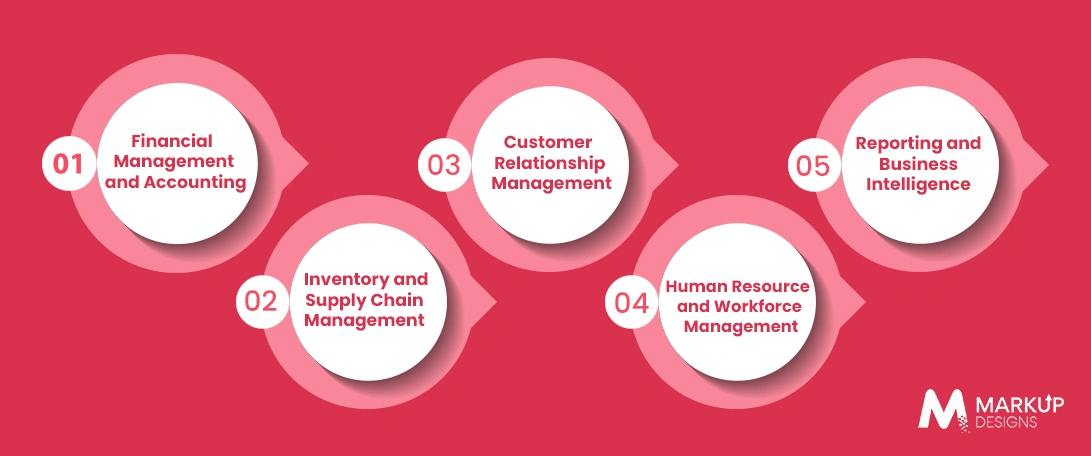
Financial Management and Accounting
ERP software assists organizations in handling their accounting, expenditures, invoicing, budgets, and financial management on a single software platform. ERP ensures that organizations obtain reliable financial information and make better decisions.
Inventory and Supply Chain Management
ERP solutions assist organizations in managing their inventories and supply chains. ERP gives them timely information on stock levels and reduces shortages in the inventory.
Customer Relationship Management
ERP customer relationship management solutions enable organizations to effectively manage their customers and sales activities. This is an important step towards building customer relationships.
Human Resource and Workforce Management
With ERP software, employees can be managed easily by processing their payrolls, monitoring attendance, recruiting candidates, and keeping information about their employees.
Reporting and Business Intelligence
ERP enables the generation of real-time reports that enable companies to analyze their performance and discover growth opportunities.
The Growing Importance of ERP Software Businesses in the Middle East
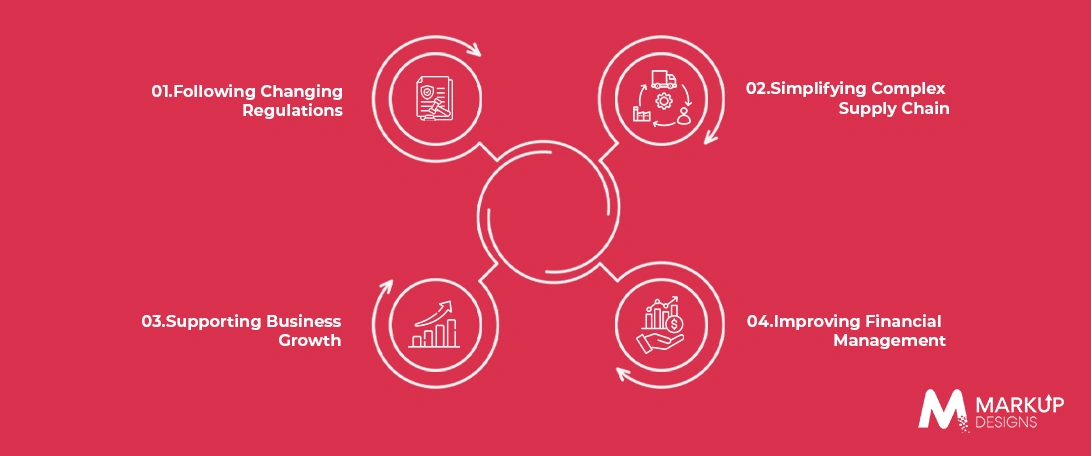
Dubai’s business landscape is driven by rapid growth, global connectivity, and a diverse workforce. As companies expand in this fast-moving environment, managing increasing operational complexity becomes more challenging, making efficiency and adaptability essential for sustained success.
There are some reasons why ERP solutions for Dubai-based companies are vital for their future success:
Changing Regulations
Business regulations in UAE, including VAT, trade policies, and compliance requirements, continue to evolve as the country aligns its business framework with global standards. For companies conducting business in Dubai, being aware of these developments is key to avoiding any compliance problems that may arise.
ERP software in Dubai will enable organizations to effectively comply with these laws through automation of compliance processes, maintaining orderly finances, and managing their VAT obligations, among other things.
Complex Supply Chain Management
Dubai, being a center of global business, translates to companies being involved in activities like import and export, storage, and procurement. These activities would be quite hectic without having a proper management system in place. An ERP solution for companies operating in Dubai will streamline business processes.
ERP solutions for businesses in Dubai will help manage the processes and offer real-time updates on inventory levels, automate procurement activities, and even improve demand planning. Businesses using ERP software will benefit from better process efficiency, reduced delays, lower waste, and improved customer satisfaction.
Supporting Business Growth
The expansion of industries such as e-commerce, hospitality, and construction in Dubai provides businesses with vast possibilities. But as the business grows, the need to deal with greater staffing levels, customer requirements, and complicated operations becomes hard when the current system is rigid.
ERP Software allows businesses to grow easily through integrating all business departments into one system, automating operations, and providing a scalable software solution. By implementing an ERP solution in Dubai, firms will be able to grow, introduce new products, and manage several branches without having to go through operational difficulties.
Improving Financial Management
Dubai businesses frequently conduct transactions on an international level, need to deal with various currencies, and engage in many financial activities outside their business territory. When these processes are conducted manually, it can be problematic for businesses to control their finances properly and avoid making mistakes.
ERP systems allow businesses to improve their financial processes because they automatically conduct accounting operations, integrate financial data, and enable businesses to manage currencies online. In addition, using ERP systems enables businesses to see all financial activities more clearly, plan their financial strategies, and make decisions.
Steps to Successfully Implement ERP Software in Your Business
An ERP implementation process may be quite daunting. However, by dividing the entire process into simple, actionable tasks, you can manage your tasks easily through ERP. The following outlines the step-by-step process for implementing an ERP system successfully:
Step 1: Identify Challenges
Before deploying an ERP system, organizations must identify the operational challenges that they wish to address, which could range from inventory problems, accounting issues, or anything else that might need improvement within the organization. This aids in the selection of a suitable ERP system that addresses their needs.
Step 2: Define Business Requirements
The next step is to understand the exact requirements of your business. These include the processes involved in your operations, different departments in your organization, the current software you use, and so forth. From these aspects, it would be easy for you to understand the exact functions you need from the ERP software.
Step 3: Research and Evaluate ERP Solutions
Each ERP software differs in terms of its abilities, features, and customizations; you need to find one that meets your needs. Find ERP companies that have experience working in Dubai as well as your industry in particular. Hence, you will be assured of systems that cater to Dubai regulations such as VAT. Scalability is another consideration that you should take into account.
Step 4: Engage Teams in the Process
The selection of ERP software is important for various functional areas in your organization, such as finance, operations, HR, and information technology. Getting involved with key personnel from those areas enables you to learn about their problems, know what kind of functionalities they require, and select a solution that would be beneficial to all of them.
Step 5: Plan ERP Implementation
Properly implementing and configuring the ERP solution plays a key role in its success. Businesses need to choose an ERP solution partner with expertise and knowledge to implement the software successfully. For firms expanding in the GCC region, consulting experts in that area or using custom software development services would be more advantageous.
Step 6: Train Your Team
The adoption of an ERP solution is dependent on whether your team is able to understand and leverage the system. Training will ensure that the team learns about the basic features, operation techniques, reporting functions, and other aspects. Many ERP vendors provide training services for their customers.
Step 7: Monitor the System Performance
Once you have installed the ERP system in your organization, it is time to constantly review its effectiveness and see whether it helps you reach your business objectives. Make sure to monitor different aspects of the process, such as the use of the system by users, how effectively it facilitates the work process, and the comments received from employees. Collaborating with your ERP vendor to enhance the system will prove helpful.
Partner with Markup Designs to Build ERP Software
We realize that every organization has unique requirements, and that is why we work towards developing ERP systems that match your objectives. Our professionals work for various companies based in Dubai to help them optimize their operations, automate workflows, and handle various departments from one point. We develop scalable and easy-to-use ERP software solutions that facilitate effective decision-making and increased efficiency.
Backed by extensive experience in delivering business solutions, we develop ERP systems tailored to solve key operational challenges, including inventory management, financial oversight, reporting, and process automation. We create a business-oriented ERP solution that is not only secure and adaptable but also future-proof in order to help our clients maintain their competitiveness in today’s rapidly evolving Dubai market.
Build a Custom ERP Solution for Your Dubai Business
Streamline your operations with a customized ERP solution designed to improve efficiency, automate workflows, and support business growth.

Conclusion
In the fast-paced, competitive market that Dubai businesses operate in, being efficient in management practices is important. The use of ERP software allows businesses to achieve better automation, collaboration, compliance, and decision-making based on accurate data. This software is used not only for management purposes but also for expanding business activities and conducting a digital transformation strategy.
FAQs
1. What is ERP software and why is it important for businesses in Dubai?
ERP software is a business management system that integrates different operations, including finance, inventory, HR, sales, and reporting, into one platform. For businesses in Dubai, ERP helps improve efficiency, automate processes, and manage growing operational demands.
2. How can ERP software help growing businesses in Dubai?
ERP software helps growing businesses by streamlining workflows, reducing manual tasks, improving data accuracy, and providing real-time insights. It allows companies to manage expansion, multiple departments, and complex operations more effectively.
3. Is ERP software suitable for small and medium-sized businesses in Dubai?
Yes, ERP solutions can benefit businesses of all sizes. Small and medium-sized businesses can use ERP to automate processes, improve productivity, and create a scalable system that supports future growth.
4. How long does it take to implement ERP software?
The implementation timeline depends on factors such as business size, system complexity, customization requirements, and data migration needs. A properly planned implementation process helps ensure smoother deployment.
5. Can ERP software support UAE compliance requirements?
Yes, ERP systems can help businesses manage compliance requirements by automating financial reporting, VAT-related processes, record management, and other regulatory activities.
6. Why choose a custom ERP solution instead of a standard ERP system?
A custom ERP solution is designed according to your specific business processes and requirements. It provides better flexibility, scalability, and functionality compared to generic systems that may not fully match your operational needs.
Author's Perspective
In my opinion, ERP software has evolved from being an essential operational utility to becoming a key growth accelerator for businesses operating in Dubai. In today’s competitive business world, where things are constantly changing and evolving, businesses need to be flexible enough to accommodate changes. A properly designed ERP system is capable of helping businesses do just that.
Discuss Your Project NowGaurav Goyal
Global Sales- VP
Related Posts

Supply Chain Automation Software Development: Modernizing Australian Enterprises

BLE System Integration: Enterprise Applications, Architecture & Implementation...
Custom Enterprise App Development powering Dubai’s 2040 Vision
Insights Are Valuable & Execution is Priceless
You’ve read about the digital future. Now, let’s build the infrastructure to take you there. Move your strategy from the page to the product.
Design Your Solution Now
Contact Us
Schedule The Appointment At Your Convenience Date And Time.
30 Min
Web Conference
Time Zone
Indian standard time (08:30pm)

Thanks For Getting In Touch!
You’ve Taken The First Step Toward Transforming Your Digital Presence. Our Experts Will Reach Out Shortly To Take It Forward.
Launch Your Dream Project
Provide a brief overview of your project, and our specialists will evaluate your requirements. We will connect with you to explore how the right digital solutions can help you launch faster.