

In Brief
- The automated supply chain management software enables Australian organizations to integrate their procurement processes, inventory, warehousing, logistics, suppliers, and order fulfillment while eliminating manual processes and increasing real-time transparency.
- Using AI, machine learning, IoT, cloud computing, and analytics could enable supply chains to become predictive by providing capabilities for demand forecasting, inventory planning, monitoring risks related to suppliers, route optimization, and anomaly detection.
- Some key advantages are cost reduction, better inventory management, decision-making, supply chain visibility and resilience, and better customer experience.
- The development costs in Australia may vary between AUD 70,000 and AUD 700,000+ depending on the complexity of solutions, whereas an AI-powered platform may cost above AUD 1,000,000.
- However, its successful development and implementation involve following a well-defined development process, effective integration of systems, availability of data, cybersecurity, user adoption, scalability, and choosing a competent development partner.
Australian organizations are dealing with sophisticated supply chains that require management in terms of getting raw materials, coordinating suppliers, managing warehouses, transporting goods, and delivering them finally. Large distances, high operational costs, shortage of labour, volatile demand, and disruptions can make the manual process hard to manage. Supply Chain Automation Software Development plays an essential role in the digital transformation of companies.
Supply chain automation software allows companies to integrate processes, eliminate routine actions, enhance visibility, and make quick decisions based on real-time data. When used alongside advanced technology solutions like artificial intelligence, machine learning, the Internet of Things, and cloud computing, it can allow enterprises to create responsive and resilient supply chains.
In this blog, we will be discussing what supply chain automation software is, the importance of such technology for companies in Australia, the features that the technology has, the involvement of artificial intelligence in this technology, the process of its development, cost, benefits, problems in implementing, and selection of a development partner.
What is Supply Chain Automation Software?
Supply Chain Automation Software is an online application that enables companies to automate and coordinate various supply chain processes from a single software program. By utilizing supply chain automation software, enterprises can avoid using spreadsheets, emails, phone calls, and manually entered data, as it links all procurement, inventory management, warehousing, transportation, suppliers, and order fulfillment.
By using supply chain automation software, companies can benefit from automatic data processing, workflow initiation, alerts and notifications, shipment tracking, inventory updates, and much more. Thus, supply chain automation software allows saving time and effort as well as identifying potential problems in advance.
Supply chain automation is particularly beneficial for Australian enterprises in case of operations that include multiple locations, suppliers, warehouses, or transportation. Supply chain automation will allow increased visibility along the entire supply chain.
Modern systems can also connect to existing ERP, WMS, TMS, CRM, e-commerce, and IoT systems, forming an ecosystem for the supply chain.
In the next section, we will look at why Australian enterprises are increasingly adopting supply chain automation.
Why Australian Enterprises Need Supply Chain Automation
Australian enterprises cover vast geographic expanses, and this poses additional difficulties to the management of the supply chain, making it costly and complicated. Companies have to manage their supplies, storage, transportation services, and consumers scattered in various geographic regions in the face of fluctuating demand and possible delays.
Supply chain automation provides enterprises with an effective solution of overcoming these obstacles through integration and enhanced control of daily activities.
Some key reasons Australian businesses are adopting automation include:
- Operational Complexity Management: Automation links various supply chain activities and minimizes reliance on isolated systems.
- Enhanced Real-Time Visibility: Organizations can monitor inventories, orders, shipments, and suppliers all through one interface.
- Minimizing Manual Tasks: Routine processes like purchase orders, inventory updates, reporting, and shipment notifications can be automated.
- Faster Response to Disruptions: Through automatic alerts and analysis, it is possible to detect potential issues before they occur.
- Cost Management: Improved inventory management, purchasing, and transportation lead to minimized operational costs.
- Growth Opportunities: With a scalable solution, it becomes easier to handle more products, suppliers, warehouse locations, and other operations.
For Australian enterprises, however, automation is not simply a matter of automating repetitive tasks. It is about making the entire supply chain more connected and resilient.
Key Components of Supply Chain Automation Software
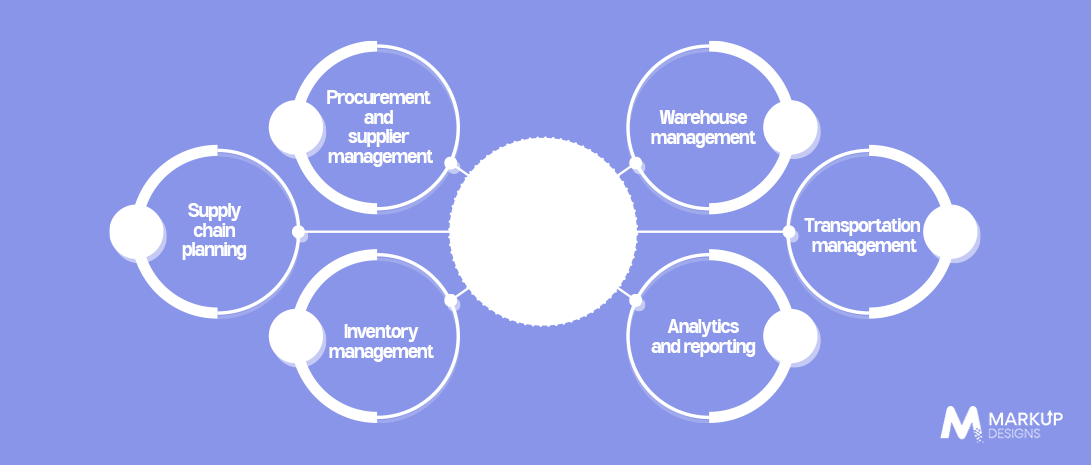
The modern supply chain automation system combines a number of different business processes into one connected system. The specific modules vary depending on the requirements of the organization, but generally consist of the following:
Supply chain planning
Enables the company to forecast demand, plan the supply, allocate capacity, and be prepared for any changes in the environment.
Procurement and supplier management
Facilitates purchase orders, supplier onboarding, performance tracking, contract management, and communication with suppliers.
Inventory management
Keeping track of inventory across different locations helps in managing the reorder points and prevents overstocking and understocking.
Warehouse management
Assists in receiving, picking, packing, inventory movement, bar-coding, and warehouse task management.
Transportation management
Assists in shipping planning, route optimization, delivery management, and carrier management.
Analytics and reporting
Offers dashboards and real-time analysis of inventory, procurement, delivery performance, cost, and overall supply chain efficiency.
When these components work together, enterprises gain a more complete view of their operations and can automate workflows across the entire supply chain.
How AI is Transforming Supply Chain Automation
The use of AI in logistics is transforming supply chain automation to a level beyond simple rule-based systems. While traditional software follows preset rules, modern software has the capability of analysing data, spotting patterns, anticipating problems, and making informed decisions
For Australian enterprises, AI can be applied across different stages of the supply chain:
- Demand Forecasting: AI will be able to examine past sales and market trends, among others, in order to predict future demand.
- Inventory Management: Companies will be able to recognize potential shortages or excess inventories and act on them accordingly.
- Supplier Risk Analysis: Using AI, one will be able to evaluate the performance of their suppliers and detect any risks.
- Route Planning: AI will enable the identification of efficient routes for deliveries according to the data available.
- Anomaly Detection: Unusual inventory movements, transactions, or shipment delays will automatically be recognized.
- AI-driven Decision Making: AI assistants can help supply chain professionals to gather data, create reports, and get advice.
As AI capabilities continue to improve, enterprises can move from simply automating repetitive tasks toward building more predictive and responsive supply chain operations.
Modernize Your Supply Chain With Intelligent Automation
Ready to reduce manual processes and gain better control over your supply chain? The right automation solution can connect your operations, improve visibility, and help your business respond faster to changing demands.

Benefits of Supply Chain Automation for Australian Enterprises
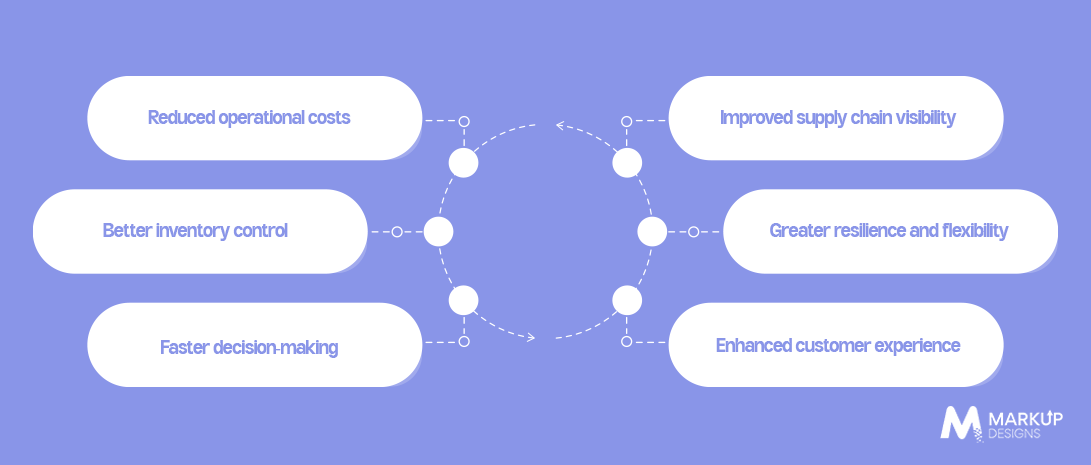
Supply chain automation can provide value in procurement, inventory, warehousing, transport, and order management. For Australian businesses, such benefits could help with daily efficiency and future business expansion.
Reduced operational costs
Automating routine activities can decrease costs and help manage administrative and operational costs.
Better inventory control
Automatic real-time monitoring and management of inventory can avoid stockouts and excess inventory.
Faster decision-making
Real-time dashboards and analysis enable team members to have access to vital supply chain data.
Improved supply chain visibility
Companies can keep track of their suppliers, inventory, shipping, and orders via an integrated system.
Greater resilience and flexibility
Early alerts and insights can help companies react to any delays, shortages, and other issues.
Enhanced customer experience
Increased accuracy of inventory information, faster order fulfillment, and enhanced tracking of deliveries can result in better customer service.
Supply Chain Automation Software Development Process
Software development for automating supply chains involves more than just developing automated capabilities. The software should be able to integrate with current processes, systems, information, and future requirements. The structured development approach can help companies develop software that creates tangible benefits.
1. Find Opportunities for Automation
First, analyse your existing supply chain process and find repetitive, time-consuming, and error-prone procedures within it.
2. Define Requirements and KPIs
Define what your software should be capable of doing and what your objectives are; for example, what KPIs should the system track, such as inventory turnover, order fulfillment rate, procurement lead time, and delivery performance.
3. Create a Software Architecture
Design software architecture to facilitate scalability, security, integration, data management, and automation in the future.
4. Build Key Modules
Develop key modules including purchasing, inventory management, warehouse management software, logistics, order management, and analytics.
5. Integrate with Existing Systems
Integrate the platform with ERP, WMS, TMS, CRM, e-commerce platforms, systems of suppliers, and IoT devices as necessary.
6. Testing, Implementation, and Scaling
Test the solution for workflow, security, integration, and performance before implementation. Post-implementation, measure the outcomes and scale automation for other operations.
Supply Chain Automation Software Development Cost in Australia
The cost of developing an automation program for the supply chain system in Australia may differ greatly based on the extent of the software program. The cost of developing a small automation program with minimal automation will be significantly lower compared to an enterprise platform integrated with AI.
| Software Type | Estimated Cost |
| Basic automation platform | AUD 70,000–150,000 |
| Mid-level enterprise solution | AUD 150,000–400,000 |
| Advanced automation platform | AUD 400,000–700,000+ |
| Large-scale AI-powered platform | AUD 700,000–1M+ |
Several factors can influence the final development cost, including:
- Number of Modules & Features
- AI and Machine Learning Requirements
- ERP, WMS & TMS Integration
- Internet of Things and Real-Time Tracking Capabilities
- Data Migration & System Architecture
- Security and Compliance Requirements
- UI/UX, Dashboards & Mobile Applications
- Maintenance & Support
For this reason, firms must identify their key automation objectives before considering their development budget. This way, it would be easy for them to start with valuable features first and build up the platform accordingly.
Common Challenges in Supply Chain Automation Development
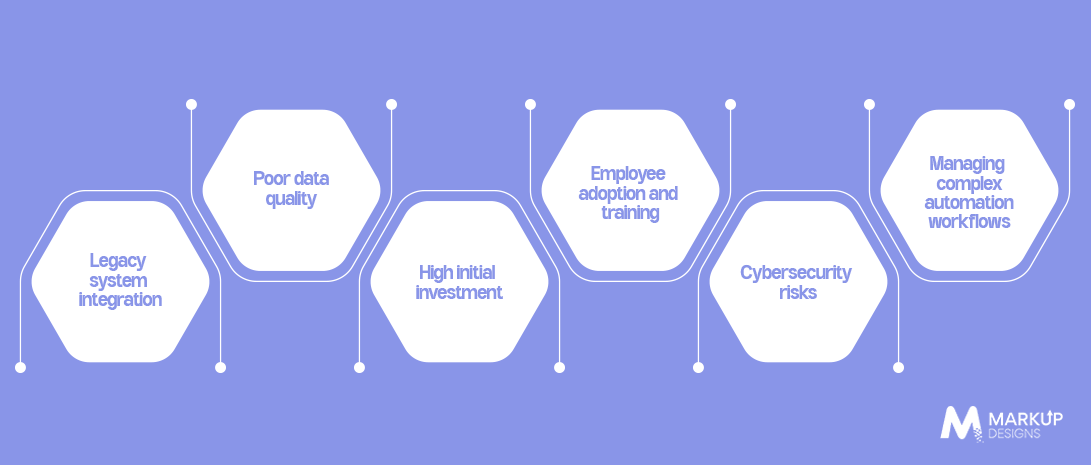
While automation can be very beneficial for improving the supply chain process, there may be some problems involved when creating and installing such software. Australian businesses need to deal with these problems in order to avoid complications.
Legacy system integration
The integration with the legacy ERP, warehouse, and transportation systems could prove challenging with respect to contemporary software.
Poor data quality
Poor quality or inaccurate data could lead to reporting, forecasting, and AI-powered decision-making errors.
High initial investment
The implementation of enterprise-level automation would require a significant amount of investment.
Employee adoption and training
Employees need proper training to feel comfortable using the automation system.
Cybersecurity risks
Cybersecurity measures are necessary for connected supply chain systems.
Managing complex automation workflows
As all enterprises have different workflows, automation needs to be customized accordingly.
Read Also: How to Build a Student Management Software System in Australia
How to Choose the Right Supply Chain Software Development Partner
A good choice of software development partners may make a difference in how well a supply chain automation project succeeds. Enterprise firms need to think beyond mere development skills and consider if the partner is familiar with their needs and demands.
Consider the following factors:
- Experience in Supply Chain: Experience with the development of logistics, procurement, warehousing, inventory, or enterprise software should be sought out.
- Technical Knowledge: They should possess technical knowledge in areas such as artificial intelligence, cloud, APIs, Internet of Things, data engineering, and enterprise integrations.
- Integration Capabilities: Make sure that they are capable of integrating the software platform into current ERP, WMS, TMS, CRM, and other business systems.
- Security and Compliance: Check their approach to cybersecurity, data protection, access management, and other Australian compliance should be assessed.
- Scalability: The software should be scalable to incorporate more users, facilities, suppliers, and other business processes.
- Post-Launch Assistance: They should provide post-launch support including maintenance, monitoring, upgrades, troubleshooting, and enhancements.
A strong development partner should also take time to understand the company’s existing supply chain before recommending technologies or features.
Ready to Build a Smarter Supply Chain?
Turn complex supply chain operations into connected, automated workflows with the right software strategy. From planning and procurement to inventory, transportation, and analytics, the right technology can help your enterprise operate with greater speed and visibility.

Conclusion
Automation of the supply chain will help Australian companies to be efficient, transparent, and robust despite rising costs, increased complexity, and disruptions within the supply chain. The use of an appropriate platform will help to consolidate procurement, inventory management, warehousing, transport, suppliers, and order fulfillment into a unified ecosystem using technology.
The use of AI, IoT, cloud computing in logistics, and advanced analytics would further help in making smart decisions within this ecosystem. The successful automation of the supply chain will depend on the right process, integration, technology, and development approach. The first step for organizations to make this happen will be to automate their key areas and measure progress made.
FAQs
1. What is supply chain automation software?
Supply chain automation software is a digital solution that automates and connects processes such as procurement, inventory management, warehousing, transportation, order processing, and supplier management.
2. How much does supply chain automation software development cost in Australia?
Depending on features and complexity, development can range from around AUD 70,000 to AUD 700,000+, while large-scale AI-powered enterprise platforms can cost AUD 1 million or more.
3. How does AI improve supply chain automation?
AI can support demand forecasting, inventory prediction, supplier-risk analysis, route optimization, anomaly detection, and intelligent decision-making.
4. What features should supply chain automation software include?
Common features include procurement management, inventory tracking, warehouse management, transportation management, supplier management, order management, analytics, alerts, and system integrations.
5. Can supply chain automation software integrate with existing ERP systems?
Yes. Custom supply chain platforms can integrate with ERP, WMS, TMS, CRM, eCommerce, accounting, supplier, and IoT systems through APIs and other integration methods.
Author's Perspective
Supply chain automation is more than a technology upgrade. Its real value lies in helping Australian enterprises make faster decisions, reduce repetitive work, and improve supply chain visibility. Businesses should begin with high-impact processes, connect automation with existing systems, and gradually introduce AI and predictive analytics. With the right strategy and development partner, automation can become a long-term business capability that improves efficiency, resilience, and supports sustainable growth.
Discuss Your Project NowGaurav Goyal
Global Sales- VP
Related Posts
BLE System Integration: Enterprise Applications, Architecture & Implementation...
Custom Enterprise App Development powering Dubai’s 2040 Vision

Inventory Management Software Development in UAE: Complete Guide...
Insights Are Valuable & Execution is Priceless
You’ve read about the digital future. Now, let’s build the infrastructure to take you there. Move your strategy from the page to the product.
Design Your Solution Now
Contact Us
Schedule The Appointment At Your Convenience Date And Time.
30 Min
Web Conference
Time Zone
Indian standard time (08:30pm)

Thanks For Getting In Touch!
You’ve Taken The First Step Toward Transforming Your Digital Presence. Our Experts Will Reach Out Shortly To Take It Forward.
Launch Your Dream Project
Provide a brief overview of your project, and our specialists will evaluate your requirements. We will connect with you to explore how the right digital solutions can help you launch faster.