

In Brief
- Comprehend how cloud technology is reshaping conventional supply chains into connected, smart, and highly resilient ecosystems.
- Understand its basic components, enterprise cloud architecture, and real-life usage examples that facilitate transportation, warehouse, and inventory management.
- Familiarise yourself with the advantages of cloud computing, including enhanced supply chain visibility and operational management, improved efficiency, reduction of costs, and speed of decision-making.
- Know how to implement cloud solutions successfully, avoiding obstacles and challenges while migrating.
- Gather information about important innovations like AI, IoT, predictive analytics technology, and edge computing that will influence the future of cloud logistics technology.
The logistics sector is experiencing unprecedented pressure to provide services faster than before, cope with more complicated supply chains, and meet the increasing customer requirements while keeping service prices low. Conventional logistics systems that often rely on old technologies and dispersed platforms cannot provide real-time visibility and flexibility that are so necessary today.
Cloud computing in logistics has changed the game by enabling firms to centralize information, automate processes, enable collaboration, and make informed decisions based on data.
From real-time shipment monitoring and smart warehouse management to AI-based demand forecasting and predictive routing solutions, cloud logistics systems have changed how logistics companies work today. Those enterprises that are embracing cloud technologies are not only raising efficiency levels of their operations but also creating reliable supply chains that can adjust to such challenges such as demand volatility and changes in customer behavior.
In this blog, we’ll learn about the principles of cloud computing in logistics, its basic elements, popular enterprise architectures, implementation stages, expenses, return on investment, and novelties that make logistics firms competitive in the modern market.
Why Cloud Computing is Transforming Modern Logistics
The world of logistics is changing dramatically due to higher demands from businesses on the ability to deliver products faster and reduce costs while being able to see every element in complex supply chains. Outdated systems and disjointed processes can no longer meet such needs. This is where cloud computing in logistics comes into picture. By helping businesses link together their activities and processes, cloud computing improves their ability to operate and ensure more efficient and data-driven operations.
The Growing Challenges in Traditional Logistics Operations
Traditional logistics systems use on-premises systems, manual operations, and non-integrated applications that can make it extremely hard for a business to maintain strong visibility in its supply chain, beat deadlines, and keep proper inventory records. Such challenges can arise, and more serious issues in the process of expansion that may require some businesses to deal with many warehouses, fleets, suppliers, and regions.
Making decisions and responding to problems becomes quite complicated without sufficient access to relevant information about what is going on in the supply chain at any moment in time.
What is Cloud Computing in Logistics?
Cloud computing in logistics represents the use of cloud-based application platforms for coordinating such processes as transportation, warehousing, inventory, shipment tracking, and supply chain operations through a centralised digital environment.
Businesses can access software and operational data from any location with internet connectivity rather than relying solely on on-premise servers for their IT infrastructure.
Through consolidating data from a multitude of systems in one place, cloud logistics solutions give firms a chance to benefit from real-time visibility throughout the supply chain, while also promoting cooperation among warehouses, carriers, suppliers, and consumers.
Why Cloud First Logistics is Becoming a Business Necessity
Because of consumer expectations, disruptions in the global supply chain, and complexities in operations, the transition to the cloud has become an essential prerequisite instead of being considered just an upgrade. Companies need an IT solution that will support their scaling efforts, allow for integration with existing infrastructure, and be adaptive to environmental changes.
The cloud-centric approach gives businesses the much-needed level of flexibility to deploy innovative solutions quickly, cut the expenditures on maintaining their own IT infrastructure, ensure data protection, and maintain business continuity.
Core Components of a Cloud-Based Logistics Ecosystem
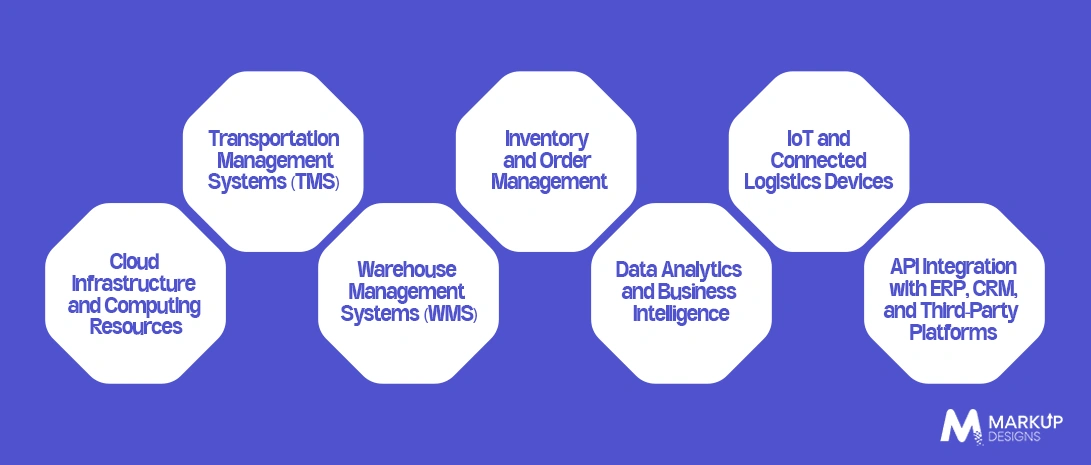
The cloud logistics ecosystem relies on the combination of various technologies so that information can travel without obstacles within transportation, warehousing, inventory management, and logistics systems.
Together, these components improve visibility, automate operations, and help organisations respond quickly to changing business demands.
Cloud Infrastructure and Computing Resources
The cloud infrastructure enables the operation of logistics applications in an efficient manner that doesn’t incur hefty costs associated with the installation of on-premises technology. The cloud infrastructure subscriptions can be adjusted in accordance with business needs, thus allowing companies to avoid unnecessary expenditure on infrastructure and achieve stable performance in peak periods.
The flexibility afforded by the cloud technology allows logistics companies to scale their operations faster as well as achieve operational reliability and a high level of availability.
Transportation Management Systems (TMS)
A cloud-based transportation management system (TMS) assists companies in the planning of cargo transport and shipment monitoring from one platform. It facilitates the process of carrier management, route planning, cargo shipment scheduling, and tracking.
It allows the businesses that use it to track route performance in real-time using such tools and technologies as live traffic monitoring and predictive analysis.
Warehouse Management Systems (WMS)
Cloud WMS provides companies with an opportunity to control warehouse operations in real-time. This includes issues related to inventory movement and storage allocation as well as order processing. Due to the automation of warehouse processes, companies can improve the accuracy of inventory, as well as cut down on additional costs in logistics.
When integrated with transportation and inventory systems, WMS creates a more connected and efficient warehouse environment.
Inventory and Order Management
Having accurate information in real time is crucial for managing inventory across various warehouses and selling points. Cloud inventory management helps in automatically updating the stock level, purchase orders, and customer orders to eliminate stock shortages and higher stocks of inventory.
The integrated order management helps to improve the fulfillment process as it ensures that the order processing is done promptly, precisely, and with proper visibility.
Data analytics and business intelligence
Every logistics process generates useful process-related data. Cloud analytics makes it possible to change this data into valuable decisions by means of dashboards, reports, and forecasts.
It allows businesses to track their delivery process, warehouse operations, transport costs, and clients’ requirements in real time, making decisions faster.
IoT and connected logistics devices
Cloud platforms can provide excellent results when using IoT devices, such as GPS, RFID, temperature gauges, and fleet systems. These devices allow for real-time data collection, monitoring, and analysis.
Read Also: Why Cloud is Essential for Successful Digital Transformation
API integration with ERP, CRM, and third-party platforms
Modern logistics operations are based on the use of many business tools, including ERP, CRM, accounting systems, suppliers’ sites, and e-commerce platforms.
One of the advantages of cloud-based APIs is their ability to automate data sharing between systems, thereby eliminating the requirement for manual tasks and reducing the occurrence of information silos. By helping the integration process between the networks of different companies, cloud-based systems enable corporations to take advantage of crucial technologies.
Enterprise Cloud Architecture for Logistics Companies
In essence, the correct architecture of a cloud system is essential for a successful transformation of logistics processes. Regardless of the cloud model your logistics business is required to use, be it public, private, or hybrid cloud and it has to meet the needs of your logistics company.
Public Cloud Architecture
In the case the logistics company aims for flexibility and cost-effectiveness, public clouds are the ideal solution as all resources are managed by third parties and the company does not have to invest in physical infrastructure as the workload changes.
Private Cloud Architecture
A private cloud provides a dedicated infrastructure for one company; hence, the level of control over the data and security increases.
It is commonly used by enterprises handling sensitive logistics information or operating in highly regulated industries where data privacy and customisation are critical.
Hybrid and Multi Cloud Architecture
Numerous logistics companies utilize a hybrid or multi-cloud approach to take advantage of the benefits that various cloud environments have. While crucial applications and sensitive information live on private cloud computing services, other types of information flow through the public cloud computational platforms. This solution leads to better flexibility, operational continuity, and financial efficiency while eliminating dependence on a single service provider.
Building a Secure, Scalable, and High-Availability Logistics Infrastructure
The cloud architecture must not only host applications but also provide high availability, automatic scalability, secure storage of information, the ability to recover from disasters, and allow for seamless communication with contractors, warehouses, and vendors. This results in a well-working logistics infrastructure that can keep working even during peak times or unforeseen circumstances.
Key Benefits of Cloud Computing in Logistics
The use of cloud computing enables logistics companies to improve operations by increasing visibility, automating many processes, and making data-based decisions. Here are some of the major benefits of this technology.
End-to-End Supply Chain Visibility
Cloud technologies allow communication between suppliers, customers, warehouses, and vehicles, giving them real-time data. Businesses that use cloud technology can provide precise information on the shipment’s location and respond to problems quicker and improving service.
Improved Fleet and Route Optimisation
Combining cloud programs with AI, GPS, and traffic monitoring allows logistics companies to spot the best delivery channels, save fuel, avoid delays in transportation, and use the fleet efficiently.
Smarter Warehouse Operations
Cloud WMS provides automation in a warehouse, allowing monitoring of inventory, allocating storage, picking, and shipping. It results in better accuracy in inventory, quicker deliveries, and reduced errors.
Reduced Infrastructure and Operational Costs
The cloud makes it possible for businesses not to install expensive server hardware, nor do they need to maintain their computers and servers. Thus, cloud computing is a good solution for cost savings and growing business at the same time.
Business Continuity and Disaster Recovery
Unexpected disruptions can impact logistics operations at any time. Cloud technologies help to minimize downtime due to improved disaster resistance and restoration solutions.
Stronger Security and Regulatory Compliance
Reputable cloud providers provide their customers with innovative protection mechanisms like encryption and identity management. This helps in safeguarding important logistics information while ensuring one’s adherence to regulatory requirements.
Faster Decision Making with Real-Time Analytics
Cloud technology utilizes analytical services that gather and process operational information, obtaining timely reports and dashboards. These enable businesses to monitor performance indicators, detect weaknesses, predict customer demands, and make decisions based on evidence rather than assumptions.
Scalability for Seasonal Demand and Business Growth
It is well known that logistics workloads fluctuate rarely. Thanks to cloud computing, businesses get an opportunity to scale computing devices, storage, and applications up and down in a matter of minutes during so-called peak seasons or under circumstances of business advancement.
Real World Applications of Cloud Computing in Logistics
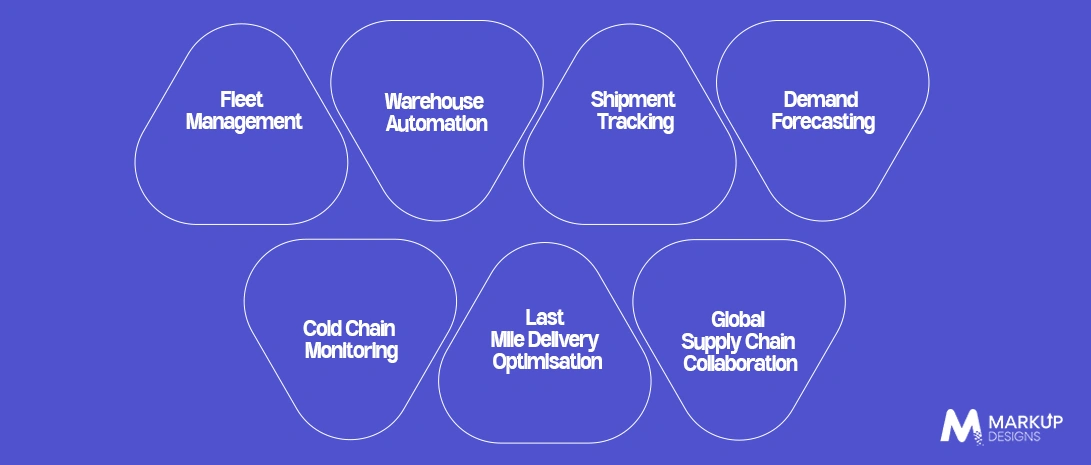
Today, cloud computing is not a tool for future use. It is gradually being implemented in logistics by businesses willing to optimize operations. Here are some cases of effective cloud solutions applied in the logistics industry.
Fleet Management
Fleet management systems that are based in the cloud allow companies to view the whereabouts of vehicles, fuel usage, driver performance, and maintenance schedules on a real-time basis. With having access to data on operations in a flash, companies can improve fleet utilization, decrease expenses, and make sure that deliveries are on time.
Warehouse Automation
Cloud/WMS systems enable companies to automate their inventory status updates, picking of orders from warehouses, allocation of storage space, and delivery of shipments. The usage of WMS systems decreases the need for human efforts and increases the accuracy of inventory records.
Shipment Tracking
A real-time shipment tracking system allows a company and its customers to follow the whole path of shipments during the delivery period. Cloud technologies provide a possibility to collect data from GPS equipment and logistics partners and thus help eliminate the problems with timely delivery.
Demand Forecasting
Using the data on past sales and customer behavior analysis, cloud-based analytical systems can help companies forecast demand better. With the help of demand forecasting data, companies can avoid shortage or overstocking.
Cold Chain Monitoring
Cold Chain Monitoring is a term used in the pharmaceutical and food industries, and with the help of Internet of Things (IoT) sensors, one can make sure to keep constant monitoring of temperatures, humidity, and storage conditions with the use of cloud-connected devices. Consequently, in case of any irregularities in the processes, businesses receive automatic alerts.
Last Mile Delivery Optimisation
Another function of cloud computing is optimizing last-mile delivery, which involves providing delivery services with relevant real-time updates from traffic, GPS, and the system that is capable of coming up with route recommendations. And because of same, delivery becomes easier and cheaper for customers.
Global Supply Chain Collaboration
Additionally, cloud solutions enable interaction among manufacturers, warehouses, and end-users, thus improving communication and paving the way for fast decision-making.
How AI, IoT, and Cloud Computing Work Together in Logistics
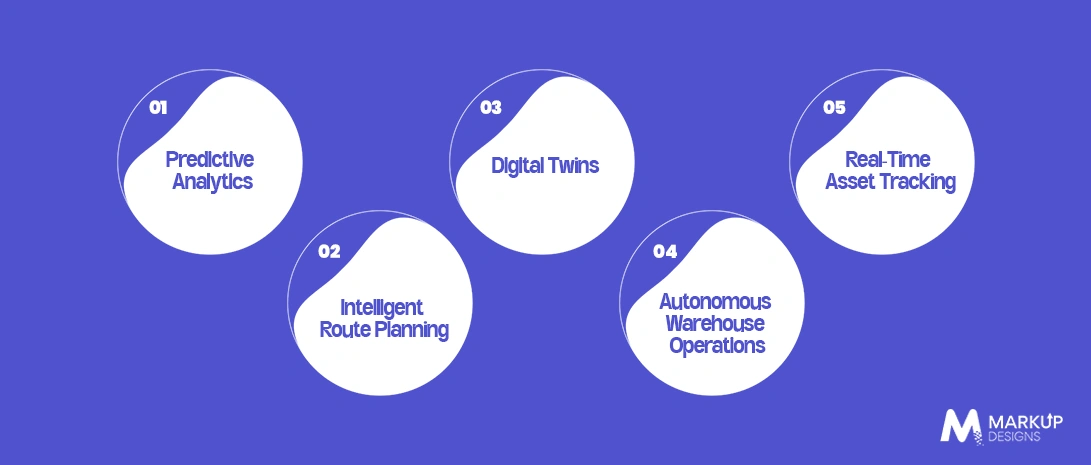
Cloud computing is necessary for the existence of AI and IoT, as the process requires some basis. Furthermore, it is worth mentioning that using different kinds of predictive analytics is an advantage of AI technology, since it helps organizations to know when they need to solve issues within the supply chain.
Predictive Analytics
Predictive analytics driven by AI employs cloud-based information, allowing the analysis of market needs, recognition of possible risks, and prediction of maintenance needs. This way, organizations can act preemptively before problems arise.
Intelligent Route Planning
AI studies the situation on the road, weather, delivery schedules, and vehicle capacity to advise the best delivery route. This way, the fuel burn decreases, the delivery time shortens, and the delivery process becomes more effective.
Digital Twins
A digital twin is a virtual representation of a logistics network that reflects operations in reality due to cloud resources. Organizations can do simulations and recognize possible problems to enhance logistics performance.
Autonomous Warehouse Operations
AI technologies in warehouses make it possible to accomplish routine work such as tracking inventory, sorting orders, and using robots for picking. This allows to improve productivity, elimination of human errors, and speed up delivery time.
Real-Time Asset Tracking
With the help of IoT sensors and GPS equipment, companies receive online information about the position and state of various objects, transferring this information to the cloud.
Cloud Migration Roadmap for Logistics Businesses
A successful move to the cloud necessitates a clear strategy to prepare for disruption and maximize value for the long term. This is achieved through structured migration approaches that enable a smooth transition while maintaining business continuity.
Assess Existing Infrastructure and Cloud Readiness
Assess your logistics application and IT systems’ current state. Identify performance gaps, integration limitations, and workloads that would benefit from moving to the cloud.
Define Business Goals and Migration Strategy
Identify clear objectives such as reduction of operational costs, improved visibility in supply chain processes, enhanced scalability, or improved performance of the systems. A well-defined strategy enables synchronization of the migration process with the company’s goals.
Select an Appropriate Cloud Service Provider
Select a cloud provider providing a high level of security, availability, scalability, compliance support, and integration with existing ERP, CRM, WMS, and Transportation Systems.
Design the Target Cloud Architecture
Design an ecosystem compliant with your operational needs while ensuring flexibility, security, disaster recovery, and scalability of data. Choosing among the public, private, or hybrid cloud solutions marks the critical part of that stage.
Migrate Applications and Data Safely
Move applications and data following safety standards. Implement thorough testing along with the migration process to reduce downtime.
Thorough testing throughout the migration process helps minimise downtime and protects business-critical information.
Test, Optimise, and Monitor Performance Continuously
Cloud migration is just the first step. Ongoing performance evaluation and monitoring, resource optimization in the cloud, security strengthening, and measurement of key metrics will increase the lifetime value of cloud technology.
Challenges of Cloud Adoption in Logistics and How to Overcome Them
Adopting cloud technology is not that simple, and it really requires thorough planning. Knowing about potential challenges and addressing them in advance makes it possible to make the most out of investment in cloud technology.
Legacy System Integration
Many logistics companies still run on obsolete ERP solutions, warehouse management systems, or custom software designed before the era of cloud computing. Integration complexities can be overcome by means of using APIs, gradual migration approaches, and engaging skilled cloud providers.
Data Security and Compliance
Due to the nature of the work, logistics companies deal with highly sensitive operational, financial, and customer-related data. Selecting a provider with good encryption and identity management systems as well as updating security services automatically helps to keep this data safe and in compliance with the regulations.
Downtime During Migration
Migrating applications and data without proper planning can disrupt daily operations. A phased migration approach, comprehensive testing, and disaster recovery planning minimise downtime and ensure business continuity throughout the transition.
Cost Management
Without proper monitoring, cloud costs can increase due to unused resources or inefficient workloads. Regular cost audits, resource optimisation, and pay-as-you-go pricing models help businesses maintain control over cloud spending.
Workforce Adoption and Training
Technology alone cannot drive transformation. Employees must understand how to use new cloud platforms effectively. Providing hands-on training and continuous support encourages adoption and helps businesses realise the full benefits of cloud computing.
Cost of Implementing Cloud Computing in Logistics
Cloud implementations typically vary in cost depending on how large a firm is, what sort of infrastructure it already has, and how complicated its logistics operations are. Understanding cost drivers allows firms to make better investment decisions.
Factors That Influence Cloud Implementation Costs
Cloud implementation costs depend on the type of cloud model, number of users, data migration needs, software integrations, security features, infrastructure upgrades, and necessary level of customisation. Ongoing support is also an important factor in estimating the overall cost of implementation.
Typical Cost Breakdown for Small, Mid-Sized, and Enterprise Logistics Businesses
Small logistics firms usually begin with cloud-based Software as a Service (SaaS) solutions that involve very low initial investment. Mid-sized companies usually decide to invest in customised clouds so that it is easy to integrate such solutions as ERP and CRM systems. Large logistics firms need large-scale cloud solutions involving great security, artificial intelligence capabilities, and multi-location deployments.
Strategies to Optimise Cloud Spending
Businesses can achieve savings in cloud implementation by choosing the right deployment model, cancelling unused resources, automating workloads process, and monitoring usage all the time. Regular performance reviews also help ensure infrastructure remains aligned with business requirements as operations grow.
Measuring ROI of Cloud Computing in Logistics
The use of cloud technology is expected to create tangible business results instead of just being a substitute for existing systems. The right key performance indicators can be identified in order to judge the success of a cloud transformation project.
Key Performance Metrics to Track
Important metrics to be identified include the time to process orders, the accuracy of delivery, the turnover of excess inventory, the efficiency of transporting goods, and various others. By examining these KPIs, companies get a clearer understanding of how their operations changed before and after moving to the cloud.
Cost Savings and Operational Efficiency
Implementing cloud technology reduces companies’ spending on hardware and keeps costs for maintenance low as well. This enables firms to save money.
Productivity, Customer Satisfaction, and Revenue Growth
Cloud adoption allows faster decision-making, increased visibility during delivery, and easier logistics processes. High efficiency in operations generally leads to better retention of customers and higher profits.
Calculating Cloud ROI and Payback Period
The return on investment can be calculated by comparing the money spent for implementation of cloud technologies and the total savings in the long term as well as improvements in productivity.
Read Also: ROI of Cloud Computing: Is It Really Worth the Investment?
Future Trends in Cloud-Powered Logistics
Cloud computing is one of the areas of technology that the world is constantly improving, as a result of which supply chain systems are becoming more efficient and smart than ever before. Companies that are willing to adopt the new technologies are likely to experience more success in decreasing their expenditures, improving efficiency, and remaining competitive in the world of logistics.
AI Native Supply Chains
Artificial Intelligence has moved one step further from automation and established intelligent supply chains, which allow companies to accurately predict demand, identify potential risks, optimise their inventory, and make operational decisions in real time.
Edge Computing
Data processing is conducted in closer proximity to connected devices. This reduces latency and allows for timely decision-making.
Blockchain Enabled Logistics
Blockchain enables companies to maintain supply chain records securely to make every transaction and shipment tamper-proof.
Sustainable and Green Logistics
Cloud systems give organisations the chance to reduce their fuel consumption, optimise their logistics routes, and enhance warehouse monitoring and management.
Autonomous Supply Chain Operations
The future of logistics is in fully autonomous systems, where AI, robotics, IoT, and cloud computing technologies work efficiently together to facilitate logistics operations.
This shift will enable businesses to build faster, more resilient, and increasingly self-optimising supply chains.
Why Choose Markup Designs for Cloud Logistics Solutions?
Cloud transformation requires the right strategy and technology partner. Markup Designs helps logistics businesses design, migrate, and optimise cloud solutions that improve visibility, automate operations, and enhance supply chain performance.
From cloud consulting and custom logistics software development to AI integration, API connectivity, and post-deployment support, we deliver scalable, secure, and future-ready cloud ecosystems. Backed by 12+ years of experience, 300+ technology experts, 350+ technologies, 10,000+ successful projects, and 8,000+ global collaborations, we help businesses accelerate digital transformation with confidence.
Build a Smarter, More Resilient Logistics Ecosystem with Markup Designs
Modern logistics demands speed, visibility, and scalability. Whether you’re planning a cloud migration, modernising legacy systems, or building a cloud native logistics platform, Markup Designs delivers secure, AI-powered, and future-ready cloud solutions tailored to your business.

Conclusion
Cloud computing is reshaping logistics by improving supply chain visibility, automating operations, and enabling faster, data-driven decisions. As AI, IoT, and predictive analytics continue to evolve, cloud-powered logistics will become essential for businesses seeking long-term growth and operational resilience.
By adopting the right cloud strategy and partnering with an experienced technology partner, organisations can build smarter, faster, and more efficient supply chains that are ready for future challenges.
FAQs
1. What is cloud computing in logistics?
It is the use of cloud-based platforms to manage transportation, warehousing, inventory, and supply chain operations through a secure, centralised environment.
2. What are the benefits of cloud computing for logistics companies?
It improves supply chain visibility, reduces operational costs, enhances scalability, strengthens security, and enables real-time decision-making.
3. How much does cloud implementation cost?
The cost depends on business size, deployment model, integrations, customisation, and migration complexity. Small businesses typically invest less than enterprise organisations.
4. How long does cloud migration take?
Simple migrations may take a few weeks, while enterprise logistics systems with multiple integrations can take several months.
5. How do you measure cloud migration ROI?
Track improvements in operational costs, system uptime, delivery performance, productivity, customer satisfaction, and overall business efficiency.
6. Which cloud deployment model is best for logistics?
It depends on your business needs. Public cloud offers scalability, private cloud provides greater control, while hybrid cloud balances flexibility, security, and performance.
Author's Perspective
Cloud computing has become the foundation of modern logistics, enabling businesses to move beyond fragmented operations and build connected, data-driven supply chains. However, successful cloud adoption is not just about migrating infrastructure. It requires a well-planned strategy, the right architecture, and seamless integration with existing logistics systems.
As AI, IoT, and real-time analytics continue to reshape the industry, organisations that invest in scalable cloud solutions today will be better equipped to improve efficiency, respond to disruptions, and maintain a competitive edge in an increasingly digital logistics landscape.
Discuss Your Project NowGaurav Goyal
Global Sales- VP
Related Posts

How Cloud Product Development Helps Businesses Build Faster...
Cloud Services Company in Kuwait: Benefits, Solutions &...
How is DevOps Charting a New Model for...
Insights Are Valuable & Execution is Priceless
You’ve read about the digital future. Now, let’s build the infrastructure to take you there. Move your strategy from the page to the product.
Design Your Solution Now
Contact Us
Schedule The Appointment At Your Convenience Date And Time.
30 Min
Web Conference
Time Zone
Indian standard time (08:30pm)

Thanks For Getting In Touch!
You’ve Taken The First Step Toward Transforming Your Digital Presence. Our Experts Will Reach Out Shortly To Take It Forward.
Launch Your Dream Project
Provide a brief overview of your project, and our specialists will evaluate your requirements. We will connect with you to explore how the right digital solutions can help you launch faster.