

In Brief
- Cloud computing is the foundation of successful digital transformation, helping businesses modernize operations, improve agility, reduce costs, and accelerate innovation through scalable and secure infrastructure.
- By enabling technologies such as AI, automation, analytics, and cloud-native applications, the cloud helps organizations deliver better customer experiences, make data-driven decisions, and adapt quickly to changing market demands.
- Businesses can choose from different cloud deployment models (public, private, hybrid, and multi-cloud) and service models (IaaS, PaaS, SaaS, and FaaS) based on their operational, security, and scalability requirements.
- A successful cloud transformation requires a clear strategy that includes assessing existing infrastructure, defining business goals, planning migration, strengthening security, modernizing applications, training teams, and continuously optimizing cloud performance.
- Although challenges such as legacy systems, data migration, security, compliance, vendor lock-in, and cloud cost management exist, following best practices and partnering with experienced cloud experts enables businesses to achieve long-term digital transformation success.
Today, digital transformation is no longer just a trend-it’s a business necessity. Organizations across industries are embracing new technologies to improve customer experiences, streamline operations, reduce costs, and stay ahead of the competition. However, achieving these goals requires more than adopting digital tools. Businesses need a flexible, scalable, and secure technology foundation that can support continuous innovation, and that’s where cloud computing plays a vital role.
Cloud technology enables organizations to modernize their IT infrastructure, access data from anywhere, scale resources on demand, and launch new digital initiatives much faster than traditional systems. Whether you’re a startup or a large enterprise, the cloud provides the agility needed to adapt to changing market demands.
In this blog, we’ll explore why cloud computing is essential for successful digital transformation, the key benefits it offers, how it supports business growth, common adoption challenges, and the best strategies to build a future-ready, cloud-powered enterprise.
What is Digital Transformation?
Digital transformation is the process of using digital technologies to improve the way a business operates, delivers products or services, and creates value for its customers. It is not just about replacing manual processes with digital tools, it is about rethinking business models, improving customer experiences, and making smarter and data-driven decisions.
Today, customers expect faster services, personalized experiences, and seamless digital interactions. At the same time, businesses face increasing competition, evolving market demands, and the need to operate more efficiently. Digital transformation helps organizations meet these expectations by integrating technologies like cloud computing, artificial intelligence (AI), data analytics, automation, and the Internet of Things (IoT) into their daily operations.
A successful digital transformation strategy can help businesses:
- Improve operational efficiency through automation.
- Enhance customer experiences across digital channels.
- Increase agility to respond to market changes faster.
- Make informed decisions using real-time data and analytics.
- Reduce operational costs by optimizing business processes.
- Drive innovation with modern technologies and scalable solutions.
However, digital transformation also comes with challenges. Many businesses face issues like outdated systems, scattered data, security risks, limited budgets, and difficulty adapting to new technologies. Without the right technology foundation, digital transformation can become costly, time-consuming, and hard to scale as the business grows.
This is where cloud computing becomes essential. It provides the flexibility, scalability, and infrastructure needed to support a digital transformation strategy, making it easier for businesses to innovate, collaborate, and grow in an increasingly digital world.
What is Cloud Computing?
Cloud computing is the delivery of computing services such as servers, storage, databases, networking, software, and analytics over the internet instead of relying on physical, on-premises infrastructure. Rather than investing in an expensive hardware and maintaining complex IT systems, businesses can access these resources on demand and pay only for what they use.
With cloud computing, organizations can quickly deploy applications, store and manage large volumes of data, collaborate across teams, and scale their infrastructure based on changing business needs. This flexibility makes it an ideal technology for companies looking to innovate and adapt in a fast-moving digital landscape.
Depending on business requirements, organizations can choose from different cloud deployment models:
- Public Cloud: Resources are hosted and managed by a third-party cloud provider, making it a cost-effective option for businesses seeking flexibility and scalability.
- Private Cloud: Dedicated cloud infrastructure designed for a single organization, offering greater control, security, and customization.
- Hybrid Cloud: A combination of public and private cloud environments that allows businesses to balance security, performance, and cost.
- Multi-Cloud: The use of services from multiple cloud providers to improve reliability, avoid vendor lock-in, and optimize workloads.
Today, cloud computing is more than just an IT solution, it is the backbone of digital transformation. It empowers businesses to innovate faster, improve operational efficiency, support remote work, and adopt advanced technologies like artificial intelligence, big data analytics, and automation with ease.
The Importance of Cloud Computing in Digital Transformation
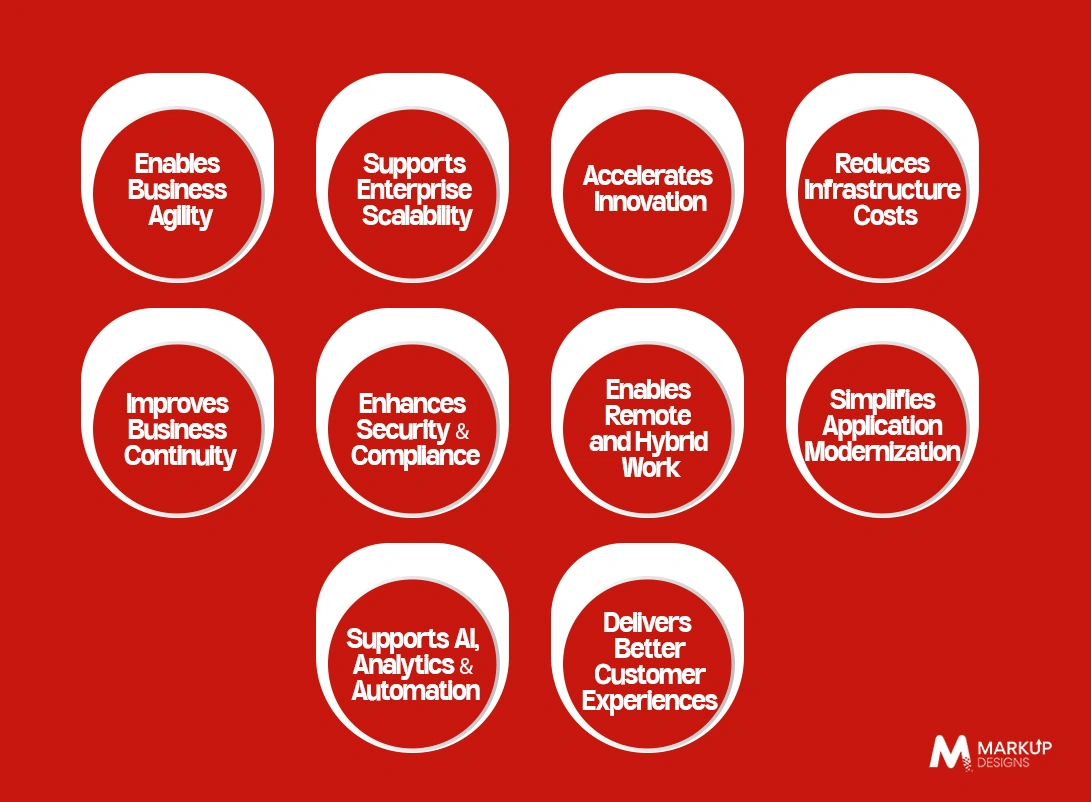
Cloud computing has become the backbone of modern digital transformation. It provides the flexibility, speed, and scalability businesses need to innovate, adapt to market changes, and deliver better customer experiences. By moving to the cloud, organizations can modernize legacy systems, improve collaboration, and leverage emerging technologies without the limitations of traditional IT infrastructure.
1. Enables Business Agility
Cloud platforms allow businesses to deploy applications, launch new services, and respond to market changes much faster. This agility helps organizations innovate continuously and stay ahead of competitors.
2. Supports Enterprise Scalability
As business requirements grow, cloud infrastructure can easily scale resources up or down without significant hardware investments. This ensures optimal performance while controlling operational costs.
3. Accelerates Innovation
Cloud environments provide quick access to advanced technologies such as artificial intelligence, machine learning, IoT, and big data analytics, enabling businesses to build innovative products and services faster.
4. Reduces Infrastructure Costs
Cloud computing eliminates the need for an expensive on-premises servers and ongoing maintenance. Businesses pay only for the resources they use, improving cost efficiency and maximizing ROI.
5. Improves Business Continuity
With automated backups, disaster recovery, and high availability, cloud platforms help businesses minimize downtime and maintain operations even during unexpected disruptions.
6. Enhances Security & Compliance
Leading cloud providers offer enterprise-grade security features, including data encryption, identity management, continuous monitoring, and compliance with global industry standards to protect sensitive business information.
7. Enables Remote and Hybrid Work
Cloud-based applications allow employees to securely access business systems, collaborate in real time, and work from anywhere, improving productivity and workforce flexibility.
8. Simplifies Application Modernization
Organizations can modernize legacy applications, migrate workloads efficiently, and adopt cloud-native architectures that improve performance, reliability, and long-term scalability.
9. Supports AI, Analytics, and Automation
Cloud platforms make it easier to process large volumes of data and integrate AI-powered tools, enabling smarter decision-making, workflow automation, and predictive business insights.
10. Delivers Better Customer Experiences
By providing faster application performance, personalized services, and real-time customer insights, cloud computing helps businesses enhance customer satisfaction and build lasting relationships.
Ready to Accelerate Your Digital Transformation Journey?
Whether you’re planning cloud migration, application modernization, or enterprise cloud adoption, our cloud experts help you build scalable, secure, and future-ready digital solutions.

Key Benefits of Cloud Computing for Digital Transformation
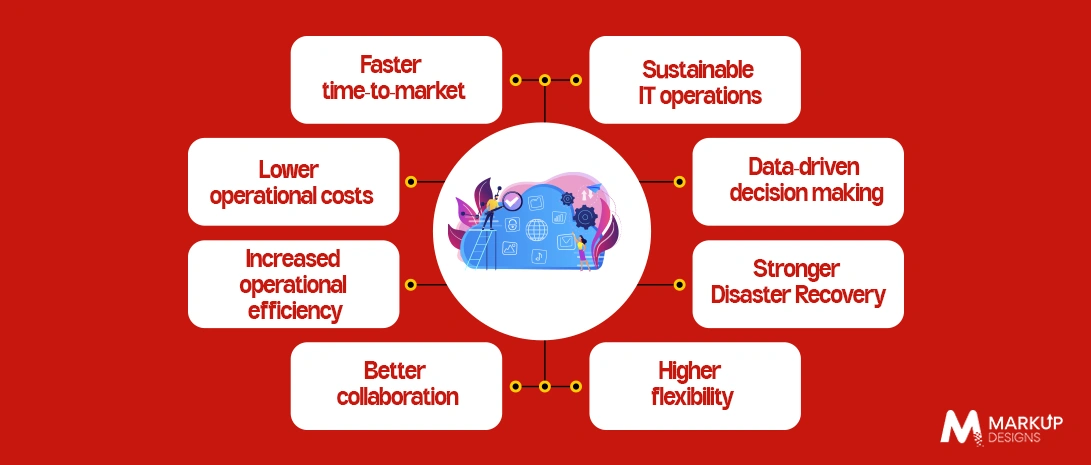
Cloud computing delivers far more than flexible IT infrastructure, it creates measurable business value. By enabling organizations to operate more efficiently, innovate faster, and adapt to changing customer expectations, cloud becomes a key driver of successful digital transformation. Here are some of the biggest benefits businesses can achieve through cloud adoption.
Faster Time-to-Market
Cloud platforms enable rapid mobile application development, testing, and deployment. Businesses can launch new products, services, and updates much faster, helping them respond quickly to market opportunities and customer needs.
Lower Operational Costs
With a pay-as-you-go pricing model, businesses avoid large upfront investments in hardware and infrastructure. Reduced maintenance, lower energy consumption, and automated resource management further decrease operating expenses.
Increased Operational Efficiency
Cloud-based tools automate routine tasks, simplify IT management, and improve workflow efficiency. Employees spend less time managing systems and more time focusing on strategic business initiatives.
Better Collaboration
Cloud technology allows teams to access files, applications, and business data from anywhere. Real-time collaboration improves communication, supports remote work, and enhances overall productivity across departments.
Higher flexibility
Businesses can quickly scale computing resources up or down based on demand. This flexibility ensures consistent performance during peak workloads while preventing unnecessary infrastructure costs.
Stronger Disaster Recovery
Cloud providers offer automated backups, disaster recovery solutions, and geographically distributed data centers. This helps businesses recover quickly from unexpected outages while minimizing downtime and data loss.
Data-Driven Decision Making
Cloud platforms integrate with analytics and business intelligence tools, enabling organizations to collect, analyze, and visualize data in real time. These insights support faster, more informed business decisions.
Sustainable IT Operations
Cloud computing reduces the need for energy-intensive on-premises infrastructure. Optimized resource utilization and energy-efficient data centers help organizations lower their carbon footprint while supporting long-term sustainability goals.
Read Also: Why Businesses Fail to Optimize Cloud Costs
Cloud Service Models That Drive Digital Transformation
Choosing the right cloud service model is a critical step in any digital transformation strategy. Each model offers different levels of control, flexibility, and management, allowing businesses to select the option that best aligns with their operational needs, budget, and long-term goals.
| Cloud Service Model | What It Offers | Best For |
| Infrastructure as a Service (IaaS) | Provides virtual servers, storage, networking, and computing resources over the cloud. Businesses manage applications and operating systems while the provider manages the infrastructure. | Organizations seeking maximum control over their IT environment and scalable infrastructure. |
| Platform as a Service (PaaS) | Offers a complete development platform with tools, frameworks, and runtime environments for building, testing, and deploying applications. | Businesses focused on faster application development without managing underlying infrastructure. |
| Software as a Service (SaaS) | Delivers ready-to-use software applications through the internet, eliminating installation and maintenance requirements. | Companies looking for cost-effective business applications with minimal IT management. |
| Function as a Service (FaaS) | Allows developers to run individual functions or code in response to events without managing servers, commonly known as serverless computing. | Businesses building event-driven applications, APIs, and microservices with automatic scaling. |
How to Build a Successful Cloud Transformation Strategy
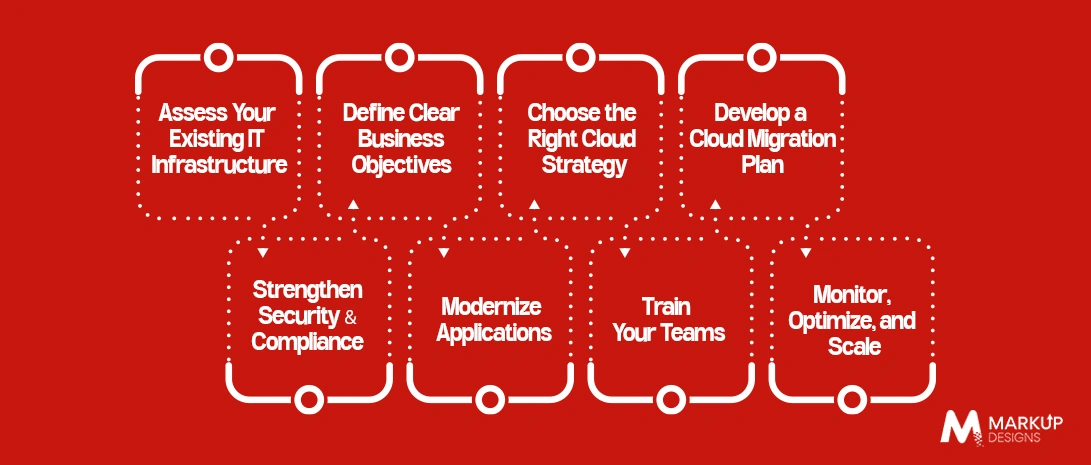
A successful cloud transformation requires more than migrating data and applications to the cloud. Businesses need a well-defined strategy that aligns cloud adoption with their long-term goals, minimizes risks, and maximizes return on investment. Following a structured approach helps organizations achieve a smooth transition while ensuring security, scalability, and business continuity.
Step 1: Assess Your Existing IT Infrastructure
Start by evaluating your current applications, workloads, data, and infrastructure. Identify legacy systems, performance bottlenecks, and modernization opportunities to determine what should be migrated, upgraded, or replaced.
Step 2: Define Clear Business Objectives
Establish measurable goals for your cloud transformation, such as reducing operational costs, improving scalability, accelerating innovation, enhancing customer experiences, or increasing business agility.
Step 3: Choose the Right Cloud Strategy
Select the cloud deployment model-public, private, hybrid, or multi-cloud-that best suits your business needs. Also, decide whether a lift-and-shift, re-platforming, or cloud-native modernization approach is most appropriate.
Step 4: Develop a Cloud Migration Plan
Create a phased migration roadmap that prioritizes critical workloads, minimizes downtime, and ensures business continuity. Testing each migration stage helps reduce risks and avoid unexpected disruptions.
Step 5: Strengthen Security & Compliance
Implement robust security measures, including identity and access management, data encryption, continuous monitoring, and compliance with industry regulations to safeguard sensitive business information.
Step 6: Modernize Applications
Optimize existing applications for cloud environments by adopting microservices, containers, APIs, and serverless technologies. Modern applications deliver better performance, scalability, and user experiences.
Step 7: Train Your Teams
Equip employees with the skills needed to manage cloud platforms, adopt new technologies, and follow cloud security best practices. A well-trained workforce is essential for long-term success.
Step 8: Monitor, Optimize, and Scale
Cloud transformation is an ongoing process. Continuously monitor performance, optimize resource utilization, manage cloud costs, and scale infrastructure based on changing business demands to maximize value from your cloud investment.
AWS vs Google Cloud for Mobile Apps: Which is Better in 2026?
Discover how mobile app development can help businesses improve customer engagement, increase sales, strengthen brand loyalty, and stay ahead in an increasingly mobile-first world.

Common Cloud Adoption Challenges and How to Overcome Them
While cloud computing offers significant advantages, businesses may encounter challenges during adoption. Understanding these obstacles and implementing the right strategies can ensure a smooth and successful cloud transformation.
| Challenge | Solution |
| Legacy Systems | Modernize applications and migrate workloads in phases. |
| Data Migration Complexity | Develop a detailed migration strategy and validate data before deployment. |
| Security & Privacy Concerns | Implement encryption, multi-factor authentication, and continuous monitoring. |
| Compliance Requirements | Choose cloud platforms that meet industry and regional compliance standards. |
| Vendor Lock-In | Adopt hybrid or multi-cloud strategies and use open standards. |
| Cloud Cost Management | Monitor resource usage and implement FinOps practices to optimize spending. |
| Skills Gap | Invest in cloud training or partner with an experienced cloud consulting company. |
Best Practices for Cloud-Led Digital Transformation
A successful cloud transformation goes beyond technology-it requires the right strategy, governance, and continuous improvement. Following these best practices can help businesses maximize the value of their cloud investments.
- Develop a Cloud-First Strategy: Align cloud initiatives with your long-term business goals and digital transformation roadmap.
- Prioritize Security from Day One: Build security into every stage of your cloud journey using encryption, identity management, and continuous monitoring.
- Choose the Right Cloud Architecture: Select the deployment and service models that best support your workloads, scalability, and compliance requirements.
- Modernize Applications Gradually: Upgrade legacy applications in phases to reduce risks and improve performance.
- Automate Business Processes: Use cloud-based automation to streamline operations, reduce manual tasks, and improve efficiency.
- Leverage AI and Data Analytics: Integrate intelligent technologies to gain actionable insights and support data-driven decision-making.
- Continuously Monitor Performance: Track cloud performance, costs, and security to identify optimization opportunities.
- Measure Business Outcomes: Define KPIs to evaluate the success of your cloud transformation and ensure continuous improvement.
Why Choose Markup Designs for Cloud Transformation Services
At Markup Designs, we help businesses unlock the full potential of cloud computing through customized, secure, and scalable cloud solutions. From strategy and migration to modernization and ongoing optimization, our experts deliver end-to-end cloud transformation services that align with your business objectives.
Why businesses partner with us:
- Cloud consulting tailored to your business goals
- Secure and seamless cloud migration services
- Cloud-native application development and modernization
- Multi-cloud and hybrid cloud expertise
- DevOps implementation and workflow automation
- AI, analytics, and cloud integration capabilities
- Enterprise-grade security and compliance practices
- Continuous monitoring, optimization, and managed support
- Scalable solutions designed for long-term business growth
Whether you’re starting your cloud journey or optimizing an existing environment, we provide the expertise needed to accelerate innovation and achieve measurable business outcomes.
Transform Your Business with Cloud-First Innovation
Modernize your infrastructure, accelerate digital transformation, and unlock scalable growth with secure, future-ready cloud solutions tailored to your business goals.

Conclusion
Cloud computing has become the driving force behind successful digital transformation. It enables businesses to innovate faster, improve operational efficiency, scale on demand, and deliver exceptional customer experiences while reducing infrastructure costs. More importantly, it provides the flexibility needed to adapt to evolving market conditions and emerging technologies.
As organizations continue their digital transformation journeys, adopting a cloud-first approach is no longer optional-it’s a strategic necessity. By choosing the right cloud strategy and partnering with experienced cloud experts, businesses can build a resilient, future-ready enterprise that is prepared for long-term success.
FAQs
1. Why is cloud computing important for digital transformation?
Cloud computing provides the scalability, flexibility, and agility businesses need to modernize operations, innovate faster, and support digital transformation initiatives.
2. How does cloud computing improve business efficiency?
It automates IT operations, enables remote collaboration, reduces infrastructure management, and allows employees to access applications and data from anywhere.
3. Which cloud deployment model is best for digital transformation?
The best model depends on business needs. Public, private, hybrid, and multi-cloud environments each offer unique benefits for different workloads and security requirements.
4. What are the biggest benefits of cloud adoption?
Key benefits include lower costs, improved scalability, faster innovation, enhanced security, business continuity, and better customer experiences.
5. What challenges do businesses face during cloud migration?
Common challenges include legacy systems, data migration complexity, compliance requirements, security concerns, vendor lock-in, and managing cloud costs.
Author's Perspective
Cloud computing is no longer just an infrastructure upgrade-it has become the foundation of modern business transformation. Organizations that embrace cloud technologies gain the flexibility to innovate, respond quickly to changing market demands, and leverage emerging technologies such as AI, automation, and advanced analytics. However, successful cloud adoption requires careful planning, strong governance, and a long-term strategy aligned with business goals. Businesses that invest in the right cloud ecosystem today will be better equipped to drive innovation, improve resilience, and maintain a competitive advantage in an increasingly digital world.
Discuss Your Project NowAjit Kumar Jha
VP - Business Operations
Related Posts
How is DevOps Charting a New Model for...

Green Cloud Computing: Sustainable Cloud Strategies for Modern...

Cloud Computing in Logistics: Building Smarter, Faster, and...
Insights Are Valuable & Execution is Priceless
You’ve read about the digital future. Now, let’s build the infrastructure to take you there. Move your strategy from the page to the product.
Design Your Solution Now
Contact Us
Schedule The Appointment At Your Convenience Date And Time.
30 Min
Web Conference
Time Zone
Indian standard time (08:30pm)

Thanks For Getting In Touch!
You’ve Taken The First Step Toward Transforming Your Digital Presence. Our Experts Will Reach Out Shortly To Take It Forward.
Launch Your Dream Project
Provide a brief overview of your project, and our specialists will evaluate your requirements. We will connect with you to explore how the right digital solutions can help you launch faster.