
In Brief
- A compliant Azure cloud platform will help companies in UAE to keep their sensitive information safe, control access, minimize security threats, and comply with relevant regulations. Microsoft Azure has good tools for compliance; however, companies need to properly configure them.
- Companies in UAE need to know about the PDPL of UAE, data protection regulations of the DIFC and ADGM, and industry requirements for compliance. Additionally, they have to be concerned about data residency, cross-border transfers, data retention, audit logs, and reporting.
- Creating a compliant Azure environment requires knowing about data and compliance needs, choosing proper Azure regions, designing the architecture of the cloud environment, controlling access using Microsoft Entra ID and RBAC, securing the data, and automating compliance processes.
- Major Azure services are Azure Policy, Microsoft Defender for Cloud, Azure Monitor, Log Analytics, Azure Key Vault, Azure Backup, and Azure Site Recovery. The major concerns include compliance, integration with old systems, unnecessary access for users, incomplete auditing, and costs associated with cloud management.
- UAE companies should consider compliance as an ongoing process through continuous assessment, monitoring, reviewing access, and recovery planning. Markup Designs can help businesses in creating a scalable and secure Azure architecture as per their business and compliance requirements.
Cloud computing has grown in popularity as a tool for managing the company’s data, applications, and other operations within the UAE. A number of businesses have adopted the Microsoft Azure services to achieve greater scalability and better security, and ensure the successful growth of the business. Nevertheless, cloud migration should be considered alongside compliance with specific regulations required of the business.
For companies based in UAE, it means being ready to comply with data residency, privacy rules, access, and security regulations from the very beginning. An improper implementation of cloud technology may result in certain gaps concerning compliance, security, and auditing.
The creation of a compliance-ready Azure cloud infrastructure ensures that companies fulfill their compliance-related responsibilities as well as maintain their operations safely and reliably. In this blog post, we will discuss compliance requirements for UAE, how you can build your Azure environment to meet those requirements, what tools can assist you, and what challenges you can expect.
What is a Compliance-Ready Azure Cloud Infrastructure?
A compliance-ready Azure cloud infrastructure is a cloud infrastructure that conforms to the regulations, policies, and security controls that are required of a business. This cloud infrastructure makes use of Microsoft Azure services, policies, and security controls in order for organizations to safeguard their data, secure their access, and be in control of their cloud infrastructure operations.
When talking about compliance-ready Azure cloud infrastructure, in the context of an organization in the UAE, it requires more than just housing the data in one location. Organizations also need to think of data collection, processing, access, transmission, and retention in relation to the industry and the regulations.
A typical compliance-ready cloud infrastructure will have secure cloud infrastructure design, identity & access management, encryption, monitoring, backups, and compliance assessments.
It is equally crucial to know that the utilization of Azure does not imply compliance per se. The platform offers a number of features enabling compliance, but these have to be configured properly for one’s business to achieve compliance through its use.
In simple terms, the infrastructure ready for compliance offered by Azure helps organizations create cloud environments that are secured and managed as required by various compliance rules.
Why Do UAE Businesses Need a Compliance-Ready Azure Infrastructure?
With increased cloud adoption by UAE businesses, it has become essential for them to ensure data protection and compliance with requirements. A compliance-enabled Azure platform will assist businesses in fulfilling these requirements while meeting their business requirements.
Here are some essential reasons for its importance:
1. Protect Business-Sensitive Information
UAE businesses deal with a lot of business-sensitive data, including customer information, financial data, employee data, etc. Proper security controls will help them keep the data safe from any unauthorized access, data leakage, or cyberattacks.
2. Compliance with Regulatory Requirements
UAE businesses may be required to comply with data protection laws and other industry-specific compliance requirements. Azure can help them meet these requirements through appropriate controls and record-keeping.
3. Better Data Management and Control
Proper data management policies assist businesses in understanding the data storage location, access, and processing/transferring of data.
4. Minimize Security and Compliance Risk
Monitoring, access, and automated policy checks will assist in identifying configuration problems that could otherwise become a larger issue.
5. Build Customer Trust
Businesses can gain more trust from their clients when they take care of their data and have good security processes in place.
Ultimately, a compliance-ready Azure infrastructure helps UAE businesses manage risk, improve accountability, and build a stronger foundation for long-term cloud adoption.
Key UAE Compliance Requirements to Consider Before Building on Azure
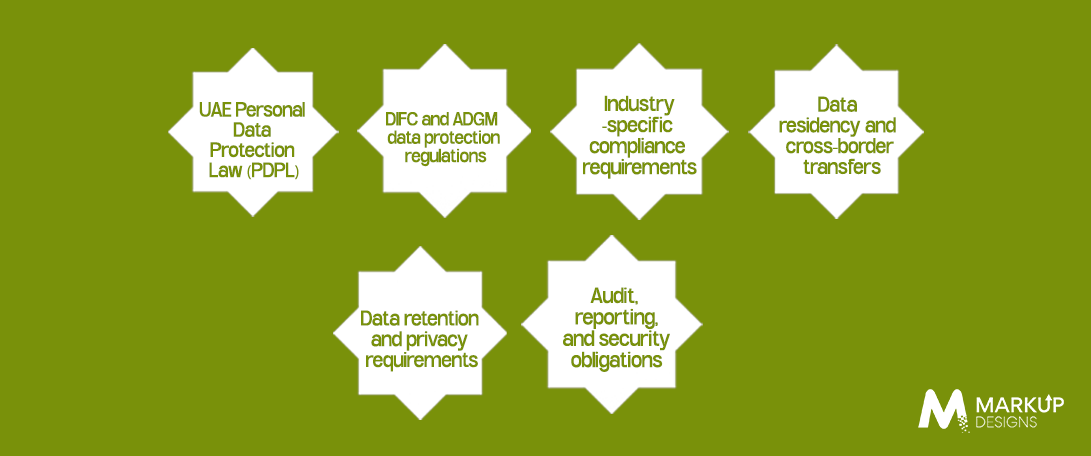
Before building the Azure cloud platform, companies in the UAE must be aware of what regulations and requirements are relevant to them. This might have implications for how information is stored, processed, accessed, and moved across different jurisdictions.
The following are six major areas that must be taken into consideration.
UAE Personal Data Protection Law (PDPL)
UAE PDPL imposes requirements for the processing and protection of personal data under its purview. Companies must check their responsibilities relating to consent, rights of the data subject, security, and international data transfer.
DIFC and ADGM data protection regulations
Companies working within the DIFC or ADGM are required to comply with their data protection laws, which are separate from the federal PDPL.
Industry-specific compliance requirements
The financial services industry, the health care sector, and other regulated industries could have further requirements regarding the handling, cybersecurity, archiving, and reporting of data.
Data residency and cross-border transfers
Organizations should determine where their data resides and is processed, and also where their backup and disaster recovery copies of the data are stored. The selection of Azure regions and cross-border transfer of data need to be done in accordance with relevant laws and agreements.
Data retention and privacy requirements
Organizations should formulate policies regarding the retention period of data, its access, deletion, and archiving of data.
Audit, reporting, and security obligations
Organizations should maintain logs of data access and security operations along with documentation of security and incident responses.
Understanding these requirements early helps businesses design an Azure environment around their actual obligations rather than addressing compliance gaps after deployment.
How to Build a Compliance-Ready Azure Cloud Infrastructure
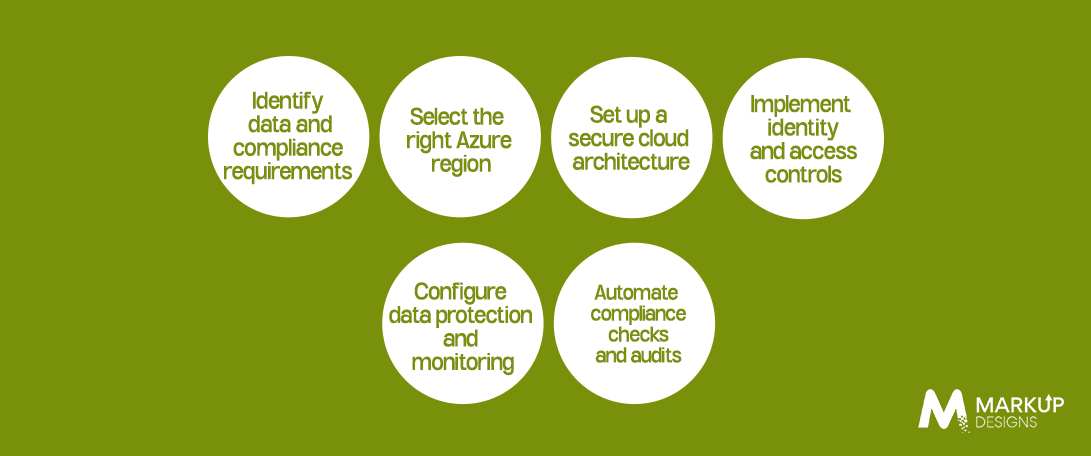
Creating a compliant Azure cloud infrastructure involves meticulous planning, appropriate security measures, and monitoring. UAE-based enterprises need to think about compliance when they choose how to store data, manage user access, and ensure their cloud environments are set up properly.
Here are six steps to help businesses get started.
Identify data and compliance requirements
First of all, determine what type of data you handle and the compliance requirements. Categorize sensitive data and define how it is stored, processed, accessed, and transferred.
Select the right Azure region
Select the Azure region that meets your needs regarding data residency, availability, performance, and disaster recovery. Check which services process and store your data rather than making assumptions about it remaining in UAE.
Set up a secure cloud architecture
Structure your Azure environment with the help of a carefully designed landing zone, separate environments, and effective governance policies in order to ensure consistency as your environment expands.
Implement identity and access controls
Implement Microsoft Entra ID, RBAC, and multifactor authentication to control access to cloud resources. Assign only necessary permissions to the users.
Configure data protection and monitoring
Guard confidential data by implementing encryption, key management, network security, and logging of all activities. Create alerts to detect possible security threats.
Automate compliance checks and audits
Perform regular compliance checks using Azure Policy and proper monitoring services. Analyze results, close gaps, and document the implemented controls.
Following these steps helps businesses build a more secure, organised, and compliance-focused Azure environment while making ongoing cloud management easier.
Essential Microsoft Azure Services for Compliance and Security
Microsoft Azure offers many services that help businesses secure data, control access to information, monitor cloud activity, and enforce relevant governance policies. The right service depends on the business’s infrastructure and industry needs.
Some useful Azure services to look into:
1. Microsoft Entra ID
Microsoft Entra ID helps manage the identities of users and control access to resources in the cloud. The service could be used by businesses for multifactor authentication and other related functions.
2. Azure Policy
Azure Policy is a tool that businesses can use to implement rules and restrictions across their Azure environment. It could be used to limit resource configurations or identify nonconforming resources.
3. Microsoft Defender for Cloud
This feature allows for the analysis of cloud security postures, identification of weaknesses, and possible attacks. This solution may also suggest improvements to security configurations.
4. Azure Monitor and Log Analytics
This solution enables the collection and analysis of data from monitoring and logs on cloud services. These features allow businesses to conduct investigations, monitor performance, and perform security checks.
5. Azure Key Vault
Azure Key Vault is used for secure management of encryption keys, secrets, and certificates that would otherwise have to be stored in applications.
6. Azure Backup and Azure Site Recovery
These services assist in developing a plan to protect data and ensure its disaster recovery. Companies should determine how they want to back up their data based on residency, availability, and compliance requirements.
Using these services together can help UAE businesses strengthen cloud security and governance. However, the services themselves do not guarantee compliance. Proper configuration, regular reviews, and clear responsibility remain essential.
Common Challenges in Building a Compliance-Ready Azure Infrastructure
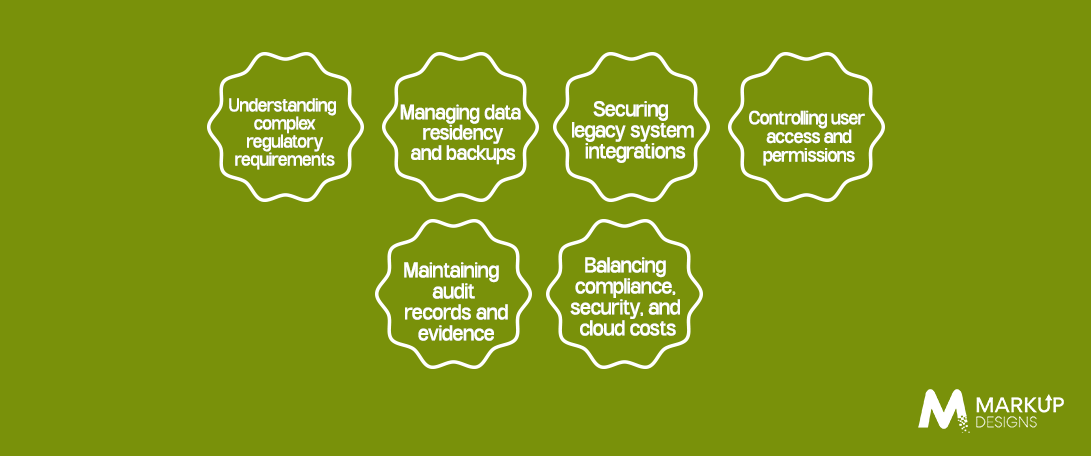
Building an Azure environment that meets compliance standards is never easy, particularly when companies handle confidential data, run various applications, and have diverse regulatory demands. It is important to realize the issues that arise from such conditions in advance and act accordingly.
Understanding complex regulatory requirements
A company located in the UAE might need to comply with federal data protection legislation, laws within the free zone, and industry-specific standards. Finding out what regulation applies to specific business activities will require effort and analysis.
Managing data residency and backups
Data residency within the UAE does not necessarily imply that all services associated with data, backup, and recovery operations will be within the country too. Business entities have to look into data residency and other terms.
Securing legacy system integrations
The integration of legacy business applications with Azure can pose potential vulnerabilities due to a lack of modern authentication, encryption, or monitoring capabilities in the existing systems.
Controlling user access and permissions
It becomes increasingly difficult to manage permissions as organizations grow. Too much access can put sensitive information at risk.
Maintaining audit records and evidence
It is important for organizations to have proper logs on access, configuration changes, security events, and audit activities.
Balancing compliance, security, and cloud costs
While security measures, monitoring services, backup storage space, and compliance audits can drive up cloud computing costs, companies have to prioritize those measures which are needed without neglecting important aspects of security and regulatory compliance requirements.
Addressing these challenges through proper planning, clear governance, and regular reviews helps businesses maintain a more secure and manageable Azure environment.
Why Choose Markup Designs for Azure Cloud Infrastructure?
Choosing the right technology partner can assist in designing a secure cloud environment in Azure. Markup Designs assists companies in developing cloud architecture keeping into consideration the technical requirements, the operational needs and compliance requirements of the businesses. The process begins from planning the architecture and then implementation, with the objective of designing an environment which is secure, scalable and manageable.
For whatever reason, whether it is the transfer of your existing applications on Azure platform or optimizing your current cloud infrastructure, proper guidance can assist you in avoiding any configuration gaps as well as complications. It will include planning of access control, data security, monitoring and governance and also backup solutions according to your business needs.
Markup Designs can also assist companies in reviewing their infrastructure and also planning the next steps for their growing cloud environment. With a systematic approach towards Azure implementation and management, you can design a solid
Ready to make your cloud infrastructure more secure, scalable, and easier to manage?
Markup Designs can help you plan and implement Azure solutions that support your operational goals and applicable compliance requirements.

Conclusion
Building a compliance-ready Azure cloud infrastructure is essential for UAE organizations to ensure protection of confidential data, mitigate potential risks and adhere to relevant laws and regulations. This process involves more than simply choosing an Azure region or configuring several security functions. It is necessary for organizations to have a comprehensive idea about their data, the existing legislation and controls needed for management of their cloud infrastructure.
Choosing the appropriate architecture, controlling user access, analyzing cloud activities, and performing testing of disaster recovery strategies are some of the components that help organizations create more secure and reliable Azure infrastructure. Assessments are also essential for organizations to be able to keep up with constantly changing needs, risks, and regulations.
It is possible for organizations to strengthen Azure cloud infrastructure with proper planning and the help of appropriate tools and professionals. In order to achieve this, it is crucial to perceive compliance not as a one-time process but as an ongoing process of cloud management.
FAQs
1. What is a compliance-ready Azure cloud infrastructure?
A compliance-ready Azure cloud infrastructure is a cloud environment designed to meet applicable legal, regulatory, and security requirements. It includes appropriate data protection, access management, monitoring, and governance controls.
2. Does hosting data in UAE automatically ensure compliance?
No. Hosting data in UAE may support data residency requirements, but businesses must also consider data processing, access, transfers, retention, security, and applicable regulations.
3. Which UAE regulations should businesses consider before moving to Azure?
Businesses should assess UAE Personal Data Protection Law (PDPL), where applicable, as well as DIFC or ADGM data protection regulations and relevant industry-specific requirements.
4. How can businesses verify where their Azure data is stored?
Businesses should review Azure region settings, service-specific documentation, data processing terms, backup configurations, and disaster recovery arrangements to understand where data is stored and processed.
5. Which Azure services help with security and compliance?
Microsoft Entra ID, Azure Policy, Microsoft Defender for Cloud, Azure Monitor, Azure Key Vault, and Azure Backup can support different security and governance requirements when configured appropriately.
Author's Perspective
A compliance-ready Azure infrastructure is not something businesses can set up once and forget about. It requires ongoing attention to data protection, access management, security monitoring, and changing regulatory requirements. For UAE businesses, the best approach is to understand their specific obligations first and then build the right controls into their cloud environment. Microsoft Azure provides useful tools to support these efforts, but their effectiveness depends on how they are configured and managed. By making compliance part of everyday cloud operations, businesses can reduce avoidable risks, improve accountability, and build a more reliable foundation for digital growth.
Discuss Your Project NowAjit Kumar Jha
VP - Business Operations
Related Posts

Cloud Computing Solutions in Kuwait: Benefits, Challenges, and...

How Cloud Product Development Helps Businesses Build Faster...

Cloud Services Company in Kuwait: Benefits, Solutions &...
Insights Are Valuable & Execution is Priceless
You’ve read about the digital future. Now, let’s build the infrastructure to take you there. Move your strategy from the page to the product.
Design Your Solution Now
Contact Us
Schedule The Appointment At Your Convenience Date And Time.
30 Min
Web Conference
Time Zone
Indian standard time (08:30pm)

Thanks For Getting In Touch!
You’ve Taken The First Step Toward Transforming Your Digital Presence. Our Experts Will Reach Out Shortly To Take It Forward.
Launch Your Dream Project
Provide a brief overview of your project, and our specialists will evaluate your requirements. We will connect with you to explore how the right digital solutions can help you launch faster.