
In Brief
- Cloud technology enables businesses in Kuwait to lower their infrastructure expenses, enhance scalability, and streamline IT operations.
- Major cloud solutions are migration, cloud storage, data backup, security, cloud application hosting, and managed cloud solutions.
- There are public, private, hybrid, and multi-cloud cloud solutions with different levels of flexibility and control.
- Also, cloud technology can be helpful for industries like healthcare, banking, oil and gas production, retail, and logistics which need to increase efficiency in their operations.
- To choose the most suitable cloud technology provider one needs to research the provider’s expertise, security, compliance, pricing, and other additional aspects.
Cloud technology is a significant element in the process of modernization of businesses in Kuwait, which helps to manage their IT infrastructure and data without relying on on-premises solutions only. In addition to providing alternative solutions during the process of digital transformation, cloud services make it easier for organizations to achieve agile business operations.
Yet, cloud technology implementation means not only choosing a cloud service platform and upgrading from the traditional form of operation. Indeed, more issues have to be addressed, such as migration ways, data security issues, and system integration features.
A reliable cloud services company in Kuwait can help organisations assess their existing infrastructure, choose suitable cloud solutions, manage implementation, and maintain performance as their requirements evolve. Understanding the available services, their benefits, and the factors involved in selecting a provider can help businesses make informed cloud investment decisions.
What Are Cloud Services and How Do They Work?
Cloud services provide businesses with on-demand access to computing resources, including servers, storage, databases, networking, software, and security tools over the internet. Instead of purchasing and maintaining all IT infrastructure on-site, organisations can use resources hosted by cloud providers and pay according to their chosen service model and usage.
These services operate through remote data centres that host applications, process information, and store business data. Employees can access approved resources through internet-connected devices. At the same time, cloud providers or managed service partners handle responsibilities such as infrastructure maintenance, updates, and resource allocation, depending on the service agreement.
Why Are Businesses in Kuwait Adopting Cloud Services?
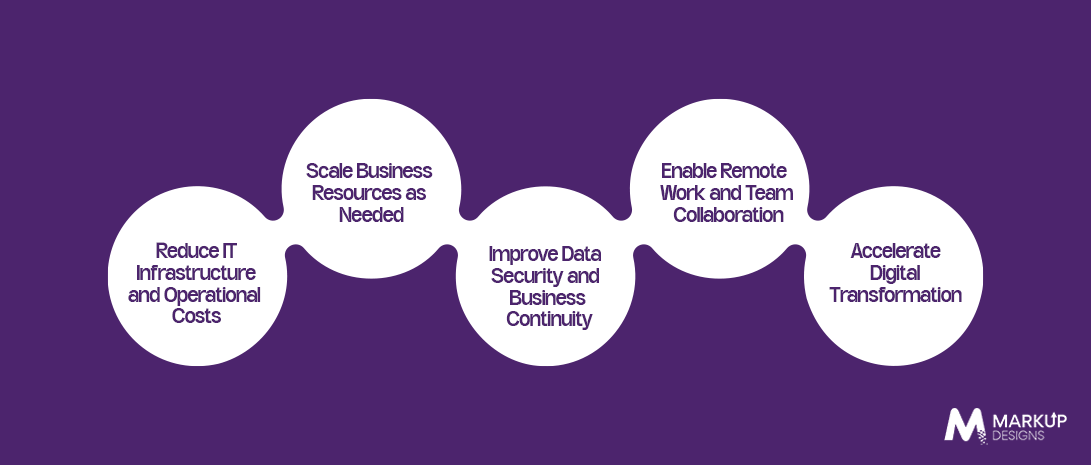
Companies in Kuwait are moving towards cloud services to make their IT systems modern, take maximum advantage of available resources, and improve their digital growth. Cloud infrastructure enables businesses to better react to changing demands, make their work more efficient, and manage their applications without limitations of the local IT infrastructure. Benefits can vary depending on the present infrastructure of the company, the type of cloud, and how the technology is implemented.
Reduce IT Infrastructure and Operational Costs
Local IT systems imply upfront investment in servers, networking hardware, premises, and ongoing maintenance. Cloud solutions enable businesses to avoid purchasing and managing all these things on their own. Companies can choose their service plans, modify capacity according to demand, and lower hardware maintenance obligations.
Scale Business Resources as Needed
Business conditions can be ever-changing according to things like customer profiling. Cloud technology allows businesses to alter computing power, storage, and similar resource parameters instead of purchasing physical assets every time a need arises.
Improve Data Security and Business Continuity
Cloud options offer key features including identity and access management, data encryption, security monitoring, and backup options.
Cloud-based backup and disaster recovery solutions can also help organisations restore data and resume operations after outages or other disruptions.
Enable Remote Work and Team Collaboration
Cloud-hosted applications and shared workspaces allow authorised employees to access files, business systems, and collaboration tools from different locations. Teams can work with shared information, coordinate projects, and communicate without depending entirely on office-based infrastructure.
Accelerate Digital Transformation
Cloud infrastructure gives businesses access to technologies that support automation, data analytics, artificial intelligence, and modern application development. Instead of building every capability from scratch, organisations can use existing cloud services to test new ideas, integrate business systems, and deploy digital products more efficiently.
What Cloud Solutions Does a Cloud Services Company in Kuwait Offer?
The company that provides cloud services aids businesses in formulating their operations through planning, execution, and monitoring of cloud infrastructures. This relatively broad scope includes functions like application migration, infrastructure management, securing corporate information, and providing assistance for cloud-native applications. The appropriate combination depends on such factors as the current infrastructure of a company, its information security needs, the characteristics of workload, and plans for future development.
Cloud Infrastructure Services
Cloud infrastructure services supply access to the needed virtual server and computing power, networking, and data storage at a company without forcing the organization to care about all underlying physical devices. Organizations can customize resources according to their requirements and change them in terms of computations when dealing with workload. This makes cloud infrastructure services perfect for hosting business applications, managing databases, supporting environment development, and overseeing workload.
Cloud Migration and Modernisation
Cloud migration refers to moving applications, databases, and company data from the local infrastructure or already existing hosting platforms to cloud services. Cloud service provider first assesses the current operating system, finds the dependencies of the system, develops a strategy for the migration, and checks the applications after the migration process is completed. Modernisation may also involve updating legacy applications, adopting containers, or redesigning systems to take advantage of cloud-native capabilities.
Cloud Storage and Backup Options
The concept of cloud storage provides the option to collect and distribute information using cloud-based networks. The backup option creates the copies of important data that can be used to protect it against the deletion of data by accident, failures of the system, and corruption of information. Businesses should determine the frequency of backups, time of retention, type of access, and objectives of recovery.
Cloud Security and Disaster Recovery
Cloud protection services protect data and infrastructure by applying access level, encryption, vulnerability management, and control over protection processes. Cloud recovery services implement the plans and technologies used to restore the system after its failure. Depending on the needs of the business, some services can help determine the recovery objectives in terms of time and process of recovery.
Cloud App Development and Hosting
Cloud application development means using cloud services and infrastructure to create, develop, implement, and maintain applications for business purposes. Cloud application hosting implies setting up the environment for the operation of applications and using databases, automated processes, and monitoring instruments.
Cloud Services Management
Managed Cloud Services refer to transferring the responsibility of some or all cloud infrastructure management to a third-party organisation. The extent of services covered under this arrangement depends on the agreement between the two parties and may include performance monitoring, configuration management, security management, cost management, troubleshooting, and technical support. Therefore, the managed services model is helpful in maintaining the cloud environment without the need for a dedicated internal team for management.
Hybrid and Multi-cloud Solutions
Hybrid solutions combine public and private infrastructures, enabling companies to balance workloads between the two using factors such as security, performance, and operational requirements. In contrast, multi-cloud solutions make use of services offered by various cloud service providers that allow companies to utilise multiple providers for different technical or business needs. The cloud services provider can help design, implement, and operate these solutions provided that they are properly governed.
What Are the Different Types of Cloud Computing Services?
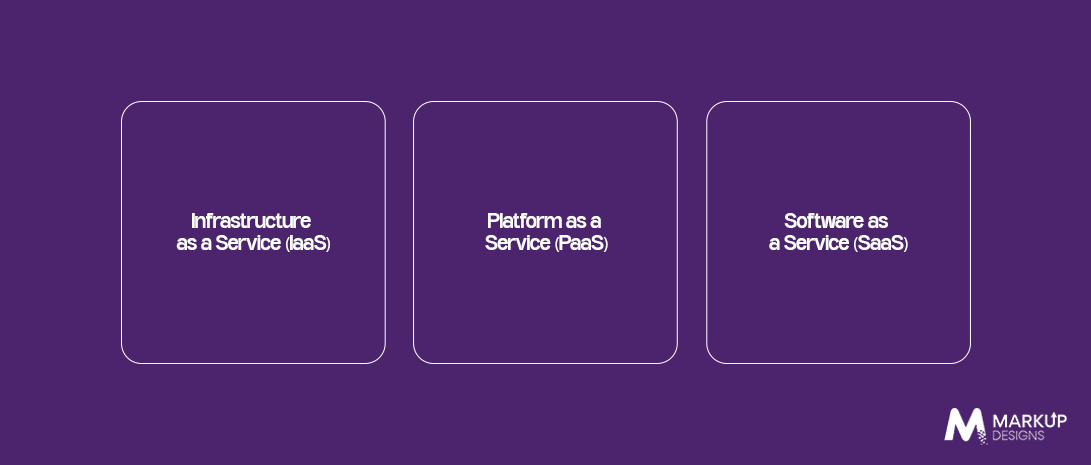
Three different types of models can be found in cloud computing services: Infrastructure as a Service (IaaS), Platform as a Service (PaaS), and Software as a Service (SaaS). These models differ in the degree of control and management and allow businesses to select the permanent model depending on their needs.
Infrastructure as a Service (IaaS)
IaaS refers to the provision of virtualized computing resources like storage, networking, and servers on the internet. By using the services of IaaS, any organization can install the operating system and customize the software without buying the physical servers. In this case, the provider of the cloud-based service will take care of the infrastructure underneath, and the client will be responsible for any operations at the level of the operating system and the application according to the service contract.
Best suited for: Companies that want flexibility in terms of infrastructure and want to have more control with regard to configuration or want to use cloud services for existing applications.
Platform as a Service (PaaS)
PaaS provides a cloud-based platform to develop, test, and deploy applications. PaaS also offers tools that can be used to build applications. It typically includes tools and services for application runtimes, databases, development workflows, and deployment. By reducing the need to manage underlying infrastructure, PaaS allows development teams to focus more on application functionality and delivery.
Best suited for: Businesses developing custom applications or modernising software without wanting to manage every infrastructure component.
Software as a Service (SaaS)
SaaS provides users with a ready-made software solution delivered through a web browser or application. Usually, this solution is provided on a subscription basis. The provider runs the application and its infrastructure while the user configures the software, manages users, and controls data and other features of the service they subscribe to. Typical examples of software sold as SaaS include business e-mail, CRM software, accounting applications, and collaborative platforms.
Best for: Companies that need business applications without spending time on implementing and maintaining the software.
Which Cloud Deployment Model is the Right One for Your Business in Kuwait?
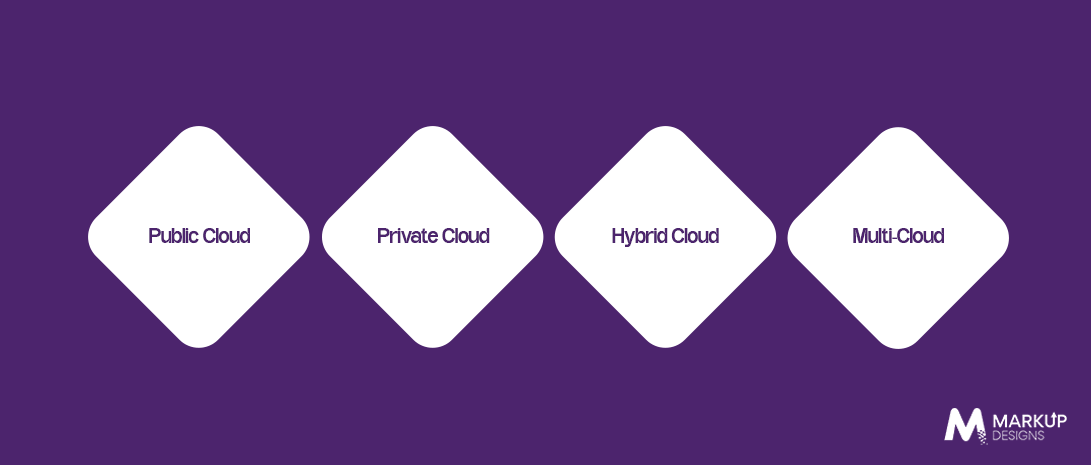
The cloud deployment model determines how cloud infrastructure is hosted, accessed, and managed. The right model depends on many factors such as the sensitivity of workloads, compliance requirements, performance expectations, the availability of infrastructure, among others. Therefore, businesses should use those factors before deciding which model to go with instead of assuming that all models can work for all applications.
Public Cloud
A public cloud infrastructure is supported by a third-party service provider which often shares the infrastructure with other companies but keeps their operations logically separate.
Businesses can access computing, storage, databases, and other services without maintaining the underlying physical data centre.
This model can suit organisations that need rapid deployment, flexible capacity, and access to a broad range of cloud services. However, businesses should assess data residency requirements, access controls, service availability, and usage-based costs before moving sensitive workloads.
Private Cloud
A private cloud is an environment set aside for the exclusive use of one organisation. Sometimes it is established in an organisation’s own facilities while at other times said organisation entrusts external parties to set it up. In this particular model, it is possible to provide more regulation of the configuration of infrastructure, access system and performances depending on its setting.
It is suitable for corporations having their own unique requirements concerning safety, governance or performance. However, using such infrastructure normally means much more expenditure as well as added managerial difficulties in comparison with public cloud.
Hybrid Cloud
A hybrid cloud represents the combination of a private infrastructure and services from public cloud, which gives an opportunity for businesses to place various workloads in different environments. For instance, an organisation may leave some sensitive operation in a protected environment while continuing using global cloud for other operations such as hosting of a website, development and work with variable workloads.
In such a way this model restores in some way the balance between flexibility and control. Nevertheless, a business has to have good connectivity, identity management and correct integration between the environments.
Businesses should also plan how data will move between systems and how security policies will be enforced across the entire setup.
Multi-Cloud
Multi-cloud refers to using services from two or more cloud providers. A business might choose one provider for application hosting, another for analytics, and a third for specialised business software. This approach can help organisations select services based on specific technical requirements rather than relying on a single platform for everything.
However, multi-cloud does not automatically improve resilience or reduce costs. Managing multiple platforms can increase operational complexity, making consistent governance, cost monitoring, skills development, and security management essential.
Which Industries in Kuwait Can Benefit From Cloud Services?
Businesses in Kuwait can benefit from cloud computing, as it can help them access applications, make data-based decisions, and reduce reliance on fixed IT infrastructure. However, the advantages of cloud services vary by industry depending on the workflows, sensitivity of data and specific regulations.
Banking and Financial Services
The banking and financial institutions use cloud services for the purpose of data analysis, e-banking apps, fraud observation, and customer support platforms. In addition, cloud technologies can help create test and development environments, which will facilitate the release of new services by the companies. The financial companies must analyze what regulations are relevant to them, how the data must be stored, what risks exist, and what controls they will need.
Healthcare
Cloud technologies can provide assistance to medical institutions in running appointment systems, telemedicine solutions, administration systems, as well as secure data sharing and analysis. Cloud computing technologies will also allow designated representatives to absorb information so as to enhance resource planning. Due to the confidential nature of the healthcare information, the user must implement certain access controls, data security and backup systems as well.
Retail and E-commerce
Retailers and e-commerce companies can take advantage of cloud computing for hosting stores, managing inventory, tracking customer interaction with the products and linking their stock systems with a user-friendly infrastructure. The power of cloud technology allows businesses to handle peak loads of web traffic during campaigns and sales. Also, with cloud CRM and analysis tools applied, businesses can benefit from knowledge about customer engagement and future inventory needs.
Oil and Gas
Oil companies can benefit from cloud technology as well by using it for processing operational data, supporting equipment monitoring, performing complex analysis, and coordinating information. Cloud technologies can also enable predictive maintenance and reporting capabilities. Nevertheless, critical operational technologies should be carefully segmented, controlled, and assessed for risks before implementing them in the cloud.
Government and Public Sector
Local governments can rely on cloud services for hosting Public digital services, managing internal systems, improving collaboration, or performing data analysis. By applying cloud technologies, a company can also upgrade legacy systems and facilitate the implementation of Public digital services.
Logistics and Transportation
Logistics providers and transportation companies can use cloud solutions to manage shipment information, track assets, coordinate fleets, and analyse delivery performance. Integrating cloud platforms with warehouse management, transport management, and tracking systems can improve visibility across supply chains. Scalable infrastructure can also support data processing as shipment volumes and operational requirements change.
What Challenges Can Cloud Services Help Businesses Overcome?
Businesses often face IT challenges that limit efficiency, increase operational costs, and make it difficult to respond to changing demands. Cloud services help address these issues by providing flexible infrastructure, centralised resource management, and access to modern technology. However, successful implementation requires proper planning, configuration, and ongoing management.
Managing IT Infrastructure Costs
Maintaining on-premises infrastructure involves hardware purchases, maintenance, software licensing, electricity, and dedicated IT personnel. Cloud services allow businesses to access computing resources without investing in all the underlying physical equipment. Organisations can select suitable pricing models and adjust resource usage according to demand. Regular cost monitoring and resource optimisation are essential to prevent unnecessary spending on unused or oversized cloud resources.
Protecting Sensitive Business Data
Businesses must protect confidential information against unauthorised access, data breaches, and accidental loss. Cloud services offer security capabilities such as encryption, identity management, access controls, and continuous monitoring. However, these features do not guarantee complete protection on their own. Businesses must configure security settings correctly, enforce strong authentication, review access permissions, and establish backup and data retention policies based on their requirements.
Integrating Legacy Systems
Older business applications may not be designed to work with modern cloud platforms, creating compatibility and data exchange challenges. Cloud migration services help organisations assess existing systems, identify dependencies, and determine whether applications should be migrated, modernised, replaced, or retained on-premises. APIs, integration tools, and phased migration strategies can help connect legacy applications with cloud-based application systems while reducing disruption to ongoing operations.
Ensuring Business Continuity
Hardware failures, cyber incidents, and unexpected outages can interrupt business operations and affect access to critical information. Cloud-based backup and disaster recovery solutions help organisations maintain recoverable copies of data and restore important applications after disruptions. Businesses should define recovery time objectives (RTOs) and recovery point objectives (RPOs), test recovery procedures regularly, and confirm that their selected cloud architecture meets their continuity requirements.
Supporting Business Growth and Scalability
Fixed IT infrastructure can become a constraint when businesses expand, launch new services, or experience sudden increases in demand. Cloud services allow organisations to increase computing capacity, storage, and application resources without waiting to procure and install additional hardware. This flexibility supports growth while helping businesses align infrastructure spending with actual requirements. Performance monitoring and capacity planning remain important to maintain reliability as workloads increase.
How to Choose the Right Cloud Services Company in Kuwait
Selecting a cloud services company involves more than comparing service prices or choosing a familiar cloud platform. Businesses should assess the provider’s technical capabilities, security practices, implementation approach, and ability to support long-term operational requirements. A structured evaluation helps organisations choose a partner that aligns with their infrastructure, budget, and business objectives.
Assess Industry Experience and Technical Expertise
Look for a provider with experience delivering cloud projects similar to your business requirements. Relevant expertise may include infrastructure migration, application modernisation, cloud architecture, database management, and workload optimisation. Ask about previous implementations, technical certifications, and the provider’s approach to handling complex integrations. Industry experience is particularly valuable when your systems have specialised performance, security, or operational requirements.
Evaluate Security and Compliance Capabilities
Review the provider’s approach to data protection, identity and access management, encryption, vulnerability management, and incident response. Businesses operating in Kuwait should also assess applicable local regulatory requirements and any sector-specific obligations relevant to their data and operations. Ask how data locations are documented, how access is controlled, and what security responsibilities remain with your organisation. Do not assume that choosing a reputable cloud provider automatically makes your environment compliant.
Review Cloud Platforms and Technology Partnerships
Evaluate whether the company has experience with platforms such as Amazon Web Services (AWS), Microsoft Azure, and Google Cloud. The right platform depends on your existing systems, application requirements, technical expertise, and budget. A capable provider should explain why a particular platform or architecture fits your needs instead of recommending technology solely because of an existing partnership.
Compare Pricing and Service-Level Agreements
Request a clear breakdown of implementation fees, recurring charges, support costs, storage, data transfer, and other potential expenses. Review the service-level agreement (SLA) to understand commitments relating to availability, response times, support coverage, and service credits. Comparing the total expected cost of ownership is more useful than evaluating headline prices alone, as the cheapest initial option may not deliver the best long-term value.
Check Migration, Support and Maintenance Services
Cloud adoption requires planning before migration and active management after deployment. Assess whether the provider offers infrastructure assessment, migration planning, application testing, performance monitoring, troubleshooting, and ongoing maintenance. Clarify support availability, escalation procedures, documentation, and knowledge transfer. A provider with clearly defined responsibilities can help reduce implementation risks and ensure that your cloud environment continues to meet changing business needs.
What Are the Key Cloud Computing Trends in Kuwait for 2026?
Cloud computing is evolving as businesses seek more intelligent, secure, and adaptable technology environments. In Kuwait, organisations evaluating cloud investments should consider emerging capabilities alongside their existing infrastructure, operational priorities, and regulatory requirements. The following trends highlight areas worth assessing when planning a cloud strategy for 2026.
AI-Powered Cloud Solutions
Cloud platforms increasingly provide access to artificial intelligence (AI), machine learning, and generative AI services without requiring businesses to build every component from scratch. Organisations can use these capabilities for document processing, customer service automation, forecasting, and data analysis.
Hybrid and Multi-Cloud Adoption
Organisations are using hybrid and multi-cloud architectures to distribute workloads according to technical, security, and operational needs. A hybrid approach combines private infrastructure with public cloud services, while a multi-cloud strategy uses multiple cloud providers.
Cloud Security and Data Governance
As more business operations move to cloud environments, security and AI governance remain essential priorities. Organisations are strengthening identity controls, adopting zero-trust principles, improving threat monitoring, and establishing clearer data management policies.
Cloud-Native Application Development
Cloud-native development uses approaches such as containers, microservices, and managed application platforms to build and deploy software. These technologies can help businesses update applications more frequently, scale individual components, and improve deployment flexibility. However, adopting cloud-native architecture requires suitable technical skills, automated testing, monitoring, and well-defined development practices.
Automation and Managed Cloud Operations
Cloud automation helps organisations manage routine tasks such as infrastructure provisioning, software deployment, resource scaling, and policy enforcement. Managed cloud services can complement automation through monitoring, maintenance, cost optimisation, and technical support. Together, these capabilities can reduce repetitive work and improve operational consistency, provided that businesses establish appropriate oversight and access controls.
How Can Markup Designs Help With Cloud Services and Solutions?
Markup Designs helps businesses plan and develop technology solutions aligned with their operational requirements and digital transformation goals. Our team can support cloud-related initiatives through custom software development, application modernisation, system integration, and the development of scalable digital products.
For businesses in Kuwait, the right cloud strategy should support measurable business outcomes rather than technology adoption alone. Whether you are modernising an existing application, developing a cloud-ready platform, or integrating business systems, Markup Designs can help you evaluate your requirements and plan the next steps towards a scalable digital infrastructure.
Build a Scalable Cloud Infrastructure for Your Business
Move towards a more secure, flexible, and cost-efficient IT environment with cloud solutions tailored to your business requirements.

Conclusion
Cloud services help businesses in Kuwait modernise their IT infrastructure, improve scalability, and access technologies that support evolving operational needs. From cloud migration and managed infrastructure to data protection and application hosting, the available solutions can address a wide range of business requirements. However, the results depend on selecting the right architecture, managing costs, implementing appropriate security controls, and planning for long-term maintenance.
Choosing a cloud services company with relevant technical expertise, transparent pricing, and reliable support can help businesses make informed technology decisions. By aligning cloud investments with business objectives and applicable compliance requirements, organisations can build an IT environment that supports operational resilience and sustainable growth.
FAQs
1. What does a cloud services company in Kuwait do?
A cloud services company helps businesses plan, deploy, migrate, secure, and manage cloud infrastructure and applications. Depending on its service portfolio, it may provide cloud hosting, storage, backup, security, system integration, migration, and ongoing infrastructure management.
2. How much do cloud services cost in Kuwait?
Cloud service costs depend on infrastructure requirements, storage capacity, computing usage, security needs, licensing, migration complexity, and support arrangements. Businesses should request a tailored estimate that includes implementation expenses and recurring charges rather than relying on a single standard price.
3. Which cloud platform is best for businesses in Kuwait?
AWS, Microsoft Azure, and Google Cloud are widely used platforms, but the best choice depends on your applications, existing technology stack, budget, security requirements, and technical capabilities. Businesses should compare the services and deployment options relevant to their workloads before selecting a platform.
4. Are cloud services secure for businesses in Kuwait?
Cloud services can provide strong security capabilities, including encryption, access management, monitoring, and backup. However, security depends on correct configuration, effective governance, and shared responsibilities between the cloud provider and the business. Organisations should assess applicable regulations and implement controls appropriate to their data and operations.
5. How long does cloud migration take?
Cloud migration can take anywhere from a few weeks to several months or longer, depending on the number of applications, data volumes, legacy system dependencies, security requirements, and testing needs. A migration assessment helps establish a realistic timeline and identify the best sequence for moving workloads.
Author's Perspective
Cloud adoption should begin with a clear understanding of business requirements, not simply a decision to move infrastructure online. Businesses in Kuwait should evaluate their existing systems, data protection obligations, workload requirements, and long-term operating costs before choosing a cloud model or service provider. A well-planned cloud strategy can create a stronger foundation for digital growth, but its value depends on implementation quality, effective governance, and continuous optimisation.
Discuss Your Project NowGaurav Goyal
Global Sales- VP
Related Posts

How Cloud Product Development Helps Businesses Build Faster...
How is DevOps Charting a New Model for...

Green Cloud Computing: Sustainable Cloud Strategies for Modern...
Insights Are Valuable & Execution is Priceless
You’ve read about the digital future. Now, let’s build the infrastructure to take you there. Move your strategy from the page to the product.
Design Your Solution Now
Contact Us
Schedule The Appointment At Your Convenience Date And Time.
30 Min
Web Conference
Time Zone
Indian standard time (08:30pm)

Thanks For Getting In Touch!
You’ve Taken The First Step Toward Transforming Your Digital Presence. Our Experts Will Reach Out Shortly To Take It Forward.
Launch Your Dream Project
Provide a brief overview of your project, and our specialists will evaluate your requirements. We will connect with you to explore how the right digital solutions can help you launch faster.