
In-Brief
- Know the approximate cost of the development of a fitness wearable app in the UAE.
- Find out what the main cost determinants of the total expense are.
- Get to know what the essential and advanced app features should be.
- Discover the development process in full, from planning to support.
- Analyze revenue models to create a successful and monetizable fitness app.
The increased popularity of smartwatches, fitness bands, and health gadgets opens up many business opportunities in the UAE fitness market. Various companies like fitness start-ups, gym chains, healthcare firms, and corporate wellness firms invest in fitness wearables to create customized workout programs, track physical activity, and offer health monitoring features. But the investment depends on the app functionality, targeted audience, and compatibility with wearables.
The cost of the development of a wearable fitness app in the UAE can be estimated based on such cost drivers as features’ complexity, platform, UI/UX design, AI integration services, data security, and maintenance. Businesses need to choose appropriate revenue models like a subscription model, paid features, a corporate wellness model, etc. This guide explores the key cost drivers, essential features, development process, and monetization strategies to help businesses plan their wearable fitness app investments effectively.
How Much Does It Cost to Develop a Wearable Fitness App in the UAE?
Costs associated with the development of a wearable fitness app in the UAE depend on its technical specifications, the complexity of the project, and the need to integrate various third-party components. An app with basic functionalities will be cheaper than a more advanced one featuring AI insights, real-time health tracking, and wearables integrations.
What Factors Affect Wearable Fitness App Development Costs in the UAE?
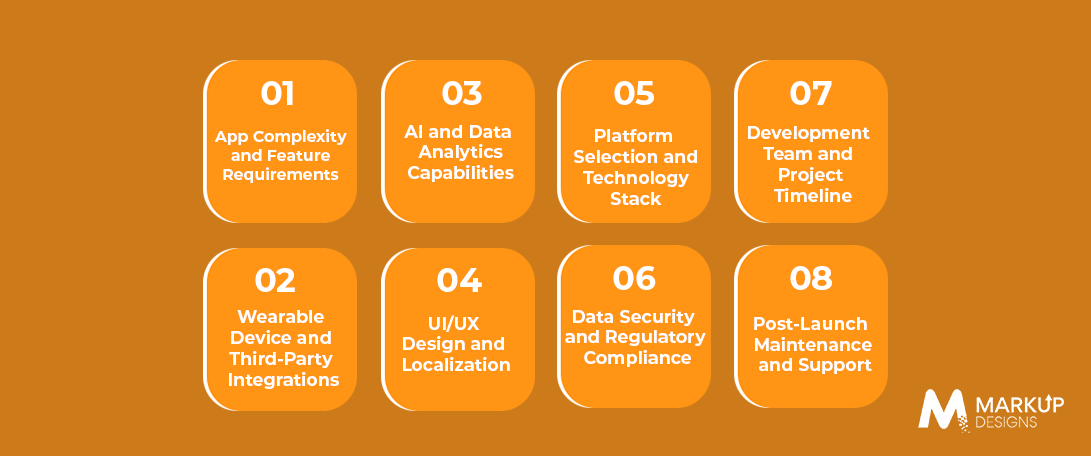
Development of wearable apps is subject to several factors affecting the time and money spent on their creation and maintenance. Knowing them will help companies estimate their budget accurately and avoid possible issues.
App Complexity and Feature Requirements
Complexity and the number of features will determine the time and cost spent on development. Activity tracking will be cheaper than personal training or real-time health tracking.
Wearable Device and Third-Party Integrations
In order to synchronize the data from Apple Watch, Fitbit, Garmin, and other wearables, a compatible API and data exchange mechanisms are necessary.
Supporting multiple devices can increase integration efforts because each platform has different capabilities, permissions, and technical requirements.
Capabilities in AI and Data Analytics
AI-based recommendation systems, predictions, and personalized training plans need further data analysis and development efforts. Also, pricing may vary based on whether the app uses AI-based solutions from the available services or if it needs a specific AI model, infrastructure, and performance monitoring.
UI/UX and Localization
A user-friendly interface assists with understanding the fitness metrics, progress tracking, and workout plans. Support for Arabic and English languages, including right-to-left layout, may have some implications for design, development, and testing for the UAE market.
Platform Choice and Tech Stack
Building native apps for iOS and Android separately requires more effort than using an appropriate cross-platform solution. Pricing will also be determined by backend architecture, database, cloud infrastructure, and technologies used for wearables integration.
Data Privacy and Regulatory Compliance
It is important to ensure the security of personal information through authentication, encryption, access control, and consent mechanisms. In addition, businesses working with health-related data need to consider the applicable UAE legislation for personal information and health data.
Development Team and Project Timeline
Development cost will depend on the skills and experience of the team, their geographical location, and project length.
Such a project that involves wearable integration, artificial intelligence technology, and unique security requirements is likely to require more development resources than a simple MVP.
Post-Launch Maintenance and Support
Post-launch maintenance of the application includes fixing bugs, updates for compatibility with different operating systems, security patches, and improving the wearable integration. Companies should budget money for cloud hosting, third-party services, and feature additions to meet the demands of the growing number of users.
Which Features Should You Include in a Wearable Fitness App?
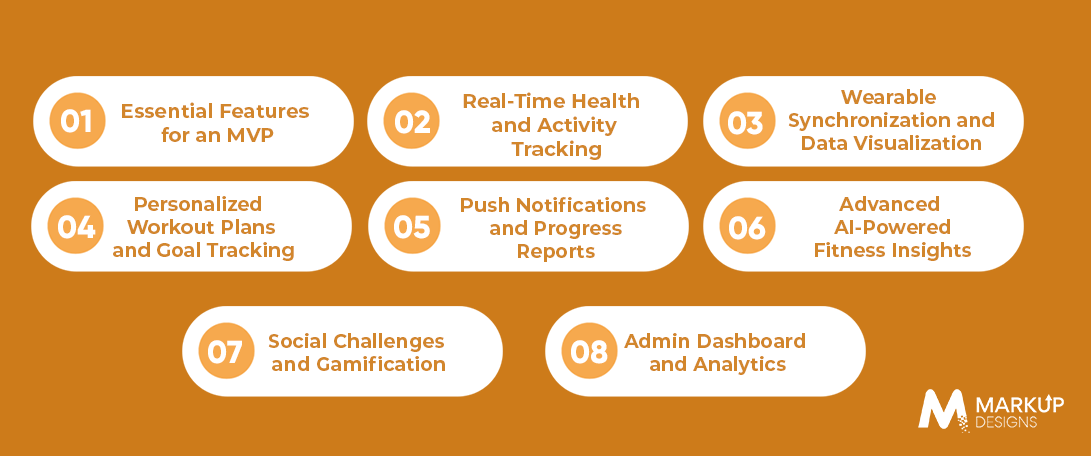
It depends on the target audience, business model, and the purpose of the application. The best way for companies to control costs is to add advanced features in separate releases after validating demand from users.
Essential Features for an MVP
An MVP should have user profiles, activity tracking, logging of workouts, goal setting, and progress tracking features. These features will allow businesses to validate the demand from users before investing in more sophisticated solutions.
Real-Time Health and Activity Tracking
Activity tracking provides a possibility for users to track such metrics as number of steps, heart rate, burned calories, hours of sleep, and workout time.
Reliable data collection and clear presentation help users understand their activity patterns and make informed fitness decisions.
Wearable Synchronization and Data Visualization
Synchronization between an app and wearable technology devices enables collection and structuring of fitness data. Visual representations such as interactive charts and daily reports allow users to interpret their progress without exploring complex dashboards.
Personalized Workout Plans and Goal Tracking
Personalized exercise regimes make it possible for users to choose suitable exercises depending on their fitness level and aims. Goal setting involves the introduction of additional measures to track the user’s progress.
Push Notifications and Progress Reports
Notifications can be used to remind users about workouts, goals, and scheduled training. Progress reports at the end of each week or month will give an opportunity to monitor performance and increase motivation.
Advanced AI-Powered Fitness Insights
The AI technologies will enable analysis of users’ activities and generation of recommendations about adjustment of workout schedule, periods of recovery, and personalized fitness regime. It is necessary that the data collected is correct.
Social Challenges and Gamification
Features like leaderboards, badges, and team fitness challenges can motivate users to participate more actively and regularly in the process by introducing the element of competition and cooperation into the experience.
Admin Dashboard and Analytics
An admin dashboard helps businesses manage users, monitor engagement, and review app performance. Analytics covering active users, feature adoption, and subscription activity can also inform product improvements and business decisions.
How to Develop a Wearable Fitness App in the UAE?
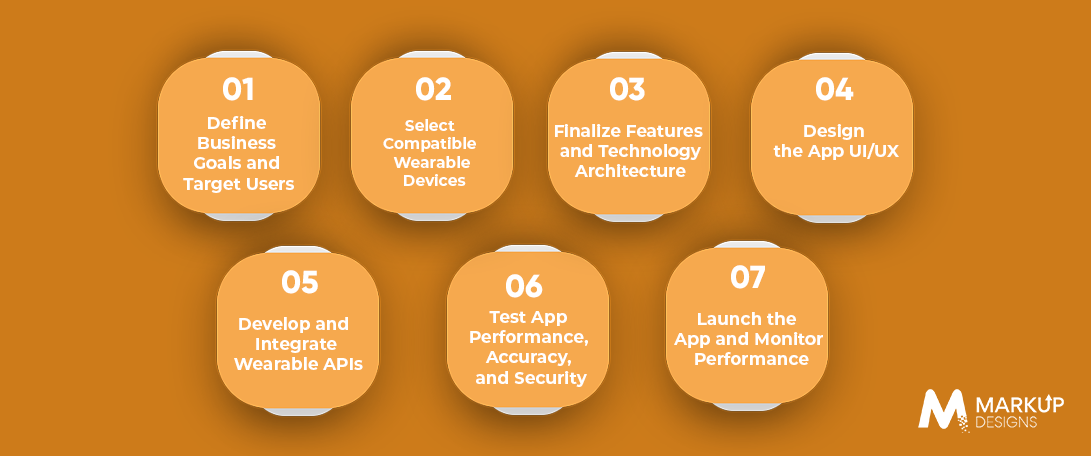
The structured development process allows a business to control the scope, mitigate technical risks, and make sure that the product matches user expectations. At each step of the process, it is important to validate the requirements to minimize rework and increase the chances of a successful launch.
Define Business Goals and Target Users
Identify the target audience, the problem that your app solves, and business goals. It is important to research competitors and users’ preferences in the UAE to determine the correct positioning and features.
Select Compatible Wearable Devices
Select the wearable devices and platforms that match the target audience, the metrics supported by the devices, and the integrations possible. It is important to limit the number of integrations to only those devices that are important at this moment to make the development process easier and speed up the first release of your app.
Finalize Features and Technology Architecture
Decide on MVP scope, technology stack, and the architecture of the application’s backend, database, and integrations. It is important to choose solutions that satisfy current requirements but allow you to grow when more people use the application.
Design the App UI/UX
Construct wireframes and interactive prototypes to facilitate navigation, tracking fitness, and measuring progress. The design should take into consideration different screen sizes, accessibility requirements, and Arabic and English languages.
Develop and Integrate Wearable APIs
Develop the mobile application, the backend, as well as integration with wearable platforms. The developers should also handle the management of permissions, data synchronization, API limits, and errors to ensure good performance of supported devices.
Test App Performance, Accuracy, and Security
Testing should be done on all supported devices and operating systems to detect synchronization errors, incorrect display of data, and performance issues. Security testing, usability, and validation of health metrics need to be performed before releasing the application.
Launch the App and Monitor Performance
Deploy the app using the distribution channels and monitor crashes, engagement, synchronization, and feedback. This provides business insights on what to fix, how to retain users, and develop further features.
Which Revenue Models Can Generate Income From a Wearable Fitness App?
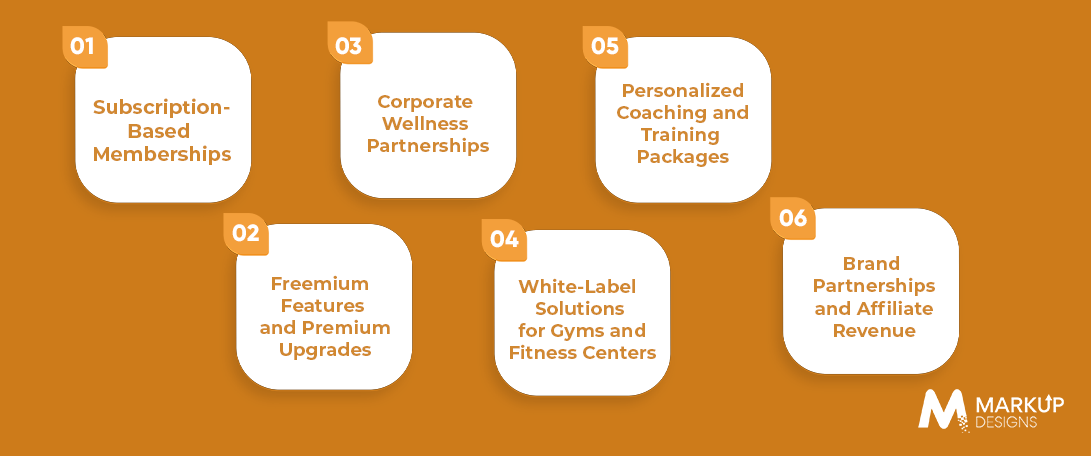
A suitable revenue model depends on the app’s audience, the value it provides, and customers’ willingness to pay. Businesses can start with one primary model and introduce additional revenue streams as the user base and product capabilities expand.
Subscription-Based Memberships
Monthly and annual subscriptions can provide recurring revenue through premium workout programmes, detailed analytics, and personalized fitness guidance. Offering clear differences between subscription tiers helps users understand the value of upgrading.
Freemium Features and Premium Upgrades
A freemium model provides basic activity tracking and goal setting at no cost while reserving advanced features for paying users. This approach can attract a wider audience, although premium features must offer enough value to encourage conversion.
Corporate Wellness Partnerships
Businesses can offer wearable fitness solutions to employers seeking to support employee wellness and participation in fitness programmes. Revenue may come from company-wide subscriptions, per-employee pricing, or customized wellness packages.
White-Label Solutions for Gyms and Fitness Centers
White-label apps allow gyms and fitness businesses to offer branded digital fitness experiences without building every component from scratch. Developers can generate revenue through licensing fees, recurring platform charges, and paid customization.
Personalized Coaching and Training Packages
Paid coaching services can include customized workout plans, virtual training sessions, and specialist-led fitness programmes. This model works best when the app connects users with qualified professionals and delivers measurable value beyond basic tracking.
Brand Partnerships and Affiliate Revenue
Partnerships with fitness equipment brands, sports retailers, and relevant wellness providers can generate commissions or sponsorship income. Recommendations should remain relevant to users, with clear disclosure of commercial relationships.
What Challenges Can Affect Wearable Fitness App Development in the UAE?
There are various factors that developers of wearable fitness apps must consider regarding technical constraints, data protection requirements, and user engagement aspects in order to ensure reliability once released into the market. Considering these factors from the very beginning will help prevent integration problems, costly changes to the app, and maintain a good user experience.
Maintaining Accurate Health Data Across Devices
Wearables might use different methods to collect and present health metrics, and the developer should provide the necessary validation, standardization of data, and clear description of its limitations.
Managing Data Privacy and Regulatory Requirements
Fitness apps can collect sensitive personal data and require proper privacy measures to be considered from the very beginning. Businesses must develop a set of processes concerning consent, access, retention of data, and compliance with the applicable regulations.
Ensuring Battery Efficiency and Real-Time Synchronization
Health apps often track users continuously and perform frequent background operations, which increases battery usage. Proper synchronization, reasonable intervals between updates, and background processing optimize battery usage and performance of apps.
Supporting Multiple Wearable Platforms
APIs, permissions, formats, and capabilities of each ecosystem might differ. The support of several platforms will require additional
Supporting several platforms therefore requires additional integration work, device testing, and ongoing updates as manufacturers change their software.
Retaining Users and Encouraging Consistent Engagement
Users may stop using an app if its recommendations feel repetitive or its tracking provides little practical value. Personalized goals, meaningful progress reports, relevant reminders, and well-designed challenges can encourage continued participation without overwhelming users with notifications.
How Can Businesses Optimize Wearable Fitness App Development Costs?
Companies can manage development costs by focusing on key functionality, proper integrations, and scalability. It is important to avoid unnecessary expenses but maintain good app performance, data security, and user experience.
Start With an MVP and Prioritize Core Features
Start with basic features, including activity tracking, an exercise program, and progress reports instead of developing sophisticated AI features. MVP will be useful for validating user requirements and making necessary improvements without further development expenses.
Choose Wearable Integrations Based on User Demand
Implement wearable integrations according to the needs of your users. There is no need to develop support for all platforms at once, but it is possible to add other wearables according to the demands of users.
Use Scalable Cloud Infrastructure
Cloud infrastructure should be chosen in such a way as to allow the app to handle more users and more data without changing the whole system architecture. The usage-based approach and proper monitoring of resources may help in reducing costs.
Adopt Third-Party APIs Where Practical
Use well-known third-party APIs and services and corresponding SDKs for implementing such features as wearable integration, analytics, notifications, etc. Evaluate licensing fees, usage limits, security, and vendor dependency before selecting services to avoid unexpected long-term costs.
Plan Maintenance and Updates From the Beginning
Budget your maintenance, security updates, device updates, and infrastructure costs from the start. Monitoring and preventative maintenance may be able to help you address problems sooner and prevent any costly repairs further down the line.
How Markup Designs Will Assist You in Developing a Wearable Fitness App in the UAE?
Markup Designs assists companies in converting their ideas of fitness apps into actionable digital solutions through strategic planning, UI/UX design, app development, and integration with third-party tools. By aligning features and functionalities of an app according to the business goals and user requirements, companies will be able to make the right technology-related decisions for their apps for the UAE market.
Build a Wearable Fitness App That Fits Your Business Goals
Turn your fitness app idea into a scalable digital product with the right features, wearable integrations, and technology strategy. Partner with Markup Designs to plan your development investment and create an app built for long-term growth.

Conclusion
As it was explained above, the cost of creating a wearable fitness app in the UAE is dependent on various factors including the features’ complexity, integration with wearables, use of AI, etc. Businesses can control their investments by building an MVP first, picking appropriate integrations, and setting up a viable monetization approach.
FAQ
1. How much does it cost to develop a fitness wearables app in UAE?
The cost of an app will vary depending on how complex the application is, what it includes, how many wearable integrations, and what technologies will be used. It is safe to say that simpler applications will require fewer resources to develop than advanced platforms that have AI-based analysis and more integrations.
2. How long will it take to create a wearable fitness app?
There are several factors that determine how long it takes to develop a fitness app. It includes the number of features and wearable integrations the developer needs to include, number of devices that need to support the application, testing.
3. With which wearable devices can a fitness app integrate?
Some of the examples of the wearable devices that can be integrated with a fitness app include Apple Watch, Fitbit, and Garmin, although this list is not exhaustive.
4. Is AI necessary for developing a wearable fitness application?
AI is not a must-have feature in the process of creating a wearable fitness application. A simpler application can perform all tasks without AI integration.
5. What technologies should be employed to create wearable fitness applications?
It may be Swift (iOS), Kotlin (Android), or cross-platform tools like Flutter and React Native. The technologies for wearable SDKs, back-end architecture, databases, and cloud services facilitate connectivity, functionality, and scalability of applications.
6. How is it possible to make money with wearable fitness apps?
Popular approaches involve subscription fees, premium upgrades, B2B wellness programs, white label solutions, and personal training. Companies should select a revenue model depending on the target audience, pricing considerations, and additional value of premium options.
Author's Perspective
Wearable fitness apps should be developed to solve users’ problems, not to provide an extra set of features that only makes applications look modern. Businesses targeting the UAE market should concentrate on creating a reliable tracker, valuable analytics, secure data storage, and a profitable revenue model prior to implementing any advanced functionality.
Discuss Your Project NowJupinder Singh Arora
Founder and CEO
Related Posts

How Much Does It Cost to Build a...
Insights Are Valuable & Execution is Priceless
You’ve read about the digital future. Now, let’s build the infrastructure to take you there. Move your strategy from the page to the product.
Design Your Solution Now
Contact Us
Schedule The Appointment At Your Convenience Date And Time.
30 Min
Web Conference
Time Zone
Indian standard time (08:30pm)

Thanks For Getting In Touch!
You’ve Taken The First Step Toward Transforming Your Digital Presence. Our Experts Will Reach Out Shortly To Take It Forward.
Launch Your Dream Project
Provide a brief overview of your project, and our specialists will evaluate your requirements. We will connect with you to explore how the right digital solutions can help you launch faster.