
In Brief
- Industry 5.0 integrates human knowledge with advanced technologies to make UK manufacturing processes more effective, sustainable, adaptable, and resilient. In contrast to Industry 4.0, it stresses human welfare and environmental considerations along with automation.
- Some technologies used include collaborative robots, AI and machine learning, IIoT (Industrial Internet of Things), digital twins, AR/VR, and 3D printing. These technologies allow for improving production processes, predicting equipment failures, increasing the quality of goods, and making manufacturing customized.
- Some of the benefits of Industry 5.0 include increased productivity, reduction of waste, better workplace safety, increased quality of goods produced, resilient supply chains, and development of workforce competencies.
- The common barriers to the implementation of Industry 5.0 include cost issues, shortage of skills, cybersecurity threats, problems of integration of legacy systems, ethical AI issues, and human reluctance.
- The way UK manufacturers can start is by reviewing their operations, defining business objectives, picking up the appropriate technologies, integrating them securely, training employees, and evaluating outcomes. Markup Designs can assist companies in researching digital solutions that would enable smarter and future-proof manufacturing.
The manufacturing sector in the UK is evolving as enterprises continue searching for new approaches that can help them boost efficiency, minimize waste, and satisfy increasing demands from customers. The implementation of smart manufacturing has allowed companies to make use of innovations like artificial intelligence (AI), IoT, and automation to optimize their manufacturing process and speed up production. But the future is not limited to technological innovations alone; it requires an improved relationship between the technological solutions, people, and the environment.
Industry 5.0 is here to provide such a relationship by merging human experience and advanced technologies for the creation of flexible, sustainable, and resilient manufacturing processes. This approach does not focus on automation anymore and provides an equal emphasis on people, ecological awareness, and business development.
In this blog post, we will be analyzing the impact of Industry 5.0 on smart manufacturing in the UK, technological drivers, main advantages and disadvantages of this approach, and practical guidelines for manufacturers who want to implement it.
What is Industry 5.0?
The upcoming phase of industry advancement is Industry 5.0, which features the use of technology in conjunction with human labor in order to increase the efficiency and sustainability of the manufacturing processes, as well as human involvement in them. As opposed to the previous stage – Industry 4.0 – that emphasizes automation and connectivity, Industry 5.0 emphasizes the combination of these elements with human labor.
What should be stressed is that the aim is not to replace humans with machines but to enable the former to become more productive through the utilization of technologies like AI, collaborative robotics, and digital twins.
Industry 5.0 also focuses on three important principles:
- Human-centrism: Technology that empowers people and improves their performance by making the workplace safer.
- Sustainability: Waste reduction and resource efficiency for a less damaging manufacturing process.
- Resilience: Business resilience to withstand shocks to the supply chains and changes in market demands.
The manufacturers in the UK can utilize the concept of Industry 5.0 to construct intelligent factories with people at their heart.
Why is Industry 5.0 Important for UK Manufacturing?
There are quite a few challenges facing the UK manufacturing industry, such as growing operating costs, skills shortages, disruptions within the supply chain, and mounting pressure to lessen its negative environmental impact. What manufacturers require is a set of solutions that will help them tackle these problems while retaining high-quality products and satisfying their customers’ requirements. Industry 5.0 can become an answer to these needs due to its fusion of technological solutions and human knowledge.
Here is why Industry 5.0 matters for UK manufacturers:
- Improving productivity: Smart technologies can automate repetitive tasks and help employees focus on more valuable work.
- Filling skills gaps: With the help of digital technologies, manufacturers can train workers, provide them with guidance, and help them gain access to information.
- Achieving sustainability: Intelligent technologies can assist in minimizing waste, energy usage, and manufacturing.
- Creating a resilient operation: Real-time information and connectedness can help firms react quickly to disruption.
- Meeting customer requirements: The use of flexible manufacturing systems makes the production of customized products simpler.
- Enhancing competitiveness: Companies are able to increase efficiency and respond better to market changes.
Through the adoption of Industry 5.0, UK manufacturers have an opportunity to go beyond automation and create a system that balances all three aspects of performance.
Key Technologies Driving Industry 5.0 in Smart Manufacturing
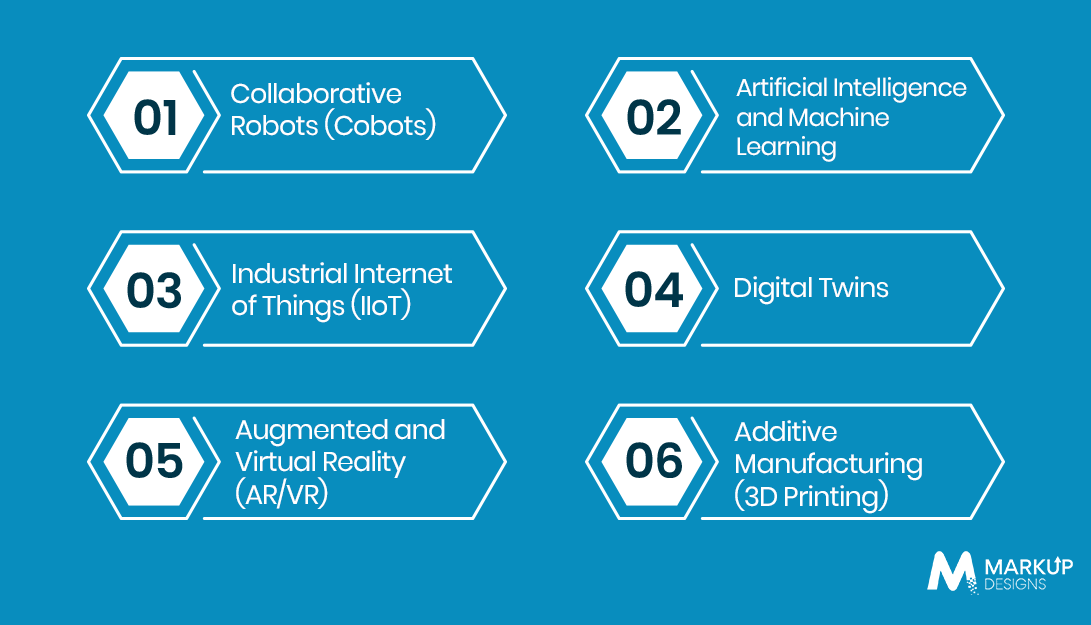
The fusion of technology in Industry 5.0 is aimed at enabling manufacturing organizations to improve their production activities while ensuring that humans remain central in their activities. The technologies will allow manufacturers to make informed decisions, reduce human labor, and react promptly to any changes that occur. Some of the technologies that will be used in Industry 5.0 in the UK manufacturing industry include:
Collaborative Robots (Cobots)
The cobots assist humans in carrying out tasks that are either repetitive, physically stressful, or require precision. They will increase efficiency, improve the working environment, and enable humans to engage in other activities.
Artificial Intelligence and Machine Learning
AI and machine learning assist manufacturers in analysing production information, finding patterns, forecasting machine breakdowns, and enhancing quality control.
Industrial Internet of Things (IIoT)
IIoT involves connecting machines, sensors, and equipment in order to gather information about their work in real time. This is an option for manufacturers to keep tabs on production and its performance, and detect problems.
Digital Twins
Digital twins refer to the virtual models of actual machines, products, or production processes, which make it possible for manufacturers to test changes in them, monitor performance, and detect problems before making any modifications to actual operations.
Augmented and Virtual Reality (AR/VR)
These technologies help employees in their training, maintenance of equipment, and assembly of equipment through the provision of visual guidance or practice in virtual environments.
Additive Manufacturing (3D Printing)
3D printing assists manufacturers in creating customized components and testing product designs, and manufacturing some of the components with less waste of materials.
How Industry 5.0 is Reshaping Smart Manufacturing in the UK
Industry 5.0 is revolutionizing how manufacturers will organize their production processes, support employees, and address the needs of customers. Combining technology and human knowledge is allowing manufacturers to develop more flexible, consistent, and sustainable manufacturing processes. Below are five ways in which this change is revolutionizing smart manufacturing in the UK.
Bringing Together Humans and Robots
Robotic collaboration enables workers to deal with boring and laborious jobs. As a result, people can spend their time solving problems and checking the quality of work that cannot be done by robots.
Increased Stability of Manufacturing
The use of artificial intelligence and sensors provides manufacturing companies with opportunities to monitor the performance of machinery and detect failures ahead of time.
Enabling Customizable Production Processes
Digital technology allows manufacturers to modify the process of production depending on the changing customer preferences. Enterprises are able to adapt to the need for customization of goods without fully using fixed production processes.
Promoting Sustainability of the Process of Manufacturing
The use of smart monitoring technologies facilitates tracking the consumption of energy resources, raw materials, and waste generated. Such knowledge enables the identification of inefficiencies and their resolution.
Enhancing Training and Safety for Workers
AR-based manuals, virtual training, and intelligent safety measures can be useful for the development of employees’ skills and performance. Technology helps workers to work more effectively rather than substituting for them with technology.
Together, these changes help UK manufacturers build smarter operations that balance productivity, human needs, and long-term business resilience.
Key Benefits of Industry 5.0 for UK Manufacturers
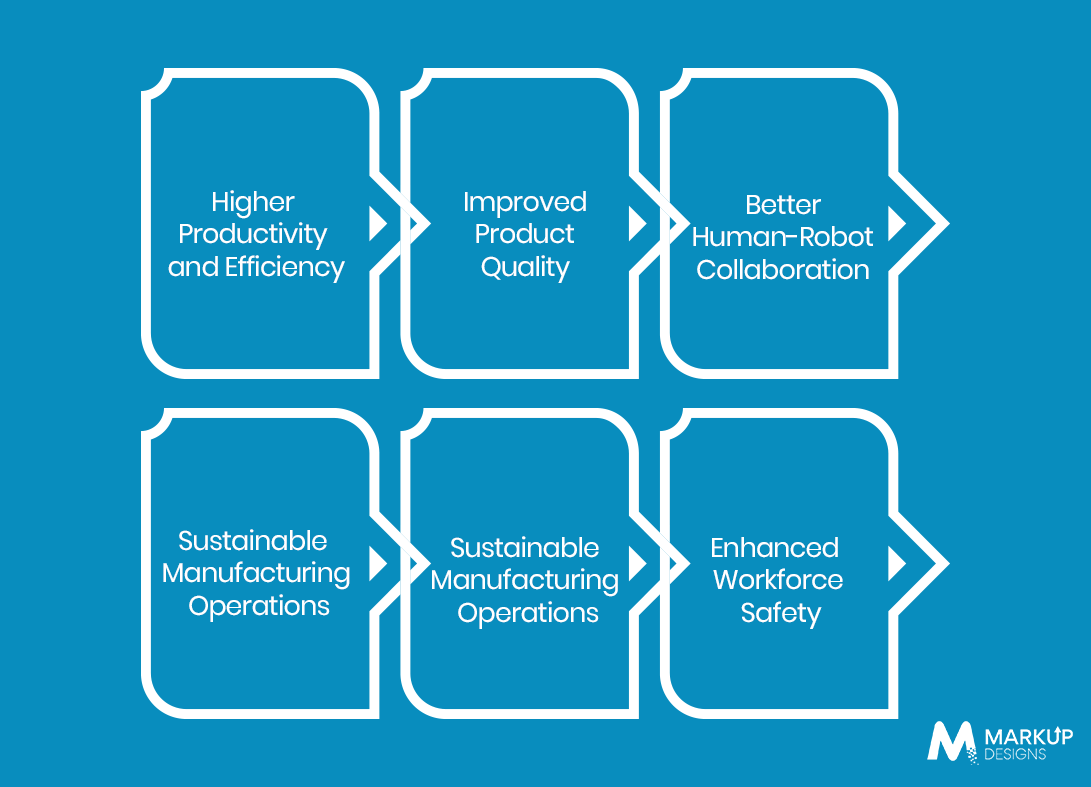
Industry 5.0 provides companies with an opportunity to go beyond automation and concentrate on improving the overall effectiveness of their operations. Utilizing the combination of people and innovative technology is how UK manufacturers can achieve higher levels of efficiency, flexibility, and sustainability. These are six benefits of adopting Industry 5.0 for manufacturers.
Higher Productivity and Efficiency
The use of AI, automated machines, and cobots can lead to minimizing repetitive actions and optimizing manufacturing processes. Workers will be able to dedicate their time to creative and thoughtful actions.
Improved Product Quality
Real-time checks and quality control based on AI enable the identification of errors in the process of manufacturing. It will allow companies to fix issues rapidly and provide high-quality products.
Better Human-Robot Collaboration
Cobots help workers handle physically strenuous or repetitive jobs. That could make working environments safer, decrease exhaustion, and let workers concentrate on more essential duties.
Sustainable Manufacturing Operations
Smart solutions will enable manufacturing businesses to better track energy consumption, reduce waste of materials, and be more resourceful. These steps will not only help reach environmental objectives but will also contribute to controlling the costs of operations.
Greater Supply Chain Resilience
Connected solutions and data analysis will allow for more transparent monitoring of inventory levels, production activities, and other supply chain processes. Manufacturers will be able to detect any disruptions sooner and react appropriately.
Enhanced Workforce Safety
Through digital training and smart assistance systems, manufacturers are able to teach workers the necessary skills to work with new manufacturing technology.
Challenges of Adopting Industry 5.0 and How to Overcome Them
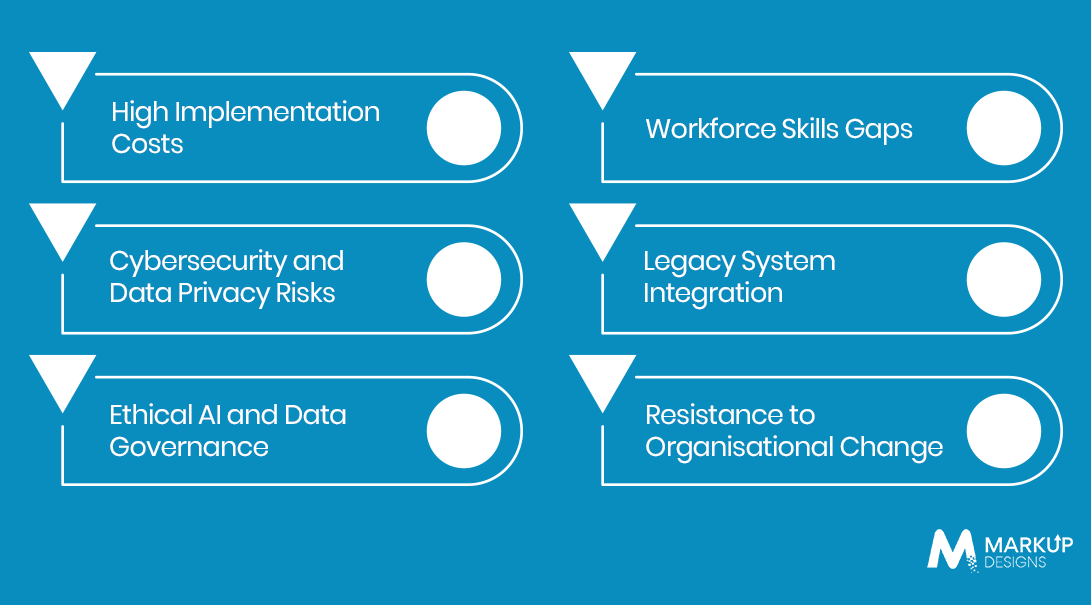
Despite various advantages associated with Industry 5.0, its adoption can become a problem for manufacturers. There are issues with the cost of implementation, readiness of employees, cybersecurity, as well as compatibility of existing systems that should be considered in advance. Knowing about these challenges allows UK manufacturers to develop strategies for the transition.
High Implementation Costs
Implementation of such innovations as AI-based systems, collaborative robots, and connected manufacturing technology can imply high costs.
How to overcome it: Initiate small-scale manufacturing first and focus on the application of innovations in those areas that bring value to the business.
Workforce Skills Gaps
The manufacturing workforce may not have the necessary knowledge of advanced manufacturing systems.
How to overcome it: Organize training for employees and workshops where they can acquire digital skills.
Cybersecurity Data Privacy Risks
Connected machines and digital platforms might expose an organization to cybersecurity threats and unauthorized access to information.
How to overcome it: Apply appropriate access control mechanisms, network security measures, update software, and apply data protection policies.
Legacy System Integration
Integration with legacy systems is quite problematic because the old machines might be incompatible with the new technology.
How to overcome it: Conduct an assessment of the current infrastructure, choose adequate integration tools, and update systems gradually.
Ethical AI and Data Governance
Poor design and management of AI-based systems might result in a lack of transparency in decisions made by AI algorithms and biases in decision-making processes.
How to overcome it: Develop an appropriate policy for the governance of AI frameworks, monitor its operation, and have human supervision of significant decisions.
Resistance to Organisational Change
Employees may be afraid of losing their jobs as a result of implementing new technologies.
How to overcome it: Explain the purposes of implementing innovations and their benefits for employees’ activities.
How to Implement Industry 5.0 in Your Manufacturing Business
Adopting Industry 5.0 is not an instant decision that would require a complete rework of all existing manufacturing processes. Companies are allowed to take into account their needs, apply new technologies, and expand incrementally when they notice positive results. For UK companies, a proper implementation strategy would help to implement Industry 5.0 more easily and faster.
Analyze Your Current Manufacturing Processes
Pinpoint the issues related to production delays, waste of material resources, downtime of equipment, or human labor, and understand how you could improve things with Industry 5.0.
Determine Suitable Use Cases
Before choosing appropriate solutions, set clear objectives for yourself. For instance, you may need to enhance the quality control procedures, boost occupational health and safety, or minimize energy consumption.
Select Suitable Technologies
Choose solutions depending on your business needs. There are many technologies to consider, including AI, collaborative robots, IIoT sensors, and digital twins, among others.
Integration of Systems and Data Security
Make sure that new technology can connect with current equipment and software. Implement cybersecurity measures in order to secure the data of production processes.
Educate Employees and Build Digital Literacy
Make sure that employees know how to use the new tools and how they may help in their work. Early involvement of employees can increase trust in new technology.
Measure Performance and Scale Up Gradually
Measure key metrics like downtime, defects, energy consumption, and efficiency of production processes. Use the results to fine-tune your strategy before implementing solutions elsewhere.
A step-by-step approach helps manufacturers adopt Industry 5.0 at a manageable pace while keeping business goals and employee needs at the centre of the process.
Why Choose Markup Designs for Smart Manufacturing Solutions?
The selection of the right technology partner is also crucial in the case of the transition to Industry 5.0. Every company should have solutions that align with its needs and will help it develop successfully in the future. Markup Designs can help companies analyze their needs and find out how digital tools can be used to increase operational efficiency and improve the overall process of digitalization of their operation.
In the case of manufacturers, the identification of business requirements, finding suitable technologies, and focusing on problem-solving solutions can help companies get the right tools that are needed. For example, it can become easier for a manufacturer to use the right development partner when it comes to increasing data visibility, simplifying processes, and other needs.
An adequate approach is useful not only from the perspective of making it easier for manufacturers to invest in digital tools but also in terms of planning further steps and making sure that future changes will not be problematic.
Take the Next Step Towards Smart Manufacturing
Industry 5.0 is creating new opportunities for manufacturers to improve efficiency, support their workforce, and build more sustainable operations. The right digital solutions can help your business move towards these goals with greater confidence.

Conclusion
Industry 5.0 changes the face of smart manufacturing in the UK through the integration of people with various technological advancements like AI, collaborative robots, the Internet of Things, and digital twins. This allows for increased productivity, product quality, flexibility, and sustainability.
Yet, to be able to adopt Industry 5.0, manufacturers have to plan carefully, train their employees, ensure the security of their systems, and choose appropriate technologies. They can start with setting objectives and gradually introducing the necessary advancements.
Through the balance of technology and human capabilities, manufacturers in the UK can stay competitive in this ever-changing environment.
FAQs
1. What is Industry 5.0 in smart manufacturing?
Industry 5.0 combines advanced technologies with human skills to create manufacturing operations that are more efficient, sustainable, and resilient. It focuses on collaboration between people and machines rather than automation alone.
2. How is Industry 5.0 different from Industry 4.0?
Industry 4.0 focuses on automation, connected machines, and data-driven production. Industry 5.0 builds on these technologies by placing greater emphasis on human well-being, sustainability, and business resilience.
3. Why is Industry 5.0 important for UK manufacturers?
It can help UK manufacturers improve productivity, address skills gaps, reduce waste, and respond more effectively to supply chain disruptions and changing customer requirements.
4. Which technologies are used in Industry 5.0?
Key technologies include collaborative robots, artificial intelligence, machine learning, the Industrial Internet of Things, digital twins, augmented and virtual reality, and additive manufacturing.
5. What are the main challenges of adopting Industry 5.0?
Common challenges include implementation costs, workforce skills gaps, cybersecurity risks, integration with older systems, ethical AI concerns, and resistance to organisational change.
Author's Perspective
Industry 5.0 is not just about adopting advanced technologies; it is about using them to solve real business challenges while supporting employees. For UK manufacturers, balancing automation, human expertise, and sustainability is essential. Technologies like AI and robotics can improve production, but success also depends on workforce training, data security, and proper planning. By setting clear goals, starting small, and measuring results, manufacturers can make smarter investments and build efficient, resilient, and future-ready operations that create lasting business value.
Discuss Your Project NowJupinder Singh Arora
Founder and CEO
Insights Are Valuable & Execution is Priceless
You’ve read about the digital future. Now, let’s build the infrastructure to take you there. Move your strategy from the page to the product.
Design Your Solution Now
Contact Us
Schedule The Appointment At Your Convenience Date And Time.
30 Min
Web Conference
Time Zone
Indian standard time (08:30pm)

Thanks For Getting In Touch!
You’ve Taken The First Step Toward Transforming Your Digital Presence. Our Experts Will Reach Out Shortly To Take It Forward.
Launch Your Dream Project
Provide a brief overview of your project, and our specialists will evaluate your requirements. We will connect with you to explore how the right digital solutions can help you launch faster.