
In Brief
- Businesses across the Middle East are rapidly adopting ERP software to improve operational efficiency, automate workflows, and centralize business management.
- ERP systems help organizations manage finance, HR, inventory, procurement, supply chains, customer relationships, and reporting from a single platform.
- Countries such as UAE, Saudi Arabia, Qatar, Oman, and Kuwait are accelerating digital transformation initiatives, increasing ERP adoption across industries.
- Cloud ERP solutions are becoming increasingly popular because they offer scalability, remote accessibility, lower infrastructure costs, and operational flexibility.
- Industries such as retail, healthcare, logistics, manufacturing, construction, oil & gas, hospitality, and finance are heavily investing in ERP ecosystems.
- AI-powered ERP systems are helping businesses improve forecasting, automate repetitive tasks, and make faster data-driven decisions.
- ERP software improves operational visibility, reduces human error, strengthens compliance, and supports long-term scalability.
- Modern ERP systems now include mobile accessibility, analytics dashboards, automation tools, and multi-language capabilities, including Arabic support.
Businesses across Middle East are entering a new era of digital transformation. For years, many organizations relied on disconnected systems, spreadsheets, paper-based workflows, and manual operational processes to manage business activities. While these methods may have worked in traditional business environments, they are becoming increasingly inefficient in today’s fast-moving digital economy.
Modern businesses are now expected to operate with greater speed, transparency, flexibility, and accuracy. Companies must manage large volumes of operational data, customer interactions, supply chain activities, financial processes, and workforce coordination simultaneously. As operational complexity continues to grow, ERP software has become one of the most important technologies helping businesses improve efficiency and scale sustainably.
ERP software allows businesses to integrate multiple operational functions into one centralized platform. Instead of departments operating independently, ERP systems create connected business ecosystems where information flows seamlessly across teams and processes.
Across Middle East, organizations are investing heavily in ERP systems to improve productivity, automate operations, strengthen reporting, and support digital business growth. From retail and healthcare to manufacturing, logistics, hospitality, finance, and oil & gas, ERP software is transforming how businesses operate across the region.
What is ERP Software
Understanding ERP Software
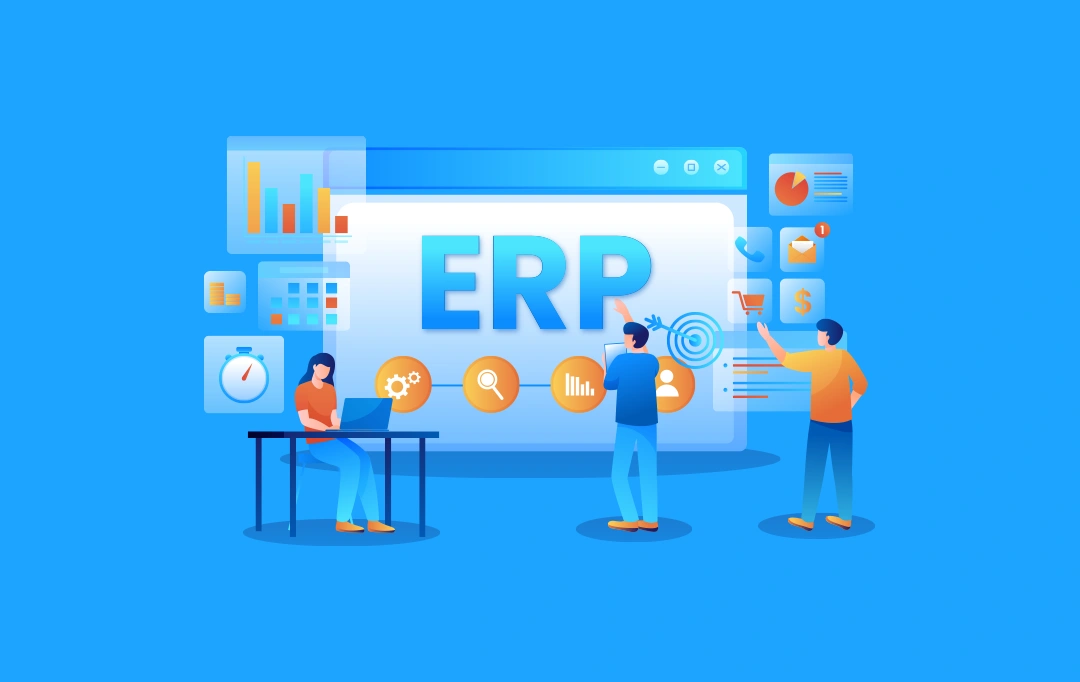
ERP stands for Enterprise Resource Planning. It is a software designed to centralize a business management system, which helps organizations to manage multiple operations from one unified platform.
Instead of using separate software for finance, HR, inventory, procurement, customer management, and reporting, ERP systems combine all these functions into one connected ecosystem.
This helps businesses:
- Improve coordination
- Reduce operational silos
- Automate workflows
- Improve data accuracy
- Increase operational efficiency
ERP systems act as the operational backbone of modern businesses.
Core Functions of ERP Systems
Modern ERP software typically includes:
- Financial management
- Human resource management
- Payroll processing
- Procurement management
- Inventory tracking
- Supply chain management
- Customer relationship management (CRM)
- Reporting and analytics
- Project management
- Business automation
Instead of manually moving information between departments, ERP systems synchronize data automatically in real time.
How ERP System Works
It centralize operational data into one connected environment.
For example:
- Sales teams can access inventory data instantly.
- Finance teams can monitor procurement spending in real time.
- HR departments can manage payroll and attendance automatically.
- Management teams can track operational performance through live dashboards.
This improves collaboration while reducing delays and manual errors.
Growing Importance of ERP Software
Middle East is experiencing a rapid digital transformation driven by:
- Government modernization initiatives
- Smart city development
- Cloud adoption
- Growing startup ecosystems
- AI and automation investments
Programs such as Saudi Vision 2030 and UAE digital economy initiatives are encouraging businesses to modernize their operational infrastructure. As a result, ERP adoption is increasing rapidly across GCC region.
How Software Solutions Improve Business Efficiency in 2026
Modern businesses are rapidly adopting custom software solutions and digital technologies to improve productivity, reduce operational delays, improve customer experiences, and build scalable digital operations for long-term growth and stay competitive in an evolving market.

Growing Need for Business Automation
Businesses today face increasing operational complexity. Companies must manage:
- Larger customer bases
- Multi-location operations
- Remote teams
- Supply chain coordination
- Real-time reporting
- Customer expectations
Manual workflows can no longer support modern operational demands. ERP systems automate repetitive tasks and improve operational speed.
Rise of Cloud Computing
Cloud computing has made ERP systems more accessible than ever before. Cloud ERP platforms allow businesses to:
- Access systems remotely
- Reduce hardware dependency
- Scale operations quickly
- Improve collaboration
- Lower infrastructure costs
This flexibility is especially important for growing businesses operating across multiple branches and countries.
Growing SME Ecosystem
ERP’s adoption is no longer limited to large enterprises. Small and medium-sized businesses across the Middle East are increasingly investing in affordable cloud ERP systems to improve operational efficiency and support growth.
Key Features of Modern ERP Software
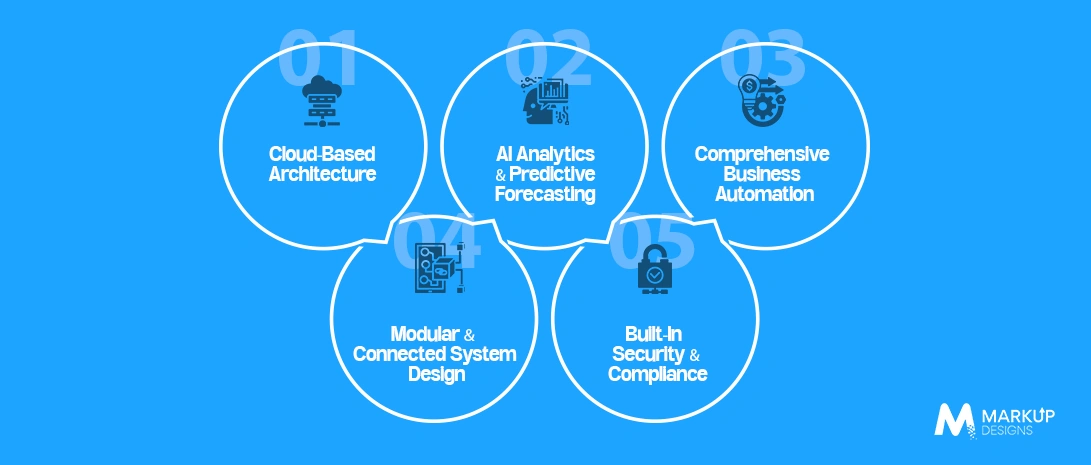
1. Cloud-Based Architecture
- Enables businesses to access data and operations from anywhere.
- Allows employees and managers to manage workflows through mobile devices.
- Supports real-time inventory tracking and performance monitoring.
- Reduces dependency on expensive on-premise IT infrastructure.
- Improves business flexibility, scalability, and remote accessibility.
2. AI Analytics & Predictive Forecasting
- Provides real-time analytics for faster and smarter decision-making.
- Offers customizable dashboards for role-based business insights.
- Uses AI-powered forecasting to predict sales and market trends.
- Helps optimize inventory management and cash flow planning.
- Improves resource allocation and operational efficiency.
3. Comprehensive Business Automation
- Automates repetitive and time-consuming business processes.
- Streamlines invoicing, procurement, payroll, and order management.
- Reduces manual work and operational delays.
- Minimizes human errors through automated workflows.
- Enhances overall productivity and business accuracy.
4. Modular & Connected System Design
- Connects finance, HR, inventory, sales, and supply chain operations into one platform.
- Eliminates data silos across departments.
- Improves collaboration and real-time data sharing.
- Ensures better data consistency and operational transparency.
- Integrates easily with CRM systems, eCommerce platforms, and payment gateways.
5. Built-In Security & Compliance
- Protects sensitive business data with advanced security features.
- Uses role-based access control for secure data management.
- Restricts unauthorized access to critical information.
- Helps businesses comply with regional tax laws and regulations.
- Reduces compliance risks and improves data security standards.
Types of ERP Software Used
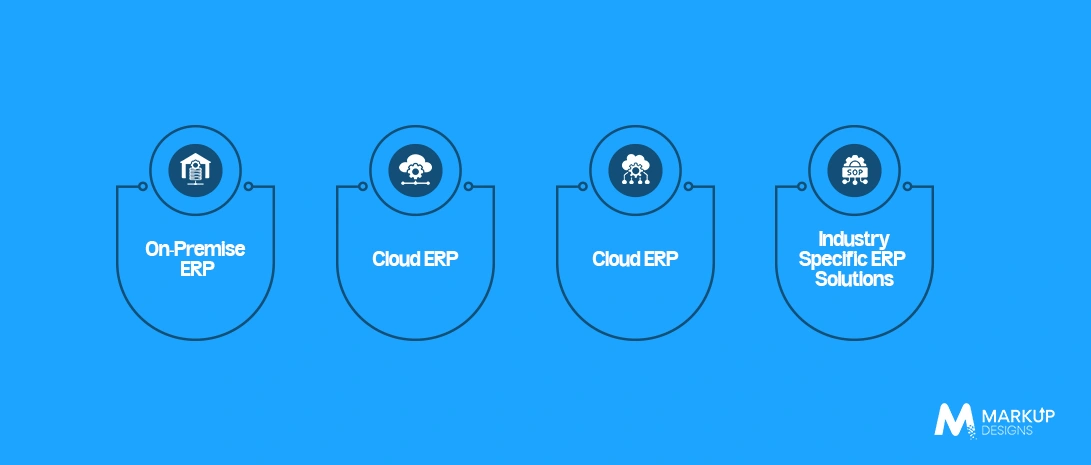
On-Premise ERP
On-premise ERP systems are installed directly on company servers. Benefits include:
- Greater infrastructure control
- Internal data management
- Custom security configurations
However, they often require:
- Higher infrastructure investment
- Ongoing maintenance
- Dedicated IT management
Cloud ERP
Cloud ERP systems operate online through SaaS (Software as a Service) models.
Benefits include:
- Lower upfront costs
- Remote accessibility
- Easier scalability
- Faster deployment
Cloud ERP is becoming the preferred choice for modern businesses.
Hybrid ERP
Hybrid ERP combines cloud and on-premise environments. Businesses use hybrid systems when they need:
- Flexibility
- Partial cloud migration
- Custom infrastructure requirements
Industry-Specific ERP Solutions
Many industries require customized ERP ecosystems. Examples include:
- Manufacturing ERP
- Healthcare ERP
- Retail ERP
- Construction ERP
- Logistics ERP
- Hospitality ERP
Industry-specific ERP systems improve operational alignment and efficiency.
Benefits of ERP Software for Middle East Businesses
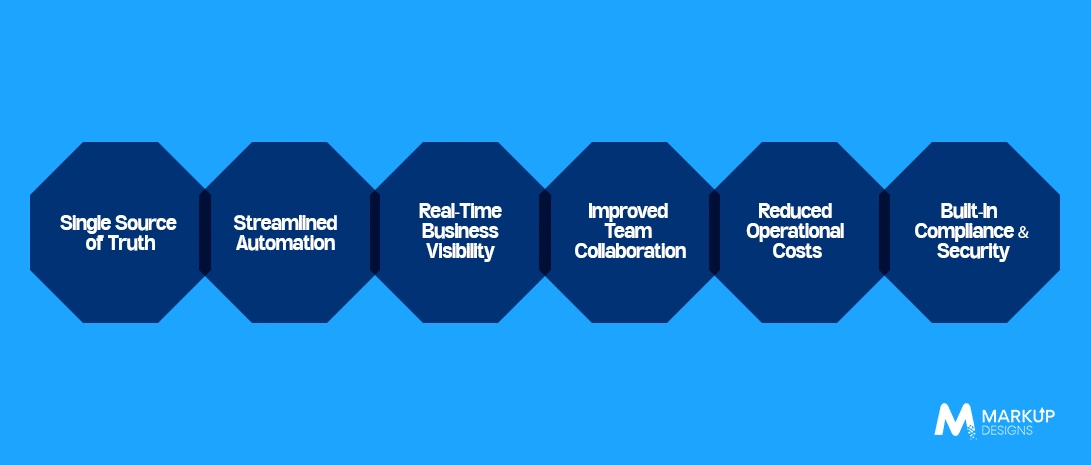
- Single Source of Truth: Modern ERP systems centralize all business data into one unified platform, ensuring every department works with accurate and updated information while eliminating data silos.
- Streamlined Automation: ERP solutions automate repetitive tasks such as invoicing, payroll, and inventory management, helping businesses reduce manual errors and improve overall productivity.
- Real-Time Business Visibility: Businesses gain instant access to live financial and operational data, enabling faster decision-making, accurate forecasting, and better strategic planning.
- Improved Team Collaboration: ERP systems connect different departments, allowing teams to easily share updates, track projects, manage purchase orders, and improve communication across the organization.
- Reduced Operational Costs: By optimizing workflows, resource utilization, and supply chain operations, ERP systems help businesses lower operational expenses and minimize material waste.
- Built-In Compliance & Security: Modern ERP platforms support regulatory compliance by maintaining secure audit trails, protecting sensitive business data, and helping organizations meet industry and regional standards.
ERP Implementation Challenges
- Resistance to Change: Employees may find it difficult to adapt to new systems and workflows, which can slow down adoption and affect overall productivity during implementation.
- Data Migration Challenges: Moving data from old systems to a new ERP can be complex, especially when data is outdated, duplicated, or inaccurate. Poor data migration can lead to operational issues and unreliable reporting.
- Budget & Timeline Overruns: Inadequate planning or excessive software customization can increase project costs and delay implementation timelines beyond the original expectations.
- Unclear Business Requirements: If a business fails to clearly define its objectives or involve all departments in the planning process, the ERP system may not align properly with daily operations and business needs.
- Lack of Leadership Support: Successful ERP implementation requires strong involvement from senior management. Without executive support, businesses may face resource limitations, poor coordination, and resistance to change.
How to Choose the Right ERP Software
Understand Business Requirements
Businesses should first identify:
- Operational challenges
- Workflow gaps
- Growth objectives
This helps determine ERP requirements.
Evaluate Scalability
ERP systems should support:
- Business expansion
- New users
- Additional branches
- Increasing operational complexity
Choose Industry-Specific Features
Industry-focused ERP systems provide better operational alignment.
For example:
- Retail businesses need inventory synchronization.
- Healthcare providers need patient management tools.
- Logistics companies need fleet tracking capabilities.
Check Integration Capabilities
ERP systems should integrate smoothly with:
- CRM platforms
- Payment gateways
- Analytics tools
- Third-party applications
Analyze Vendor Expertise
Businesses should choose ERP providers with:
- Regional experience
- Technical support
- Industry knowledge
- Scalable implementation strategies
Compare Pricing Models
Businesses should evaluate:
- Subscription-based pricing
- Licensing costs
- Maintenance expenses
- Long-term operational value
Top ERP Trends in the Middle East for 2026
1. Cloud-First, Always Accessible
- Access your business data anytime and from anywhere.
- Manage operations using mobile phones, tablets, or laptops.
- Approve purchase orders and monitor reports remotely.
- No need for complex IT infrastructure or manual software updates.
- Real-time access improves business flexibility and team collaboration.
2. Data-Driven Insights for Smarter Decisions
- Get real-time business insights through advanced analytics and reporting.
- Track sales performance, inventory levels, and customer behavior easily.
- Make faster and smarter business decisions using accurate data.
- Reduce dependency on manual reports and guesswork.
- Improve planning, forecasting, and overall business growth strategies.
3. Customization Without Complexity
- Easily customize dashboards, reports, and workflows without coding skills.
- Adjust the ERP system according to your business needs.
- Generate customized reports with just a few clicks.
- Save time and reduce dependency on IT teams.
- Create a more flexible and user-friendly business environment.
4. Work From Anywhere
- Enable employees to work remotely using any connected device.
- Access invoices, inventory data, and reports on the go.
- Support hybrid work environments and remote teams efficiently.
- Receive real-time updates for faster decision-making.
- Improve team productivity and operational responsiveness.
5. Security You Can Trust
- Protect sensitive business information with advanced security systems.
- Maintain secure and transparent transaction records.
- Prevent unauthorized access or unwanted data modifications.
- Simplify audits with accurate and traceable business records.
- Ensure compliance with industry regulations and security standards.
6. Industry-Specific Capabilities
- Get ERP features designed for your specific industry needs.
- Manufacturing businesses can manage production schedules and inventory.
- Retail businesses can monitor stock levels and sales performance in real time.
- Healthcare organizations can manage records and compliance efficiently.
- Faster implementation helps businesses start operations quickly.
7. Connecting With Emerging Technologies
- Integrate ERP systems with IoT devices and analytics platforms.
- Monitor shipments, inventory, and operations automatically.
- Use real-time business data for better forecasting and planning.
- Improve communication and coordination across departments.
- Create a smarter and more connected business ecosystem.
ERP Software Cost in the Middle East
| ERP Type | Estimated Cost Range |
| Basic Cloud ERP | $50 – $300 per user/month |
| Standard Cloud ERP | $10,000 – $50,000 |
| Enterprise Cloud ERP | $50,000 – $300,000+ |
| On-Premise ERP | $80,000 – $500,000+ |
| Industry-Specific ERP | $25,000 – $250,000+ |
| Hybrid ERP Solutions | $40,000 – $200,000+ |
| Custom ERP Development | $100,000 – $1M+ |
| ERP Mobile Applications | $5,000 – $50,000+ |
Why Choosing the Right ERP Partner Matters
ERP implementation success depends on choosing the right technology partner.
Many businesses fail to achieve full ERP value because of:
- Poor implementation planning
- Weak integration
- Limited scalability
- Low user adoption
- Inadequate training
Businesses require ERP partner who understand:
- Operational strategy
- Industry workflows
- Scalable architecture
- Long-term benefit
Markup Designs helps businesses develop customized ERP ecosystems designed to improve operational efficiency, automate workflows, centralize operations, and support long-term business growth.
By focusing on scalability, performance optimization, user experience, and intelligent business automation, we help organizations to build future-ready enterprise ecosystems rather than disconnected software environments.
Ready to Transform Your Business with Smart ERP Solutions?
Streamline operations, improve productivity, and connect every part of your business with intelligent ERP solutions tailored for the Middle East market. Build faster workflows, smarter decision-making systems, and scalable business processes that drive long-term growth.

Conclusion
Businesses across the Middle East are rapidly adopting ERP software to improve operational efficiency, strengthen decision-making, automate workflows, and support long-term digital growth.
Traditional operational models built around spreadsheets, disconnected systems, and manual processes are no longer capable of supporting modern business demands. ERP systems help organizations centralize operations, improve transparency, reduce inefficiencies, and create scalable business environments.
From retail and healthcare to logistics, manufacturing, finance, hospitality, and oil & gas, ERP software is becoming a critical foundation for modern enterprise operations.
The future of business growth in the Middle East will increasingly depend on intelligent digital ecosystems powered by automation, cloud infrastructure, AI, analytics, and connected enterprise operations.
Businesses that invest strategically in scalable ERP solutions today will likely gain stronger operational advantages, improved customer experiences, and greater long-term competitiveness in the years ahead.
FAQs
1. What is ERP software used for?
ERP software helps businesses manage finance, HR, inventory, procurement, supply chains, reporting, and customer operations through one centralized platform.
2. Why is ERP software becoming popular in the Middle East?
ERP adoption is growing because businesses are focusing heavily on digital transformation, automation, cloud infrastructure, and operational efficiency.
3. Which industries benefit most from ERP software?
Industries such as retail, healthcare, logistics, manufacturing, construction, hospitality, finance, and oil & gas benefit significantly from ERP systems.
4. What is the difference between cloud ERP and on-premise ERP?
Cloud ERP operates online with remote accessibility and lower infrastructure costs, while on-premise ERP is installed on internal company servers.
5. Is ERP software suitable for small businesses?
Yes. Modern cloud ERP systems are scalable and affordable for small and medium-sized businesses.
6. How long does ERP implementation take?
Implementation timelines depend on business size, customization complexity, integrations, and operational requirements.
7. Why is AI becoming important in ERP systems?
AI helps ERP platforms automate workflows, improve forecasting, enhance analytics, and support faster decision-making.
8. Why is cybersecurity important in ERP systems?
ERP platforms manage sensitive operational and financial data, making cybersecurity essential for protecting business infrastructure and customer information.
Author's Perspective
Many businesses in the Middle East still view ERP software as simply an operational management tool. In reality, ERP systems are becoming the foundation of modern digital enterprises. Businesses today require connected operations, real-time intelligence, automation, scalability, and data-driven decision-making to remain competitive. Companies relying on fragmented systems and manual workflows often struggle with operational inefficiencies and slower growth. Organizations investing early in intelligent ERP ecosystems are not only improving productivity but also building stronger, more agile, and future-ready business environments for long-term success.
Discuss Your Project NowGaurav Goyal
Global Sales- VP
Related Posts

Custom Software Development Cost in Bahrain: Factors, Benefits,...

How Much Does Healthcare Software Development Cost in...
How to Build Compliance Software for Australian Businesses:...
Insights Are Valuable & Execution is Priceless
You’ve read about the digital future. Now, let’s build the infrastructure to take you there. Move your strategy from the page to the product.
Design Your Solution Now
Contact Us
Schedule The Appointment At Your Convenience Date And Time.
30 Min
Web Conference
Time Zone
Indian standard time (08:30pm)

Thanks For Getting In Touch!
You’ve Taken The First Step Toward Transforming Your Digital Presence. Our Experts Will Reach Out Shortly To Take It Forward.
Launch Your Dream Project
Provide a brief overview of your project, and our specialists will evaluate your requirements. We will connect with you to explore how the right digital solutions can help you launch faster.