

In Brief
- The architecture of a mobile application is the basis of creating scalable, secure, and high-performance applications by structuring the relationship between UI, business logic, data, APIs, and the backend.
- Proper design of application architecture will allow you to enhance its performance, maintainability, flexibility, and scalability in addition to assisting companies in minimizing development challenges and costs.
- There are various kinds and patterns of architectures, such as layered architecture, microservices, MVC, MVVM, MVP, VIPER, and clean architecture, which are used to develop efficient mobile applications.
- Selection of a suitable architecture takes into account app requirements, scalability needs, security concerns, performance requirements, budget, and technology capabilities.
- Scalable mobile app architecture allows businesses to meet growing user demand, incorporate the latest technologies, and create future-oriented digital solutions.
In today’s competitive digital landscape, mobile applications need more than an attractive interface to succeed. The strong base that is formed through proper mobile application architecture is what guarantees efficiency in performance, scalability, and adaptability to future business requirements. No matter what type of application you develop – either for customers, enterprise, or any other purpose- architecture has great importance for your application’s speed, security, flexibility, and reliability.
Mobile application architecture is how all components of an application interact with each other – it includes the user interface, business logic, data management, and backend. Properly chosen architecture allows developers to build scalable applications that can grow along with the increasing number of users and new features that appear in the future. In this post, you will learn about mobile app architecture, its components, best practices, and building future-ready applications.
What is Mobile Application Architecture?
Mobile application architecture is basically the design of the mobile app and its various elements. Architecture plays an important role in determining how the various components of the application will interact to provide users with a great app experience.
With good architecture, developers can develop applications that are easy to manage, secure, scalable, and robust. In the current architecture design, functionalities of the mobile application are split into separate layers for improved maintenance and the development process.
Whether you want to develop a banking application, eCommerce app, health-related application, or enterprise app, proper architecture will help improve the performance and flexibility of mobile apps.
Why is Mobile App Architecture Important?
Mobile app architecture is a very important aspect in deciding how well the app will perform. Good architecture makes it easy for the developer to come up with an app that is fast, secure, and scalable. This also improves the experience of the user.
It improves the structure of the code, makes development less complicated, and makes it possible to have new features added to the app without changing the previous features. The architectural design also ensures that you have the best user experience through improved speed, stability, and reliability.
For a business, having the right architectural design of a mobile app means reduced cost of maintaining the app and smooth scaling as you acquire more users. It also makes integrations with other third-party platforms simpler.
Key Components of Mobile Application Architecture
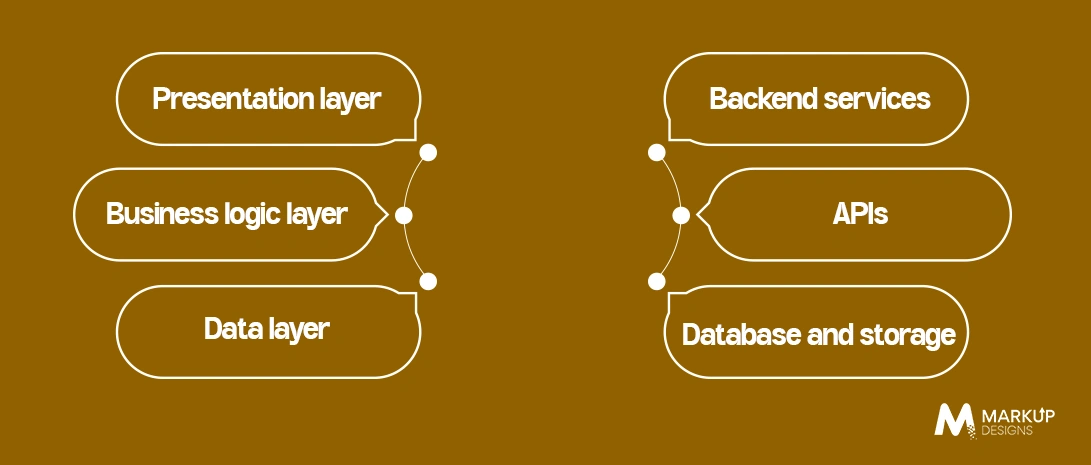
Mobile Application Architecture involves various layers that collaborate in order to make the experience smooth for the users. Every layer plays a definite role in keeping the application working effectively and flexibly.
1. Presentation layer
It is all about how the application is presented and interacts with the users through the user interface. This includes managing the user’s interaction, views, navigation, layouts, and user interface.
2. Business logic layer
It is all about the functionality and logic of the application itself, processing users’ requests and providing workflow management and calculations.
3. Data layer
The data layer controls the process of storing, accessing, and processing the data. It helps the application communicate with the database, APIs, and storage system to perform data-related operations seamlessly.
4. Backend services
Backend services provide support for mobile applications that help in managing operations related to servers, authentication, notifications, cloud-based processes, and integration with third parties.
5. APIs
APIs facilitate communication between the mobile application and the other systems. They help the application transfer data from/to servers, payment gateways, analytic platforms, and other services.
6. Database and storage
Database and storage systems manage user information, application content, user preferences, and offline data. The effective management of data improves the efficiency, security, and access to data.
Types of Mobile Application Architecture
Mobile Application Architecture Types are used to describe the structure of various elements of applications and their interaction and management. With the right approach to architecture, it becomes possible for companies to build scalable, manageable applications, which have potential for growth in the future
Monolithic Architecture
In the case of monolithic architecture, all elements of an application, from the user interface to business logic and data processing, are combined into one entity. Such architecture makes it easier to develop and deploy applications, but it becomes hard to manage them when the application grows.
Layered Architecture
The layered architecture separates the application into different layers like the presentation layer, business layer, and data layer. The purpose behind layered architecture is that it organizes the code better and makes the application easier to maintain.
Microservices Architecture
The microservices architecture divides an application into several smaller units called services. Each of these services performs a particular task. Microservices improve the scalability of the application, enable fast updates, and help build flexible mobile applications to handle increasing user requirements.
Client-Server Architecture
In client-server architecture, the mobile application is divided into two layers – client and server. The client layer takes care of user interaction, whereas the server layer deals with the processing of data and application logic.
Popular Mobile App Architecture Patterns
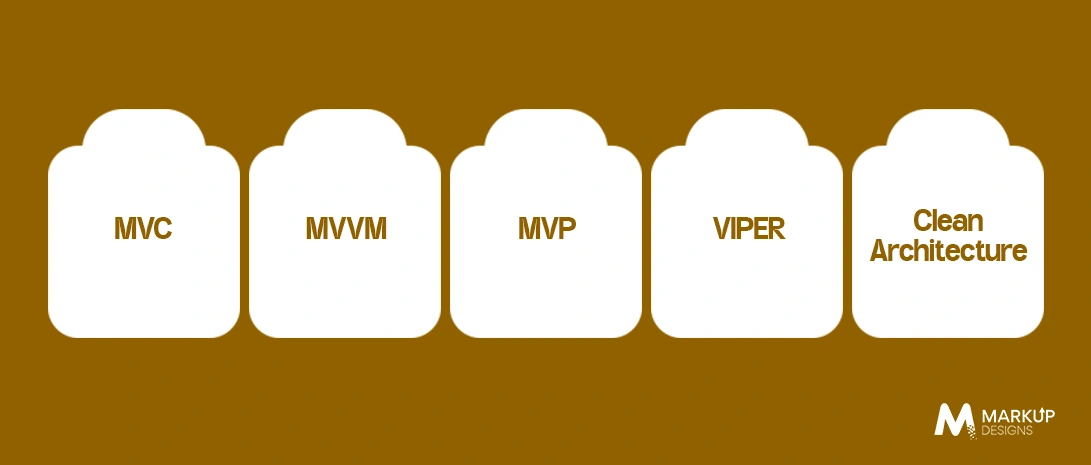
Mobile app architecture patterns allow developers to find efficient methods to design their application components and make the process of creating software more effective. They also allow developers to build applications that will be easy to maintain, test, and scale.
1. MVC
The architecture splits applications into three components – Model, View, and Controller. This architecture is easy to learn and works well for small applications.
2. MVVM
It helps to achieve better separation of user interface from business logic. The architecture is very popular for modern mobile applications.
3. MVP
The MVP architecture separates the presentation logic from the user interface, which makes the application more organized and maintainable.
4. VIPER
VIPER architecture separates an application into small pieces, which provides high modularity and control. VIPER architecture is usually used for iOS applications.
5. Clean Architecture
The Clean Architecture approach concentrates on the separation of layers and separation of concerns. It is useful for businesses to develop scalable applications.
Need a Scalable Mobile App Architecture for Your Next Project?
Turn your app idea into a future-ready solution with expert architecture planning, modern development practices, and scalable backend infrastructure.

Android vs iOS Mobile App Architecture
The apps built for Android and iOS have different architectures depending on their operating systems, frameworks, and other factors. By selecting the proper architecture, one may design an application that performs well, is scalable, and has a good user experience.
Android App Architecture
For designing Android apps, one can use various architecture patterns such as MVVM and Clean Architecture in order to separate the application logic into the UI, business logic, and data layers. There are also some components that allow developers to design a properly organized application.
iOS App Architecture
iOS applications often use patterns such as MVC, MVVM, VIPER, and Clean Architecture. These approaches help manage complex app functionalities while improving code quality, testing, and scalability.
Cross-Platform Architecture
Using frameworks such as Flutter web application and React Native makes it possible for firms to develop software that can run on both Android and iOS operating systems using the same codebase.
How to Choose the Right Mobile App Architecture
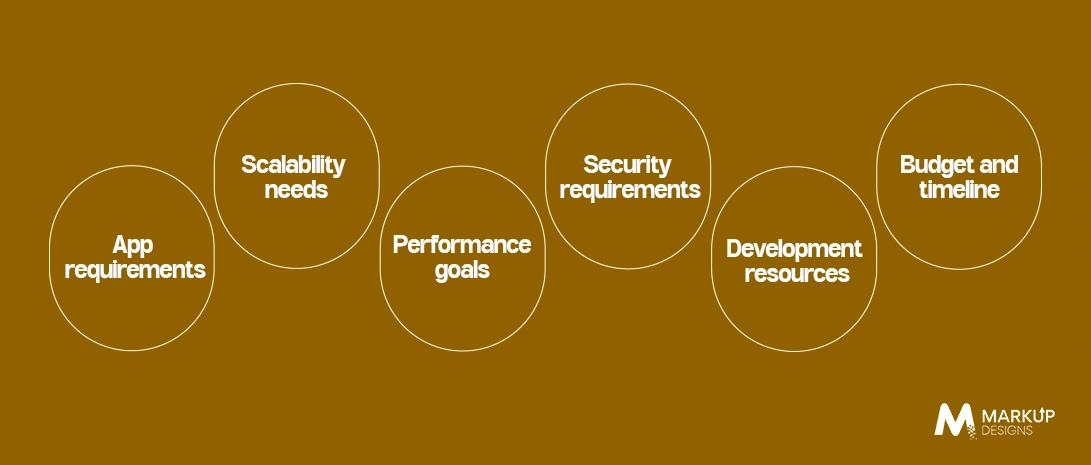
Choosing the proper mobile application architecture is a significant choice for the performance and scalability of the application. It is necessary to assess the technical and business requirements of the application before adopting any architecture.
App requirements
Analyze the application functionality and features before choosing the architecture.
Scalability needs
Pick an architecture based on scalability in terms of increasing number of users, data, and future development of new features.
Performance goals
Consider speed, responsiveness, and other performance requirements of the app.
Security requirements
Ensure the security of the data and other requirements of security.
Development resources
Pick the architecture according to the resources available to the developer.
Budget and timeline
Choose an architecture that fits the available development budget and project timeline without compromising the app’s essential requirements.
Mobile App Architecture for Scalable Applications
The ability to scale enables mobile apps to handle increases in user population, data, and requirements without affecting performance. By considering scalability at the outset, companies will be able to avoid costly changes in the future.
Here are some of the important aspects of scalability in mobile apps:
- Modular Development: The use of modular development will enable you to easily update each module.
- Cloud Infrastructure: Scalability of cloud infrastructure will be helpful in all types of applications.
- APIs First Approach: Well-designed APIs will facilitate proper communication between mobile applications and other platforms.
- Data Management: Optimization of databases and data management practices will improve the performance of mobile applications.
- Load Management: Load balancing and asynchronous loading will allow mobile applications to handle huge amounts of load.
- Continuous Monitoring: Performance monitoring will help you to optimize the application according to the growing demands of users.
Common Mobile App Architecture Mistakes to Avoid
Choosing the right architecture for the mobile application is important for its proper development. Unfortunately, businesses tend to overlook choosing the proper app architecture, and that results in such issues as poor performance and high cost of maintenance.
- Ignores Scalability Needs: Selection of the architecture without considering its future scalability leads to problems.
- Overcomplicating Architecture: Implementation of complicated design patterns in case of simple applications adds more complexity and cost to development.
- Poor Separation of Components: Mixing UI, business layer, and data components causes problems with working with the app.
- Neglecting Security: Absence of taking into account security requirements during the development leads to risks of exposure of the critical data.
- Absence of Performance Planning: Neglecting performance requirements leads to issues with speed and responsiveness.
- No Proper Documentation: Poorly documented architecture decreases the possibility of working with the application.
How to Design a Mobile App Architecture: Step-by-Step Process
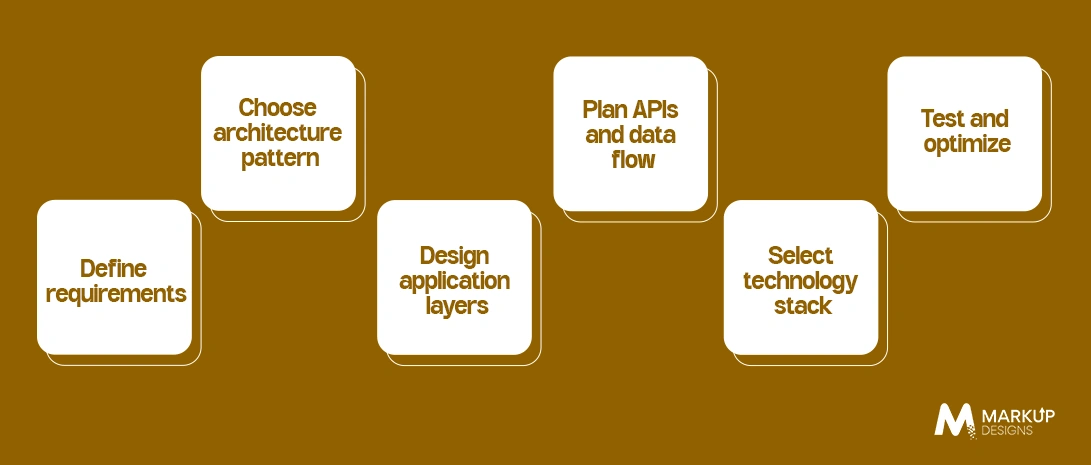
The architecture of the app needs to be designed carefully for developing an efficient, flexible, and scalable application.
Define requirements
Start by knowing the purpose of the application, the target users, the required functionality, performance requirements, and other related technical requirements.
Choose an architecture pattern
Choose one of the many available architecture patterns such as MVC, MVVM, MVP, VIPER, and Clean Architecture based on the complexity of the application.
Design application layers
Design architecture for the presentation layer, business layer, and data layer for appropriate segregation of layers.
Plan APIs and data flow
Design the integration between the mobile application and various other backend services, database services, and third parties.
Select technology stack
Select languages, frameworks, databases, cloud platforms, and development tools based on the requirements of the project.
Test and optimize
Once implemented, ensure that the performance, security, and scalability of the application are continuously monitored and improved accordingly.
Properly planned architecture design enables companies to build mobile applications that can be relied upon and will have a bright future.
Cost Factors of Building a Scalable Mobile App Architecture
The cost associated with the development of a proper mobile application architecture will be dictated by different factors. Implementation of an effective architectural approach will come with increased costs at first, but it will assist in minimizing maintenance costs.
Key factors affecting mobile app architecture costs include:
- Complexity of Application: Features, complex processes, and functionality complicate the architectural design and development of the application.
- Type of Architecture: Basic architectures require fewer resources, but more complicated architectures such as microservices architecture or Clean Architecture require more resources.
- Platform Requirements: The development of applications for different platforms (Android or iOS), as well as multiplatform applications, affects the selection of technologies and expenses.
- Backend Requirements: The use of cloud technologies, APIs, databases, and servers increases the development costs.
- Security Requirements: The implementation of architecture with encryption, authentication, and security standards makes the architectural implementation more costly.
- Testing and Maintenance: Continuous testing, monitoring, updates, and optimization ensure high application performance.
It is important to emphasize that businesses need to pay attention to the selection of the proper architecture now, not in the future, in order to ensure the possibility of scaling in the future.
How Markup Designs Can Help Build Scalable Mobile Applications
A scalable mobile app can be created exclusively with correct architectural design and knowledge. The Markup Designs Company helps organizations create high-performance mobile applications thanks to advanced architectural techniques.
Our company focuses on building flexible architectures for applications, selecting the right architecture patterns, and using the technologies that help to ensure high performance of the application. Whether it is native and cross-platform mobile application development, backend, API development, cloud solutions, or security optimization, our company helps to develop the highest quality of digital products.
Having extensive experience in modern framework development and implementation, Markup Designs helps to create mobile applications that are easy to maintain, update, and scale.
Ready to Build a Scalable Mobile Application?
Turn your app idea into a future-ready solution with expert architecture planning, modern development practices, and scalable backend infrastructure.

Conclusion
The mobile application architecture is the basis upon which the effectiveness of the application will be determined, depending on its performance and scalability. Good architecture ensures the stability, security, maintenance, and overall better user experience of the application.
It is important to understand that all decisions that will be made during the development process of the mobile application, starting with selecting architecture and design patterns and ending with scalability issues, will influence the future effectiveness of the application. The companies should strive for flexible architectures that can handle the increased number of users and new technologies.
By adhering to best practices and collaborating with skilled hire mobile app developers, businesses can create applications that are consistent and compete with others.
FAQs
1. What is mobile application architecture?
Mobile application architecture is the architectural design that describes how different modules of a mobile application, like the user interface, business logic, database, and backend services, work with each other.
2. Why is mobile app architecture important?
Effective architecture design enhances the performance, scalability, security, and maintainability of an app while making it easier for businesses to add new features later.
3. What are the main types of mobile app architecture?
Monolithic architecture, layered architecture, microservices architecture, and client-server architecture are some common architecture designs for mobile apps.
4. What architecture design works best for mobile applications?
The best architecture design varies depending on app requirements. MVC, MVVM, MVP, VIPER, and Clean architecture are some popular architecture designs used by many developers.
5. How does architecture make your application scalable?
Scalable architecture design enables applications to perform well even with an increasing number of users, a growing amount of data, and more features.
Author's Perspective
A successful mobile application starts with a strong architectural foundation. The right architecture makes apps easier to maintain, secure, and scale as business needs evolve. Whether it is a startup or enterprise solution, early architecture decisions directly impact long-term performance. By focusing on scalability, clean code, flexibility, and future-ready technologies, businesses can build reliable mobile experiences that adapt to changing user expectations and deliver lasting value.
Discuss Your Project NowJupinder Singh Arora
Founder and CEO
Related Posts

Cost to Build a Mobile App in Qatar...

How Much Does It Cost to Build an...

How to Build a Car Wash App: Development...
Insights Are Valuable & Execution is Priceless
You’ve read about the digital future. Now, let’s build the infrastructure to take you there. Move your strategy from the page to the product.
Design Your Solution Now
Contact Us
Schedule The Appointment At Your Convenience Date And Time.
30 Min
Web Conference
Time Zone
Indian standard time (08:30pm)

Thanks For Getting In Touch!
You’ve Taken The First Step Toward Transforming Your Digital Presence. Our Experts Will Reach Out Shortly To Take It Forward.
Launch Your Dream Project
Provide a brief overview of your project, and our specialists will evaluate your requirements. We will connect with you to explore how the right digital solutions can help you launch faster.