

In Brief
- Custom inventory management software in Australia can cost around AUD 50,000–80,000 for a basic system, AUD 100,000–180,000 for a mid-level solution, and AUD 200,000–300,000+ for enterprise-grade software.
- The final development cost depends on features, number of warehouses, integrations, platforms, security requirements, data migration, and advanced technologies such as AI, IoT, and RFID.
- Businesses also need to account for cloud hosting, hardware, integrations, training, maintenance, and ongoing support beyond the initial development cost.
- Basic inventory software can take around 3–6 months to develop, while complex enterprise systems may require 6–12 months or more.
- Choosing between off-the-shelf, SaaS, and custom inventory software requires looking beyond the upfront price and considering long-term total cost of ownership.
The cost of inventory management software in Australia can range from around AUD 50,000 to AUD 300,000+ when developing a custom solution. A basic inventory management system with stock tracking and reporting may fall within the AUD 50,000–80,000 range, while a mid-level platform with multi-warehouse management, barcode scanning, automated reordering, and integrations can cost around AUD 100,000–180,000. Enterprise-grade software with AI-powered forecasting, advanced analytics, batch tracking, role-based dashboards, and extensive integrations can reach AUD 200,000–300,000 or more. However, these figures are not fixed prices; the actual investment depends on the complexity and business requirements of the software.
Development cost is only one part of the overall investment. Australian businesses also need to consider data migration, cloud infrastructure, third-party integrations, warehouse hardware, security, compliance, testing, employee training, maintenance, and post-launch support. Integrating platforms such as Xero, MYOB, Shopify, Amazon, ERP, or POS systems can add to development effort, while technologies such as AI, machine learning, IoT, and RFID can increase both functionality and cost. This guide breaks down the major cost components, development timelines, feature-wise expenses, ongoing costs, and total cost of ownership to help businesses estimate the investment required for inventory management software in Australia.
What Is the Average Cost of Inventory Management Software in Australia?
There is no fixed average cost because pricing depends on the type and complexity of the software. Custom inventory management software can cost approximately AUD 50,000–80,000 for basic solutions, AUD 100,000–180,000 for mid-level systems, and AUD 200,000–300,000+ for enterprise platforms.
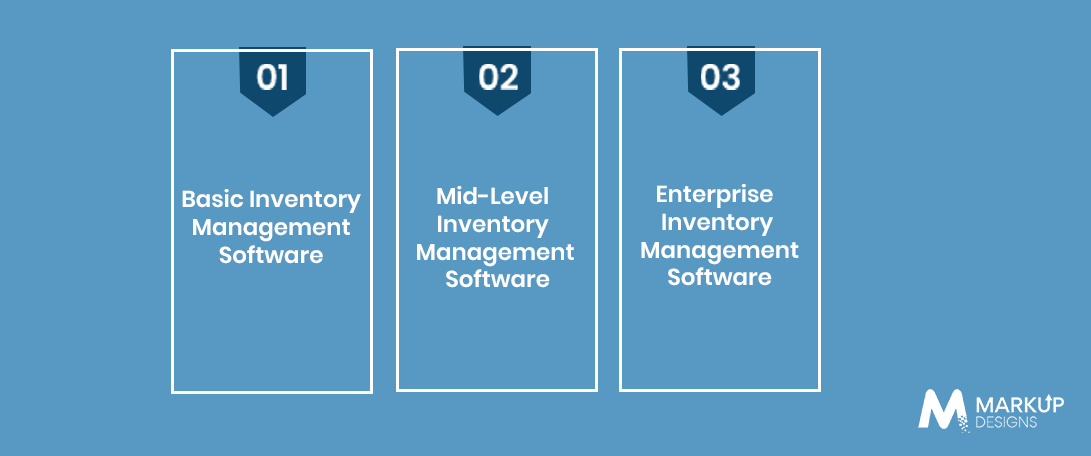
Inventory Management Software Cost by Development Complexity
| Type | Estimated Cost | Typical Features |
| Basic | AUD 50,000–80,000 | Stock tracking, reporting, single warehouse |
| Mid-Level | AUD 100,000–180,000 | Multi-warehouse, barcode scanning, automated reordering |
| Enterprise | AUD 200,000–300,000+ | AI forecasting, advanced analytics, batch tracking, dashboards |
Basic Inventory Management Software
AUD 50,000–80,000
Stock tracking, inventory records, basic reports, stock alerts, and single-location management.
Mid-Level Inventory Management Software
AUD 100,000–180,000
Multi-warehouse management, barcode scanning, automated reordering, supplier management, and third-party integrations.
Enterprise Inventory Management Software
AUD 200,000–300,000+
AI-powered forecasting, advanced analytics, batch and serial tracking, RFID, complex integrations, and role-based dashboards.
Inventory Management Software Cost by Software Type
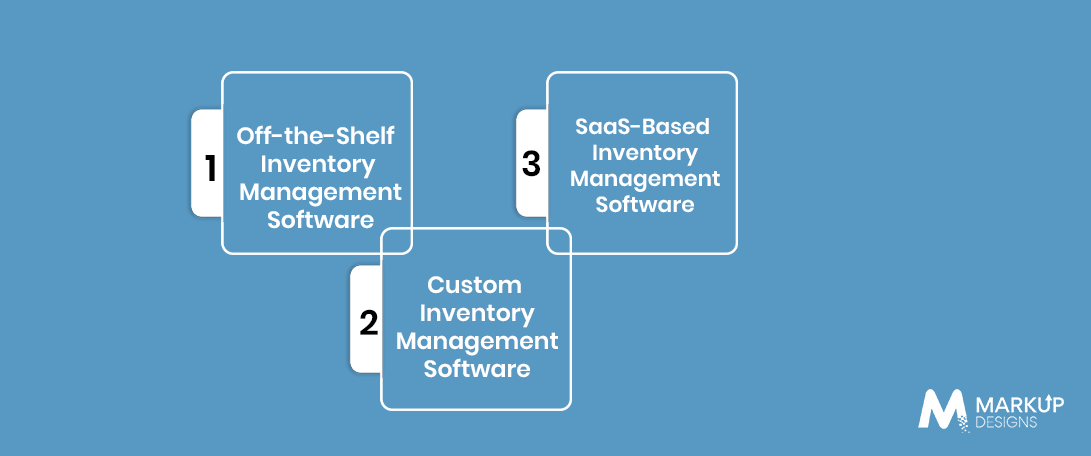
Off-the-Shelf Inventory Management Software
Lower upfront cost with subscription or licensing fees. Additional costs may apply for users, locations, integrations, implementation, and premium features.
Custom Inventory Management Software
Higher initial investment but allows businesses to build specific workflows, integrations, dashboards, automation, and scalability requirements into the system.
SaaS-Based Inventory Management Software
Usually charged through monthly or annual subscriptions. The overall cost depends on users, features, locations, transaction volumes, and add-ons.
What Factors Affect Inventory Management Software Development Cost in Australia?
Software Features and Functional Complexity
More advanced features such as automated reordering, real-time tracking, forecasting, analytics, and warehouse management increase development effort and cost.
Number of Warehouses and Inventory Locations
Managing multiple warehouses requires additional functionality for stock transfers, synchronization, location-level inventory, and centralized management.
User Roles and Access Levels
Different permissions and dashboards for administrators, warehouse teams, procurement staff, managers, and other users add to development complexity.
Third-Party Integrations
Integrating existing business systems can significantly influence the development budget.
ERP and Accounting Software Integration
Integration with Xero, MYOB, and ERP systems can synchronize financial, purchasing, supplier, and inventory data.
E-commerce and Marketplace Integration
Platforms such as Shopify and Amazon can be connected to synchronize orders, products, and stock levels.
POS and CRM Integration
POS and CRM integrations can connect sales, customer, order, and inventory data within one system.
Technology Stack and Development Platform
The technology stack, cloud infrastructure, APIs, database requirements, and scalability needs affect development costs. Technologies such as React.js, Node.js, and PostgreSQL may be used for custom inventory platforms.
Web and Mobile Application Development
Building web software alongside iOS or Android applications increases development and testing requirements, particularly for warehouse operations and barcode scanning.
UI/UX Design and Custom Dashboards
Custom dashboards, role-specific interfaces, real-time inventory views, analytics, and mobile workflows can add to design and development costs.
Data Migration and System Configuration
Migrating product, supplier, stock, and historical data from spreadsheets or legacy systems requires data cleansing, mapping, configuration, and validation.
Security and Australian Compliance Requirements
Costs can increase when the software requires encryption, MFA, role-based access, audit trails, and compliance considerations related to the Privacy Act 1988, Australian Information Security Manual, AS 8015, and Notifiable Data Breaches Scheme.
AI, IoT, RFID, and Other Advanced Technologies
AI forecasting, machine learning, IoT sensors, RFID, predictive analytics, and blockchain can increase development costs because they require additional infrastructure, integrations, and testing.
Testing and Quality Assurance
Functional, integration, performance, security, and user acceptance testing are required to ensure inventory data and connected systems work correctly.
Post-Launch Maintenance and Support
Ongoing costs include bug fixes, security updates, infrastructure, monitoring, API updates, and feature improvements. A common planning benchmark is 15–25% of the initial development cost annually.
How Much Does It Cost to Develop Inventory Management Software Based on Features?
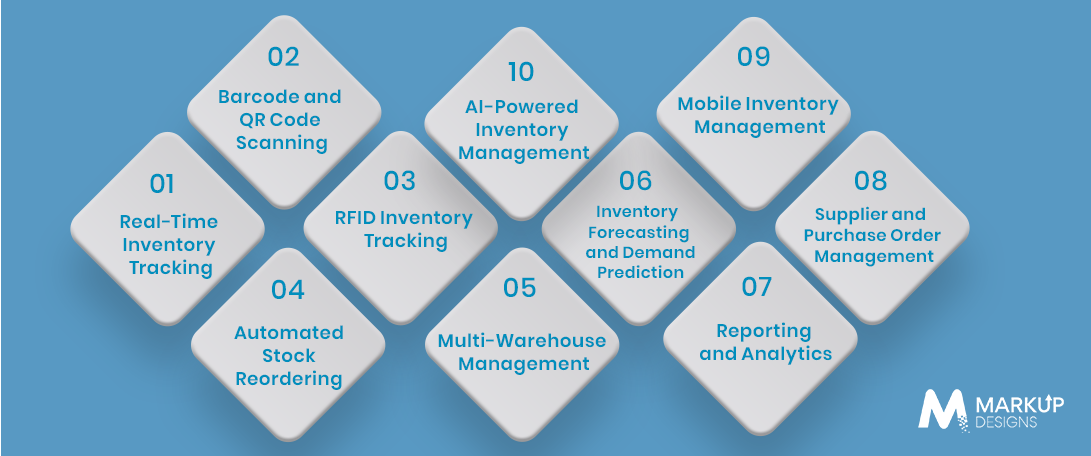
The cost of individual features varies based on complexity, integrations, and the level of customization required. Instead of assigning unsupported prices to each feature, explain their relative cost impact and what makes each one more complex.
| Feature | Cost Impact |
| Real-Time Inventory Tracking | Low–Medium |
| Barcode and QR Code Scanning | Medium |
| RFID Inventory Tracking | Medium–High |
| Automated Stock Reordering | Medium–High |
| Multi-Warehouse Management | High |
| Inventory Forecasting and Demand Prediction | High |
| Reporting and Analytics | Medium |
| Supplier and Purchase Order Management | Medium |
| Mobile Inventory Management | Medium–High |
| AI-Powered Inventory Management | High |
Real-Time Inventory Tracking
Explain real-time stock updates across products, orders, and locations. The complexity increases when multiple warehouses and connected systems need synchronized data.
Barcode and QR Code Scanning
Cover product identification, stock updates, receiving, picking, and dispatch operations using barcode or QR scanning.
RFID Inventory Tracking
Explain automated inventory identification and tracking through RFID readers and tags, particularly for larger warehouse operations.
Automated Stock Reordering
Cover low-stock alerts, reorder points, purchase orders, and automated replenishment based on inventory levels.
Multi-Warehouse Management
Discuss centralized inventory visibility, stock transfers, location-level tracking, and warehouse-specific inventory management.
Inventory Forecasting and Demand Prediction
Cover historical inventory data, demand patterns, seasonal trends, and predictive models used to support replenishment decisions.
Reporting and Analytics
Include inventory turnover, stock levels, sales trends, slow-moving inventory, and customizable reports.
Supplier and Purchase Order Management
Cover supplier records, purchase orders, order status, incoming stock, and procurement workflows.
Mobile Inventory Management
Discuss mobile access for warehouse teams, including stock checks, scanning, receiving, picking, and inventory updates.
AI-Powered Inventory Management
Cover AI-driven demand forecasting, anomaly detection, replenishment recommendations, and predictive inventory insights.
Read Also: Modern Supply Chain Automation Software for Australian Enterprises
What Are the Additional Costs of Inventory Management Software?
The development budget does not cover every expense involved in implementing and operating the software.
Data Migration Costs
Costs may include extracting, cleaning, mapping, and validating existing product, supplier, and inventory data.
Cloud Hosting and Infrastructure Costs
Consider servers, databases, storage, backups, monitoring, and scaling requirements.
Third-Party API and Integration Costs
Some integrations may involve API fees, middleware, custom connectors, or ongoing subscription charges.
Hardware and Warehouse Device Costs
Depending on the system, businesses may need barcode scanners, RFID readers, tablets, printers, or other warehouse devices.
Employee Training and Onboarding Costs
Training, documentation, workshops, and implementation support may add to the overall investment.
Software Maintenance and Support Costs
Ongoing expenses include technical support, bug fixes, security updates, monitoring, and system improvements.
How Much Does It Cost to Maintain Inventory Management Software in Australia?
A practical planning benchmark is 15–25% of the original development cost per year, although the actual amount depends on the software and support requirements.
Annual Software Maintenance
Regular maintenance keeps the platform functional and compatible with business and technology changes.
Security Updates and Bug Fixes
Cover vulnerability fixes, security patches, bug resolution, and ongoing system monitoring.
Cloud Infrastructure and Hosting
Ongoing hosting, database, storage, backup, and infrastructure costs depend on usage and scalability.
Feature Upgrades and Scalability
New integrations, features, users, warehouses, and increasing transaction volumes can create additional development costs.
How Long Does It Take to Develop Inventory Management Software in Australia?
Development timelines depend on scope and complexity. A basic system can take around 3–6 months, while enterprise software development can take 6–12 months or more.
Basic Inventory Software Development Timeline
3–6 months for core inventory tracking, basic reporting, user management, and essential workflows.
Mid-Level Inventory Software Development Timeline
4–8 months for multi-warehouse functionality, barcode scanning, automation, integrations, and advanced reporting.
Enterprise Inventory Software Development Timeline
6–12+ months for complex workflows, AI, RFID, extensive integrations, advanced analytics, and multiple platforms.
What Is the Total Cost of Ownership of Inventory Management Software?
Total cost of ownership goes beyond the initial development or subscription price and includes the costs required to implement, operate, maintain, and upgrade the software.
One-Time Development Costs
Include software development, UI/UX design, testing, configuration, and initial deployment.
Recurring Software Costs
Include SaaS subscriptions, cloud hosting, licenses, API fees, and other recurring services.
Implementation and Integration Costs
Cover data migration, system configuration, third-party integrations, and deployment.
Maintenance and Support Costs
Include technical support, security updates, bug fixes, infrastructure management, and future enhancements.
How Can You Reduce Inventory Management Software Development Costs?
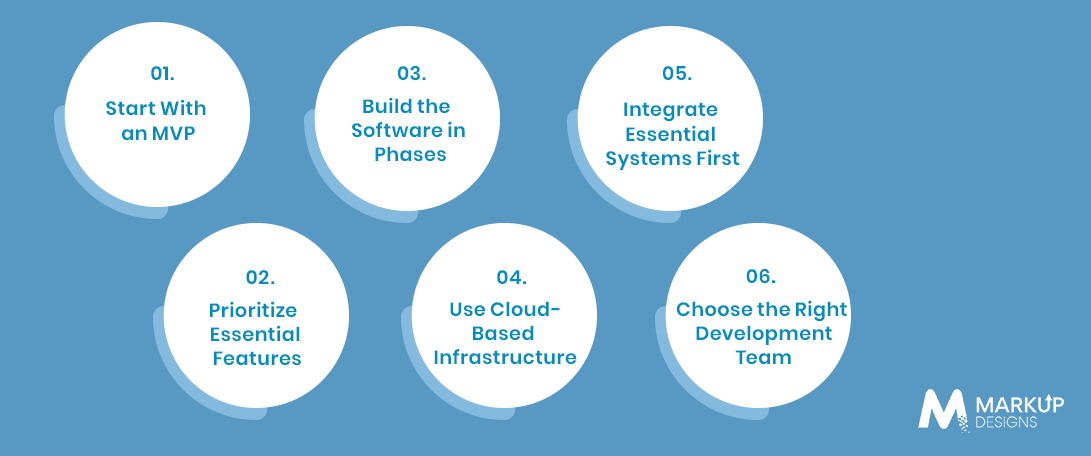
Start With an MVP
Build the essential inventory functions first and introduce advanced capabilities after validating the system.
Prioritize Essential Features
Focus the initial budget on features that directly address inventory and operational requirements.
Build the Software in Phases
Develop core inventory functionality first, followed by integrations, automation, analytics, and advanced technologies.
Use Cloud-Based Infrastructure
Cloud infrastructure can reduce the need for significant upfront hardware and infrastructure investment.
Integrate Essential Systems First
Prioritize integrations that directly affect inventory operations rather than connecting every business system from the beginning.
Choose the Right Development Team
Select a team based on its experience with inventory systems, integrations, security, scalability, and the technologies required for the project.
Custom vs Off-the-Shelf Inventory Management Software: Which Costs More?
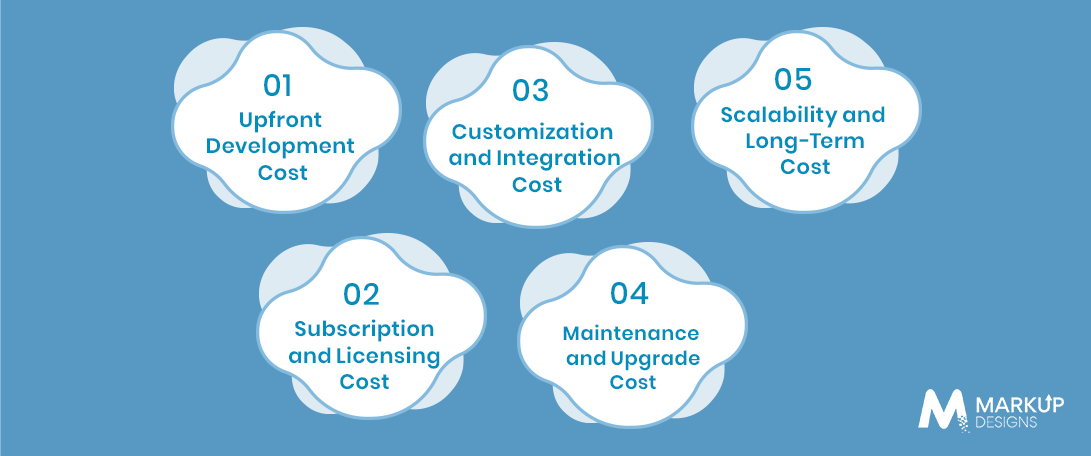
The cost difference depends on the business requirements and how much customization is needed.
| Cost Factor | Off-the-Shelf | Custom |
| Upfront Cost | Lower | Higher |
| Subscription/Licensing | Recurring | Usually lower dependence on licensing |
| Customization | Limited–Moderate | High |
| Integrations | Product-dependent | Built around requirements |
| Maintenance | Often vendor-managed | Business/development team managed |
| Scalability | Plan-dependent | Designed around requirements |
Upfront Development Cost
Off-the-shelf software generally requires less initial investment, while custom software development requires design and development from the ground up.
Subscription and Licensing Cost
Off-the-shelf solutions commonly involve recurring subscription or licensing charges based on users, features, locations, or usage.
Customization and Integration Cost
Custom software generally costs more initially when businesses require specialized workflows and integrations.
Maintenance and Upgrade Cost
Off-the-shelf providers typically handle core product updates, while custom solutions require an ongoing maintenance and development arrangement.
Scalability and Long-Term Cost
Compare the expected costs of additional users, locations, integrations, features, and upgrades over several years rather than focusing only on the initial price.
How to Choose the Right Inventory Management Software for Your Business in Australia?
The right option depends on inventory complexity, business size, number of locations, existing systems, and customization requirements.
Small Business Inventory Requirements
Focus on essential stock tracking, reporting, alerts, basic purchasing, and affordable subscription-based solutions.
Growing Business Inventory Requirements
Consider multi-location inventory, barcode scanning, automated reordering, integrations, analytics, and mobile access.
Enterprise Inventory Requirements
Look for multi-warehouse management, advanced analytics, AI forecasting, RFID/IoT capabilities, extensive integrations, role-based controls, and scalable architecture.
Build Inventory Management Software That Fits Your Business
From real-time inventory tracking to multi-warehouse management and AI-powered forecasting, build a solution around your specific operational needs.

Conclusion
Inventory management software costs in Australia vary significantly based on the business’s operational requirements and the level of customization involved. While a basic custom solution may start around AUD 50,000, enterprise-grade platforms can exceed AUD 300,000 when they include advanced automation, multiple integrations, AI, RFID, and complex warehouse operations. Businesses should also account for implementation, infrastructure, hardware, maintenance, and support when calculating the overall investment.
FAQs
1. How much does inventory management software cost in Australia?
Custom inventory management software can cost approximately AUD 50,000–80,000 for a basic system, AUD 100,000–180,000 for a mid-level solution, and AUD 200,000–300,000+ for an enterprise platform. SaaS and off-the-shelf solutions generally follow subscription or licensing models.
2. How much does it cost to build custom inventory management software in Australia?
Building custom inventory management software can cost AUD 50,000–300,000+, depending on features, number of warehouses, integrations, platforms, security requirements, and advanced technologies such as AI, IoT, or RFID.
3. What factors affect the cost of inventory management software?
The major cost factors include software complexity, features, number of users and locations, third-party integrations, technology stack, UI/UX, data migration, security, compliance, testing, and ongoing support.
4. How much does it cost to maintain inventory management software?
Annual maintenance can be estimated at around 15–25% of the original development cost. Additional expenses may include cloud hosting, security updates, technical support, bug fixes, and new feature development.
5. How long does it take to develop inventory management software?
A basic inventory management system can take around 3–6 months, while a mid-level solution may require 4–8 months. Enterprise platforms with complex integrations, AI, RFID, or multi-warehouse functionality can take 6–12 months or more.
Author's Perspective
The cost of inventory management software should not be evaluated by the development price alone. A lower-cost solution may become expensive if it requires numerous add-ons, integrations, or workarounds, while a custom platform requires a larger upfront investment but can be built around specific operational needs. Before setting a budget, businesses should define their essential workflows, integrations, users, locations, and long-term scalability requirements.
Discuss Your Project NowGaurav Goyal
Global Sales- VP
Related Posts

Enterprise AI Outsourcing: How to Choose the Right...

How Much Does It Cost to Build a...

How to Hire the Best Mobile App Developers...
Insights Are Valuable & Execution is Priceless
You’ve read about the digital future. Now, let’s build the infrastructure to take you there. Move your strategy from the page to the product.
Design Your Solution Now
Contact Us
Schedule The Appointment At Your Convenience Date And Time.
30 Min
Web Conference
Time Zone
Indian standard time (08:30pm)

Thanks For Getting In Touch!
You’ve Taken The First Step Toward Transforming Your Digital Presence. Our Experts Will Reach Out Shortly To Take It Forward.
Launch Your Dream Project
Provide a brief overview of your project, and our specialists will evaluate your requirements. We will connect with you to explore how the right digital solutions can help you launch faster.