
In Brief
- AI demand forecasting analyses historical, real-time, and external data to predict future product demand more accurately.
- Predictive intelligence helps businesses reduce stockouts, excess inventory, and inaccurate safety stock levels.
- Machine learning and time series models can identify demand patterns that traditional forecasting methods may overlook.
- Integrating AI forecasts with ERP and inventory systems enables faster, data-driven replenishment and planning decisions.
- Continuous model monitoring and high-quality data are essential for maintaining reliable forecasting accuracy as market conditions change.
Accurate demand forecasting is critical to maintaining the right inventory levels, but traditional forecasting methods often struggle when demand changes quickly. Seasonal fluctuations, promotions, changing customer behaviour, supply disruptions, and market conditions can make historical averages unreliable, leaving businesses with excess stock on one side and costly stockouts on the other.
AI demand forecasting addresses this challenge by using predictive intelligence to analyse large volumes of historical and real-time data, identify demand patterns and estimate what customers are likely to need next. When connected with inventory and supply chain systems, AI can help businesses make more informed decisions about purchasing, replenishment and stock allocation. This guide explores how AI demand forecasting works, the technologies behind it, its inventory benefits, implementation process, challenges, costs and future trends.
Understanding AI Demand Forecasting
AI demand forecasting uses artificial intelligence and predictive analytics to estimate future customer demand. Instead of relying mainly on historical averages, it can analyse multiple data sources and changing patterns to help businesses make more informed inventory and supply chain decisions.
What Is AI Demand Forecasting?
AI demand forecasting is the use of machine learning and statistical techniques to predict how much of a product or service customers are likely to need over a specific period. It can account for historical demand, seasonality, customer behaviour, and other relevant variables.
How AI Demand Forecasting Improves Inventory Accuracy
By producing more dynamic demand estimates, AI can help businesses determine when to reorder products, how much stock to maintain, and where inventory should be allocated. This can reduce both excess inventory and stockout risks.
Traditional Forecasting vs AI-Powered Forecasting
Traditional forecasting often depends heavily on historical sales and predefined assumptions. AI powered forecasting can process larger and more varied datasets, recognise complex relationships and continuously adjust predictions as new information becomes available.
How AI Demand Forecasting Works
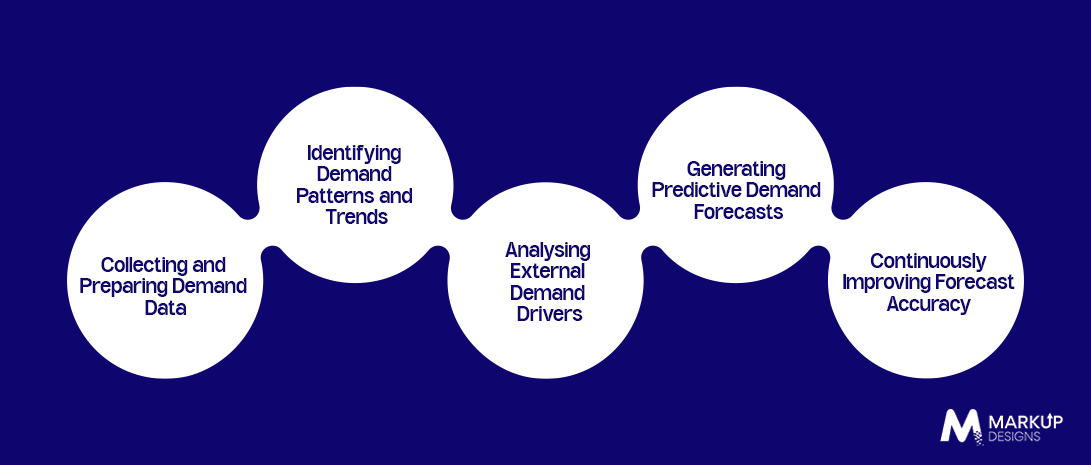
The forecasting process combines data preparation, pattern recognition and predictive modelling to generate demand estimates.
Collecting and Preparing Demand Data
The system gathers relevant sales, inventory, customer and market data, then cleans and structures it for analysis.
Identifying Demand Patterns and Trends
AI models examine historical data to identify trends, seasonality, recurring behaviour and changes in demand.
Analysing External Demand Drivers
Factors such as promotions, weather, market conditions and economic changes can influence demand. AI can incorporate these signals where relevant.
Generating Predictive Demand Forecasts
The trained model uses identified patterns and current inputs to estimate future demand across products, locations or time periods.
Continuously Improving Forecast Accuracy
Forecasts can be compared with actual outcomes, allowing models to be retrained and adjusted as new data becomes available.
Key Data Sources for AI Demand Forecasting
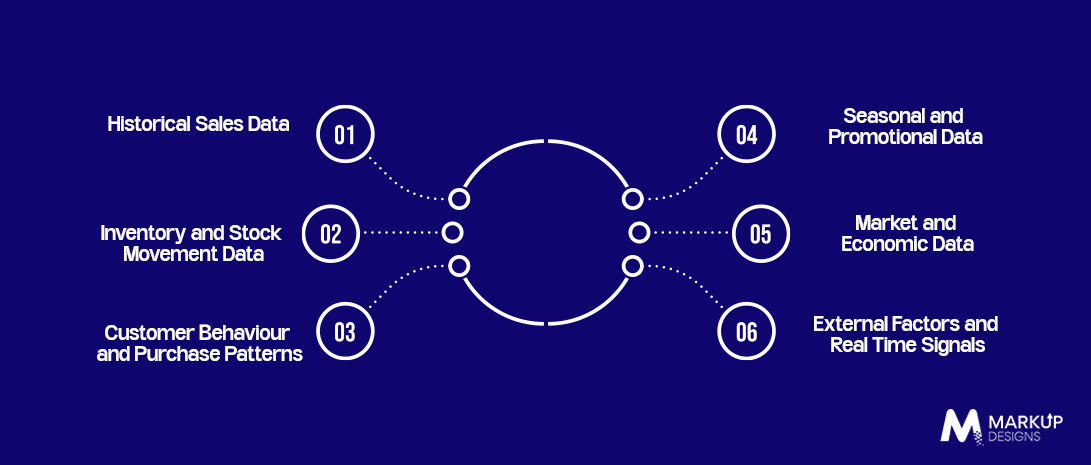
The quality and variety of input data directly influence forecasting performance.
Historical Sales Data
Previous sales provide the foundation for identifying demand trends, seasonal patterns and product performance.
Inventory and Stock Movement Data
Stock levels, replenishment history and inventory movement help the system understand availability and purchasing patterns.
Customer Behaviour and Purchase Patterns
Customer preferences, buying frequency and purchasing behaviour can reveal changes that may affect future demand.
Seasonal and Promotional Data
Festivals, holidays, discounts and marketing campaigns can create temporary demand increases or shifts in purchasing behaviour.
Market and Economic Data
Pricing changes, market trends and broader economic conditions can provide additional context for demand predictions.
External Factors and Real Time Signals
Weather, competitor activity, supply disruptions and other real time signals can help explain sudden changes in demand.
AI Technologies and Models Used for Demand Forecasting
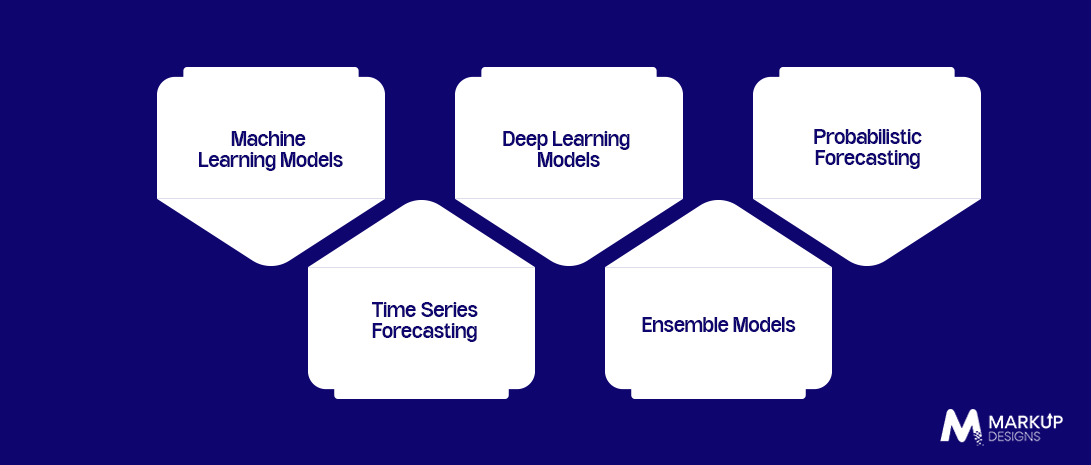
Different forecasting approaches can be selected based on the type and complexity of the available data.
Machine Learning Models
Machine learning models can identify relationships between multiple demand variables and generate predictions based on historical patterns.
Time Series Forecasting
Time series techniques analyse demand over time to identify trends, seasonality and recurring fluctuations.
Deep Learning Models
Deep learning can handle complex datasets and relationships, making it useful for large scale forecasting scenarios with many influencing variables.
Ensemble Models
Ensemble approaches combine predictions from multiple models to improve robustness and forecasting performance.
Probabilistic Forecasting
Instead of producing a single estimate, probabilistic models can provide a range of possible demand outcomes, helping businesses account for uncertainty when planning inventory.
How AI Improves Inventory Accuracy
AI helps businesses move from reactive inventory management to more data driven planning. By analysing demand patterns and inventory conditions, predictive models can support better decisions around stock levels and replenishment.
Reducing Overstock and Excess Inventory
More accurate demand predictions help businesses avoid purchasing more stock than they are likely to sell, reducing excess and obsolete inventory.
Preventing Stockouts
AI can identify upcoming demand increases and help businesses replenish products before inventory reaches critically low levels.
Improving Safety Stock Levels
Predictive models can estimate demand variability and help businesses maintain safety stock that better reflects actual requirements.
Optimising Reorder Points
AI can support dynamic reorder decisions by considering demand patterns, lead times and changing market conditions.
Improving Demand Planning
Forecasts give procurement and supply chain teams better visibility into future requirements, making purchasing and production planning more efficient.
Reducing Inventory Holding Costs
Better inventory decisions can reduce storage requirements, capital tied up in stock and costs associated with excess inventory.
Enterprise Applications of AI Demand Forecasting
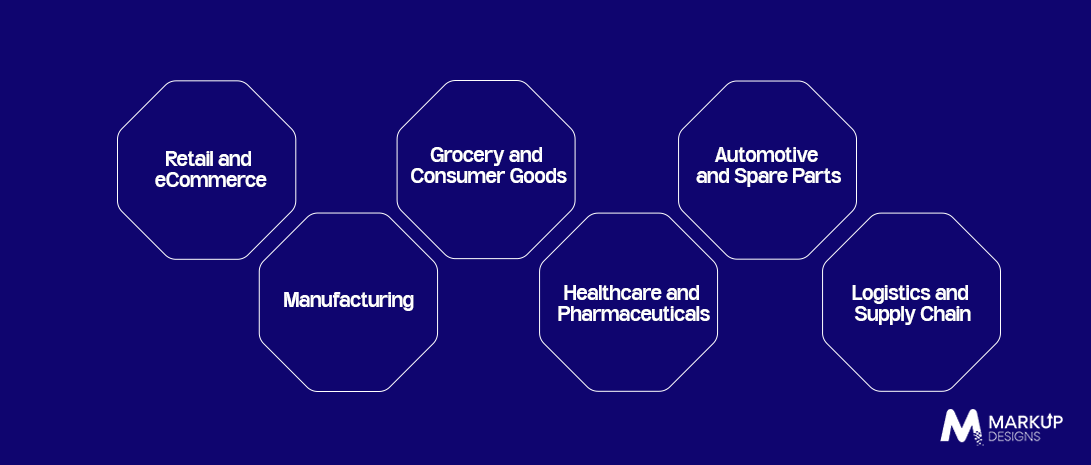
AI demand forecasting can be applied across industries where demand variability directly affects inventory and operations.
Retail and eCommerce
Businesses can forecast product demand, plan replenishment and adjust inventory across stores, warehouses and online channels.
Manufacturing
Manufacturers can use forecasts to plan raw materials, production schedules and finished goods based on expected demand.
Grocery and Consumer Goods
AI can account for seasonality, promotions and purchasing patterns to improve stock availability for frequently changing products.
Healthcare and Pharmaceuticals
Demand forecasting can help organisations plan supplies and maintain appropriate inventory levels for medicines and healthcare products.
Automotive and Spare Parts
Forecasting can help businesses anticipate demand for vehicle parts and reduce delays caused by unavailable inventory.
Logistics and Supply Chain
Supply chain teams can use predictive demand insights to improve inventory positioning, procurement, and distribution planning.
Benefits of AI-Powered Demand Forecasting
Higher Forecast Accuracy
AI can analyse multiple demand signals and identify patterns that may be difficult to capture through basic forecasting methods.
Better Inventory Availability
More reliable predictions help businesses maintain products closer to the levels customers actually require.
Lower Operational Costs
Reducing excess stock, emergency replenishment and inefficient inventory movement can lower operating costs.
Improved Supply Chain Efficiency
Better demand visibility helps coordinate procurement, production, warehousing and distribution more effectively.
Faster Decision Making
Automated forecasts provide teams with timely insights instead of requiring extensive manual analysis.
Increased Customer Satisfaction
Maintaining appropriate stock levels reduces missed sales and improves the likelihood that customers can find the products they need.
How to Implement AI Demand Forecasting
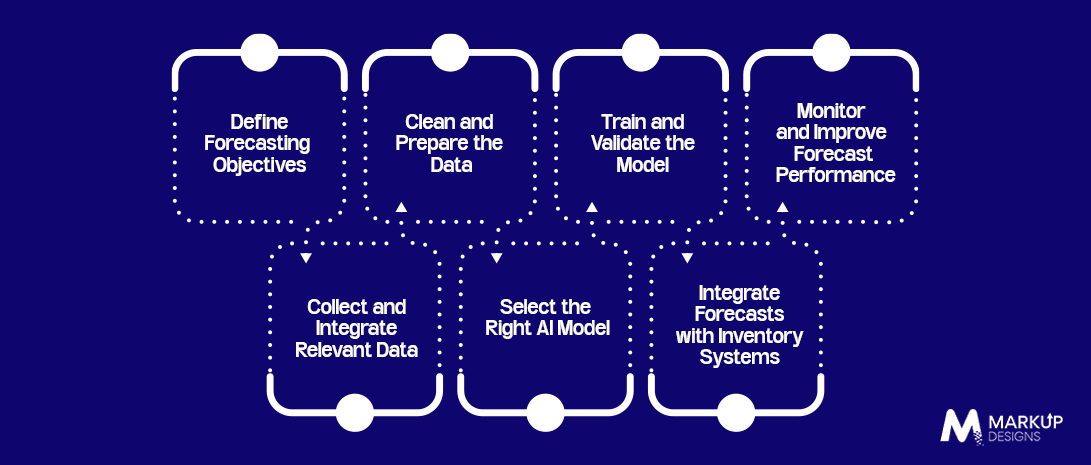
A successful implementation requires more than selecting an AI model. Businesses need reliable data, suitable infrastructure and integration with existing inventory processes.
Step 1: Define Forecasting Objectives
Determine what you want to improve, such as reducing stockouts, lowering excess inventory or improving replenishment accuracy.
Step 2: Collect and Integrate Relevant Data
Bring together sales, inventory, customer, pricing, seasonal and other relevant data sources.
Step 3: Clean and Prepare the Data
Remove inconsistencies, address missing values and structure the data so it can be used reliably for model training.
Step 4: Select the Right AI Model
Choose a forecasting approach based on demand patterns, data volume, business requirements and the level of prediction accuracy needed.
Step 5: Train and Validate the Model
Train the model using historical data and evaluate its predictions against actual demand before deploying it into production.
Step 6: Integrate Forecasts with Inventory Systems
Connect forecasts with ERP, warehouse management or inventory platforms so predictive insights can support actual replenishment decisions.
Step 7: Monitor and Improve Forecast Performance
Track forecast accuracy and business outcomes continuously, then retrain or adjust models as demand patterns change.
Challenges of AI Demand Forecasting
Poor Data Quality
Incomplete, inconsistent or inaccurate data can directly reduce the reliability of AI generated forecasts.
Demand Volatility and Unpredictable Events
Sudden market changes, supply disruptions or unexpected customer behaviour can make even advanced predictions less certain.
Integration with Legacy Systems
Older ERP and inventory systems may require additional APIs, middleware or modernisation before AI forecasting can be integrated effectively.
Model Accuracy and Bias
A model can produce unreliable results if it is trained on limited, outdated or unrepresentative data. Regular validation is therefore essential.
Lack of AI Expertise
Businesses may need specialised data science and engineering skills to develop, deploy and maintain forecasting models.
Data Security and Governance
Demand forecasting systems often combine data from multiple business sources, making appropriate access controls, governance and data protection important.
Cost of Implementing AI Demand Forecasting
The cost of implementing AI demand forecasting depends on the complexity of the solution, data requirements, number of integrations and level of automation. A simple forecasting system requires fewer resources than an enterprise platform connected to multiple inventory and supply chain systems.
Factors Affecting AI Demand Forecasting Costs
Data Infrastructure and Integration
Costs can increase when data needs to be collected from multiple sources, cleaned and integrated into a central forecasting environment.
AI Model Development
Custom model development, training, testing and optimisation require specialised data science and engineering expertise.
Software and Cloud Infrastructure
Cloud computing, data storage, analytics tools and other software services contribute to the overall implementation cost.
Inventory System Integration
Connecting forecasts with ERP, warehouse or inventory management systems requires API development and integration work.
Testing and Deployment
Model validation, performance testing and production deployment add to the implementation effort.
Maintenance and Model Optimisation
AI models need ongoing monitoring, retraining and optimisation as demand patterns and business conditions change.
Future Trends in AI Demand Forecasting
Generative and Agentic AI
Generative and agentic AI can help interpret forecasts, identify demand scenarios and support more automated planning decisions.
Real Time Demand Forecasting
Real time data from sales channels, connected systems and market signals can enable businesses to adjust forecasts more quickly.
Predictive Digital Twins
Digital twins can simulate supply and demand scenarios, helping businesses evaluate potential outcomes before making inventory decisions.
Automated Inventory Decisions
AI is moving beyond forecasting towards recommending or automatically triggering replenishment and inventory actions based on predefined business rules.
Multimodal Demand Intelligence
Combining structured business data with text, market information, customer signals and other data types can provide a broader view of demand.
How Markup Designs Can Help Implement AI Demand Forecasting
Markup Designs helps businesses develop AI powered demand forecasting solutions that connect predictive models with existing inventory and supply chain systems. Our team can support data integration, AI model development, cloud infrastructure, API integration, dashboards and ongoing model optimisation to create forecasting solutions aligned with specific business objectives.
Turn Demand Data into Smarter Inventory Decisions
Still relying on spreadsheets and historical averages to plan inventory? Build an AI powered demand forecasting solution that turns sales, inventory, and market data into actionable predictions.

Conclusion
AI demand forecasting can significantly improve how businesses plan and manage inventory by turning historical and real time data into actionable predictions. However, successful implementation depends on data quality, appropriate model selection, reliable system integration and continuous monitoring. When properly integrated with inventory and supply chain operations, predictive intelligence can help reduce excess stock, minimise stockouts and support faster, more informed decisions.
FAQs
1. How does AI improve demand forecasting accuracy?
AI can analyse large and varied datasets to identify trends, seasonality and demand drivers that traditional forecasting approaches may overlook. Models can also be updated as new data becomes available.
2. How can AI demand forecasting reduce inventory costs?
More accurate forecasts can help businesses avoid excessive purchasing, optimise safety stock and reduce emergency replenishment, lowering storage and inventory holding costs.
3. What data is required for AI demand forecasting?
Common inputs include historical sales, inventory levels, customer behaviour, pricing, promotions, seasonal trends and relevant market or external data.
4. Can AI demand forecasting prevent stockouts?
It can reduce stockout risk by identifying expected demand changes and supporting better replenishment decisions. However, no forecasting system can completely eliminate stockouts because unexpected events can still affect supply and demand.
5. How long does it take to implement an AI demand forecasting solution?
The timeline depends on data readiness, model complexity, integrations and the scale of deployment. A focused solution can be implemented faster than an enterprise platform requiring multiple system integrations.
6. How much does AI demand forecasting software cost?
There is no universal price. Costs depend on whether the solution uses an existing forecasting platform or requires custom AI development, along with infrastructure, integrations, testing and ongoing maintenance.
Author's Perspective
AI demand forecasting is valuable only when its predictions translate into better inventory decisions. Simply adding an AI model to an existing system will not fix poor data, weak processes or disconnected inventory platforms. Businesses should focus on building a complete forecasting ecosystem where reliable data, suitable models and existing operational systems work together. The goal is not to predict demand perfectly, which is unrealistic, but to make inventory planning more accurate, responsive and data driven.
Discuss Your Project NowGaurav Goyal
Global Sales- VP
Related Posts

How to Build an App With Claude Code:...

AI Development Firm in the UK: How to...

Hiring an AI Development Partner in the UK:...
Insights Are Valuable & Execution is Priceless
You’ve read about the digital future. Now, let’s build the infrastructure to take you there. Move your strategy from the page to the product.
Design Your Solution Now
Contact Us
Schedule The Appointment At Your Convenience Date And Time.
30 Min
Web Conference
Time Zone
Indian standard time (08:30pm)

Thanks For Getting In Touch!
You’ve Taken The First Step Toward Transforming Your Digital Presence. Our Experts Will Reach Out Shortly To Take It Forward.
Launch Your Dream Project
Provide a brief overview of your project, and our specialists will evaluate your requirements. We will connect with you to explore how the right digital solutions can help you launch faster.