

In Brief
- Inventory management software for hospitals is intended to enable healthcare providers to manage their inventory of medicines, medical supplies, equipment, and other inventory centrally, thus increasing stock visibility and eliminating manual activities.
- Key features are real-time inventory tracking, automation of order placement, expiration and batch control, barcode/RFID scanning, inventory notifications, supplier management, reporting and analytics.
- Inventory management software can help hospitals decrease inventory costs, avoid stockouts and overstocking, minimize product expirations, increase accuracy, simplify procurement, and ensure the availability of necessary supplies.
- Development usually includes requirement analysis, system architecture design, UI/UX design, development of core functions, integration with EHR/EMR and other hospital systems, testing, deployment, and support. Development expenses may be from $40,000 to $300,000+, while development duration is usually 3-12+ months.
- Hospitals need to select a competent development company with healthcare knowledge, good security, integration abilities, scalable architecture, and post-deployment support to develop an efficient inventory management system that in the future could be enhanced with AI, forecasting, RFID, and analytics.
The hospital has to handle a number of medicinal drugs, medical products, instruments for surgeries, laboratory materials, and other necessary goods on a daily basis. The management of all these things becomes complicated very soon using manual means. This can hamper the efficiency of work, as well as the quality of treatment provided to patients.
It is here that the hospital inventory management software development becomes significant. A computerized inventory system offers hospitals improved inventory management through monitoring inventory quantities, controlling product flows, managing expiry dates, automatic reordering, and reporting tools.
With more emphasis being placed on the efficiency and digital transformation of healthcare organizations, hospital inventory management software solutions have become increasingly essential in the current hospital environment.
Here, we will discuss the hospital inventory management software solution, its main features and advantages, development process, cost and time, and the importance of picking the right development company.
What is Hospital Inventory Management Software?
Hospital inventory management software is a digital solution that can help hospitals and other healthcare organizations effectively control and manage all their medical inventory through one centralized system. Such systems can track all kinds of inventory ranging from medicines and surgical supplies to medical devices, lab products, and daily-use supplies.
Instead of using manual sheets and spreadsheets, hospital managers can utilize the software for inventory tracking, control of purchase orders, monitoring expiry dates and other activities associated with managing and controlling the inventory.
Today’s inventory management software can be integrated with other hospital management systems, including EHR/EMR systems, pharmacy management systems, procurement software, and accounting systems.
This is how hospital stock management systems assist organizations in keeping proper stock records, avoiding unnecessary buying and waste, and ensuring the availability of necessary products when needed.
Why Do Hospitals Need Inventory Management Software?
Hospital inventory management goes beyond just understanding what items are available in stock. Hospitals have to manage huge inventories of various products, multiple storage places, fluctuating demand, expiry dates, and frequent stock movement. Such manual work may make it hard to keep track of everything in real time.
Hospital inventory management systems help cope with the problem by putting all the activities related to inventory on one platform. The following points will explain why hospitals need such systems:
- Prevent shortages: Real-time tracking of inventory enables the hospital staff to notice shortages and replenish supplies that are running out of stock.
- Avoid wastage: Expiry and batch tracking will allow hospitals to make use of their products before they expire.
- Minimize expenses on inventory: Increased visibility allows for avoiding unnecessary purchases.
- Increase efficiency: Automated tracking minimizes mistakes made through manual entry.
- Simplify procurement: Automated alerts and purchase workflows make replenishment easier.
- Improve visibility: Hospital management is able to track inventory for all departments from one system.
Increased control of inventory allows hospitals to improve the efficiency of daily activities and ensure the availability of supplies.
Key Features of Hospital Inventory Management Software
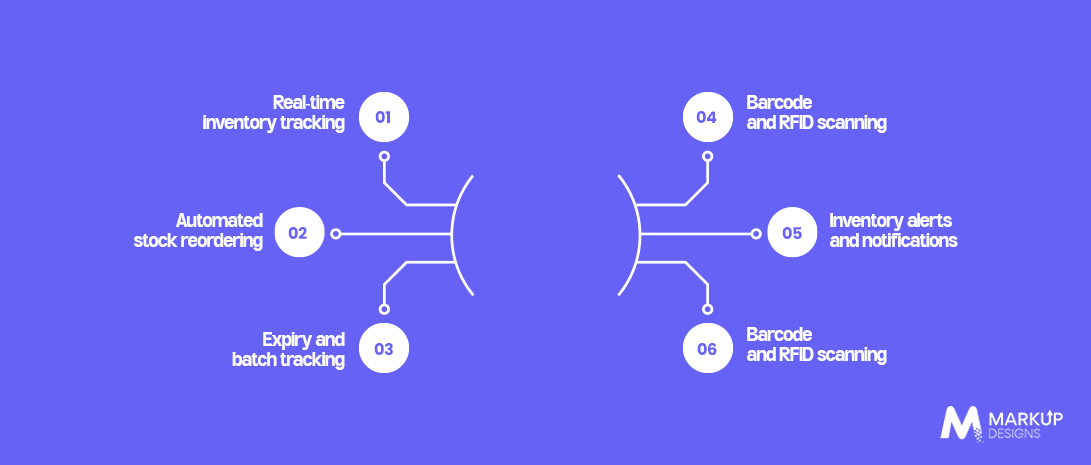
An inventory management system in a hospital is supposed to do more than just document available stock. It should aid in managing stocks, purchases, minimizing wastage, and increasing decision-making speed. The following are some key features for such a system:
Real-time inventory tracking
Keep track of stock balances, product movement, and availability throughout departments and storerooms.
Automated stock reordering
Determine minimum stock balances and be informed about stock shortages via alerts.
Expiry and batch tracking
Keep track of the batch number and expiration date to minimize the chances of administering expired medicines and using expired medical supplies.
Barcode and RFID scanning
Scan products during receipt, storing, transportation, and utilization for better tracking.
Inventory alerts and notifications
Be alerted to stock shortages, expiration of products, abnormal consumption, and other inventory-related occurrences.
Reporting and analytics
Obtain valuable insight into inventory balances, consumption, purchases, waste, and inventory costs through reports.
Benefits of Hospital Inventory Management Software
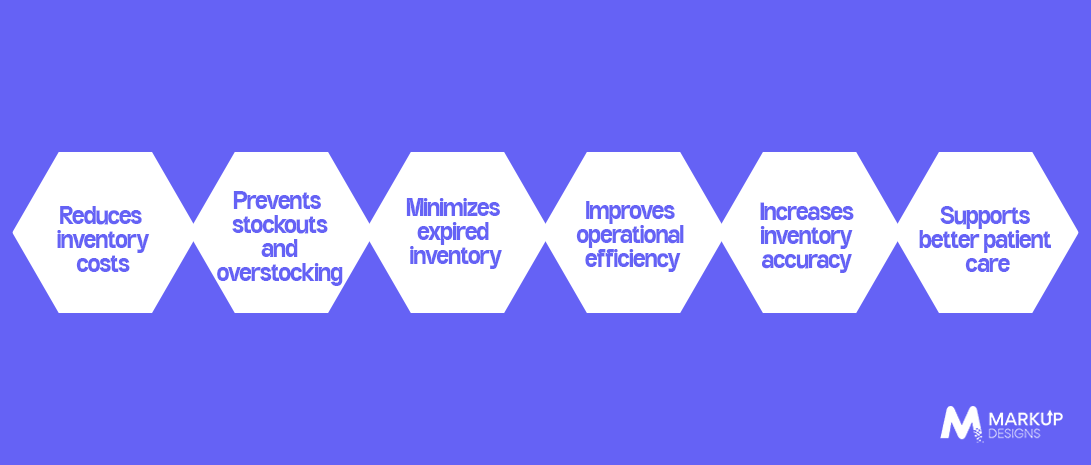
Hospital inventory management software will be able to enhance the efficiency of inventory management for healthcare facilities. Through a consolidated system, rather than spreadsheets and manual efforts, hospitals will have more oversight of their inventory.
Reduces inventory costs
Hospitals can save on inventory expenses by having an accurate record of inventory and avoiding purchasing extra inventory.
Prevents stockouts and overstocking
Monitoring systems will enable hospital staff to always have the correct inventory and replenish supplies before they get exhausted.
Minimizes expired inventory
The batch management system will help hospital staff know which inventory is about to expire and consume it before expiration.
Improves operational efficiency
With the automation of some of the processes involved in inventory management, the staff will not have to deal with repetitive tasks and can concentrate on other important duties.
Increases inventory accuracy
Automation using barcodes, RFID tags, and other tracking systems can lower errors made by humans in inventory management.
Supports better patient care
Availability of the right medicines and equipment will assist healthcare practitioners in providing services to patients without interruptions.
In addition to these immediate advantages, inventory software will provide hospital administrators with valuable information that will help them plan their procurement and analyze their consumption patterns. Based on the obtained data, they will be able to make well-informed decisions about procurement and allocation of resources.
Ready to streamline your hospital inventory operations?
Partner with our healthcare software experts to build secure, scalable, and feature-rich hospital inventory management software designed around your operational needs.

How to Develop Hospital Inventory Management Software?
The development of the software for managing the inventory of hospitals demands an understanding of the hospital work processes, the inventory, and the users’ requirements. The development process enables the creation of an effective, reliable, secure, and user-friendly system.
- Requirement Definition: Determine the types of inventories, departments, users, processes, integrations, and reporting requirements that will need to be met by the system.
- Architecture Planning: Choose a database, API, cloud computing resources, security controls, and overall architecture depending on the scalability and performance requirements.
- UI/UX Design: Make sure that the design of user interfaces is easy enough to enable administrators, pharmacists, procurement specialists, and warehouse staff to work with the inventory.
- Develop Core Features: Implement basic modules including inventory management, inventory automation, expiration dates, supplier management, alarms, and reporting.
- Integration: Integrate the software with EHR/EMR, pharmacy, procurement, ERP, barcode, RFID, and any other required systems.
- Testing and Implementation: Conduct functional, security, integration, and performance testing prior to implementation. Once launched, provide staff training, maintenance, monitoring, and updates.
The proper development strategy will make sure that the software can handle existing inventory management needs, as well as being able to adapt to the future needs of the company, including artificial intelligence forecasting.
How Much Does Hospital Inventory Management Software Development Cost?
The development cost for the hospital inventory management software would depend largely on the extent to which the software needs to be integrated with other software, the level of customization needed, etc. Naturally, it is more expensive to develop enterprise-level software for hospitals that is more feature-rich than a basic version.
As a general estimate:
| Software Type | Estimated Development Cost |
| Basic Inventory Software | $40,000–$80,000 |
| Mid-Level Solution | $80,000–$150,000 |
| Advanced Enterprise Solution | $150,000–$300,000+ |
Several factors can influence the final development cost:
- Features and modules: More sophisticated functionality for inventory, purchasing, reports, and automation will involve more work on development.
- Integration with third-party systems: Integration with EHR/EMR, ERP, pharmacy, or purchasing systems can also become a problem.
- Security considerations: The healthcare application must have solid security measures in place, along with access control, encryption, and auditing features.
- Barcodes, RFID, IoT: The hardware component of tracking will also require more development efforts.
- AI/Analytics: Predictive forecasts and smart recommendations will involve more data and development skills.
- Developer team: Its location, experience, and size will play a role in the total cost of development as well.
Consequently, it’s essential to perform a thorough analysis of requirements first.
How Long Does It Take to Develop Hospital Inventory Management Software?
Time taken for the development of inventory management systems in hospitals is contingent upon the nature and extent of sophistication of the software.
An entry-level software with basic features like stock inventory, alerts, expiry management, and reporting can be developed in 3 to 6 months. An intermediate inventory management system that has procurement processes, multi-locations, mobile compatibility, and third-party integrations can take 6 to 9 months to develop. An enterprise-level inventory management software with EHR/EMR integration, RFID, artificial intelligence-based forecasting, advanced analytics, and complex security can take 9 to 12 months or more.
The timeline also comprises various stages like requirement gathering, user interface/user experience design, development, testing, integration, implementation, and staff training. Requirement changes during development will also cause delays in the schedule.
Hence, the hospitals should identify their requirements right from the beginning and work with a development team that has prior experience to develop a realistic timeline. Another strategy is to roll out essential features and add advanced features in subsequent versions.
Why Partner With a Hospital Software Development Company?
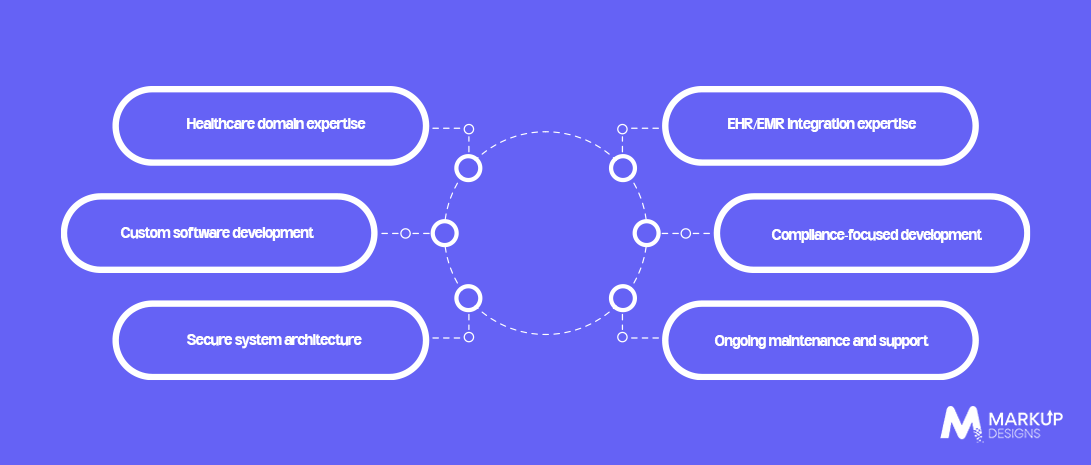
The choice of the development partner is crucial when creating software for hospital inventory management. There are specific processes and security aspects in the healthcare industry that require deep knowledge; therefore, collaboration with such a partner may significantly lower the risks of development.
Healthcare domain expertise
An experienced developer in healthcare software development is familiar with the workings of hospitals, their inventory processes, and the requirements of various medical professionals. This will result in the creation of software according to the true operational requirements.
Custom software development
Each hospital might have its own type of inventory, approval process, departments, and procurement process. The developers will make the software according to these requirements rather than making the hospitals work in a fixed procedure.
Secure system architecture
The inventory platform of hospitals might contain sensitive operational and healthcare-related data. Experienced developers can apply the security architecture to protect the data.
EHR/EMR integration expertise
Sometimes hospitals make use of different digital platforms. With a competent development team, the system can be integrated with the existing inventory system, EHR/EMR, ERP, pharmacy, procurement, accounting, barcodes, RFID, and many more.
Compliance-focused development
With the growing number of inventories, users, departments, or the geographical location of hospitals, the technology needs to function without fail. The appropriate vendor is able to provide you with a scalable infrastructure.
Ongoing maintenance and support
Development of software does not end once the product has been launched. Maintenance and updates are important for the reliability of the software. A strong technology partner can therefore help hospitals move from manual inventory processes to a more connected, automated, and efficient digital system.
Looking to build smarter hospital inventory software?
From real-time tracking and automated reordering to AI-powered analytics and system integrations, we can help turn your idea into a reliable healthcare solution.

Conclusion
Inventory and management software have become extremely important in modern healthcare operations. It will help hospitals to keep track of their medications and supplies, procurement process, expiration dates, and stock levels. Features like automatic tracking, reordering, barcode and RFID, notifications, and analysis can eliminate the need for manual processes, wastage of medications, shortages, and avoidable expenses.
The total cost and time required for development depend on features, integrations, security considerations, and the technology used. Hospitals need to determine their requirements well and develop the product with a trusted development partner.
FAQs
1. How much does hospital inventory management software development cost?
Hospital inventory management software can cost around $40,000 to $300,000+, depending on features, integrations, customization, security requirements, and advanced technologies such as AI or RFID.
2. How long does it take to develop hospital inventory management software?
A basic solution can take around 3–6 months, while a mid-level or advanced enterprise platform may take 6–12 months or more, depending on its complexity.
3. What are the key features of hospital inventory management software?
Important features include real-time inventory tracking, automated reordering, expiry and batch tracking, barcode/RFID integration, inventory alerts, reporting, analytics, and supplier management.
4. Can hospital inventory software integrate with EHR and EMR systems?
Yes. The software can be integrated with EHR/EMR, pharmacy, ERP, procurement, accounting, warehouse management, and other hospital systems through APIs and suitable integration technologies.
5. Can AI be used in hospital inventory management software?
Yes. AI can support demand forecasting, predictive replenishment, consumption analysis, anomaly detection, and inventory optimization.
Author's Perspective
Hospital inventory management is no longer just about tracking medicines and supplies. The right software can connect procurement, storage, departments, and supply usage while providing real-time visibility. From my perspective, hospitals should prioritize solutions that fit their workflows, integrate with existing systems, and offer strong security and scalability. With automation, analytics, RFID, and AI, inventory software can reduce waste, improve efficiency, and support better resource planning.
Discuss Your Project NowJupinder Singh Arora
Founder and CEO
Related Posts

How to Build an Insurance Portal with CRM,...

Custom Software Development Services in Abu Dhabi for...

Custom Software Development Cost in Bahrain: Factors, Benefits,...
Insights Are Valuable & Execution is Priceless
You’ve read about the digital future. Now, let’s build the infrastructure to take you there. Move your strategy from the page to the product.
Design Your Solution Now
Contact Us
Schedule The Appointment At Your Convenience Date And Time.
30 Min
Web Conference
Time Zone
Indian standard time (08:30pm)

Thanks For Getting In Touch!
You’ve Taken The First Step Toward Transforming Your Digital Presence. Our Experts Will Reach Out Shortly To Take It Forward.
Launch Your Dream Project
Provide a brief overview of your project, and our specialists will evaluate your requirements. We will connect with you to explore how the right digital solutions can help you launch faster.