

In Brief
- Get familiar with the cost estimation required for custom software development in Bahrain and understand the reasons why there is no single price for any project.
- Learn about the major determinants defining the final cost of development: the software’s complexity, its features, the type of technology used, integrations, security, and other development resources.
- Examine the distinctions between custom software and off-the-shelf solutions, especially when it comes to flexibility, scalability, licensing, and TCO.
- See what impacts custom software develo pment in terms of operability, automation, customer service, data visibility, and scalability.
- Get some ideas on how to calculate the ROI of your custom software and how to pick a software development agency considering its long-term costs instead of its upfront expenses.
Custom software development helps Bahraini companies solve many problems that can’t be addressed using off-the-shelf applications. It helps with automating repetitive processes, integrating various business systems, improving data transparency, and providing personalized services to customers. However, in order to determine whether custom software development makes sense for your business, it is crucial to know what influences the cost of the relevant solution.
Various aspects impact the development budget, such as the complexity and type of software, the number of required features, the technology stack, possible integrations, data needs, security measures, the development team, and ongoing upkeep. Alongside the initial investment, businesses must account for the total cost of ownership of software being developed and also for the potential ROI. In this blog post, we will discuss the key factors influencing custom software development costing in Bahrain, the benefits of investing in bespoke solutions, and how to assess whether your investment will pay off in the long run.
What is the Pricing for Custom Software Development in Bahrain?
In Bahrain, the costs of custom software development cannot be specifically defined since every project differs from the others in terms of its scope, functional requirements, and technology. A small internal solution will require far less funding than enterprise-level software development services with a load of integrations, sophisticated AI technology, complex data processing, and strong security measures.
As a practical estimate, businesses can broadly consider the following cost ranges:
| Software Complexity | Estimated Development Cost |
| Basic Custom Software | BHD 5,000 – 15,000 |
| Mid-Level Custom Software | BHD 15,000 – 40,000 |
| Enterprise-Level Custom Software | BHD 40,000 – 100,000+ |
Figures provided are just estimates and not guaranteed. The actual cost will be affected by factors such as use case, tech stack, integrations, the company’s experience, duration of the project, security requirements, and support needed.
Basic custom software
Basic custom software consists of simple applications of low complexity with common functionality and smooth operations. Examples of such software can be small management applications, basic customer portals, reservation systems, and workflow applications.
Mid-level custom software
Mid-level custom software is tailored to firms with more sophisticated business processes. Aspects of mid-level software may include multiple actors accessing the application, admin dashboards, reporting, automation of workflow procedures, notifications, payment options, and integration with old business solutions.
Enterprise software
Enterprise software implies complicated systems that are created for big companies with intricate processes, several departments, a large number of users, or distant teams. Enterprise-level software solutions may include complex architecture, many integrations, a high level of security, and sophisticated processing of data.
What Is Included in a Custom Software Development Estimate?
A reliable development estimate should account for more than just coding. Depending on the project, the cost may include:
- Discovery and requirements analysis: Understanding business objectives, workflows, users, technical requirements, and project scope.
- UI/UX design: Creating user journeys, wireframes, interfaces, dashboards, and responsive designs.
- Frontend and backend development: Building the application interface, business logic, APIs, and core functionality.
- Database development: Designing databases, data structures, storage systems, and data access mechanisms.
- API integrations: Connecting the software with payment gateways, CRMs, ERPs, cloud platforms, and other external services.
- Testing and QA: Functional, usability, performance, security, and compatibility testing.
- Deployment: Configuring production environments, cloud infrastructure, application deployment, and release management.
- Security: Implementing authentication, authorisation, encryption, access controls, monitoring, and other security measures.
- Maintenance and support: Providing technical support, security updates, bug fixes, performance optimisation, and future enhancements.
Understanding what is included in an estimate helps businesses compare development proposals more accurately and avoid unexpected costs later in the project.
What Factors Affect Custom Software Development Cost in Bahrain?
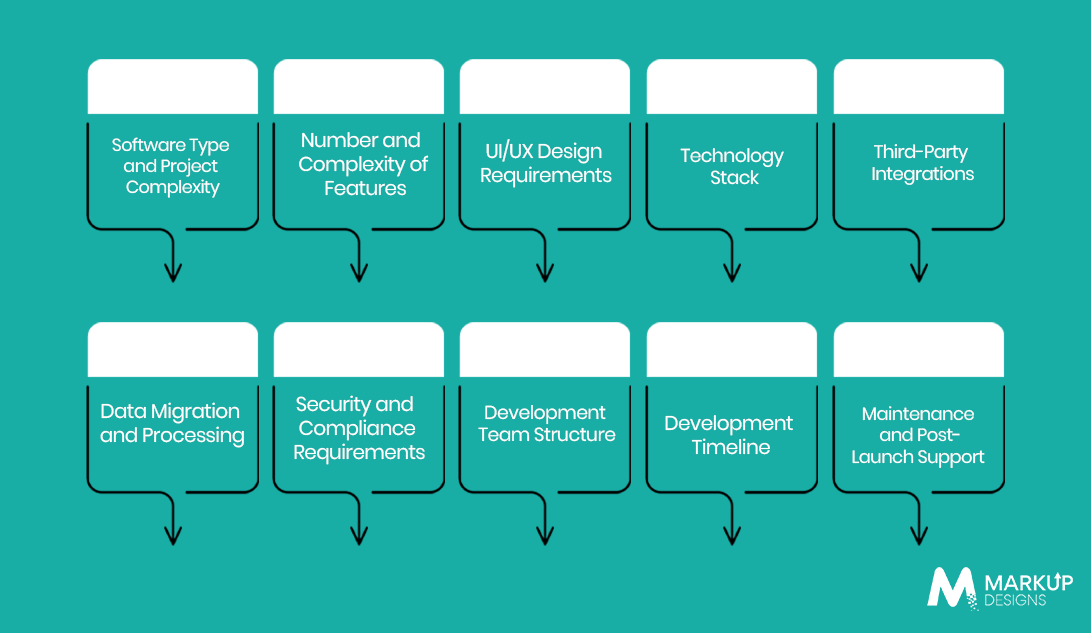
The cost of custom software development in Bahrain depends on several technical and business factors. Two applications serving similar industries can have very different budgets depending on their features, integrations, data requirements, security needs, and scalability goals.
Software Type and Project Complexity
The type of software has a direct impact on development effort. A basic internal business application may require relatively simple workflows, while a CRM, ERP software development, marketplace, healthcare platform, or fintech system can involve multiple modules, user roles, integrations, and security requirements.
Number and Complexity of Features
Every feature adds design, development, testing, and maintenance requirements. Basic user registration may require limited development effort, whereas features such as advanced dashboards, payment processing, reporting, search, notifications, workflow automation, AI, and predictive analytics require considerably more work.
UI/UX Design Requirements
The complexity of the user experience also affects the overall development budget. Custom interfaces with multiple user journeys, responsive layouts, accessibility requirements, interactive dashboards, and role-specific experiences require additional design and development effort.
Technology Stack
The selected technology stack influences development effort, infrastructure requirements, scalability, and long-term maintenance. This includes frontend and backend frameworks, programming languages, databases, cloud platforms, APIs, AI technologies, and Cloud DevOps infrastructure.
Third-Party Integrations
Integrating custom software with existing platforms can add significant development effort, particularly when APIs are complex, poorly documented, or require extensive data synchronisation.
Data Migration and Processing
Migrating data from legacy systems is often more complicated than simply transferring records. Existing data may need to be cleaned, transformed, validated, deduplicated, and restructured before it can be used by the new software.
Security and Compliance Requirements
Development costs may increase when the project requires advanced encryption, multi-factor authentication, role-based access controls, audit trails, secure data transmission, vulnerability testing, monitoring, or industry-specific compliance measures. Building these requirements into the architecture from the beginning is generally more effective than adding them after development.
Development Team Structure
The size and expertise of the development team also influence the overall budget. Depending on the project, a custom software team may include business analysts, UI/UX designers, frontend and backend developers, QA engineers, DevOps specialists, AI engineers, and project managers.
Development Timeline
The required delivery timeline can affect the overall development budget. A standard development schedule allows teams to work through discovery, design, development, testing, and deployment in planned stages.
Maintenance and Post-Launch Support
The development budget should also account for the software’s ongoing operational needs after launch. Maintenance can include bug fixes, infrastructure management, security updates, performance optimisation, monitoring, technical support, and feature enhancements. Regular maintenance helps keep the software secure, reliable, and compatible with changing business and technology requirements.
How Does Software Complexity Impact Development Cost?
Software complexity affects development cost through more than the number of features. The architecture, number of users, integrations, data processing requirements, security controls, and technical dependencies all determine how much design, development, QA testing, and infrastructure work is required.
Low-Complexity Software
Low-complexity software is typically designed for a limited number of users and straightforward business processes. These projects generally require a smaller development team, simpler architecture, and shorter testing cycles, making them more cost-effective to build and maintain.
Medium-Complexity Software
Medium-complexity applications support more users, business processes, and system interactions. These requirements increase development effort because the software needs more sophisticated business logic, data handling, testing, and access management.
High-Complexity Software
High-complexity software is generally built for demanding operational or enterprise environments. Such systems require greater architectural planning, specialised development expertise, extensive testing, and stronger infrastructure.
How Much Does It Cost to Maintain Custom Software in Bahrain?
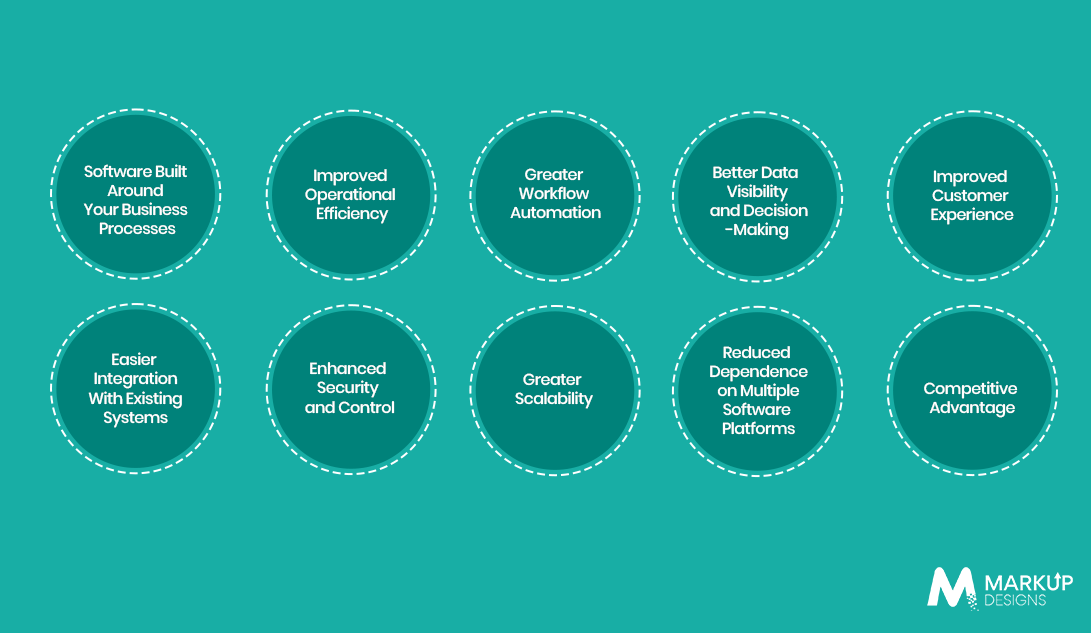
The initial development budget is only one part of the overall software investment. Once the application goes live, businesses need to allocate a maintenance budget to keep it secure, reliable, compatible, and aligned with changing business requirements.
Bug Fixes and Technical Support
Ongoing support addresses software bugs, technical issues, integration failures, user problems, and unexpected application behaviour. A support arrangement can help businesses resolve issues without disrupting daily operations.
Security Updates
Applications require regular security patches, dependency updates, vulnerability fixes, access-control reviews, and other measures to address emerging security risks.
Cloud and Infrastructure Costs
Businesses may incur recurring expenses for cloud hosting, storage, databases, computing resources, bandwidth, backups, and other infrastructure services.
Performance Monitoring
Monitoring helps identify slow response times, infrastructure issues, failed processes, and unusual system behaviour before they significantly affect users.
Software Updates and Upgrades
Technology platforms, operating systems, frameworks, APIs, and third-party services change over time. Updates may therefore be required to maintain compatibility and functionality.
New Features and Enhancements
As business requirements evolve, organisations may need new workflows, integrations, dashboards, automation features, or other functionality. These enhancements form part of the software’s long-term investment.
Data Backup and Disaster Recovery
Regular backups and disaster recovery mechanisms help protect business data and support service continuity in the event of system failures, security incidents, or infrastructure disruptions.
Custom Software vs. Off-the-Shelf Software: Which Is More Cost-Effective?
The lower upfront price of an off-the-shelf application does not necessarily make it the more cost-effective option over the long term. The better choice depends on the business’s processes, scalability requirements, integration needs, and expected usage.
Upfront Development Cost
Custom software generally requires a higher initial investment because the application is designed and developed specifically for the business. Off-the-shelf software usually has a lower entry cost because the product has already been developed for a broader customer base.
Customisation and Flexibility
Off-the-shelf products may require businesses to adapt their workflows to the software’s existing functionality. Custom software takes the opposite approach, allowing workflows, features, interfaces, and business rules to be designed around existing processes.
Integration Costs
Off-the-shelf platforms may provide standard integrations, but connecting them with specialised or legacy systems can still require additional development. Custom software can be architected around the systems and data sources the business already uses.
Licensing and Subscription Costs
Off-the-shelf software commonly involves recurring subscription or licensing fees, which can increase as the number of users, modules, or required features grows. Custom software does not follow the same SaaS licensing model, although businesses remain responsible for hosting, maintenance, support, and future development.
Scalability
Custom software can be designed around expected growth in users, transactions, locations, data volumes, and business operations. Off-the-shelf platforms may provide scalability within their available plans and architecture, but businesses can face limitations if their requirements move beyond what the product supports.
Long-Term Total Cost of Ownership
A meaningful comparison should consider more than the initial purchase price. Businesses should evaluate licensing, customisation, integration, maintenance, upgrades, infrastructure, and support costs over the expected life of the software.
What Are the Benefits of Investing in Custom Software in Bahrain?
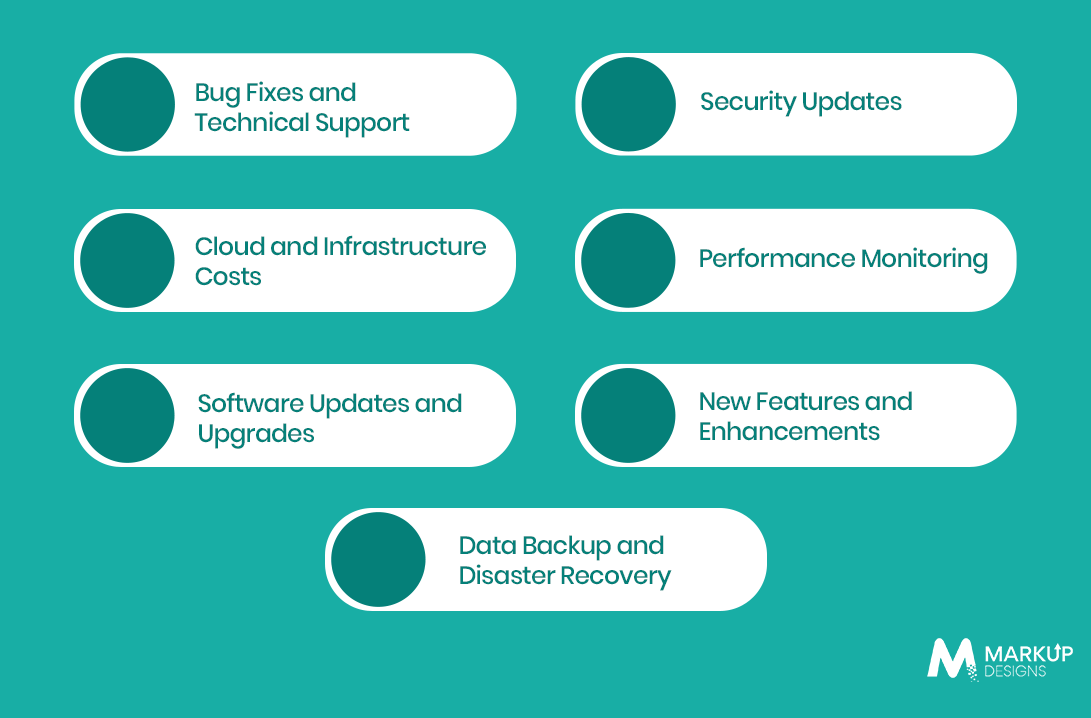
The value of custom software comes from how effectively it addresses specific business requirements. Rather than paying for features that may not be relevant, businesses can invest in functionality that supports their workflows, customers, and growth objectives.
Software Built Around Your Business Processes
Custom applications can reflect the way a business actually operates, including its workflows, approval processes, user roles, reporting requirements, and business rules.
Improved Operational Efficiency
Automating repetitive processes can reduce manual effort and shorten the time required to complete routine tasks. This can be particularly valuable for businesses managing large volumes of transactions, records, or customer requests.
Greater Workflow Automation
Custom software can automate activities such as approvals, notifications, data transfers, reporting, task assignment, and other repetitive workflows, reducing reliance on manual processes.
Better Data Visibility and Decision-Making
Centralising business data can give teams access to more consistent and timely information. Custom dashboards and reporting tools can help management monitor performance and make decisions using relevant business data.
Improved Customer Experience
Businesses can design customer-facing features around their target audience, from personalised portals and booking journeys to faster service processes and real-time updates.
Easier Integration With Existing Systems
Custom software can connect with existing CRMs, ERPs, accounting systems, payment platforms, communication tools, and other business applications, reducing disconnected workflows and duplicate data entry.
Enhanced Security and Control
Businesses can define their own access controls, security architecture, data handling processes, and user permissions instead of relying entirely on the security model of a third-party product.
Greater Scalability
The software architecture can be planned around expected increases in users, transactions, locations, data, and functionality, making it easier to expand the platform as the business grows.
Reduced Dependence on Multiple Software Platforms
When businesses rely on several disconnected applications, they may face duplicate data entry, integration challenges, multiple subscriptions, and fragmented reporting. A custom platform can consolidate relevant processes into a more connected environment.
Competitive Advantage
Software built around a company’s specific processes can support workflows and customer experiences that may be difficult to replicate using standard products, helping the business differentiate its operations and services.
Read Also: Top Benefits of Mobile App Development for Businesses in Bahrain
How Does Custom Software Generate ROI?
Custom software can create ROI when the financial and operational benefits generated far exceed the total investment in its development and operation. The benefits can come from cost reductions, increased productivity, increased revenues, or a mix of all three.
Reducing Manual Work and Operational Costs
Automating repetitive tasks eliminates employee time spent on data entry, document processing, reporting, approvals, and other routine activities.
Increasing Employee Productivity
With the help of a single, centralized system, it takes employees less time to switch between applications and search for information.
Reducing Human Errors
Automated calculations, validation rules, data synchronization, and standardized workflows reduce errors associated with repetitive manual processes.
Improving Customer Retention and Conversion
Faster processes, personalized experiences, better communication, and easy customer journeys increase conversion and retention rates.
Increasing Revenue Opportunities
Custom software can give life to new digital services, enable online transactions, ensure personalization, create marketplaces, implement subscription models, or otherwise provide revenue opportunities.
Reducing Software Licensing Costs
Using multiple third-party tools that pertain to the same area of overlap may result in high ideal recurring license or subscription fees. The savings will weigh against development and maintenance costs.
Improving Business Decision-Making
Centralised data, real-time reporting, analytics, and custom dashboards can help businesses identify opportunities, monitor performance, and respond to operational issues more quickly.
Supporting Business Scalability
Software that can accommodate additional users, transactions, locations, and processes can help businesses expand without proportionally increasing manual operational effort.
How to Calculate Custom Software Development ROI?
Calculating software ROI requires businesses to consider the complete investment alongside measurable financial benefits. A simple framework can help establish whether the project is generating sufficient value.
Identify the Initial Software Investment
Start by calculating the full upfront investment, including:
- Software development
- Implementation
- Data migration
- Employee training
- Deployment and launch
Calculate Ongoing Costs
Include the recurring expenses required to operate and maintain the software, such as:
- Cloud infrastructure
- Maintenance and support
- Security updates
- Software upgrades
- Third-party services
- Ongoing development
Measure Financial Benefits
Track measurable improvements that can be linked to the software, including:
- Cost savings
- Additional revenue
- Productivity gains
- Reduced errors
- Reduced processing time
- Improved customer retention
- Increased conversions
Apply the ROI Formula
The basic software ROI formula is:
ROI = (Total Financial Benefits − Total Software Investment) ÷ Total Software Investment × 100
Measure Payback Period
ROI shows the overall return, while the payback period shows how long it takes to recover the initial investment.
To calculate it, businesses can compare the initial software investment with the average monthly or annual financial benefit generated by the solution. A shorter payback period generally indicates that the software is recovering its initial investment more quickly.
What Is the Total Cost of Ownership of Custom Software?
The quote that pertains to the development is just one portion of the cost. Total cost of ownership (TCO) encompasses all that a company expends on developing, utilizing, safeguarding, managing, and improving a given software application over its entire lifespan.
Development and Implementation
Some aspects of the TCO are consulting, design, development, testing, deploying, migrating data, training, and other expenditures needed to get the software.
Infrastructure and Hosting
The TCO might also include cloud hosting, servers, storage, database, bandwidth, monitoring, and similar kinds of installation.
Third-Party Services
There are various things a business can pay. Various things, including payment gateways, APIs, communication platforms, and cloud computing resources, present ordinary enterprises with extra charges.
Maintenance and Support
The ongoing costs would include bug fixing, technical support, and other expenses.
Security and Compliance
Security evaluation, repairs, vulnerability testing, compliance evaluation, access control, and data recovery contribute to long-term costs.
Upgrades and Enhancements
As enterprises and technologies develop, the applications they use have to catch up with changes by getting new features or by being redesigned.
Internal Training and Administration
While employees receive the necessary training, the internal teams will still have to spend time administering the software.
How Can Businesses Reduce Custom Software Development Costs in Bahrain?
Cutting down on development expenses does not imply eliminating key functionalities or hiring the cheapest development service. An effective method for keeping costs low is to monitor scope, reduce the changes made to the product, and make technology decisions supporting efficiency in the long run.
Define the MVP Before Full-Scale Development
Begin with the must-have functionalities for solving the main business challenge. The additional features will be implemented later once the MVP is validated.
Prioritise High-Value Features
The features have to be ranked by business significance and user value. It helps avoid wasting development efforts on unnecessary features.
Reuse Proven Technologies and Components
Using well-known frameworks, libraries, APIs, and other reusable components allows reducing development time without any loss in quality.
Choose the Right Architecture
Thought-out architecture will allow reducing extra development effort while forming a basis for further scalability and integrations.
Integrate Instead of Rebuilding Existing Systems Where Practical
If some other reliable and well-proven system fulfills the required function, integration may be more feasible than creating the same functionality anew.
Use Agile Development
Agile development allows businesses to build and review the software in stages, helping identify scope issues and changes before they become expensive to fix.
Test Early
Early testing helps identify usability, functional, integration, and technical issues before they spread across the application and require significant rework.
Plan Scalability From the Start
Building with future growth in mind can prevent expensive architectural changes when the number of users, transactions, or integrations increases.
Work With an Experienced Development Partner
An experienced team can help identify unnecessary complexity, select suitable technologies, estimate effort more accurately, and reduce costly development rework.
Read Also: Why Agile Development Continues to Drive Enterprise Software Success
How to Choose a Custom Software Development Company in Bahrain?
A good partner for product development should be assessed based on the way they can provide the solution needed rather than just being the cheapest.
Review Relevant Industry Experience
Find partners that have experience with projects similar to yours in terms of technology, user experience, and security issues.
Assess Technical Expertise
Make sure that the partner’s team has the required skills in the areas of Front-end and Back-end development, databases, cloud technologies, APIs, artificial intelligence, security, DevOps, and other required technologies.
Examine Previous Projects and Case Studies
It would be great to see what projects were undertaken by the partner in order to understand what it has done and how complex they were.
Evaluate Security and Compliance Capabilities
Ask about the approach to authentication, encryption, access control, secure coding, quality assurance, protection of data, and other security aspects.
Understand Their Development Methodology
You need to know the steps in the development process to understand how it works.
Ask About Post-Launch Support
You have to be clear on what will happen after the release, including bug fixing, monitoring, updates, maintenance, and technical assistance.
Compare Proposals Based on Scope, Not Just Price
A lower quotation may exclude important elements such as integrations, testing, security, deployment, or maintenance. Compare proposals based on what is actually included.
Clarify Ownership of Source Code and Intellectual Property
The agreement should clearly state who owns the source code, custom components, documentation, designs, and other intellectual property created for the project.
Assess Communication and Project Management
Reliable communication, clear reporting, defined responsibilities, and structured project management can significantly influence delivery quality and timelines.
What Should a Custom Software Development Proposal Include?
A detailed proposal makes it easier to understand the investment and compare development partners.
| Proposal Component | What It Should Cover |
| Project Scope | Objectives, modules, features, and deliverables |
| Functional Requirements | User roles, workflows, and required functionality |
| Technology Stack | Recommended frontend, backend, database, cloud, and other technologies |
| Development Milestones | Key stages and expected deliverables |
| Estimated Timeline | Development phases and projected completion |
| Cost Breakdown | Development costs by major project component |
| Third-Party Costs | External APIs, licenses, services, or infrastructure |
| Testing and Deployment | QA approach, environments, release, and launch |
| Maintenance and Support | Post-launch support, updates, and maintenance terms |
| Intellectual Property Ownership | Source code and ownership rights |
| Payment Terms | Payment schedule and commercial conditions |
A proposal with this level of detail helps businesses understand the actual scope behind the quoted price and reduces the possibility of unexpected costs later.
Why Choose Markup Designs for Custom Software Development in Bahrain?
The methodology of software development for Markup Designs usually begins with identifying the business needs it addresses and then determining the possible technologies that can fulfil those needs. The main idea is to create solutions that will meet operational requirements without becoming overly complicated and will allow proper adjustments and scaling in the future.
The range of offered services includes custom software development, solution architecture, UI/UX design, cloud and infrastructure services, API and third-party integration, automation and artificial intelligence integration services, software security development, as well as QA and post-launch maintenance.
This approach helps tackle the challenges which can have an impact on the overall cost: preventing complications with development process, making the right choice of architecture, and integrating with legacy systems, while ensuring security as well.
Build Custom Software That Delivers Long-Term Business Value
From minimum viable product to scalable enterprise platforms, we build software solutions here tailored to business processes and integrations, security needs, and plans for growth.

Conclusion
Custom software development cost in Bahrain should not be evaluated by the initial quotation alone. The more important question is what the investment delivers over the software’s lifecycle. A cheaper solution that leaves businesses dependent on manual work, disconnected tools, workarounds, or repeated redevelopment can ultimately become more expensive.
Evaluating development cost alongside total cost of ownership, scalability, security, and expected ROI provides a much clearer basis for making the right investment.
FAQ
1. What is the cost of Custom Software Development in Bahrain?
Cost for custom software in Bahrain varies from approximately BD 5,000 for simple applications to over BD 100,000 for complicated enterprise systems. The cost of custom software depends on the characteristics, complexity, integration, technology, security, development efforts and ongoing requirements.
2. What are the factors that influence the cost of Custom Software Development in Bahrain?
The most important factors are: complexity of the software, number of features, UI/UX requirements, technology stack, third-party integrations, data transfer, security and compliance, people working on the project, development period and support after launch.
3. What is the duration for Custom Software Development in Bahrain?
Developing a simple application may take few months while complex enterprise systems may take considerably longer. The duration depends on the size of the project, number of integrations, complexity of the project, size of the team, testing issues, and phase delivery.
4. Is Custom Software more expensive than Off-the-Shelf Software?
Custom software solutions generally have a higher initial cost, as it is important to look into additional costs such as licensing costs, customisation, integration costs, maintenance costs, etc. For a company with special work processes, it may be much more valuable to implement a custom software solution.
5. How much does it cost to maintain custom software?
Custom software maintenance pricing varies depending on the complexity of the software utilized and the integration processes involved. Companies must consider expenses related to security, support, upgrading, monitoring, and other costs related to maintenance services when formulating the total cost of ownership.
Author's Perspective
Custom software may seem like a smart investment, but it only works in instances where it achieves a desired result, minimizes operational inefficiencies, integrates systems efficiently, and generates tangible cost or productivity returns.
For companies in Bahrain, a better move would be to select a developer based on the total price of ownership, scalability, security, and the potential benefits they could get from this investment instead of going for the cheapest offer on the market.
Discuss Your Project NowJupinder Singh Arora
Founder and CEO
Related Posts
How Much Does Healthcare Software Development Cost in...

How to Build Compliance Software for Australian Businesses:...

How Patient Scheduling Software Improves Healthcare Operations
Insights Are Valuable & Execution is Priceless
You’ve read about the digital future. Now, let’s build the infrastructure to take you there. Move your strategy from the page to the product.
Design Your Solution Now
Contact Us
Schedule The Appointment At Your Convenience Date And Time.
30 Min
Web Conference
Time Zone
Indian standard time (08:30pm)

Thanks For Getting In Touch!
You’ve Taken The First Step Toward Transforming Your Digital Presence. Our Experts Will Reach Out Shortly To Take It Forward.
Launch Your Dream Project
Provide a brief overview of your project, and our specialists will evaluate your requirements. We will connect with you to explore how the right digital solutions can help you launch faster.