
In Brief
- Healthcare 4.0 combines AI, connected devices, cloud computing, automation, and data-driven technologies to transform healthcare delivery.
- Interoperability and connected healthcare ecosystems enable information to move more efficiently between patients, providers, devices, and systems.
- AI and advanced analytics support predictive insights, personalised care, clinical decision-making, and operational efficiency.
- Technologies such as IoMT, robotics, digital twins, AR/VR, edge computing, and 5G are expanding the capabilities of modern healthcare.
- Successful Healthcare 4.0 adoption requires strong cybersecurity, data governance, interoperability, regulatory compliance, and scalable digital infrastructure.
Healthcare is moving beyond traditional digital transformation toward more connected, intelligent, and data-driven models of care. Healthcare 4.0 brings together technologies such as artificial intelligence, Internet of Medical Things (IoMT), cloud computing, advanced analytics, robotics, and automation to create healthcare ecosystems that can respond to patient and operational needs more efficiently. Rather than relying only on digitised records or individual healthcare applications, the approach focuses on connecting technologies, systems, healthcare professionals, and patients.
The shift toward Healthcare 4.0 is also changing how healthcare organisations approach diagnosis, treatment, monitoring, hospital operations, and patient engagement. Predictive analytics can help identify potential risks, connected devices can support remote monitoring, and AI can assist with clinical and administrative workflows. This article explores what Healthcare 4.0 means, the technologies driving it, its applications and benefits, implementation challenges, and how healthcare organisations can prepare for the next era of digital healthcare.
What Is Healthcare 4.0?
Healthcare 4.0 refers to the next stage of healthcare transformation, where connected technologies, intelligent systems, automation, and data-driven insights work together to improve how healthcare is delivered and managed. It extends digital transformation beyond digitising records and processes by connecting patients, medical devices, healthcare professionals, and systems within a more integrated ecosystem.
How Healthcare Has Evolved From 1.0 to 4.0
Healthcare has progressed from traditional, largely manual care models toward increasingly digital, connected, and intelligent ecosystems.
- Healthcare 1.0: Primarily focused on conventional, provider-led, and reactive healthcare.
- Healthcare 2.0: Introduced greater use of medical technology, specialised care, and improved clinical processes.
- Healthcare 3.0: Accelerated digitisation through electronic health records, telemedicine app development, health information systems, and digital tools.
- Healthcare 4.0: Builds on this digital foundation by connecting AI, IoMT, cloud services, analytics, automation, and advanced connectivity to support more predictive, personalised, and integrated care.
What Makes Healthcare 4.0 Different?
Healthcare 4.0 goes beyond individual digital tools. Its focus is on connecting technologies and data so that healthcare organisations can make more informed decisions, automate suitable processes, and deliver services across both physical and digital care environments.
Key Characteristics of Healthcare 4.0
- Connected healthcare: Links patients, providers, devices, and healthcare systems for continuous information exchange.
- Intelligent decision-making: Uses AI and analytics to support clinical and operational decisions.
- Automation: Automates repetitive administrative, operational, and selected clinical workflows.
- Personalised care: Uses patient data and analytics to support more individualised care strategies.
- Real-time data: Enables healthcare teams to access and respond to relevant information as it becomes available.
- Predictive healthcare: Uses historical and real-time data to identify risks and anticipate potential outcomes.
- Interoperability: Enables different healthcare applications, devices, and systems to exchange and use information effectively.
Healthcare 4.0 vs Digital Health vs Smart Healthcare
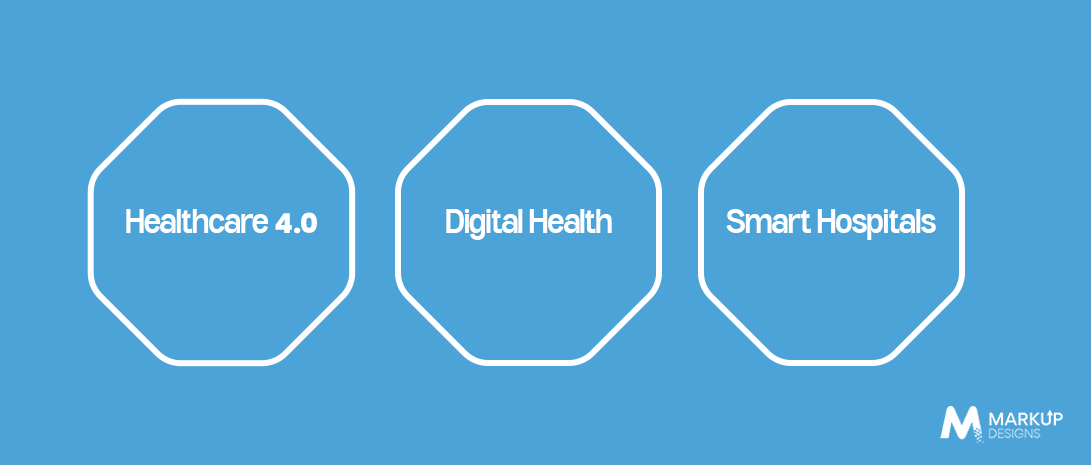
Healthcare 4.0, digital health, and smart healthcare are closely related but represent different levels and approaches to technology adoption.
Healthcare 4.0
Healthcare 4.0 represents a broader transformation framework that combines connected technologies, AI, automation, analytics, and interoperability to create intelligent healthcare ecosystems.
Digital Health
Digital health refers to the use of digital technologies to support healthcare delivery, health management, communication, records, monitoring, and patient engagement. It includes technologies such as telemedicine, electronic health records, mobile health applications, and digital therapeutics.
Smart Hospitals
Smart hospitals apply connected and intelligent technologies within hospital environments to improve clinical workflows, resource management, patient experiences, and operational efficiency. IoMT devices, automation, AI, robotics, and real-time analytics can form part of a smart hospital ecosystem.
How These Concepts Work Together
Digital health provides many of the digital tools and services used across healthcare. Smart hospitals apply connected technologies to hospital operations and care environments, while Healthcare 4.0 brings these capabilities together within a broader, intelligent, and interconnected healthcare model.
| Aspect | Healthcare 4.0 | Digital Health | Smart Hospitals |
| Scope | Broad healthcare transformation | Digital healthcare services and solutions | Technology-enabled hospital ecosystem |
| Technologies | AI, IoMT, cloud, analytics, robotics, digital twins, 5G | EHRs, telemedicine, mobile apps, wearables, digital platforms | IoMT, AI, robotics, automation, connected infrastructure |
| Focus | Connected, predictive, personalised, intelligent healthcare | Digitising healthcare access and processes | Connected hospital operations and patient care |
| Use Cases | Predictive care, personalised treatment, remote monitoring, intelligent automation | Virtual consultations, digital records, health monitoring | Smart beds, asset tracking, automated logistics, connected patient monitoring |
| Objective | Build integrated and data-driven healthcare ecosystems | Improve access, delivery, and management through digital tools | Improve hospital care, workflows, resources, and patient experience |
What Technologies Are Driving Healthcare 4.0?
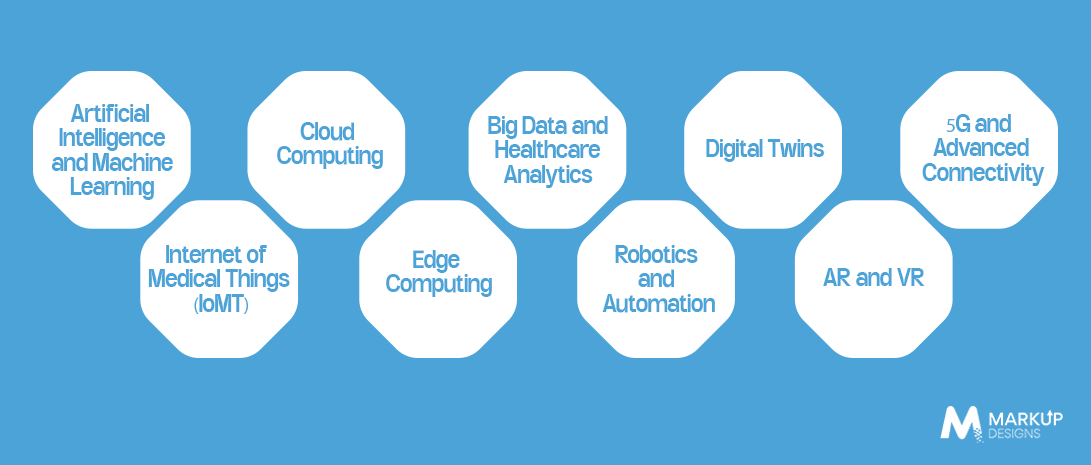
Healthcare 4.0 combines multiple technologies rather than relying on a single digital capability. These technologies work together to connect healthcare data, support decision-making, automate workflows, and enable more responsive care.
Artificial Intelligence and Machine Learning
AI and machine learning can process large volumes of healthcare data to identify patterns and support clinical and operational workflows.
- Clinical decision support: Provides data-driven insights to assist healthcare professionals.
- Predictive analytics: Identifies patterns that can support risk assessment and forecasting.
- Disease detection: Supports the analysis of medical images, clinical data, and other health information.
- Personalised treatment: Helps analyse patient-specific information for more tailored care strategies.
- AI-powered automation: Automates selected administrative and healthcare workflows.
Internet of Medical Things (IoMT)
IoMT connects medical devices, sensors, wearables, and healthcare systems to enable continuous data collection and exchange.
- Connected medical devices: Links devices to healthcare networks and applications.
- Remote patient monitoring: Supports monitoring outside traditional clinical settings.
- Real-time vital tracking: Captures relevant patient measurements for timely review.
- Smart medical equipment: Enables connected equipment monitoring, management, and data collection.
Cloud Computing
Cloud computing provides scalable infrastructure for storing, processing, and accessing healthcare applications and data.
- Healthcare data storage: Supports scalable storage for digital healthcare information.
- Secure data access: Enables authorised users to access applications and information across locations.
- Application scalability: Allows healthcare platforms to scale as demand and data volumes increase.
- Collaboration across healthcare systems: Supports data and application access across distributed teams and facilities.
Edge Computing
Edge computing processes data closer to where it is generated instead of relying entirely on centralised infrastructure.
- Real-time data processing: Supports faster analysis of data from connected devices.
- Low-latency clinical applications: Helps applications respond quickly where timing is important.
- Connected medical devices: Enables local processing for device-generated data.
- Remote monitoring: Supports responsive monitoring when continuous connectivity to central systems may be limited.
Big Data and Healthcare Analytics
Healthcare analytics combines data from multiple sources to generate insights that can support clinical, operational, and population-level decisions.
- Patient data analysis: Identifies patterns across clinical and health information.
- Population health insights: Helps organisations understand trends across patient populations.
- Risk prediction: Supports the identification of potential risks and high-priority cases.
- Operational analytics: Helps analyse resource utilisation, workflows, and healthcare operations.
Robotics and Automation
Robotics and automation can support clinical procedures, logistics, and repetitive administrative processes.
- Robotic-assisted surgery: Supports surgeons during selected procedures.
- Hospital logistics: Automates tasks such as transportation and material movement.
- Pharmacy automation: Supports medication handling and dispensing workflows.
- Administrative automation: Reduces repetitive manual tasks across healthcare operations.
Digital Twins
Digital twins create virtual representations of physical systems, processes, or assets that can be analysed using data.
- Virtual patient models: Can support simulation and analysis of patient-specific scenarios.
- Treatment simulation: Helps model potential treatment or care scenarios.
- Predictive maintenance: Uses equipment data to anticipate maintenance requirements.
- Hospital infrastructure modelling: Supports analysis and optimisation of facilities and connected infrastructure.
AR and VR
Augmented reality and virtual reality create immersive or digitally enhanced environments for clinical, educational, and rehabilitation applications.
- Medical training: Provides simulated environments for healthcare education.
- Surgical planning: Can support visualisation of anatomical or procedural information.
- Patient rehabilitation: Enables technology-assisted rehabilitation and therapeutic experiences.
- Remote assistance: Can support collaboration between healthcare professionals in different locations.
5G and Advanced Connectivity
Advanced connectivity provides the network foundation required for connected healthcare devices, real-time communication, and data-intensive applications.
- Real-time communication: Supports rapid communication between healthcare systems and professionals.
- Remote healthcare: Enables connected services across different locations.
- Connected devices: Supports communication between medical devices and healthcare platforms.
- High-speed data transmission: Facilitates the transfer of large volumes of healthcare data.
How Is Healthcare 4.0 Transforming Healthcare Delivery?
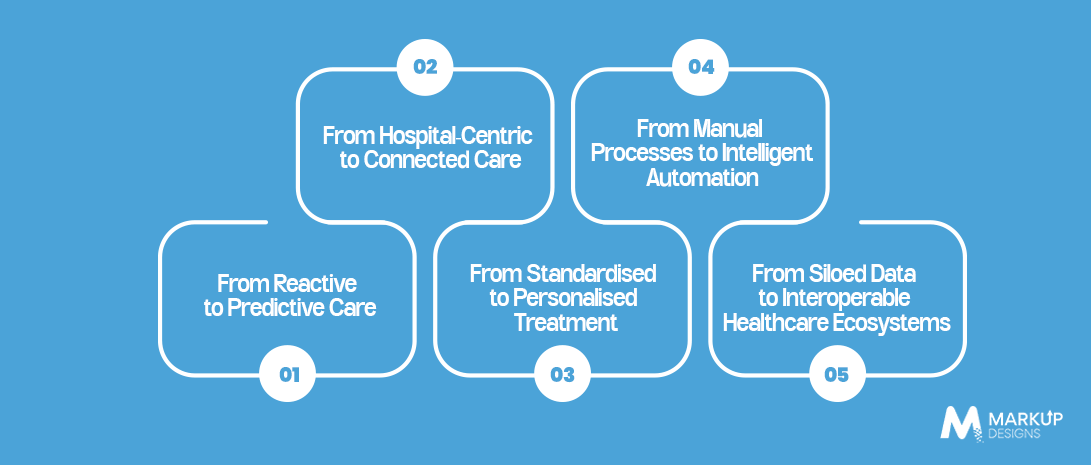
Healthcare 4.0 is changing healthcare delivery by shifting organisations from isolated, reactive processes toward connected systems that can use data, automation, and intelligent technologies throughout the care journey.
From Reactive to Predictive Care
Traditional healthcare often responds after symptoms or problems emerge. Healthcare 4.0 uses historical and real-time data, analytics, and AI to identify patterns and potential risks earlier, supporting more proactive approaches to care.
From Hospital-Centric to Connected Care
Care is increasingly extending beyond hospital walls through telemedicine, remote monitoring, connected devices, and digital health platforms. This creates a more connected care environment involving patients, healthcare professionals, devices, and healthcare systems.
From Standardised to Personalised Treatment
Healthcare 4.0 enables healthcare organisations to analyse patient-specific clinical, behavioural, and monitoring data. These insights can support care strategies that are better aligned with individual patient needs and circumstances.
From Manual Processes to Intelligent Automation
Automation can handle repetitive administrative, operational, and selected clinical support tasks. By connecting automation with AI and healthcare data, organisations can streamline workflows while allowing healthcare professionals to focus on activities requiring human expertise.
From Siloed Data to Interoperable Healthcare Ecosystems
Healthcare data is often distributed across different applications, facilities, devices, and departments. Healthcare 4.0 places greater emphasis on interoperability, enabling relevant information to move between connected systems and supporting more coordinated healthcare delivery.
Key Applications of Healthcare 4.0
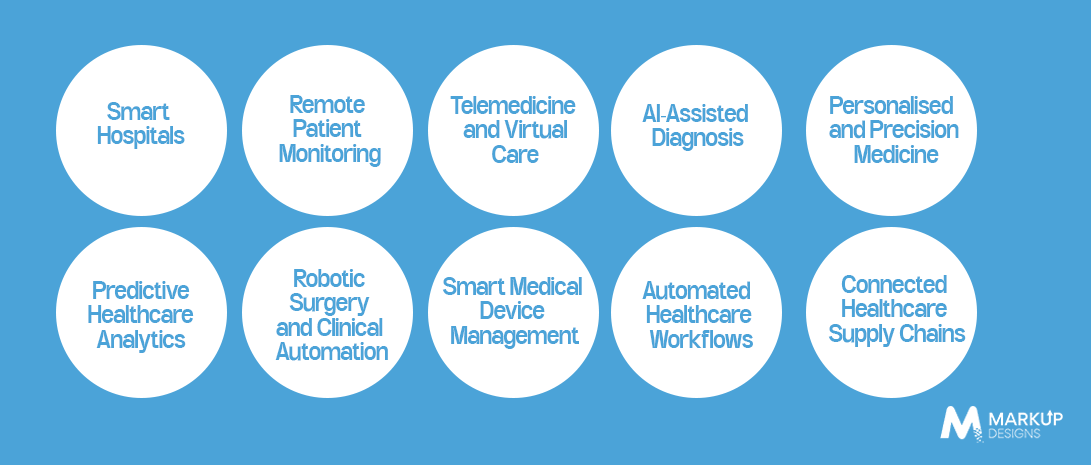
Healthcare 4.0 brings connected technologies, AI, automation, and analytics into practical healthcare environments. These capabilities can support clinical care, patient monitoring, hospital operations, and healthcare management.
Smart Hospitals
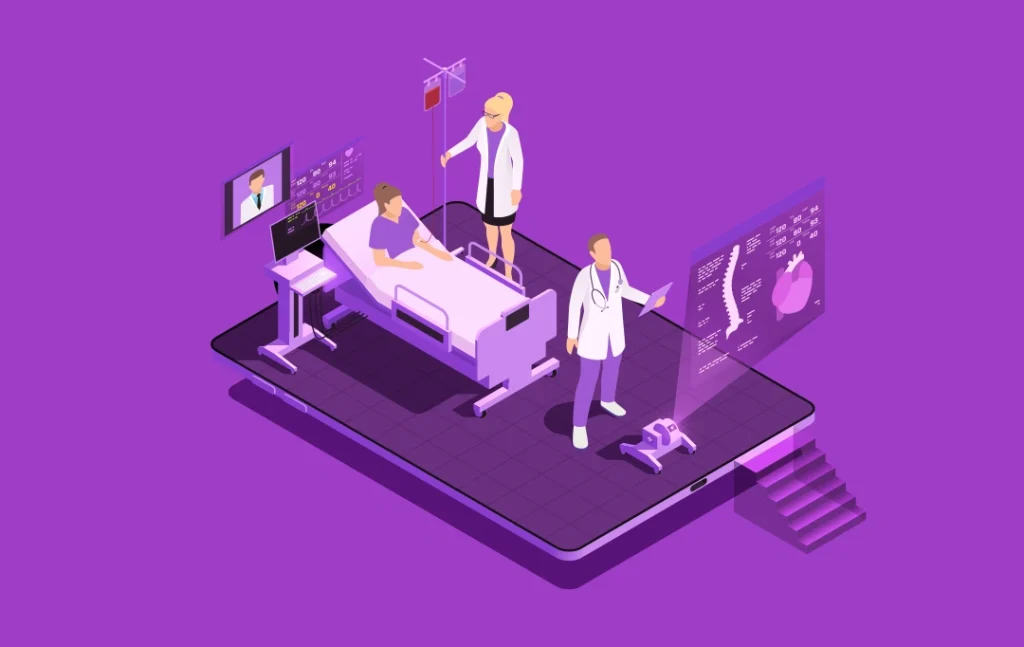
Smart hospitals use connected devices, AI, automation, and real-time data to improve clinical and operational workflows. Technologies such as smart sensors, connected medical equipment, robotics, and intelligent hospital systems can support better resource management and patient care.
Remote Patient Monitoring
IoMT devices and wearable technologies can collect health data outside traditional clinical settings. Healthcare professionals can use this information to monitor patients remotely, identify changes, and support ongoing care.
Telemedicine and Virtual Care
Telemedicine platforms enable patients to consult healthcare professionals remotely through video consultations, digital communication, and connected health applications. Healthcare 4.0 can integrate virtual care with patient records, monitoring devices, and other digital services.
AI-Assisted Diagnosis
AI can analyse clinical information, medical images, and other healthcare data to identify patterns that may support diagnostic decision-making. These systems are designed to assist healthcare professionals rather than replace clinical judgement.
Personalised and Precision Medicine
Healthcare 4.0 enables healthcare providers to combine patient-specific information with advanced analytics to support more personalised approaches to prevention, diagnosis, and treatment.
Predictive Healthcare Analytics
Predictive analytics can identify patterns in historical and real-time healthcare data to support risk assessment, resource planning, patient monitoring, and early intervention strategies.
Robotic Surgery and Clinical Automation
Robotics can assist with selected surgical procedures and clinical tasks, while automation can support repetitive processes across healthcare environments. These technologies can improve workflow consistency and reduce manual intervention in suitable use cases.
Smart Medical Device Management
Connected medical devices can provide data about equipment status, usage, performance, and maintenance requirements. Healthcare organisations can use this information to monitor assets and improve equipment management.
Automated Healthcare Workflows
Healthcare organisations can automate repetitive administrative and operational processes such as appointment management, documentation, billing workflows, and routine data processing, allowing teams to focus more on higher-value activities.
Connected Healthcare Supply Chains
IoT, analytics, and automation can connect suppliers, healthcare facilities, inventory systems, and logistics operations. This can improve visibility into medical supplies, equipment, inventory levels, and delivery processes.
How AI Is Powering Healthcare 4.0
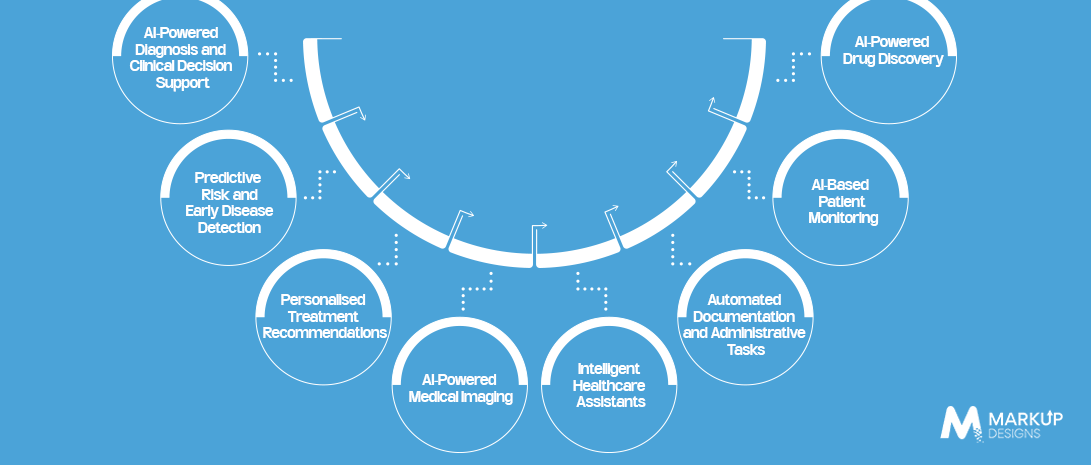
AI acts as an intelligence layer across many Healthcare 4.0 technologies, helping organisations analyse large volumes of data, identify patterns, automate suitable tasks, and support healthcare professionals with timely insights.
AI-Powered Diagnosis and Clinical Decision Support
AI systems can analyse clinical information and identify patterns that may support healthcare professionals during diagnosis and treatment planning. Clinical decision-support tools can provide relevant insights while keeping final decisions with qualified professionals.
Predictive Risk and Early Disease Detection
Machine learning models can analyse patient and population data to identify patterns associated with potential health risks. This can support earlier assessment and targeted monitoring where clinically appropriate.
Personalised Treatment Recommendations
AI can combine patient-specific information with relevant clinical data to support treatment planning and care recommendations. Such systems can help healthcare professionals consider individual patient characteristics when evaluating care options.
AI-Powered Medical Imaging
AI can assist in analysing medical images by identifying patterns, highlighting areas for review, and supporting image interpretation. This can help clinicians handle large volumes of imaging data more efficiently.
Intelligent Healthcare Assistants
AI-powered assistants can support patients and healthcare teams with tasks such as answering routine questions, providing information, scheduling, GPS navigation, and other appropriate interactions.
Automated Documentation and Administrative Tasks
AI can assist with documentation, data entry, summarisation, appointment workflows, and other repetitive administrative activities. Automation can reduce manual effort while maintaining appropriate human oversight.
AI-Based Patient Monitoring
AI can analyse data from connected devices and monitoring systems to identify changes or patterns that may require attention. This supports continuous observation across hospitals, clinics, and remote care environments.
AI-Powered Drug Discovery
AI and machine learning can help researchers analyse biological and chemical data, identify potential drug candidates, and model interactions. These technologies are increasingly being explored to support different stages of pharmaceutical research and development.
What Are the Benefits of Healthcare 4.0?
Healthcare 4.0 can create value across clinical care, patient engagement, healthcare operations, and organisational decision-making when technologies are implemented around clearly defined needs.
Improved Patient Outcomes
Connected monitoring, analytics, and decision-support technologies can provide healthcare teams with additional information to support timely and informed care decisions.
Personalised Patient Experiences
Digital platforms and data-driven technologies can help healthcare organisations tailor services, communication, monitoring, and care pathways to individual patient needs.
Earlier Disease Detection
AI, predictive analytics, and continuous monitoring can help identify relevant patterns or changes earlier, supporting timely clinical assessment and intervention.
Greater Operational Efficiency
Automation, connected systems, and real-time analytics can streamline workflows and help healthcare organisations manage resources and processes more efficiently.
Reduced Administrative Workloads
Automating repetitive documentation, scheduling, data processing, and administrative workflows can reduce manual effort for healthcare teams.
Better Resource Utilisation
Healthcare analytics can provide visibility into resources such as staff, equipment, beds, supplies, and facilities, supporting more informed planning and allocation.
Real-Time Healthcare Monitoring
Connected devices and IoMT solutions can continuously collect relevant information, enabling healthcare teams to monitor patients, equipment, and operational environments more effectively.
Improved Access to Healthcare
Telemedicine, remote monitoring, mobile healthcare applications, and connected care platforms can extend selected healthcare services beyond traditional clinical locations.
Data-Driven Decision-Making
Healthcare organisations can bring together data from clinical, operational, and connected systems to generate insights for decision-making and planning.
Reduced Healthcare Costs
Automation, preventive approaches, resource optimisation, and more efficient workflows can create opportunities to manage operational costs, although actual savings depend on implementation, use case, and scale.
Challenges of Implementing Healthcare 4.0
Healthcare 4.0 requires more than deploying new technologies. Organisations must address technical, operational, regulatory, financial, and workforce-related challenges to build sustainable digital healthcare ecosystems.
Data Privacy and Security
Healthcare systems handle highly sensitive information, making privacy and cybersecurity essential. Organisations need appropriate access controls, encryption, monitoring, governance, and security practices throughout the technology lifecycle.
Interoperability With Legacy Systems
Many healthcare organisations operate a combination of modern and legacy applications. Connecting these systems can require integration layers, standardised data structures, APIs, and careful migration strategies.
Regulatory and Compliance Requirements
Healthcare technologies must operate within applicable privacy, security, medical device, and healthcare regulations. Compliance requirements should be considered during system design rather than treated as a post-development activity.
High Implementation Costs
AI, IoMT, cloud infrastructure, cybersecurity, integration, and specialised healthcare software can require significant investment. Organisations need to prioritise use cases and establish a clear technology roadmap.
Data Quality and Management
AI and analytics depend on reliable data. Incomplete, inconsistent, duplicated, or poorly structured healthcare data can affect the quality of insights and system performance.
Workforce Skills and Digital Adoption
Healthcare professionals need appropriate training to use new technologies effectively. Successful adoption also requires change management, clear workflows, and ongoing technical support.
Scalability Across Healthcare Systems
A solution that works in one department or facility may face challenges when expanded across multiple locations, systems, and patient populations. Architecture, interoperability, security, and infrastructure should therefore be considered from the beginning.
Ethical and Responsible AI Adoption
AI systems require appropriate governance around transparency, accountability, bias, data usage, human oversight, and clinical responsibility. Organisations need processes to evaluate and monitor AI throughout its lifecycle.
Read Also: Healthcare App Development Cost in 2026
How to Successfully Implement a Healthcare 4.0 Strategy
A structured implementation approach helps healthcare organisations connect technology investments with measurable clinical and operational requirements.
Assess Existing Healthcare Infrastructure
Begin by reviewing current applications, devices, data systems, connectivity, security controls, workflows, and integration capabilities. This assessment helps identify technology gaps and existing assets that can be extended.
Identify High-Impact Use Cases
Prioritise use cases based on patient needs, operational challenges, technical feasibility, expected value, and available resources. Starting with clearly defined problems helps prevent technology adoption without a practical objective.
Establish an Interoperable Data Architecture
Design an architecture that allows healthcare applications, devices, and data platforms to communicate effectively. APIs, common standards, integration platforms, and appropriate data governance can support interoperability.
Build Security and Privacy Into the System
Security should be incorporated across infrastructure, applications, devices, APIs, identity management, and data flows. Privacy requirements should also guide how healthcare information is collected, stored, processed, and shared.
Start With Pilot Projects
Pilot implementations allow organisations to validate technology, workflows, user adoption, and expected outcomes within a controlled environment before expanding the solution.
Train Healthcare Teams
Provide healthcare professionals and operational teams with practical training covering technology usage, new workflows, security practices, and appropriate human oversight.
Monitor Performance and Patient Outcomes
Define relevant technical, operational, and patient-focused metrics before implementation. Continuous monitoring helps organisations understand whether a solution is delivering its intended value.
Scale Successful Solutions Across the Organisation
Once a solution has demonstrated value and operational readiness, organisations can expand it across departments or facilities while adapting infrastructure, integrations, AI governance consulting, and support processes as required.
What Does the Future of Healthcare 4.0 Look Like?
The future of Healthcare 4.0 is likely to involve deeper integration between AI, connected devices, advanced analytics, robotics, cloud infrastructure, and healthcare professionals. The emphasis will increasingly be on intelligent systems that support care across hospitals, clinics, and home environments.
Autonomous and AI-Assisted Healthcare
AI will continue to support selected clinical and operational tasks, with greater emphasis on human oversight, governance, and clearly defined areas of responsibility.
Hyper-Personalised Patient Care
Increasingly detailed patient data and advanced analytics may enable healthcare systems to develop more individualised care pathways, monitoring strategies, and patient engagement models.
Advanced Digital Twins
Digital twins may become more sophisticated, enabling organisations to model patients, equipment, facilities, and healthcare processes for simulation, planning, and optimisation.
Next-Generation Medical Robotics
Advances in robotics may expand applications across surgery, rehabilitation, logistics, pharmacy, and other healthcare environments.
Ambient and Voice-Enabled Healthcare
Voice interfaces, ambient computing, and context-aware systems may reduce the need for manual interactions with digital healthcare systems and support documentation, communication, and patient engagement.
Edge AI and Real-Time Healthcare Intelligence
AI processing at the edge can bring analytics closer to connected devices and care environments, supporting faster responses in applications where low latency and local processing are important.
Connected Home-Based Healthcare
Connected devices, remote monitoring, telemedicine, and digital platforms can enable more healthcare services to be delivered and monitored within patients’ homes where clinically appropriate.
Greater Focus on AI Governance and Responsible Innovation
As AI becomes more integrated into healthcare, governance will become increasingly important. Organisations will need clear frameworks for data privacy, model oversight, accountability, transparency, security, and responsible deployment.
How Can Healthcare Organisations Prepare for Healthcare 4.0?
Preparing for Healthcare 4.0 requires organisations to build the infrastructure, data capabilities, security practices, and workforce readiness needed to support long-term digital transformation.
Modernise Legacy Infrastructure
Assess and gradually modernise outdated applications, infrastructure, and systems that limit integration, scalability, security, or access to healthcare data.
Invest in Interoperability
Prioritise architectures and integration capabilities that allow healthcare systems, applications, and connected devices to exchange relevant information effectively.
Strengthen Cybersecurity
Implement layered security across devices, applications, networks, identities, APIs, and data while continuously monitoring the technology environment for emerging risks.
Build a Data-Driven Culture
Establish strong data governance and encourage teams to use reliable data and analytics when making clinical, operational, and strategic decisions.
Prioritise Patient-Centric Technologies
Technology investments should address genuine patient and healthcare-provider needs, with emphasis on accessibility, usability, privacy, and the overall care experience.
Develop an AI and Automation Roadmap
Identify where AI and automation can provide practical value, define governance requirements, prioritise use cases, and establish a phased roadmap for implementation and scale.
How Markup Designs Can Help With Healthcare 4.0 Transformation
Markup Designs can support healthcare organisations in developing digital solutions that connect modern technologies with specific healthcare workflows and business requirements.
Healthcare Software Development
Develop custom healthcare software and digital platforms designed around specific clinical, administrative, and operational requirements.
AI and Machine Learning Solutions
Build AI-enabled solutions for analytics, automation, decision support, intelligent workflows, and other suitable healthcare use cases.
IoT and Connected Healthcare Solutions
Develop connected healthcare applications that integrate medical devices, sensors, wearables, and IoT infrastructure for data collection and monitoring.
Telemedicine and Remote Patient Monitoring
Create digital platforms that support virtual consultations, patient engagement, connected monitoring, and remote healthcare services.
Cloud-Based Healthcare Applications
Build scalable cloud-enabled healthcare applications that support data management, application accessibility, integration, and distributed healthcare operations.
Healthcare Data and Analytics
Develop data and analytics solutions that help healthcare organisations transform complex information into actionable operational and business insights.
Secure and Scalable Digital Healthcare Platforms
Design healthcare platforms with security, scalability, integration, and long-term maintainability considered throughout the development lifecycle.
Ongoing Support and Optimisation
Provide continuous maintenance, performance monitoring, enhancements, integrations, and technology optimisation as healthcare requirements evolve.
Build the Future of Connected Healthcare
Transform your healthcare operations with secure, scalable, and intelligent digital solutions built around your organisation’s needs.
Read Also: Transforming Healthcare with Digital Innovation: Creating Smarter and More Connected Care Ecosystems
Conclusion
Healthcare 4.0 represents a shift toward a more connected and intelligent healthcare ecosystem. By combining AI, IoT, cloud, analytics, robotics, connected devices, and intelligent automation, healthcare organisations can move beyond isolated digital solutions toward more predictive, personalised, connected, and data-driven models of care.
However, successful Healthcare 4.0 adoption requires more than selecting advanced technologies. Organisations must also establish interoperability, cybersecurity, compliance, workforce readiness, reliable data practices, and a clear implementation strategy. A phased approach that begins with relevant use cases and scalable infrastructure can help healthcare organisations adopt new technologies while creating a foundation for long-term digital transformation.
FAQs
What is Healthcare 4.0?
Healthcare 4.0 is an advanced approach to healthcare transformation that connects AI, IoT, cloud computing, analytics, automation, and other digital technologies. It focuses on creating more connected, predictive, personalised, and data-driven healthcare environments.
What technologies are used in Healthcare 4.0?
Healthcare 4.0 uses technologies such as artificial intelligence and machine learning, Internet of Medical Things (IoMT), cloud and edge computing, big data analytics, robotics, digital twins, AR/VR, and advanced connectivity such as 5G.
How is AI contributing to Healthcare 4.0?
AI supports Healthcare 4.0 by analysing healthcare data, assisting with clinical decision-making, supporting medical imaging, identifying potential risks, enabling personalised care, automating administrative tasks, and powering intelligent monitoring systems.
What is the difference between Healthcare 4.0 and digital health?
Digital health broadly refers to the use of digital technologies to support healthcare delivery, access, management, and patient engagement. Healthcare 4.0 takes this further by integrating digital health capabilities with AI, IoMT, automation, analytics, interoperability, and connected systems to create more intelligent healthcare ecosystems.
What are the benefits of Healthcare 4.0?
Healthcare 4.0 can support earlier risk identification, personalised care, real-time monitoring, improved operational efficiency, reduced administrative workloads, better resource utilisation, improved healthcare access, and more data-driven decision-making.
Author's Perspective
Healthcare 4.0 should be approached as a long-term transformation strategy rather than simply a technology upgrade. The real value comes from connecting systems, data, devices, and people in ways that address practical healthcare needs. Organisations that combine modern technology with strong security, interoperability, responsible AI practices, and workforce readiness can build a stronger foundation for the next generation of healthcare delivery.
Discuss Your Project NowAjit Kumar Jha
VP - Business Operations
Related Posts
Healthcare IT Outsourcing: A Strategic Guide for Modern...
AI in UK Healthcare: Real-World Applications Driving Better...
AI-Powered Smart Hospital Systems: The Future of Healthcare...
Insights Are Valuable & Execution is Priceless
You’ve read about the digital future. Now, let’s build the infrastructure to take you there. Move your strategy from the page to the product.
Design Your Solution Now
Contact Us
Schedule The Appointment At Your Convenience Date And Time.
30 Min
Web Conference
Time Zone
Indian standard time (08:30pm)

Thanks For Getting In Touch!
You’ve Taken The First Step Toward Transforming Your Digital Presence. Our Experts Will Reach Out Shortly To Take It Forward.
Launch Your Dream Project
Provide a brief overview of your project, and our specialists will evaluate your requirements. We will connect with you to explore how the right digital solutions can help you launch faster.